Showing posts with label The Q. Show all posts

Friday, 23 December 2022

Friday Five: But Wait, There's More Theatre

Lima Prichard as Ste and Nick Dyball as Jamie in Beautiful Thing

  1. Beautiful Thing - Everyman Theatre, ACT Hub: The coming-of-age exploration of sexual orientation drama is sensitively directed by Jarrad West although some of the class issues and geo-political context is lacking. Sandra (Amy Kowalczuk) is a single mother in 80s Britain (southeast London, and the accent ain't bad) with all the social connotations that implies. Dressed in short leather skirts, chain-smoking and both seducing and repelling her latest hippie lover, Tony (played with cringe-worthy 'think-of-me-as-your-mate' pseudo cool by Colin Giles), Sandra is desperately concerned with appearances while pretending she doesn't care what the neighbours think. Her world order is challenged when her son Jamie (Nick Dyball, who does some great work when he isn't shouting to portray emotion) develops feelings for Ste, the heartthrob next-door. Liam Prichard has remarkable confidence in the role, delivering a subtle performance full of troubled teen vulnerability. Liv Boddington plays Leah, the drug-taking, Mama Cass-loving expelled adolescent with peculiar naivety rather than as an ASBO waiting to happen, in keeping with the sanitisation of the whole. Some of the blocking and sight-lines are questionable as the traverse set is problematic depending on where the audience member sits, but on the whole this is a heartfelt and touching production. 
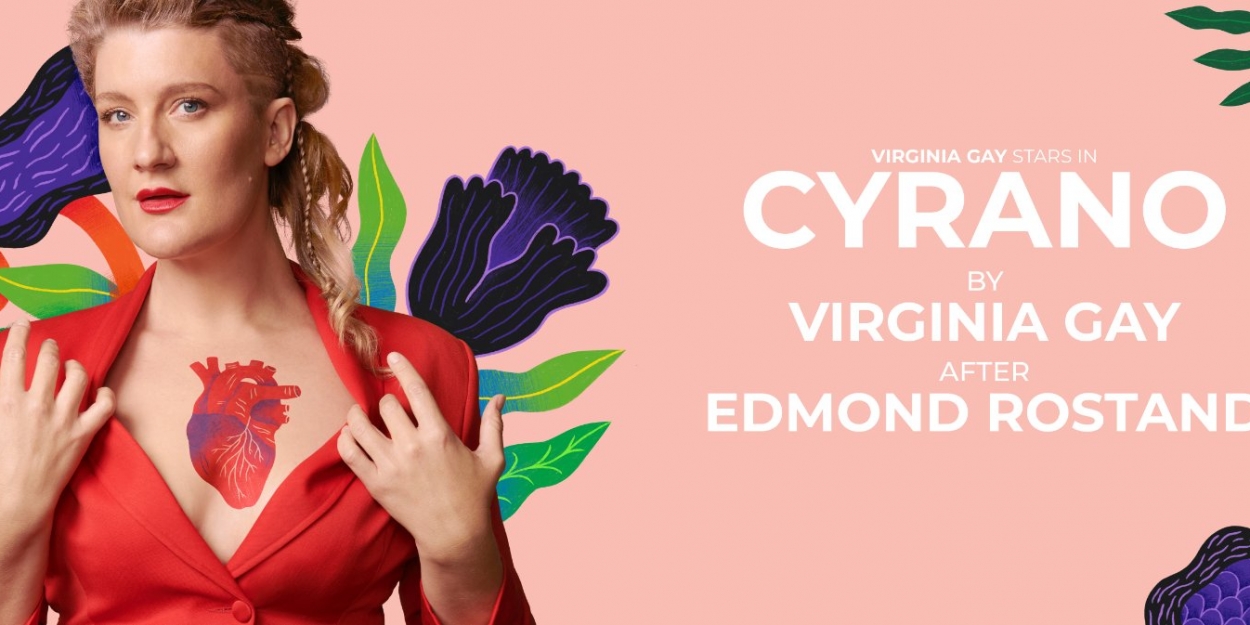
  2. Cyrano - Melbourne Theatre Company, Southbank Theatre: The production directed by Sarah Goodes is original and immediate, switching genders, updating language, and consolidating characters to make this a story for our times rather than an historic piece. Playwright and performer, Virginia Gay writes, "The stories that we tell have enormous importance... I don't think entertainment and fighting for something more are mutually exclusive; if you can do them both at once, then that is the sweet spot." This is smart and sexy, with many a self-aware wry comment on the nature of theatricality - often directly to the audience - enhanced by a plain, back-stage set. Gay is superb as the titular character with all the best lines and the nuanced personal development, Tuuli Narkle works hard with limited material as Roxanne, and Claude Jabbour brings the buff in contrast to the brains as the alternate love interest. The supporting chorus (Holly Austin, Robin Goldsworthy, Milo Hartill) guide us through the story with music, humour and theatrics, as they have heard it many times before, but the interpretation makes it feel fresh to our eyes and ears. 
  3. Murder on the Nile - Tempo Theatre, Belconnen Community Theatre: Jon Elphick directs another Agatha Christie for Tempo Theatre - this is the eleventh time that he has done so, and it's pretty solid with no frills. First performed in 1946, Murder on the Nile is the play of the novel (and subsequent film versions) of the film, Death on the Nile. The staging here is all on a boat - mainly portrayed by a couple of port holes in the set - on the Nile - a missed opportunity for some dramatic lighting to portray the vivid sunsets mentioned in the script. Regular stalwarts of the company, Garry Robinson, Marian Fitzgerald, Paul Jackson and Kim Wilson return to play a variety of roles they've played before. If you've seen one Tempo production of an Agatha Christie play; you've seen them all - this isn't a bad thing because it makes Christie comfortable and familiar and sometimes that's just what's required from a night at the theatre. 
  4. Come Alive Festival of Museum Theatre - The National Library of Australia and the National Portrait Gallery, NPG: Come Alive is a student festival that gains its inspiration from the exhibits and collections of the National Library of Australia and the National Portrait Gallery, creating  theatre performances that have drawn on characters, events, objects and items in the two galleries' vast collections. Peter Wilkins, artistic director of Come Alive, works with teachers and students to create the original and inspired performances in which students pursue their passion for the performing arts and engage with their nation's cultural heritage. Over a week, eleven groups presented fourteen performance through theatre, movement and music, as well as visual media. I saw St Clare's College perform Clowning Around (an abstract exploration of the association between clowns and mental disorders through movement and masks) and Colour My World inspired by the sculpture of Dr John Wu and his drive to create spaces for young patients that brought light into a world of darkness. I also saw a surreal and fascinating short piece by St Edmund's College called Life is Like a Box of Chocolates and inspired by a tin box of chocolates sent by Queen Victoria to her troops serving in South Africa in 1899. Nigel Palfreman is the teacher behind this memorable work which ranges from Buckingham Palace to the soldiers on the front line, and incorporates the legend of Banjo Patterson. Ashleigh Nguyen performed a dance piece based on the portrait and story of Anna May Wong, who 'reshaped the way Asian roles in American cinema could be conceived and created.' The bold work combines dance, text and video all choreographed and curated by Nguyen herself to confront stereotypes and challenge expectations. This is an excellent festival which should be encouraged and supported by all who care about engaging young people with their history and culture in original and exciting ways.
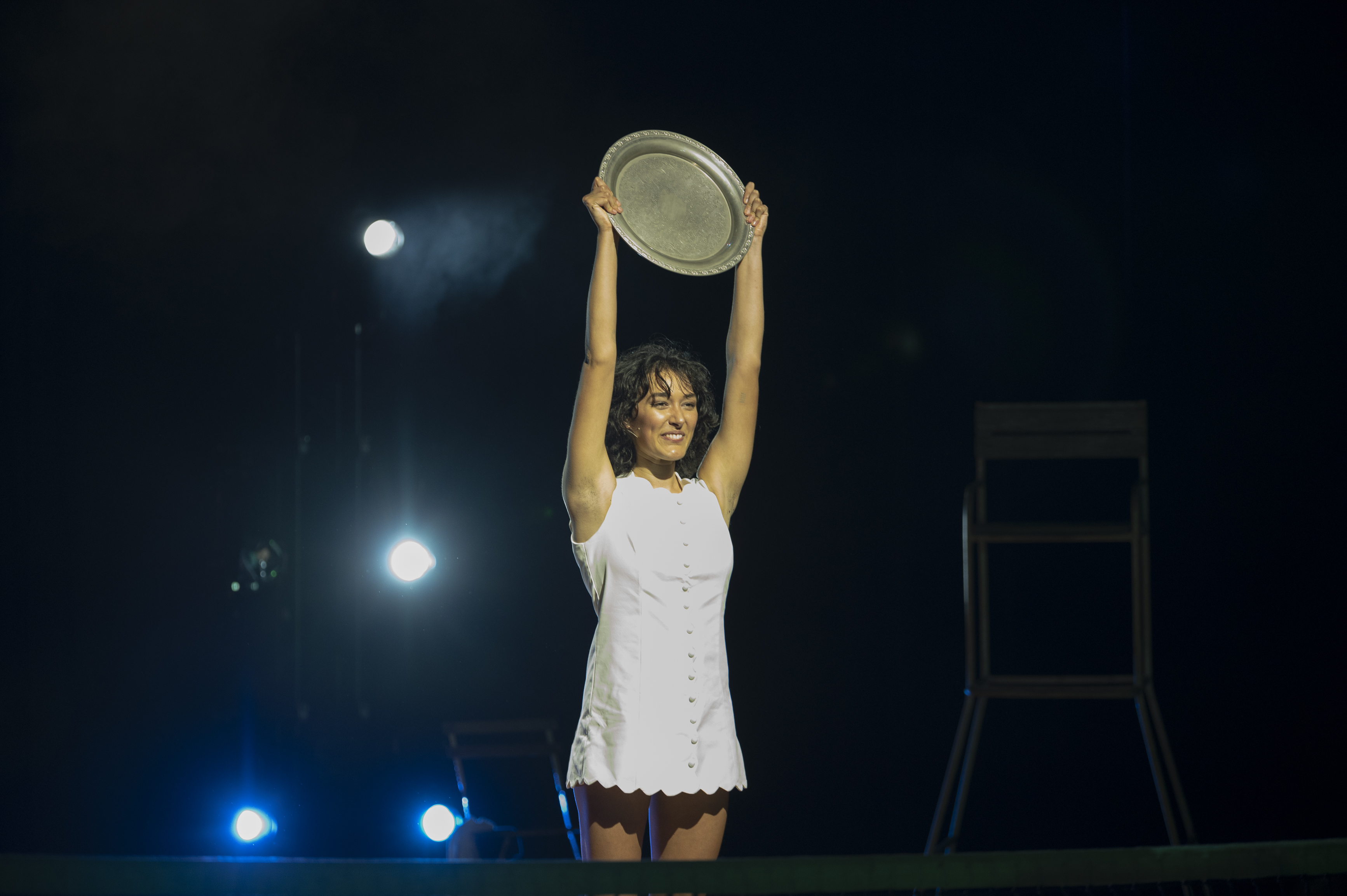
  5. Sunshine Super Girl - Performing Lines, The Q - Queanbeyan Performing Arts Centre: I remember watching the Wimbledon Women’s final in 1980 and knowing I was watching something special. Written and directed by Andrea James, Sunshine Super Girl follows the life, challenges and achievements of Evonne Goolagong Cawley, acted with a well-judged blend of charm and grit by Ella Ferris. All the other players in her story from her family to her coaches to coaches, competitors and journalists are given vibrant life and interpretation by the spectacular skills of the ensemble (Sermash Bin Saad, Jacqueline Compton, Lincoln Elliott, Katina Olsen). Katine Olsen is also credited as the movement director, and she has created an almost balletic interpretation of the drama of sport. Moments of humour and pathos are given equal weight as the highs and lows reflect the parrying back and forth of the ball over the net and into the angles of the court. The set, designed by Romaine Harper suits the purpose superbly as it represents the physical court, with movable fixtures, an umpire's chair, and metal benches representing everything from the family car to a hotel bed to a trophy cabinet. It would have been even more appealing if this were performed in the traverse setting as that would enhance the audience engagement and experience of the ebb and flow of the game(play). Sunshine Super Girl at The Q is a spectacular production of a play about a remarkable woman, and I’m all out of superlatives.
Ella Ferris as Evonne Goolagong Cawley in Sunshine Super Girl

Friday, 18 December 2020

Friday Five: Best Theatre of 2020


What with one thing and another (I think we all know what I mean), I've not had the chance to see much live theatre this year. So most of my top theatre of the year was seen in the first three months of 2020. And it was in Canberra/ Queanbeyan because we can't travel. I'm not including the National Theatre Live films of productions in this list, although some of those were excellent and certainly helped to get me through a period when I couldn't go to the theatre.
Tom Healey in Red Stitch Theatre's American Song
5 Best Theatre Production I Saw in 2020 (in alphabetical order):
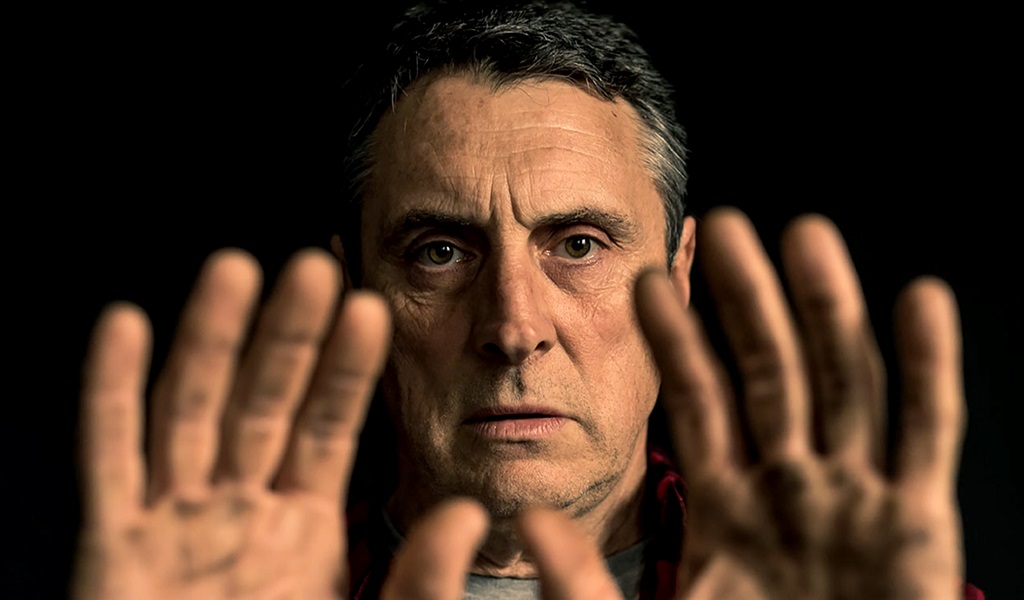
  1. American Song - Red Stitch Actors' Theatre and Critical Stages Touring, Queanbeyan Performing Arts Centre: One man theatre performed by Joe Petruzzi, directed by Tom Healey, and written by Joanna Murray-Smith is a heart-felt and sensitive account of how to cope with unfathomable loss due to gun violence. It's not as preachy as it could easily be, and the dry-stone wall metaphor may be a little stretched, but it is so well-meant that I'll let it stand.
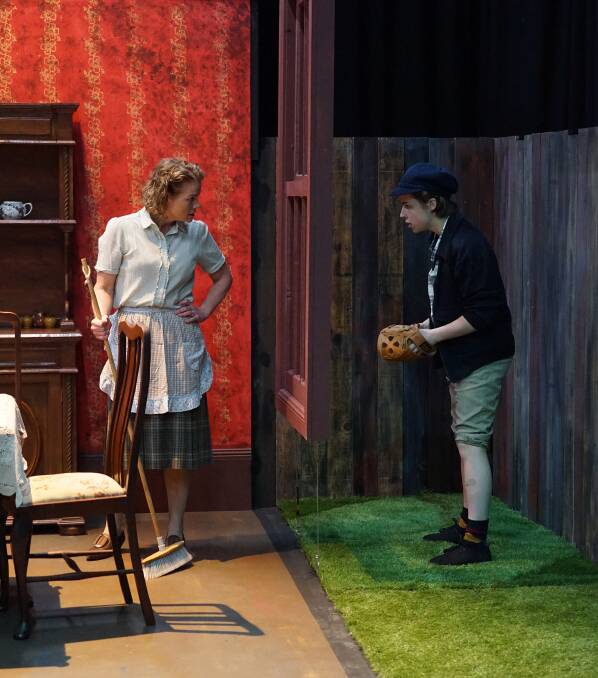
  2. Brighton Beach Memoirs - Canberra Repertory Society, Theatre 3: If I'm honest I'm a bit bored with stories about men being men or becoming men. I know this is not the fault of the writer (write what you know. right?) but rather the publishing houses and production companies who choose these stories over anything else. But the second rule of reviewing is 'review what is there; not what you want to be there' (the first is 'don't give away the plot'), and in that vein, this is a pretty fine production. Director Karen Vickery has obviously worked on diction and projection - despite the assumed American accents, I can still understand 90% of what the cast are saying - and has also imported a realism of action that works well with the home-spun tale of how a kid became a writer. The semi-autobiographical character of Eugene Jerome is played with plenty of energy and promise by Jamie Boyd, who looks to have a bright future if theatre survives in this town, and, as his mother, Victoria Dixon is dignified and powerful with an exceptional touch of insecurity. The family dynamics with their alliances, splits, and hierarchical divisions (three adults, three children and one teenager are crammed into a Brooklyn apartment) are highlighted brilliantly by Chris Baldock's set, which paints its own claustrophobic pictures.
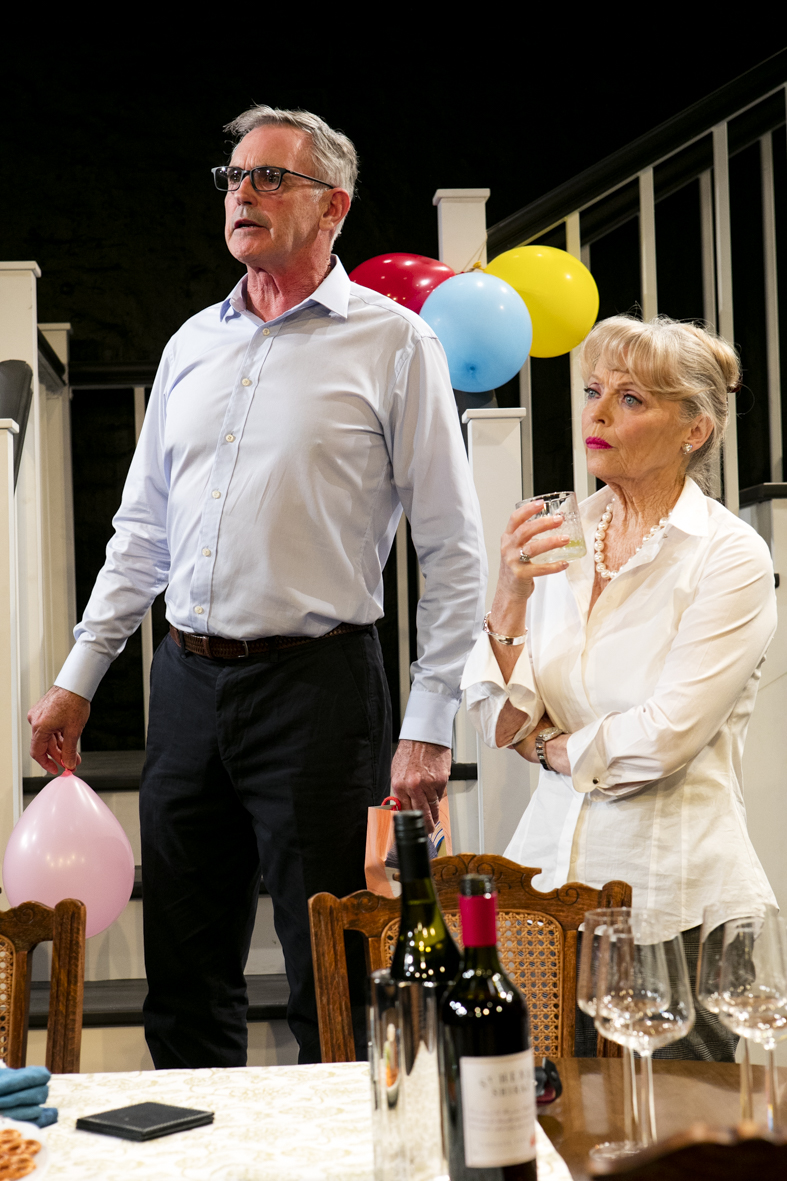
  3. Family Values - Griffin Theatre Company, The Playhouse: Full of meaty goodness - political satire in its natural habitat with plenty of energy and dysfunctional dynamics. As he prepares for his 70th birthday, retired judge, Roger (Andrew McFarlane) holds forth smugly on a number of issues, including refugees, detention centres and boat people, in such a way that will obviously be challenged when his family arrive and question all of his assumptions. Great work by creative cast and crew brings this aphoristic text (David Williamson) to life.
  4. Hell Ship - Chester Creative, Queanbeyan Performing Arts Centre: Another one-man show (more likely due to financial considerations rather than viral ones) as Michael Veitch interprets a personal story about the doctor on board the 'fever ship', Ticonderoga, which arrived in Melbourne in 1852, and on which 170 of the 800 passengers (mainly Scottish families who had embarked seeking a new life) died from typhus. The doctor, James William Henry Veitch was Veitch's great-great grandfather, and he portrays his initial warmth, humour and subsequent survivor's guilt with the help of a sheet and some creative lighting.
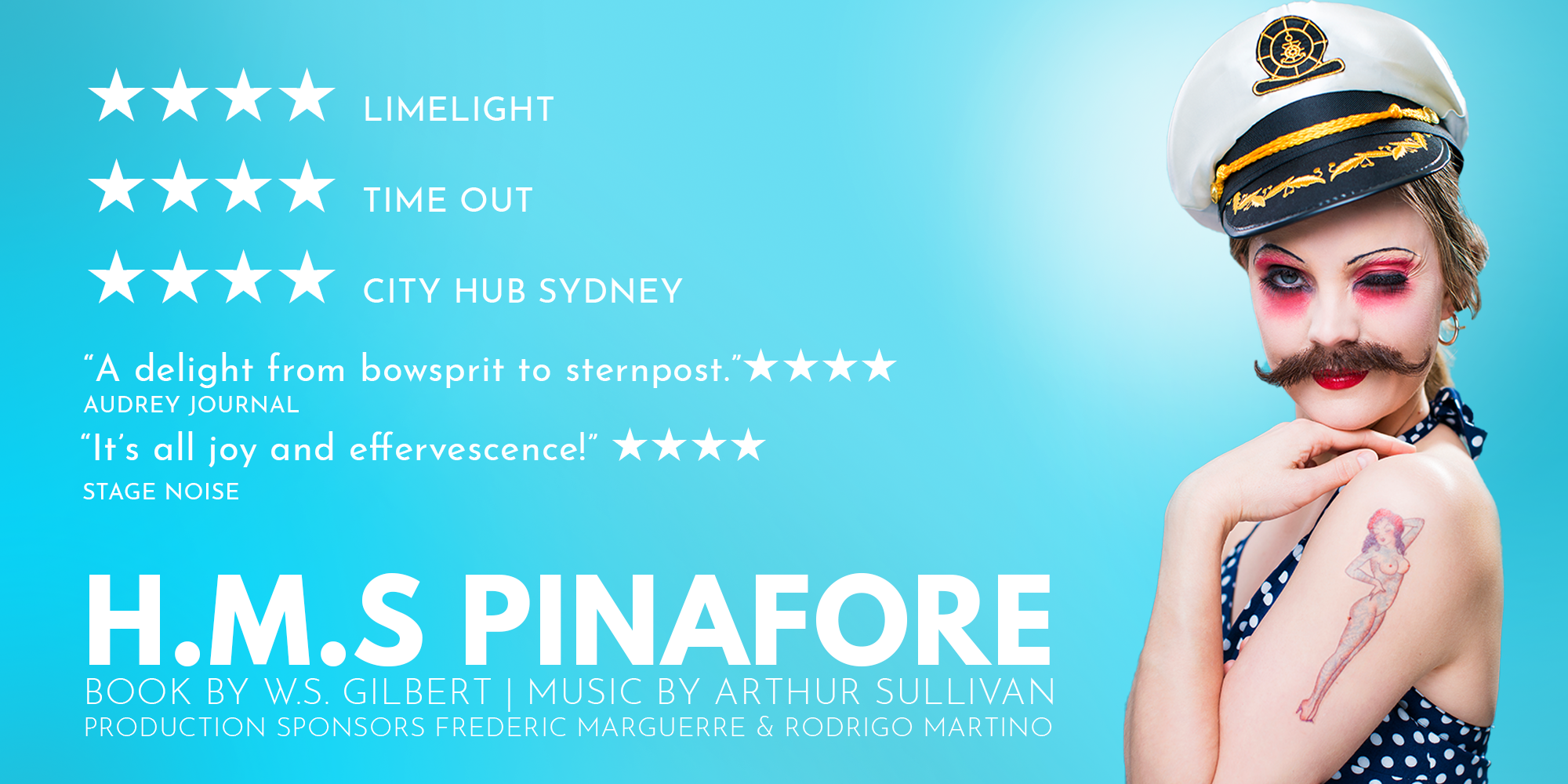
  5. HMS Pinafore - Hayes Theatre Co, Queanbeyan Performing Arts Centre: This show is amazing! Kate Gaul has directed a masterpiece with respect and irreverence in equal measure. I suspected I would like it, but I was not expecting to love this as much as I do: I simply can't stop smiling. The star-crossed lovers; the mismatched marriages; the mistaken identities; the entirely relevant gender-reversals; the songs I didn't even know I knew; the hyper-realism of set and costume... Oh joy, oh rapture unforeseen; it is absolutely beautiful and an utter delight. In case you can't tell, I f*•^ing loved it.
Andrew McFarlane as Roger and Belinda Giblin as Sue in Griffin Theatre's Family Values
I would also like to give a special mention to a couple of venues who have done everything they can to support live performance (theatre; music; comedy), namely The Basement in Belconnen, Smiths Alternative, and Canberra Repertory Society in the CBD. They have kept going as best they can providing entertainment to live audiences and encouraging the arts in the most fundamental and necessary manner. People want to perform and people want to see them do so - let's keep this alive.
Victoria Dixon as Kate and Jamie Boyd as Eugene in Canberra Rep's Brighton Beach Memoirs

Tuesday, 20 March 2018

Hearts and Minds: QED

Ylaria Rogers as Catherine in Proof
Proof by David Auburn
Freefall Productions

The Q, 14 -17 March 2018

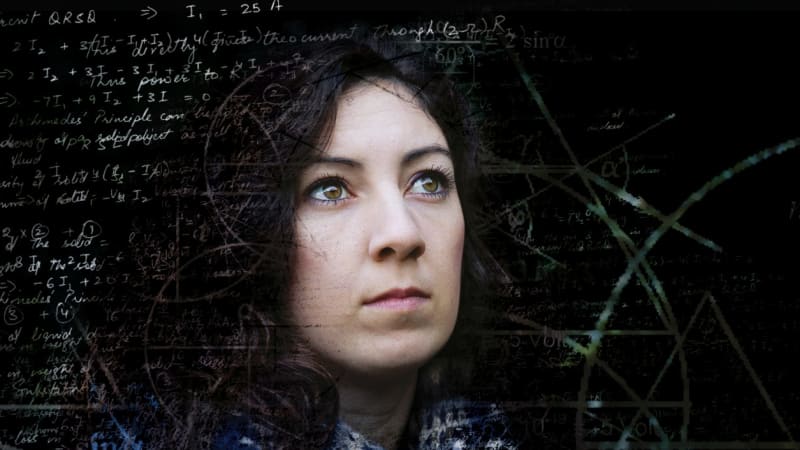
A mathematical proof is an argument in support of a statement based on exhaustive logic. It implies a clinical level of control, which David Auburn exploits in his 2000 Pulitzer Prize and Tony Award-winning play Proof. Catherine (Ylaria Rogers) is the daughter of mathematical genius and professor, Robert (Gerard Carroll), who has recently died after a long mental illness. During his increasing insanity she cared for him mentally and physically as she explains in intimately heartbreaking detail.

Her sister, Claire (Julia Christensen), who has escaped filial duty in New York as a currency trader, returns for the funeral and to sell the house. Her bags may be light but her baggage is not. Meanwhile, Robert’s former student, Hal (Derek Walker), stumbles across a proof in his mentor’s notebooks that he believes will change the future of mathematics.

On one level the play is simplicity itself, pared back to four characters and a single set. Despite the intellectual subject matter, there is no emphasis on chalk-covered blackboards or complicated-looking equations; we never see the experimental scribblings as they are contained in innocuous-seeming notebooks. The action all occurs outside the house, set on an oblique angle across the stage, featuring an array of well-tended pot plants in a sort of conservatory and windows covered with sheets through which lights shine erratically during scene changes.

Against this solid backdrop, however, we are in the world of non-linear narrative and imaginary numbers. Robert, whose death precedes the beginning of the play, makes several appearances and gives Catherine a bottle of birthday bubbles, which she drinks with him. Should we see this as an example of her mental fragility or the time-bending possibilities of quantum physics? She, herself believes she may be following her father’s footsteps both in the cerebral world of prime number theory and the irrational realm of madness.

Scratching the surface further uncovers layers of guilt, fear and anxiety, as is felt in all relationships, whether that be between father and daughter; siblings; tutor and pupil; or lovers. Carefully constructed façades crumble just as we are told the house in which Catherine and her father have lived until now is falling to pieces.

While a proof follows logical steps, it may also include natural language – in a mathematical context, this means a language developed and spoken by humans in an organic manner as opposed to a formal language, such as that used to program a computer. This is accepted to admit some level of ambiguity to the deductions, and this production excels in its ambiguity. Those who didn’t know the plot were shocked at the mid-point revelation, although admitting they should have seen it coming; a true testament to expert storytelling.

Tour director, Tyran Parke, and original director, Derek Walker, trust the actors to carry the narrative, and their belief is well placed as all four handle their character with subtlety and sensitivity. The frequent switches in pace and motivation are demonstrated through tone and expression as well as posture and movement. No one resorts to histrionics or excess; all are entirely believable. The role of Catherine is pivotal to the success or otherwise of this play and Ylaria Rogers imbues it with grace and nuance, highlighting every aspect from stubborn anger to enchanting naivety.

They also credit the audience with enough intelligence to reach their own conclusions about the ‘moral’ of the play rather than enforcing any particular agenda or riding any current hobbyhorse. The programme notes state that Freefall Productions wants to give audiences, ‘stories that they can identify with, theatre that touches our hearts and minds.’ With this superb and thoughtful gift of a production, they have done just that.

Alexander Brown as Hal and Ylaria Rogers as Catherine