Showing posts with label Harry Potter. Show all posts

Friday, 2 January 2015

Friday Five: New Year's Eve quotes

Rainbow lorikeets in the back garden
We had a fantastic New Year's Eve with friends on the coast (Mr and Mrs Lovely-Bonkers and their offspring and her parents). There were beach walks and sea-swimming and bubbles and fishy foods and raucous games and bird-watching. Among the hilarity, there were some quotable gems that could be repeated in public. These are they:

5 Quotes from New Year's Eve:
  1. If we run out of red wine later, you can always suck my shorts.
  2. No secret identities at the table.
  3. You've got sparkles down my top.
  4. It was all aflame and now it's fizzled out. We've all been there.
  5. I could see in the new year with a damp tea bag.
The Harry Potter wand sparkle-off

Tuesday, 26 July 2011

HP7Pt2


And so it is finished. And I am glad.

Don't get me wrong; I love Harry Potter and I really enjoyed the earlier books - getting to know the characters and the magical world of Hogwarts. This was adapted well in the first films as we were introduced to all the elements of great storytelling. The later books continued this thread, and then it all seems to have gone horribly wrong.

Harry Potter and the Deathly Hallows (Part One) was bearable, but I should have realised things were all going to be less like a dramatic film and more like a version of a video game when the latest instalment was advertised as HP7. Despite being intensely loyal to the franchise (I have bought all the books, been to the cinema to see all the films and own a couple of them on DVD), I have to concede that I am not the target audience.


I know this because reports of Harry Potter and the Deathly Hallows (Part Two) have been overwhelmingly positive, whereas I found it all rather dull. It's the battle sequence. I hated it in the Narnia stories/ Star Wars/ The Lord of the Rings. It's good versus evil and we don't teach children about nihilism, so there is no surprise in the outcome.

This I could cope with if it didn't just all look like some CGI X-Box game. What happened to the characters? Who cares? Chuck in some shooting sparks and explosions and that will compensate for the weakest narrative arc to grace a screen in a long time. Maggie Smith still gets to do a spot of acting as Professor McGonagall, and there's a decent cameo from Kelly Macdonald as Helena Ravenclaw who helps Harry find her mother's diadem, which seems all too easy.


In fact Harry (Daniel Radcliffe), Ron (Rupert Grint) and Hermione (Emma Watson) make simple work of finding the remaining horcruxes in which Voldemort has hidden parts of his soul. Collect each token; progress to the next level. Basically, everyone else just runs around shouting at each other, leaping from action sequence to action sequence with no thought for orchestrated tempo or development - if you pause too long, the audience might realise that it's got no depth or substance to it: this is genuine cinema for the ADD generation.


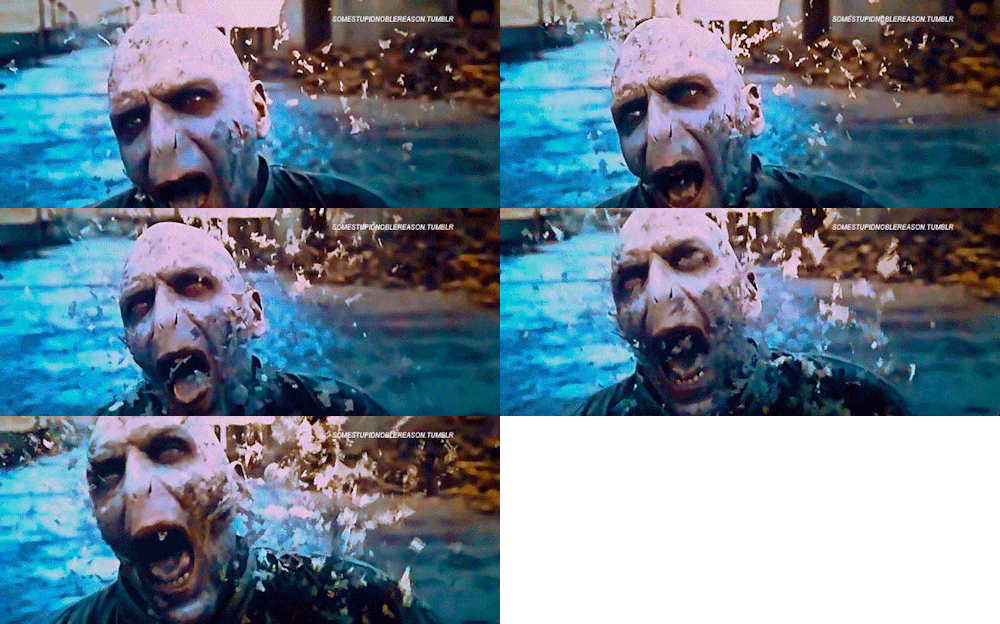
The superlative characterisation in this final film belongs to Matthew Lewis as Neville Longbottom. As he stands alone in a dodgy cardy from Bury market facing the axis of evil protected only by a wand and a magic shield he rants to the ranging forces, 'You and whose army?' It's the best line of the film - trust me. His delivery is perfect as he proves his mettel by weilding the sword of Gryffindor (do you see what I did there?) to defend Harry from Nagini, Voldemort's snake and the last remaining piece of his soul. At this, Voldemort dissolves into whirling puzzle pieces, like Chris Martin in that Viva La Vida video. And no, I'm not giving anything away because it was obvious from the beginning.


Speaking of spoilers - the ending (which you will already know if you've read the books, and if you haven't then you're not a true fan so I'm not going to apologise) is appalling. Not that they all turn up as adults with their children to send them away to a boarding school where they were all three nearly killed, but by their horrifically conservative dress sense. I would have liked to see the offspring of Neville and Luna - I'll bet they at least got to wear something slightly less dull.

My problem is not that the film missed out loads from the book (most films do that - they have to cram 607 pages into a couple of hours, although in this case, they did get two films to do it in) but that it missed the essence of the film. Sure, I will miss the terrific trio, but they were actually already missing from this film.

Friday, 10 December 2010

Harry's Quest

I miss Hogwarts. Harry Potter and the Deathly Hallows (Part One) has moved on with director, David Yates', latest vision. The three friends (Harry, Ron and Hermione) now spend most of their time running around the hills, forests and lakes of Britain (shot with breathtaking beauty by cinematographer Eduardo Serra) with a purpose (to destroy the Horcruxes – containers of the disparate pieces of Voldemort’s soul) but not much of a clue.

The school for wizards added a structure and timetable which is largely missing from this rambling marathon. There are no cosy divination lessons or starring roles from the new professor of dark arts. Instead we are given rampant hormones and rampaging death. The opening sequences employ both, with a chilling sequence at the Death Eaters’ camp followed by a fatal broomstick chase and some extreme snogging.

We do get to visit the Ministry of Magic, taken over by the Death Eaters in their black leather coats and Hitler moustaches (okay, so the facial hair reference is false but the Third Reich implications are solid) and the streets of London. The wand shoot/spell-out in a West End café is particularly dramatic as the supernatural and super-normal worlds collide over cappuccinos (surely this should have been mugs of tea?).

For the most part, however, we are in a tent (albeit with tardis-like dimensions) with the trio and there’s not a lot to do: Hermione (Emma Watson) reads; Harry (Daniel Radcliffe) broods and Ron (Rupert Grint) escapes. They may be glamping, but canvas claustrophobia soon sets in, both for them and the viewers as they indulge in desultory dialogue and hunt the Horcruxes.

And this is where the problems emerge. From an exciting magical romp, the story turns into a pedestrian quest with serious JRR Tolkein/ CS Lewis/ Thomas Malory overtones – right down to the sword in the lake. Not even the majesty of Malham Cove can lift the tale from the slough of despond.

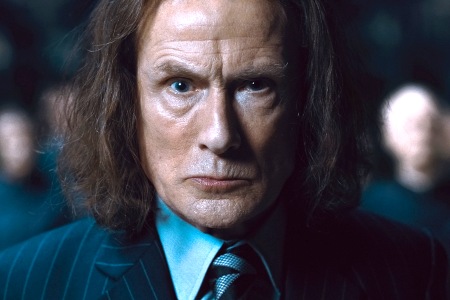
The supporting characters are fabulous but underwhelming with the possible exceptions of the new Minister of Magic, Rufus Scrimgeour, played by Bill Nighy (the only actor on the planet who could take on Alan Rickman in a lip curling competition with any credibility) and Helen Bonham Carter who gets more disturbingly insane with each installment. As the first instalment of the seventh part of the story, this was inevitably going to suffer from over-exposition.

There are hints and flashbacks aplenty (with extra cameos for departed characters) but the story itself is stilted and reined in; waiting for the final episode to unleash the great battle between the force and the dark side. You’ll probably need to watch it again just before you watch the finale, but that’s probably something dedicated Gryffindorains do anyway.

Tuesday, 12 October 2010

All the King's Men

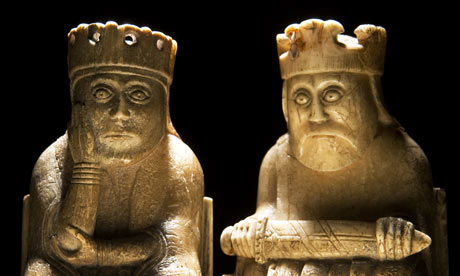
Continuing my punishing schedule of cultural experiences in Edinburgh, I head to the National Museum of Scotland to see the Lewis Chessmen. These charismatic little pieces are advertised all over the city and have piqued my interest. Created in the late twelfth or early thirteenth century from elaborately worked walrus ivory and whales’ teeth, they were discovered in 1831 on the Isle of Lewis and came to public notice through an article in The Scotsman.

I like their expressive faces – the bulging eyes and Dwayne Dibley teeth. They are very intricate, even down to the strands of hair and ornamental carvings in the chairs on which they sat. They seem to follow slightly different patterns which could possibly be due to different craftsmen making them from the same workshop, and some are clearly replacement pieces made later on – there are about 70 pieces all together.

The history of the pieces is shrouded in tales of murder, deception, folklore and legend. A local man, Malcolm MacLeod, said his cattle were grazing on Uig Bay sand dunes (which suggests they must be grassy sand dunes) when he discovered the chessmen. The minister of Lewis preached against idols (the island was strictly Protestant) so Malcolm was afraid of what he had found and took them to the minister in great trepidation. The story before that (or how they came to be in the sand dunes) is that a young boy washed up on shore with them in a bag (the exhibition includes a carved buckle which may have come from this bag) and met a man who promised he would lead him to safety, but instead hit him on the head with a rock and stole them.

Archeological problems are posed by these pieces because nothing else like them has been discovered. Walrus ivory is a popular material for work in Trondheim and Dublin, which makes sense because they were part of the Viking trading route: Greenland; Iceland; Trondheim; Shetland/ Orkney/ Lewis Islands; Isle of Man; Dublin. In the 790s the Vikings raided the Western Isles with a series of brutal attacks on coastal communities and monasteries. Tradition says there was a monastery at Mealasta but there is no evidence of this. Lewis was a Scandinavian island and didn’t revert to Scottish rule until 1266.

The characters are in the likeness of warders, kings, queens, pawns, knights and bishops. They were probably used at chess, tables (a predecessor of backgammon), and a game called hnefatafl. There is nothing like this from similar times in the otherwise progressive Islamic artistic tradition where craftsmen were reluctant to portray humans for religious reasons.

The kings each hold a sword in two hands as though in the act of drawing it – classic mythology says kings did this while listening to the words of Odin. The queens, resting their cheek on their hand, all look vaguely fed up. The bishops were a new feature on chessboards when these were made – this may reflect the importance and patronage of archbishops based in Trondheim (Trondheim was the seat of archbishops).

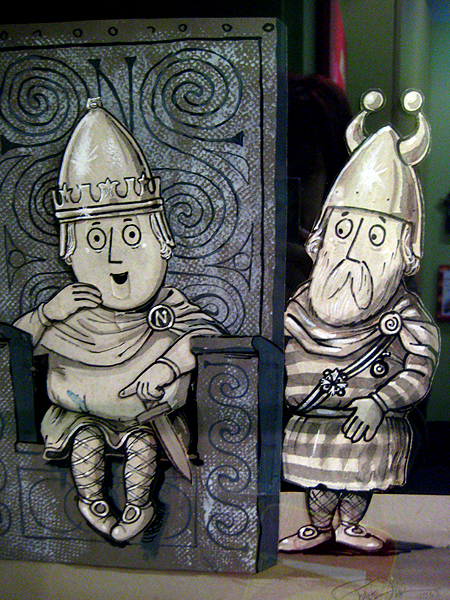
In true Wikipedia fashion, the exhibition provides information as to how and where these figures have been used in popular culture: they are the inspiration for J.K. Rowling’s wizard chess; the template for Rosemary Sutcliffe’s Chess-Dream in a Garden; and the motivation for Oliver Postgate’s Noggin the Nog. He writes that he noticed, “far from being warlike, it was clear that these were essentially kindly, non-belligerent characters, who were thoroughly dismayed by the prospect of contest.”