Last month, The Endurance, the lost vessel of Antarctic explorer Sir Ernest Shackleton was found at the bottom of the Weddell Sea. It was discovered by an expedition mounted by the Falklands Maritime Heritage Trust, led by veteran polar geographer, Dr. John Shears, using a South African icebreaker, Aguhlas II, equipped with remotely-operated submersibles.
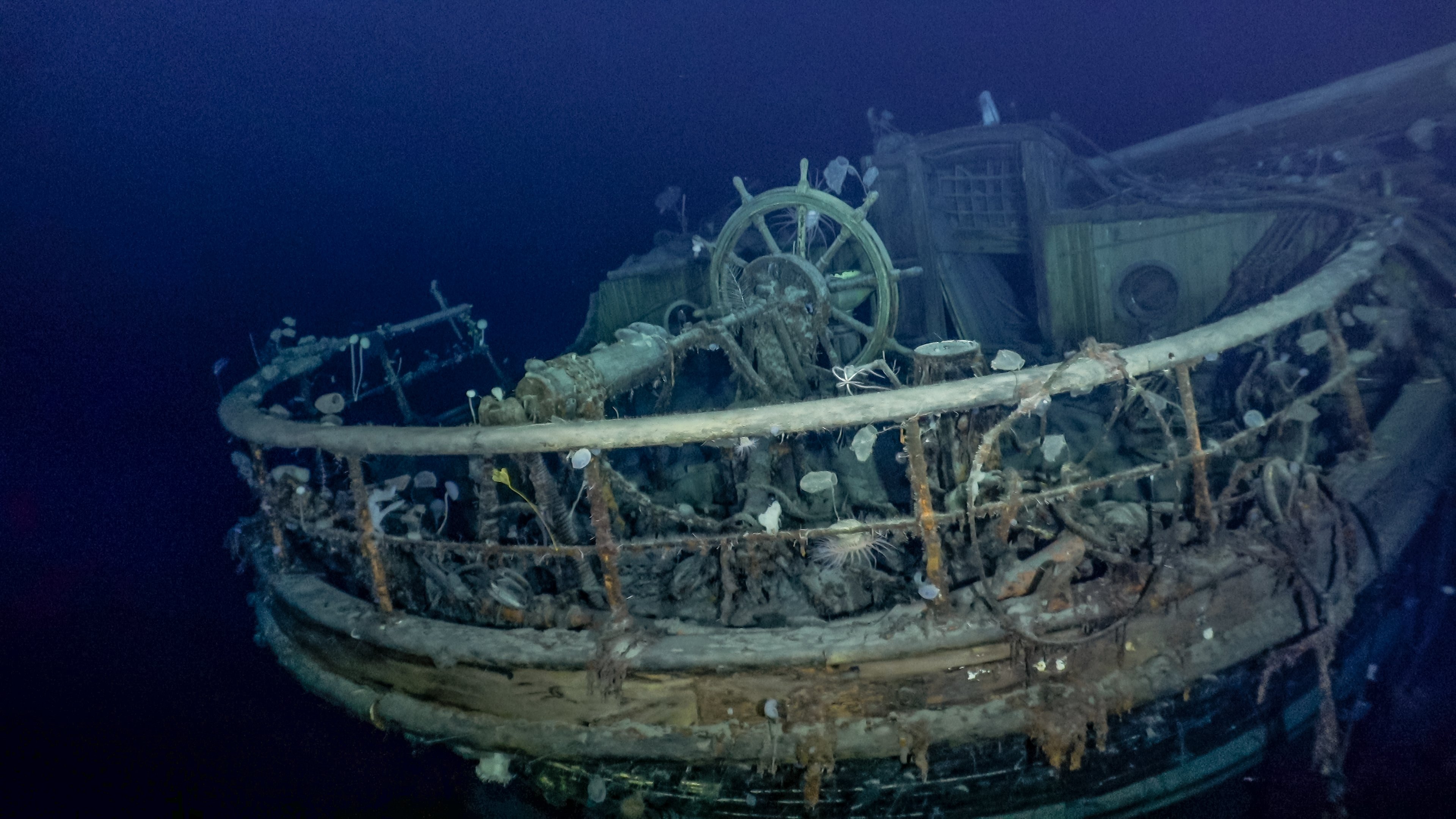
Looking like a ghost-ship, the vessel is remarkably intact. It was crushed by sea-ice and sank in 1915 and was found resting in 3,008m (approx. 10,000ft) of cold, deep water. Due to the temperature of the water, the timbers are in remarkable condition, with the name Endurance still clearly visible on the stern over a century afterwards. The water is too cold for wood-eating organisms, although other deep-sea marine lifeforms have colonised the ship, including stalked sea squirts, anemones, sponges of various forms, brittlestars and crinoids (related to urchins and sea stars).

This story is an incredible achievement on many levels. The discovery of the wreck itself is remarkable, or, as Dr. Shears described it, 'jaw-dropping'. He explained, "We have successfully completed the world's most difficult shipwreck search, battling constantly shifting sea-ice, blizzards, and temperatures dropping down to -18C. We have achieved what many people said was impossible."
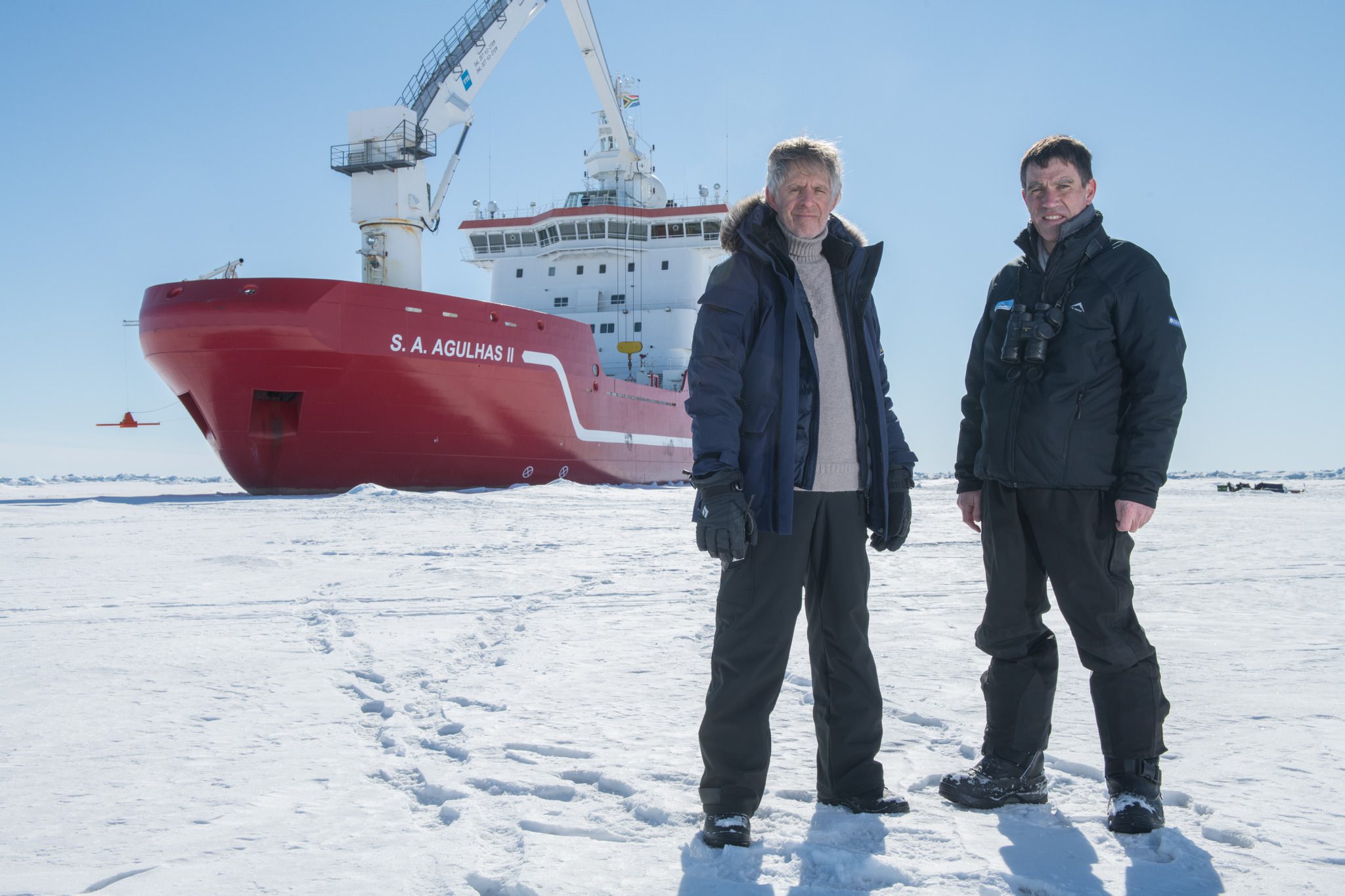 |
| Mensun Bound and John Shears stand by the icebreaker SA Aguhlas II |
It was an enormous challenge to find the ship at all. The Weddell Sea is pretty much permanently covered in thick sea-ice, the same ice that ruptured the hull of Endurance in the first place. Getting near to the presumed sinking location is hard enough, let alone being able to conduct a search The last month, however, showed the lowest-recorded extent of sea-ice since these records began (1970s) so in that respect, conditions were favourable.
For over to weeks the subs had combed a predefined search area, investigating various interesting targets, before finally uncovering the wreck site and making a detailed photographic and video record of the timbers and surrounding debris field. Because the wreck is a designated monument under the International Antarctic Treaty, it must not be disturbed in any way and no physical artefacts can be brought to the surface.

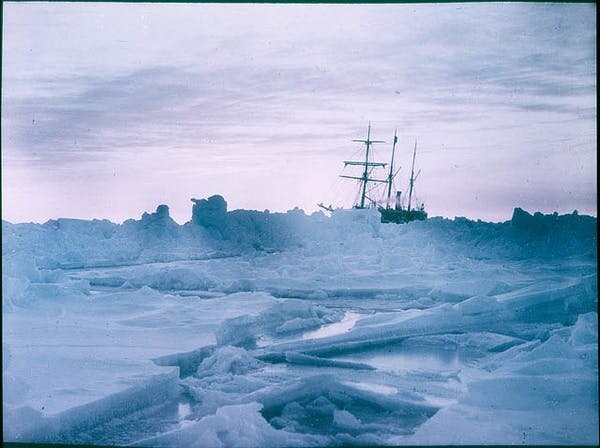
The ship looks much the same as when photographed for the last time by Shackleton's filmmaker, Frank Hurley in 1915. The masts are down, the rigging is in a tangle, but the hull is broadly intact. Some damage is evident at the bow, presumably where the descending ship hit the seabed. The anchors are present and the subs even spied some boots and crockery.
The other incredible thing about this story is Shackleton's amazing 'escape' which he and his men undertook on foot and in small boats. After Endurance was crushed, Shackleton organised the crew to take a couple of the lifeboats across ferocious seas to get help after months spent in makeshift camps as the ice drifted northwards. The party took the lifeboats to reach the inhospitable, uninhabited Elephant Island. Shackleton and five others then made an 800-mile (1,300km) open-boat journey in the James Caird to reach South Georgia. From there, Shackleton was eventually able to mount a rescue of the men waiting on Elephant Island and bring them home without loss of life.
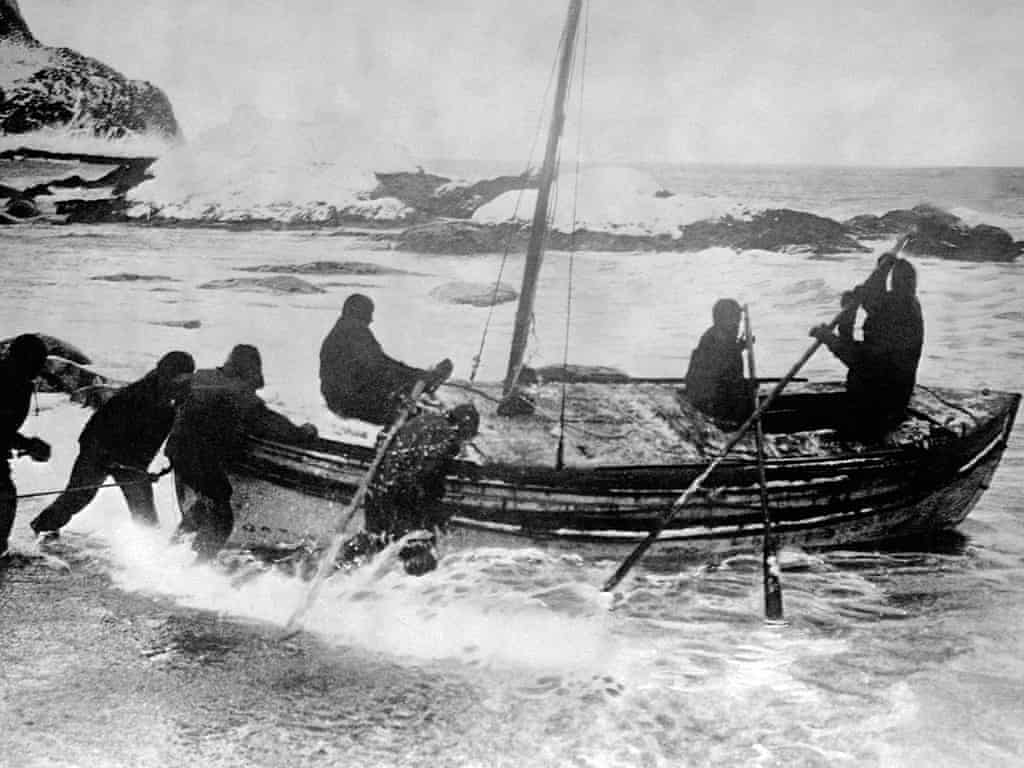 |
| Sir Ernest Shackleton and his crew of five men launching the James Caird |
The dictionary definitions of endurance seem to sum up all of the above:
- The ability to endure an unpleasant or difficult process or situation without giving way
- The capacity of something to last or to withstand wear and tear
- Denoting or relating to a race or other sporting event that takes place over a long distance or otherwise demands great physical stamina
- The ability to continue doing something for a long time
- Stamina; persistence; especially in the face of hardship, distress or pain