Showing posts with label National Library of Australia. Show all posts

Wednesday, 12 September 2018

The Human Face of History


Crime, Punishment and Redemption: A Convict’s Story by June Slee 
(NLA Publishing), Pp. 194

The diary of John Ward is one of the few existing records of life from the perspective of a convict. He was sentenced to ten years transportation to Australia in 1838, before which he spent 19 months on the prison hulk York, moored at Gosport. He was then transported on board The Mangles (1839-1840) but by the time he arrived in NSW, they were no longer receiving convicts, so he was sent instead to Norfolk Island. During 1840-1844 he came under the more humane system of Captain Alexander Maconochie and his marks system, before being sent to Van Diemen’s Land to serve out the final four years of his sentence.

June Slee is delighted with this diary of 155 pages, which provides valuable information about the period. In this book she has copied excerpts from the dairy, adding analysis and background. It is lavishly illustrated with photos, paintings and images of artefacts, collected by the National Library of Australia. Interpretative sections on a variety of topics add colour and include smuggling; eating out; fox hunting; county courts and the justice system; hulks; homosexuality (punishable by death – between 1801 and 1835 more than 50 men were hanged in England for sodomy); convict ships (often shoddy and barely sea-worthy); surgeons-superintendent (the highest ranking man on the ship; he had power over all the convicts; a decent one made a huge difference); convict class and society; and evangelicalism (men could be saved through religious conversion).

In some ways it is reminiscent of Moll Flanders, dwelling on the sordid and squalid aspects which sell, and then the religious conversion and desire to do good seem narratively disappointing. His religious conversion is probably a result of the evangelical tracts which were in vogue at the time. He sees life through the eyes of the evangelists and shuns relatively innocent pleasures such as the line-crossing ceremony held as the Mangles crossed the equator, describing it as “very improper”. The diary in effect becomes an extended confession in which he interprets his previous lifestyle with new-found disapproval.

As a surviving record of transportation, John Ward’s diary adds a human element to the statistics. “Transportation to Australia began with the arrival of the First Fleet at Botany Bay in 1788 and ended when the Hougoumont landed 279 convicts in Western Australia in 1868. Over that 80-year period, an estimated total of 163,000 convicts was sent to Australian penal colonies from Britain.”

Sections on Captain Alexander Maconochie are fascinating from a philosophical perspective as to the future of the nation. He believed that punishment alone would not result in peopling the colony with desirable citizens, and that it was important to recognise that those who were convicts would become settlers.

In writing his diary, John Ward hoped that it “may prove of service to those that may come after me”. Clearly he was intending to convert potential sinners to his brand-new evangelism, but it has proved invaluable to those studying this fascinating period “as a rare, if not unique, eyewitness account of the final decades of British transportation to the Australian penal colonies.”

Monday, 26 February 2018

Deeds Not Words

Deeds Not Words: Women's Suffrage in Britain
Treasures Gallery, National Library of Australia
6 February - 19 August 2018

This month saw the hundredth anniversary of the passing of the Representation of the People Act, granting women in the UK the right to vote. Not all women, of course; only those aged over thirty who were householders, the wives of householders, occupiers of property with an annual rent of £5, and graduates of British universities.


Leading Australian feminist Bessie Rischbieth (1874-1967) was in London from May to June 1913, a time when the campaign for women's suffrage was at its peak.

Although not an activist in the British campaign, she attended meetings and heard the rousing speeches of suffrage leaders like Emmeline Pankhurst and Charlotte Perkins Gilman. She followed the press reports of the spectacular actions of the suffragettes and what she witnessed helped inspire her future commitment to women's rights. 


Fascinated by the charisma of the suffragettes and their militant actions, Bessie Rischbieth gathered memorabilia of the movement. building a collection of photographs, pamphlets, newspapers cuttings, suffrage periodicals, postcards and correspondence. She conceived of her transnational collection as a 'bridge over the British and Australian demand for the vote'. The British campaign formed the basis for her own campaigns for women's equality and rights in Australia. Building on this foundation, she became a prominent figure in Australian and international feminism.This exhibition is drawn from the collection that she bequeathed to the National Library of Australia.


In 1872 the fight for women's suffrage became a national movement with the formation of the National Society for Women's Suffrage and later the more influential National Union of Women'a Suffrage Societies (NUWSS). In 1906 the militant campaign began with the formation of the Women's Social and Political Union (WSPU). 

In October 1908 Muriel Matters and Helen Fox padlocked themselves to 'that vile grille behind which women have had to sit in the House of Commons for so many years'. The police had to remove the grille in order to release them. Matters and Fox shouted 'Votes for Women' from the gallery. They are considered the first words to have been spoken by women in Parliament.


Women who spoke publicly for the cause frequently faced hostile mobs. They were jeered and abused; pelted with stones, rotten eggs and (on one occasion) dead rats; attacked; molested; stripped and trampled. They received very little police protection and faced crowds of angry men demanding they go home and cook their husband's dinner. Their bravery and determination in the face of such hostility totally humbles me.


The WSPU was tightly controlled by the three Pankhurts; Emmeline and her daughters Christabel and Sylvia. It specialized in highly visible publicity campaigns such as large parades and acts of violence -stone throwing, window smashing and arson of unoccupied buildings. While there was much support for women's suffrage in Parliament, the Liberal Government refused to allow a vote on the issue and arrested women on charges of vandalism, interrupting meetings, and obstructing traffic. Many of these women couldn't or wouldn't pay the fines and went to prison instead, where some of them went on hunger strike to draw attention to the cause.


One of the viler consequences of the fight for women's suffrage was the Prisoners (Temporary Discharge for Ill Health) Act - commonly known as The Cat and Mouse Act - passed by Parliament under Asquith's Liberal Government in 1913. Women who went on hunger strike were force fed by shockingly brutal methods, and became seriously ill. Constance Lytton describes the process thus:
“Two of the women (wardresses) took hold of my arms, one held my head and one my feet. One wardress helped to pour the food. The doctor leant on my knees as he stooped over my chest to get at my mouth. I shut my mouth and clenched my teeth. The sense of being overpowered by more force that I could possibly resist was complete, but I resisted nothing except with my mouth. The doctor offered me the choice of a wooden or steel gag; he explained that the steel gag would hurt and the wooden one would not, and he urged me not to force him to use the steel one. But I did not speak nor open my mouth, so after playing about for a moment or two with the wooden one he finally had recourse to the steel. The pain of it was intense; he got the gag between my teeth, when he proceeded to turn it much more than necessary until my jaws were fastened wide apart, far more than they could go naturally. Then he put down my throat a tube, which seemed to me much too wide and was something like four feet long. The irritation of the tube was excessive. I choked the moment it touched my throat until it had gone down. Then the food was poured in quickly; it made me sick a few seconds after it was down and the action of the sickness made my body and legs double up, but the wardresses instantly pressed back my head and the doctor leant on my knees. The horror of it was more than I can describe. I had been sick over my hair, all over the wall near my bed, and my clothes seemed saturated with vomit. The wardresses told me that they could not get a change (of clothes) as it was too late, the office was shut.”
In an attempt to prevent the suffragettes from becoming martyrs in prison, the Cat and Mouse Act provided for the release of those whose hunger strikes and force feeding had brought them sickness to the point of near death, as well as their re-imprisonment once they had recovered. As the women were able to testify as to their treatment, this proved to be great publicity for their cause. On 14 July 1913 Emmeline Pankhurst, on temporary release from prison, famously declared,
"I would rather be a rebel than a slave. I would rather die than submit... I mean to be a voter in the land that gave me my birth or that they shall kill me, and my challenge to the Government is: "Kill me or give me my freedom; I shall force you to make that choice." 
WSPU Poster 1914

Increasing numbers of doctors, as well as members of the general public, were speaking out against forcible feeding, saying it contravened the rules of medical practice and that those doctors performing the operation were punishing, rather than treating, their patients. Even The Times, well known for its anti-suffragism, suggested review of policy.

In recognition of the enormous toll this practice took on women both physically and mentally, the WPSU presented hunger strikers with commemorative medals “For Valour” in pursuing “to the last extremity of hunger and hardship a great principle of political justice”. The purple white and green of the ribbon were the official colours of the WPSU (representing dignity, purity and hope) and each bar was inscribed with the date on which the recipient was force fed. 

The outbreak of war in 1914 enabled both the WSPU and the authorities to retreat. Emmeline Pankhurst called a temporary suspension of militancy while the government granted an amnesty to all suffrage prisoners. Thus ended the most shameful episode in the history of the British women’s suffrage campaign. 

This particular medal was awarded to Letitia Withall by the WPSU in August 1913 after her release from prison. She sent it to Bessie Rischbieth hoping that it would be exhibited in the museum that Rischbieth intended to create in Canberra. Fewer than 100 of these medals are thought to have been awarded, and only three are known to be held in Australian institutions (Museum of Australian Democracy at Old Parliament House, and Museums Victoria).
"The hunger-striking suffragette laid bare the sexual divisions in Edwardian society, exposing a deep flaw in an all-male Liberal government that claimed to be ‘democratically’ elected yet tortured those women who challenged its legitimacy. Although partial enfranchisement for certain categories of women over the age of 30 was not granted until 1918, the forcibly fed suffragette had won the moral high ground. Through her courage and endurance, she had showed that physical force could never overcome the justice of her cause. In the battle for women’s equality, she had politicised her body in a way that those who came after her would never forget. Men might insist upon controlling women’s bodies, but physical force could never triumph because their cause was just." - June Purvis, Professor of Women's and Gender History at Portsmouth 

Monday, 19 December 2016

It's what you make it


My Life in an Object
Canberra Writers Festival
National Museum of Australia, Visions Theatre
Saturday 27 August 2016

Objects acquire symbolism through our transference. Many people have items of ‘sentimental value’ that would mean little to anyone else. I have a quilt my sister made me when she left home. It has accompanied me around the world and graced my bed in every house I’ve ever lived in. I know that once the people and animals were safe, that would be the thing I save from a house fire. Sentimental and worthless to strangers, it connects me to my love for my family although they are many miles away.

Ahead of the National Museum’s A History of the World in 100 Objects exhibition, three authors were asked to bring along an object and explain how it had changed their life. That’s a tough request, and they all admitted that they chose something lightweight and easily portable to represent a greater truth. George Megalogenis, Karen Middleton and Nick Earls all entered into the spirit of the panel show-and-tell, My Life in an Object, with enthusiasm.


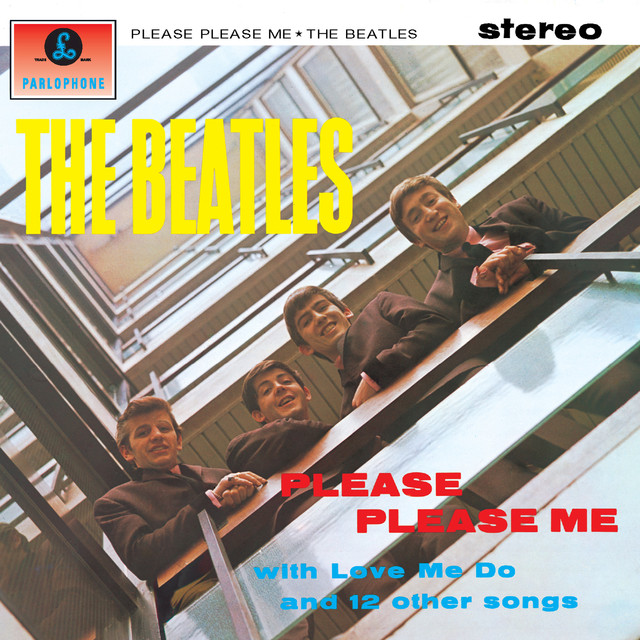
Author, journalist and political economist, George Megalogenis, brought along a Beatles record, Please, Please Me. He explained how the first time he heard it he had to have it, even though he didn’t have a record player. He was crippled with consumer anxiety that by the time he had the wherewithal to play it; the record wouldn’t be available any more. Clearly he couldn’t predict the enduring popularity of the Fab Four and the ubiquity of their songs.

He mused that it is no longer his favourite Beatles track, and that objects don’t necessarily change but people do and so the relationship alters. Our need to possess things we like is also interesting, but I wonder if it is fading in the world of digital downloads, minimalist furnishing, and premium prices on real estate space.


Karen Middleton's effect was a stars-and-stripes bandana purchased shortly after the terrorist attacks on September 11th 2001. At the time she had been in Washington DC with John Howard as a political correspondent for the West Australian newspaper, reporting on the then Prime Minister's visit to the United States. She recalled that John Howard was bundled onto Airforce 2 and flown to Hawaii, then Qantas to Canberra, but Air Traffic Control was asleep so he was diverted to Sydney where he was met by recently-sacked Ansett workers.

She, meanwhile, flew to New York to report on the scene there. The air was full of noxious dust comprised of potentially lethal asbestos from toppled buildings and human remains. Some African-American kids saw a gap in the market and sold these bandanas not as souvenirs but for practical reasons so people could mask their faces and breathe a little more easily. “They were enterprising kids – I paid way too much for it.” Even in the face of grief and horror, capitalist opportunism will triumph.

At the time she didn’t know she would become a war correspondent, but she knew this was a life-changing moment and that it would have a dramatic effect on her personal and professional development. Indeed she went to Afghanistan three times as a direct consequence of these events and published the book, An Unwinnable War: Australia in Afghanistan. In it she questioned Australia’s carte blanche commitment to help the US, for which she received hate mail and was labelled a traitor. She took the bandana with her, as a reminder of why she was doing what she was – the object became imbued with her projected focus, and although she said it is not a talisman, she has clearly made it a token.


A butter pat makes a fairly unassuming object for author, Nick Earls, to expand upon, but he soon brings the domestic wooden item to life. It was used on the farm in Ireland where he lived until he was nine. He explained that such simple appliances provide links to the land, and that the stories of nearby churches or landmarks become your stories too – we willingly assume the ties and inherently form affiliations.

Apparently we crave these connections and researching family history is the third most popular activity on the internet “after shopping and pornography”. Earls used this platform to appeal for more funding for Trove, the popular and free digital resources portal created by the National Library of Australia. “Please remove the shackles and let it run.” The on-line resource contains books, images, historic newspapers, maps, music and archives, but the Library stopped funding content in July due to government cuts. (At the time of writing, this decision has been reversed.)

Nick Earls is writing a series of novellas. He has researched the form and understands the way it works to intrigue and delight the reader in a single sitting. He complained that people now consume so much information and content and so quickly they don’t understand anticipation or deferment. He believes in enforcing breaks “to let the stories sit in your head.”

Just as the Quarterly Essay (for which George Megalogenis writes, bringing us full circle) fills the gap in the market that has been dropped from the weekend newspaper, novellas have their own place on the bookshelf. Earls claimed that while articles were getting shorter, books were getting fatter, and that we are losing the art of digesting information. He stated that novellas can give depth without padding. Similarly objects can give meanings without words.  It’s a concept worth exploring, and this panel did so convincingly.

Friday, 7 March 2014

Friday Five: Enlightenment.

I have mentioned before (about this time last year, funnily enough) how much I like the Enlighten Festival that Canberra puts on. Having wiffled on about it previously, I think I shall just highlight my top five architectural projections for this year.

5 Architectural Projections:
  1. The National Library is currently exhibiting Mapping Our World: Terra Incognita to Australia - the terrific collection of cartographic treasures is highlighted in the images on the walls of the building.


  2. The National Portrait Gallery exterior features animated designs which chase each other across the face of the building. One short story relates the theft and recovery of a precious artefact.


  3. The National Gallery of Australia follows up last year's outstanding Toulouse-Lautrec exhibition with works from Gold and the Incas: Lost Worlds of Peru. All of these images are fabulous, but obviously I like the one with the cat best.


  4. Old Parliament House provides a canvas for a number of cartoonish and surreal presentations. They are bright and colourful and some feature kangaroos.


  5. Parliament House displays projections of past politicians, national artworks and events of extreme importance (the signing of the Magna Carta) but my favourite is the wordscape of the constituencies that comprise the current government.