Showing posts with label The Handmaid's Tale. Show all posts

Friday, 17 February 2023

Friday Five: Some TV Shows


I haven't done this for a while, so here are just a few shows I've been watching recently (well, in the last couple of years anyway).

5 TV Shows Watched Recently-ish:

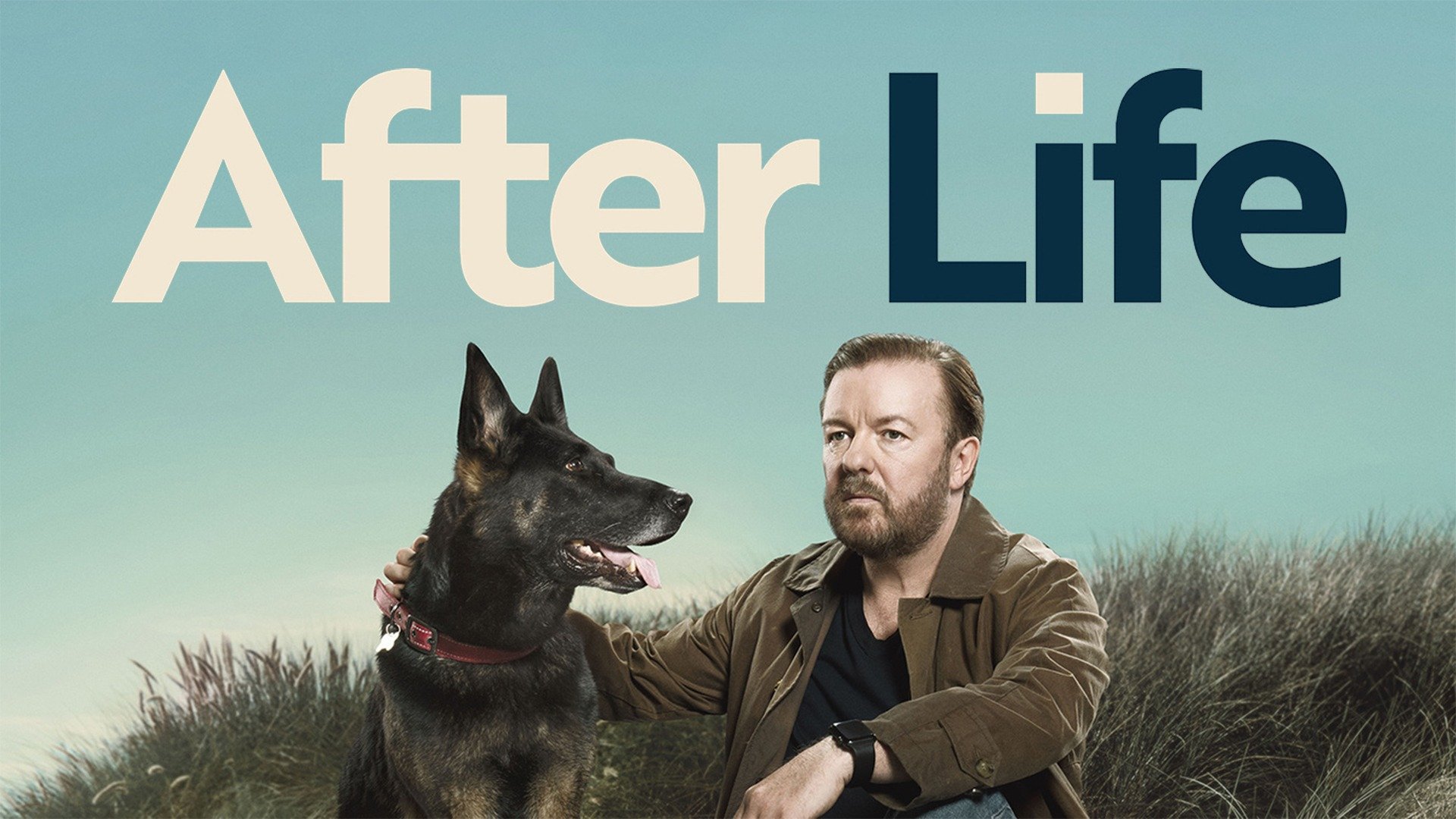
Anti and Ricky Gervais in After Life
  1. After Life, Series 1, 2 & 3 (Netflix) - Tony (Ricky Gervais) is struggling to see the point of life after his wife Lisa (Kerry Godliman) has died from breast cancer. He contemplates suicide but is gradually drawn back into the community by his colleagues (Tony Way; Mandeep Dhillon; Tom Basden; Diane Morgan), his dad (David Bradley), his dad's nurse (Ashley Jensen), a prostitute with a solid social outlook (Roisin Conalty), a fellow griever on a park bench (Penelope Wilton), his dodgy postman (Joe Wilkinson), and a beautiful dog (Anti). It's black humour written by a master of the dark art. 
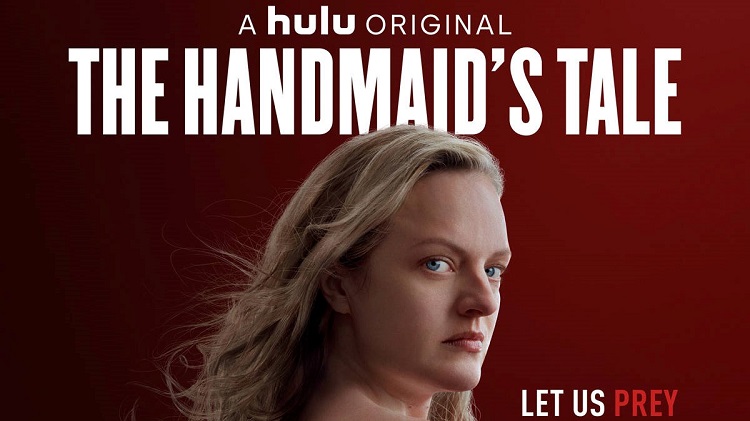
  2. Handmaid's Tale, Season 5 (Hulu/ SBS On Demand) - It just keeps getting better! June Osborne (Elisabeth Moss) and Serena Joy Waterford (Yvonne Strahovski) are out of Gilead and still each other's nemeses. The cinematography is outstanding and the writing explores the nature of reproduction, rebirth and new beginnings. It is powerful drama, superbly acted and I just can't get enough of it (baby).
  3. Elisabeth Moss in The Handmaid's Tale
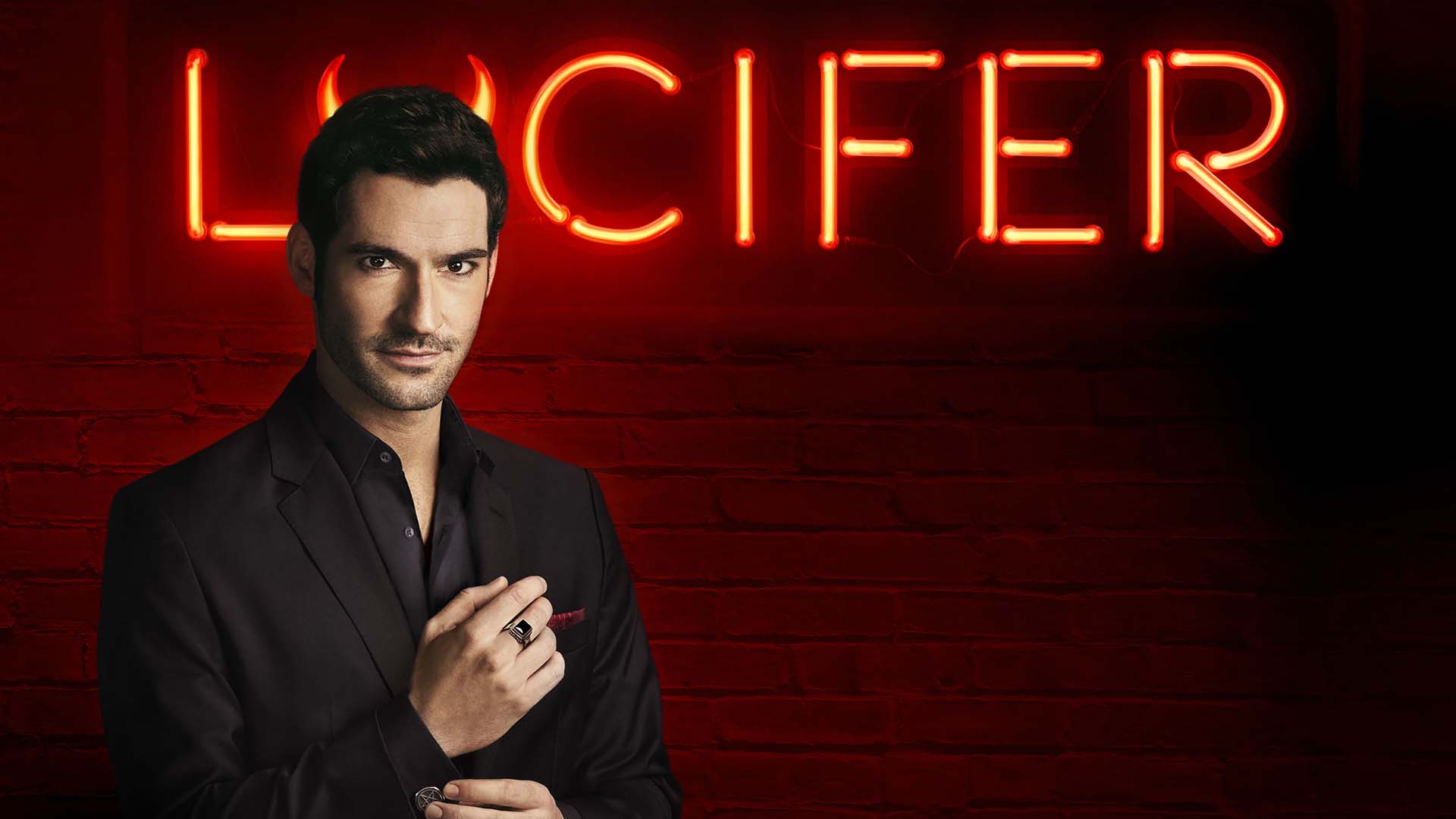
  4. Lucifer, Season 3 (Netflix) - Tom Ellis has great style and charisma as Lucifer Morningstar, which is essential as Lauren German as Chloe Decker, the love 'interest', is anything but. There's some biblical hokum featuring angels and demons, heaven and hell, Cain and Abel, but mainly I watch it for the sharp suits, predictable plotting and flash scenery. It's easy on the eye (and the brain) but 26 episodes in a season is too much. Why do you do this, America?
  5. Robin of Sherwood, Series 1, 2 & 3 (ITV) - I re-watched the entire box set. Such fun! That Clannad music! Michael Praed 'morphing' into Jason Connery! A young Ray Winstone being gruff as Will Scarlett! Nickolas Grace hamming it up as the Sheriff! The introduction of the Saracen character with Mark Ryan!  Maid Marian proving that frizzy hair was considered attractive! Herne the Hunter proving the writers were on drugs! Ground-breaking sets and backdrops; arrow shooting, quarterstaff fighting, horse-riding and swordsmanship! The same story trotted out 26 times! Guest appearances from the likes of Rula Lenska, Cyril Cusak, Phil Davis, Richard O'Brien and Lewis Collins! This was all so comforting and reminded me of watching television at home in my parents' house pretending I'd already done my homework. 
  6. Spirited, Season 1 & 2 (ABC iview) - The Australian supernatural comedy drama romance ticks a lot of boxes. The lead actors Claudia Karvan and Matt King have great chemistry although they are completely different people - she's an uptight dentist; he's a post-punk new romantic. Oh, and he's dead. He inhabits the apartment block she moves into after she splits up with her husband (Rodger Corser) and he haunts people because he can't leave. She is the only human who can see him, so they exchange witty banter, although other humans can only hear her side of it and think she's going crazy. She just might be. It's like Moonlighting with a ghost, and was apparently targeted at 'women in their 40s'. There probably aren't many shows aiming at that demographic. On the basis of this, there should be more.
Matt King, Claudia Karvan and Rodger Corser in Spirited

Friday, 24 September 2021

COVID-19 Friday Five: More Podcasts

We're allowed two hours of exercise now. I walk. I listen. Sometimes I listen to the birds and sometimes I listen to podcasts. Here are some of the podcasts to which I listen.

5 Podcasts:
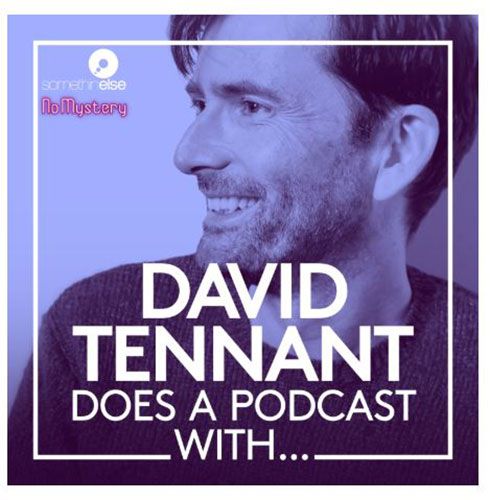
  1. David Tennant Does a Podcast With... (Somethin' Else and No Mystery) - The former Doctor Who star chats with his showbiz friends. It's very star-studded and a bit lovely-dahling, but it makes one realise how many great actors he has worked with, from Judi Dench, Olivia Colman, Elisabeth Moss, Billie Piper and Cush Jumbo to Ian McKellan, Neil Gaiman, Michal Sheen, John Hamm and Brian Cox. At this stage there is no Season 3 planned, but there are still 21 episodes to get to grips with at this stage.

  2. Eyes on Gilead (SBS) - As a companion podcast to The Handmaid's Tale, a group of intelligent and interested viewers (Fiona Williams; Haidee Ireland; Sanar Qadar; Natalie Hambly) discuss and dissect each episode after it has finished. More than just examining the plot, they suggest possibilities and refer to design and direction elements that highlight the intricacies of the show. There are also bonus interviews with actors (special love for Yvonne Strahovski - well, it is Australian), composers, make-up artists, costume designers, directors and the series creator. It's one for the fans. 

  3. Natalie Haynes Stands up for the Classics (BBC Radio 4) - a friend introduced me to this podcast after I read Natalie Haynes' A Thousand Ships, which re-tells the story of The Illiad from the perspective of the women involved (it's excellent - more on that later). In a sort-of spin-off from the original series, Natalie Haynes does a series within the podcast in which she 'sits down' for the myths. In a move that will surprise absolutley no one, the first one I listened to was on Penelope. There are also episodes on The Odyssey, Clytemnestra, Helen of Troy, Penthesilea and Medusa. Plus, there are the original episodes on Cicero, Plato, Sophocles, Virgil, Ovid, Aristotle, etc. It's told in a light, informative and entertaining manner. I remember most of it, and can happily go back a few weeks later to remind myself of the bits I missed first time around. 

  4. The Poet Laureate Has Gone to His Shed (BBC Radio 4) - I've got a bit of a thing for Simon Armitage. No, not like that (although I do love his voice). I've met him (twice) and I'm in his book, Gig (although not by name). He taught at the polytechnic where I studied (although not at the same time) and we know some of the same people, and have a shared interest in myth (The Odyssey; The Green Knight; King Arthur). He is busy writing haiku in his shed at the bottom of his garden (or so he would have us believe) and he interviews some iconic figures from my growing-up days. So far I have listened to the episodes featuring Jo Whiley, JK Rowling and Johnny Marr. I look forward to listening to the back catalogue including interviews with Maxine Peake, Antony Gormley and HRH Prince Charles.

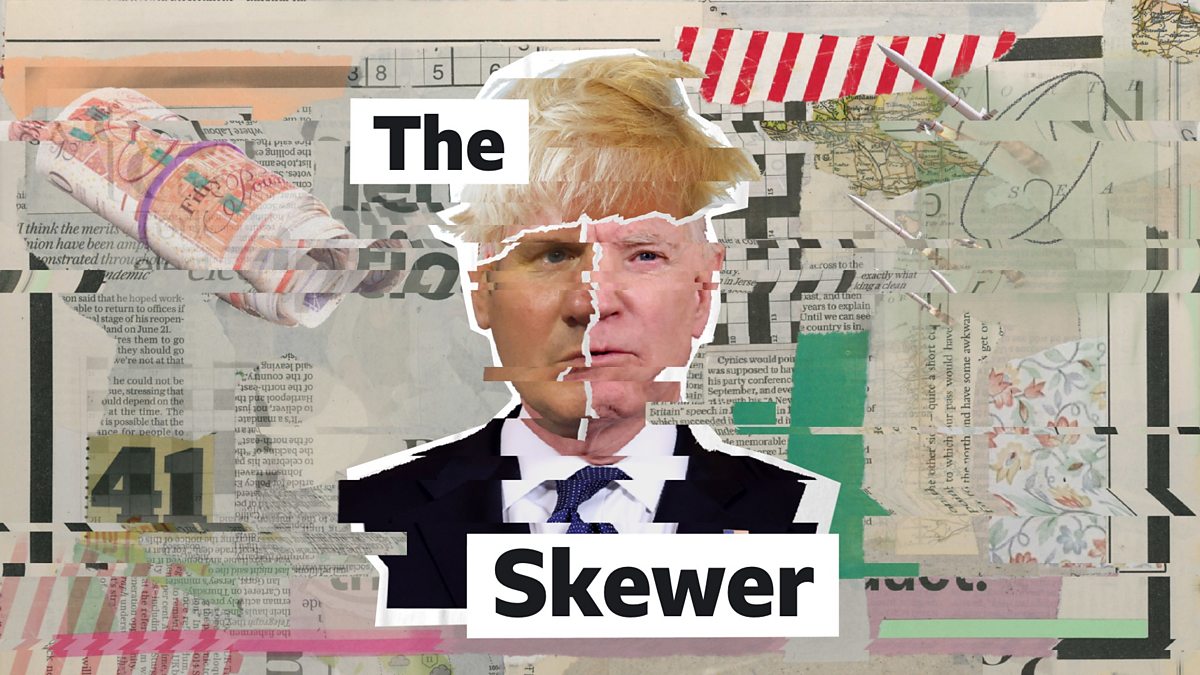
  5. The Skewer (BBC Radio 4) - Described as the news retwisted as a comedy treat, it is a biting satire on politics and current events using the very effective sampling techniques that put words into other people's mouths. It's irreverent and devastating in 15-min chunks with dazzling wit and British pop-culture references that might stump some living outside the UK.

Friday, 3 September 2021

COVID-19 Friday Five: ISO TV We've Been Watching

We're in lockdown - sorry, maybe you weren't aware? Well, we are. And everyone is watching TV. I've scrolled through my notes to see what's been keeping me entertained on the small screen.


5 TV Shows We've Been Watching:
  1. Fisk (ABC) - Written and starring Kitty Flanagan, this show is light-hearted and fun, even though it is set in a law firm specialising in wills and probate, and the main character is Helen Tudor-Fisk, a woman whose career and marriage has fallen apart. The writing is smart and there are featured roles for a number of favourite Aussie comedians (Marty Sheargold; Julia Zemiro; Aaron Chen), with cameo appearances by many others (Ed Kavalee; Sam Pang; Dave O'Neil). It's a total contrast to the dark, gritty drama I tend towards, and I enjoy it greatly for the light relief. So far there is only one season of six episodes, but I hope there will be more. 
  2. Handmaid's Tale, Season 4 (Hulu/ SBS On Demand) - The story continues to be as gripping and the production values as scrupulous as ever. June Osborne (Elisabeth Moss) makes it out of Gilead, but how does she cope in Canada? Can she reconnect with her past life? How does she make sense of the fact that people are literally dying to help her? Gilead still exists, and her daughter is still there, so what can she do about that? And will she ever forgive the Waterfords (Joseph Fiennes and Yvonne Strahovski) for what they did to her? So many questions - some of them are answered. It looks beautiful when it's at its most grim.
  3. Lucifer, Seasons 1 & 2 (Netflix) - Described as an American urban fantasy television series, it revolves around the story of Lucifer Morningstar (Tom Ellis), aka the Devil, who abandons Hell for a stint in Los Angeles where he runs a nightclub called Lux and becomes a consultant to the LADP. Yes, that's ridiculous and it is glib and flashy - apparently based on a character in the comic book series The Sandman. It has elements of comic book conversions about it - lots of sidekicks and pointless characters, most of whom are one-dimensional, with the possible exception of Lesley-Anne Brandt who plays Lucifer's ass-kicking demon ally, Mazikeen. It's worth watching for the way Tom Ellis delivers his narcissistic dialogue with such delight - he is one sexy little devil.
  4. National Treasure (Channel 4/ ABC iview) - The four-part 2016 British drama written by BAFTA-award-winning writer, Jack Thorne, is inspired by Operation Yewtree, a police operation begun in 2012 that resulted in the prosecution of a number of veteran TV performers. One such veteran TV performer is Paul Finchley, played by Robbie Coltrane, a once-successful comedian of the 1980s and early 1990s, now hosting a TV quiz show. When he is accused of raping several young women in the early 1990s, he fights to clear his name with the help of his former comedy partner and current star, Sir Karl Jenkins (Tim McInnery), while trying to explain his actions to his wife (Julie Walters) and daughter (Andrea Riseborough). It's unpleasant at times but very well written and acted. 
  5. Tin Star, Season Three (Sky Atlantic/ SBS On Demand) - The wildly dysfunctional Worth family are back in Liverpool, making a list and checking it twice. I have really come to care for these characters over the past few series. Even if their actions are morally questionable (i.e. killing people is never a good thing), they are disarmingly charming, and no one does cheeky criminal banter quite like Tim Roth. But three season are enough, and judging from the unequivocal ending, I think we all know that.

Friday, 20 December 2019

Friday Five: Cross Stitch Designs

To help with general mental health and well-being, I am still doing cross-stitches; here are another five of my latest cross-stitch creations. The first three patterns and explanations are taken from Really Cross Stitch; for when You Just Want to Stab Something a Lot by Rayna Fahey.


Poverty, war, climate change, corruption, slavery, refugees, indigenous rights, education, housing, health care, child care, food prices, domestic violence, prison reform, gun control, equal pay, trade agreements, tax reform, chemical warfare, land mines, pollution, drilling, fracking, mass control of the population through the media; I could go on FOREVER.

It'd be a lot quicker and more concise just to stitch this pattern. But don't temper your rage. As Gloria Steinem once said, "The truth will set you free, but first it will piss you off."


"We will be the thorn in your side. The glass in your bread. The pain in your ass." - Anti Racist Action

The needle in your eye...

Last time I checked, there were a grand total of zero feminists advocating for the rounding up of men and stuffing them into gas chambers. There are, however, thousands of white supremacists organising around the world for the elimination of interesting people. Standing up against fascism is really important (see: the twentieth century). They're not normally a smart bunch so it's not actually that hard.


Lobbyists spend literally billions of dollars a year to keep the world's politicians on the side of greed. Every time we optimistically sign a petition, there's ten of these bastards lined up to open up nee loopholes.

But these times are indeed a'changing. We are taking back our democracy and turning the tables on lobbyocracy.

"It took this horrific moment of darkness to wake us the fuck up. It seems as though we had all slipped into a false sense of comfort, that justice would prevaila dnt at good would win in the end. Well, good did not win this election. But good will win in the end." - Madonna, Washington Women's March


I made this for a friend for her birthday. We watched The Handmaid's Tale and avidly discussed each episode after it had aired. This particular design was inspired by one of those church signs outside the Gosford Anglican Church equating repressive legislation with the fictional regime of Gilead in Margaret Atwood's tale of dystopian society. And also, by the fact, that according to the TV series it spawned, 'Muffins mean yes".


Liverpool FC: six-time champions of Europe. YNWA. Enough said.

Monday, 9 December 2019

History Never Repeats: The Testaments


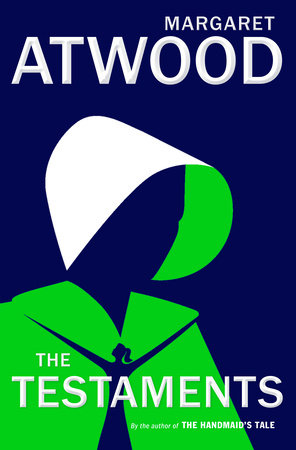
The Testaments by Margaret Atwood
Chatto & Windus
Pp. 415

In her acknowledgements, at the end of The Testaments, Margaret Atwood thanks “the readers of The Handmaid’s Tale; their interest and curiosity has been inspiring.” If my desire to know what happened after The Handmaid’s Tale is in any part responsible for the writing of this book, 35 years after its predecessor, you’re welcome. It’s been a long time coming, but it is certainly worth it, and after all this time, it still has a clear directive: “We must continue to remind ourselves of the wrong turnings taken in the past so we do not repeat them.”

Much of the novel is a thinly-veiled polemic against totalitarianism. One of the narrators is Aunt Lydia, who warns against assuming all that is new is good, and ignoring past wisdom, especially that derived from women. “The corrupt and blood-smeared fingerprints of the past must be wiped away to create a clean space for the morally pure generation that is surely about to arrive. Such is the theory.” She keeps a secret diary, which is part confession, within the hollowed-out pages of a book, incorporating sarcasm about women’s perceived roles with asides about the veracity of history and the stories we are conditioned to believe.

Her wit and humour are displayed throughout her manuscript, and she rambles with her folksy sayings and pragmatic methods. There is a dark side to the humour, however. Some of the young girls threaten to will kill themselves if they are forced into marriage, afraid of male sexuality. “No one wants to die. But some people don’t want to live in any of the ways that are allowed.” It is horrifically symptomatic of totalitarian regimes: women and children suffer as men rape and take what they want.

Before Gilead, Lydia was a judge, and the new (male) rulers did not want her around. “Any forced change of leadership is always followed by a move to crush the opposition. The opposition is led by the educated, so the educated are the first to be eliminated.” Persecution was fairly indiscriminate: “All that was necessary was a law degree and a uterus: a lethal combination.” Now she is a cornerstone of the Gilead government, but she knows power can be overthrown and statues easily toppled.

Whereas The Handmaid’s Tale was focused primarily on June and the other handmaids and was claustrophobic in tone; this novel is narrated through three different voices: Aunt Lydia, Agnes, and Daisy. As the title suggests, they are putting their name to a document they have sworn to be true, and the novel opens up into a wider world. Where there are women; there is communication. “The Aunts, the Marthas, the Wives: despite the fact that they were frequently envious and resentful, and might even hate one another, news flowed among them as if along invisible spiderweb threads.”

Treatment of women by men, who seek to dominate and oppress them, is an over-arching motif. Women must be pure: those who enjoy sex and physical relationships are sluts. Women should be nurturers and carers. Women are blamed for their indiscretions; men are not held accountable for their deeds: men must act on their urges; women must not encourage them. Women exist to reproduce; their bodies are baby-making factories and do not belong to them individually. “Every woman wanted a baby, said Aunt Estée. Every woman who wasn’t an Aunt or a Martha. Because if you weren’t an Aunt or a Martha, said Aunt Vidala, what earthly use were you if you didn’t have a baby?” It’s all depressingly familiar.

Aunt Lydia keeps secrets so she can blackmail people later when it is useful to do so. “All that festers is not gold, but it can be made profitable in non-monetary ways: knowledge is power, especially discreditable knowledge. I am not the first person to have recognised this, or to have capitalized on it when possible: every intelligence agency in the world has always known it.” Fake news and students on strike are recognisable tropes. The combination of adulterated Shakespeare and pertinence to contemporary affairs is deliberately unsettling. Atwood uses the language of fairy tales, but the chilling ones like Sleeping Beauty and later comparisons with Bluebeard.

Atwood notches up the tension as a couple of young protagonists escape Gilead by boat in a thrilling adventure, as the reader experiences the fear of young women who have never left their established order. Just as in The Handmaid’s Tale, there were cassette tapes that carried the messages of those trapped within a system; here there is another way of disseminating information and spreading the truth. Aunt Lydia thinks, “Fly well, my messengers, my silver doves, my destroying angels. Land safely.” Further parallels between the books exist in the closing of them both with a Symposium. Here the thirteenth Symposium cleverly ties it together and prevents alternative endings, while still leaving sufficient scope to flesh out. “As they say, history does not repeat itself, but it rhymes.”