Wednesday, 5 January 2011

Films seen in 2010: Part Two

But wait, there's more: here's the second installment...

21. Date Night – Tina Fey and Steve Carrel are forced to play a variety of roles in this action/rom com when they are mistaken for big-time criminals. Their clutzy, clumsy, running into things shtick is light and entertaining, and there are also some original action sequences – a tug of war between two interlocked cars; domestic squabbles in the middle of a gunfight; and perhaps the funniest pole dancing you’ve ever seen. And it begins with The Ramones singing Blitzkrieg Bop so it can’t be all bad.

22. The Day the Earth Stood Still (FS) – This was deservedly a classic of time (1951); it’s still a classic of our times. The ‘special effects’ aren’t particularly spectacular by today’s standards (Klaatu wears a shiny silver shell-suit) but the politics (in which the aliens land on earth and tell us we must stop waging war on each other or we will destroy our planet) are remarkably familiar.

23. Daybreakers – In 2019 a plague has converted almost everyone into vampires and blood is swiftly running out. There’s got to be another way, according to researcher Ethan Hawke, but capitalist greed drives those who control the market and so keep the prices high – Sam Neill. This fails to be the analogy it wants because it can’t rise above the banality of the dialogue.

24. Die Hard with a Vengeance – Bruce Willis teams up with Samuel L Jackson to save New York from psychotic bomber Jeremy Irons. It may be fifteen years old, but if chase sequences, explosions and action plots are your thing, then it’s still a pretty good example of the genre. Yippee ki yay, motherf*%#er!

25. Disgrace – This film follows the book so faithfully, I wondered why anyone had bothered to make the film, unless it is just another chance to prove that John Malkovich is indeed, odd. If so, mission accomplished. There’s some stark and powerful imagery leaving nowhere to hide for the ugly nature of apartheid and its consequences.

26. District 9 – Township Johannesburg is invaded by aliens resembling giant prawns in a strangely moving and thought-provoking exposé of human behaviour. Directed in a fake documentary style, Neill Blomkamp manages to infuse stereotypical storytelling devices with a fresh twist. Some excellent performances and domestic politics make this a low-budget triumph.

27. Easy Virtue – So much better than I had expected, and probably equally appealing to both the British and American market. When a young Englishman marries a glamorous American and brings her home to meet the family, there is a delicious culture clash heightened by an intriguing soundtrack. Based on Noel Coward’s play, there are farcical elements but no warmth.

28. Faintheart – LARP-ing (Live Action Role Play) isn’t what you expect from an action hero, which is why this is a comedy. Eddie Marsan shows his sensitive side as he re-enacts eleventh-century battles and tries to win back his son and his ex-wife. Nice enough but nothing spectacular.

29. Fifty Dead Men Walking – An IRA film that doesn’t take sides? That’s probably because the director is Canadian (Kari Skogland) and the acting talent is British (Jim Sturgess and Ben Kingsley) rather than American. This is a political/action thriller that doesn’t spout platitudes and no-one makes any mawkish speeches about being a free man.

30. Flame and Citron – Two men in the Danish resistance during WWII start to worry that they may be being used to settle personal scores rather than secure political motives. It’s so focussed on playing up the uncertainty of the assassins that it loses its way and the plot becomes disconnected.

31. Good – Not all Nazis were nasty, apparently. Viggo Mortensen tries to convince that some were just caught up in events, but all actions have consequences, fame comes at a price, and this isn’t the best example of either platitude. I’m also still not convinced by Viggo Mortensen as anything but a slightly sulky ring fellow.

32. Green Zone – Matt Damon stars in this war film about the search for weapons of mass destruction in Iraq and the consequences of their lack of appearance. Paul Greengrass directs one incident in Rajiv Chandrasekaran’s brilliant book, and the film manages not to be too bad either.

33. The Grocer’s Son – This French tale is pleasant without being pretentious and you slowly grow to like the honesty of the well-acted characters. Although they don’t really do anything, they do it endearingly in beautiful scenery. Sometimes less really is more.

34. Harry Potter and the Deathly Hallows (Part One) – I miss Hogwarts. As with the books, I prefer the Enid Blyton to the JRR Tolkein aspects. From an exciting magical romp, the story turns into a pedestrian quest , and not even the majesty of Malham Cove can lift the tale from the slough of despond. As the first installment of the seventh part of the story, this was inevitably going to suffer from over-exposition. There are hints and flashbacks aplenty (with extra cameos for departed characters) but the story itself is stilted and reined in; waiting for the final episode to unleash the great battle between the force and the dark side.

35. The Hurt Locker – One that actually does deserve the Oscar. War is disturbing and there are no easy answers, either for the elite bomb squad in Iraq or for us on the sofa at home, watching the almost unbearably tense drama unfold. It is appalling, but for some it is also appealing and who is to say who is right? The best film of last year.

36. The Informant – Matt Damon plays against type and the result is both believable and entertaining. Bumbling and beefed up, he is a naive whistle-blower trying to protect honest folk from corporate greed. Or is he? The humour is subtle rather than sledge-hammer and the tone is sardonic rather than slick. Director Steven Soderbergh has done a great job with this material.

37. Inglourious Basterds – Tarantino does WWII in the film a lot of people were waiting for. Although there are some excellent long sequences of dialogue and tension, it’s nothing you haven’t seen before from Tarantino and in fact, the heavy-handed mix of comedy and gore doesn’t sit well with the horrors of the Holocaust. Yes, it’s still too soon, but more than enough for me from the geek-genius.
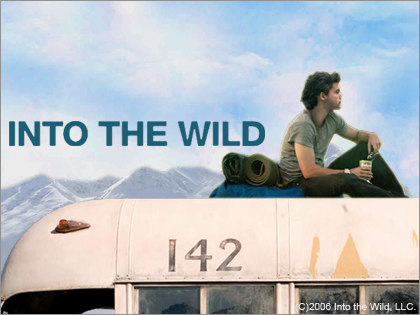
38. Into the Wild – When I read the book, I thought Christopher McCandless was a spoiled little rich kid who made some stupid decisions that led to his untimely death, and I didn’t really care. Sean Penn’s direction elicits a sympathy that was absent from the original narrative – is this because Hollywood has to identify with the hero?

39. Iron Man 2 – Over-the-top fight scenes and action sequences featuring guns, cars, machines, weaponry and lots of explosions are ten-a-penny, but as we’re talking Robert Downey Jnr. there is still a smattering of humour and flawed genius. There are spies, baddies, double-crossing, a love interest and textbook narcissism which leads to (or is the result of?) a strained father/son relationship. But really, it’s all about the toys.

40. Knight and Day – Tom Cruise and Cameron Diaz are both good action heroes but they have no chemistry together. This is still entertaining enough as an action-thriller as an everyday girl is caught up in extraordinary events. The set pieces race along although they don’t connect with any credibility.

Monday, 3 January 2011

Films seen in 2010: Part One

New Year is a time to reflect and make lists (especially for Librans). So, Happy New Year, and here are the films I watched in 2010 in alphabetical order. (Not that I watched them in that order, you understand...) FS realtes to the films I saw as part of my membership of Film Society.

1. The Accidental Husband – I got the title confused with Oscar Wilde’s An Ideal Husband, which is a witty, amusing satire with spirited dialogue, sexual politics and sympathetic characters. This drab ‘romantic comedy’ has absolutely nothing in common except for the final word of the title. Big mistake.

2. The Baader-Meinhoff Complex – Germans can be very intense and single-minded, as we know. This terrorist organisation planned bombings, kidnappings, robberies and assassinations in the late 1960s and 70s to protest against the new fascism – American capitalism. In this political drama we see how the ends are used to justify the means and how a supposedly secure unit can disintegrate from the inside. And it’s all true.

3. Berlin is in Germany (FS) – No, not a geography lesson, but a history one about a man who goes to prison when Germany is divided in two, and is released after the wall has come down. Adapting to life on the outside is even more difficult when your boundaries have literally been redrawn.

4. Bestseller – A Korean ghost story has all the requisite trappings of a classic horror story but still manages to hold some interest. A writer who may or may not be losing her mind; a silent daughter with an invisible friend; a strange old crone; a decrepit house by a lonely lake surrounded by woods – what could possibly go wrong? Plenty, it would seem.

5. Beyond the Darkside (FS) – A selection of short New Zealand films indicates that Kiwis are a little too connected to their environment and they need to stop taking themselves so seriously – themes of murder and bullying and abuse are played out against a bleak, claustrophobic landscape in which it is raining. Not exactly light-hearted...

6. Black Sheep – And so it was done; the Kiwis made a splatter-fest with sheep involved. This is an ovine version of The Birds but not as intense or self-consciously serious. It’s only got one joke and it goes on for a bit too long, but it’s amusing in a woolly sort of way.

7. The Blind Side – Sandra Bullock won an Oscar for her role in this schmaltzy and non-too realistic (although based on a true story) portrayal of a wealthy WASP momma taking in a big black homeless boy (Quinton Aaron) who can’t read but can play American football like a demon. It’s all very ‘nice’ and predictable but quite touching in parts, despite the heavy-handed ‘we’re all one people’ moments.

8. The Book of Eli – An extremely obvious and predictable parable with no surprises despite some good acting from Denzel Washington and Gary Oldman. It’s very dusty in post-apocalyptic America, but young men are still encouraged to Go West!

9. The Boys are Back – Clive Owen is a favourite of mine and he’s so good I will watch him even in a film about children. When he becomes a single parent in tragic circumstances, Supernanny probably wouldn’t approve of his child rearing methods, but he loves his children and does the best he can. I found my heart warmed and my eyes brimming despite myself.

10. Breathless (FS) – When this Jean-Luc Goddard film came out in 1960 it heralded the New Wave in French cinema and blew everyone away. Clearly times have changed. The story itself (a small-time thug who hangs out with his American girlfriend while on the run from the police) is not as important as the way it is told.

11. Bright Star – This is an utterly beautiful depiction of the three-year romance between Fanny Brawne and John Keats, and the affect it had on their families and friends. Jane Campion’s directorial focus can make anything look attractive, and the bluebell woods are simply divine. It’s heart-stoppingly, desperately romantic – one for the girls, perhaps?

12. The Brothers Grimm – Fairytales are far from cuddly and full of deception and depravity in this fable for grown-ups, starring Heath Ledger and Matt Damon. Terry Gilliam’s muddled vision is not quite Pan’s Labyrinth, but it’s a long way from Disney’s sanitised tales.

13. Cemetery Junction – Reading is boring – I could have told you that – but apparently in 1973 it was even more boring. This British comedy about coming of age and discovering sex has a cute (albeit predictable) homily about how much you should escape and how much you should honour your roots – should you ever forget where you came from? It’s an old story, well told with a script by Ricky Gervais and Stephen Merchant.

14. Cheri – This is a slightly overwrought story of a young man falling in love with an older woman, but it was written by Collette, so what do you expect? Society is scandalised although the ‘older woman’ is the still-gorgeous Michele Pfeiffer, so it really shouldn’t be. Female reviewers like it and males don’t – I guess they don’t appreciate the double standard. Plus ça change...

15. Clash of the Santas – Probably not the best Christmas film ever made, but certainly not the worst either. Robson Green and Mark Benton (among representatives from around the world) battle it out to see who is the best Santa at an international competition in Lithuania. Contests include (frozen) turkey bowling, side-car racing and chimney climbing in a cosy tale that will not cause any problems while digesting the Christmas dinner.

16. Close-Up (FS) – It’s not every day I watch an Iranian film... and on the basis of this one, it will be a long time coming before I watch another one. This is supposedly a film that makes you think about the impossibility of true documentary. I found myself looking at the radiators on the walls and thinking, ‘Oh, so that’s how Iranians heat their houses’... Compelling it wasn’t.

17. Cold Souls – Billed as a ‘weird comedy’, this is really just weird. Paul Giamatti plays Paul Giamatti (although not quite himself) as he searches for his soul in his life and his self. The navel-gazing, self-obsessed, neurotic, whiny, cynical, fed-up, depressed and depressing New York element is funny in a Woody Allen sort of way, if you like that sort of thing.

18. Confessions – This Japanese revenge tragedy was intriguing from beginning to end. No one can be trusted, and the many twists and turns to the narration are explosive. With callous youths and calculating teachers, this film refreshingly subverts the inspirational teacher genre. Brilliantly brutal; please no American remake.

19. Creation – The story of a man’s personal and familial battle – to confirm what he has proven; he must turn his back on all his wife believes. Paul Bettany embodies Charles Darwin’s inner struggle beautifully with nuances of insanity as he wrestles with the big issues.
 
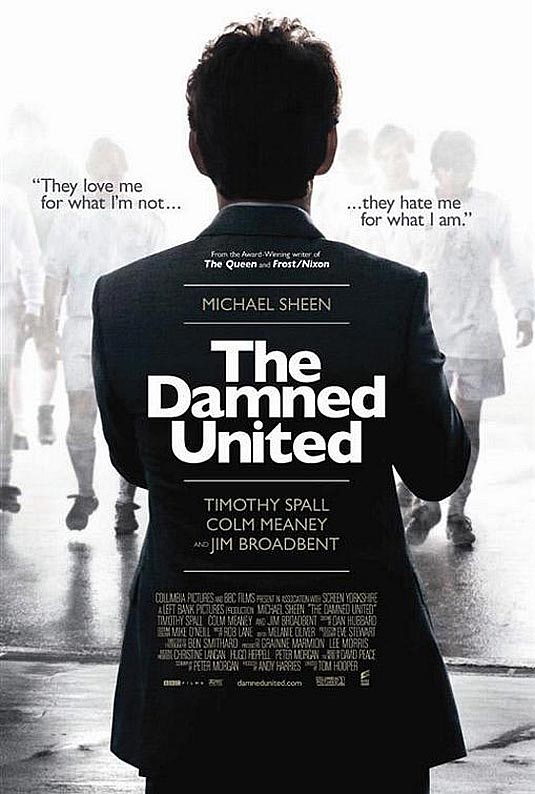
20. The Damned United – I’ve only ever seen Michael Sheen play Tony Blair, which he does frighteningly convincingly, but he does Brian Clough equally well. With sensitive portrayals of men under pressure, he and Timothy Spall bring Leeds to life – even the American critics loved this film (although they did insist on calling it soccer).

Tuesday, 28 December 2010

Fashion Matters

While I was in England, in between cultural expeditions and riverside walks to village pubs, I read the papers as I lounged around my parents’ house drinking cups of tea. They were full of reports about the impending election for the leader of the Labour Party, which is fair enough as this is of national (and potentially international) importance.

More surprising to me was the number of articles about fashion even in the ‘heavyweight’ papers. I would have thought the re-emergence of animal prints or this season’s techniques of belt-wearing were somewhat frivolous, but it appears not. London Fashion week, apparently, makes £20million a year for the capital and has wider implications for tourists attracted by the shopping in the UK.

I was always surprised by American surveys that listed ‘shopping’ as a preferred holiday activity, yet I have friends who visit Melbourne on shopping trips and when in Wellington would rather admire Lambton Quay retail outlets, than Te Papa cultural exhibitions. A friend who works in recruiting tells me that ‘fashion’ has firmly replaced ‘reading’ on young girls’ lists of interests on their CVs.

Harold Tillman, chairman of the British Fashion Council is unsurprised by a recent report that claims ‘the UK fashion industry is the largest employer of all the creative industries, directly employing 816,000 people. The industry is similar in size to food and drink services and generates more than twice as many jobs as real estate, and considerably more than telecommunications, car manufacturing and publishing put together.’

Indeed, the report finds that British fashion contributes almost £21billion to the UK economy, and in times of financial crisis, that is not to be sniffed at. Perhaps clothes really do maketh the man – or at least, the woman.

Friday, 24 December 2010

Christmas values


For the past couple of weeks I have been sick with worry for a good friend of mine who has just been diagnosed with cancer. He is generally as solid and dependable as an oak and now he needs all his strength to counter this vicious disease, which is wrapping itself around his internal organs like poison ivy. When terrible things like this happen to people we love, naturally we question our faith and our values.

This time of year is full of added pressure. We are bombarded with messages of a million things we ‘must’ do: buy the presents; tidy the house; deck the halls; prepare the dinner; ice the cake; wrap the presents; dress the tree; write the cards; finish all the jobs at work; send out the emails; clean the windows; sort out the cupboards; dust off the deckchairs… the list is endless.

Looking at one of my dearest friends lying in his hospital bed I realised that none of that matters at all. I know that the doctors, nurses and surgeons are all doing the best they can for him so in many ways it is the best place for him to be. But it’s full of sick people. And he needs to feel invigorated. His many visitors bring him love and support, but they can’t bring him fresh sea-air and pounding waves; it’s that which makes me feel alive.

So I walked on the beach and I thought of all the people I love and care about, and prayed that he’ll be back out soon. I haven’t done half of the things we are 'meant' to do at Christmas, but I shall sing some carols and think of my loved ones and try to spread whatever happiness I can. At the risk of sounding like some ghastly old hippy; Merry Christmas, and love and peace to all.

Friday, 17 December 2010

Out of Context


For Remarkable Theatre's summer show, I have put together a collection of comic scenes, songs and sketches to come under the umbrella title of A Funny Thing Happened on the Way to the Gardens. It's a promenade performance whereby a guide escorts the audience around the Botanic Gardens with a performance of 3 - 10 minutes duration in each selected location.

The hardest thing was to take comedy out of context. Many things are funny in the second act of a play becaue the first is exposition - without the initial set-up, the gag would fall flat and you can't just deliver the punchline without first laying the foundation. It's given me a whole new appreciation of farce. Noises Off is one of my favourite plays but you can't perform a short extract that makes any sense by itself.

Stand-up comedians often complain that their jokes are taken out-of-context and lead to them being labelled as racist/ sexist/ homophobic/ anti-semitic or whatever we are feeling particularly sensitive about that week. It may have come from a very funny line-up with a mitigating explanation, but if you remove all that, it's just another 'retarded gay nigger' joke.


Repetition is another factor in comedy. Something that is not funny at first utterance becomes increasingly so as we come to recognise, acknowledge, and then predict the inevitable. This is how catch-phrase or sketch humour works (Angry Frank being a classic example). And we can't claim this is sophisticated.

If you ever watch children watching theatre, they are bemused at the first appearance of the comedy elf. By the third or fourth appearance he becomes familiar, and by the time you, as an otherwise perfectly rational adult, are willing to bludgeon him to death with the nearest blunt instrument, the mini-critics are anticipating and so delighting in his entrance because they 'get it'.

'Getting it' is the pay-off for all the spade work and anticipation (no smutty innuendo please - let's leave that to The Two Ronnies. In all comedy there is an underlying theme which compounds throughout the 'drama'. If you only have five minutes to establish this drama, you have to choose the familiar and subvert it. And this becomes an exercise in defying stereotypes.

Comedy - it's not a science; it's an art.

Friday, 10 December 2010

Harry's Quest

I miss Hogwarts. Harry Potter and the Deathly Hallows (Part One) has moved on with director, David Yates', latest vision. The three friends (Harry, Ron and Hermione) now spend most of their time running around the hills, forests and lakes of Britain (shot with breathtaking beauty by cinematographer Eduardo Serra) with a purpose (to destroy the Horcruxes – containers of the disparate pieces of Voldemort’s soul) but not much of a clue.

The school for wizards added a structure and timetable which is largely missing from this rambling marathon. There are no cosy divination lessons or starring roles from the new professor of dark arts. Instead we are given rampant hormones and rampaging death. The opening sequences employ both, with a chilling sequence at the Death Eaters’ camp followed by a fatal broomstick chase and some extreme snogging.

We do get to visit the Ministry of Magic, taken over by the Death Eaters in their black leather coats and Hitler moustaches (okay, so the facial hair reference is false but the Third Reich implications are solid) and the streets of London. The wand shoot/spell-out in a West End café is particularly dramatic as the supernatural and super-normal worlds collide over cappuccinos (surely this should have been mugs of tea?).

For the most part, however, we are in a tent (albeit with tardis-like dimensions) with the trio and there’s not a lot to do: Hermione (Emma Watson) reads; Harry (Daniel Radcliffe) broods and Ron (Rupert Grint) escapes. They may be glamping, but canvas claustrophobia soon sets in, both for them and the viewers as they indulge in desultory dialogue and hunt the Horcruxes.

And this is where the problems emerge. From an exciting magical romp, the story turns into a pedestrian quest with serious JRR Tolkein/ CS Lewis/ Thomas Malory overtones – right down to the sword in the lake. Not even the majesty of Malham Cove can lift the tale from the slough of despond.

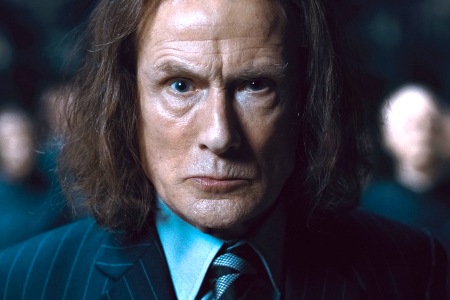
The supporting characters are fabulous but underwhelming with the possible exceptions of the new Minister of Magic, Rufus Scrimgeour, played by Bill Nighy (the only actor on the planet who could take on Alan Rickman in a lip curling competition with any credibility) and Helen Bonham Carter who gets more disturbingly insane with each installment. As the first instalment of the seventh part of the story, this was inevitably going to suffer from over-exposition.

There are hints and flashbacks aplenty (with extra cameos for departed characters) but the story itself is stilted and reined in; waiting for the final episode to unleash the great battle between the force and the dark side. You’ll probably need to watch it again just before you watch the finale, but that’s probably something dedicated Gryffindorains do anyway.

Monday, 6 December 2010

Look-i-like-i

I've recently been looking up some old work by Ernie Wise. He was a very entertaining and talented performer.

Unlike this clown...

...who also bears an uncanny resemblence to Elmer Fudd.