Monday, 12 November 2012

British Museum: Overwhelming History

I arrived at the British Museum with only limited time to explore the building – and wow, what a building! The reading room in the centre of the great court has the second largest domed ceiling (after the Sistine Chapel) but it is being used for an exhibition and you can’t go in otherwise. There are plenty of other treasures to admire, however.

The Great Court in the British Museum
I only had time to look at the ground floor and I was overwhelmed by the sheer weight of history. The Assyrian gateways, black obelisks and colossal guardian lions are incredible. The Balwat Gates (858-824BC) are wooden gates covered with strips of bronze embossed with scenes from Shalmaneser’s campaigns. The statue of Amenhotep III (1350BC) from the Temple at Thebes is impressive, and the guardians of the city wall from Ashur (835BC) are immense. Even on the reliefs from doors and walls, there is simply so much history.

The Assyrian room and the Balwat Gates - photo by Nathan Meijer
Of course there was a massive crowd around the Rosetta Stone and I could barely get near it. Some may be trying to decipher the meaning of the ancient hieroglyphics, hoping to grasp the key and unlock the mysteries of Egyptian culture, but most are simply pointing their i-phones and gurning at the glass case – surely they would be better suited to buy a postcard?

The Rosetta Stone at the British Museum - fascinating folk for thousands of years!
The Egyptian sculpture rooms contain stone people and lions, limestone dyads of a man and wife (approx 1350BC) and a seated Salchmet (approx 1400BC) – a black granite leonine goddess, bringer of destruction to the enemies of sun-god Ra. There are red granite statues of kings, heads, and a sarcophagus (approx 2400BC). The black granite statues of King Sesotris III (approx 1850BC) have excellently worked faces with overlarge ears and neck jewellery carved into the torso.

Horus in Roman Military Costume
I am confronted by obelisks and sphinx; a grey granite papyrus-column (1500BC); a red granite arm from a colossal statue; the sarcophagus of Merymose (approx 1380BC); a limestone figure of Horus-falcon (600BC); a black schist sarcophagus and lid of Ankhnesneferibre; Horus in Roman military costume (AD 50-300); a red breccias figure of the goddess Taweret (664-343BC).

Panehsy (approx 1270BC) kneels, holding a shrine containing the gods Horus and Osiris, and the goddess Isis. A grandiorite figure of a Horus-falcon (600BC) has eyes of ivory and bitumen. Animals include eagles, ravens, rams and a colossal scarab beetle. Each one is amazing. All together they are overwhelming.

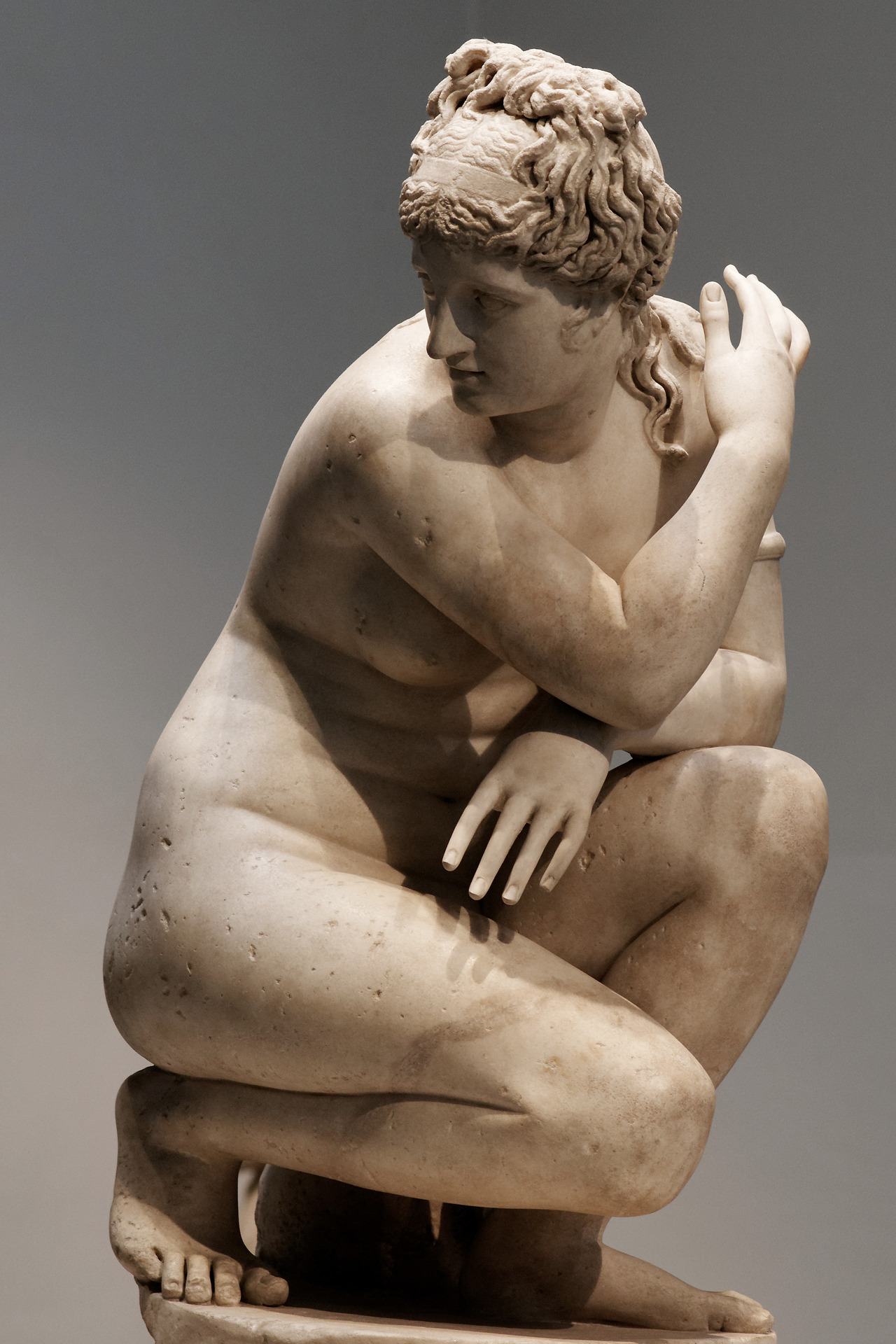
Venus (Surprised as She Bathes) by Lely
I moved through to the Greek and Roman sculpture, which was far more familiar to me and therefore, perhaps, less daunting. Lely’s Venus (Surprised as She Bathes) is a central statue, and is on loan from Her Majesty Queen Elizabeth II. There are rooms of headless figures (Dr Who’s scary weeping angels have a lot to answer for) and a reconstruction of Olympia, and the Nereid Monument.

Everywhere are examples of horses’ heads, gods, men, centaurs and battles, and over all hangs the question of should they really be here or have we been stealing other peoples’ history? A pamphlet seeks to answer the question and, being distributed by the British Museum, obviously sides heavily with Lord Elgin and his successors. I must agree that it is fabulous these antiquities are free for all the view and admire.

The Nereid Monument at the British Museum

Sunday, 11 November 2012

Quote for Today: Reheasal Space

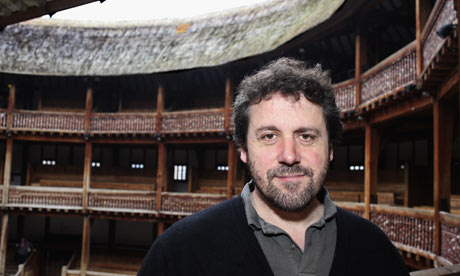
We had a technical rehearsal today for Alan Ayckbourn's Improbable Fiction, that I am performing in for Canberra Repertory Theatre. Technical rehearsals are always long and usually tedious, but totally necessary. We got through today's quite well, and, as far as I know, without too much major incident.

Dominic Dromgoole has some sage words about rehearsal rooms, although clearly he has never worked in Queenstown.
“For some, it’s a seminar room (the deadliest); for some a party (the most fun, with the most variable results); for some it’s a therapy session (avoid like the bubonic plague); and for many it’s a knocking shop (be selective). But for the best it is often a temple. Something special and magical takes place in there, and the air around it has to be carefully looked after to ensure anything is possible. This doesn’t mean everyone prays or takes off their shoes and pads around with Peter Brookish Obi-Wan faux religiosity. It means you treat it with respect and humility. And you don’t allow kids in.” - Will and Me: How Shakespeare Took Over My Life by Dominic Dromgoole, artistic director of the Globe Theatre.

Friday, 9 November 2012

Friday Five: It Will Change Me!


Australia has a lot of lotteries - there are national ones and federal ones and it seems like there's one every day of the week. They can reach pretty high stakes, and recently the prize pool topped $70million. We bought a ticket , but we didn't win. Fair enough - it is, after all, a lottery.

What does annoy me, however, is when people say, 'oh, it won't change me'. Well, clearly you don't 'deserve' to win it then - give it to me!  Of course I would pay off my mortgage and that of any other of my family members who need it, I would buy an E-type Jag and another couple of houses somewhere, preferrably one in Park Crescent, and indulge myself in my dream holidays.

But I would make changes to everyday life as well. If I had unlimited funds, here are the ways I would change:

5 Lottery Winning Changes:
  1. I would always fly first class
  2. I would hire a cleaner - housework would be a thing of the past for me
  3. I would always get taxis home from a night out, rather than having to plan for a sober driver or leaving on the last train/bus home - or if I were in a decent city, I would just stay in a hotel overnight
  4. I would donate money to every charitable organisation I walked past (as long as they weren't supporting right wing politicians)
  5. Every time I had a health niggle, I would go straight to the relevant practitioner (doctor/ dentist/ physio/ massage therapist) rather than saving up all my ailments until I felt I had enough to justify the consultancy fee.

Monday, 5 November 2012

Australian Portraits 1880-1960 (Part Three)

The portraits of the Forties and Fifties explore the question, 'who am I?' None of these artists made their living by painting portraits. They liked instead to depict themselves, friends, family and colleagues rather than 'important people' from whom they would get a commission. Sometimes they chose disreputable subjects, such as criminals, murderers and outlaws.


Sidney Nolan's Daisy Bates at Ooldes (1950) is a remarkable study of an eccentric character who created her own mythologies. Daisy Bates was most recognised for her work as a journalist and welfare worker with Aboriginal communities. This is an imagined portrait of her in beekeeping gear, in the centre of an expansive and seemingly hostile landscape, with its red earth, hillocks and dead trees. What was Sidney Nolan thinking? Who knows? It's often difficult to tell.

For example, this monochrome version of Ned Kelly (1946) has blurred eyes as if they are shifting too fast to capture. Nolan's more famous Kelly series features the bushranger with a tin hat with the eyes the only things visible, so this is the inverse or the negative. There is no landscape or back story in this posthumous portrait, although the surrounding circle may suggest a noose. The image resembles a photo of Ned Kelly when he was aged 18.

 The Head of a Soldier (1942) is a Dali-esque portrait by Sidney Nolan of a man with bloodshot eyes in an Australian army uniform. The model was Captain Bilby, Nolan's commanding officer. Nolan tried to avoid the army but ended up serving between 1942 and 1944. He depicted the soldier stripped of any form of identification, and the portrait lays bare Nolan's strong personal reaction to Australia's involvement in the war.

Man's Head by Albert Tucker is a portrait of a man in a collar-less shirt, with a crooked, craggy face, wiry hair and fleshy lips. Tucker used his art to convey his anger and distress at the darker aspects of humanity, either through social-psychological landscapes, or portraits such as this one based on newspaper photographs of criminals. This man was charged with kicking a small dog to death.

His portrait of Sydney Fox (1946) is an eerie, psychologically disturbing image. The lop-sided lazy eye, the smooth sallow skin, and the blue and yellow hues suggest bile, anger and depression.

Sydney Fox was an English serial killer who murdered his mother in 1929 in an attempt to obtain money from her life insurance policy. At the age of 31 in 1930 he was the last man hanged in Maidstone Prison, Kent. This portrait is based on Fox's police photo.

Jude Rae's Interiors (1956) is a series of portraits of  fellow Canberra artists with their eyes closed to negate the aphoriosm that eyes are the windows to the soul. The subjects, by closing their eyes, render themselves vulnerable, but they are also complete in their interior world. This art-work is quiet, reflective and poetically intense.

The Girls at School (1959) by John Brack is odd. Three girls in their gingham dresses and school cardigans stand against a brick wall, one holding a bunch of daisies. Their neat hair, pulled off their face and tied back in pig-tails emphasises their flat faces and slightly down-turned mouths.

Brack was a skilled draughtsman and master of composition. He depicted his daughters in a bold, stylised way, by limiting the colour palette as if in a sepia photograph, and by flattening the frame.

It's quite a disturbing finish to the exhibition, and suggests that these Australians aren't all of such a cheerful, sunny disposition as many of us have been led to believe!


Wednesday, 31 October 2012

Australian Portraits 1880 -1960 (Part Two)

Moving on to The Modernists 1920 - 1940.

The artists in this period experimented with a degree of abstraction, a concern with composition, form and colour, and with a shallow picture plane and cool, crisp precision.

Stella Bowen's portrait of Mary Widney (1927) is rendered in bold lines and depicted from viewer sees the subject in a 3/4 profile and also her image from behind as she is reflected in the mirror.
Meanwhile, Grace Cossington-Smith's Study of Head, Self-Portrait (1916) reveals the influence of Post-Impressionism in its high-key palette of pinks, blues, greens, and animated brush strokes.

My new favourite artist is Nora Heysen - ok, she's been around for a while, but she's new to me. I love her London Breakfast (1935) as she sits in her dressing gown, hunched forward over the paper with a tea-cup in hand and the breakfast things still on the table. It's gentle and soft but somehow still honest as I imagine her taking a moment to herself before hurrying on with the day.

The boy in the bathing trunks in Elise Blumann's Charles, Morning on the Swan (1935) seems to be almost stepping out of the frame. He has no face but lots of form against the rippling sea. The canvas has a flat, patterned surface, and the broad rhythmic brushstrokes and network of hatch marks are clearly visible.
Margaret Preston's Flapper (1925) is another favourite. The artist has emphasised the flat patterned surfaces of the clothing set against a shallow picture plane. The subject's rosy cheeks and bright expression suggest she is painted as a progressive young society woman, but her homely woollen dress and knitted tights are at odds with the model of the flash bohemian flapper of the 1920s.
Eric Wilson did not clutter his portraits with background detail. All attention is focused on the subject and the meticulous realism of The atist's mother (1937) is almost photographic in its detail. With her hat and coat on, and her gloves and umbrella in hand, she looks as though she is just about to go out and is only delayed by her son's request to pose.

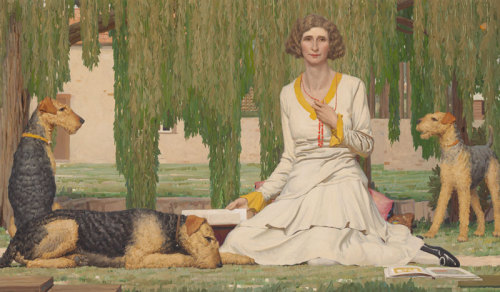
In Christian Waller with Baldur, Undin and Siren at Fairy Hills (1932), Napier Waller has painted his wife sitting on the grass with three airedale terriers, beneath the willow trees with books and cushions. She sits fully dressed in stockings and shoes, playing with her necklace. The wide canvas is full of details to the edges - if this were a photograph we would say it was beautifully cropped.

Christian became a book illustrator and printmaker while her husband became a printmaker and worked with murals and mosaics. In the 1930s he began to work almost exclusively in stained glass and mosaics, using a classical and formal style. This was painted at a time when he was becoming a man of the world while she was retreating into an esoteric religion. Knowing that, there seems to be some distance implied in the portrait.

Roy de Maistre was a pioneer of Australian Post-Impressionism and Abstraction. In his Self Portrait (1945) the central focus is the well-stoked fire, symbolising the belly of the artist, and suggesting a passionate and creative spirit. The bold, flattened forms and intersecting planes show the influence of cubism upon the work.

Albert Tucker, on the other hand, was influenced by the Expressionists, whose strong images responded to the social realities of the Depression - he became one of a group of Melbourne artists known as the Angry Penguins. His Self Portrait (1937) reveals a deeply penetrating gaze, foreshadowing the emotionally charged images he produced in the 1940s. The high forehead, swept back hair, mean scarf over jacket and tie, big eyes, sharp nose, full lips, one raised eyebrow, head tilted forward with chin down but eyes up, all combine to produce the effect of a knowing but quizzical look.

Tuesday, 30 October 2012

Australian Portraits 1880-1960 (Part One)

Australian Portraits 1880-1960
Canberra Museum and Gally, Canberra, ACT
17 August - 21 October

This exhibition promised to contain "a compelling and diverse representation of Australians" including 54 portraits and self-portraits by 34 leading Australian painters. I don't know much at all about Australian art so I am beginning to familiarise myself with it. The exhibition is divided into chronological sections, so I just strolled around, taking notes on the pictures I liked.

Montgomery, Esquire (1885) by Bernard Hall is part of a series of his 'late night images' of his friends. I like the way he sits casually with his leg crossed over, smoking a cigarette, with a drink balanced behind him. His look, however, is anything but casual and is, in fact, almost disturbingly frank - the way things can get late at night...


Seated outdoors, perhaps in a walled garden, the model for Robert Dowling's Miss Robertson of Colac (Dolly) (1885-86) presents quite a different prospect. Although in a relaxed setting, she appears stiff and focused on something beyond the canvas, almost as though she were eavesdropping on a private conversation and completely ignoring the stylised accessories of the Japanese tea service and the spaniel. These may have been added later as her posture and mien suggest absolutely no interaction with them.

I love Tom Roberts' An Australian Native (1888) and can well believe this is a classic of Australian art. In her pink dress/ coat with a bustle and feathered hat, clasping her umbrella before her with both hands, the subject is clearly meant to be a 'type': a young, healthy, vigorous Australian-born woman of Anglo-Celtic descent.
She, in turn, is in contrast to Miss Myra Kemble (1888) by Girolamo Nerli, who is painted with swathes of theatricality. She was, according to the catalogue notes, 'one of Australia's best-loved stage actresses.' Teasing her audience from behind her ostrich fan, we glimpse her coy expression, direct eye and amused mouth. The artist has painted her as if spot-lit on a darkened stage, focusing our attention on her playful character, flair and beauty. His attentive eye has picked out her plush red cloak with intricate detail on the lining, and her ruched water-silk gown with high neck and button and dart detail.

And so we move on to the next section - The Edwardians 1900 - 1920. Apparently many Australian artists of this era spent a substantial amount of their time living and working abroad. Many subjects appear dressed up or acting out roles, as many families commissioned portraits in historical style to give themselves credibility.

I love the Study of Lena Brasch (1893) by Tom Roberts. The artist has used rapid brush-strokes and bold colour, capturing the subject galncing down in her hat trimmed with tartan ribbon or perhaps even shiny bon bon wrappers. The charming combination of auburn hair, pale pink lips and the delicate blush on her cheek make this painting seem alive, although it is incomplete. One almost expects the subject to turn, to look up and burst out laughing any minute.

George W Lambert's Chesham Street (1910) is altogether more serious. This is a dramatic self-portrait in which the subject lifts his shirt to reveal a fairly skinny torso, presumably to a doctor. The blinding white flesh lightens the canvas, although judging from the serious expressions contained in the portrait, it is unlikely to have lightened the mood.

Many artists painted self-portraits because they saved money by not hiring models. This proceedure also allowed them a degree of critical self-analysis and introspection.

In Hugh Ramsay's Self Portrait Bust Showing Hands (1901), his hands are jointed like the wooden mannequins often seen in artists studios. With the long face and aquiline nose, this may equally be a study in antaomy or the effects of light and dark, as his half-smile is emphasised by the shadow cast on his lopsided lips.

Charles Wheeler can also afford to be less than flattering in Apres le bal (1910) in which he paints his self-portrait in a turban; his facial features contorted in an exaggerated yawn.

The full-length portrait of The Boy with the Palette (1911) by Violet Teague is of Theo Scharf, who at this time was a child prodigy. He betrays a nonchalant stance in his dark polo neck, long shorts, and knee-high socks. With his supercilious expression, his eyes really do follow you about the room, while never looking directly at you. He appears to be looking down on you with a sneer.

The artist has totally captured his assertive gaze and conveyed his confidence in himself and his artistic talents.

Bright colours against a studio background capture the attention in Max Meldrum's Poland (Madame de Tarczynska) (1917). The subject is dressed in traditional costume which seems more important than her strong but ill-defined features.

Meldrum was an adherent of the tonalist theory which maintained that the contrasting light and dark was the most important component of a painting.

E Phillips Fox takes a more impressionist approach with The Green Parasol (1912). Luminous colour abounds in this portrait of a seated woman in a green dress and parasol with a small black dog on her lap. Her auburn hair and the flowerful garden enhance the sensuous and stylish work celebrating light and colour. The warmth of the dappled, diffused afternoon fairly spills out of the canvas.

George W Lambert's Weighing the Fleece (1921) is another classic to behold. It is painted as a tableau with focus on the structure and pattern. The men are engaged in business  (with a record-priced fleece being weighed) while a woman sits casually on a woolsack. One sheep is shorn while the other stands by beneath a heavy fleece hinting at further riches. The painter has captured minute details such as the brand on the wool bale and the swallow droppings on the beams, while the overall projection is one of wealth, success and good fortune.

Monday, 29 October 2012

Billy Bragg - Singing His Own Tune

Billy Bragg
Ain’t Nobody That Can Sing Like Me Tour
Canberra Theatre Centre
23 October, 2012

Billy Bragg has apparently been recognised in Britain as a national treasure. I remember him as a protest singer who got me into deep trouble in early-80s America when I played his pro-union, anti-capitalism cassette tapes in Conservative America. On the evidence of Tuesday night’s concert in Canberra, he is both.

Some things have changed: for one thing, he’s older, as are we all – approx 90% of the audience is over 40 – and I’ve never sat down for a Billy gig before. He still commands the same devotion, particularly among men; 70% of the audience is male and sporting a fine array of t-shirts. He exhibits more humour than previous incarnations (I last saw him in 1996) but his enthusiasm and passion remain; this Billy still comes to the boil.

The evening is divided into two sets. First he plays the music of Woody Guthrie, intending to evoke the spirit of ‘little guy’, and after a short interval he is back to bring us the essence of Mr Bragg. For the Woody set he sits with an acoustic guitar chatting about the process of developing these tunes as though he were some cool scout leader (not the creepy kind) around a camp fire.

Woody Guthrie (who died prematurely of Huntington’s disease) left 3,000 songs behind. Billy says he’s been writing songs for over 40 years and hasn’t written close to 1,000. Nora Guthrie, Woody’s youngest daughter, allowed him access to the manuscripts after seeing him struggle through a Woody Guthrie musical workshop at Okemah, Oklahoma, Woody’s home town.

Billy says he thought he could blag his way through it – he knew three songs, although he knew if anyone played one of the ones he was counting on, he’d be stuffed. He was alarmed to find the other participants in the workshop were Pete Seeger, Ramblin’ Jack Elliott and Arlo Guthrie (Woody’s son) – “Dylan couldn’t make it”. Pete Seeger had a whole load of notes stuck to his guitar with titles of Woody Guthrie songs and Billy was amazed to realise how many he knew.

He was doing alright until they came to play This Land is Your Land and they each got up to play a verse. When he came to his turn he tried to bluff his way through, explaining that as a Brit, it wasn’t really his land so he didn’t feel he could sing it – it was soon apparent, however, that he didn’t know the words and was busted, although he claims Nora took pity on him.


He explains that although the sheets say ‘words and music by Woody Guthrie’, there is no music – just words. This suits Billy just fine as he can’t read or write music himself. He says a proper musician is one who plays the piano, whereas he just makes it up in his head as he goes along. Woody’s words, he says, have an implicit rhythm that indicates how the song should be sung. Some even, as he self-deprecatingly remarks, “deserve more than the three major and one minor chord I usually throw at things”.

He intersperses this instruction with several great songs including Way Over Yonder in a Minor Key and Against the Law. He ranges from the powerful Slipknot, a racially charged number about the knot on the hangman’s noose, to the none-too subtle Volcanoes, in which a metaphoric volcano explodes in a song about Ingrid Bergmann.

A poignant and poetic song Go Down to the Water is explained as the result of Woody’s wish for his wife Marjorie to write words in the sand on ‘their’ beach at Coney Island, which would be carried by the waves to him on his ocean ship during WWII. Billy melds music based on a traditional Irish folk song and it works beautifully.

Billy makes references to academics who want to know the deeper meaning behind everything and says they are willing to rummage through bins to look for evidence. His own lyrics are probably scrutinised in modern universities and he comments that all his songs are about nothing more than shagging – “Yes, even Between the Wars” – which suggests he is tired of being asked.

Woody Guthrie is famously known for three things. Firstly he wrote This Land is Your Land; secondly he inspired Bob Dylan. He also inspired Joe Strummer (who used to call himself Woody), and Billy in turn refers to himself as a child of the Clash. The third thing is that his guitar had ‘This machine kills fascists’ written on it. This is clearly Billy’s favourite Woody fact as he finishes the first set with a raging rendition of All You Fascists, raw with emotion and pulsing with hope.

After a 20 minute break, (where people were drinking wine in the foyer!) he comes back on as Billy Bragg, standing and with an electric guitar. He immediately breaks a string in the first song (Sexuality) through playing ‘in anger’ but he is consummately adaptable (even supplying his own backing vocals at one point) and swaps guitar as the other one is re-stringed.

When it is returned to him he constantly re-tunes it, to his own amusement, building this into his set as he asks “does anyone know any jokes?” He is comfortable on stage and has a great rapport with his sound engineer/ producer Grant Showbiz who sits twiddling the knobs on the sound desk - they have worked together for the past 20 years so it's touching to see their easy interactions.

Naturally, Billy talks a lot between songs, like a stand-up comic linking comments from earlier and coming full circle with his rants and tirades. He has a fair understanding of Australian politics (having appeared on the televised political debating programme Q&A) and he has a lot to say about Scott Morrison and Tony Abbott, none of it complimentary.

He retains his anger for British politics, commentating that the country is in the worst state since Thatcher was in power, but people are numbed by X-Factor into not caring about the big picture. He admits he made a mistake with tactical voting for the liberals, so that he ended up voting for a party he doesn’t support against a party he despises, and they joined forces together anyway and are ripping his country apart.

Moving easily between the specific and the general, he argues that Socialism is nothing unless it is organised compassion. He sings There is Power in a Union (my favourite) with as much passion and power as ever; although it is hard to stand and make the solidarity fist while trying to play guitar, and he doesn’t get much support from the crowd. In fact the audience seems a little embarrassed by the socialist stance, but what were they expecting? Billy said he thought they would be “more political down here”, but senses they are “all softies”.

He has a range to suit all tastes, however, and plays old hits and new songs, while also adding new lines to well-known favourites – “Why not?” – and revamping the classic Great Leap Forward with lyrics to suit the current political crop. A new tune, Scousers Never Buy The Sun, confronts the phone-hacking scandal, the Murdoch Empire, the disgusting lies told about the Hillsborough disaster, and the scurrilous scaremongering of the media.

His strongest ire is reserved for cynicism, which he rates as a greater enemy than capitalism or consumerism. He believes (yes, he still believes) that the internet is the worst source of this scourge, and shares a tweet he received, which he felt was awful and amazing at the same time. “The great thing about Twitter is that all your life you thought Billy Bragg was a cunt, and now you can tell him”.

He can laugh about this but knows there is a serious side that could destroy young people trying out their ideas and ethics in public for the first time, and urges us to confront the racism, sexism and homophobia on the internet. Freedom of speech is not the freedom to be abusive, and he counsels against feeding the trolls, “Starve the bastards”.

All of which leads nicely into his anti-cynicism campaign song, and he sings Tomorrow’s Going to be a Better Day. He warns that it does contain whistling, in the way that people with nut allergies need to be warned beforehand, as some people are allergic to whistling, “but if it makes you feel better, it’s ironic whistling”.

Again, during this set he intersperses new material with old favourites, and it’s great to hear Levi Stubbs Tears and Must I Paint You a Picture? delivered with all the panache of old. Greetings to the New Brunette gets a new slant with a dedication to Tony Abbott, and, although he suggests the crowd sing along, they don’t, perhaps not wanting to miss anything. It could also be that they are chastened from being laughed at for interrupting an earlier song, “That was my dramatic pause: this is a theatre!”

If the atmosphere is a little subdued, he is still the master of it, and he informs us jokingly, “Pete Seeger told me to be a folk singer you had to tune up on stage and finish with a sing-song”. He obliges by closing his set with New England and when he asks, “Shall we sing a verse for Kirsty McColl?” the audience resoundingly reply with the one about waiting for someone to pull me through. I think it is him, after all. He certainly injected some much-missed motivation back into music.