Friday, 28 June 2013

Friday Five: Lack of Empowerment


A friend drew my attention to this cartoon by Jackie Flemming. As an indictment of lads' mags, it's a good one, I must admit. But, as I pointed out to her, women's magazines are just as bad. Sadly, most of them are also degrading to women: buy this; wear this; act like this; raise your chilren like this; don't wear this; don't do this; don't leave the house unless you're under 25 and thin... And let's all gawp at a picture of a real woman who dares to have cellulite and wear no make-up.

A few years ago I made a New Year's resolution not to buy women's magazines and I don't. Apart from the year I resolved not to iron any more clothes, it has been my favourite resolution.When we were at Bondi Beach the other weekend however (yes, I did just place drop shamelessly), a girl from the Cosmo Combi was handing out free copies of the latest issue of Cosmopolitan so I took one.

Out of interest, some of the articles which are meant to be empowering young women of today are listed below. I think I made the right decision but I still despair for those who are influenced by this patronising sexist consumerism whch preaches that women are simply not good enough, and probably never wll be, but if they can keep on striving to be physically and sexually alluring, (and buying beauty and fashion products) perhaps they might please a man. 

Five Cosmopolitan Articles:
  1. The best way to find a guy
  2. Thinking of a threesome?
  3. 20 sexy ideas for when you're not up for sex
  4. Five hair products you need
  5. Cool stuff you didn't know you needed

Tuesday, 25 June 2013

Adelaide Migration Museum: It's not over here

The Immigrants by Aurelio Fortelaan
The Migration Museum in Adelaide is a building with a story of its own. The site was originally used as a Native School where Aboriginal children were boarded and educated. It then served as part of Adelaide’s Destitute Asylum (housing the poor and homeless and ‘fallen women’), from 1852 to 1918. In its final incarnation before becoming the current museum, it was a Government Chemistry Department, where chemists analysed blood samples. All of these eras have a small exhibition explaining their purposes, although the main body of the museum features the history of migration in Australia.

Scientific discoveries in navigation and shipbuilding technology meant that by the fifteenth century ships could travel much greater distances than before. The competitive nation-states of Europe began a search for distant lands where they could exploit natural resources in order to increase their power and trading opportunities. In 1492 Columbus claimed the Americas for Spain.

For the next four centuries, Spain, Portugal, the Netherlands, England, France and Germany progressively explored the Americas, Africa, Asia and the Pacific. Soldiers, missionaries, settlers and armies of bureaucrats followed in the wake of these voyages of ‘discovery’. The world’s oceans were linked through a network of empires, colonies, trading posts and shipping routes.

Between 1815 and 1930, 52 million people left homes in Britain, Ireland, the German States, Scandinavia, Italy and Southern Europe. Of those, 3.5 million came to Australia (fewer to South Australia). They were exiles for political or religious reasons, leaving their native land due to instances of poverty, such as the Irish famine or the Highland clearances of Scotland. They sought opportunities of work and land.

Of course, while the story of immigration is an important one for the continent, it was not Terra Nullius. The Kaurna people are the indigenous owners of the land of the Adelaide Plains and they called the area by the mouth of the Torrens River, which became the city of Adelaide, Tananya, which means Red Kangaroo.

The white settlers could have learned much from the original inhabitants, but were too busy trying to make a new Britannia; ‘civilising and Christianising’ the Aborigines. They found the rose (a symbol of England) flourished in South Australia, and Archdeacon Matthew Hale introduced cricket at Poonindie as part of the ‘civilising’ process. Escaping persecution made the new migrants zealous for religious freedom; there is a reason Adelaide is known as the city of churches.

The octagonal display room of the museum features many exhibits of what the immigrants decided they needed to take or were physically able to carry. Some of the items such as valuable work boots, sentimental christening gowns or tea-sets one couldn’t bear to leave behind are terribly poignant as people embarked upon a new life on the other side of the world.


In 1829 one of the founders of South Australia, Edward Gibbon Wakefield, published a theory of systematic or scientific colonisation in which settlers would no longer receive free grants of land as in other colonies. He suggested instead that colonial land should be sold for a set price to men of wealth, and the proceeds used to pay emigration costs of desirable labourers. The class system was still in evidence, however, and the ‘wrong type of labourers’ were arriving. The government began subsidising immigrants only at times of extreme shortage.

Australia became a Federation in 1901. The Nomenclature Act of 1917 prohibited use of German language and changed place names of German origin. In 1927 the Duke and Duchess of York opened the new Parliament House in Canberra, and in 1930, the first telephone link to Britain was established between Melbourne and London. And the waves of migration were reaching Australian shores from all over the globe.

In 1906 Australia took formal control of PNG from Britain; 7,500 Jewish refugees from Germany were accepted in 1973, flowed by Chinese refugees in 1940 after the Japanese invasion. Italian prisoners of war arrived in 1941, and in 1946 Austrians, Maltese, Italians and Germans came. Free and assisted passage agreements with the UK and Poland were set up to help displaced persons to migrate, and in 1948 the creation of Israel led to emigration of Palestinians.

Child migrants began to arrive in 1951 and, as of 1956, jet aircraft flights to Australia made it easier for Eastern Europeans to travel, which they did with the assistance of the Operation Reunion Scheme. Many people from the UK flocked Down Under as part of the Bring out a Briton campaign of 1957. The British, and particularly the English, make up a large percentage of Australia’s immigrants, but are often referred to as ‘the invisible migrants’.

Not all migrants were welcomed equally. A dictation test was established in 1901 in which some new migrants had to transcribe 50 words of ‘any European language.’ From 1909 the Immigration Restriction Act (known as the White Immigration policy) was implemented and until it was repealed in 1958, no one who was given the test passed it. Dictation would be given in Swedish, Scots Gaelic or Hungarian if the immigration officers didn’t like the look of you (i.e. you were Irish, Asian, black) or your politics.
A tapestry from Bosnia and Herzegovina
Immigration has continued steadily over the years, following a pattern of social, economic, political or geographical upheaval: – Italians from Sicily arrived after the earthquake of 1968; 12,000 Czech and Slovak refugees arrived following the Soviet invasion; Vietnamese people came to avoid the war in their country, and Cambodian refugees fled Pol Pot’s regime throughout the 1970s. Bengali immigrants escaped civil war between East and West Pakistan in 1971, and Chilean refugees escaped Pinochet where they could.

The relationship has not always been an easy one, however, and although migration adds multicultural richness in terms of faith, food, dress and theatre, not everyone is happy with the diversity. In 1949 the Minister of Immigration, Arthur Calwell, instigated The Good Neighbour Project to ‘Australianise all our migrants in as short a time as possible’. The Aboriginal Tent Embassy was erected in Canberra in 1972 by indigenous people who felt their rights were being eroded by foreign intervention.

Despite the Declaration of Universal Migration in 1973 which stipulates, ‘any persons anywhere in the world can apply to migrate to Australia no matter what their sex, colour, ethnic origin or religion’, there is still a large amount of tension and unease around the subject, bursting into violent protest on occasion such as the 2005 race riots.

The museum had no section on the (current) Opposition leader’s tirade against Indonesian asylum seekers – Tony Abbott maintains he will ‘turn back the boats’ – but the fact that this is an incendiary issue which might have a significantly influence the upcoming federal election suggests that the migration museum has several more chapters to include in its narrative journey.

Tapestry detail

Friday, 21 June 2013

Friday Five: Big Cheeses

Not long ago I made a comment to a friend that mainstream New Zealand ‘tasty’ cheese was in breach of the Trade Descriptions Act. I stand by this assertion as much of the stuff on the supermarket shelves has the taste and constituency of rubber. When I first arrived in New Zealand (1996) I was horrified at the state of dairy products on general sale. I had grown up in England eating Anchor butter and I really did think this was to be the land of milk and honey. Well, perhaps they exported all the good stuff, because it certainly wasn’t here.

The cheese in America was also a huge disappointment. This was the land that gave us those tasteless slices of bright yellow synthetic material that you melted on top of your burgers. A friend told me she once put one in the microwave and forgot to remove it from its plastic pocket. It was only the constituency of it that alerted her to her error – she couldn’t actually taste the difference.

And yet the cheeses in Britain and Europe are sensational. I came to believe nowhere else could actually make it. I realise now that this is untrue: many countries copy the style of our cheeses very well indeed; I have tasted a fabulous Australian Gouda, an excellent New Zealand blue stilton and Kapiti Port Wine Cheddar, also from New Zealand, which is superb.


Five Great Cheeses:
  1. Brie/ camembert – on a cycling holiday around the champagne region with Him Outdoors, we would buy a baguette, a couple of tomatoes and a round of cheese each morning from the market and pop it into our panniers. We picnicked each lunch-time as the cheese had softened to perfection; slightly gooey and runny and perfect with the bottle of bubbles.
  2. Gorgonzola – rich, creamy, smelly and blue. It goes beautifully with fruit, nuts and dessert wines. It’s also delicious on pizza.
  3. Mozzarella di bufala – another cycling holiday (in Italy this time, obviously); another discovery. This creamy white confection was delicious with sliced tomatoes, salami and basil on garlic bruschetta drizzled with olive oil. Or just on its own. With chianti.
  4. Cheddar – tart, rich, mouth-filling goodness. So versatile it can be used for almost anything, but at its best in a cheese and pickle sandwich.
  5. Feta – the goats’ milk variety in particular. When I get stressed I get digestive issues and at my worst had to avoid all dairy products. I could cope without butter and yoghurt and made do with soy milk, but it was too painful to be cheese-free and goat’s feta saved my taste buds, if not my lactose intolerant insides.
Gorgonzola at the Adelaide Central Market

Wednesday, 19 June 2013

Frankenstein: as Shelley Intended

Frankenstein by Nick Dear
Ensemble Theatre Production
Street Theatre, 7-11 May 2013

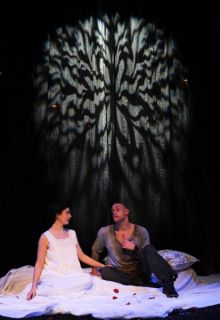
From the opening strains of the cello (composer Elena Kats-Chernin; cellist Heather Stratfold), which set the tempo and the heart racing, and underscore the rest of the action, this visceral, chilling, moving and powerful drama (director Mark Kilmurry) provides much to look at and even more to think about.

Everyone knows a version of the Frankenstein story, but they are probably more familiar with the cinematic depictions of the mid 1900s than the psychologically tortured Gothic melodrama that Mary Shelley wrote in 1817. Despite a reference to the Hammer House of Horror in the predominantly black and white costumes with occasional splashes of red, Nick Dear’s adaptation focuses mainly on the ethical elements of the legend.

Having tinkered with the divine right of creation by constructing a creature from dead human skin and organs, Doctor Victor Frankenstein (Andrew Henry) must suffer consequences. If one wants to create life; one should produce children, yet Frankenstein’s reluctance for intimacy with his finance, Elisabeth (Katie Fitchett) makes this seem unlikely.

Instead he manufactures the Creature, which is represented with startling brilliance by Lee Jones. Jones’ spasmodic movements suggest a twisted choreography. The ‘birth’ scene in particular is incredibly disturbing: actions such as discovering one’s fingers, toes and penis, while cute in a baby, are confronting in a nearly-naked adult.


When thrown out by his disgusted creator, the Creature stumbles upon the farm of a blind university professor (Michael Ross), who teaches him morals, literature and philosophy, unafraid of what he can’t see. He explains that society can breed cruelty; people gather together for comfort and companionship, but then massacre each other, just as soldiers destroyed the professor’s books.

The professor’s son and daughter-in-law (Michael Rebetzke and Olivia Stambouliah) share a loving marriage. The Creature is inspired by this example of equality but when he is introduced to them they recoil in horror and he seeks revenge for their repulsion. Although he wants to be good and loved, he is scorned and derided, which forms his character.

Shelley was greatly inspired by the contemporary doctrine of Calvinism – Calvin taught in Geneva where much of the novel (and subsequently play) is set – which teaches that people are born depraved and only achieve salvation through God. Other religions and philosophies of the time propounded that we are born pure, and learn evil through education and environment. The entire novel can be read as a debate on this issue, and Kilmurry’s direction certainly highlights this aspect.

Things in nature go together and need partners, so the Creature needs a companion and asks Victor for a wife. It is a concept familiar to the Shelley’s and forms the essence of Percy Bysshe Shelley’s poem Love’s Philosophy; “The fountains mingle with the river/ And the rivers with the ocean/ The winds of heaven mix for ever/ With a sweet emotion;/ Nothing in the world is single,/ All things by a law divine/ In one another’s being mingle –/ Why not I with thine?”

The bride that Victor creates is ‘perfection’ by early nineteenth-century standards of the ideal female: she looks great but doesn’t say anything. Women were considered second-rate and early feminist principles are prevalent in Frankenstein (many male detractors argued that Mary Shelley couldn’t possibly have written such a great work herself and must have had help from her husband).

Fitchett embodies this strength in the character of Elisabeth. She is determined to share her husband’s scientific experiments arguing (passionately and justifiably) that the only reason she cannot understand them is that women are not permitted to go to university. She is tired of perfection and searching for something other, claiming that the lakes and mountains are beautiful, but boring and the people are dull.

The handsome but austere settings of Switzerland and the North Pole wind and snowscape (with a brief foray to the Orkney Islands) are superbly executed through sound (Daryl Wallis) and lighting (Nicholas Higgins). Victorian light bulbs drip from the ceiling like stalactites, and the effects are exceptional from the pulsing accompaniment of the heartbeat to the flickering fire and woodland gobos.

The on-stage Foley art adds a nightmarish abstract dimension as actors recreate the sounds of grave digging, beatings and crackling flames. This enhances the clear and creative set design with a central scrim – the semi-transparent curtain occasionally closed like a hospital cubicle to screen the action while conversely highlighting dire imaginings.

The antagonistic symbiotic relationship shared by the Creature and his creator is made flesh by the spectacular acting of the principals and the co-ordinated cyclical design (Simone Romanuk). The final tableau of the North Pole connects us back to the beginning with its infinite succession of life, death, birth, creation and destruction; all reflected in the round black granite stage. It’s timeless, it’s brilliant and it’s truer to the original source material than any previous version of this classic tale.

Friday, 14 June 2013

Friday Five: Iain (M) Banks

I really admire Iain Banks. When I was a humble bookseller in Manchester, he came to the shop to do a singing session, which ended up in a drinking session at the pub. I was slightly intimidated by him. He was a large man with a big beard, prodigious talent and uncompromising politics (that I feared included a dislike of the English, but turned out to be a dislike of the Tory government, which I think all of us shared).

It seems to me to be no coincidence that four very important men in my life (Him Outdoors; Hoggy; Will and Scooter) all rate him very highly too. Many of my memories of his books are tied up with memories of these people, and my Manchester bookselling days, which makes him a sentimental favourite as well as a literary legend. I was very sad to hear of his death, which is a loss to the thinking (and drinking) world.

I am currently reading Raw Spirit: In Search of the Perfect Dram, which I bought for Him Outdoors about a decade ago. He read it but I never did, until now. It is taking quite a long time to read the mix of travel, taste, tradiion and tall tales, as I accompany the turning of pages with sipping of malt whisky. Surely there is no ohter way to do it? I'm sure this will make it into my top five favourite Iain Banks books, but here are another five to be getting on with in the meantime. I have included my original notes and the dates I read them.

Five Fabulous Iain Banks books:
  1. The Wasp Factory (1994) This novel is brilliant; there is no other word for it. It was my introduction to Iain Banks through my brother who recommended it to me telling me it was one of his favourite novels, but it could be considered sick. I suppose it could. But the chillingly horrific aspect adds to its excellent spell in which I was bound from the moment I picked it up.
    The novel is narrated by Frank, a sixteen-year-old recluse with an overly fertile imagination and certain grotesquely bizarre habits. Living alone with his father in a remote part of Scotland, he admits before the novel commences to have killed three of his relatives and we soon realise he is more than capable of doing so again.
    He tortures animals, collecting them on sacrifice poles. He predicts the future through the use of the wasp factory: the wasps choose a certain passage to crawl down, at the end of each is a particularly nasty way for them to die. Frank is generally not a very nice person, but at least he loves his brother, Eric, who is no better, with a penchant for setting light to dogs. Eric is being held in a mental hospital, but he has escaped and is heading home.
    Frank is highly intelligent but very intense and even, at times, sensitive, such as in his friendship with Jamie, a dwarf. The novel contains some startlingly graphic images, such as a brain full of maggots, which make the reader more inclined to credit the rest of the novel with its extremely unusual ideas.
    It ends with a dramatic twist which makes you want to re-read it in the light of what you now know. It really is a stunning debut novel with tributes pouring in from most papers such as 'brilliant dialogue', 'cruel humour', 'weirdly talented', 'barnacled with the grotesque', 'minor masterpiece', and 'unsettling'. Others were less enamoured, claiming it is sick, crass, repellent, depraved, obscene, lurid, vicious, distasteful, and repulsive. All of which titbits, incidentally, are reprinted in the opening pages.
    The Wasp Factory certainly made a shocking impact when first published. Some reviewers loved it, others hated it, but all realised its power and significance. I loved it and wish all debuts were this impressive. Certainly unforgettable and I doubt, as The Times hoped, 'a joke, meant to fool literary London into respect for rubbish.'

  2. The Crow Road (1995)
    I had to check The Wasp Factory wasn't a one-off, so I read this one too. It is excellent - a good story and well-written. It has the same shock-tactics, beginning with 'It was the day my grandmother exploded', and continues in a similar style.
    Prentice McHoan returns to his family on the west coast of Scotland, having fallen out with his father over a question of religion and principle. His grandmother informs him that he is a 'pivot' and that the rest of the family revolves around him. As he delves into the past, discovering more about his uncles, some of what he uncovers proves to be extremely disturbing to him and his sense of family values.
    Prentice has an irritating flat mate, who runs the bath full of hot water and then leaves it to cool down, and fills the kettle to the brim when he only needs enough for a cup of tea. He plays rugby and accompanies Prentice everywhere. Prentice also has an older brother Lewis, who has become a successful stand-up comic by telling jokes about his family, which Prentice resents.
    Prentice is also concerned with alcohol, drugs and sex. The only thing which is obvious is that he gets the girl in the end. There is a revelatory scene where Ashley (the girl in question) uses her cervical muscles to spell out 'I love you' in Morse code while having sex.
    The rest of the novel is not nearly so predictable. It flashes between time and characters with great regularity as Prentice discovers more about the Crow Road. This is a set of papers left behind by Uncle Rory after his disappearance; the crow road being a place whence people went when they died, according to Grandma Margot.
    Many of the novel's excellent snippets make you wonder about Banks' sanity, but none of them can be divulged because they all interlink and would reveal the story. The 500 pages simply fly by. More please!

  3. A Song of Stone (1998)
    As I have come to expect from Iain Banks, this novel is weird and wonderful. The narrator, Abel, tells his story to ‘you’, his lover, although she was there for the most part, as he looks back on his life recalling the events that led to his impending death.
    Abel owns a castle in Scotland complete with servants, game and trout streams. When a war wages through the country (there are no dates, it appears to be set in some dystopian future, although ‘when’ is immaterial), he and his lover attempt to flee but they are arrested by a lieutenant and her ragged army and imprisoned in their former home.
    Possession is a major theme. The army now owns the castle in which it wreaks havoc and destruction. “My home, our home, laid waste, sacked and ruined; the collected treasure of a handful of centuries, an entire family tree of ancestors and half the countries of the world all obliterated in one night of frenzied abandon.” The castle, built centuries ago for defence, cannot stand up to cannon-fire and is eventually razed, outliving its function, and strangely liberating Abel by taking his possessions from him.
    The question of possession in relationships is also raised. Abel’s relationship with ‘you’ is very strange. They share each other sexually with others without jealousy or regret, although there is still evidence of affection. Many of their friends think they are depraved and eventually drift away, leaving them isolated. They are not ashamed of their actions and don’t consider them debauched, although they do secretly bury a stillborn offspring, afraid that they have gone too far. This, and other hints, Leads the reader to question the nature of their relationship.
    A Song of Stone is a dark nihilistic novel. It looks at the worst of human nature; its brutal side. There are scenes of torture and disgusting images, perhaps reminiscent of Lord of the Flies or Heart of Darkness. Iain Banks has a dim view of humans, believing they are ultimately concerned with themselves and their own gratification, often through destruction of both material possessions and moral strictures. It is as excellently written as the rest of his novels, but left me feeling empty and depressed.

  4. Feersum Endjinn (2002)
    This was a rare foray for me into the world of science fiction, but I like Iain Banks, so decided to see what difference an M would make. The style is similar. The prose is lucid, the plot well worked, and the characters distinguished, as the narration leaps between them, some telling their tales in the first person, others having them told on their behalf. The dark nihilism of Banks’ other works of ‘artistic’ fiction (if there is such a category, as removed from ‘science’) is present here, but this world is futuristic, and Banks can allow his morbid imagination to run away with him, and us.
    The year is “by the new reckoning….called the second-last”. The Encroachment is coming, like some sort of second ice age, as the sun dims to darkness. In this world, people have seven lives and their accumulated knowledge and experience is held in the crypt, into which people can travel through virtual means - incorporating ‘constructs’ – talking polar bears, sloths, and ants. One of the characters learns as she goes along. Her vocabulary expands with her knowledge. Another cannot spell and records his thoughts phonetically, all of which makes demands upon the reader. Others speak in technical jargon or flit through parallel realities as they stretch the fabric of time. Utterances such as “ ‘U ½, ½ u?’ I sez (& am finkin O-O)” require concentration, but it is well-rewarded.

  5. Transition (2009)
    This novel is supposedly the mid-way point between Iain Banks and Iain M Banks, so you get the best of both worlds; nitty-gritty realism and fanciful sci-fi imaginings. From the opening sentence – “Apparently I am what is known as an Unreliable Narrator” – you are immediately plunged into chaos and confusion.
    The narrator is a transitionary, someone who can flit between worlds where they can interfere and affect outcomes. Some of the tasks of the Transitionary are to do good; to intervene by introducing people to each other, leaving a book lying around for them to discover, stopping them from entering a building that is about to collapse. But these are not the roles the Transitionary relishes and which keep him awake at night.
    Some people are able to tandem, which is to take another person with them when they transition. Most transition with the help of a special chemical in tablet form, called septus, although the Transitionary does it by sneezing, like Nadia Popov in Rent-a-Ghost. An organisation controls the transitions and the quantities of septus, but what happens if people can flit or transition without it? Also, some people are able to pervert the natural order by assuming new bodies and simply refusing to age or die. As with all of Iain (M) Banks’ novels there is an element of paranoia and the fear of powerful corporations, and he advocates disorder and natural arbitrariness.
    With or without the M, Ian Banks is instantly recognisable and any novel of his will provide a good read. You know what to expect up to a point. His genius is that he can take similar ingredients each time – sex, torture (this gets a bit preachy and there is an obvious swipe at the Bush administration and Guantanamo Bay), drugs, whisky and of course, Scotland – and create an entirely new concoction.

Friday, 7 June 2013

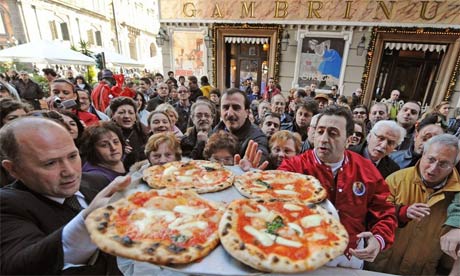
Friday Five: Pizza Toppings

Friday is fish and chips night. But occasionally it is pizza. It is never Hawaiian pizza, or anything with bananas on top. That's just wrong.

5 Favourite Pizza Toppings:
  1. Margherita: fresh tomatoes; sliced mozzarella; basil and extra-virgin olive oil (simply the best!)
  2. Capricciosa: mozzarella, tomato, mushrooms, artichokes, prosciutto, olives
  3. Frutti di mare: tuna, shrimps, mussels
  4. Napolitana: anchovies, olives, capers (especially if I need salt)
  5. We Love Ewe: slow-roasted lamb; button mushrooms; caramelised onions; blue cheese and walnuts (exclusive to Pesto in Arrowtown - I miss it)

Friday, 31 May 2013

Friday Five: Chat Shows

I like chat shows. This is a good thing, because they seem to be making a come-back. When I come home from rehearsal or a show, my mind is still whirling and I need to unwind but don't want anything too heavy. Sometimes I have a drink and listen to music. If he's still awake I talk nonsense with Him Outdoors. Sometimes I watch chat shows and listen to snippets from other people's lives.

You are invited to share on a chat show: you learn what they want you to learn - it's not like it's phone-tapping - but there are also involuntary physical gestures that can lead you to form an opinion about the person on the sofa. The format I prefer is when the guests are seated together so they interact with each other. Michael Parkinson once said that this was the way to get the best show. He could just sit back and enjoy it as the party unfolded. That's what feels comfortable to watch too. I also like the variety feel with musical and comedic acts interspersed with the chat.

5 Favourite TV Chat Shows:
  1. Parkinson - Michael Parkinson: simply the best
  2. The Graham Norton Show - has an interesting variety of guets and Graham Norton knows how to make them come across well (no filth intended)
  3. Rove Live - before he went to LA; Rove McManus was the Australian standard
  4. The Kumars at no. 42 - The studied awkwardness and faux-family dynamic with guests who played along with the joke; it just worked
  5. Wogan - Terry Wogan may have suffered from over-exposure (he was everywhere in the 80s) but his chat show was actually pretty good.