Friday, 12 July 2013

Friday Five: Le Tour Facts


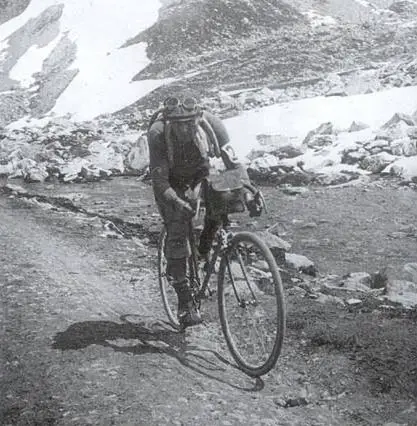
Eugene Christophe, who rode his first TdF in 1906 and his last in 1925, when he was aged 40.
The other day while I was waiting to meet Him Outdoors in a cafe, I picked up a book of photos released to commemorate the 100th Tour de France. Of course, it may be the hundredth race this year, but it is not 100 years since the first one: Le Tour did not take place between 1915-1920 and 1940-45. It seems that only war can stop the tour. It was very saddening to read that so many young men of phenomenal athletic ability who had ridden this incredible race, including winners Lucien Petit-Breton, Francois Faber and Octave Lapize, were killed in the wars.

As I flicked through the photos, I was struck by many differences both great and incidental: every spectator in the early shots is wearing a hat, whereas none of the riders are wearing helmets. Some of the roads are now sealed as opposed to the gravel, and the towns have grown, but the mountains remain the same. And although the bikes are now made of carbon fibre and state-of-the-art gearing, they are still just a frame on wheels. The bike is an amazing invention, and France is a fabulous country through which to ride.

5 Tour Trivia Tidbits:
  1. The winner of the very first Tour de France (in 1903) was disqualified for taking the train - now that's blatant!
  2. Le Tour has finished in Bordeaux more than in any other city, other than Paris
  3. The first death at Le Tour occured in 1910 when Adolphe Heliere was stung by a jellyfish while bathing off the cost of Nice on a rest day
  4. Originally cyclists were allowed no outside assistance (pictures show them carrying their own spare tyres slung across their chests). In 1913 the forks of Eugene Christophe's bike broke in the Pyrenees. He carried his bike 14km to the nearest village to repair them at a forge. Unfortunately the lad operating the bellows was judged to have been helping and Christophe was given a four-hour time penalty. That 326km stage took him 17 hours and 44 minutes to complete. (The Swiss rider Celidonio Morini took 21 hours and 24 minutes)
  5. The starts were between midnight and 6am to allow the riders to finish in daylight hours.

Thursday, 11 July 2013

Countdown to At Home at the Zoo 1


Something Borrowed Theatre is presenting At Home at the Zoo by Edward Albee next week at Smith's Alternative. I am playing the part of Ann, which is an intriguing and deeply involving role. For the next week, I shall count down to the performance with quotes from the play.
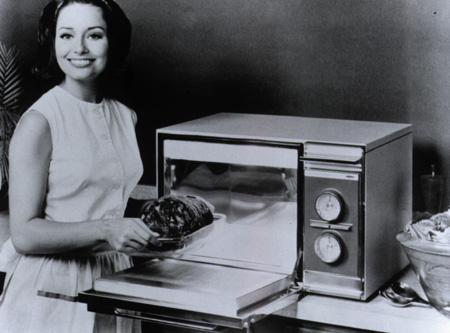
"I've decided I don't like microwaves. It's hard to get in there and... stir around; you have to trust what you're doing." - Ann

Friday, 5 July 2013

Friday Five: Big Thoughts from the Smallest Room


I honestly never even thought it was disrespectful of my parents to have a copy of the United States Declaration of Independence on our toilet wall. Admittedly when I was very young I used to giggle occasionally at the thought that wee hold these truths to be self-evident, but as I got older I thought it was good to reminded at least once a day that all men are created equal and have certain unalienable rights including life, liberty and the pursuit of happiness.

You have time to sit and think on the toilet. I don't encourage you to take in reading matter (that appears to be a boy thing) but if there is something to look at, it seems to make the time (and other things) pass more pleasantly. Many folk have calendars in their toilets, perhaps merely to look at pretty scenic pictures, or to remind themselves to do things, when they are more at leisure to do so. Sometimes these bear humorous anecdotes or witty cartoons. It's a good place for a laugh.

Or reflection. There are always mirrors, although I don't think it's a good idea if these are positioned so one can witness one's morning constitutional. But there are often photos of the home-owner and their drinking buddies, or images which might seem a little risqué in a more formal setting. But the décor in the lavatory can be informative and illuminating.

5 Posters found in toilets:
  1. Height charts - frequently found in houses with children; a little sad if the only inhabitants are adults. My favourite was the one where the 'mother' appeared to shrink as she had clearly been lying about her height until her children physically outgrew her and she could no longer keep up the pretence. You know who you are.
  2. The periodic tale - favourite of science geeks universally
  3. Historic chart showing Kings and Queens of England in a rather natty family tree. Most educational
  4. A mushroom and fungi identification chart - unfortunately by the time you are sorrowfully gazing at the image of the chestnut dapperling, the fool's webcap or the deadly parasol, it may be a little late...
  5. A pure yeast and fermentation guide for the making of ales, lagers and Belgian and wheat styles. Actually, it's in our house. Him Outdoors got it to assist in home brewing, while I chose the location. As I said, it's a good place for a laugh.

Wednesday, 3 July 2013

Hans Academy


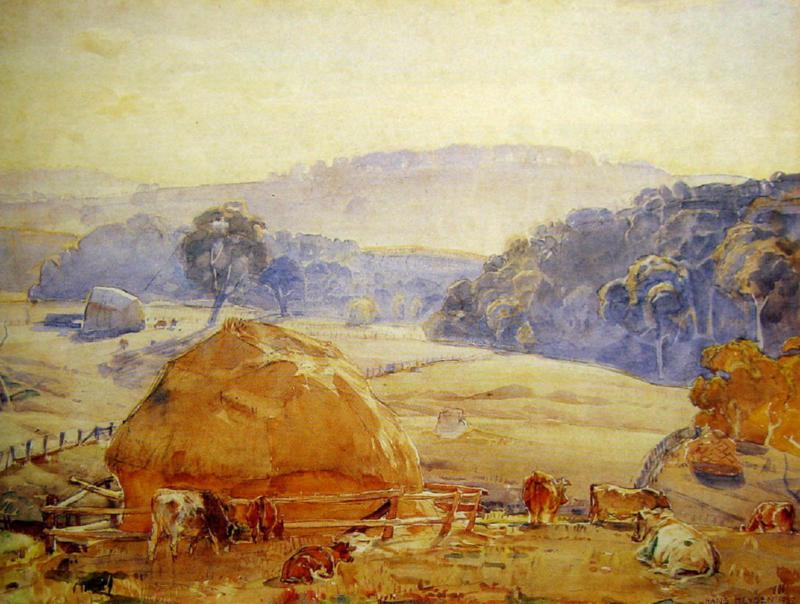
Hans Heysen (1877 – 1968) was a renowned landscape artist who spent most of his working life in and around Hahndorf, South Australia. A superb draughtsman, skilled watercolourist and accomplished painter in oils, he was famous for his unique romantic-realist representation of Australian landscape, in particular of the massive gum trees in the Adelaide Hills that he so loved.


He is considered to be the first artist to visit the outback and is known for his sensitive and penetrating vision and devotion to nature. As well as depictions of the Flinders Ranges of the north of South Australia, his pen and pencil drawings and charcoal compositions evoke the quality of light in the Adelaide Hills.

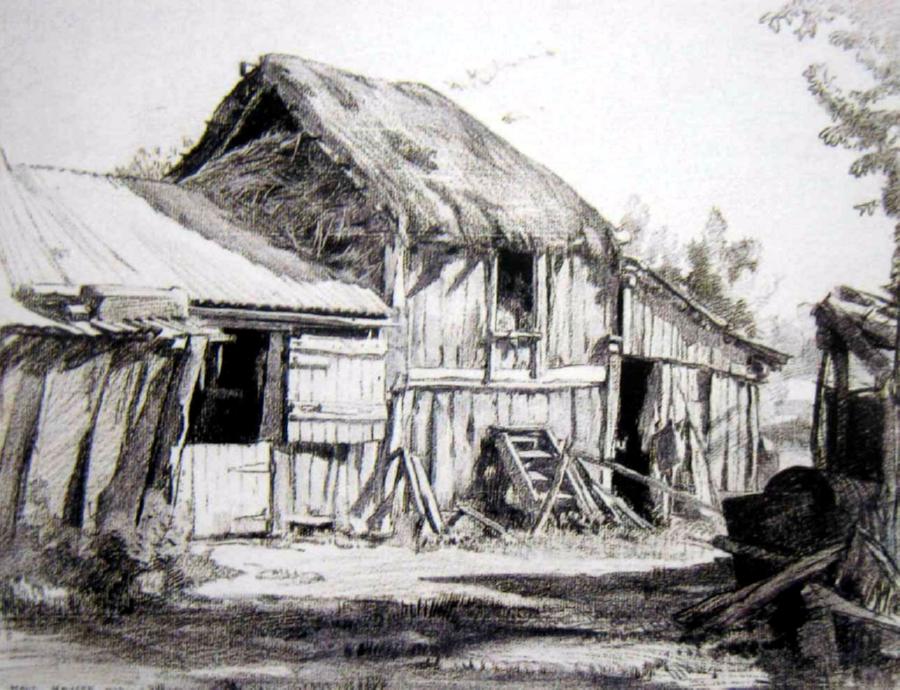
Heysen donated a selection of drawings to the Hahndorf Academy which are now on permanent display. These exquisite sketches and preparatory drawings were completed over a period of fourteen years from 1906 to 1920. They reflect the artist’s love of Hahndorf where he and his wife settled in 1908, as well as his strong support of the Academy.

The Academy was a school, established in 1857, whose purpose was to provide, “a sound and good English and German education in order to enable its pupils to enter the learned professions or to prepare for commercial life.” It became a secondary boarding school teaching in both English and German with a strong reputation for art, physical education, academic scholarship, commerce and music.

Due to various financial difficulties, the building was sold several times and served many functions, including as a Lutheran teacher’s seminary, a nursing home and hospital, council offices, military headquarters, a betting shop, a dentist’s surgery, private dwellings and flats, and a recreation centre.

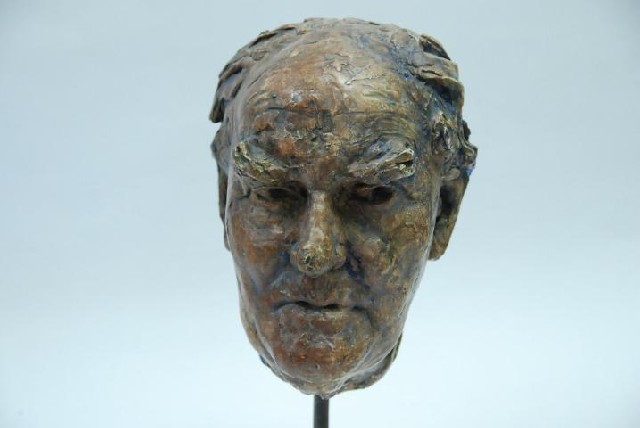
Eventually it became the Hahndorf Galleries and German Folk Museum, with an exhibition of Hans Heysen’s works to commemorate his 90th birthday. The subsequent programmes of works by emerging artists drew visitors from around the world, and the Academy also became well known for its concerts. The Heysen Room was dedicated to displaying the works that Hans Heysen had donated to help raise funds plus the bronze sculpture of his head by John Dowie.

Heysen’s sketches at the Academy include German Wagon, Cutting Chaff, Farm log roller, Haebich’s Smithy, Back Street Corner, Witmer’s Pump, Thatched barn, and The Road to Hahndorf. Heysen didn’t have the heart to finish this last painting, as the authorities felled the trees (although he offered them the selling price of the timber to try and save them).

The spiel at the Academy claims that the pictures Heysen donated are part of a visual archive. “The images are a reminder of days gone by; a lively German town filled with the sounds of horse drawn vehicles and children playing... the aroma of German sausage and freshly baked bread and the charm of the thatched cottages lining the main street.”

Tuesday, 2 July 2013

My Newest Favourite Thing: Veronika Maine

I don’t like clothes shopping. By which I mean I don’t like shopping for clothes. If clothes want to shop, that’s fine by me, although perhaps unlikely. According to popular mythology, women love shopping. Sigh. Another way I don’t fit into your boxes.

The first problem is me. My top half and my bottom half are different sizes, which means I can’t easily wear dresses. Apparently if you are over a size twelve anyway, all should wear is black so you can scuttle about your business and return to your house as unobtrusively as possible. Designers don’t want you to be seen in their clothes – heavens; it might suggest there are real women out there, and the sky might fall.

The second problem is the clothes. They are usually badly-made and ill-fitting with shoddy stitching and insufficient lining. My grandmother was a seamstress. She would take the garment between thumb and finger, examine the material and the make-up and then tut loudly and pronounce, ‘Shabby’. It was an experience that to witness was to wither. Many shop assistants are probably still in therapy.

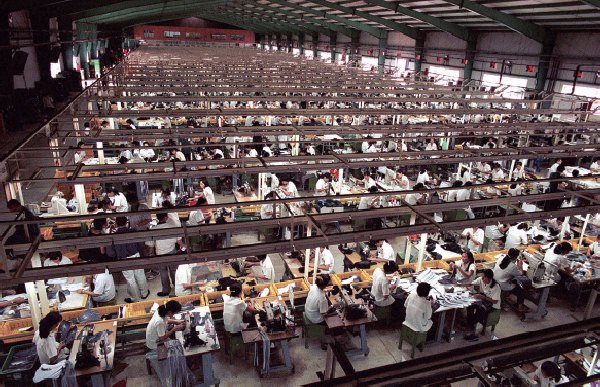
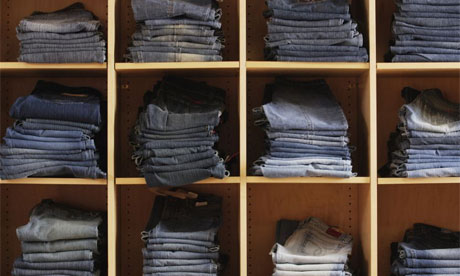
The contribution of high-street fashion to slave labour and sweat shops makes me sick. Certain shops proudly trumpet the fact that they sell jeans for $15. You can bet they have a hefty mark-up on these items, so they are probably purchasing them for $5 or less. That price will include transport from China or Bangladesh or the Philippines or whichever country’s impoverished workforce we are currently choosing to exploit. Slavery was abolished in Britain nearly 200 years ago, and the Universal Declaration of Human Rights banned slavery globally in 1948.


By turning a blind eye because I want cheap jeans (and who doesn’t? I haven't got much money and I certainly can't afford top-end designer gear) I am perpetuating this system. I am not supporting my local economy, manufacturers or designers, and therefore am contributing to the current downturn with its inherent erosion of workers’ rights and might as well vote Tory. I buy Fairtrade, organic and free range products wherever possible and have never illegally downloaded artistic creations. To purchase unethically would betray my principles and yet buying clothes seems to leave me with strictly limited options.

The third problem is the shops. Loud music; fluorescent lighting; confronting changing rooms; neurotic thermostat controls; and as for the staff… It’s really not their fault; they are there to sell and I suppose they get a commission. There is no other excuse for them foisting items onto you that you clearly don’t want or suit and then telling you that they look great on you when you know perfectly well they make you look ghastly but you have been battered by the onslaught of rampant consumerism and you don’t want to look like a failure by leaving the shops with nothing – it is tantamount to admitting you are misshapen and hideous and will never fit in with the thin and pretty people – so you buy something you will never wear and still have achieved nothing through the whole rigmarole except a feeling of self-loathing and an inability to pay the heating bill, and, what’s more, you will have to do it again because you still haven’t got a pair of jeans that fits... And breathe.


Enter my damsel in shining armour: Mim at Veronika Maine. She does not laugh at my size, or make me feel bad about being big. She asks whether I want colour and what styles I would prefer. She recommends things that actually fit (and are well made), and doesn’t seem to mind if I don’t take everything and spend a fortune. She understands my ethical concerns and discusses them with me. The shop is part of a group that is 100% Australian-owned and employs local designers. Almost everything is made in Australia and the organisation works closely with the Textile Clothing and Footwear Union of Australia (TCFUA) to ensure rights and working conditions are honoured. How often have you been confident that the retail assistant in the high street would even know those details, let alone be proud of them?

And the changing room is spacious and pleasant. I leave the store with two pairs of jeans that fit, that aren’t outrageously expensive (but I know that the price I paid means that the people who made them received a decent wage or doing so) and that I know I will wear and be happy with. I also have a good feeling about my ethical consumer choice. For once, I have had an enjoyable shopping experience. Honestly, why would I shop anywhere else?

Friday, 28 June 2013

Friday Five: Lack of Empowerment


A friend drew my attention to this cartoon by Jackie Flemming. As an indictment of lads' mags, it's a good one, I must admit. But, as I pointed out to her, women's magazines are just as bad. Sadly, most of them are also degrading to women: buy this; wear this; act like this; raise your chilren like this; don't wear this; don't do this; don't leave the house unless you're under 25 and thin... And let's all gawp at a picture of a real woman who dares to have cellulite and wear no make-up.

A few years ago I made a New Year's resolution not to buy women's magazines and I don't. Apart from the year I resolved not to iron any more clothes, it has been my favourite resolution.When we were at Bondi Beach the other weekend however (yes, I did just place drop shamelessly), a girl from the Cosmo Combi was handing out free copies of the latest issue of Cosmopolitan so I took one.

Out of interest, some of the articles which are meant to be empowering young women of today are listed below. I think I made the right decision but I still despair for those who are influenced by this patronising sexist consumerism whch preaches that women are simply not good enough, and probably never wll be, but if they can keep on striving to be physically and sexually alluring, (and buying beauty and fashion products) perhaps they might please a man. 

Five Cosmopolitan Articles:
  1. The best way to find a guy
  2. Thinking of a threesome?
  3. 20 sexy ideas for when you're not up for sex
  4. Five hair products you need
  5. Cool stuff you didn't know you needed

Tuesday, 25 June 2013

Adelaide Migration Museum: It's not over here

The Immigrants by Aurelio Fortelaan
The Migration Museum in Adelaide is a building with a story of its own. The site was originally used as a Native School where Aboriginal children were boarded and educated. It then served as part of Adelaide’s Destitute Asylum (housing the poor and homeless and ‘fallen women’), from 1852 to 1918. In its final incarnation before becoming the current museum, it was a Government Chemistry Department, where chemists analysed blood samples. All of these eras have a small exhibition explaining their purposes, although the main body of the museum features the history of migration in Australia.

Scientific discoveries in navigation and shipbuilding technology meant that by the fifteenth century ships could travel much greater distances than before. The competitive nation-states of Europe began a search for distant lands where they could exploit natural resources in order to increase their power and trading opportunities. In 1492 Columbus claimed the Americas for Spain.

For the next four centuries, Spain, Portugal, the Netherlands, England, France and Germany progressively explored the Americas, Africa, Asia and the Pacific. Soldiers, missionaries, settlers and armies of bureaucrats followed in the wake of these voyages of ‘discovery’. The world’s oceans were linked through a network of empires, colonies, trading posts and shipping routes.

Between 1815 and 1930, 52 million people left homes in Britain, Ireland, the German States, Scandinavia, Italy and Southern Europe. Of those, 3.5 million came to Australia (fewer to South Australia). They were exiles for political or religious reasons, leaving their native land due to instances of poverty, such as the Irish famine or the Highland clearances of Scotland. They sought opportunities of work and land.

Of course, while the story of immigration is an important one for the continent, it was not Terra Nullius. The Kaurna people are the indigenous owners of the land of the Adelaide Plains and they called the area by the mouth of the Torrens River, which became the city of Adelaide, Tananya, which means Red Kangaroo.

The white settlers could have learned much from the original inhabitants, but were too busy trying to make a new Britannia; ‘civilising and Christianising’ the Aborigines. They found the rose (a symbol of England) flourished in South Australia, and Archdeacon Matthew Hale introduced cricket at Poonindie as part of the ‘civilising’ process. Escaping persecution made the new migrants zealous for religious freedom; there is a reason Adelaide is known as the city of churches.

The octagonal display room of the museum features many exhibits of what the immigrants decided they needed to take or were physically able to carry. Some of the items such as valuable work boots, sentimental christening gowns or tea-sets one couldn’t bear to leave behind are terribly poignant as people embarked upon a new life on the other side of the world.


In 1829 one of the founders of South Australia, Edward Gibbon Wakefield, published a theory of systematic or scientific colonisation in which settlers would no longer receive free grants of land as in other colonies. He suggested instead that colonial land should be sold for a set price to men of wealth, and the proceeds used to pay emigration costs of desirable labourers. The class system was still in evidence, however, and the ‘wrong type of labourers’ were arriving. The government began subsidising immigrants only at times of extreme shortage.

Australia became a Federation in 1901. The Nomenclature Act of 1917 prohibited use of German language and changed place names of German origin. In 1927 the Duke and Duchess of York opened the new Parliament House in Canberra, and in 1930, the first telephone link to Britain was established between Melbourne and London. And the waves of migration were reaching Australian shores from all over the globe.

In 1906 Australia took formal control of PNG from Britain; 7,500 Jewish refugees from Germany were accepted in 1973, flowed by Chinese refugees in 1940 after the Japanese invasion. Italian prisoners of war arrived in 1941, and in 1946 Austrians, Maltese, Italians and Germans came. Free and assisted passage agreements with the UK and Poland were set up to help displaced persons to migrate, and in 1948 the creation of Israel led to emigration of Palestinians.

Child migrants began to arrive in 1951 and, as of 1956, jet aircraft flights to Australia made it easier for Eastern Europeans to travel, which they did with the assistance of the Operation Reunion Scheme. Many people from the UK flocked Down Under as part of the Bring out a Briton campaign of 1957. The British, and particularly the English, make up a large percentage of Australia’s immigrants, but are often referred to as ‘the invisible migrants’.

Not all migrants were welcomed equally. A dictation test was established in 1901 in which some new migrants had to transcribe 50 words of ‘any European language.’ From 1909 the Immigration Restriction Act (known as the White Immigration policy) was implemented and until it was repealed in 1958, no one who was given the test passed it. Dictation would be given in Swedish, Scots Gaelic or Hungarian if the immigration officers didn’t like the look of you (i.e. you were Irish, Asian, black) or your politics.
A tapestry from Bosnia and Herzegovina
Immigration has continued steadily over the years, following a pattern of social, economic, political or geographical upheaval: – Italians from Sicily arrived after the earthquake of 1968; 12,000 Czech and Slovak refugees arrived following the Soviet invasion; Vietnamese people came to avoid the war in their country, and Cambodian refugees fled Pol Pot’s regime throughout the 1970s. Bengali immigrants escaped civil war between East and West Pakistan in 1971, and Chilean refugees escaped Pinochet where they could.

The relationship has not always been an easy one, however, and although migration adds multicultural richness in terms of faith, food, dress and theatre, not everyone is happy with the diversity. In 1949 the Minister of Immigration, Arthur Calwell, instigated The Good Neighbour Project to ‘Australianise all our migrants in as short a time as possible’. The Aboriginal Tent Embassy was erected in Canberra in 1972 by indigenous people who felt their rights were being eroded by foreign intervention.

Despite the Declaration of Universal Migration in 1973 which stipulates, ‘any persons anywhere in the world can apply to migrate to Australia no matter what their sex, colour, ethnic origin or religion’, there is still a large amount of tension and unease around the subject, bursting into violent protest on occasion such as the 2005 race riots.

The museum had no section on the (current) Opposition leader’s tirade against Indonesian asylum seekers – Tony Abbott maintains he will ‘turn back the boats’ – but the fact that this is an incendiary issue which might have a significantly influence the upcoming federal election suggests that the migration museum has several more chapters to include in its narrative journey.

Tapestry detail