Showing posts with label slavery. Show all posts

Saturday, 12 January 2019

A tour de force of story-telling


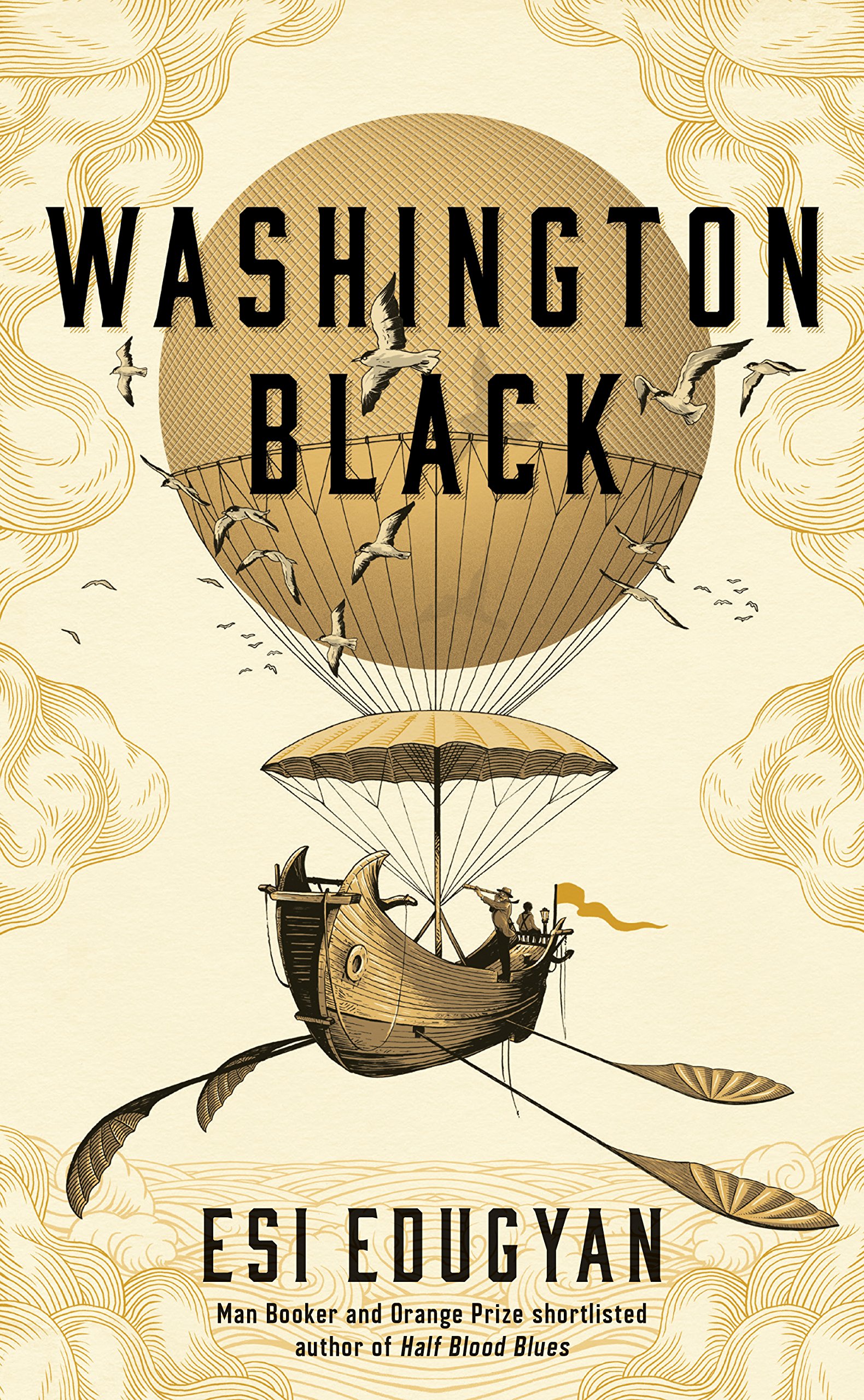
Washington Black by Esi Edugyan
(Serpent's Tail)
Pp. 417

This is a picaresque novel full of adventures and multiple locations: from the slave plantation in Barbados to the frozen wastelands of the Canadian Arctic; from the structured canals of Amsterdam to the wild coasts of Nova Scotia; from the scientific calm of the London Aquarium to the wind-swept deserts of Morocco. It is peopled by explorers, adventurers, scientists and exploiters. Everyone is seeking something: discovery; freedom; equality or survival, and it can all be realised as Washington Black says to his mentor who warns him something is impossible, “Nothing is possible, sir, until it is made so.”

Washington Black is rescued from his brother’s slave plantation by adventurer and inventor Christopher ‘Titch’ Wilde, who says he wants a young boy to help him carry his instruments and take scientific measurements. Titch is trying to sail in a cloud cutter – a craft propelled by both a hot air balloon and more prosaic oars. He encourages Washington’s prodigious gift of drawing and removes him from the daily cruelty of life he has previously experienced. Is he really benevolent, however, or simply using him for his own means?

After an incredibly unfortunate incident, Titch knows that he and Washington must flee and so they affect a wonderfully improbable escape to the Canadian Arctic. Here Washington is introduced to a new world, culture and relationships. When Titch disappears from Washington’s life, he is presumed dead, and Washington must attempt to forge his own way in the world that has hitherto denied him freedom.

Edugyan never flinches from the violence and barbarism of slavery and its consequences, but nor does she dwell upon it. Washington knows his mother was abused and raped, and he writes baldly of the horrors of the slave ships: “The stench of the holds, all of them rolling naked and ill in the dark stomach of the barquentine. The urine and excrement and vomit, men clawing their own throats open with ragged fingernails, bloodied women leaping the deck rails into waters sharp with the fins of sharks. I saw the dozens who had died on the way to Barbados, and I saw those who died once ashore.”

In striving for his freedom, Washington severs his ties with his previous existence and the people he once knew and cared for – it seems that he can only care for himself in order to survive. The novel questions the meaning of belonging. We understand that we do not belong to a person, but can we belong to a place, and how important are family connections? When Washington suspects that Titch may be alive, he begins to search for him, but why? Was he abandoned?

As well as being a sweeping saga of derring-do and outrageous plots, this novel also examines the conundrum of colonialism, survivor’s guilt, and the impossibility of altruism in a pointed and poignant manner. The language is clear and precise as Washington attempts to describe unimagined circumstances, and the fantasy and realism elements blend well in a tour-de-force of storytelling.

Tuesday, 22 October 2013

Daniel Day-Lewis IS President Lincoln


In Britain we have a royal family to obsess over. America has their presidents. Some have achieved legendary status for good or bad, but the good can barely be questioned. Abraham Lincoln is among these monolithic myths, and, with his latest film, Steven Spielberg has added to the general hagiography.

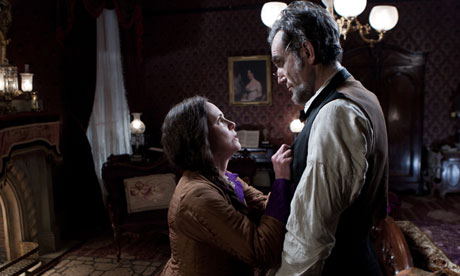
Just over twenty years ago Oliver Stone made a film about JFK which was equally reverential and full of similar examples of good actors struggling with a tedious script. In other words, it is incredibly worthy and desperately dull. Sally Field, Tommy Lee Jones, James Spader, David Strathairn and, indeed, the entire supporting cast are excellent, but this is a star vehicle for one man only, and Daniel Day-Lewis embodies the eponymous character to a frightening extent.


DDL (as he is referred to in the Hollywood press) is a notorious method actor and apparently he didn’t drop his assumed accent or stoop for three months of filming. The physical similarity is remarkable and when he stirs in his chair in the opening scene, it is as though the great Lincoln memorial has come to life. His voice is almost atonal and though there is fire in his argument it is not apparent in his delivery. He shuffles, looks down when he talks, chuckles to himself and presents as a shambling and slightly delusional drunkard.

He is also constantly telling anecdotes, gathering his staff around him like a luvvie director holding court before his sycophantic crew. His wife (the indomitable Sally Fields) reflects, “How the people love my husband. They flock to see him on public events”. However, great sympathy is shared with the Secretary of War, Edwin Stanton (played by Bruce McGill) who rails, “I don’t believe that I can bear to listen to another one of your stories!”

Lincoln must be impeccably researched and the ponderous dialogue is probably taken from transcripts – there is such a lot of it. Lincoln was a lawyer, and there are plenty of lectures which would feel at home in a courtroom. We are reminded that he was a political genius and favoured rational justice and stirring speeches rather than flamboyant gestures or theatrical fanaticism. He frequently repeats his salient points and resorts to Euclidean geometry to strengthen his message – “Things that are equal to the same thing are equal to each other – this is self evident”.


Doubtless there is meticulous attention to detail and the beautifully-framed set pieces would make an excellent stage for a play. The interior décor almost certainly suits the period (1865) perfectly, but it’s very stuffy and there are a lot of dark rooms, which makes it tiresome to view. Titles appear across the screen as each member of the confederacy or other important political figure is introduced, highlighting the documentary feel.

Lincoln attempts to do anything to win support for his 13th Amendment, which will abolish slavery and involuntary servitude, except as punishment for a crime, and is not above boardroom deals. Despite a tense voting scene, the action is severely limited for a film set in the midst of the bloodiest period of American history – more American men died in this conflict than in all other American wars combined.


We are also presented with a very simplistic view in which the Civil War was fought entirely over slavery between the Slave South and the Free North. While Lincoln preaches, “We begin with equality. That’s the origin isn’t it? That balance, that’s fairness, that’s justice” his detractors counter, “Congress must never declare equal those whom God created unequal”. There is hours of this stuff, as the debate drones tireless on. While we modern enlightened viewers clearly know which side is right, we cheer to Thaddeus Stevens’ (Tommy Lee Jones) interjection wishing to know when we can see an end to this “interminable gabble”.


As one of his black and white treatises on slavery, I prefer Spielberg’s Amistad. Watching Lincoln, the viewer may be forgiven for imagining they are back at school and being forced to sit through a fairly elementary history lesson. Lincoln himself confirms, “I could write shorter sermons but when I get started I'm too lazy to stop”.

Apparently the fear is that if slavery is abolished the men will have to be enfranchised. Whatever next; votes for women? They needn’t have worried – another 100 years had to pass before emancipation. Lincoln claims, “I’ve found that prophesying is one of life’s less profitable ventures,” which was perhaps just as well.

With the war over and the amendment passed, it remains to Lincoln to lead the country “with malice toward none; with charity for all... to bind up the nation’s wounds”. Of course, he will have far more personal wounds with his assassination (not shown on screen as the viewer is in another theatre when the fatal shot is fired), but he will belong to history.

To a score by John Williams, Lincoln strides into the dust to cast a shadow like a spectre over all American politics. References resound of George Washington, John Quincy Adams, James Monroe, and Thomas Jefferson throughout the film. It is self-evident that Abraham Lincoln takes his rightful place in this sparkling quintet. It is also obvious from the opening credits that DDL will earn an Oscar for his character portrayal. It is less clear whether the film is as assured.

Tuesday, 2 July 2013

My Newest Favourite Thing: Veronika Maine

I don’t like clothes shopping. By which I mean I don’t like shopping for clothes. If clothes want to shop, that’s fine by me, although perhaps unlikely. According to popular mythology, women love shopping. Sigh. Another way I don’t fit into your boxes.

The first problem is me. My top half and my bottom half are different sizes, which means I can’t easily wear dresses. Apparently if you are over a size twelve anyway, all should wear is black so you can scuttle about your business and return to your house as unobtrusively as possible. Designers don’t want you to be seen in their clothes – heavens; it might suggest there are real women out there, and the sky might fall.

The second problem is the clothes. They are usually badly-made and ill-fitting with shoddy stitching and insufficient lining. My grandmother was a seamstress. She would take the garment between thumb and finger, examine the material and the make-up and then tut loudly and pronounce, ‘Shabby’. It was an experience that to witness was to wither. Many shop assistants are probably still in therapy.

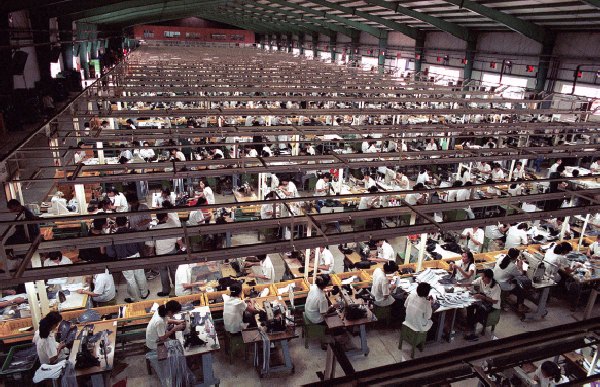
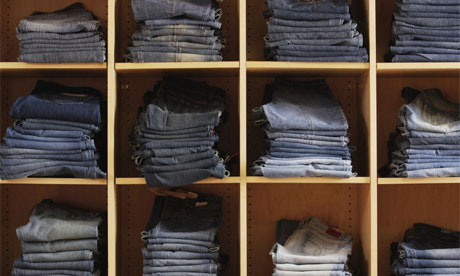
The contribution of high-street fashion to slave labour and sweat shops makes me sick. Certain shops proudly trumpet the fact that they sell jeans for $15. You can bet they have a hefty mark-up on these items, so they are probably purchasing them for $5 or less. That price will include transport from China or Bangladesh or the Philippines or whichever country’s impoverished workforce we are currently choosing to exploit. Slavery was abolished in Britain nearly 200 years ago, and the Universal Declaration of Human Rights banned slavery globally in 1948.


By turning a blind eye because I want cheap jeans (and who doesn’t? I haven't got much money and I certainly can't afford top-end designer gear) I am perpetuating this system. I am not supporting my local economy, manufacturers or designers, and therefore am contributing to the current downturn with its inherent erosion of workers’ rights and might as well vote Tory. I buy Fairtrade, organic and free range products wherever possible and have never illegally downloaded artistic creations. To purchase unethically would betray my principles and yet buying clothes seems to leave me with strictly limited options.

The third problem is the shops. Loud music; fluorescent lighting; confronting changing rooms; neurotic thermostat controls; and as for the staff… It’s really not their fault; they are there to sell and I suppose they get a commission. There is no other excuse for them foisting items onto you that you clearly don’t want or suit and then telling you that they look great on you when you know perfectly well they make you look ghastly but you have been battered by the onslaught of rampant consumerism and you don’t want to look like a failure by leaving the shops with nothing – it is tantamount to admitting you are misshapen and hideous and will never fit in with the thin and pretty people – so you buy something you will never wear and still have achieved nothing through the whole rigmarole except a feeling of self-loathing and an inability to pay the heating bill, and, what’s more, you will have to do it again because you still haven’t got a pair of jeans that fits... And breathe.


Enter my damsel in shining armour: Mim at Veronika Maine. She does not laugh at my size, or make me feel bad about being big. She asks whether I want colour and what styles I would prefer. She recommends things that actually fit (and are well made), and doesn’t seem to mind if I don’t take everything and spend a fortune. She understands my ethical concerns and discusses them with me. The shop is part of a group that is 100% Australian-owned and employs local designers. Almost everything is made in Australia and the organisation works closely with the Textile Clothing and Footwear Union of Australia (TCFUA) to ensure rights and working conditions are honoured. How often have you been confident that the retail assistant in the high street would even know those details, let alone be proud of them?

And the changing room is spacious and pleasant. I leave the store with two pairs of jeans that fit, that aren’t outrageously expensive (but I know that the price I paid means that the people who made them received a decent wage or doing so) and that I know I will wear and be happy with. I also have a good feeling about my ethical consumer choice. For once, I have had an enjoyable shopping experience. Honestly, why would I shop anywhere else?