Wednesday, 6 November 2019

Innermost thoughts: Someone Like Me


Someone Like Me by M.R. Carey
Orbit
Pp. 500

In many ways this novel by M.R. Carey reminds me of those by Stephen King. It is rooted in reality with a strong dose of pop culture. The relationships seem true and sympathetic, with natural dialogue and some elements of humour. The concept of split personalities, or multiple characters in different dimensions, is a good one, and the supernatural elements creep in subtly. It would make a great film, with strong visuals and spooky scenes, but the ending is ultimately unsatisfactory and leaves the reader (or potential viewer) wondering how on earth they are ever going to get away with telling that story to the police.
 
It begins with a sadly familiar tale of domestic violence, as Liz Kendall is being strangled by her ex-husband, Marc. It appears that has another character inside her, Beth, who comes out after years of abuse to fight back. The abuse is documented as part of an on-going case: “That was a lot less exciting and TV-movie-forensic than it sounded.” The author is aware that this is commonplace and that we have seen it all before in modern culture, so he has to make it about more than ‘just’ domestic violence.


We sympathise with Liz; she is poor with two kids to raise (Zac and Molly), an abusive ex-husband and a terrible medical insurance policy. When she is first ousted by Beth, there may be sympathy for her too, as Beth has been repeatedly killed by Marc in different times and other realms. We feel for her absence and all the things she has missed, as she hugs Molly, “It was the first human contact Beth had experienced in what felt like a hundred years that wasn’t born out of violent rage.” But Beth will then use anything to survive, even at the expense of the children, and we begin to wonder about her motives.


Meanwhile, Zac’s schoolmate, Fran, is also one of these people who is aware of the multiple options of things happening in different futures or pasts, and she recognises the duality of Zac’s mum, Liz/Beth. When she was a child, Fran was abducted and taken to the Perry Friendly Motel by a man (Bruno Picota) who saw two personalities in her and tried to kill one. Throughout the trial that led to his incarceration in an asylum, he became known as the Shadowman because he constantly referred to shadows that move independently of their host or ‘skadegamutc’ from Native American culture. He describes this (in a transcript that Fran and Zac conveniently locate) as “the ghost of a witch. A ghost, but it’s got magic. An evil spirit. And you can’t ever see where it might have come from. You just see that it’s there.”

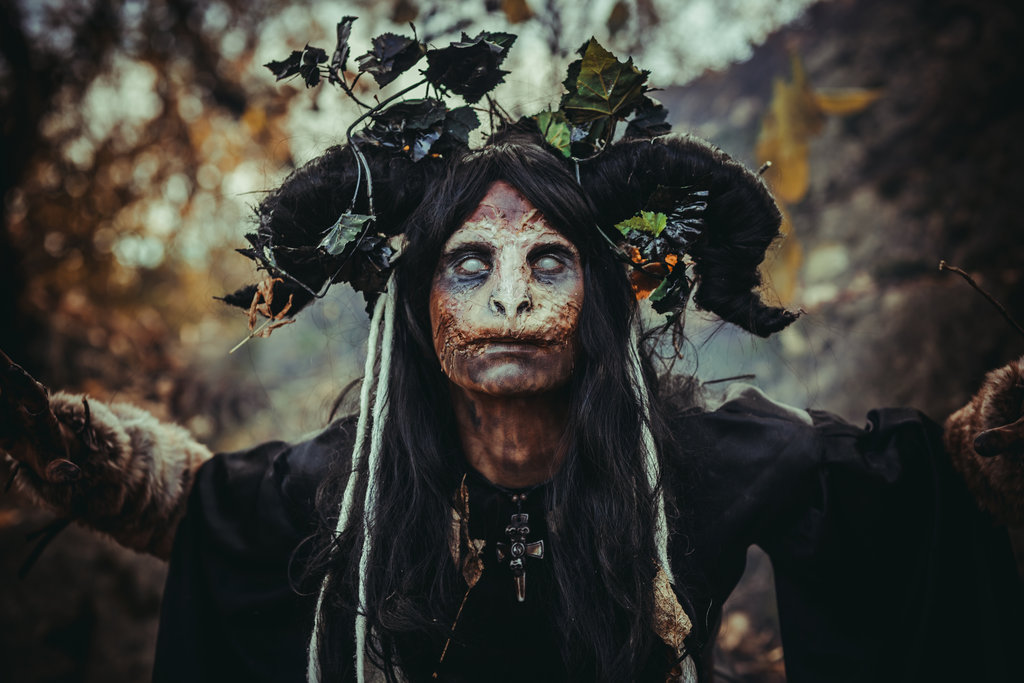
Skadegamutc or forest witch
Fran also has an alter-ego who is a cartoon fox with a sword and armour, Lady Jinx from Knights of the Woodland Table. Fran comes to understand that Picota was obsessed with split personalities or detached characters, who have been separated from the original. He thought he had killed one of hers. Did he?

As in Fellside, M.R. Carey takes us to a world of psychologists and criminals as he explores the dark places of the mind. Is this what happens to the brain when it tries to shield the body from pain, or to remove the memories of experiences that are too traumatic to confront? Are these supernatural elements based on self-delusion, or is medication involved? There is enough ambiguity to interest the reader as the novel crosses from the solid world we know to the less certain one we fear.

Like Stephen King, Carey incorporates Native American elements, pop culture references, ‘innocent’ children involved in violent and spooky situations, cinematic and comic book devices (he used to write comics for DC including Lucifer and Hellblazer), and a denouement at a creepy, deserted motel. The genre-crossing thriller ghost story is domestic in scope with science-fiction undertones, but there are sufficient similar themes to those found in Fellside, which I read earlier this year, that I don’t think I need to read any more of Carey’s novels for a while.

Tuesday, 1 October 2019

My Newest Favourite Thing: Yarralumla Gallery

This bijou gallery is set in Weston Park, Yarralumla. It has a charming cafe attached with a range of cakes and proper lunches. The outdoor setting is delightful under the trees with the nearby 'English Gardens' providing outdoor colour at the right time of year (particularly when the rhododendrons are in bloom). The paintings and pottery provide indoor colour all year round. 


When I called in, the exhibition featured three artists from Goulburn: Lesley Whitten, Marion Schumacher and Helen de Jonge. The theme was Feathers and Flotsam, and it is interesting to see that all the artists focus on a similar theme of birds, with different approaches to art. According to a Canberra Times article, "De Jonge loves Australian birds, Schumacher is a parrot fan and Whitten likes roosters." De Jonge is the artist of the wonderful watercolour kookaburra in the picture below, sitting pretty before the deep blue background. 


Lesley Whitten said of the theme, "There are lots of paintings of birds, but the ‘flotsam’ tag also allowed us to exhibit other ideas.” 
Three Pears from Ios by Lesley Whitten
Quince Quins by Lesley Whitten
Black-Headed Sheep by Lesley Whitten
As well, the three often produce striking landscapes and seascapes, reflecting their love of the Australian environment. Marion Schumacher's scenic landscapes in oils and acrylics are particularly striking, and I also enjoyed the fun implicit in her painting Aquarium (second picture down). 
Night Scene, Mittagong by Marion Schumacher
The gallery also featured a range of interesting ceramics and glass, with visions of strata and shapes suggesting geological designs. I also loved the curious flying horses. 


It's a genuinely lovely little gallery, and I will definitely be back to see another exhibition (and eat some more cake).

Tuesday, 17 September 2019

Making it Up: Today I Am A Book


Today I Am A Book by xTx
CCM Design
Pp. 117

All of the short, poetic segments (it feels wrong to call them stories, and, besides, they have the tart juiciness of an orange) in this collection are introduced with the words ‘Today I am a…’ It is a great creative writing exercise, and a way to express thoughts and feelings, but a lot of them are complicated and negative.

Many are tales of abuse, violence, sexuality and shame, with cripplingly low expectations; a woman goes to bed early because she wants to masturbate without her husband disturbing her; a woman seeks out compliments from a man she knows “isn’t good at saying nice things”; a woman desperately wants to hear the words ‘You are wanted’. In Today I am a Slave, the author writes, “Except for trying to kill me every day, Pepito is pretty nice. He’s definitely getting better at it though. Surprising me now, but I am vigilant. I don’t want to die and I don’t think he wants to kill me. Yet.”

Let’s get the question of authorship out of the way. Who is xTx, and does it matter? I assume the author is female, although some segments are written from a male point of view. The first page announces, “Today I am a dedication. Today, and everyday you are my driving force. Thank you, Roxane Gay, for making me believe. Still.” Many of the themes are similar to those found in Roxane Gay’s book Bad Feminist. For example, one harrowing piece reveals, “Today I am a bulimic. I take in the world. I throw it up. Do you want to see pain? Hold on for a minute. Just one minute. That’s all it takes for me to work it back up. Do you have patience? Are you a patient person? The one who waits the longest gets the best payoff. Please trust me.”

The narrator goes on to list the things she has swallowed; “An ongoing gorging since I was a girl: Frosted Flakes, a handful of bow shaped barrettes, twelve ice creams, seven fingers of my brothers’ friends inside me”. She explains, “The time it takes doesn’t matter. What matters is how you feel afterwards.” Her specific instructions of what to do are heartbreaking and visceral (don’t read them while you’re eating) from “1. Eat enough to make you feel sick and/ or hate yourself” through “4. Approach the toilet. Make sure it hasn’t been cleaned in a while. The filth will help you” and “7. Stare at the toilet water. Feel how gross you are, how utterly disgusting and worthless you are” until “11. After each hurl reach again. Keep fucking puking. Empty your fucking guts. Remember to breathe. Remember you are a big piece of shit.” That is absolutely raw and confronting; it is shocking and emotional; it is exceptional.

She is often the gateway for someone else’s needs or frustrations. In Today I Am A Time Machine she writes, “He has made me his time machine so he can stay there. He tells me this. He wants me to open myself wide enough that he can crawl through. Go back to the boy he once was… Back to when his life wasn’t as tarnished as it is now.” She is not often considered as a person in her own right but in how she relates to others and what they can take from her. In Today I Am A Lion she confirms “It’s hard being everything for everyone when you just want to be someone else’s everything.”

But women are expected to be all things to all people, and that is exhausting, even though we should be prepared for it. “It’s easy to be a make-up artist when you’re a female. So much of what we’re meant to be is pretend anyway.” As she continues in Today I Am A Make Up Artist, she can no longer tell tall tales and make up big stuff as an adult, so she has to “resort to little things like giving the guy at Starbucks a fake name just so I can see it black Sharpied on the cup… convincing my boss I am completely on top of things, assuring my two kids that everything will be okay, telling my husband I love him.” This story switches from comic to bleak in the twist of a sentence.

Her prose is sparse but full of imagery. The analogy in Today I Am An Outlier is breathtaking when considered more deeply: “My period blood is made for bigger things. It’s an important liquid made waste when not called upon. It’s like the genie from the lamp giving up and leaving, bags slung over shoulder, after eons of nobody rubbing.” And, like all good story-tellers, she returns to the beginning with Today I Am A Writer: “Today I am a writer. I say this thirty-three times while forcefully bashing my head into the metal keys of a typewriter. I want the answers to imprint my face. I want its ribbon to birth answers. Tell me what I need to say… All the blood mars any facial embossing and I am still sitting where I began – blank.”

There is a lot of style in these segments, but there is also deep substance. The stories that seem short and even superficial are full of meaning. Much of that meaning is grim and dark; this is an uncomfortable glimpse into a tormented mind that is trying very hard to make up.

Tuesday, 10 September 2019

A Helping Hand


Every day there seems to be a new alarming story about how the world is doomed and we are all going to die. (Actually, the planet will regenerate eventually; it's the Human Race that will have serious problems, but that's another issue.)

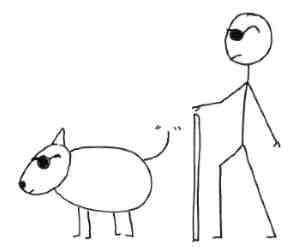
The latest is that even though we are recycling, we are not recycling hard enough. There is a tired story still doing the rounds of old folk (40+) getting fed up with young people (the 'we discovered everything' generation) telling them how to recycle. Recycling changes. In 'my day' we collected silver foil and milk bottle tops for the Blue Peter appeal for the Guide Dogs for the Blind. We sent it all into the studio BBC TV Centre, London W12 8QT (every British child of the 80s will remember that address by heart), and the program raised enough money to fund two guide dog puppies, and subsequently followed their training. I actually thought they were blind dogs, not dogs for the blind, and though I have nothing at all against blind humans, I was a little disappointed that my efforts did not go towards helping sightless canines. 


Much of the recycling that we put into our bins in Canberra and send to China is not recyclable. China sends it back, which leads to unnecessary pollutants, and it ends up in landfill anyway. China used to be the largest importer of the world's recycling, accepting over 30 million tonnes every year. Until a few years ago, China accepted recyclables with a contamination level of around 5% (contamination being incorrect items mixed in with the material to be recycled).  However, the National Sword Policy of January 2018 introduced a strict contamination limit of 0.5%, which meant that much of the world's recycling could not meet this new export standard.  

Not all plastic is accepted in recycle bins (only numbers 1, 2, 3, and 5 - the number is printed within a triangle on the container); neither is all glass (if it has been heat-treated; it is unacceptable. Yes, all glass is heat-treated, I would have thought, but...). Cardboard and paper are fine, but shredded paper is not. If you want to protect your identity, it will have to go to landfill; take your secrets to the grave, as it were. Anything smaller than a credit card should not be put into recycle bins - it ends up in the ocean and kills the turtles. 

There is also the issue of conflicting information: the ACT Government website states, 'Keeping recyclables clean is important to ensuring they can be processed effectively and are able to be sold in competitive markets. We need people to wipe, scrape or rinse out food and drink before placing containers in the recycling bin.' But, an ABC News article of February 2019 trumpets, 'As opposed to other places in Australia, you do not need to worry about rinsing bottles, jars or yoghurt containers in the ACT. There really are no excuses!'


But there is some good news in all of this. Those small plastic milk bottle tops that you can't put in the recycle bin, can be used to great effect. Envision Hands is a not-for-profit community initiative that uses 3D printing to turn plastic waste into mechanical hands and arms for kids, and those plastic bottle tops are perfect for the job. They are shredded and made into a filament, then fed through a 3D printer, and they turn into fingers. Okay, so I'm sure there's a lot more science to it than that, but the good news is that you can help by taking your (rinsed) bottle caps to a collection point. 

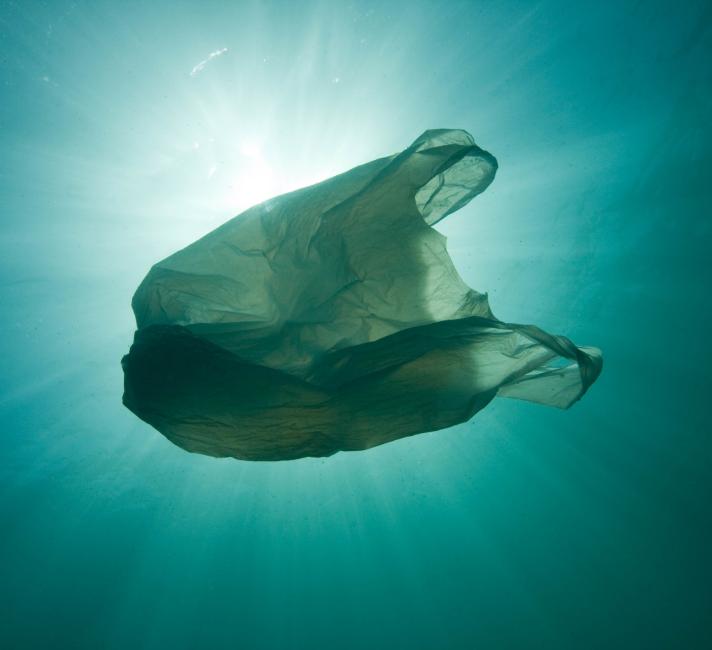
Do you ever feel like a plastic bag? No, Katy Perry, I don't. But thanks for asking.


Friday, 6 September 2019

Friday Five (Ten): Films from the First Half of the Year


This post is very late, I know. I could say I'm busy, but that's not really an excuse, because, isn't everyone? So, as we're meant to focus on positives rather than constantly criticising ourselves and others, let me just say, thanks for your understanding.

These are the top ten (bonus five) films that I have seen this year, so far, in alphabetical order.
  1. Aurora - somewhat formulaic but fun Finnish romantic drama for a Friday night.
  2. Bauhaus Spirit: 100 Years of Bauhaus - an interesting documentary that explains that the Bauhaus spirit is 'art is the implementation of the harmony between people and matter'. It considers people not in terms of their spirituality but as spacial objects. The movement has had a massive influence on art, design, fashion, architecture and urban planning. One could even say it has become a part of the zeitgeist.
  3. Ben is Back - excellent central performances (Julia Roberts and Lucas Hedges) in a study of a mother's love for her son, no matter what.
  4. Destroyer - I enjoyed it: the storytelling was good and the outcome was unexpected (by me, at least). Nicole Kidman does cold-dish-serving revenge very well. 


  5. Free Solo - A documentary about a narcissistic free climber (bordering on psychopath), with a very unusual attitude to relationships, but a unarguable approach to risk vs reward. Shot by his friends (one wonders how he has any) with simply stunning scenery.
  6. If Beale Street Could Talk - Quite simply beautiful; utterly life-affirming against all odds.
  7. Mary Poppins Returns - This is odd. It's exactly the same as the original but the songs have different words. The story arc, the characters, the emotional manipulation and the scenes are almost identical, but with slight differences that make it feel like a dream. It's unsettling.
  8. The Reports on Sarah and Saleem - "If the message of the film was “Having an affair is probably not a great idea”, its delivery could be perceived as being somewhat heavy-handed. It was bloody good though." - quoted from my CGB (Cinema-Going Buddy)
  9. Rocketman - Excellent, moving, and honest depiction of addiction and loneliness despite fame and riches. I don't particularly like Elton John's music but it is spectacular in this film. The acting and direction is superb.
  10. Us - Proper bonkers; gripping and good with stuff to think about and a few decent scares. 

Friday, 23 August 2019

Friday Five: Strong Female Lead


Last night I went to see a show at Smith's Alternative. It was called Strong Female Lead and it featured six acts of fabulous female talent. The atmosphere was warm, welcoming and overwhelmingly supportive. Comperes Lou Maconachie and Amy Crawford encouraged us all to turn to the person next to us and pay them a compliment. As I was seated next to the bright, vibrant, intelligent and compassionate Purple Patch, this was not a hardship. It was, in fact, a wonderful way to start the evening and celebrated the supportive side of performance. It must also be mentioned that (although the audience was predominantly female), there were men in attendance too, and they were equally generous: not all men are threatened by strong women.
  1. Chris Ryan kicks off proceedings with a great stand-up comedic set. She has a confident and likable presence, drawing us into her world and telling stories of family, friendships, and what she would like to do when she grows up. She may be ageing gracefully - she admits to being 'openly gray' - but she doesn't consider herself to be an 'adult' yet. Her riff on all the expectations levelled at women - from appearance to empathy; from exercise to social conscience; from sexual experimentation to professional development - is clever, cutting and concise. Imagine an ironic female version of Renton's 'Choose Life' speech from Trainspotting and you're halfway there.
  2. Ruth and Friends - Ruth Oettle is the Ruth in question, and she presents a genre-challenging rap about science which manages to be informative as well as entertaining. She's good at including her audience and adapting her material, introducing verses specific to the venue. Her casual laconic style masks the artifice behind the art, and she makes everything look effortless. She invites her friends to the stage and sits with them to sing an original love song, I Love You to Launceston and Back, which is utterly charming. Her smile is infectious and the trio make you want to sing along even though you don't know the words yet. It's like woke folk music, but without the wankery that implies.
  3. Liz St Clair Long performs a piece by local playwright Harriet Elvin, Shopping for Underwear. It’s an age-old story where a retired schoolteacher from England makes a profound discovery about herself when she goes into an Adelaide department store. Liz is a consummate actor and she lights up every stage she graces in a variety of roles. She flexes her acting muscles displaying a range of expression, and seeing her own the space with confidence and comedy is an absolute treat.
  4. Ali Clinch presents 'Mothering Father', a one-woman show that she has written about extremely personal experiences. Using a sparse soundscape and projected images, she shares the story of her particular circle of life, celebrating birth while dealing with palliative care and grief. It is a familiar female story, as women bear the weight of caring for the young and elderly family members, often at the same time. Her honesty and candour make the scene powerfully touching and the fact that it doesn't seem self-indulgent is due entirely to her generosity of performance.
  5. Virginia's Wolf are a trio who met while studying at the Canberra School of Music. Caley Callahan (vocals), Monica Lindemann (drums) and Tammy Pinto (guitar) seem to have disparate presentation styles, but they clearly all love music and they are keen to share this passion. Their energy is friendly rather than furious, and their timing is tight. It's enjoyable to hear them run through a series of covers, including the perennial favourite, Creep, which brings appreciative cheers from the audience when Callahan hits all the right notes of anguish and frustration. They do belong here.
  6. Helen Way is different, as in original. She stands out from a crowd with her almost interrogatory approach and informative content. She's also a confident piano player, and her demonstration of why Beethoven's 'Fur Elise' is a terrible piece of music is brilliant. Her combination of musical and comedy talent is in a similar vein to Tim Minchin or Bill Bailey. I will never hear this piece in quite the same light again, but I will probably laugh whenever I hear it cranking out of an ice-cream van.
Strong Female Leads - photo by Lightbulb Improv

Friday, 12 July 2019

Friday Five : The Evolving Book Pile

At the beginning of the year I took a picture of the pile of books on my bedside table. By the end of year, I expect I shall still have a pile of books, but I would like them to be different ones. This is the six-monthly record of the evolving nature of that pile.

Bedside book pile January 2019
In January I read My Absolute Darling by Gabriel Tallent, The Sympathizer by Viet Thanh Nguyen, and All in the Timing by David Ives from my pile. I picked up the former while in Powell's City of Books in Portland. I was considering reading it over Christmas, but Christmas is supposed to be cheery and this book is anything but, so I waited until afterwards to embark upon it. A fourteen-year-old girl grows up dealing with nature and approaching adulthood through adventure and grit; like a female version of Huckleberry Finn with an added whack of abuse that is agonising to read. Happy New Year! 

The Symapthizer was lent to me by a friend who claimed the prose is beautiful. He's right. Mind you, it won the 2016 Pulitzer Prize for Fiction, so he's not alone in thinking that. It covers a range of genres from espionage thriller to darkly comic political commentary, and, because it deals with the Americanization of the Vietnam War, it nods somewhat vigorously towards Graham Greene. 

David Ives' All in the Timing is a collection of fourteen short plays set in surreal situations. Overlapping scenes, non-linear time, multi-faceted characters, literary allusions and fluid language make these a thoroughly entertaining cerebral challenge. David Ives is a comic genius who has put the play back into playwright. 

I also read Wicked Sisters by Alma de Groen, which was not in the pile. I am part of a committee which is producing this fantastic play in a couple of months in which four women meet up after the death of one of their husband's and learn more about him and themselves in the space of a wine-fueled evening than they ever knew or wanted to know.

Books read from pile: 3/11

Bedside book pile February 2019
In this month I read The Overstory by Richard Powers from the pile, and several others that weren't in it. The Overstory was shortlisted for the 2018 Man Booker Prize - it considers the narrative of life above ground, while maintaining that everything is connected beneath it. There are diatribes upon trees; growth; concentric circles; timelines; length of time taken to replace and regenerate; the fact that we have missed our opportunity and are now all doomed.

I also read The Mars Room by Rachel Kushner, which was similarly shortlisted - set in a women's prison and told in the first person through flashbacks, it details the lives of the inmates with a combination of mind-numbing boredom and bone-crunching brutality. We learn that these women are largely incarcerated due to poor choices made in the face of so few opportunities.

In keeping with the theme I read the winner of the 2017 Man Booker International Prize, A Horse Walks into a Barby David Grossman (translated by Jessica Cohen). It is a very short but very complex novella about a comedian who falls apart on stage. It is set in Israel and packed with lines that are certain to offend, but it presents a clever comparison between the individual and society, and how disease spreads from within to become all-consuming. 

The plays I read were Melancholy Play by Sarah Ruhl, which is admirably bonkers and addresses the issue of why we find sadness so attractive, and A Doll's House Part 2 by Lucas Hnath. I've never been a fan of people penning sequels to the works of others, but I have been asked to audition for this play, so I thought I should at least read it. I like the ideas and concepts about the need for equality in all things, but I'm yet to be convinced of its necessity.

Books read from pile: 4/14

Bedside book pile March 2019
March's reading was quite varied and included a few from the pile. Oscar Wilde's The Happy Prince, the Selfish Giant and Other Stories is full of tales of practical characters in fairy-tale situations where beauty is admired above all, which leads to bitterness and anger when youth fades. I read it as a child and dug it out again after seeing both the film The Happy Prince and the play The Judas Kiss in the space of a couple of weeks.

Silent Women: Pioneers of Cinema edited by Melody Bridges and Cheryl Robson is a collection of essays about the women who helped to shape the film industry: actors; directors; editors; marketers; producers; managers - there is a lot of historical content explaining how roles were not so strictly delineated (many women had creative control but were not called directors) and how various movements in the past affected their status in Hollywood and elsewhere. More recently, 1995 was “the peak of female director hires in the United States. For the next twenty years, women directors would face stasis and decline in employment.” In fact, only 1.9% of directors of the top-grossing one hundred films of 2013 and 2014 were women.

I'm not usually a fan of stream-of-consciousness novels (James Joyce and Virginia Wood test my patience to the limit), but the self-obsessed need to express every tiny thought no matter how banal, fits the teenage narrator of Milkman perfectly. Anna Burns' 2018 Man Booker Prize winning novel is set in Northern Ireland during The Troubles, (or 'the problems') as they are called here: it is almost comical (in a Monty Python People’s Liberation Front sort of way), but people are killed for these minor details, so the humour is very dark.

Having heard nothing about Of Love and Techno by Anthony Marra, I got it out of the library on a whim due to the title and am so glad I did. The multi-layered story about censorship and art, which covers many decades, nine narrators and a variety of styles, remains absolutely engaging throughout. It is one of those weird coincidences that one of the characters mentioned in the novel is Russian poet Anna Akhmatova, the titular character of Alma de Groen's time-travelling The Woman in the Window, in which anything is possible in a world where quantum physics explains different dimensions.This play, with its dual narrative thread of repressing poetry in the past and future for political purposes will be produced by Canberra Repertory later in the year. It's a great story with powerful themes and plentiful scenes - I'm looking forward to seeing it.

Books read from pile: 8/16

Bedside book pile April 2019
In April a friend lent me Bridge of Clay by Markus Zusak, and I liked The Book Thief, so I gave this a go. Big mistake. And I mean big. Huge. It is clearly meant to be an homage to Homer but, while Homeric epithets may work in epic poetry; repetitive descriptors, sonorous syntax and quirky sentence length are tiresome in this novel. The novel revolves around five boys growing up in a rural suburb in New South Wales, and at almost 600 pages, it reads as if Zusak doesn’t know where to start, or finish, or even what to say.

The Essex Serpent by Sarah Perry was a lot more successful, in which (to copy from a Guardian review), 'An Essex village is terrorised by a winged leviathan in a Gothic Victorian tale crammed with incident, character and plot'. From the book pile I also began to read Every Last One by Anna Quindlen, until I realised that I already had, and so returned it to the library.


Books I read that never made it into the pile were The Mao Case by Qiu Xiaolong (the sixth outing for Chief Inspector Chen, who has to solve a crime in Shanghai and Beijing, which may or may not involve Chairman Mao), The Graveyard Book by Neil Gaiman (which I read to help a student at work with a school project), and The Long Take by Robin Robertson. The latter was another shortlisted nominee for the 2018 Man Booker Prize and is a poetic work of brilliance, historical worth and impermanence, as the noir narrative exposes the black and white cinematic qualities of city developments and PTSD.

I also read Escaped Alone by Caryl Churchill because she is my favourite playwright and I am trying to find plays with strong female characters - this has four of them (all over sixty) who chat in the back garden with dialogue charged with incident and heightened reality.


Books read from pile: 11/18

Bedside book pile May 2019
I persisted with Anna Quindlen in May and read Still Life with Bread Crumbs. It's fine; gentle and comforting although occasionally it can also be a touch clichéd. The novel deals with loneliness, depression, mental illness, and creative temperament. These are big issues, which are important to address, but the treatment at times feels a little superficial. In the Blood by Lisa Unger is a perfectly readable thriller about missing college friends and maniacal children that didn't make me lose any sleep.

You Say Potato: A Book about Accents by Ben Crystal and David Crystal, on the other hand, is an absolute ripper. The father and son combination, with an almost intimidating knowledge of acting, Shakespeare and linguistics between them, riff on the topic of accents: where they come from; how they evolve; how they are influenced by fashion and attitude; and how "we think people should be proud of their accent, whatever it is.”

Not in the pile (but I read them anyway), were How to Talk to Girls at Parties by Neil Gaiman (about which I feel rather conflicted), and Votes for Women and Other Plays edited by Susan Croft - still on the lookout for strong female roles, I thought I could do worse than approach this anthology of plays, sketches and monologues to celebrate the centenary of the Suffragettes. It is, indeed, fascinating in its range and scope. 

Books read from pile: 14/ 21


Bedside book pile June 2019
I managed to read two book from the bedside pile in June, and what wonderful ones to choose. Simon Armitage wreaks amazing magic with his translation of Gawain and the Green Knight, which is funny and modern, while adhering to the style and traditions of the original. I read it and then I read it again out loud, because the words are supremely satisfying and they cry out to be spoken.

I also read Bad Feminist by Roxanne Gay, which is a well-written series of essays about feminism and other things: from the traumas of fat camp to the triumphs of scrabble tournaments; good journalism and social responsibility; lessons learned from teaching and the guilt of enjoying reality TV and rap music. 

Because we went for a long weekend to the coast and because I like to read books set in similar habitats to my environs, I finished off the mid-year by reading The Alphabet of Light and Dark by Charlotte Wood (an over-wrought piece about a woman drawn back to her home town after her father - the lightkeeper's - death, which won the Australian Vogel Literary Award in 2002 and readds like it was written by a creative writing graduate. It was.) and Dance upon the Air by Nora Roberts (in which three women represent earth, fire and air, and have brown, red and blonde hair and combine their spiritual powers to defeat men and commune with nature and blah, blah, blah...).

Books read from pile: 16/24

Total number of books still in the pile from the beginning of the year: 3/11