Showing posts with label conversation. Show all posts

Tuesday, 14 March 2023

I Hear Voices: Chatter


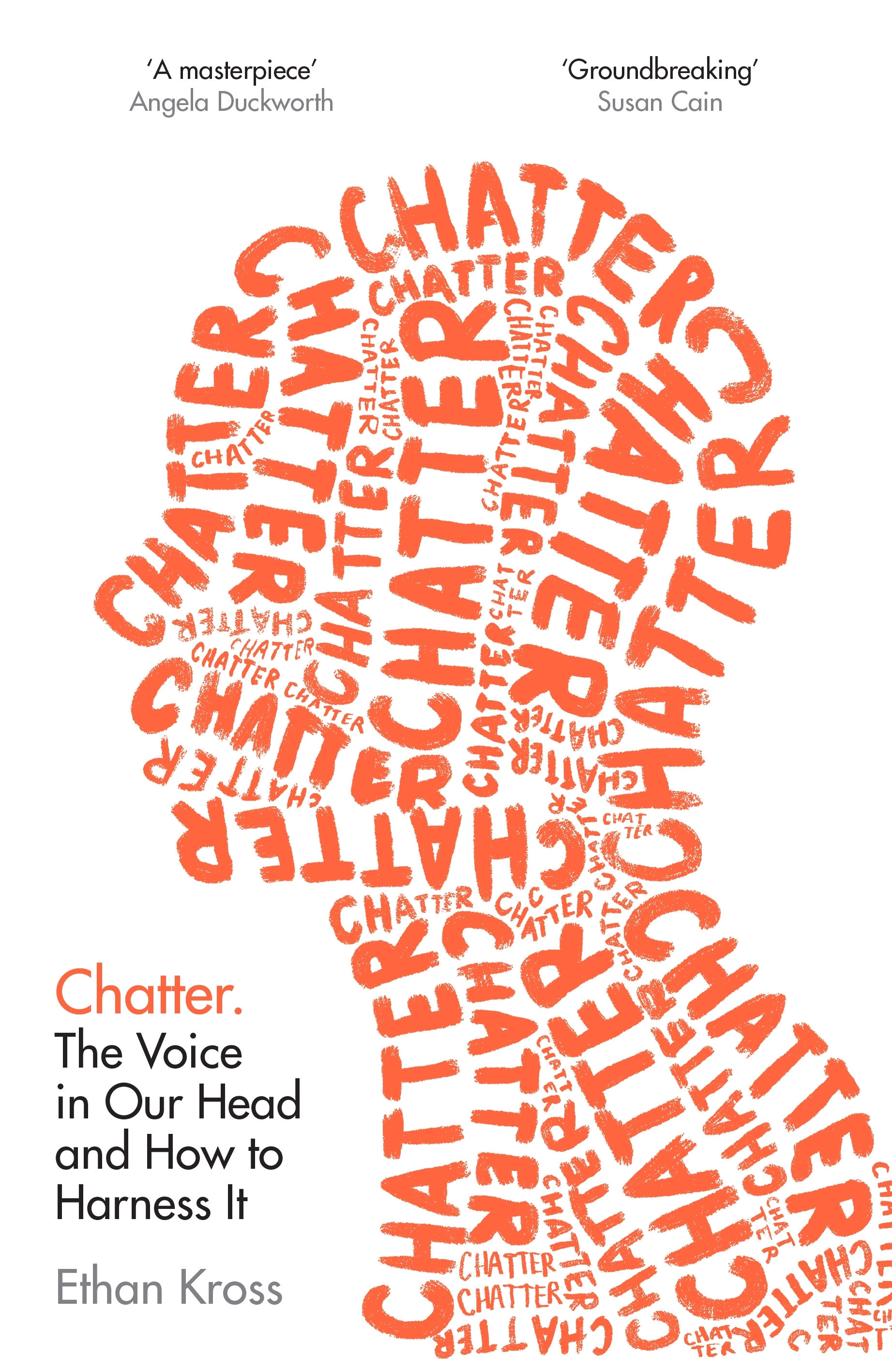
Chatter: The Voice in Our Head and How to Harness It by Ethan Kross
Vermilion
Pp. 171

We’ve all heard the expression, “it’s good to talk’. Yes, but how much, and to whom? Echo chambers can encourage us to wallow in misery, victimhood, or self-righteousness. Communication can help with our problems, however, by allowing us to distance ourselves from them and seeking practical assistance. We spend a lot of our time mentally time-travelling, remembering the future or projecting into the past, all of which can be useful as long as we don’t dwell on the negativity or foreshadow anxious situations. Ethan Kross examines the voice, or voices, in our head, and offers suggestions about which internal monologue and external advisors we should heed.

Talking to others and sharing events can be helpful. It can ‘normalise’ an experience and help a person appreciate that they are not alone. But Kross cautions that we use this sharing function with care and choose the people to whom we discuss issues on a strategic basis. If we rant at our friends about ourselves all the time, they will become disillusioned and uninterested, and feel they have not been heard or supported.

It is important to be able to share, and our support networks are crucial, but if we overshare, not only are we likely to annoy others, we can get caught in a self-destructive feedback loop, especially if we choose the ‘wrong’ people. “Other people can be a tremendous asset, but more often than we realise, they can be a liability too.” While talking about adverse events, we can focus more on the need to repeat and be heard than the need to address the issue and move on.

This process is called co-rumination in which we seek validation from others and it is harmful because, “when we’re upset, we tend to overfocus on receiving empathy rather than finding practical solutions.” While this may briefly feel good, it isn’t useful in the long-term. Naturally, this creates a vicious cycle and one in which it is easy to get stuck. And nowhere does this have greater effect than on social media, which has given us a much wider audience.

One of the ways we can manage these emotions and internal voices is to distance ourselves from them through mental time travel or the simple technique of journaling. Asking people to write about their most upsetting negative experiences for fifteen to twenty minutes leads them to feel better, visit the doctor less, and have healthier immune function. “By focusing on experiences from the perspective of a narrator who has to create a story, journaling creates distance from our experience. We feel less tied to it.”

Mental, physical and emotional welfare can be improved by simply getting out into nature. As well as the health benefits of fresh air and exercise, this is also due to experiencing the phenomenon of awe: “the wonder we feel when we encounter something powerful that we can’t easily explain.” It can be instigated by viewing a sunset or a mountain range and it is considered a self-transcendent emotion in that it allows people to think and feel beyond their own needs and wants.

Marie Kondo fans would be pleased to hear Kross state that imposing order on our environment can help reduce anxiety by getting rid of clutter. “The fascinating thing about seeking compensation for chaos in one area (that is, our minds) by creating order in another (that is, the physical environment) is that it doesn’t even have to have anything to do with the specific issue that is throwing off our inner voice.” It’s a relatively easy thing to tidy a desk, and it can have a highly positive result. Imposing order on situations is the function of rituals, which have a crucial underlying purpose. They reiterate the values of our community and help us to transcend our own concerns, connecting us with forces larger than ourselves.

Distancing is a great tool for normalising challenges, connecting with others and minimising predicaments in our mind. Kross includes a toolkit at the end of the book with practical suggestions on how to give and receive chatter support, from techniques you can implement on your own to those that involve other people. All of these are valuable for those who are overwhelmed by the voices in their head or for those who wish to understand how it affects those who are. For this particular problem, this is a highly recommended self-help book. 

Thursday, 13 February 2014

Travelling on buses...

David Tennant (Doctor Who) and some chocolate on a bus - any tenuous link will do.
"Any man who rides a bus to work after the age of 30 can count himself a failure in life." - Margaret Thatcher
Despite what Her Ironess  thought, there are many reasons for choosing public transport. From ecological concerns to responsible drinking, you get all types on the bus. My favourite are the borderline nutters, who like to have conversations with total strangers, even if they are trying desperately to read a book. Here's one from today.

Her: I really like your top. It's such a beautiful colour [Liverpool red] but it doesn't go with your shoes. Such a shame. You should always match your shoes. 

Me: Oh.

Her: What are you reading?

Me: Gone with the Wind

Her: Oh, I loved that book. You must keep it forever.

Me: OK.

Her: Is it yours?

Me: Yes.

Her: Well, that's even better. I read it twice - once when I was younger and I thought I was Scarlett O'Hara, then when I was older and I realised I was more like Melanie, which is a shame because she's so dull. It would be nice to be a mixture of both... Melanie always reminded me of those assistant lecturers, so grey and boring. Do you know what I mean?

Me: Um...

Her: Of course you do, you live in Canberra. Did you go to university?

Me: Yes.

Her: I thought so. What did you do?

Me: English.

Her: Ah, is there anything else?

Me: Well...

Her: Do you read feminist literature?

Me: Some.

Her: Fay Weldon is wonderful, and Marilyn French - The Women's Room had a huge effect on me when I was younger. It changed my life. But that book (points), oh it's wonderful. And I love the ending, because life's like that sometimes, isn't it?

Me: Well I haven't got there yet.

Her: No, but you've seen the film?

Me: No.

Her: Well, it's not the same. They did a fairly good job, but then there was the Civil War, you see... It was 1860 something, wasn't it?

Me: Yes - 1865 it finished.

Her: Yes. She got hit by a car. Stepped out into the street and hit by a speeding car. She only wrote one book. Such a shame. 

Me: Um...

Her: You should never grow up. 

Me: Right

Her: I've just been to the National Library but I'm so cross because there are no guides to take you round the cartography exhibit. They're booked up to the end of the season. 

Me: Oh.

Her: Have you been to it?

Me: Yes - it was very good.

Her: Did you do the guided tour?

Me: No, I just walked around by myself.

Her: Hmm, It's not the same.

Me: Oh.

Her: I must sit down. Keep that book forever. And stay young.

Wednesday, 19 October 2011

Quick Quintet: Actual Conversations

There used to be a time when you could have endless pointless debates in the pub about anything at all - when did Ziggy Stardust take his final bow; who scored the winning goal in the FA Cup Final of 1957; in how many films did Doris Day star with Rock Hudson; you know the sort of thing.


Now, if you ruminate on any sort of question of this nature, someone will irritatingly whip out their smart phone and tell you the answer. Okay, so it may be smart, (or smug) but it ruins all the fun - at least you should waste a good half hour discussing it first. 

This is why they may be good for virtually anything, but smart phones are the death of (pub) conversation. In the last week or so, I have whiled away many pleasant minutes (if not hours) with the family deliberating such pressing issues as:

5 Recent Conversations which didn't involve a Smart Phone:
  1. Does what goes up always have to come down?
  2. If fish spoke English, which species would have what accent?
  3. Why is some 80s music shockingly bad when some is excellent, and why do Americans and Kiwis generally prefer the former?
  4. When does attractive confidence become ugly arrogance?
  5. If you could live in any era in history, when would it be?