Showing posts with label psychology. Show all posts

Tuesday, 14 March 2023

I Hear Voices: Chatter


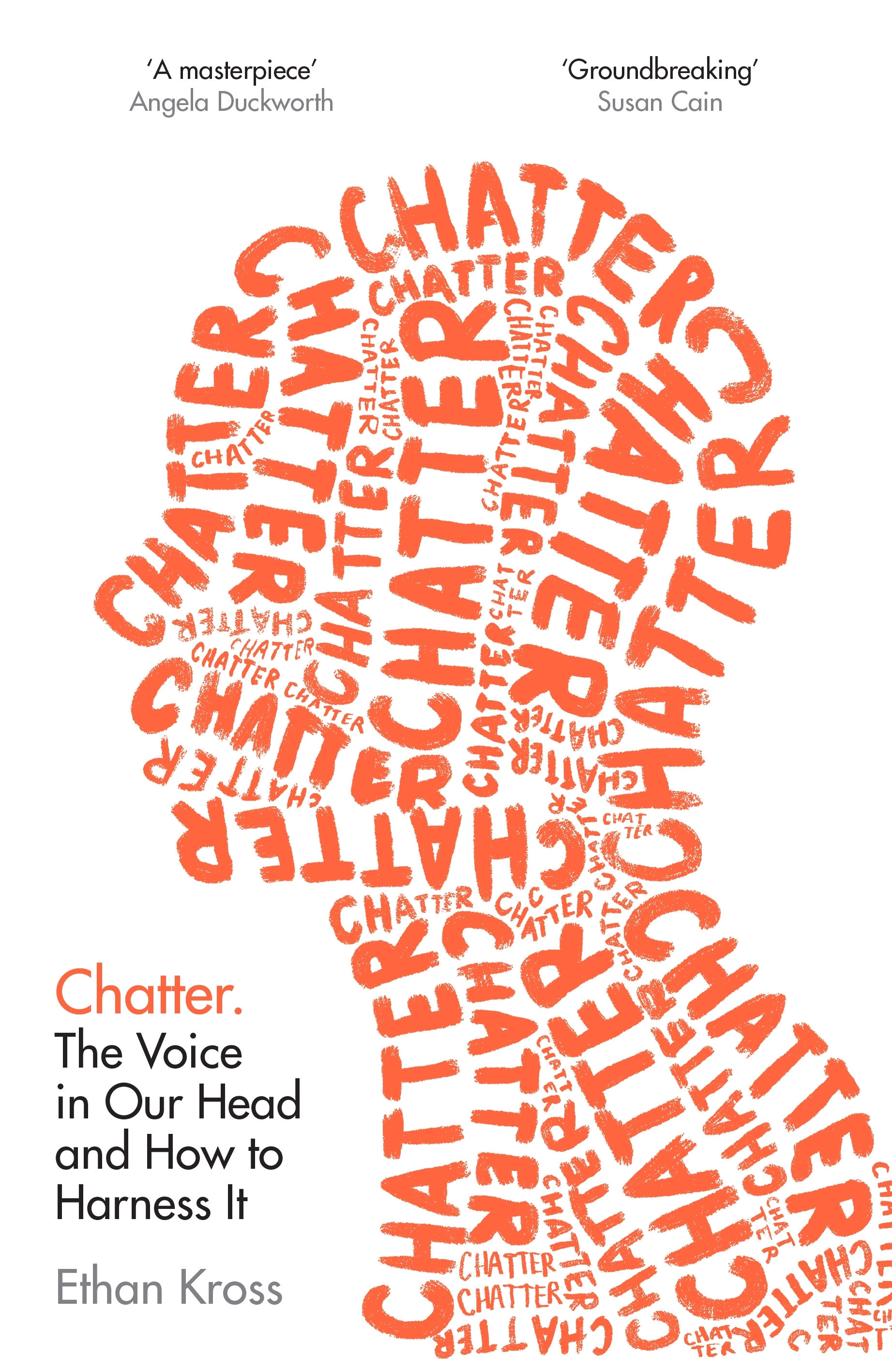
Chatter: The Voice in Our Head and How to Harness It by Ethan Kross
Vermilion
Pp. 171

We’ve all heard the expression, “it’s good to talk’. Yes, but how much, and to whom? Echo chambers can encourage us to wallow in misery, victimhood, or self-righteousness. Communication can help with our problems, however, by allowing us to distance ourselves from them and seeking practical assistance. We spend a lot of our time mentally time-travelling, remembering the future or projecting into the past, all of which can be useful as long as we don’t dwell on the negativity or foreshadow anxious situations. Ethan Kross examines the voice, or voices, in our head, and offers suggestions about which internal monologue and external advisors we should heed.

Talking to others and sharing events can be helpful. It can ‘normalise’ an experience and help a person appreciate that they are not alone. But Kross cautions that we use this sharing function with care and choose the people to whom we discuss issues on a strategic basis. If we rant at our friends about ourselves all the time, they will become disillusioned and uninterested, and feel they have not been heard or supported.

It is important to be able to share, and our support networks are crucial, but if we overshare, not only are we likely to annoy others, we can get caught in a self-destructive feedback loop, especially if we choose the ‘wrong’ people. “Other people can be a tremendous asset, but more often than we realise, they can be a liability too.” While talking about adverse events, we can focus more on the need to repeat and be heard than the need to address the issue and move on.

This process is called co-rumination in which we seek validation from others and it is harmful because, “when we’re upset, we tend to overfocus on receiving empathy rather than finding practical solutions.” While this may briefly feel good, it isn’t useful in the long-term. Naturally, this creates a vicious cycle and one in which it is easy to get stuck. And nowhere does this have greater effect than on social media, which has given us a much wider audience.

One of the ways we can manage these emotions and internal voices is to distance ourselves from them through mental time travel or the simple technique of journaling. Asking people to write about their most upsetting negative experiences for fifteen to twenty minutes leads them to feel better, visit the doctor less, and have healthier immune function. “By focusing on experiences from the perspective of a narrator who has to create a story, journaling creates distance from our experience. We feel less tied to it.”

Mental, physical and emotional welfare can be improved by simply getting out into nature. As well as the health benefits of fresh air and exercise, this is also due to experiencing the phenomenon of awe: “the wonder we feel when we encounter something powerful that we can’t easily explain.” It can be instigated by viewing a sunset or a mountain range and it is considered a self-transcendent emotion in that it allows people to think and feel beyond their own needs and wants.

Marie Kondo fans would be pleased to hear Kross state that imposing order on our environment can help reduce anxiety by getting rid of clutter. “The fascinating thing about seeking compensation for chaos in one area (that is, our minds) by creating order in another (that is, the physical environment) is that it doesn’t even have to have anything to do with the specific issue that is throwing off our inner voice.” It’s a relatively easy thing to tidy a desk, and it can have a highly positive result. Imposing order on situations is the function of rituals, which have a crucial underlying purpose. They reiterate the values of our community and help us to transcend our own concerns, connecting us with forces larger than ourselves.

Distancing is a great tool for normalising challenges, connecting with others and minimising predicaments in our mind. Kross includes a toolkit at the end of the book with practical suggestions on how to give and receive chatter support, from techniques you can implement on your own to those that involve other people. All of these are valuable for those who are overwhelmed by the voices in their head or for those who wish to understand how it affects those who are. For this particular problem, this is a highly recommended self-help book. 

Friday, 2 September 2022

Friday Five: Books Read in August

Once again it turns out that I have (conveniently for blog purposes) read five books in a month. These are they.

5 Books Read in August:
  1. Chatter: The Voice in Our Head and How to Harness It by Ethan Kross (Vermilion) - We all have voices in our head; some supportive and encouraging; others belittling and disruptive. Kross provides pop-scientific reasons for why and which ones count. Talking to ourselves and others can be beneficial to help us distance ourselves from traumatic experience, but it can also lead us into a vicious cycle of repetition, particularly in the echo chambers of social media. This book presents ways to normalise and contextualise confronting events and suggests methods that enable us to take back 'control'. Easy to read and with a practical 'toolkit' of strategies, this is recommended for anyone struggling with daily overwhelm. 
  2. Cow by Susan Hawthorne (Spinifex) - A sublime book of poetry inspired by the humble (or scared in some societies) bovine beast. From ancient aurochs to nursery rhyme moon jumpers; cattle chattel of Lakshmi, the Hindu goddess of wealth and good fortune to the shape-shifting Io of Greek myth who became a white heifer due to Zeus' lust and Hera's rage, there are cows, "at the edges of every known world/ like it or not we are everywhere."
  3. The Club: Johnson, Boswell and the Friends Who Shaped an Age by Leo Damrosch (Yale University Press) - Named one of the ten best books of 2019 by the New York Times Book Review, this is the story of the phenomenal London club, established in 1764, and the men (and it was only men) who comprised it. It was established in a tavern and was the meeting place of writers, thinkers, economists, philosophers, artists, actors, playwrights, politicians, historians, lawyers, doctors, musicologists, poets, clergymen, botanists, chemists, scholars and statesmen - a who's who of the mid-late eighteenth century. Told mainly through the eyes of James Boswell (he wrote a lot), it captures the characters and the events of the times, such as the cultural climate and political happenings, but, "Above all the Club existed for conversation: not just small talk, but wide-ranging discussion on topics of all kinds."
  4. Fled by Meg Keneally (Echo Publishing) - This novel tells the story of Mary (Dabby) Bryant, who was transported to the fledgling colony of New South Wales for highway robbery. Once there, she manipulated the system as much as possible until she escaped to make her way back to  England, where she thought she had a better chance of survival for herself and her children. She is renamed Jenny Trelawney for the purposes of fiction, and while the 'real' Mary Bryant was illiterate and never wrote down any thoughts or feelings, many of the facts are true and make for an incredible historical adventure. In the Mobius strip-like way that art can unfold, Meg Keneally's father, Thomas wrote a book, The Playmaker, based on the story of the first play ever performed in Australia, with Dabby Bryant being one of the actors - this book was the basis for a play by Timberlake Wertenbaker, Our Country's Good, in which I am currently performing (as Dabby Bryant) at Canberra Repertory.
  5. The Secrets of Strangers by Charity Norman (Allen & Unwin) - When a bloke marches into a café in London and shoots the proprietor, several of the patrons get caught up in the cross-fire and the ensuing hostage situation. We learn about them all individually in a highly stylised manner that makes the novel seem more like a stage play or a series of TV episodes. Among those captive in the café are a grandmother looking after her grandson, a lawyer who is meant to be defending her client in court, a former teacher who is now homeless due in part to a gambling addiction, and a waitress who is hiding in the cleaning cupboard, her presence unknown to the gunman. Their stories all wrap up neatly - everyone has to have a backstory to provide context for their actions, many of which are glossed over or shoehorned into the story as the cause du jour (coercive control; refugee experience; infertility obsession) - and the reader has very few gaps to fill, removing any tension necessary for a thriller. We also hear from Eliza, the police negotiator who is talking to the gunman and trying to secure the release of the hostages - hers is the most interesting and realistic voice in the novel. While the pace is fast enough that one does want to keep turning the pages, there are no surprises and the need to keep everything tidy and completed is distancing and unsatisfying to the point of triteness. 

Wednesday, 9 June 2021

Neuroscience Meets Mindfulness: Hardwiring Happiness


Hardwiring Happiness by Rick Hanson
Rider
Pp. 223

Being good to yourself has benefits for everyone, and for the entire planet. That’s quite a grand claim, but Rick Hanson, “a father, husband, psychologist, meditation teacher and business consultant” makes a concerted effort to help everyone do just that. He sets out to show us how to retrain the brain to focus on positivity rather than negativity, which is actually not our brain’s natural and default setting. The balance between science and practicality is fair, and Hanson correctly states, “You won’t need a background in neuroscience or psychology to understand these ideas.”

He has handily distilled his practice down to four simple steps “with the acronym HEAL: Have a positive experience. Enrich it. Absorb it. Link positive and negative material so that positive soothes and even replaces negative. (The fourth step is optional.)” Every new technique seemingly has to have an acronym, and this is a good one. He introduces concepts with analogies and anecdotes, including side tables to condense the information, and a section at the end of each chapter called ‘Taking It In’ that summarises the key points. He includes a table that the reader can print and then fill in with their own experiences that they want to affirm, and there are reference notes and a bibliography later in the book for further study. He even includes a section explaining how to use these steps with children, “while naturally adapting them to the child’s age and situation.”

The basic premise is simple: the brain has a built-in negativity bias to pay more attention to the bad than the good. This is a survival technique because the bad can kill you; the formation of implicit memory is negatively biased, to make us avoid harmful things or, as Hanson puts it, “Your brain is like Velcro for negative experiences but Teflon for positive ones.”

With advice that borrows a lot from Buddhist teachings, Hanson recommends that we focus on the positive and open our mind and body to happiness and good feelings. He describes how to sit and be with positivity, cultivate inner strengths, and absorb good feelings so that they can be recalled in other situations and used to calm and focus. He is keen to encourage feeling good in the moment and taking in the good through simple experiences like looking out of the window or eating an orange. It may all sound a bit Little Book of Calm, but if increased positivity is good for you, why not give it a try?

He focuses on ‘feeling all right, right now’, which he considers to be one of the greatest strengths, and supports experiencing something as it is rather than grasping after it or wanting more – “let sensations come to you rather than reaching for them”. An experience is made more powerful by being particular to a person and linked to their good memories. Hanson encourages holding onto this pleasant feeling to be able to more easily recall it later, through multimodality; sensing good experiences throughout the whole body and being aware of as many aspects of it as possible.

Although much of this sounds rather pleasant, we still have the capability to resist it, so Hanson isolates these negative blockers to our potential happiness. Some may argue that employing this positivity method is simply denial, but Hanson counters, “You’re not looking at the world through rose-tinted glasses, but rather correcting your brain’s tendency to look at it through smog-tinted ones.” Another specific blocker is the belief that there’s no point in feeling good since some things are still bad. Even a little bit of good will increase happiness: you can take a slice of the pie without waiting or wanting to have the whole thing. It is up to us to learn to enjoy experience, and Hanson is aware that this may be difficult, so he brings it home by appealing to our morals and contemporary ethics. “The fearful, greedy and self-centred reactive setting of the brain promotes a kind of gorging of the earth’s limited resources that is causing deforestation, mass extinctions, and global warming.”

He has crafted such a framework that it is morally questionable not to look after ourselves by accepting more happiness into our life and brain. He has supplied a very straightforward and practical manual outlining how to achieve this goal in which neuroscience meets mindfulness. And if he has made some money along the way, well good for him; I have no feelings of envy or resentment. See, it’s working already.

Wednesday, 15 January 2020

It's Not About the Girl: The Girl Before


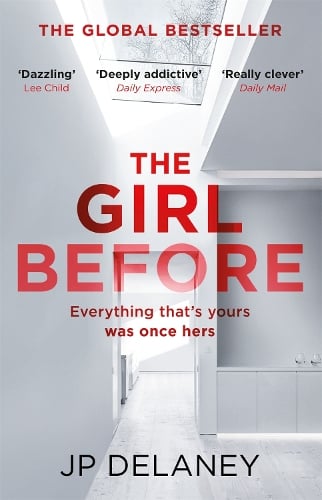
The Girl Before by JP Delaney
Quercus
Pp. 406

Edward has designed a house that is minimalist in appearance, with all the modern technology to make it seem almost sentient. To rent One Folgate Street, with its open-plan features, floating staircase and clean spaces, potential tenants must answer a series of questions before gaining admittance. Once they have been accepted, they understand that he has a sense of authority over them. Everything in the house is computerised and Edward controls the computer; if the tenants don’t answer the questions to his satisfaction, he will turn off the lights or the hot water for the shower. The questions get increasingly pertinent and personal, as the house computer search engine will only respond with certain information, and it collates all the findings to provide ‘helpful hints’. The novel questions when being cared for becomes being spied on; when does being protected become being stifled?

It is clear that Edward is a control-freak. He needs to control all aspects of his – and others’ – lives; not just their living arrangements. He cooks in a very methodical manner with precisely the right hard-to-find ingredients; he admires foreign things so that he can appear knowledgeable and correct people’s pronunciation to constantly assert authority. He also likes the Japanese custom of hitobashira, which he tells a tenant is about burying dead people under buildings, but she later finds out it refers to burying the living. So far; so creepy.

But wait; there’s more. He has very similar relationships with very similar women, two of whom live in his house and narrate alternate chapters. Jane is ‘now’. She has had a stillbirth which makes her vulnerable; she has memories which Edward triggers, she thinks accidentally. Emma was ‘then’. She had been attacked and raped by burglars – her partner, Simon, adores her, but can’t live by her stringent rules or those of the house. Jane’s friend, Mia, points out how much Jane looks like Emma, the previous tenant, who died in the house, and Edward’s wife, Elizabeth, before that. Emma defends him, “Men often go for the same type. Women do too, of course. It’s just that in our case, it isn’t usually physical resemblance so much as personality.” But when does it stop being a ‘type’ and become a fetish?

Past experiences are repeated in the present; the lines Edward uses echo over each other as he says them to both women and they find themselves starting to question his past. When Jane questions Edward about his former relationship (his wife and previous tenant both died in suspicious circumstances), he tells her not to look into it. “The past is over; that’s why it’s the past. Let it go, will you?” There are heavy-handed metaphors about clean slates with faintly discernible chalk marks from previous writings, and if we hadn’t already got the point, Jane spells it out for the hard of understanding with a high-school art essay about palimpsests and pentimenti.

As with any novel including the word ‘girl’ in the title, it seems we must have sex, violence, and an unreliable narrator. It is also worth bearing in mind that it is written by a man. A policeman advises Emma, “We take cases of rape very seriously. That means assuming every woman who says she’s been raped is telling the truth. The flipside of that is that we take false rape allegations equally seriously.” This suggests they are equally common. Fact check: over the past 20 years, only 2% of rape accusations proved to be false. It’s not that men can’t write realistic female characters, but a reliance on pop psychology and simplified gender stereotypes doesn’t help.

The Girl Before is not about a girl, before, after or present. It is about a house and a man’s viewpoint of manipulation and control. It is an entertaining read, but it is not earth-shattering. Shock value isn’t everything, and its veneer wears off very quickly.