Showing posts with label ritual. Show all posts

Tuesday, 14 March 2023

I Hear Voices: Chatter


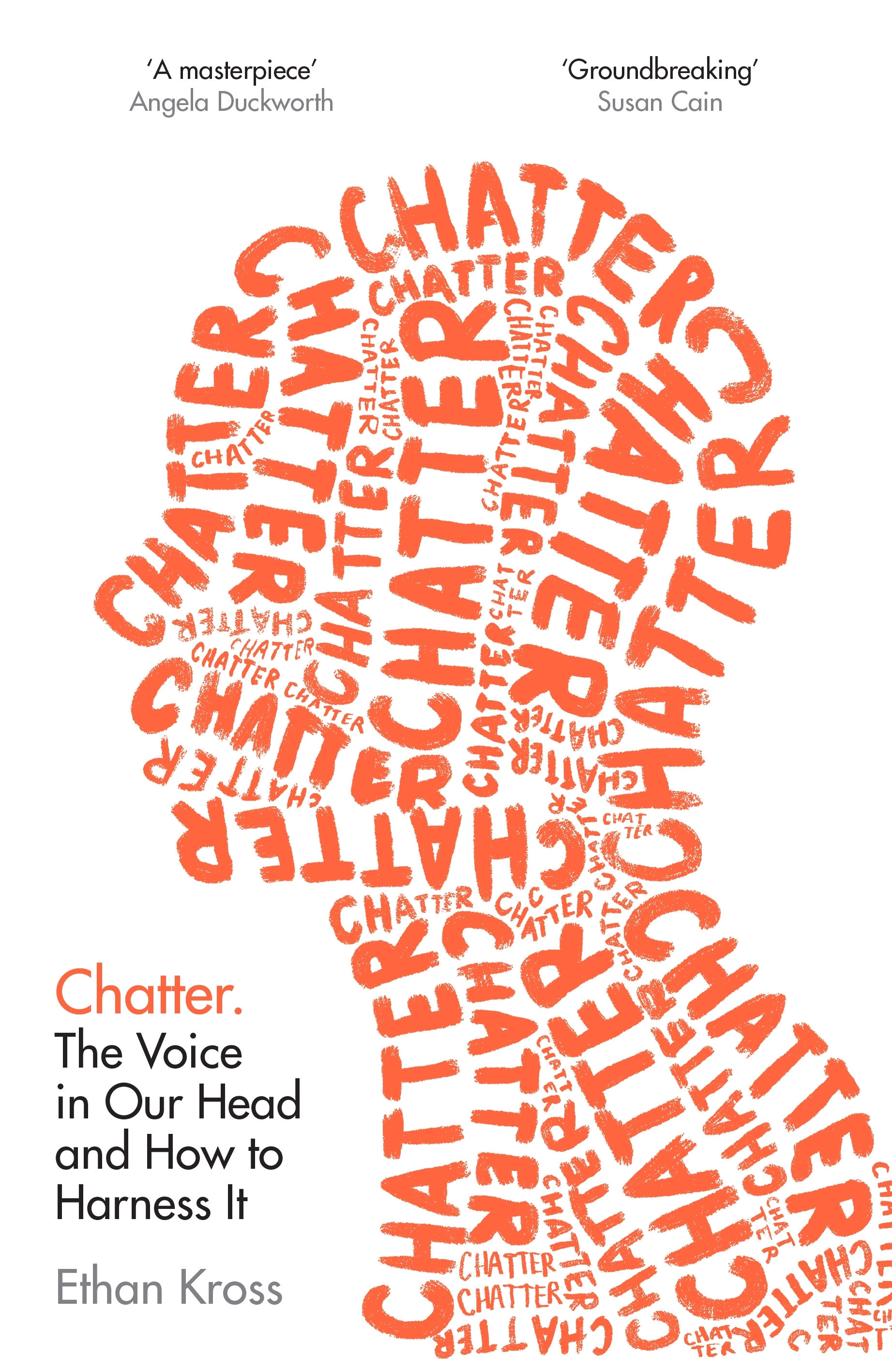
Chatter: The Voice in Our Head and How to Harness It by Ethan Kross
Vermilion
Pp. 171

We’ve all heard the expression, “it’s good to talk’. Yes, but how much, and to whom? Echo chambers can encourage us to wallow in misery, victimhood, or self-righteousness. Communication can help with our problems, however, by allowing us to distance ourselves from them and seeking practical assistance. We spend a lot of our time mentally time-travelling, remembering the future or projecting into the past, all of which can be useful as long as we don’t dwell on the negativity or foreshadow anxious situations. Ethan Kross examines the voice, or voices, in our head, and offers suggestions about which internal monologue and external advisors we should heed.

Talking to others and sharing events can be helpful. It can ‘normalise’ an experience and help a person appreciate that they are not alone. But Kross cautions that we use this sharing function with care and choose the people to whom we discuss issues on a strategic basis. If we rant at our friends about ourselves all the time, they will become disillusioned and uninterested, and feel they have not been heard or supported.

It is important to be able to share, and our support networks are crucial, but if we overshare, not only are we likely to annoy others, we can get caught in a self-destructive feedback loop, especially if we choose the ‘wrong’ people. “Other people can be a tremendous asset, but more often than we realise, they can be a liability too.” While talking about adverse events, we can focus more on the need to repeat and be heard than the need to address the issue and move on.

This process is called co-rumination in which we seek validation from others and it is harmful because, “when we’re upset, we tend to overfocus on receiving empathy rather than finding practical solutions.” While this may briefly feel good, it isn’t useful in the long-term. Naturally, this creates a vicious cycle and one in which it is easy to get stuck. And nowhere does this have greater effect than on social media, which has given us a much wider audience.

One of the ways we can manage these emotions and internal voices is to distance ourselves from them through mental time travel or the simple technique of journaling. Asking people to write about their most upsetting negative experiences for fifteen to twenty minutes leads them to feel better, visit the doctor less, and have healthier immune function. “By focusing on experiences from the perspective of a narrator who has to create a story, journaling creates distance from our experience. We feel less tied to it.”

Mental, physical and emotional welfare can be improved by simply getting out into nature. As well as the health benefits of fresh air and exercise, this is also due to experiencing the phenomenon of awe: “the wonder we feel when we encounter something powerful that we can’t easily explain.” It can be instigated by viewing a sunset or a mountain range and it is considered a self-transcendent emotion in that it allows people to think and feel beyond their own needs and wants.

Marie Kondo fans would be pleased to hear Kross state that imposing order on our environment can help reduce anxiety by getting rid of clutter. “The fascinating thing about seeking compensation for chaos in one area (that is, our minds) by creating order in another (that is, the physical environment) is that it doesn’t even have to have anything to do with the specific issue that is throwing off our inner voice.” It’s a relatively easy thing to tidy a desk, and it can have a highly positive result. Imposing order on situations is the function of rituals, which have a crucial underlying purpose. They reiterate the values of our community and help us to transcend our own concerns, connecting us with forces larger than ourselves.

Distancing is a great tool for normalising challenges, connecting with others and minimising predicaments in our mind. Kross includes a toolkit at the end of the book with practical suggestions on how to give and receive chatter support, from techniques you can implement on your own to those that involve other people. All of these are valuable for those who are overwhelmed by the voices in their head or for those who wish to understand how it affects those who are. For this particular problem, this is a highly recommended self-help book. 

Tuesday, 4 May 2021

It Comes to Us All: Reaper Man


Reaper Man by Terry Pratchett
Corgi Books
Pp. 287

Reaper Man is the eleventh Discworld novel and fleshes out the character of Death, as it were. In this adventure, Death’s time is running out; things aren’t dying the way they should be, which interrupts the fabric of existence; and everything is “filling up the world with life force.” Windle Poons is the oldest wizard in the world, and he is supposed to die, but Death doesn’t show up to collect him, so he doesn’t. Instead, he becomes a member of the Fresh Start Club, a dead rights activism group led by Reg Shoe and comprising other undead folk, such as a vampire and his wife who is desperately trying to conform to stereotype; including wearing certain clothes and speaking with a strong Eastern European accent. We also encounter Ludmilla, a werewolf who changes from woman to dog at full moon, a male dog, Lupine, who changes to human form at the same time, and a bogeyman called Schleppel who likes to lurk behind doors, so much so that he carries his own with him.

Meanwhile, oblivious to all the chaos, Death assumes the mantle of Bill Door and finds work at Miss Flitworth’s farm as an actual reaper man, helping with the harvest, leading to an extended gag about a scythe vs a Combination Harvester. As his time runs out both literally and metaphorically through a sort of egg-timer/ hour glass, he attempts to fit in with the villagers, drinking beer and playing darts. “It was amazing how many friends you could make by being bad at things, provided you were bad enough to be funny.” He is not used to living, which he finds odd, but also confronting. “Was that what it was really like to be alive? The feeling of darkness dragging you forward? How could they live with it? And yet they did, and even seemed to find enjoyment in it, when surely the only sensible course would be to despair.”

Delightful cameo appearances and side swipes at conventional wisdom, recall a fantasy Dickens. Mrs Cake is a clairvoyant who is able to answer questions before people have asked them – they still have to ask them anyway. The faculty wizards at the Unseen University get all sorts of things muddles, which makes for moments of humour, for example, when the Archdeacon (Ridcully) suggests that an RSVP is requested to an invitation, the Bursar exclaims, “Oh, good, I like sherry.” Ridcully himself is “simple-minded. This doesn’t mean stupid. It just meant that he could only think properly about things if he cut away all the complicated bits around the edges.”

The plot is suitably fanciful as evil snow globes hatch into shopping trolleys that converge on places, operating like worker ants or bees around a queen. This might or might not be the case; it is difficult to know for sure. As with all of Terry Pratchett’s work, there is a comically reverent tone to the rituals of human life. He refers to belief as an entity that “sloshes around in the firmament like lumps of clay spiralling into a potter’s wheel” seeking to attach itself to things, such as gods and icons.

Despite all this absurdity and hilarity, there is a touching homily on the nature and meaning of life. “No one is finally dead until the ripples they cause in the world die away – until the clock he wound up winds down, until the wine she has made has finished its ferment, until the crop they planted is harvested. The span of someone’s life, they say, is only the core of their actual existence.” Terry Pratchett is comfort reading for a variety of reasons: his turn of phrase; his ridiculous characters; his twinkling humour and his gentle satire, but above all it is his strong moral compass that truly points the way and keeps his readers coming back.