Tuesday, 16 November 2010

Freedom at what price?


Earlier this week we received the good news that Nobel Peace Laureat Aung San Suu Kyi was released from the house arrest under which she has spent 15 of the past 21 years. This is not the end, however. The country in which she lives is ruled by a military junta which flagrantly breaks the Geneva Convention and routinely lists killings, torture, rape, destruction and appropriation of property, and taking of hostages among its violation of human rights and crimes against humanity.

Aung San Suu Kyi has much Western backing, and support for her has become symbolic with the struggle to protect democracy and freedom of the individual. She has been released before. In 1995 she was released only to be attacked and there are fears that a similar thing could happen again. She may be out of 'custody' but as long as she speaks out against the abuse of human rights she is not safe. She also argues that she is not free.

"If my people are not free, how can you say I am free? We are none of us free."

Immediately Aung San Suu Kyi wants to work to free the more than 2,100 political prisoners still being held by the Burmese regime. Her intention is to gain global support and bring their plight to interantional attention. "This is a time for Burma when we need help. We need everybody to help in this venture. Western nations, eastern nations, all nations."

She displays an exemplary love of her country despite the treatment she has received and says of her captors, "I think we will have to sort out our differences across the table, talking to each other, agreeing to disagree, or finding out why we disagree and trying to remove the sources of our disagreement." We can only wish that others around the world were more rational and less bent on revenge.

In a speech of which a trade unionist would be proud, she said, "There is a time to be quiet and a time to talk. People must work in unison. Only then can we achieve our goal." Crucially this assumes that we all have the same goal. Unfortunately while some seek personal advancement at all costs, and inevitably the expenxse of others, this can never be the case.

Wednesday, 10 November 2010

Dry Stone Walls

When people ask me (as they invariably do) what I miss about England, I respond; family, friends and football - in no particular order. I also miss English drama, comedy, theatre, sense of humour, beer and pubs. There are also certain things that have the capacity to make me homesick, but I never knew that the Public Footpath Network and dry stone walls were among them. It seems I am not alone in this.

When I posted photos of my trip home on My Week in Pictures, the Weevil told me it was those very walls that made her want to go home. So this is for her:


Geological Geometry

Grey lines dissect the green hills,
Marking out history with geological geometry.
Where the softer South grows hedges,
The stony North builds walls
To separate the sheep from the goats;
The cows from the arable crops;
The personal profits from the fallow fields.

There are stories in stones;
Placed by hands imparting human shape to the landscape
Following the contours of ancient shifts and rifts;
Settling the wrangles of nosy neighbours
And stopping the stock from wandering;
Retaining plain sailing on rolling pastures
Layering parallel lines with through stones.

Boundaries of boulders to guide and direct;
Selecting the right path and bypassing the pitfalls,
With occasional bolt holes to squeeze through
And narrate a particular past
Without words to cement sentences:
Two stones above a stone
And one above two.


Tuesday, 2 November 2010

Big Foot Strikes Again!


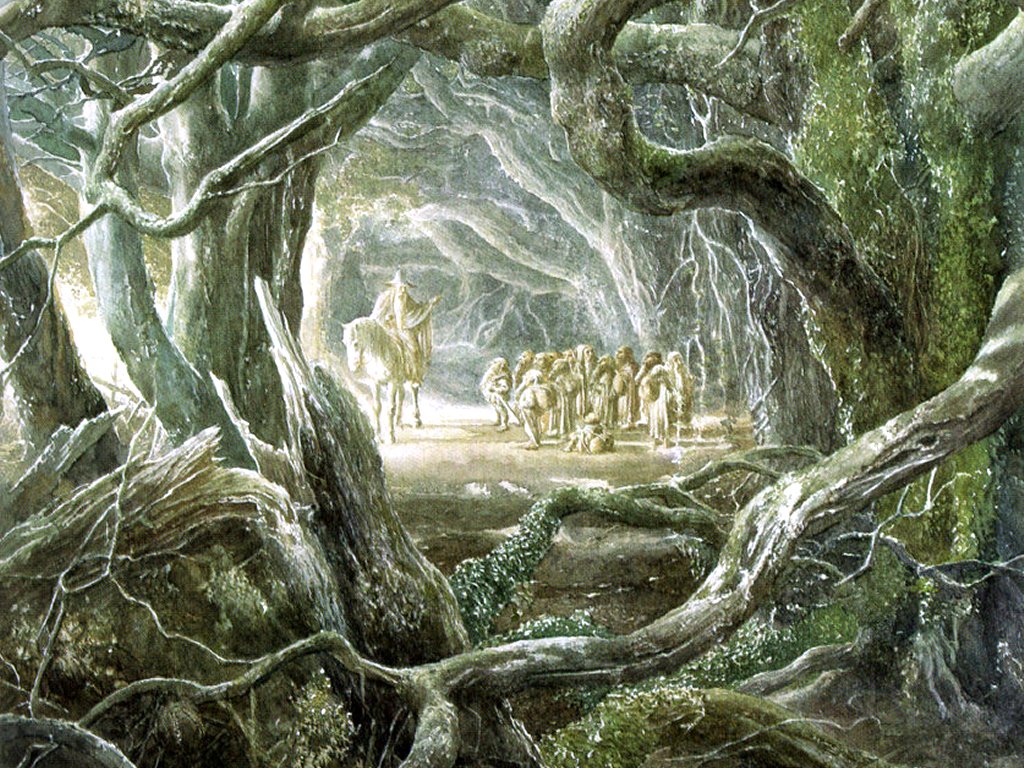
Recently the New Zealand media has been awash with hysteria over The Hobbit. Because some actors who were part of the union dared to ask for comparable wages with their American counterparts for doing the same job in the same conditions on the same film, the executives at Warner Brothers threatened to take the film off-shore. Suggestions were Poland or Czechoslovakia, because it’s cheaper. There was outcry.

This did lead to some interesting asides as an article in The Guardian speculated where certain scenes might be located if set in Britain (let’s not forget; where the book was originally written). The Shire is described thus; ‘Tranquil and pastoral, the Shire is home to the Hobbits, a bizarre race of tiny, shoeless, greedy, pipe-smoking, badly dressed little men and matronly wives.’ The suggested location was therefore Luton town centre. The forum was opened up to the public to propose where they would shoot The Hobbit – the first answer was, ‘I would shoot the hobbit in the face’. My, how I laughed.

According to some sections of the population The Hobbit can be set nowhere but New Zealand, never mind the fact that JRR Tolkien never even visited here. For a nation that has been proudly churning out ‘New Zealand-made’ garments from sweat-shops in China for years because it’s cheaper, the righteous indignation feels a little hollow. These are probably the same people who illegally download films and music, thereby killing the performance industry to save themselves a few dollars.

Many extras and people who don’t actually make a living through acting are claiming, ‘I’d do it free’. How helpful is that really? For some reason many sections of society seem to think that because actors love their job, they should be paid a starvation existence, if at all. I’m not sure I follow this argument – are we saying that lawyers and surgeons hate their work? After all, no one expects them to work for free.

It seems that the nation has finally woke up to the fact that people don’t adore them the way they think – they just use them because their labour is often cheaper than in other (generally unionised – i.e. fairly paid) countries. So I woke up one morning last week to find that John ‘I made fifty million pounds out of screwing people like you’ Key has changed the labour laws overnight, and denied one of the workers’ primary rights – that of collective bargaining. Yes, you read that right: 300 years of workers’ rights sold to Warner Brothers. It may not be Mickey Mouse, but it’s certainly goofy.

Corporate greed triumphs once again, as you would expect from the despicable I’m Alright Jack politics that epitomised the Thatcher era (during which this particular Jack made his millions), but the fact that a Prime Minister can directly intervene in a commercial venture and bribe a company to come to his country (Warner Brothers will receive $25 million in tax breaks) so it receives worldwide exposure is disgraceful. New Zealand scenery will once again be on the big screen and it will do wonders for the tourism industry (the same Guardian article points out that, ‘prior to those films it was just bungee jumping and binge drinking, but now the spectacular scenery is its own selling point’), but the actors will leave. He has made sure of that.

When all that is left are right-wing propaganda mainstream X-box American remakes in ten years time, people who voted for this slippery snake will have only themselves to blame. I will be boycotting the film of The Hobbit when it finally comes out, even if it does star Richard Armitage. Admittedly, I am only one person and will not make much of an impact on the American/oops, I mean New Zealand (there appears to be little difference) dollar, but like the actors who fought for their rights I am prepared to stand by my beliefs. (Plus The Hobbit is one of only two books I have ever started and not finished out of sheer boredom.)

Meanwhile in France, such things would not pass without a ripple. President Sarkozy’s attempt to raise the retirement age from 60 to 62 drew mass protests and strike action from the workers. It was said to cost the national economy €400 million a day and yet 70% of people supported the unions who called for these strikes. Jean-Luc Hacquart, a representative of the CGT union in Paris (Confédération générale du travail) – the strongest union in France – said (albeit doubtless in French),


"Democracy is not a carte blanche given to people to do what they want between elections. It doesn’t work like that."

George Orwell wrote in Nineteen Eighty-Four, If you want a picture of the future, imagine a boot stamping on a human face— forever.” If only people were less apathetic and more socially minded in this country, the hard-fought rights of the workers would be safeguarded rather than tossed aside for the benefit of a group of hairy-footed cellar dwellers. I mean the fictional hobbits – what were you thinking?

Thursday, 28 October 2010

It's only Rock and Roll...


Rock and Roll Suicide stars (from left) Shaun Vining, as Idol, Max Gunn (17), as Joe Rockstar, and Pearly McGrath, as Susie Diva, Joe's girlfriend, pose during the company's first dress rehearsal with the band, in the Arrowtown Athenaeum Hall, on Wednesday night. The rock opera debuts in the hall on Wednesday and plays until Friday. Photo by James Beech.
Rock and Roll Suicide
Athenaeum Hall, Arrowtown
October 27-29, 2010

When I was 13 I wrote a story for my cousin comprised entirely from the lyrics of David Bowie songs – she lived in the US and I in the UK, and he was the single artist we both admired who translated across the Atlantic. It would be fair to say that even before I was finally defeated by Cat People (there’s only so many times you can attempt to put out fire with gasoline after all) it was a woeful effort.

Fortunately for us all, UnderGround Productions have done an infinitely better job with Rock and Roll Suicide; a rock opera featuring the music of David Bowie. Margaret O’Hanlon directs a vibrant and enthusiastic cast through some novel interpretations of familiar and lesser-known songs. The band on stage are excellent if occasionally the music mix on opening night meant they drowned some of the singers, but the sound fills the hall with depth and rhythm, almost as if at a real gig.

The story isn’t too original or hard to follow which is good because you can concentrate on the music (and that is great!) although a few spoken words might enhance the clarity, especially for those who don’t know Bowie’s lyrics already, as these are sometimes hard to decipher. Joe Rockstar (Max Gunn) wants to be a rock star so he heads to London with his trusty guitar where he is fatally impressed by the star of the moment, Idol (Shaun Vining). He also meets groupie Suzy Diva (Pearly McGrath) and promises her a whirlwind romance which becomes more of a torrid maelstrom of drugs and destruction.

Pulling the strings like malevolent puppet masters are the manipulative record producers, Jupiter (Martin D Grounds) and Vex (Margaret O’Hanlon). Like a pair of scary clowns they command and wheedle; bully and badger until they get what they want – money – at any cost. In garish costume, pancake make-up, dreadlocks (him) and fishnets (her) they wheel on a magician’s cage with plush red curtains and iron bars; fame may look alluring but it is also an illusion; a trap from which there is no escape.

The chorus work and expert choreography (Anna Stuart) makes the ensemble numbers a delight. From the spine-chilling vocal harmonies of Life on Mars – played out against flickering images from the silver screen – to a dozen human cameras flashing their shutters in synchronicity in Fame, the company numbers are a highlight. Golden Years, with arm twirling and finger clicking, is a classic rock song which the lighting emphasises perfectly, and when things get dark in the second half, the choreography for Tonight has a touch of Jai Ho to bring us out of the gloom.

A propos of which, there are some very dark themes indeed as Joe Rockstar succumbs to heroin, hallucinations and attempted suicide. The young Max Gunn handles these excellently and though he may not have the vocal experience to carry the angrier punchy numbers (Changes; Suffragette City) he really hits his stride with the soulful duet When I Live My Dream and the drugged-up Always Crashing in the Same Car.

As he sits vacantly on the sofa during Lady Grinning Soul (another vocally superb cameo for Margaret as Medusa), Anna Ashton performs acrobatics on the pole that has dominated the set since the beginning. It is a fantastic display of strength and flexibility that also (I suspect due to the skimpy 'outfit') drew appreciative whistles from half of the audience. If this is one for the boys, then Pearly McGrath’s fantastic rendition of Heroes as a disappointed and neglected lover struck a chord with the girls and brought the house down. The reprise of Heroes/ When I Live My Dream/ Starman is touchingly tender, although the preceding scene needs polishing in terms of acting and mechanics to deliver the full impact

Shaun Vining puts in a stellar performance as the fallen hero who is discarded for a younger model. His pained demise in Bewley Brothers elicits skin-crawling sympathy as he descends into madness with the assistance of projected images of his distorted face. Tom Lynch and Tom-Tom Productions do a fabulous job with the technical aspects and visual backdrop which enhances the poignancy of the piece with quotes and images of those who died too young through abuse of substances and their mental health.

Incidentally, I wouldn’t have included Michael Jackson (who seemed to be the odd one out), but I would have added Ian Curtis to the likes of Joey Ramone, Sid Vicious, Marc Bolan, Jimi Hendrix, Michael Hutchence, Phil Lynott, Keith Moon, Jim Morrison, Janis Joplin, Johnny Thunders, Elvis Presley, Kurt Cobain... you can discuss this later at home. The programme includes the phone number for Wakatipu Victim Support for anyone who wishes to speak to a health professional about any issues raised by this production and there are some powerful moments as it treads a fine line between the highs and lows of adulation – never pulling any punches.

Just as Idol was thrown on the scrap heap, so Joe Rockstar follows suit when Jupiter sees he is no longer fresh and brings in a new pin-up, the effervescent Sam Hillman as DJ. He introduces a modern note (although his song, DJ, is from 1979 proving the versatility of the great man) and a hip-hop style with which the cast seem more familiar. It is indeed a credit to Margaret and Marty to get such sterling performances out of people who weren’t even alive when Bowie was at his best. The selection of songs is clearly a personal one, but perhaps more emphasis on the ‘good time’ era might explain why one would pursue such giddy heights in the first place.
 
There are some technical issues which need improvement and may shape up further into the run – the skylight needs to be blacked out or it ruins the lighting effects in the first half; the transition of microphones for the final number, Ziggy Stardust, is a bit shambolic; there are several occasions between numbers where the cast don’t know where to put themselves – it is a very small stage and can look crowded and messy – and it was entirely obvious that the encore was unplanned, although Fame was a good choice. On the whole, however, this is a thoroughly entertaining show.

Rock and Roll Suicide demonstrates how good a musical can be when you actually let the music do the talking. In the words of my favourite Bowie song, ‘Hot tramp; I love you so!’

Friday, 22 October 2010

Henry IV, Part Two: Uneasy Lies the Head that Wears the Crown

Henry IV, Part Two
Shakespeare’s Globe Theatre
July 3 – October 3, 2010

‘Does anyone ever do Henry IV, Part Two by itself?’ asks my dad after we emerge from Dominic Dromgoole’s most excellent sequel at The Globe. Probably not, because although it is a superlative historical drama, it follows on from Part One too comfortably to stand alone.

Prince Hal (Jamie Parker) is still unsure where he fits in life; like Prince Charles, his job is to wait for his monarch-parent to die. The moment when Hal thinks this has happened is shockingly powerful and moving as he has the temerity to touch the crown, only to then stand silent and chastised as his father (Oliver Cotton) remonstrates with him.

Falstaff (Roger Allam) is still a powerful coward full of bombast and bravado. Age and the law are catching up with him, however, and he is slightly more contemplative as he realises he has no true friends and may have only a lonely dotage ahead of him. He tries to shrug off such reflections with cheap tricks and ale but the merry-making seems forced. We understand why actors relish the role of Falstaff and why he is the only one of Shakespeare’s characters to get his own spin-off play, but also when Hal and his ‘shadow’ Poins (Danny Lee Wynter) tire of him, it is easier to share their disillusionment than in Part One.

The tavern scenes are exquisitely executed, from the distressed Mistress Quickly (Barbara Marten) who is simply trying to make a profit and avoid ‘swaggerers’ while her husband nonchalantly smokes his pipe on the balcony, to the vigorous slapstick humour of Doll Tearsheet (Jade Williams). She proves adept at physical comedy as she hurls herself (in more ways than one) across the stage –let’s just say the groundlings at the front get slightly more than they bargained for.

There are yet more politics and manoeuvres in this second part of the trilogy and they continue to be expressed with intelligence and clarity. A particularly Machiavellian piece of skulduggery reveals Hal’s younger brother John of Lancaster (Joseph Timms) in a not-entirely-honourable light. He is steadfast and practical, however, and more like a stereotypical older brother who gets the job done without any of Hal’s shenanigans, of which he clearly disaproves.

William Gaunt is quite brilliant as the doddering old Shallow bringing humour to what could otherwise be quite tedious scenes of choosing soldiers, and providing such much-needed lightness as the tone darkens. He is delightfully shambolic and his double act with Silence played by Christopher Godwin is the best I’ve seen since Morecambe and Wise.

With the death of his father, Prince Hal becomes King Henry V and his return to the stage (he is absent for three-quarters of the play) makes it shine anew. Although he claims, ‘This new and gorgeous garment, majesty/ Sits not so easy on me as you think’, he does in fact assume the mantle with aplomb. And when he rejects Falstaff at the conclusion, we are not as sad as we might be because we know it would be disastrous if, as the dissolute knight has boasted, ‘the laws of England are at my commandement’.

The new king reveals a glimpse of the old playboy when he promises he will reward Falstaff and his companions with advancement, but assures them it will only be ‘as we hear you do reform yourselves’ and not purely through nepotism. Already he is proving to be an adherent to fairness and justice – the audience can once again leave on a high knowing the (past) future of England is in good hands.

Thursday, 21 October 2010

Henry IV, Part One: Buzzing on the Banks of the Thames

Henry IV, Part One

Shakespeare’s Globe Theatre
July 8 – October 3, 2010

Dominic Dromgoole’s production of Henry IV, Part One at The Globe is sensitive and rambunctious; traditional and contemporary; and overall compelling viewing. It ranges from royalty to riff-raff; battlefields to brothels; city to countryside and high politics to low humour, and all of it is immensely entertaining.

The play examines the troubled relationship between sons and their fathers (both real and surrogate), and the nature of friendship as it alters with power, responsibility and age. Prince Hal has diametrically opposed father-figures, although he eventually rejects both of them, ‘breaking through the foul and ugly mists’ to emerge blazing as his own man.


I’ve always thought the part of Henry IV was a bit ineffective but Oliver Cotton delivers his conscience-wrestling quandary with dignity, sincerity and a great command of the language. On the other hand, there is the irrepressible Roger Allam as Falstaff. Falstaff is an unashamed scene stealer, milking every nuance to just the right extent, working his audience like a stand-up comedian so that we feel part of the show. He is morally reprehensible with a terrible attitude to life and impeccable comic timing. Whether he is exaggerating his part in a duel or delivering an in-depth and unfavourable analysis of honour – musing on philosophy as he casually devours a tub of ice-cream – he is a joy to witness.

The fact that Allam doesn’t dominate the entire play, however, is due to the comprehensive direction and the brilliance of the other characters. Jamie Parker has made me fall in love with Prince Hal and Henry IV, Part One all over again. From the moment he emerges from a trapdoor with his pants around his ankles and a twinkle in his eye, his conflict of self-interest is fantastic. The trading of insults with Falstaff is sublime: if only pub slanging matches were so witty. Hal maintains his irreverent sense of fun even as he matures before our eyes through the course of the play.


He can be noble and resolute and not afraid to shirk responsibility when it falls upon him. He knows what will be expected of him, and is itching to get down to the job. He mocks his father when he imitates him in a pub, but he defends him bravely in battle and foreshadows his steely rejection of Falstaff, ‘like bright metal on sullen ground’. The opposing natures of the young prince are both excellently explored. Will the real Prince Hal please stand up? I desperately want him to play Henry V – I’d follow him into a breach any time.

Hal also has to contend with Harry (Hotspur) Percy as a model of valour. Sam Crane indulges his fiery nature to provoke humour but also respect. He may be all-too prepared to fight for his beliefs, but at least he has some. Glendower (Sean Kearns) tries to restrain him with a steady hand and a mellifluous voice, but Hotspur remains tempestuous. He may be heated in battle, but lacks passion in his domestic relationships, much to the frustrated chagrin of his wife, Kate (Lorna Stuart). She behaves a little as though she is auditioning for The X-Factor and is too focussed on herself to interact with the others, although once again, you can hear every word that she intones.

The play (and its sequel) contain a good deal of principles and affairs of state, but the scenes are acted so well and spoken so clearly that you are never lost in the potential mire that could be English ‘War of the Roses’ history. Politics are given edge (literally) in sword fights and tavern scenes. The set, designed by Jonathan Fensom, incorporates rustic qualities as minimal touches elicit maximum effect. Heraldic banners hang from all the banisters and a simple backcloth unfurls to denote our locations, from the Boar’s Head tavern to the battle encampment or the King’s bedchamber. It is a delight and an honour to experience this production in its spiritual home.

It may be a traditional production in period dress but don’t be fooled into thinking it is sedate. It is infused with high energy from the riotous mummers’ performance at the beginning to the sardonic dance at the end which sends the audience out buzzing to the banks of the Thames. Music and singing enhances the play throughout with musicians augmenting the slick scene changes to ensure the action never flags.

Monday, 18 October 2010

Laughing in the Face of Adversity

Today is my birthday and I should be celebrating. And I am, mostly. I have had lunch and coffee with friends, been for a walk by the river and am going out to dinner at a fine Italian restaurant with my husband tonight.

Not everything is a box of fluffies/ bowl of cherries/ bed of roses, however. I have got laryngitis and completely lost my voice so am only able to smile, wave and squeak. I've never especially liked clowns and now am afraid I may be turning into one with my elaborate (panto)mimes! I have noticed that I am still able to laugh, which I find an interesting anatomical curiosity as it seems to prove that laughter is visceral and does not come from the throat at all. In fact, as Peter Cook points out in Tragically I Was an Only Twin,'A laugh, like an erection, is largely involuntary'. Hmmm.

But today's main disappointment has been the performance of my beloved football team. I got up at half past one to watch them lose the Miseryside derby in comprehensive fashion to Everton. Tragic. We are now second to bottom of the league - only kept off the lowest spot by a marginally 'superior' goal difference. This is the worst position Liverpool has occupied in my living memory. Even more tragic.

And yet, the Scousers still see humour in the situation. At Liverpool's John Lennon Airport, there is a bronze statue of the erstwhile Beatle. On the ceiling is written the airport's motto, taken from his song, Imagine: 'Above us only sky'. Rumour has it that some wag has scrawled alongside it, 'Below us only West Ham'. You've got to laugh, apparently...