Friday, 1 March 2013

Friday Five: Fabulous Oscar Frocks 2013

Of course I watched the Oscars and the red carpet lead-up. I love all that stuff. Call me shallow if you like, but it's a big deal for these guys. The thing with subjective stuff like acting is that you don't win a contest, like in sporting pursuits, but you do get awards, and that has to count as much. There will always be disagreements about who was better than whom, so rather than get into that, I'm just going to comment on the pretty frocks.

And yes, I know the blokes were there too, but they all looked pretty much the same, with a couple of notable standouts:
  • Eddie Redmayne - smoking in Alexander McQueen, even in slippers
  • George Clooney - distinguished as usual in Giorgio Armani
  • Jamie Foxx - the Calvin Klein grey tux with black shirt worked well for him, the old silver fox(x)
  • Daniel Day Lewis – playing up to his nebulous Irish roots by doing that thing of deliberately not abiding by the rules in a blue/black Domenico Vacca  tuxedo that doesn’t quite work. And it’s too short.
  • John Travolta - he’s a sharp-dressed man and he wears it well. The Calvin Klein suit is not bad either – ba boom tish!
Why is it that, although all the women are photographed alone, all the men have a female (wife/ girlfriend/ daughter/ mother) whom they cling to, or is it the other way round? Channing Tatum was sporting the latest accessory for men - his pregnant wife. Seriously? You're here for your acting taleent, not your ability to reproduce.

Anyway, I know it's the Friday Five, but I'm going for the seven best dressed (in my opinion) because it's my blog and I can do what I want. So, in no particular order:

7 Fabulous Oscar Frocks:

Jennifer Lawrence in Dior Couture
It takes a lot of effort (and money) to look that effortless. I would say it’s been a week well spent – who cares if she can’t walk in it – it’s not meant to be practical!

Reese Witherspoon in Louis Vuitton
Wow! In a cobalt blue gown with black accents, Reese keeps her look both classic and modern. Her lack of jewellery and her hair cascading in sculpted waves sets off her radiant, fun beauty.

Jane Fonda in Versace
Work it, lady! There aren’t many who can get away with wearing yellow, or the strong, bold geometric shape – she got the canary!

Naomi Watts in Giorgio Armani Prive
Curiously glamorous armour – an asymmetrical outfit softened by great hair.

Nicole Kidman in L'Wren Scott
Showing off a show-stopping silhouette in a metallic sequin shimmer number. I love her ‘messy’ hairdo – at least one part of her still looks natural. 
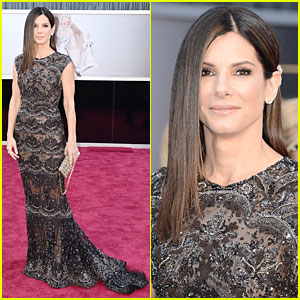
Sandra Bullock in Elie Saab
In a fantastic lacy number which covers and reveals exactly what it should and shouldn’t, our Sandra shows she is a girl who knows how to dress herself.

Salma Hayek in Alexander McQueen
In her baroque high-necked midnight blue velvet gown with her classy up-do, Salma’s worth staying up all night for.

Thursday, 28 February 2013

A World Away: Child Migration

On Their Own: Britain's Child Migrants
National Archives of Australia
December 2012 - March 2013

From the 1860s more than 100,000 British children were sent to Canada, 7,000 to Australia, and several hundred to Southern Rhodesia (later Zimbabwe) and New Zealand through child migration schemes. Some were as young as three, but the average age was eight years old, and most of them never returned home.

Their lives changed dramatically and fortunes varied. Some succeeded in creating new futures. Others suffered lonely, brutal childhoods. All experienced disruption and separation from family and homeland. This exhibition, a collaboration between the Australian National Maritime Museum and National Museums Liverpool UK, tells their emotional stories.


In the late nineteenth century, emigration was viewed as a solution to Britain’s economic and social problems. Between 1801 and 1911 the population of Britain increased from 9million to 36million and the rapid rise of industrialism led to overcrowded cities, disease, long hours and poor working conditions. It cost ₤15 to migrate a child and ₤12 a year to look after them on the Poor Law in Britain.

Charities were set up to support emigration including the Child Migration Scheme established by Kingsley Fairbridge in 1909. In 1900 many of the emigrating children came from workhouses, later they came from children’s homes and orphanages. Some parents chose the scheme for their children – orphans were not necessarily without parents – many children were taken into care when their parents couldn’t afford to look after them. They were told they were orphans to ensure they severed all ties with allegedly unworthy relations and made a fresh start.

Children were sent for the prospects of better living conditions and steady employment – a way to improve life away from the perceived evils of city life. It was not all totally altruistic, obviously, as there were growing labour needs in Britain’s dominions. The children were to be the bricks upon which the Empire would continue to be built. Australia in particular ran a ‘Populate or Perish’ campaign. The country was booming and there were demands for more children.


Before leaving Britain, children were given a wooden trunk containing winter and summer clothes (the first time many of them had ever had new clothes), a copy of the Bible and Pilgrim’s Progress. Fairbridge boys were outfitted in smart blazers, shorts, leather shoes and brown and gold striped ties. This fine wardrobe was taken from the children on arrival and replaced with khaki work clothes and bare feet. Barnardos gave children travel bags with new clothes, shoes and personal items (such as toothbrushes and combs) which were taken off them when they arrived in Australia and sent back to Britain to be used again by the next party of migrants.

The voyage was both frightening and exciting. The children they left behind home and family, but also poverty and hardship: they had new clothes and made new friends. Depending on their destination, they saw and experienced many strange sights, boats, islands and harbours – Suez Canal; Arab traders and camels; whales, dolphins and icebergs (off Labrador Coast); Quebec; Montreal; Dar es Salaam; Tanzania; Tenerife; Rock of Gibraltar; Naples; Mt Vesuvius; Port Said; Tropical Colombo; Sri Lanka.


Steamship travel afforded exotic delights and plenty to eat; many children put on weight. They played games of leapfrog and quoits and learned to swim in the pool. One interviewee remembers, “The ship had a swimming pool in the middle and I was terrified to jump in because I thought it would have no bottom and I would end up out in the sea and drown.” I can’t help but be reminded of the Land of Toys in Pinocchio where children are lured with leisure before being turned into beasts of burden. A quote at the exhibition confirms,

“The visual record of child migration is dominated by photographs of cheering children departing the UK and arriving in new lands. These photographs were taken to promote the work of sending organisations and ensure they continued to attract financial support from governments and wealthy patrons. They provide a remarkable contrast to the often damning written and oral testimonies of former child migrants, which form the basis of many case studies in the exhibition.”
Land of Toys by Bakke
Some children were given the choice of emigrating to Canada or Australia and the reasons for their choices are heartbreakingly innocent – they chose Canada because they wanted to be lumberjacks; Australia because they liked cricket or didn’t like the cold. In New Zealand many were fostered; in Canada and Australia they were put to work on the land; in Rhodesia they were educated (at the time they were told that ‘the blacks worked the land’). Some were happy with the skills they learned and later went into the farming trade, wool industry and defence forces.


For some the experience of Canada was that they were stationed in bleak, remote farms, where their accent was ridiculed and they were not allowed to eat with the family. In Australia many were shocked by the heat and the landscape, and sent to remote farm training schools or religious institutions. Pinjarra (80km south of Perth) was the first school of the Kingsley Fairbridge’s Child Emigration Society in 1912. The cottages in which the children were accommodated were called Clive, Raleigh etc – named after British navigators and war heroes to reinforce his imperial vision.

The Fairbridge Society and Barnardos sought ‘good British stock’ to populate, settle and defend the continent, but the boys were destined to be farmers, and the girls domestics and farmers’ wives. One woman recalls, “You finish school at 15 and became a cook in the Fairbridge dining room. Later you meet your future husband, an old Fairbridgian at the Fairbridge holiday camp.” The children were often put to hard labour; tilling soil, churning butter, milking cows, and hauling heavy bricks to build their own dormitories. The correspondent continues, “They asked for the best British stock – children of good health, high IQ and sound moral character – then put them to work as labourers. What a breach of faith that was.”


For some children, things were not so bad. The exhibition collects anecdotal evidence from many who underwent the schemes. One lad earned ₤10 a week and sent ₤1 to Barnardos for banking, for the savings to be released when he was 21. Others, however, tell tales of physical, sexual and verbal abuse, producing scars that remained with them for life. Some societies stole the children’s wages, belongings and letters from ‘home’ and told the children their parents were dead and that they had no siblings; that they were unloved and unwanted. When some of these children found out the truth the betrayal sent them mad. Things improved slightly with the Big Brother Movement (BBM) where Big Brothers helped Little Brothers to settle, but an interpretation panel baldly states,

“For former child migrants the legacy of their experience remains. Many have struggled, not only due to the hardships and abuse they endured, but also because they were torn from their homeland and lost their identities. Others were lucky enough to find fulfilment in their lives.”
In 1914, the First World War put a stop to child migration, although many former child migrants fought in the Canadian army as they still felt strong connections with their British roots. It recommenced after the war, but the interwar years were marked by poverty and austerity in formerly receptive colonies and child migration to Canada was formally ended by 1939. Australia became the main destination after Canada ended the scheme. One third of war evacuees to Australia later emigrated there for good. Indeed, some former child migrants also fought in the Australian army, only to later discover that they had never been granted citizenship.

In 1945 the introduction of the Welfare State reduced the need for child migration schemes, and they were officially ended in 1967. The Australian and British governments apologised for their roles in schemes “that were once considered generous philanthropy, but are now widely condemned as being fundamentally flawed.” The exhibition contains a number of oral histories, which are very moving. Videos and recordings reveal adults who still have a love for Britain even though they have lived in Australia since the age of 12, rationalising that they would have had to endure another war if they had remained in Britain.

Since the 1990s the Child Migrants’ Trust helps to reunite families. The hardest hearted cynic cannot fail to be moved by the collection of tales of reconciliations with parents thought dead and the difficulties of tracing families. Children were often given the wrong birth date and wrong name, and told they were told they had no relations, making it almost impossible to find their missing identity. One interviewee finally found his mother through her name on his birth certificate which had been concealed from him for many years. By the time he found it, she had been dead for two years.

Former child migrants gather in London for the apology from British Prime Minister Gordon Brown in February 2010.
The exhibition is sensitively handled; a well-balanced and thought-provoking treatment of an incredibly emotional issue. We can’t change history, but hopefully we can learn from it. We have done some terrible things in the past with the best of misguided intentions. In the words of the exhibition itself:

“The history of child migration is complex and contested. Issues of redress and compensation remain unresolved. Many former child migrants are still coming to terms with their deportation and dislocation and find it painful to reflect on their past.”

Monday, 25 February 2013

Beasts of the Southern Wild: Overwrought Ecological Hokum


This is not a bona-fide review, as it gives away a lot of the plot, but it does explain my feelings towards it. It soon became clear that this film was shot in queasy-cam and I was going to have to steel my nerves not to vomit.

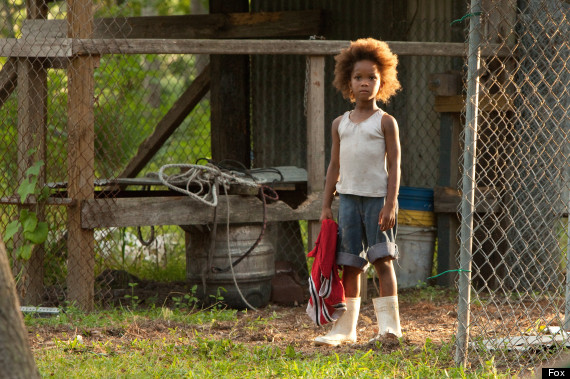
The film is set in Louisiana, in a poor part of the bayou on the edge of an ugly city where everyone is poor. Hushpuppy (Quvenzhané Wallis) is a little girl who lives in Bathtub with her father, Wink (Dwight Henry), in a shack built from reclaimed cardboard. Their yard is full of disused junk and pigs and ducks. Hushpuppy has a separate shack from her father and she eats with the animals.

The scene of poverty but community is set through a carnival with drinking, folk music, fireworks and a Rabelaisian atmosphere. Hushpuppy provides sonorous notation throughout the film, which gets annoying when it attempts to be profound – precocious children are my bête noire. She tells us the wider community ‘got fish in plastic wrappers, chicken on sticks, babies stuck in carriages – they only have holidays once a year.’ The inference is that people in Bathtub may be poor, but they can have a good time all the time. ‘They built the wall that cut us off. They think we’re going to drown down here, but we ain’t going nowhere.’


Hushpuppy not only eats with the animals; she communes with them. She listens to the hens to hear what they have to say. ‘Most of the time it’s I’m hungry or I need to poop, but sometimes they talk in code.’ She is taught in school that the icecaps will melt and everything south of the levee will flood, ‘so y’all better learn how to survive’. She believes everything is connected and that ‘the whole universe depends on everything fitting together just right’. Of course it doesn’t, and everything falls apart.

Her daddy is missing and her mother has swum away – she imagines talking to her mother and her mother singing back. Wink has been in a drunken incident and ended up in hospital, from which he discharges himself without his clothes and comes home ‘in a dress with a bracelet’.

Convinced of her own importance, Hushpuppy draws pictures of her life for future scientists to find, like cave paintings. ‘They will know that once there was a hushpuppy who lived with her daddy in a bathtub.’ While trying to cook, she sets fire to her shack, and then runs from her furious father. When he catches her he hits her and she thumps him in the heart. He falls down as though dead and she runs to find medicine for him in a sequence which demonstrates their fierce – often violent – co-dependency.


And then the storm comes, heralded by heavy symbolism of crumbling icebergs, insect larvae and aurochs – extinct beasts that look like giant cattle or buffalo. The sound of thunder is echoed in the collapsing ice shelves (some might call it magic realism; others might call it pretentious art school drivel) contrasting the hot and dirty land with the cold and clean – it’s all connected, in case we missed the point. Wink puts Hushpuppy in a suitcase with armbands on and tells her to go to sleep despite the wind and rain, ‘I’m your daddy and you have to do what I say because it’s my job to keep you from dying.’ He, meanwhile, picks up his gun and goes out to confront the storm, dealing with the physical the only way he knows how.

There’s very little of the storm itself before we cut to the aftermath. We see their pig in an altercation with an auroch. Aurochs died out in the seventeenth century; their extinction driven by hunting, a narrowing of habitat due to the development of farming, climactic changes, and diseases transmitted by domestic cattle. In other words, humans wiped them out, but as Hushpuppy intones, ‘every animal is made out of meat’ and, as animals, humans are just part of the food chain.


The quiet aftermath (a well-directed moment – actually, use of sound is good throughout the film) is disturbed by the boat containing Hushpuppy and Wink gliding through the water, with Hushpuppy’s voiceover, ‘For the animals that didn’t have a daddy to put them in a boat, the end of the world already happened. They’re all down below trying to breathe through water.’ They find some survivors and they band together, pooling their resources (pardon the pun) and feasting on crabs and prawns, ripping them apart with predatory fury. Hushpuppy needs comfort, but her father relies on strength and tells her ‘no crying allowed’. He reminisces about her mother, but his memories are sexual – ‘Mama was so pretty she didn’t even have to turn on the stove. She just walked into the room and all the water started to boil’ – when she needs maternal.


The survivors build a camp on top of the Bathtub, believing they have enough animals to last until the water goes down. The schoolteacher is among them and cautions, ‘Everything beautiful is gone. First the trees are gonna die, then the animals, then the fish – you better think about moving.’ She also tells Hushpuppy, ‘Most important thing I can teach you is to take care of people smaller and sweeter than you are.’

Two weeks later the salt water causes everything to die – dead trees and bloated cows float by, and when the water recedes the true devastation is apparent. ‘It didn’t matter that the water was gone. Sometimes you can break something so bad that it can’t be put back together. When you’re small you have to fix what you can.’ The aurochs rampage through and there is a mandatory evacuation: ‘strong animals got no mercy.’

Hushpuppy and Wink are taken and put in a shelter with bright lights that ‘looked like a fish tank with no water’, which they are told is for their own good. ‘When an animal gets sick here they plug it into the wall. Daddy said that if he ever got so sick that he couldn’t drink beer or catch catfish I had to put him in a boat and set fire to it so they couldn’t plug him into the wall.’ Wink is very ill and, though she is told everybody’s daddy dies, Hushpuppy denies it: ‘Not my daddy’. He explains to her, ‘I can’t take care of you no more. I didn’t want you to see that’, but she faces down the aurochs and counters, ‘The brave stay and watch it happen. They don’t run’.


Things go all hallucinogenic as she swims to a shack on a raft where kindly prostitutes (including one who may or may not be her mother) adore her as a plaything – ‘One day everything on your plate gonna fall on the floor and there ain’t gonna be nobody there to pick it up for you.’ Hushpuppy receives some of the physical affection she craves, but I must admit I had given up by now, partly because of the shaky focus issues, and partly due to the overwrought ecological hokum. ‘I’m a little piece of a big, big universe.’ So you said. We get it.


The film is adapted from a stage play, Juicy and Delicious, by Lucy Alibar. She worked on the film screenplay with director, Benh Zeitlin, and made a few changes. The character of Hushpuppy is originally male, but they made her a little girl to explore the father/daughter relationship of love/ responsibility/ protection. Also Alibar says they filled it up with music. Most of this is by Zeitlin and Dan Romer, with other tunes included from Lost Bayou Ramblers, Balfa Brothers and Harry Coates. The Cajun-influenced rock beats suffuse the film with depth and richness – it’s definitely a highlight.

Friday, 22 February 2013

Fiday Five: Biggest Weaknesses


I've applied for a lot of jobs since I've been in Australia. Ten, in fact. I've had a couple of interviews and a lot of rejection. As a writer living in Canberra, many of the positions I'm applying for involve working in government departments. To work for the government, it is preferred if you are an Australian citizen. I'm not.

There are interviews, and there are endurance tests. I quite like the interviews where you sit and chat and exchange views and you tell them what you want and they tell you what they want and it's soon pretty clear whether that's going to work. They're fine. And then there are the interviews with human resources. They are generally accompanied by a clipboard, a check-list and a load of clichéd questions to which you are expected to parrot text-book answers. I hate these.

This latter type encourages dishonesty from the start. The true reason you want to work for them is because you need the money. You know that; they know that, but are you going to admit it? Unlikely. Nor are you going to tell them you sulk when you don't get your own way or you handle conflict by pulling faces at your adversary behind their back. So why do they bother asking?

The question I dread most is the one about your biggest weakness. The usual answer is some guff about being a perfectionist, having high standards, putting pressure on self to complete task ahead of schedule, blah blah blah... All sorts of thoughts flash through my mind - none of which I would ever supply in a serious situation. But I am so tempted to offer one of the following:

5 Responses to the interview question 'What is your Biggest Weakness?'
  1. Bad timekeeping - I hate getting up in the morning and I'm rarely punctual
  2. I like to bitch and gossip about other staff, particularly if I can set people against each other and upset morale for my own amusement
  3. I take credit for others' successes and am very quick to apportion blame to cover my arse
  4. Insufficent standards of personal hygiene
  5. Alcohol

Tuesday, 19 February 2013

Art Gallery of South Australia: Part Four

In this final post from the Art Gallery of South Australia, I thought I'd get a little more modern.
Flora (1970) by Barbara Hanrahan
Barbara Hanrahan was an artist, printmaker and writer whose work mostly revolved around the roles of and relationships between women. Between 1957 and 1960 she studied towards a diploma in art teaching from Adelaide Teachers' College, while also taking classes at the South Australian School of Arts. In 1961, she won the Cornell Prize for painting. From 1963 to the early 1980s she lived mainly in England, first studying at the Central School of Art, London and then lecturing at the Falmouth and Portsmouth Colleges of Art, before returning to Adelaide to live until her death in 1992.

I love this hypnotic print which looks like an illustration from an avant-garde children's tale. It seems to swirl and throb with vibrancy and colour.

Milngiyawuy/ Milky Way (2004) by Naminapu Maymuru-White
Detail from Milngiyawuy
Naminapu Maymuru-White is from North East Arnhem Land in the Northern territories. She began helping her fathers Narritjin and Nanyin paint their bark paintings and sculptures in their bark shelter on the beach at Yirrkala in about 1964 when she was twelve years old.

This work of natural pigments on bark is fairly self explanatory and incredibly relaxing to gaze upon. Just like the night sky it imbues the viewer with a curious sense of calm, connection and insignificance.


Milmilngkan (2008) by John Mawurndjul
John Mawurndjul was born and lives in the region close to the Mann River in central Arnhem Land, which is an important site for the Kuninjku people. Considered one of Australia’s leading bark painters, Mawurndjul began painting in the 1970s under instruction from his elder brother and renowned artist Jimmy Njiminjuma.

Milmilngkan relates to a major ancestral site for Kuninjku people. Mawurndjul has developed a sophisticated and very fine form of the traditional rarrk (cross-hatching) which has its origins in ceremonial body painting designs. The surface of this work has a shimmering intensity that evokes both the powers of the ancestor and the reflective moving surface water of the sacred billabong. This is an excellent example of an important development in Mawurndjul’s painting, showing an increasing move towards what may be read by Western audiences as abstraction.

In an interesting exercise to persuade patrons to engage with the gallery, an on-line competition was held in which viewers were asked to vote for their favourite art-works from the archives, which would then be displayed. Here are some of them.

Dry Grass Landscape (1986) by William Robinson
The perspective on this painting is intriguing. From some angles you appear to be looking down, like the birds flying above the river, whereas the next minute you find yourself at the bottom of the tall trees looking up into the clouds. It's disconcerting, but then so is extreme heat and drought.

Ngatijirri (Budgerigar) Dreaming (1987) by Billy Stockman Tjapltjarri
This acrylic painting represents the travels of the Budgerigar ancestors during the Dreaming. On their journey, the ancestors stop to camp in sandhill country around Ilpitirri, near Mount Denison. The camps are depicted as concentric circles superimposed on a background mosaic of sand dunes, broken by patches of desert plants.

Billy Stockman Tjapaltjarri (c1927-), a founder of the Papunya painting movement, is from the Anmatyerr language group. He was born at Ilpitirri near Mount Denison, north-west of Yuendumu. The Papunya artists explain that their paintings come from the Dreaming. Like the natural features that mark out the journeys of ancestral beings and the ceremonies that re-enact these journeys, the paintings are both part of the Dreaming and part of the physical world.

By painting the designs and stories that represent their particular Dreaming places, the artists assert their rights and obligations as Central and Western Desert landowners, entrusted with the ritual re-enactment of the events that occurred at these sites. As part of these ceremonies, elaborate ground paintings are constructed using a symbolic language of U shapes, concentric circles, journey lines, and bird and animal tracks. This unique visual language is also used in designs painted on the skin, and is the same language made familiar by the Papunya painters.

Owl Vase (circa 1910) – Ernst Wahliss Porzellanhaus
I just love this fellow - he's so gloriously ugly. I also like his mischievous wink and reckon if he were in my house, I'd laugh every time I looked at him. He certainly looks as though he knows exactly what you've been up to, but he'll keep your secrets for you! 

Sunday, 17 February 2013

My newest favourite thing: MaltEaster Bunnies


The MaltEaster Bunny looks pretty cute with his round paunch and big ears. Him Outdoors bought me one as a treat after a Sunday run. It's six weeks until Easter so I reckon it's just about okay to be purchasing festival goodies (hot cross buns, creme eggs and so forth).

This little chap is milk chocolate with a crunchy and creamy Maltesers centre. The middle has the malt honeycomb consistency of normal maltesers, but the texture around it is almost fudge-like. Apparently there are mini versions of the bunny, but this size (29g) seems just perfect to me, and you can devour him in three bites.

I don't know how long they've been available in Australia, but this is the first one I've seen. I'm sure they are likely to breed as all good rabbits do, and we shall soon be overrun. Perhaps I might be able to help solve that problem...?

Friday, 15 February 2013

Friday Five: Gonna Eat a Lot of Peaches


There is a peach tree in our back graden and we have a glut of peaches at present. They are only ripe for a very short space of time before they fall from the tree, become rotten or get scoffed by the rosellas. Now, I really like peaches, but there are only so many I can eat au naturel in one sitting (about three) or even for breakfast with a handful of blueberries and a dollop of natural yoghurt.

I looked into bottling them but, although all reports say it's easy, it's also pretty time-consuming and you need the correct equipment. Him Outdoors is going to brew a peach weissbier this weekend, which uses a considerable amount of fruit. In the meantime, we've been eating a lot of peaches, in various different ways.

5 Ways with Peaches:
  1. Peach and prosciutto bruschetta with basil oil
  2. Upside-down peach tart
  3. Lamb cutlets with glazed peaches
  4. Peach polenta cake
  5. Peach and coconut crumble