Showing posts with label work. Show all posts

Wednesday, 27 January 2021

At Least It's Not a Marathon: Sprint: How to Solve Big Problems and Test New Ideas in Just Five Days


Sprint: How to Solve Big Problems and Test New Ideas in Just Five Days by Jake Knapp with John Zeratsky & Braden Kowitz
Bantam Press
Pp. 264

In this ‘How to’ manifesto, a group of guys from Google Ventures show us a ‘new’ business method. Of course, it is not really new and we’ve heard it all before, packaged differently. A rich white guy has a period of self-reflection, which leads him to want to work smarter rather than harder. As one would expect of a Google product, it’s written in an approachable and accessible sanitised way, with some good basic knowledge and an eye on the bank account.

The question the boys tackle is how to take an individual activity and focus on finding a solution. The basic idea is to provide a DIY guide for running your own sprint (five-day problem-solving exercise) with a clear daily focus and checklists (including shopping lists for necessary materials) in the back, along with FAQs and a link to the website (thesprintbook.com) for more information and resources.

The authors recommend removing all phones, laptops and tablets from the room to focus more fully on the immediate task. “These devices can suck the momentum out of a sprint. If you’re looking at a screen, you’re not paying attention to what’s going on in the room, so you won’t be able to help the team. What’s worse, you’re unconsciously saying, ‘This work isn’t interesting.’” They acknowledge that not everyone has the luxury to set other work aside for a week (who picks up the slack?), so this method can only really work in a big organisation. Interestingly, it can only really work in person, which is a shame in these ‘unprecedented’ times when nearly all meetings are conducted over video conferencing systems. The concepts involve using simple graphics and sketch designs: many of the suggestions are worked out on white boards and with sticky notes.

They maintain that deadlines force one to focus when pitching ideas while they also recognise that smaller parts of the sprint can be used if there is insufficient time to run the whole week. The ideology can be applied to making a small decision or dealing with a frustrating problem, and customer interviews can be conducted at any time. The highlights of the process are the focus on asking the experts, interviewing potential users, and making decisions on solutions.

They make an effort to use female pronouns – “The Decider needs to choose one target customer and one target event on the map. Whatever she chooses will become the focus of the rest of the sprint.” – but all the references are Silicon Valley frat boy (Star Wars; Apollo 13; Ocean’s Eleven; Lord of the Rings; Led Zeppelin; Huey Lewis and the News). The examples they use for the businesses which benefited from a sprint are: a coffee outlet; a hospitality robot; a software company; and a medical assessment service. A quick glance at the bios at the back (masquerading as thank-you notes), reveals that they spent their ‘ordinary’ childhoods computing, recording, designing sailing yachts, playing basketball and producing music.

There are some good ideas in this sprint methodology, but you have heard them all before. Now that they are repackaged in a slick, accessible, practically comic-book-style, you are likely to hear them repeated again and again, if you strain to hear the sound over that of the cash registers ringing.

Saturday, 28 March 2020

COVID-19: Under Pressure

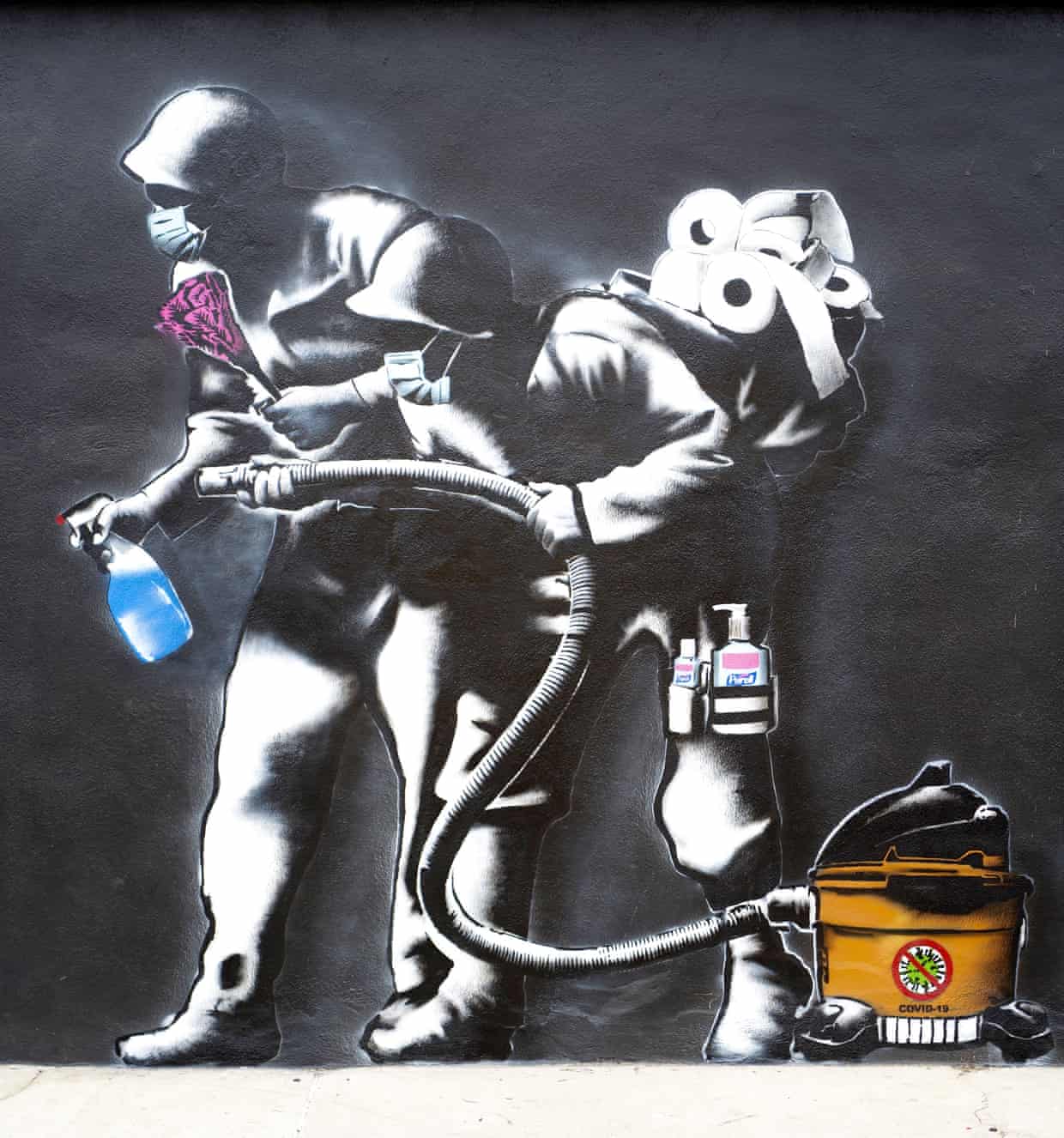
Street art by @hijackart
There are posts doing the rounds on social media of how this enforced isolation might be good for some of us. People are proposing that we could take this opportunity to create a new work or learn a new skill. I have seen suggestions that people could paint a picture, learn a language, master an instrument, take up horticulture, or improve their culinary skills. Several well-meaning people have asked if this is not the perfect time for me to write my second novel.

The short answer is 'no'.

My fist novel took me about 25 years to write. A lot of that was research, and a lot of it was reflection. To do this I need to feel safe and have a routine; an acknowledgment that if things don't go well, or if I unearth something painful (believe me, memories of death, bombs, muggings and other trauma are not things I deal with easily), I will be able to mentally and emotionally decompress in my chosen environment (a walk in the hills; a swim in the ocean; a pint or two in the pub with my friends). This is clearly not the case at present.

I cannot speak for everyone - there are far too many people purporting to do that at present for my liking - so I shall speak only for myself. The current situation is causing me extreme anxiety. I cannot sleep. I am having frequent panic attacks which cause shortness of breath and nausea. I have a constant headache and am permanently fatigued.  

I worry. I worry about my health and that of my husband (who, performing an essential service, must leave the house every day). I worry about my family - none of them live in the same country as me and I'm not sure when (and in some cases if) I will see them again. I worry about my friends, in different countries around the world with different governments taking different precautionary measures (or not, in some cases). I worry about my community - if I don't support it, will there be one when all this is over?  I worry about losing my job. If there is no community and there is no work for me to do, how can I continue; how can I support anyone else? I worry that I am not being a good enough wife, daughter, sister, friend, neighbour, citizen, employee... when did this turn into a competition?

I try not to think too deeply about anything because I will cry, so I am currently existing on a superficial level, or a submerged one. I do not feel safe. I do not feel secure. I know I am lucky to have a house with a garden and access to fresh air and open spaces. I know others are in a far worse position than me. Anyone who has ever suffered with depression will tell you that this doesn't necessarily help. It makes me feel selfish for having these concerns, and that makes me feel like a bad person. It's a very dark vortex into which I do not want to be drawn.

So, no, do not expect anything creative from me at this time. My imagination is not in a good space. There is too much pressure to perform - and no good performances come from fear. 

Thursday, 19 March 2020

COVID-19 - What a Wonderful World!

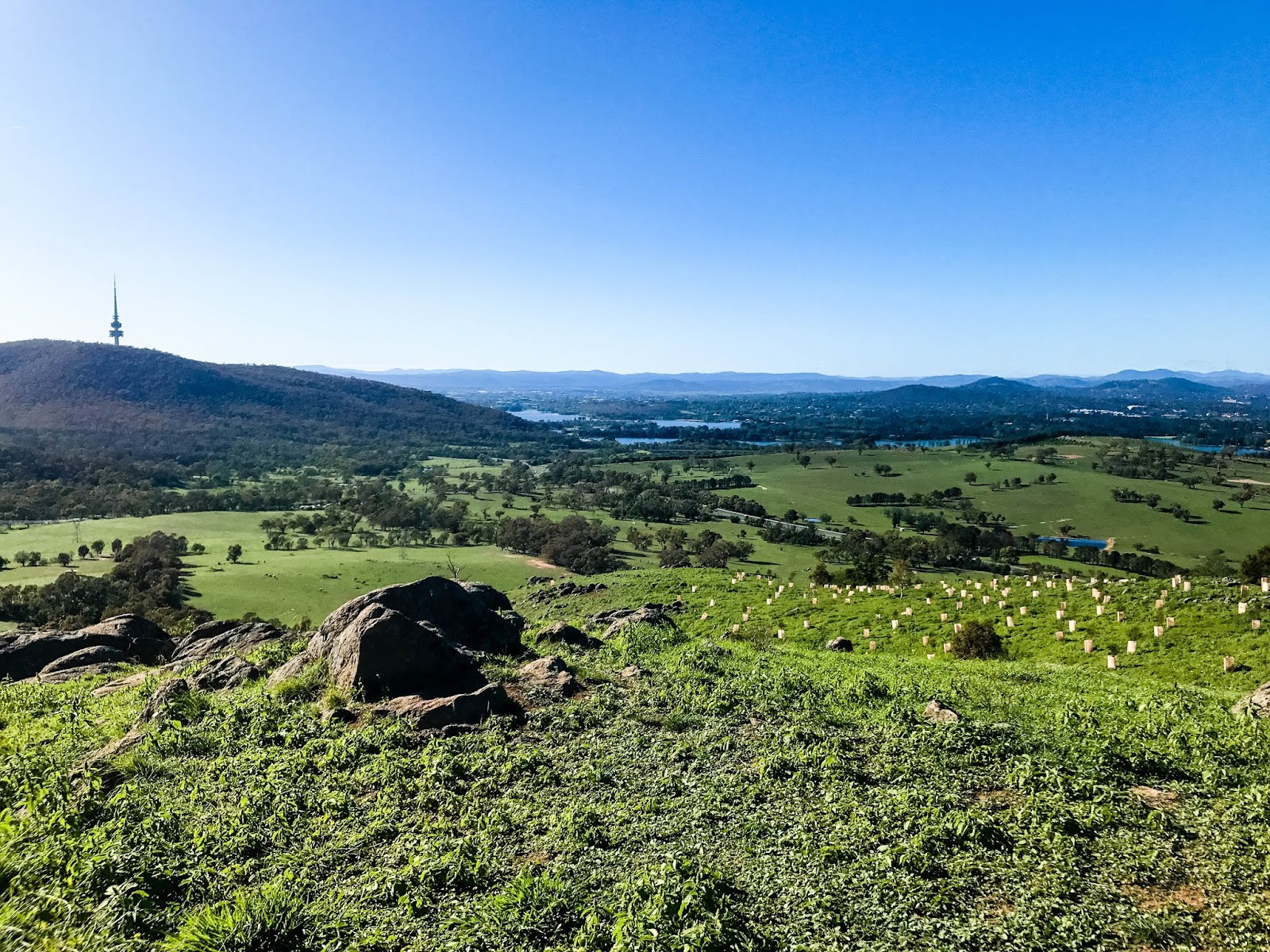
The view from Mt Painter
It's hard to make sense of things right now. A week ago we were joking about toilet paper, dried pasta, and how incredible it was that grown adults needed instruction on how to wash their hands. Now, the world has changed. 

I am working from home. My job, which involves putting educational programs into schools and communities to ensure that all children have equal opportunities to aid their learning development and engagement, is in limbo. Schools are still open, but they are not allowing any incursions or excursions; hence all our programs are suspended until further notice. 

I have read a lot of information. I have answered a lot of emails. I have cleaned up my digital files. I don't know if my job will continue to exist. This is a time of great uncertainty. We need to support ourselves and the vulnerable members of our community. But how? The Australian government seems to be doing very little compared with other governments - this is a global crisis and, as a citizen of three countries with family in all of them, I am watching things closely.  Our family is connecting and checking on each other regularly. 

I am avoiding gatherings where I might spread any infection to others - I don't think I've contracted it, but how would I know? I think the best thing to do is to avoid others. I don't know. Governments in different countries are telling people to do different things: stay in; go out; get exercise; abandon sport; support local business; avoid cafes and pubs 'like the plague' (even the cliches are relevant). 

I'm jotting my thoughts down here like some kind of diary - I don't know what's going to happen; no one does. But I need to record things because it's all so weird. In every version of apocalyptic scenarios I've seen, the world does not look like this. After months of not being able to go outside, due to fires, smoke and hazardous air quality, the sun is shining, the sky is blue, the fields are green and the roses are blooming. It is a world full of wonder; if not a wonderful world. 

A rose in our garden

Monday, 7 April 2014

Holding out for a hero

Bernabe Mendez from the State of Guerrero works as a professional window cleaner in New York. He sends 500 dollars a month.
What constitutes a hero these days? Yes, I know you were wondering too. According to Bonnie Tyler, he's must be strong, fast, sure, 'fresh from the fight' and 'larger than life', whereas Hollywood would have us believe it is a man (only occasionally a woman) in skin-tight spandex, a cape and a dodgy face mask, with superhuman powers like flight, X-ray vision and ridiculous flexibility.

Photographic artist Dulce Pinzon has a slightly different take on the term. In her exhibition The Real Story of the Superheroes, she argues the notion of the 'hero' began to rear its head in the public consciousness more and more frequently after September 11th, as people celebrate the 'ordinary' firefighters, policeman, builders and street-sweepers who made a dramatic difference that day.

Minerva Valencia from Puebla works as a nanny in New York. She sends 400 dollars a week.
Born in Mexico City, she moved to New York aged 21 and is fascinated by the Mexican immigrant worker in NYC. Many of these unnoticed labourers work extraordinary hours in extreme conditions for low wages which they send home. Mexico relies on the money remitted by Hispanic workers just as the United States relies on their labour. Two nations depend on this manual militia of cooks, food servers, truck loaders, policemen, window cleaners, and construction workers.

Superman Noe Reyes from the State of Puebla works as a delivery boy in Brooklyn, N.Y. He sends 500 dollars a week.
Pinzon has photographed Latino immigrants in their work environment but dressed in the costume of an American or Mexican superhero. A short text includes the worker's name, hometown and amount of money they send home each week. The accumulation of these seemingly insignificant details gives them dignity and relevance and demands that values be questioned. 

Is a hero really someone who beats up the bad guys, or is it someone who cares for their family and seeks to create a harmonious environment, quietly getting on with their daily tasks and supporting the future of two countries. It's definitely worth a thought. Now pass me my cape; I've got some crusading to do.

Juventino Rosas from the State of Mexico works in a fish market in New York. He sends 400 dollars a week.

Friday, 22 February 2013

Fiday Five: Biggest Weaknesses


I've applied for a lot of jobs since I've been in Australia. Ten, in fact. I've had a couple of interviews and a lot of rejection. As a writer living in Canberra, many of the positions I'm applying for involve working in government departments. To work for the government, it is preferred if you are an Australian citizen. I'm not.

There are interviews, and there are endurance tests. I quite like the interviews where you sit and chat and exchange views and you tell them what you want and they tell you what they want and it's soon pretty clear whether that's going to work. They're fine. And then there are the interviews with human resources. They are generally accompanied by a clipboard, a check-list and a load of clichéd questions to which you are expected to parrot text-book answers. I hate these.

This latter type encourages dishonesty from the start. The true reason you want to work for them is because you need the money. You know that; they know that, but are you going to admit it? Unlikely. Nor are you going to tell them you sulk when you don't get your own way or you handle conflict by pulling faces at your adversary behind their back. So why do they bother asking?

The question I dread most is the one about your biggest weakness. The usual answer is some guff about being a perfectionist, having high standards, putting pressure on self to complete task ahead of schedule, blah blah blah... All sorts of thoughts flash through my mind - none of which I would ever supply in a serious situation. But I am so tempted to offer one of the following:

5 Responses to the interview question 'What is your Biggest Weakness?'
  1. Bad timekeeping - I hate getting up in the morning and I'm rarely punctual
  2. I like to bitch and gossip about other staff, particularly if I can set people against each other and upset morale for my own amusement
  3. I take credit for others' successes and am very quick to apportion blame to cover my arse
  4. Insufficent standards of personal hygiene
  5. Alcohol

Thursday, 21 July 2011

Market Research

I suspect I am a terrible person on whom to conduct market research. I don't wish to sound egotistical or anything, but I think too much. Often the multiple choice options don't include my view, and then I deliberate interminably over my response, as the researcher rolls their eyes, fidgets with their pen and generally just wills me to get on with it.

Wherever possible I feel compelled to answer surveys. This stems in part from a childhood of reading magazines with my best friend, when we took all the quizzes to see how compassionate or fashionable we were; what type of holiday companion we would make; or what animal we most resembled (very/ not at all/ tolerable/ a dog - the last was particularly hard for my 11-year-old self to take).

Furthermore, when I finished my English degree, many of my fellow students got jobs as market researchers (slightly preferrable to call-centre operators) and stood on the aptly-named Market Street in Manchester clutching a clipboard and harrassing passers-by with queries about their shopping habits and entertainment preferences. Naturally I would always take time to answer them - after all, there but for the grace of God and everything... Not that I had much to be thankful for; I was working in a book shop on arguably the lowest pay rate in the retail industry.

Anyway, the other day I passed some bored-looking geography students who were sheltering from the rain and trying to drum up enough data to write a report on tourism in Queenstown, or some such earth-shattering masterpiece. The questions ranged from 'how old are you' - they didn't even ask me to choose an option (although I could clearly see on the upside-down form that there were several brackets) to 'do you consider your occupation to be a) directly related to tourism, b) indirectly related to tourism, or c) not related to tourism at all?'

Now, to the (as you can imagine) obvious delight of the teenagers, I considered this question carefully. I am a full-time writer and work part-time as a dental receptionist to pay for groceries - or to put it another way, for peanuts. Forget what you've heard about crime; it's writing that doesn't pay. So what would I consider my 'occupation'. Is that what I do? Or what I do to earn money?

Assuming it's the latter, despite the number of front teeth shattered by snowboards or chipped during tandem sky-dives, dentists aren't really dependent on tourism. However, if there were no tourists, there would be no Queenstown. People in hospitality and tourism serve them directly; people who work in retail, trades or services administer to them indirectly, and everyone who lives here is affected by them on a daily basis.

Only the farmers are independent of their influence, although those who turn their stations into 'experiences' so Koreans can adopt a sheep, or those who havest grapes on their land to join the burgeoning tourism wine trail clearly rely on them too.

So, how to answer that question honestly? I picked c) in the end, rationalising that the occupation itself is not necessarily related to tourism, even if the location in which it is conducted is. I am certain I lost a lot more sleep over this than the hapless lads asking the questions.

You see, I used to be on the other side. I translated cold hard statistics into 'content-rich' (how I hate that expression - as opposed to what: vaccuous?) website pieces about career choices. I remember struggling with a sentence that informed me '72% of executive assistants work in Auckland'. I immediately wondered what the other 28% of executive assistants in Auckland were up to - filing their nails and drinking coffee? Skiving off to the pictures? Checking the cricket scores? Bleating on TwatFace? I was told I had 'uncommon and irregular thought processes' (of which I was silently proud) and that no one else would interpret this statistic as such.

Please tell me I am not alone!