Showing posts with label heroes. Show all posts

Monday, 14 December 2020

There is no Planet B: The Battle of the Labyrinth


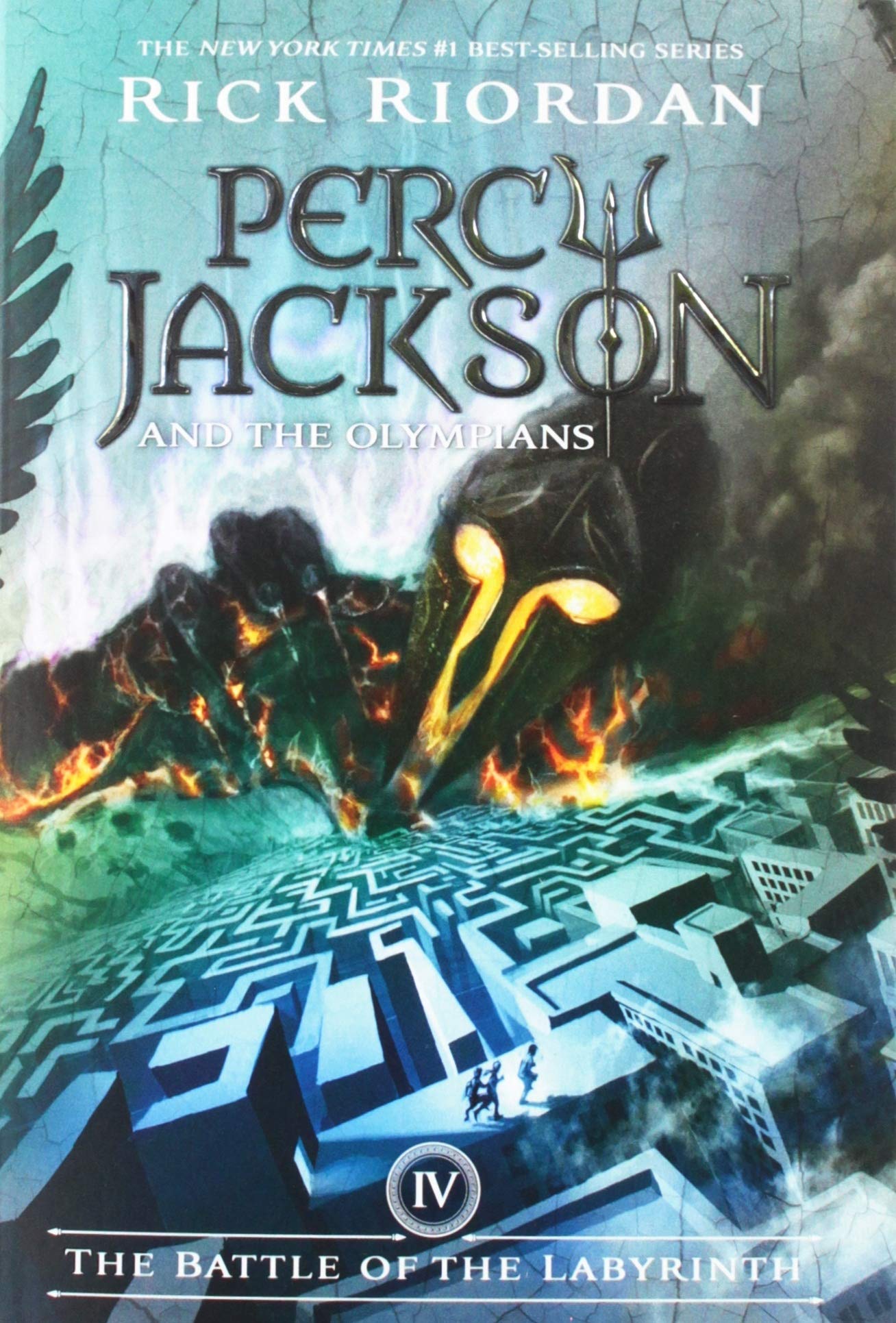
The Battle of the Labyrinth by Rick Riordan
Disney Hyperion
Pp. 361

In this fourth instalment in the Percy Jackson and the Olympians series, Percy and his companions embark on quest through the Labyrinth, a terrifying place created by Daedalus, which exists in another dimension. Like its predecessors, the novel is an entertaining introduction to the world of Greek mythology, featuring gods, heroes, monsters, half-bloods and mortals There are great action scene set pieces, and an underpinning ecological message that keeps the pace varied and adds a touch of depth to the adventures.

We meet many gods, who mostly fight each other: the Olympians are in perpetual conflict with the Titans, ruled by Kronos who is gathering his forces in secret. The gods with their games and their prophecies are fickle and deceptive. Thy are omnipotent, yet they fight against the heroes and half-bloods with their magical assistants. For example, Quitus has a large and terrifying hellhound called Mrs O’Leary who can kill and chews on a life-size squeaky pink rubber yak. There are magical swords, invisibility caps, and charmed whistles, but we learn that humans’ knowledge can help as much as (if not more than) magic.
In a gameshow sequence Annabeth has to answer the sphinx’s riddle: she thinks she knows it (the one about the ages of man), but it has been changed because everyone knows that one by now. “Canned applause blasted from the ceiling, as if there were invisible loud speakers. Spotlights swept across the room and reflected off the dais, throwing disco glitter over the skeletons on the floor.” The pop-culture meets horror story aesthetic is very similar to a Stephen King novel.

The satirical style is maintained throughout to counteract the hyperbolic escapades, and Riordan makes great use of the deadpan approach (pun intended), such as when he introduces the idea of Grover searching for Pan, god of the wild. It is Grover’s mission to find Pan, and if he fails, his life means nothing. “I’d never heard him sound so confident about anything, except maybe that cheese enchiladas were better than chicken enchiladas.” Pan’s wilderness is being destroyed by humans and development. Gods can’t die, but they can fade, as Pan tells Grover, “when everything they stood for is gone. When they cease to have power, and their sacred places disappear. The wild is so small now, so shattered, that no god can save it. My realm is gone.” 

The remaining humans must work together for salvation. The name, Pan, originally meant rustic, but over the years it has come to mean all. “The spirit of the wild must pass to all of you now. You must tell each one you meet: if you would find Pan, take up Pan’s spirit. Remake the wild, a little at a time, each in your own corner of the world. You cannot wait for anyone else, even a god, to do that for you.” The environmental message is strong, suggesting that life (both of people and the planet) is fragile and that we should take more care of it. Hephaestus bemoans, “People are more difficult to work with than machines. And when you break a person, he can’t be fixed.”

Percy Jackson was hailed as the new Harry Potter, and there are many similarities with J.K. Rowling’s wizard world. Percy is different; he has ADHD, which means he can’t sit still and he blurts things out – perhaps this is also an excuse for antisocial behaviour? His dreams threaten to torment him, as did Harry’s. He goes to camp every summer, fights to protect his friends, starts having human hormones, learns to accept difference, and deals with monsters and magic that ‘normal’ humans can’t see. Camp Half-Blood is very dangerous and people die there; each year there is a quest, and everyone wants one so that they can prove themselves. Rachel asks Percy, not unreasonably, “So you do this every summer? Fight monsters? Save the world? Don’t you ever get to do just, you know, normal stuff?”

There are five novels in this series and it is all building to the final show-down. After all, that’s how fantasy always ends; not with a whimper, but with a big bang.


Wednesday, 2 July 2014

World Cup 2014: Today's Talking Point - Heroes and Villains


Football is theatre. It combines high drama with low comedy and deep tragedy. Hours of training and rehearsal culminate in a performance before spectators. A variety of characters peoples the stage, including hard-working straight men and heroes.

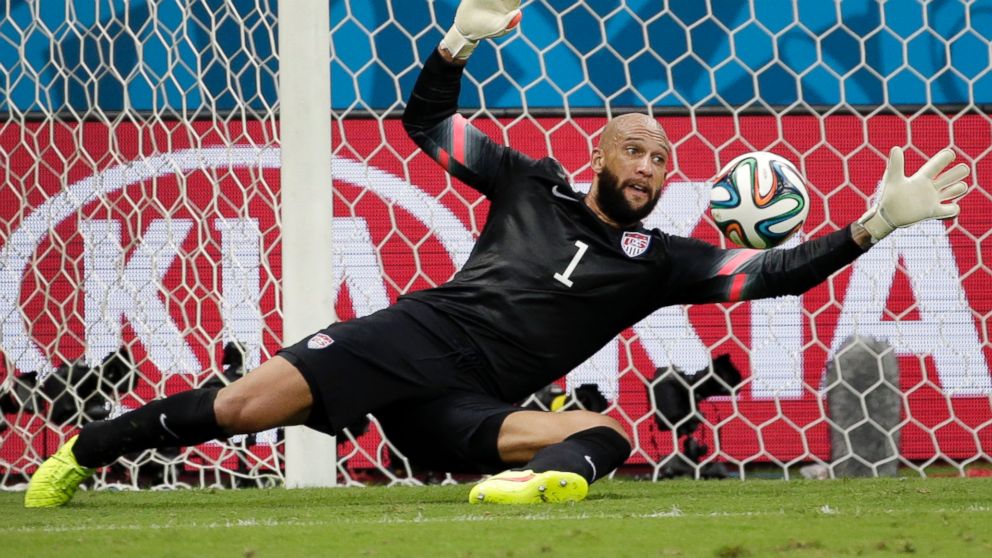
Two of these heroes were in action this morning. Tim Howard played an amazing game for the U.S.A. against Belgium. Confident and reliable at the back, he anchored an at-times shaky defence and made more saves than in any World Cup match since record-keeping began. Reports tend to be all about goals scored and of course these are important, but goals saved are equally so. Despite being on the loosing side, Howard should be proud of his hand in his team's impressive performance.


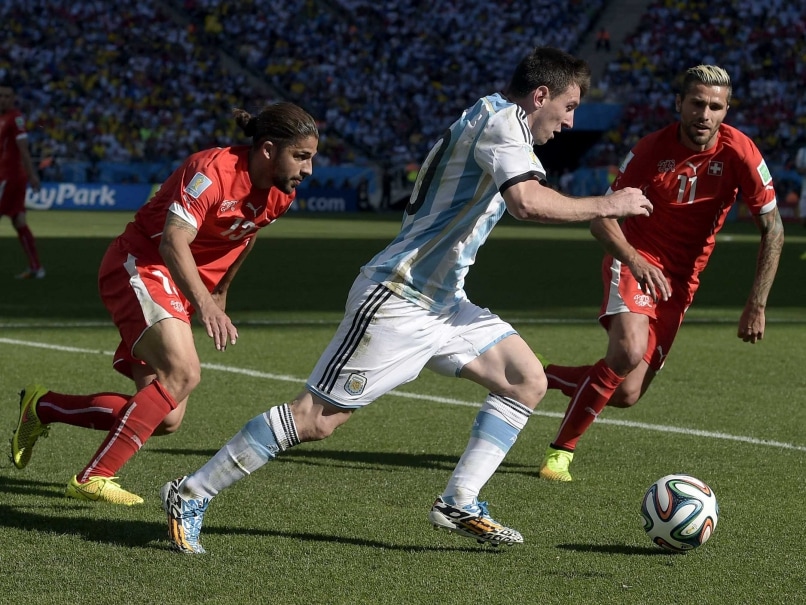
Lionel Messi is another of football's leading men. I heard a commentator say, 'If Argentina didn't have Messi, they'd just be an average side. But they have got Messi.' The Swiss tactics were clearly to mark him out of the game; whenever he got the ball he was surrounded by red shirts, and yet he still managed to skip a way through. The theory is that Argentina have a Plan A (get it to Messi) and a Plan B (get it to Messi). If both of these fail, they resort to the last measure (keep trying to get it to Messi). 


Football also crosses the threshold into pantomime, and every pantomime needs a villain. Many people award this role to Arjen Robben of The Netherlands. They claim he dives to fool the referee into awarding him penalties. This may be true. It is also true that he was fouled repeatedly in the game against Mexico; at least twice in the penalty area. 

If you are kicked, hacked and tripped, and the opposition are getting away with it, you have to draw the referee's attention to it somehow. Your side's chances to progress, your football, and your fitness are all at risk here. Maybe he overdoes it, but not without reason - and maybe that one wasn't the penalty that should have been awarded, but it made up for the two previous ones that weren't given.


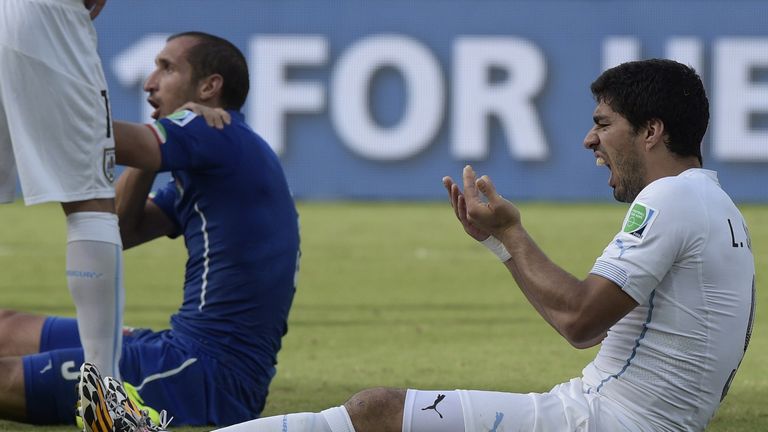
Much harder to defend is Luis Suarez. Biting people is indefensible. I said it last year in April, and I say it again. There is no excuse. I know there are arguments as to his phenomenal footballing brilliance and his dubious mental state. I appreciate that some think the four month ban from all footballing activity (including training with Liverpool) is too harsh and penalises a club that had nothing to do with the incident. This is not the place to discuss this. This is the place to quote Joyce Grenfell:

"I think it serves you right if he bit you, and don't bite him back. Because he's smaller than you are. Are you bleeding? Then don't make such a fuss." I think it's fair to point out that in this instance 'he' is a hamster called Harold Wilson. And that Joyce Grenfell also admonished another little girl, "We never bite our friends."


As for someone who is possibly both, you can't go past Cristiano Ronaldo. After the infamous World Cup winking incident of 2006, he was pretty much loathed by everyone who wasn't a Man Utd supporter. In fact, 'I hate Ronaldo' was, according to Google, the most popular Man Utd-related web search of 2007. 

In 2008, Man Utd faced Chelsea in the the Champions League Final. It was 1-1 at full time and went to penalties. Ronaldo was the only Man Utd player who missed his penalty, but his team went on to win the title. Did he celebrate with his team-mates? No. He lay down in the centre circle and cried like the spoiled brat that he is because he thinks he is more important than his team, whether that team be Man Utd or Portugal. I still think he is a petulant, whining, arrogant, selfish, vain, indulgent, tantrum-throwing, self-obsessed, pouting prima donna, but...

Ronaldo has no tattoos. This is a massive plus in my book. But the reason is even better. Apparently he gives blood a couple of times a year, and European Law states that you can't donate blood if you have had a tattoo in the past four months. And that ridiculous haircut of his? I read on the internet that it was to match the scar of a young fan who had brain surgery. And then I read on the internet that it wasn't. Whichever, it has made me soften towards him just a little, which is good, because a character who is all bad does not make for compelling theatre.


Monday, 7 April 2014

Holding out for a hero

Bernabe Mendez from the State of Guerrero works as a professional window cleaner in New York. He sends 500 dollars a month.
What constitutes a hero these days? Yes, I know you were wondering too. According to Bonnie Tyler, he's must be strong, fast, sure, 'fresh from the fight' and 'larger than life', whereas Hollywood would have us believe it is a man (only occasionally a woman) in skin-tight spandex, a cape and a dodgy face mask, with superhuman powers like flight, X-ray vision and ridiculous flexibility.

Photographic artist Dulce Pinzon has a slightly different take on the term. In her exhibition The Real Story of the Superheroes, she argues the notion of the 'hero' began to rear its head in the public consciousness more and more frequently after September 11th, as people celebrate the 'ordinary' firefighters, policeman, builders and street-sweepers who made a dramatic difference that day.

Minerva Valencia from Puebla works as a nanny in New York. She sends 400 dollars a week.
Born in Mexico City, she moved to New York aged 21 and is fascinated by the Mexican immigrant worker in NYC. Many of these unnoticed labourers work extraordinary hours in extreme conditions for low wages which they send home. Mexico relies on the money remitted by Hispanic workers just as the United States relies on their labour. Two nations depend on this manual militia of cooks, food servers, truck loaders, policemen, window cleaners, and construction workers.

Superman Noe Reyes from the State of Puebla works as a delivery boy in Brooklyn, N.Y. He sends 500 dollars a week.
Pinzon has photographed Latino immigrants in their work environment but dressed in the costume of an American or Mexican superhero. A short text includes the worker's name, hometown and amount of money they send home each week. The accumulation of these seemingly insignificant details gives them dignity and relevance and demands that values be questioned. 

Is a hero really someone who beats up the bad guys, or is it someone who cares for their family and seeks to create a harmonious environment, quietly getting on with their daily tasks and supporting the future of two countries. It's definitely worth a thought. Now pass me my cape; I've got some crusading to do.

Juventino Rosas from the State of Mexico works in a fish market in New York. He sends 400 dollars a week.

Monday, 14 September 2009

Winning and Losing

Well thank goodness for that result. Liverpool beat Burnley 4-0 so harmony remains in our household and I can afford to be gracious in victory with Him Outdoors. It was a fantastic result for Benayoun scoring his hat-trick and Stevie G played brilliantly in his alternate position. Him Outdoors admits that his boys played well, but Liverpool are simply a class above, and I’m not exactly going to argue.

Meanwhile the All Blacks lost to South Africa allowing the South Africans to take the Tri Nations title. There is a lot of kicking and chasing and precision penalties in the South African game. Kiwis complain that this is boring – they prefer running the ball from the backs. Both of these versions of the game are equally exciting to me although at the moment, only one is proving effective. Guess which?

The All Blacks are the Man Utd of rugby – beautiful to watch when it’s going well, but ‘they don’t like it up ‘em.’ The penalties they gave away were often for ill discipline, brought about because they were frustrated on the field. Whether you like it or not, if you know you have the best kicking boots in the game, that’s a good tactic by South Africa.

The Weevil was waiting for her bags at the carousel in the airport when the All Blacks turned up, returned from their unsuccessful campaign and looking somewhat sheepish. She said she was excited to be in their midst and found herself grinning, although everyone else was looking away. No one had turned up to welcome them home.

‘Can you imagine being surrounded by the England football team?’ she asked me. I assured her I would have no self-control whatsoever if I were in touching distance of Stevie G, no matter what his recent results. She asked the husband of a friend, known to be a rugby fan, if he weren’t excited by the presence of his sporting idols. He replied, ‘Nah. I might be if they’d won.’ I think that’s indescribably sad.

Are our heroes not allowed to have bad days? Are we so capricious that we turn our backs after one tiny letdown? The All Blacks were beaten by the World Champions in formidable form. I don’t think that’s a disgrace. The only shame here should be attached to the fickle response of the so-called fans.