Showing posts with label community. Show all posts

Tuesday, 8 November 2022

You Spin Me Right Round, Baby: The Music Shop


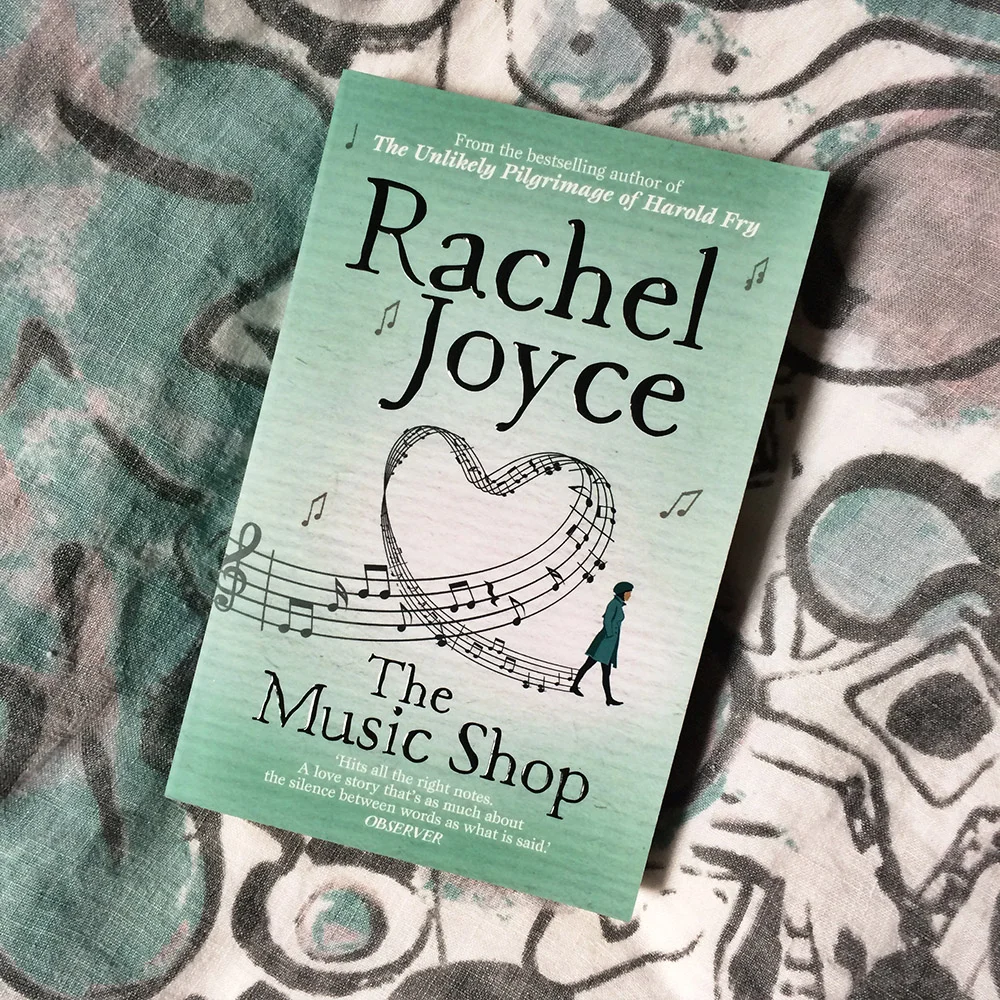
The Music Shop by Rachel Joyce
(Black Swan)
Pp.354

Frank owns a music shop which only sells vinyl, and he has the gift of being able to find the right music to soothe a person’s soul or mend their marriage. One day a beautiful woman, Ilse Brauchmann (manic pixie dream girl in a pea-green coat), faints outside his shop and they have a relationship. She says she doesn’t listen to music so he teaches her how to hear it. It turns out she was a highly proficient violinist but now has arthritis and can no longer play. And she is engaged to someone else. Of course she cares for him, but the author introduces deliberate (and illogical) stumbling blocks to draw out the story. Frank is not actually all that nice but he’s got lots of friends who encourage him in his romance (Richard Curtis style) including Maud, the tattooist, a woman who has always been inexplicably in love with him, and Kit, an incapable but passionate assistant. It’s very light and fluffy and employs every trope known to rom com, and yet the added appeal comes from the music and nostalgia.

Frank’s finest characteristic is his sense of community with the other shopkeepers. “Here they were, living together on Unity Street, trying to make a difference in the world, knowing they couldn’t, but still doing it anyway.” Ilse is supposedly cute, but immensely irritating. They meet for the lessons about music, in a café called The Singing Teapot, and the waitress becomes involved in their story too, which is charming, delightful, twee and completely unrealistic. Meanwhile, the author tells us everything so there is no room for mystery or suspense.

Music has magical properties, and listening to it can release oxytocin – books are written like this about cookery all the time; all the chapters are named after songs and there is an accompanying soundtrack. The novel contains frequent time shifts as we are cast back to Frank’s relationship with his mother, Peg, who taught him how to really appreciate music. This rapport is more interesting than that with the girl.

Music, especially vinyl, is part of the nostalgic focus of the novel, and it should be enjoyed as an experience. He uses the difference between CDs and records as a metaphor for life (God only knows what he’d make of music-streaming services), refusing to accept that he and his music shop are out of date although several reps and customers stop calling. He maintains that vinyl is messy and fragile, and therefore, more human.

The novel is Notting Hill meets Black Books; it is obviously written with one eye on the film rights, but it will doubtless be taken over by an American company who will change the setting and ruin it (see High Fidelity). Music is closely aligned with memory because it stimulates emotions, and that is what matters. Ilse remembers Frank because, “You didn’t talk about the technique of music. You told me how it felt when you listened.” Love may tear us apart, but music is best experienced together.

Wednesday, 14 September 2022

Ordering Chaos: The Mercies


The Mercies by Kiran Millwood Hargrave
Picador
Pp. 336

With echoes of The Crucible, The Handmaid’s Tale and My Antonia, this is a fascinating tale of how the women in a remote society cope after a natural disaster wipes out most of the male population. The novel begins with the (real life) sudden storm on December 24, 1617 just off the coast of the island of Vardø, Norway’s north-easternmost point, which caused forty fishermen to drown in minutes. The women are left to mourn and bury their dead, and to try to work together to survive, until ‘a stranger comes to town’ and changes everything, resulting in accusations of witchcraft and a (again, real life) ‘trial’ held on 29 March 1620.

At the outset, there are stories of the women working together at domestic chores, after their men have been lost at sea; they undertake soothing rituals of the home (bread making and sewing), but they must also put to sea to fish, and butcher the meat – things the menfolk did but they are no longer here. The action of rowing becomes a metaphor for cooperation which, despite personal differences, is essential for survival. “They pull together as men rowing a boat. It is a closeness born of necessity: they need each other more than ever, especially as food begins to scarcen.” Maren observes that there is a rhythm and a natural order to their society, which we know will be overturned, because that is the chaos that makes drama.

Women are expected to fit a mould, and they cause discomfort to others when they break out of it. Men from the mainland come to bury the bodies when the earth has thawed enough to dig. They wish to wish to control women; they dislike seeing women doing manual labour such as fishing and butchering, and they disapprove of them wearing practical clothing (trousers) to do so.

Absalom Cornet is appointed by Lensmann Cunningham to visit the island, with his new wife, Ursa, and hunt out any instances of witchcraft. The sense of unease throughout the novel is palpable, and the reader may be horrified at the ending but not surprised. Hargrave is portentous in her foreshadowing from Maren’s dreams of dead whales to more explicit warnings that the arrival of men, and Absalom Cornet in particular, will have dire consequences. “They imagine he will be like their minister, have as little impact as snow falling into the sea. They imagine that their lives will go on, and that the worst is behind them. They imagine all sorts of silly, inconsequential things, and every bit of it is wrong.”

Some of the women have relied upon ritual to deal with grief and help them to feel safe; in some cases using runes and leaving food out for trolls. Maren is comforted by the Sámi ceremonies of Diina, her sister-in-law. “She had believed it, because in those months she was grasping for something, anything, to order the chaos that the storm had set among them.” Many of the women submit to soothing domestic routines, rather than praying in the church to a stern deity. Ursa has been brought up with housekeepers and no idea how to provide for herself; when Maren teaches her how to bake bread, the description is sacramental.

The men also need to find order in the chaos, so they choose to blame witchcraft. The clear rift between the meeting house and the kirke women is embodied between Kirsten and Toril. Kirsten is stronger, but Toril speaks the right words to the church men and there is nothing anyone can do against the charge of witchcraft. The things by which they accuse the women of witchcraft are very mundane. “It reads like a list of women’s gossip, from arguments over fish-drying racks to saying the Lord’s Prayer backwards.” The women collude with the practice and find that once accusations of witchcraft begin, they are as impossible to stop as the weather. “Oh, God have mercy on us. We have begun it, and cannot end it.”

The arrival of the witch finder destroys everything the women have built, but his wife also leads to conflict from the moment she alights from the boat in her vibrant yellow dress so dramatically different from the drab outfits of the island women. Ursa and Maren seek physical comfort in each other’s arms, but not until their emotions have threatened to overrun them and left them dumb. Kiran Millwood Hargrave has taken the bare facts of witchcraft trials in a Norwegian island, and woven them into a most intriguing tale full of contemporary themes. The lessons of how an isolated community is broken by those wanting power are ringing loud and clear. 
Steilneset Memorial in Vardo, Norway, commemorating the trial and execution in 1621 of 91 people (77 women and 14 men) for witchcraft

Tuesday, 15 February 2022

Simply Exhausting: Olive Kitteridge

Olive Kitteridge by Elizabeth Strout
Scribner
Pp. 270

Writer David Nicholls has described this Pulitzer-prize-winning book (in a quote printed on the cover) as “An extraordinarily rich and detailed portrait of both a marriage and a community.” And he’s right. Similar to Lake Woebegone Days or Fried Green Tomatoes at the Whistlestop Café, it is the story of the village – the inhabitants; the relationships; the gossip and the surprises – told in a gentle, meandering style. But it is also nostalgic and elegiac in tone (reminiscent of Eleanor Oliphant is Completely Fine with focus on crucial social networks being actual rather than just virtual, particularly in our post-lock-down world) while melancholy and loneliness are achingly prominent.

Olive is a retired schoolteacher, married to Henry, who used to be a pharmacist, and with a strained relationship with her son who didn’t turn out to fit into the mould she had made for him. Opinions range among the community, and people view them differently. Olive is probably a Highly Sensitive Person, based on her reaction to stimulus. She understands the needs and motivations of others although when it comes to her own actions, she is not always so self-aware.

Set in the town of Crosby, Maine, the landscape plays a Hardyesque part in the characters’ feelings and experiences. Autumnal colours are encouraging: “It was early September and the maples were red at their tops; a few bright red leaves had fallen onto the dirt road, perfect things, star-shaped.” Winter hues are not: “The leaves were half-gone now. The Norway maples still hung on to their yellow, but most of the orangey-red of the sugar maples had found their way to the ground, leaving behind the stark branches that seemed to hang like stuck-out arms and tiny fingers, skeletal and bleak.”

The novel comprises thirteen short stories that are interrelated but discontinuous in terms of narrative, although the community is everything to itself. Throughout the community, the school and the church remain as focal points, which could be considered both good and bad in a current climate. One character reads in the newspaper, “They were making a film about the towers going down. It seemed to him he should have some opinion about this, but he didn’t know what to think. When had he stopped having opinions on things?” Among the stories, told in the third person free-indirect style (where the language takes on the aspect of the character), there is a funeral reception for adulterous husband, a hostage-taking in a hospital, an anorexic girl spurned by her boyfriend, and an alcoholic lounge pianist reeling from a toxic relationship. The inhabitants of another house only go out at night to preserve their privacy after a family tragedy.

Parochial and insular, the novel is not about global events or political or social issues, but personal battles with nostalgia and loneliness. One of the characters connects music with memories of the past and realises, “She had never liked music. It seemed to bring back all the shadows and aches of a lifetime.” Olive struggles with an introverted/ extroverted personality familiar to many. “She didn’t like to be alone. Even more, she didn’t like being with people.”

If there is a message – and I’m not sure that there is – it is to cherish the moment and be ‘present’ but not in a pumped-up-business-speak way. “Life was a gift – one of those things about getting older was knowing that so many moments weren’t just moments, they were gifts.” Olive knows that “loneliness can kill people” and she divides her life into what she thinks of a ‘big bursts’ and ‘little bursts’, considering that one needs a balance of the two.

Not all of the characters are likeable – not even Olive, who connects them all – but they all have hopes and dreams, at least in the beginning. There are hints of hopefulness towards the end of the novel, but it is overwhelmingly a little bleak and defeatist. As Olive sums it up, “Dying. Not dying. Either way, it tires you out.”

Friday, 8 October 2021

Friday Five: Street Libraries

One of the things I have enjoyed about lockdown is the walking I have done around the suburbs. With limited time allowed for exercise and a limited radius in which to do it, I have been varying my routes close to home. These wanderings have taken me past many delightful street libraries, which inadvertently showcase their suburb. Yes, there are different shapes and sizes, and they contain different books aimed at different readers, but one thing they all have in common is a desire to share with their community, and I think that is rather wonderful.

Five Street Libraries:

  1.  

Friday, 23 October 2020

Friday Five: Floriade Re-Imagined

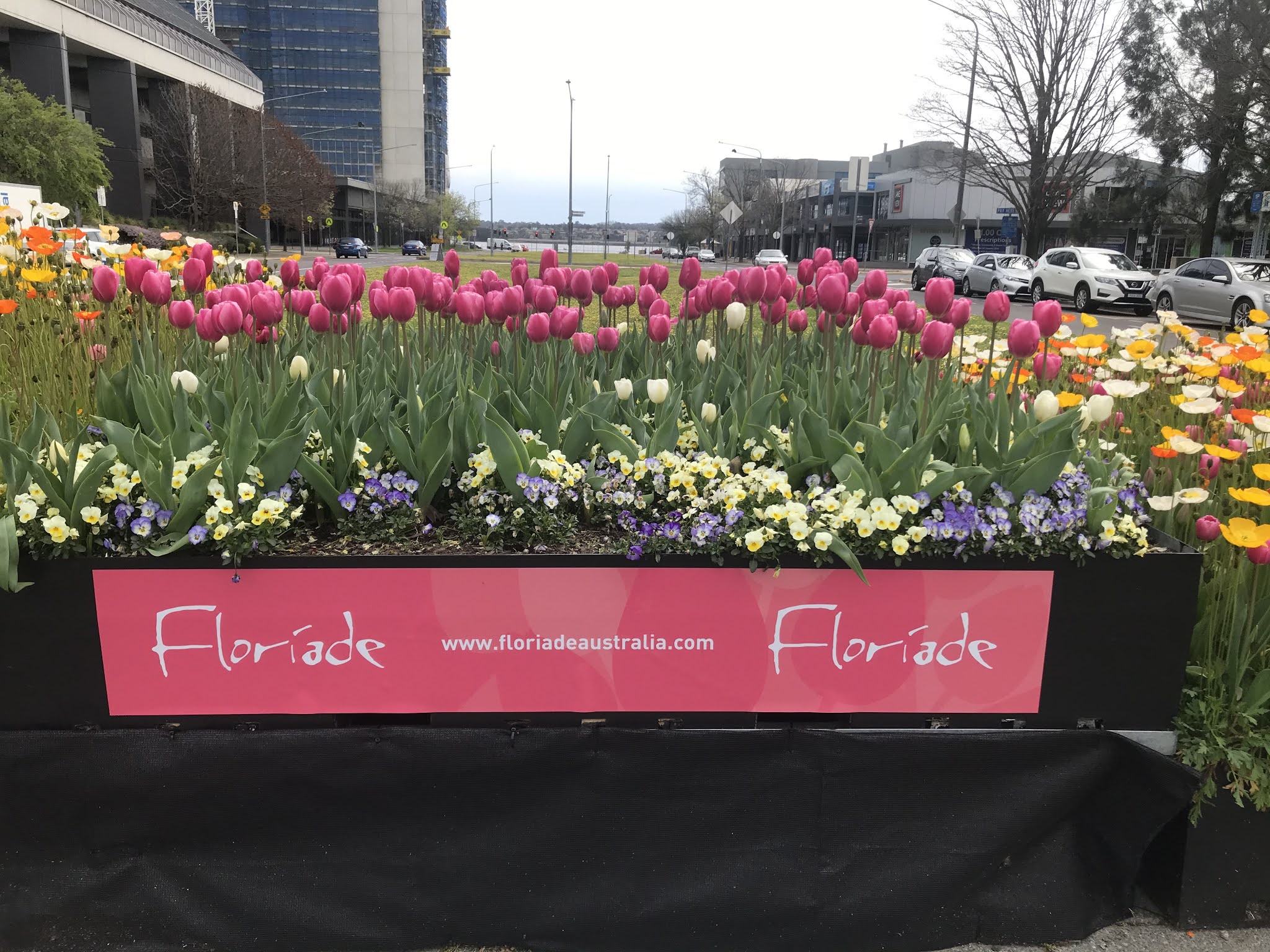
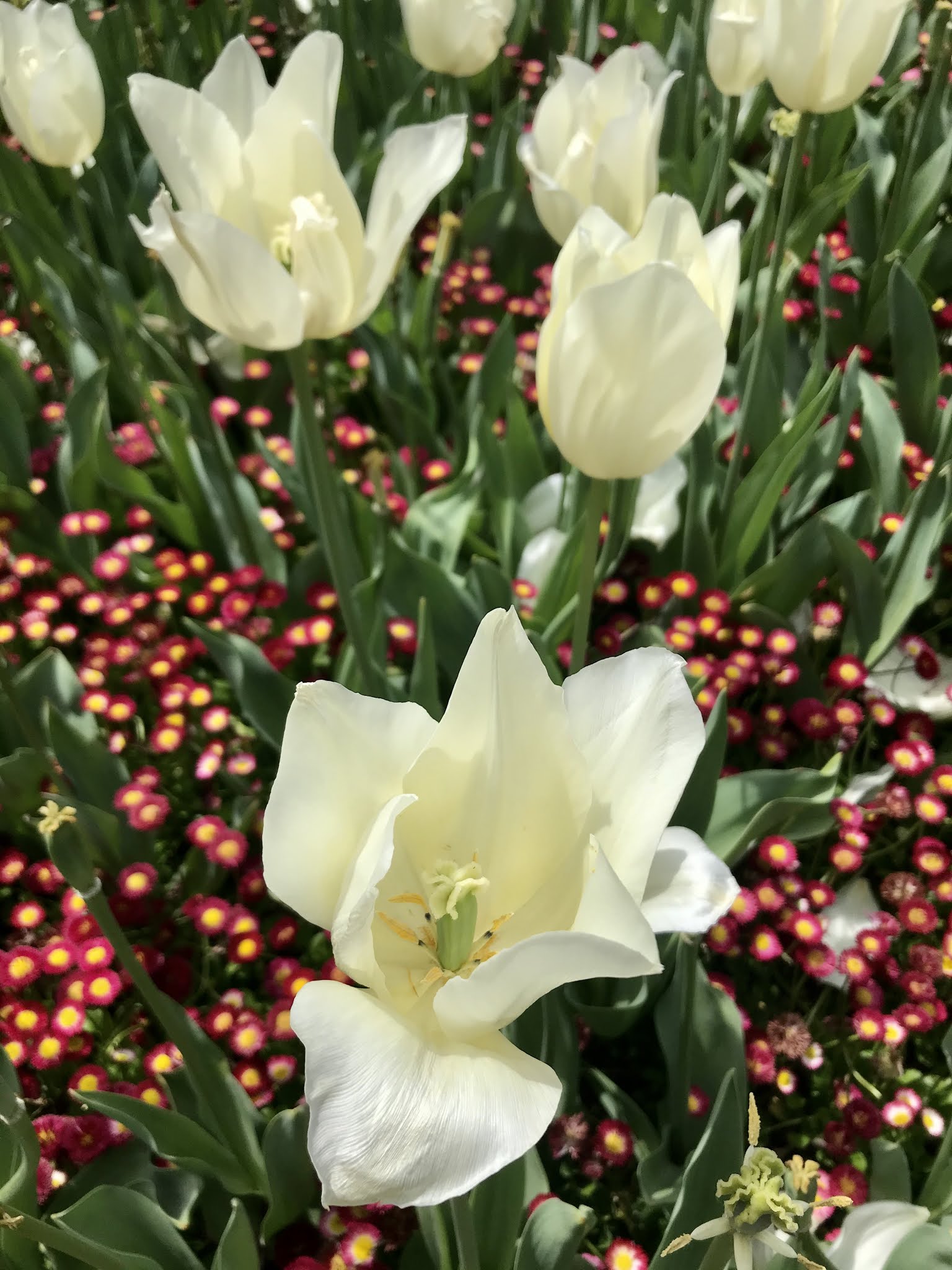
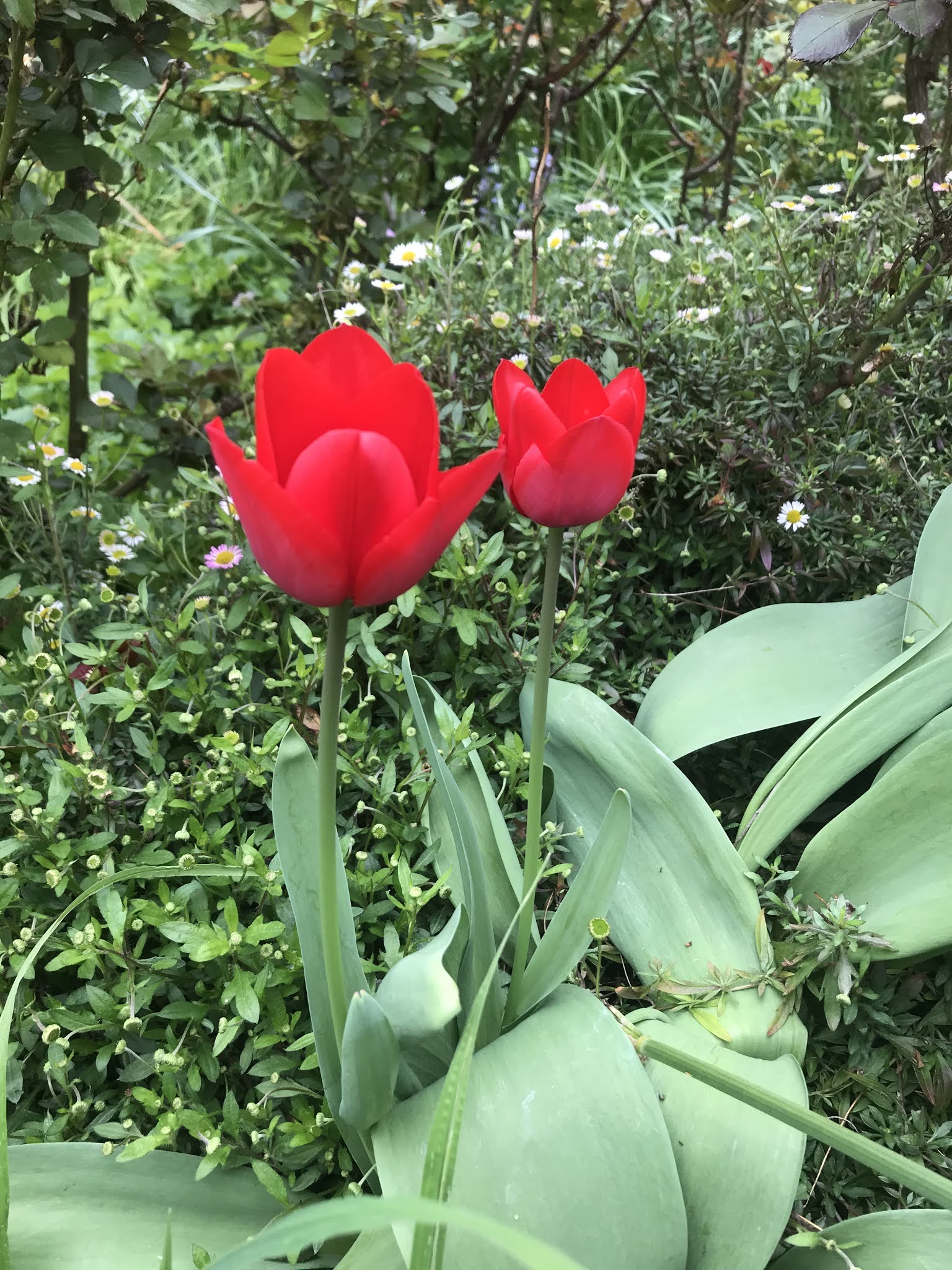
I have written about Floriade before on more than one occasion. This year, what with one thing and another, it would obviously have been irresponsible to have planted all the bulbs in one place and invited people to come and see them en masse and potentially spread disease. Instead, the Floriade Reimagined Horticultural Team, together with more than 90 community groups, planted blooms across the city in 130 different sites. 

This is a delightful way to introduce colour to the suburbs and to encourage public participation; events are not just for tourists and can be on your front door step. I really appreciated this community engagement and, while I didn't hunt down the locations that were clearly marked on the tulip trail, I did stumble across one or two sites by accident, which was a pleasant surprise. 

1. Margaret Timpson Park, Belconnen

Spot the garden gnome

2. Town Square, Woden


3. A Friend's House

Not an official location, but I did get to see Floyd (yes, he's called that because he's pink)

4. Woden Town Park, Woden


5. My Garden

Again, not an official location, but they are very pretty

Saturday, 28 March 2020

COVID-19: Under Pressure

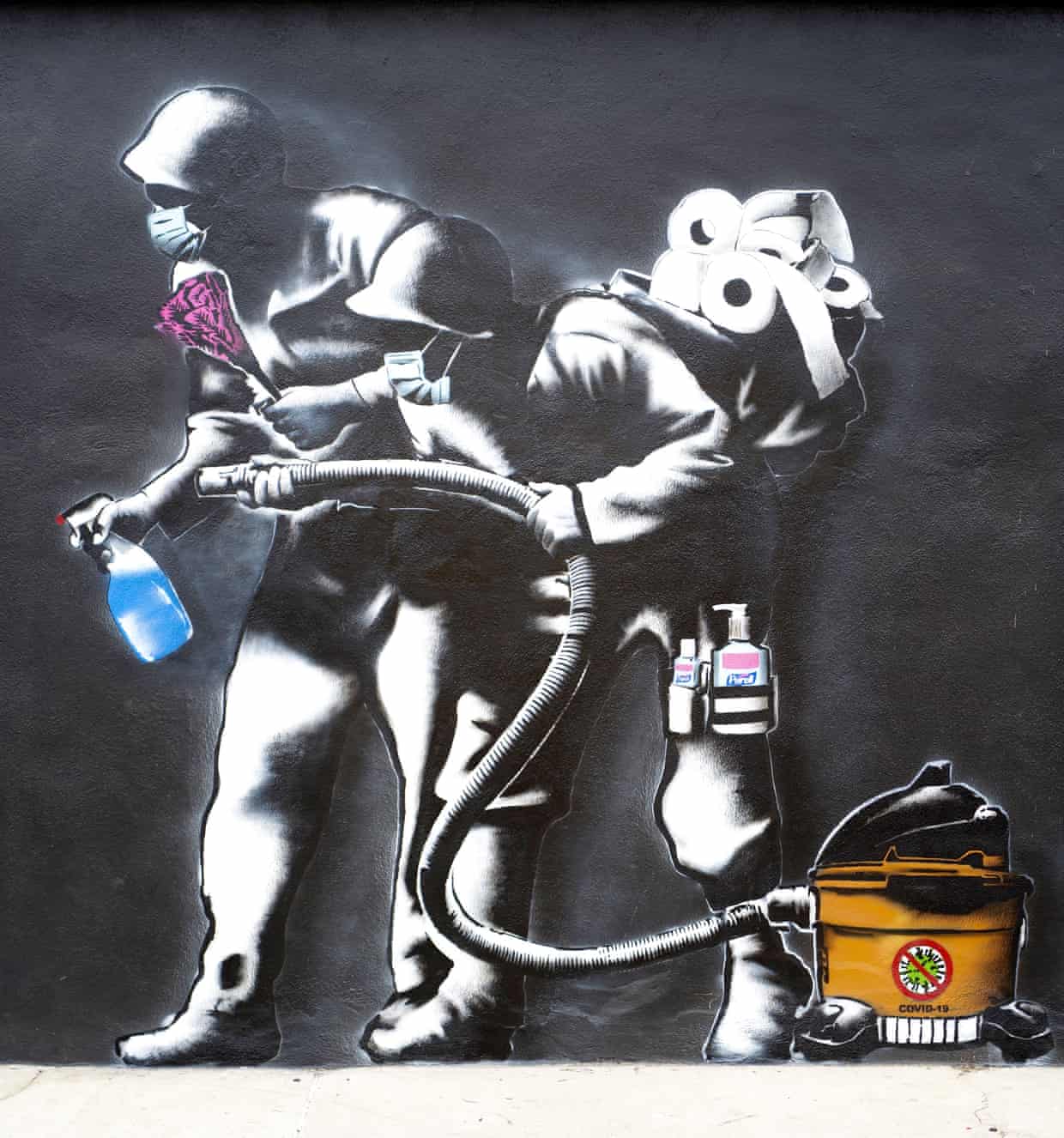
Street art by @hijackart
There are posts doing the rounds on social media of how this enforced isolation might be good for some of us. People are proposing that we could take this opportunity to create a new work or learn a new skill. I have seen suggestions that people could paint a picture, learn a language, master an instrument, take up horticulture, or improve their culinary skills. Several well-meaning people have asked if this is not the perfect time for me to write my second novel.

The short answer is 'no'.

My fist novel took me about 25 years to write. A lot of that was research, and a lot of it was reflection. To do this I need to feel safe and have a routine; an acknowledgment that if things don't go well, or if I unearth something painful (believe me, memories of death, bombs, muggings and other trauma are not things I deal with easily), I will be able to mentally and emotionally decompress in my chosen environment (a walk in the hills; a swim in the ocean; a pint or two in the pub with my friends). This is clearly not the case at present.

I cannot speak for everyone - there are far too many people purporting to do that at present for my liking - so I shall speak only for myself. The current situation is causing me extreme anxiety. I cannot sleep. I am having frequent panic attacks which cause shortness of breath and nausea. I have a constant headache and am permanently fatigued.  

I worry. I worry about my health and that of my husband (who, performing an essential service, must leave the house every day). I worry about my family - none of them live in the same country as me and I'm not sure when (and in some cases if) I will see them again. I worry about my friends, in different countries around the world with different governments taking different precautionary measures (or not, in some cases). I worry about my community - if I don't support it, will there be one when all this is over?  I worry about losing my job. If there is no community and there is no work for me to do, how can I continue; how can I support anyone else? I worry that I am not being a good enough wife, daughter, sister, friend, neighbour, citizen, employee... when did this turn into a competition?

I try not to think too deeply about anything because I will cry, so I am currently existing on a superficial level, or a submerged one. I do not feel safe. I do not feel secure. I know I am lucky to have a house with a garden and access to fresh air and open spaces. I know others are in a far worse position than me. Anyone who has ever suffered with depression will tell you that this doesn't necessarily help. It makes me feel selfish for having these concerns, and that makes me feel like a bad person. It's a very dark vortex into which I do not want to be drawn.

So, no, do not expect anything creative from me at this time. My imagination is not in a good space. There is too much pressure to perform - and no good performances come from fear. 

Thursday, 14 April 2011

Community Matters

In the aftermath of the Christchurch earthquake, many buildings have been damaged. This is nothing compared with lives lost, but it still has a big effect on the civic community. People identify with buildings; be they churches, cinemas, schools or theatres.

Children are sharing schools; they are taking it in turns to use the classrooms and facilities, causing great disruption to the parents who have to drop them off and collect them at odd times, and putting added pressure on public transport already coping with infrastructure challenges, but at least education (and some semblance of normality) is being continued. Iconic buildings such as cathedrals and art galleries must be demolished or rebuilt as they are structurally unsound.

The Christchurch Repertory Theatre, where I performed in a prodction of  Emma in 1998 
Dramatic socities have to cancel their productions as the sets are damaged, the theatres condemned, and, in a couple of horrific cases, the actors are dead. There is hardly a person in Arrowtown who doesn't know someone affected by the earthquake. Local schools are innundated with Christchurch refugees; anyone with family and friends in Canterbury has had extra visitors, and we all share their grief and anguish.

The day the 6.3 magnitude earthquake struck, I had a rehearsal planned for the evening. I am directing a play for the Arrowtown Entertainers who perform annually at the Arrowtown Autumn Festival. Usually I don't allow the outside world to intrude on the rehearsal space (check your daily woes at the door; we are here to work), but looking at the glum faces around me and feeling shaken myself, I knew I had to address the situation.

Putting all this into perspective, you have to wonder - does theatre really matter? I think so. As humans we draw strength from the support of our neighbours and community. Theatre is community by its very nature; individuals working together to produce something greater than the sum of its parts. I believe that theatre and the arts in general raise us to another level. And community spirit is clearly evident in local theatre productions.

Meanwhile in Britain, David Cameron's party are busy slashing the art's budget. There have been a few howls of indignation from the left wing press and the thespians themselves, but mainly this has passed under the bridge with barely a ripple. I was disappointed, but not suprised. After all, what else would you expect from a party that infamously declared, "There's no such thing as society"?

Friday, 27 November 2009

Lake Hayes Mistake


A couple of weeks ago I had occasion to go to a newish housing development – Lake Hayes Estate – and it got me thinking about homes and communities.

This place was originally established as ‘affordable family housing’ although with an average sale price of $604,000, I’m not sure about their definition of the word ‘affordable’; a vile subjective term anyway.

Some of the houses are well-appointed and incorporate some intelligent examples of design. Others are simply hideous. And they are all lined up in neat little rows with double garages and tidy lawns.

They are surrounded by mountains and sunk down in a dip so you can’t see from the road, which means they can’t see the beautiful lake for which they are named. In fact, many of them can’t see anything except next-door’s fence.

So I suppose their occupants go to work all day in Queenstown, or possibly Arrowtown, while their children are at schools or kindergartens. They come home to their fortress, pull the curtains, and put their feet up, happy in their nuclear, suburban, Stepford Wives existence.

When I was there I didn’t see a soul, apart from the rubbish collector. There is a park where children can play, which is laid with Astroturf and fenced off from predators. There is no café, there are no shops and there is certainly no pub.

When we moved to our house, one of the reasons for choosing the location was so that we could walk to the local village and go to the pub. I realise this may not be everyone’s priority, but what happens when they run out of bread or milk? They have to get in a car and drive to the supermarket. It’s not the sort of place that encourages ‘thinking outside the box’ (another vile expression). Living in one? That’s another matter.


Neither does it encourage community. The propaganda calls it a township, which to me has sinister connotations of segregation and apartheid. There are walkways so you can pop round to your friend’s house, if they live in the same estate as you. As it is not on the way to anywhere, the roads are quiet so the kids could ride their bikes, if there were any in evidence. It is safe and secure and sterile. We used to call these sorts of places cul-de-sacs, or dead ends.

William Morris promoted the idea of community or fellowship – “Fellowship is heaven, and lack of fellowship is hell; fellowship is life, and lack of fellowship is death; and the deeds that ye do upon the earth, it is for fellowship’s sake ye do them.”

But there is no evidence of fellowship here. No laughter or conversation. But wait, I saw one – a tree house in a walnut grove. It was a prime example of youthful enthusiasm and breaking the rules in a totally harmless way. It will probably be removed soon. This is not a place for fun, learning, or exploration.

Sadly these days people are forming ‘communities’ with virtual strangers on their electronic antisocial networking pages. They would rather stay in their house with the metaphorical drawbridge firmly raised rather than meet folk for a pint down the pub. The clean, barren impersonality of Lakes Hayes Estate may well be the way of the future. I hope not. I think it’s a big mistake.