Wednesday, 25 September 2013

What Men Want

Gentlemen Prefer Blondes and But Gentlemen Marry Brunettes by Anita Loos
(Penguin)
Pp. 123/ 116

Between Becky Sharpe and Bridget Jones, there was Lorelei Lee from Little Rock Arkansas. In her ‘Biography of a book’, Anita Loos explains, “I wanted Lorelei to be a symbol of the lowest possible mentality of our nation. Therefore I chose Little Rock which even today [is] the nadir in short-sighted stupidity.” Lorelei is the original idiot abroad. She decides to keep a diary of all her (to her) fascinating adventures, complete with appalling spelling and grammar, sentences all starting with ‘so’, ‘well’ or ‘I mean’, and pert pen and ink caricatures by Ralph Barton.

Lorelei and her friend Dorothy take on the world of social pretention, baldly reducing everything to money. When offered some shell flowers in London for 25 pounds, because all Americans are assumed to be fools with money, Lorelei asks “how much it was in money and it seems it is 125 dollars.” After her marriage, which concludes Gentlemen Prefer Blondes and her diary, Lorelei (and Loos) wants to keep writing, so she tells Dorothy’s story in But Gentlemen Marry Brunettes, with its picaresque elements of a modern Moll Flanders. Although published three years apart, the books are often packaged together, as in this edition.

Lorelei’s main ambition is to marry well (as in wealth) and be accepted into society. She and Dorothy are snubbed by many as being fast, good-time girls from unsavoury backgrounds. In the introduction to the works, Regina Barreca notes that Loos’s heroines “remain on the periphery of social cultural structures. They undermine these structures by their very presence, even when they are the centre of attention.”

Dorothy spent time in a circus and Lorelei could have spent time in prison if she had not managed to seduce the judge. The way she tells it, she went to call on a gentleman called Mr. Jennings, who had picked her out of an office for special attention, and found a girl in his apartment “who is famous all over Little Rock for not being nice. So when I found out that girls like that paid calls on Mr. Jennings I had quite a bad case of histerics and my mind was really a blank and when I came out of it, it seems that I had a revolver in my hand and it seems that the revolver had shot Mr. Jennings.”

She yearns for education, although she is unsure where to seek it and slips through the clutches of many unscrupulous men in an almost charmed existence. Gus Eisman, who has made a fortune out of buttons, wants to ‘educate’ her and, despite being depressed by his birthday gift of “a little thing you could hardly see”, she accepts his offer of a trip to Europe for her and Dorothy. On the boat on her way over, Lorelei flirts with tycoons and, although she attempts to be understanding, is cross with Dorothy for wasting her time on men without means. “So it seems that Gerry has had quite a lot of trouble himself and he can not even get married on account of his wife. He and she have never been in love with each other but she was a suffragette and asked him to marry her, so what could she do?”

Armed with introductions, she sets out in London to experience adventure, but is soon disillusioned. Barreca explains, “Loos masks her satire by having her female protagonist appear to describe faithfully a series of events without, apparently, embellishing any of them. She writes with a wink at the reader, assuming both common ground and comedic camaraderie.” In the later, But Gentlemen Marry Brunettes, Lorelei lampoons the struggle for uniqueness with wide-eyed naivety. “And so I gave Henry a subscription to the Book of the Month Club that tells you the book you have to read every month to make your individuality stand out. And it really is remarkable, because it makes over 50,000 people read the same book every month.”

Lorelei is discouraged that she has to take a train into London: “I mean everything is much better in New York, because the boat comes right up to New York and I am really beginning to think that London is not so educational after all.” Later, when they sail to Paris in “quite a small ship”, she is similarly bewildered. “It does not take nearly so long to come to Paris as it does to come to London. I mean it seems quite unusual to think that it takes 6 days to come to London and only one day to come to Paris.”

Neither is she impressed with the Tower of London. “In London they make a very, very great fuss over nothing at all. For instants, they make a great fuss over a tower that really is not even as tall as the Hickox building in Little Rock, Arkansas and it would only make a chimney on one of our towers in New York.” Rather, she finds pleasure in wining and dining at other people’s expense. “Major Falcon is really quite a delightful gentleman for an Englishman. I mean he really spends quite a lot of money and we had quite a delightful luncheon and dinner in the Ritz.”

She and Dorothy ensconce themselves at “a very very smart new restaurant called the Café de Paris” where they drink champagne cocktails, “that you could not get in New York for neither love nor money and I told Piggie that when you are traveling you really ought to take advantadges of what you cannot do at home.” Lorelei expounds this theme when she asks her benefactor, the Button King to put a down-payment on a diamond tiara, “Because what is the use of traveling if you do not take advantadge of oportunities and it really is quite unusual to get a bargain from an English lady.”

Dismissing Marilyn Monroe’s breathy tones from the mind for an instant, it is worth remembering that Lorelei can be whatever you want her to be, affecting manners and attitudes to suit any occasion. “I often remember papa back in Arkansas and he often used to say that his grandpa came from a place in England called Australia, so really, I mean to say, it is no wonder that the English seems to come out of me sometimes. Because if a girl seems to have an English accent I really think it is quite jolly.”

Paris fares a little better in Lorelei’s estimation because of its famous history. “Because when Dorothy and I went on a walk, we only walked a few blocks but in only a few blocks we read all of the famous historical names like Coty and Cartier and I knew we were seeing something educational at last and our whole trip was not a failure.” She does learn something about Parisian bureaucracy although, as with everything else in the novels, she doesn’t express this opinion directly. Rather, in But Gentlemen Marry Brunettes, she makes in-house references to a Mr Goldmark who attempts to renovate a theatre but soon finds they don’t do business the American way and he ends up paying people who have seemingly nothing to do with it. “A Parisian theatre is Sacred, and you can not put in ventilation until you have gone up before a Governmental Committee of Architecks who want to know the reason why? Because in the old historical days of Paris, Dorothy says that people who went to the theatre did not care what they smelled. And the French love to keep up all of the old traditions.”

People try to look after the girls in Paris and show them the sights, but Lorelei insists, “I really think we ought to do more shopping because shopping really seems to be what Paris is principaly for.” Of course the pair are gold-diggers or material girls, as many critics and admirers have asserted. The words made famous by Marilyn are explained by Lorelei; “I mean a girl has to look out in Paris, or she would have such a good time that she would never get anywheres. So I really think that American gentlemen are the best after all, because kissing your hand may make you feel very very good but a diamond and safire bracelet lasts forever.”

It is apt that Lorelei is a mythological siren who combs her golden hair and unwittingly distracts men with her looks and her song, luring them to their death. The key is in that lack of intent. In a 1995 essay, ‘Taking Blondes Seriously’, Susan Hegeman asks, “is she a sexual predator, or is she an innocent party; does she coax men into recklessness, or is she the passive object of their dangerous passions?” Edith Wharton was concerned with the fortunes of young women searching for a position and meaning in society, and she called Gentlmen Prefer Blondes, “the great American novel (at last!)”

The girls have remarkable looks, boundless energy, and even great intelligence, albeit unpolished. The men wish to use them for decorative boasting, but the women know what they want as well, or as Beyoncé would say, “If you liked it then you shoulda put a ring on it.” Lorelei is happy to share her wisdom, suggesting that “spending money is only just a habit and if you get a gentleman started on buying one dozen orchids at a time he really gets very good habits.” Further advice is offered in the form of going for long evening carriage rides to prompt a marriage proposal, “and he may say something definite, because nothing makes gentlemen get so definite as looking at nature when it is moonlight.”

Lorelei confounds “a famous doctor in Vienna called Dr Froyd” who likes to know what people dream because their subconscious tells them the things they would like to do. He is, therefore, astonished to find that Lorelei doesn’t dream because she hasn’t got any inhibitions and always does exactly what she wants. “So then Dr. Froyd said that all I needed was to cultivate a few inhibitions and get some sleep.”

Dorothy also grudgingly admires Lorelei’s sangfroid. “I mean she said my brains reminded her of a radio because you listen to it for days and days and you get discouradged and just when you are getting ready to smash it, something comes out that is a masterpiece.” The two may both be showgirls with romantic notions, and they are great friends (which is the highlight of the novel) but they frequently argue and criticise each other. These quips and disagreements also translated into cinematic gold. In his 1985 essay, ‘Film Comment’, Richard Corliss wrote, “Loos developed the style of wisecracking dialogue that has been the American cinema’s most bracing contribution to the English language… The effect was revolutionary.”

Feeling well-travelled, experienced, and educated Lorelei and Dorothy return to New York. Lorelei is particularly enamoured by the members of the Algonquin Club who travel the world telling people about the Algonquin Club but prefer it at home because “every time they met somebody new, they had to stop and explain all of their personal illusions before their jokes could be laughed at, and it only wasted everybody’s time.” Lorelei suggests an affinity with this spirit. “I think it’s wonderful to have so many internal resources that you never have to bother to go outside of yourself to see anything.”

At the end of Gentlemen Prefer Blondes, Lorelei marries the immensely wealthy Henry Spoffard, but it is far from the happy ever after that these stories often were. Indeed, Henry is a film censor and Lorelei is bored with his morals. She decides to write Dorothy’s story, in which endeavour she is encouraged by her husband. “I mean, Henry is quite broad minded like all great Reformers have to be in order to look at both sides of the same thing at once. And he really does not mind what a girl has been through as long as she does not enjoy herself at the finish.”

Dorothy’s marriage to a saxophone player isn’t the answer to her dreams either, as she discovers that she doesn’t really like him and they have “nothing that is common”. They eventually divorce, but not before they have been through some tense situations. “Although he constantly conversed, he really said so little that Dorothy would finally have to tell him to save his breath for his saxaphone. And then words would pass between them. And finally other objects would pass between them, like heavy iron ornaments and crockery ash trays for instants, and Dorothy really began to wonder if marriage was a failure?”

Gentlemen Prefer Blondes was first published in 1925, the same year as The Great Gatsby. Loos writes that Lorelei’s story in the hands of a “real novelist (Dreiser, Faulkner, Hemingway)” would have been grim and moralistic, and “curdled his readers’ blood with massive indignation.” Indeed the plot was dismantled in Russia where Soviet authorities saw it as evidence of “the exploitation of helpless female blondes by predatory magnates of the Capitalistic System.” It is almost impossible to separate the great talents of Marilyn Monroe and Jane Russell in Howard Hawks’ musical screen adaptation, but this original comic novel packs its own punch and deserves equal credit for its incisive insight into the Jazz Age.

Tuesday, 24 September 2013

Cartoon female perfection

"Celebrated beauties such as Rosie Huntington-Whiteley, Miranda Kerr and Keira Knightley don't look alike - but there are some common defining features: small face, huge eyes, pointy chins, full lips, flawless skin, little noses. They look like they don't age. That, coupled with super-skinny bodies, makes them look almost virtual - like anime characters." - Dr Jane Park, Senior Lecturer at the University of Sydney
Dr Jane Park is researching the burgeoning cosmetic surgery industry in Korea. Does anyone else find it worrying that the ideal for female beauty is a childish cartoon drawing? Why can't we teach girls (and women) to admire fit and healthy-looking adults?

Friday, 20 September 2013

Friday Five: Ugly Animals


Proboscis monkey we saw in Borneo
 No, no, no, I simply won’t have it. Two of my favourite animals have made the top five of the ugly animals list. New Zealand’s beautifully useless kakapo was named the second ugliest and the fabulous Proboscis monkey (with whom I fell in love in Borneo, and whom I believe bears a certain resemblance to someone I love dearly) came in at number four.

The list was compiled by the Ugly Animals Preservation Society which considers it unfair that fluffy pandas and cuddly polar bears get all the attention when other equally endangered animals are ignored because they aren’t so photogenic. This is a worthy cause, but I question their choices (although the blobfish, which tops their list, really is repulsive-looking). So I have made up my own list, and it’s true that fur generally wins in the cute race.

5 Ugly Animals (in my opinon):
  1. Human babies – come on; what’s attractive about a bright red bald screaming thing?
  2. Warthogs – need I say more?
  3. Those hairless dogs with whiskers (Chinese crested) – bald cats are none too attractive either, to be fair.
  4. Naked mole rats – they are extremely ugly but highly desirable for scientists since it has been discovered that they don’t get cancer.
  5. Cockroaches – so revolting they may be the only animal I would willingly kill if I could, although they are practically indestructible. And their larvae are repulsive too.

Thursday, 19 September 2013

Sides of Bacon: 3. Back

Francis Bacon: Five Decades
Art Gallery of New South Wales
17 November 2012 - 24 February 2013

Three Studies for Portrait of Isabel Rawsthorne
Frnacis Bacon embraced the triptych form, which gives many of his portraits the sensibility of mug shots with their front and two profile aspects. This was a format popular with devotional works and Christian altarpieces, which Bacon subverted, placing the secular (and what some considered ‘deviant’ images of homosexuality) in a religious arrangement designed to shock. This stylistic device also allowed him to construct a narrative through consecutive frames. Of Three Studes for Portrait of Isabel Rawsthorne he wrote “What I want to do is distort the thing far beyond the appearance, but in the distortion to bring it back to a recording of the appearance.”

Many of his triptychs are of George Dyer as he appears to work out his grief and anger on canvas. Three Studies of Male Back (1970) reveal a man reading or shaving reflected in a mirror, except in middle picture the mirror is symbolically a dark void. The figures in Triptych (1970) echo earlier themes of wrestlers but now the protruding spine points to vulnerability and the swinging hammock with distorted shadow and no background highlights loneliness and isolation.

Three Studies of male back (1970)

Triptych (1970)
Triptych (August 1972) seems to be a memorial as the figures on the outside are seated on a wooden chair while the one in the middle is in a foetal position. The flesh melts in puddles of pink and lilac, representing life flowing out of the body as shadows seem to escape from the figure.

Triptych (1972)
Bacon’s paintings of this period often feature mirrors and we see backs of heads and people examining themselves. He was also keen on radiology in this era, with its textbook blue circles pinpointing internal workings. In Triptych, 1973 there is an element of self-portraiture, of a figure looking critically at himself, at who and what he is. He examines his bodily functions (defecating and vomitting) and his inner demons. He claimed, “The sitter is someone of flesh and blood and what has to be caught is their emanation” but he often portrays his figures as though through glass tables with pornographic and sadomasochistic overtones.

Triptych (1973)
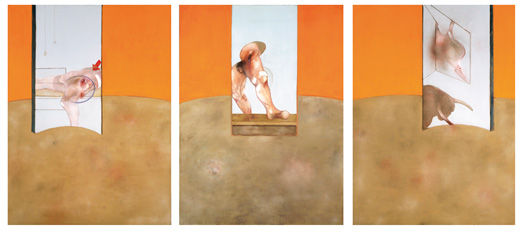
By the 1980s the sense of chaos and drama is replaced with a more sober control. Most of his friends were dead, and his paintings have become flat yet vibrantly coloured with solid, fleshy shadows. By 1987 the Triptych reveals bullfighters’ wounds as if seen through a blue window against a bright orange background.

Triptych (1987)
Francis Bacon’s work is puzzling both figuratively and literally. Confusion is created by his use of generic titles, renaming paintings with different titles, destroying of canvases, and inability to predict how many pictures he will exhibit so they cannot be included in a catalogue but arrive at the gallery with the paint still wet. Pictures of his studio reveal an overwhelming muddle and yet he insisted plaintively, “I work best in chaos”.

Perry Ogden's photo of Francis Bacon's studio


Wednesday, 18 September 2013

Sides of Bacon: 2. Middle

Francis Bacon: Five Decades
Art Gallery of New South Wales
17 November 2012 - 24 February 2014

Study for Self Portrait (1963)

In the 1960s Francis Bacon seems to have turned his attention to portraits, although they are not always flattering, or even recognisable. He claimed, “In trying to do a portrait, my ideal would really be just to pick up a handful of paint and throw it at the canvas and hope that the portrait was there.” He used flat, high key colour used to frame and isolate, with a few wild strokes and turns of the brush to create detail.

His 1963 Study for Self Portrait is a study in distortion; he is trapped by a blue sofa and his eyes are hollow sockets. The sofa makes a reappearance in Portrait of Henrietta Moraes on a blue couch (1965). A transfigures shape reclines on a blue sofa, barely covered with a white sheet and a strong suggestion of blood. Behind her a naturalist door opens onto a dark void, with all manner of possible interpretation – none of them pleasant. According to her obituary she was, ‘foul-mouthed, amoral, a thief, a violent drunkard and a drug addict. Yet she was witty, wonderfully warm and lovable.”

Portrait of Henrietta Moraes on a blue couch (1965)
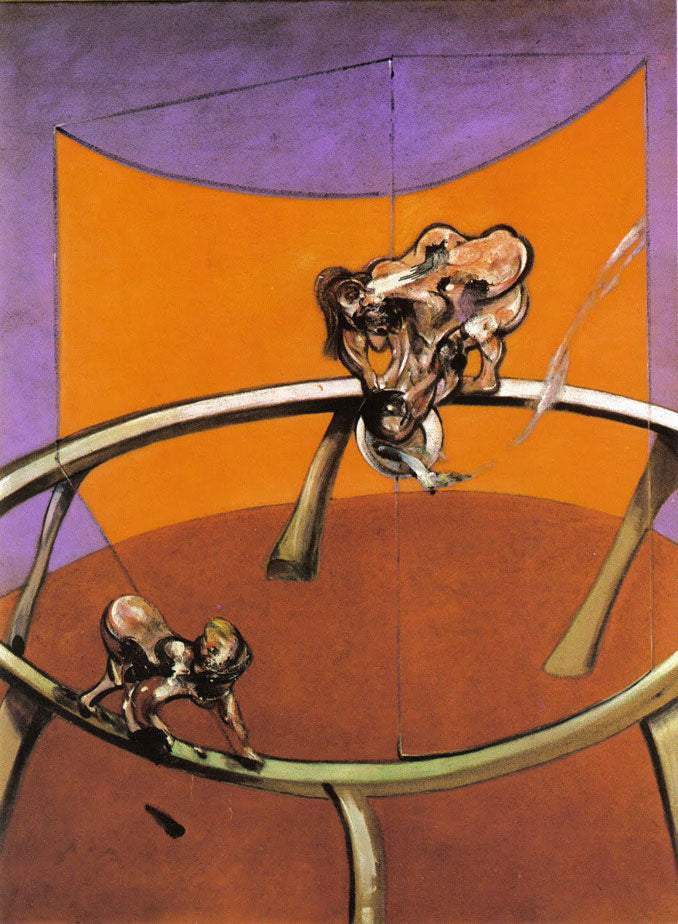
His use of blocking and perverting the colour wheel (thirds of red, orange and purple like a geography teacher’s wardrobe) are startling in From Muybridge: the human figure in motion; woman emptying a bowl of water; paralytic child walking on all fours (1965). Eadweard Muybridge was an English photographer known for pioneering motion series, and this work suggests a 3D model with moving figures.

From Muybridge (1965)
The Portrait of George Dyer in a Mirror 1967-68 shows Dyer, Bacon’s lover, sitting in what looks like a swivel office chair, his disembodied face, split down the centre, reflected in a lectern-like stand. On the painting are two splurges of white paint splashed across the surface reminiscent of semen defacing the image. Whether this indicates rage, lust, or possession, it is highly confrontational to the viewer. In 1971 Dyer committed suicide in a hotel room on the eve of Bacon’s major retrospective at the Grand Palais in Paris.

Portrait of George Dyer in a mirror (1967-68)
At first glance, Lying Figure (1969) reminds me of a fried egg in a skillet – the colours correspond. On closer inspection it is a naked female figure, Henrietta Moraes, splayed on a bed with a syringe in her arm and drugs on a sideboard. There is more than a suggestion of violence and the ‘nailed to the wood’ parodies the crucifixion. The position of the model, bleak light and floating bed hint at a dissection on an operating table or perhaps another type of theatre, dramatically arranged to resemble an artist’s palette.

Lying Figure (1969)
In later works, Bacon introduced props such as umbrellas and cricket pads. Seated Figure (1978) is a depiction of George Dyer with these symbols. The triptych Studies of the human body depicts three versions of a (headless) woman on rail or tightrope with an umbrella for possible balance. The lean minimal composition highlights a writhing, convulsing figure on a clean ground of flat colour. And Figure in Movement (1985) focuses on a faceless batsman ready for action. Bacon refused to explain the cricket pads but merely said he acknowledged the importance of the game to the British psyche and coyly added that he was interested in sport of all types and the male form in action.

Seated Figure (1978)
Studies of the human body
Figure in Movement (1985)

Tuesday, 17 September 2013

Sides of Bacon: 1. Streaky

Francis Bacon: Five Decades
Art Gallery of New South Wales
17 November 2012 - 24 February 2014

Crucifixion (1933)
 Artists are often lauded for capturing the zeitgeist and being representative of their time. Francis Bacon, however, was decidedly not of his time, resisting movements such as abstraction and drawing for ideas on a hodgepodge of sources from other artists (such as Velasquez, Picasso and Van Gogh), cinema, Nazi leaders, media images and religious iconography. Despite this, he managed to produce a profound impression on later artists including Brett Whiteley and Damien Hirst, and is considered by many critics to be the greatest British artist since Turner.

Contemporary thinking suggested that for art to be meaningful, it had to be abstract, but Bacon was fascinated with the human form and with flesh. His figurative compositions are still bold, confronting and intense. The exhibition of half a century’s work opens with Crucifixion (1933), a ghostly black and white depiction of a human form with an X-ray quality. Less a spiritual symbol than an emblem of human brutality and suffering, this manipulation of the human form, inspired by Picasso, is a recurrent theme throughout his art.

In the 1940s and the final years of WWII, Britain was shattered by profound violence and destruction. Bacon was excused from active military service (due to his asthma) but worked for the Civil Defence. He paints many screaming figures, gasping for air, crouched beneath umbrellas or enclosed in cage-like structures and claustrophobic boxes. Much has been written about the symbolism of the scream; is it a cry of pain, an asthmatic gasp or even a cry of orgiastic ecstasy?

He was also profoundly influenced by the silent film Battleship Potemkin, directed by Sergei Eisenstein, particularly the shot of a screaming nurse with broken glasses and bloodied face on the Odessa Steps. Furthermore, he was affected by a book on diseases of the mouth and wrote, ‘I like the glitter that comes from the mouth... I’ve always hoped to paint the mouth like Monet painted a sunset’.

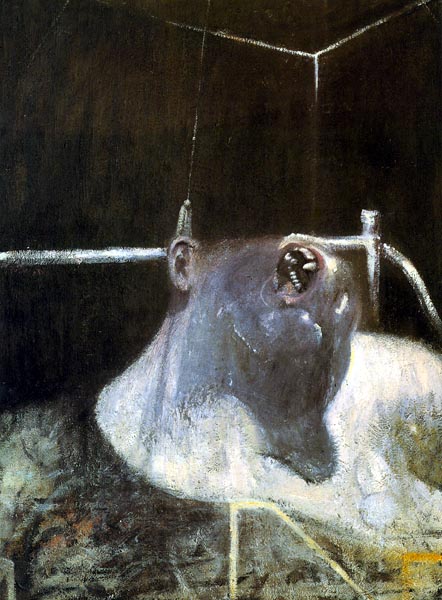
The open-mouthed image frequently appeared in his artwork, including the Head series. Bacon paints heads rather than faces, rubbing and brushing the face itself until it loses form. He substitutes black shadows and voids for where the body might be. These paintings blur the line between human and animal; the fangs suggest aggression but the expression hints at deep suffering. He emphasises the emptiness above the heads, using delineated boxes to cut down the scale of the canvas and direct the eyes down to the image.


Head I
These paintings are almost sculptural in their black and white thick impasto rendering. He painted repeatedly on the back of canvases, preferring this raw, untreated surface and also the ‘frisson of difference’, working in oils and applying many coats. It took him over four months to paint the layers, which weighed down the canvas, giving it the heft and feel of a curtain. In his Study after Velasquez I, II, and III (1950) he expressed a desire to ‘paint like Velasquez but with the texture of hippopotamus skin’.

Study after Velasquez's Portrait of Pope Innocent X
Diego Velasquez’s Portrait of Pope Innocent X, painted in 1650 conveys the dignity, glory and authority of the most powerful figure in the world at that time. Bacon was obsessed by this image and painted around 45 variations on the theme. His pope seems to be in a living hell or form of perpetual torment with his golden throne morphing into an instrument of torture. And again, the scream which evokes so much conjecture.

Many of Bacon’s works of this period feature figures in awkward postures in cubes, as those displayed as exhibits of torture or go-go girls. Men in blue suits are trapped against pin-striped backgrounds like conformist attire or circus tents – cabined; cribbed, confined. Francis Bacon was homosexual in an era where it was outlawed (it was not officially decriminalised until 1957) and perhaps his figures are subject to torture that is mental, physical, and sexual.

He was inspired by photos of supposed ectoplasm and ghostly forms, echoed in his tropes of white prisms, frames, contortionism and crouching nudes: a crouch being a posture that implies oscillating energy, squeezed into a ball ready to burst outwards. His insistence on gilt frames gave the work status and suggested value, combining subversion with respectability. Bacon also liked to have his paintings shown under glass, which forces the viewer to confront his own reflection in the midst of the painting, thus negating distance and detachment.

Study from the human body (1949) displays striking tenderness alongside a gentle erotic charge, as a figure steps through a transparent curtain. The painting suggests both depth and mystery as we ponder themes of imprisonment, concealment, danger and homosexuality. Bacon’s own comments are designed to obfuscate: “I would like my pictures to look as if a human being had passed between them like a snail leaving a trail of the human presence and memory trace of past events as the snail leaves its slime.”

Study from the human body (1949)
Bacon’s paintings appear highly visceral, from the violence of technique to the frequent interaction between two men, which is neither affectionate nor relaxed but turbulent and traumatic. The wrestling men in Two Figures (1953) imply sexual violence and eroticism. Both protected and trapped within a cage-like structure, the grappling men are thrown into sharp relief by the white sheets and dark background. They are simultaneously strong and vulnerable.

Two Figures (1953)
Likewise The End of the Line (1953) embraces the ambiguity of affection and brutality in boxer’s stance – all big head and bulging arms - amidst the linear landscape of train tracks and station shed; a clandestine meeting place for coupling?
The End of the Line (1953)

Figure with Meat (1954) is a masterpiece of composition. The dry brush marks of red, orange, cream and blue that depict the carcasses flank the authoritative male figure in purple/blue. Bacon said without discernible irony, “We are meat. We are potential carcasses. If I go into a butcher’s shop I always think it’s surprising that I wasn’t there instead of the animal.”

Figure with Meat (1954)
While the figure in isolation is a familiar theme for Bacon, the background in Untitled (half-length figure in sea) 1953-54 is unusual. The figure is barely discernible, demarcated only by a vertical brushstroke against the horizontal brushstroke of sea. Both the figure and the sea are dark, mysterious and indistinct. There seems to be a dark pier or jetty in the background but before we can attach too much symbolism, Bacon explains, “I’m just trying to make images as accurately off my nervous system as I can.”

Untitled (half-length figure in sea) (1953-54)
Just as this figure seems released from the cages of his previous works, so Study for a running dog (1954) exudes energy and a feeling of liberation. The sense of movement is captured through the blurred painterly marks, achieved by dragging fabric through wet paint. A later work, Untitled Dog (1967) displays a similar canine exuberance as a few broad sweeps of paint (including pink) on a green background imbue the painting with a lithe animated quality.

Study for a running dog (1954)

Untitled Dog (1967)
A trip to Tangiers (where homosexuality was legal, incidentally) led to splashes of colour in his art. Figure in a Landscape (1956-57) incorporates patches of orange and yellow under layers of ochre and green, which reflect the intense light of the country. He also added sand to dark paint to create a heightened texture – the landscape literally making an impression on these works.

Figure in Landscape (196-57)

Monday, 16 September 2013

Cooking the Books

The Short Life and Long Times of Mrs Beeton by Kathryn Hughes
(Harper Perennial)
Pp. 428

We all know Mrs Beeton, right? She was a Victorian matron who presided over bland food in bizarre combinations (calf’s foot blancmange, anyone) and fussy serviette folding. She wrote a book about cookery, servant management and other household hints that became a byword for bourgeois and has been much-derided ever since it was written.

Well, wrong, according to Kathryn Hughes’ scholarly biography, which also includes a plethora of information on the changing times, consumerism and attitudes towards women and home-making. Mrs Beeton, née Isabella Mary Mayson, was 21 when she began working on the first Beeton's Book of Household Management which was published in 1859 in serial form in her husband, Sam Beeton’s, Englishwoman's Domestic Magazine. Much of it was copied or stolen from other (often unattributed) sources. She died aged 28, although it benefitted her publishers to pretend that she was still alive as they brought out myriad editions of her books in different packages and formats.

As a young wife, Isabella had no idea how to run a household and probably wished there was a manual, but as there didn’t seem to be one, she began to write it herself. She offered help to women floundering in domesticity, and “emphasised the moral duty of the middle-class mistress in keeping her expenditure in check by brushing up on her arithmetic rather than her conversational Italian.”
This was not to say that Mr and Mrs Beeton were against educating women or thought they should be chained to the kitchen sink, and in fact they were adamant that “those women who needed to should have access to properly paid and respectable jobs.” The key phrase here is ‘women who needed to’, as they assumed, as did all publications of the time, that “a woman’s first and proper desire was always to marry, have children, and run a happy home.”

In an interesting aside, Hughes notes that this situation is so reversed that homemaking is now generally only appealing to those who don’t ‘need to’. Neither condemning nor condoning Mrs Beeton, this attitude also politicises the supposedly simple choice of being a housewife.

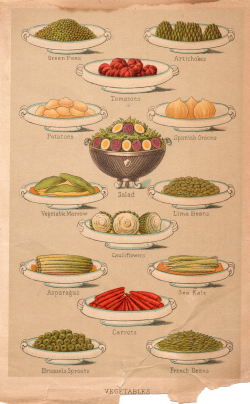
Perhaps Mrs Beeton is best known for her recipes, although most of them are not original. She was possibly the first person to include a comprehensive index at the front and to cross-reference the entries. The inclusion of cooking times and listed ingredients first, before the method, was also innovative albeit derided by ‘proper’ cooks who maintained one should always read through the recipe in full anyway. Beeton's Book of Household Management was the first British cookery book to use colour plates (in 1861) to show readers exactly how the food should look when it came to table.

Another 100 pages of the biography remain after Isabella’s death, reinforcing the idea that she and Sam were Mrs Beeton between them, and that the reputation which was built up around her had very little to do with the woman herself. It made sense for the publishing company to “pretend that Mrs Beeton was alive, well, and looking forward to supplying the nation with yet more words of wisdom from her immaculately-run home.”