Showing posts with label U.S.A.. Show all posts

Saturday, 4 July 2026

Friday Five (on a Saturday): World Cup Wonderings Week Three

Herewith, the latest instalment:


  1. The stars are out to play. Mbappe and Haaland may be taking over from Messi and Rondaldo as the newer generation of super strikers. Goals galore are also expected from the likes of Kai Havertz and Vinicius Junior, while I am quietly keeping an eye on Harry Kane and Jude Bellingham. it was also noted that Mo Salah scored his first World Cup goal helping Egypt to win their first World Cup match (3-1 v NZ). How have they not done this before now? They are now in the round of 32: let's hope their successful run continues.
  2. Meanwhile, other so-called celebrities are less illuminating. Those from the realm of music and film are recognisable: Mick Jagger; Matt Damon; Penelope Cruz; Javier Bardem; Tom Cruise; Billy Bob Thornton; Rob Lowe; Owen Wilson; Sofia Vergara; Alanis Morisette; Ryan Reynolds, to name but several. There are also plenty of former footballers out and about, notably David Beckham, Roberto Carlos, Ronaldo, Alexia Putellas, Zinedine Zidane, and Luis Suarez. The VIP lounges are full of champagne and prawn sandwiches, but the English commentators hilariously fail to recognise any 'stars' of American sports. The cameras pan to the supposed superstar who has no interest in the match and is purely there to be seen and dead air ensues while the commentator is clearly being told who that might be, before they announce it is of course some legend from letters (NFL; NBA; MLB). Until last week I had never heard of Patrick Mahomes, Marshawn Lynch, Jalen Brunson, Dirk Nowitzki, or Aaron Judge, I'm pretty sure many of the UK commentators hadn't either. Welcome to Corporate America.
  3. Staying with transatlantic travesties, what are they trying to do to our language? When did transition become a footballing term? I know what it means, as a team tries to play out from the back through the midfield towards the opposition goal, but of course Americans need a new way to explain moving from DEEfence to OFFfence. While we're here, it is nil not zero, pitch not field, shirt not jersey, clean sheet not shut out, boots not cleats, manager not coach; striker not forward; squad not roster, and definitely club not franchise. Franchises have no place in sport. And teams are plural. You may be You Ess Eh? But We Are England.
  4. On the subject of FIFA faffing, it never rains but it pours. We are now all aware of the sporting rain and weather protocols: we learned that U.S. sporting protocol requires a mandatory wait time of thirty minutes after the last observed lightning strike or thunder before play can resume. Every time a new lightning strike occurs within the designated danger radius (typically 8 miles or 13 km), the 30-minute countdown clock resets completely. So, after the start of the Mexico v Ecuador game was delayed by an hour, we were all expecting that there would be no hydration break, especially because FIFA announced that there wouldn't be. However, as the temperatures plummeted to 14 degrees, everyone was adequately cool and refreshed, and the momentum of the match was cracking along exceptionally energetically, Fox must have called FIFA and reminded them of the money they were making through the ads, and so we were 'treated' to one after all. What an absolute shower.
  5. The super-subs: Over 20% of goals scored have been by substitutes, and many of these within mere moments of the sub coming off the bench. There are plenty of reasons for this, namely, it's only the second World Cup that has allowed teams to make five substitutions, and also, the fatigue of the existing players means the fresh legs are particularly valuable. It's hot, it's humid, some stadiums are at altitude, and this combination of factors causes players' performances to drop off towards the end of the match. It makes thing interesting if nothing else. Mattias Svanberg scored in the 84th minute for Sweden in their 5-1 victory over Tunisia, 18 seconds after stepping onto the pitch and with his very first touch in a set piece. Romelu Lukaku made a near-instant impact for Belgium in the 66th minute against Egypt. A mere 22 seconds after his introduction, his powerful run forced an Egyptian defender to turn the ball into his own net, rescuing a 1–1 draw. Coming on as a late tactical change in the 90+5 minute against Algeria, the Austrian Saša Kalajdžić met a crossed ball with his first touch to power home an equalizer just 61 seconds later. The dramatic finish meant that Iran were knocked out of the tournament as a 3rd place getter with insufficient points. When Switzerland played Bosnia and Herzegovina in their group-stage match, four of the five goals were scored by subs. As always, fans are often disappointed when their favourites are subbed off, but when it works, the manager is considered a tactical genius. Conversely, Australian manager Tony Popovic subbed on experienced captain, Matthew Ryan in the 119th minute of extra time to replace starting goalkeeper Patrick Beach for the penalty shootout against Egypt. The high-stakes strategic gamble ultimately backfired, as Ryan was unable to save any of Egypt's four penalties, resulting in elimination for the Socceroos in the round of 32.

Tuesday, 25 October 2022

Le Carre's Last Stand: Agent Running in the Field


Agent Running in the Field by John Le Carré
Viking
Pp. 281

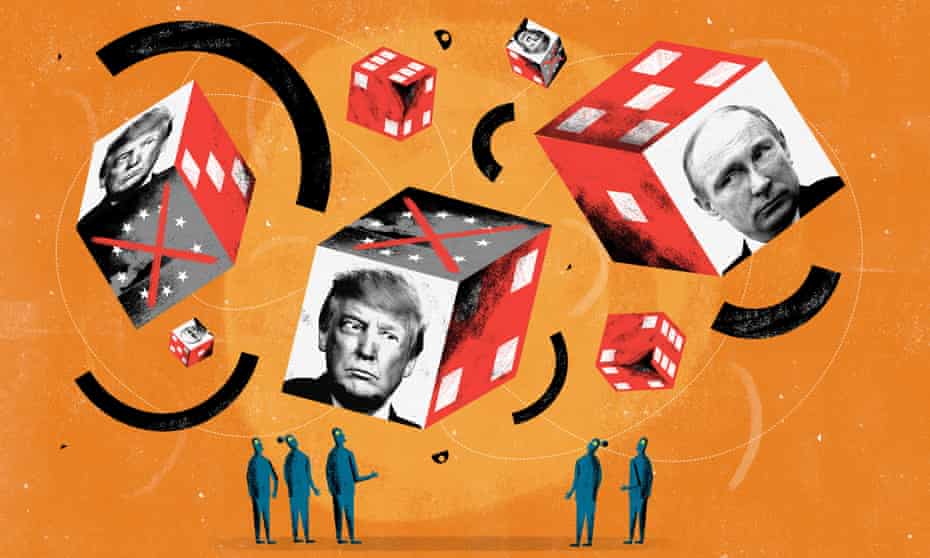
The last book that John Le Carré wrote is, perhaps unsurprisingly, a fast-paced action with a clear story and credible characters. Themes of espionage, defection and loyalty may have seemed passé, but nationalism and protectionism are once again current: the old enemy is back, reinvented as the new enemy and we may need to defend our nation and concepts of freedom and democracy all over again from plutocrats like Putin. The novel is crammed full of code names and secret spy business, played out against a backdrop of Brexit, Trump and greedy oligarchs in a contemporary environment.

Nat is a forty-seven-year-old veteran of Britain’s Secret Intelligence Service who plays badminton and lives a pleasant and seemingly settled life in London with his wife, Prue, who does pro bono legal work for worthy causes. He is somehow manoeuvred into playing badminton at his exclusive private club against a young upstart, Edward Shannon, who has ideas, and he is not afraid to expound them. With an older mentor’s indulgent attitude, Nat finds himself looking forward to these meetings, although the book is written in retrospect as he reflects upon them.

The premise is that Trump has helped to engineer Brexit so that Britain has to rely on Russia for financial and political assistance, which is obviously going to be grubby, and be beholden to the USA once again. Tellingly, Trump does Putin’s dirty work for him: “pisses on European unity, pisses on human rights, pisses on NATO. Assures us that Crimea and Ukraine belong to the Holy Russian Empire, the Middle East belongs to the Jews and the Saudis, and to hell with the world order.”

There may possibly be “an Anglo-American covert operation already in the planning stage with the dual aim of undermining the social democratic institutions of the European Union and dismantling our international trading tariffs.” This operation will also “disseminate fake news on a large scale in order to aggravate existing differences between member states of the Union.” One former spy is horrified to think that he risked his life to see the Great British Empire, liberal conscience and Christian values replaced by “a cartload of hypocritical horseshit”. In present circumstances, division and in-fighting will not be difficult to engineer.

The language of spies follows form: a newspaper in which hand determines whether it is safe to talk or not; letters written suggest the opposite of what is declared. There is, however, a refreshing respect for women, which is often absent from male hard-boiled thrillers. The novel is elevated by its use of witty and decisive one-liners to describe characters and actions. For example, one high-ranking official has a “cheery port-and-pheasant voice”, while another “doesn’t do confrontation, which is something we both know. His life is a sideways advance between things he can’t face.”

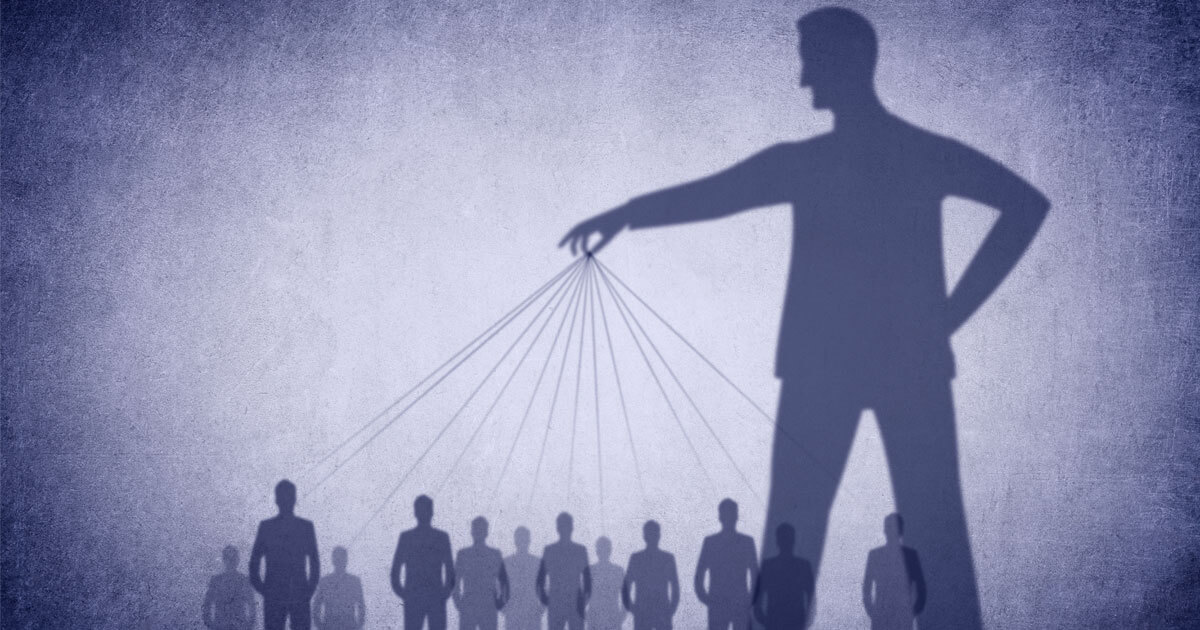
At 281 pages the novel is shorter than many of Le Carré’s previous heavyweight thrillers, but it is engrossing and entertaining, packed with set pieces, old tropes and new angles. We live in a world of surveillance and, while anyone may express almost anything on the surface, there are people watching our utterances and manipulating our movements, biding their time until we can become useful to support a pet project. Gripping stuff.

Tuesday, 26 May 2020

Life and Death: The House of Broken Angels


The House of Broken Angels by Luis Alberto Urrea
Little Brown
Pp. 321

Big Angel (Miguel Angel de La Cruz) is planning his last birthday party before he succumbs to the cancer that is killing him. And then his mother dies. The family gathers to commemorate her life and to celebrate his over one Rabelaisian weekend of relationships and recriminations in San Diego. Among the guests is Little Angel, Big Angel’s half-brother, who shares the same father, Don Antonio, but a different life: his mother was not Mexican as the rest of the family are, and the racial resentments are evident as stereotypes rub shoulders with sensitivity.

The party is raucous with lots of food and all its cultural associations, and the novel is peopled with a host of characters; there are so many people (and lots of children), that it is hard to keep up with who is related to whom by marriage or previous entanglements, especially when people have nicknames too. When Little Angel arrives he has a notebook in which he keeps a cheat sheet; this is a great idea and one that is highly recommended for the reader.

The divide between the Mexicans and the Americans is blurred. Little Angel wants to speak Spanish to his family, but they don’t accommodate this wish. “He tried, and they insisted on answering him in English. Though they knew perfectly well that he spoke Spanish as well as they did and better than their children did. Each side had something to prove, and none of them knew what it was.” Two different worlds and cultures collide in an unspoken competition. Little Angel feels torn between the nationalities and he refutes the glib assumptions that one has for the other. For many, America is better, but for others, Mexico is superior in its transparency.

The brothers share a father and the memories of his toxic masculinity. Although he was a dominating brute who abandoned both of their mothers, Big and Little Angel loved him and learned some of their behaviour from him. They share experiences in a series of picaresque reminisces. “The brothers lay side by side, shuffling through so many memories. So many imperfect scenes. It felt as though they had opened a box of old photographs, each of the pictures torn and tattered.”

Big Angel also thinks in scents and smells, which trigger memory. As his body deteriorates, other senses float forward: “Early morning before dawn was best, when he didn’t remember he was dying. For a moment, he thought he had a future. And he savoured his past. Today, it tasted of butterscotch.” The novel is elegiac, but it also fluidly distorts linear timelines. It is a riotous, messy book that depicts a celebration and observance of both life and death with a backdrop of cultural confusion. Perhaps we shouldn’t have to identify with one thing or another, but can select the aspects on which we would like to focus, and drift along on currents of abandon.