Friday, 3 March 2023

Friday Five: Books Read in February

  1. The Seven Moons of Maali Almeida by Sethan Karunatilaka: This month's family book club selection (the choice of both me and my cousin) is more than just a pretty cover. Reminiscent of George Saunders’ 2017 Booker Prize winner Lincoln in the Bardo, the 2022 Booker Prize winner also deals with the liminal space (called the In Between) in which unsettled spirits, ghosts and ghouls roam dazed and confused. They are given seven moons to come to terms with their death and to enter into The Light, or roam this limbo land forever. Maali Almeida is dead (instantly recalling Dickens' opening lines of A Christmas Carol - 'Marley was dead: to begin with. There is no doubt whatever, about that') and has a week to find out how he died and why. The novel uses the second person, which is a bit annoying and questionable as to who is the narrator, although this becomes clear at the end. In Colombo 1990, life is risky, especially if you are a photo-journalist, as Maali was, everything is political, and people are frequently disappeared. Any one the subjects of his photos might have killed him to keep him quiet, but which one and does it ultimately matter to anyone but him? As he concludes, “All stories are recycled and all stories are unfair. Many get luck, and many get misery. Many are born to homes with books, many grow up in the swamps of war. In the end, all becomes dust. All stories conclude with a fade to black.”
  2. The Travelling Cat Chronicles by Hiro Arikawa translated by Philip Gabriel: This novel (first published in 2015) had reviewers gushing that it was gentle, wise, witty, beguiling and full of simple but deceptive prose. I didn’t realise I was quite so cynical, but I have to wonder, is it deceptive or just simple and is it really profoundly charming or just a little bit naff? The novel is mainly narrated by Nana, a cat named after the Japanese word for seven, which is considered to be lucky and the shape of the cat’s tail. Nana was a stray cat who was nursed by Satoru after being hit by a car. In return, Nana lives with Satoru and gives him affection. When Satoru knows he is dying, he wants to make sure Nana has a happy home so he sets off on a road trip to visit possible adoptive homes and friends. When we see Nana's perspective he explains feline ways (why they like boxes; why they dislike the sea), teaches kittens to stand up for themselves, and cares for his adopted human. The Travelling Cat Chronicles is a novel about the bond between humans and their animals, but it is also about the power of friendship from childhood to adults. Without the support of those he visits, Satoru would not have grown into the kind and gentle man he has become – the kind of man who would scour the country to find the perfect home for his cat.
  3. Flawsome by Georgia MurchNo one's perfect, and the sooner we accept ourselves with all our flaws, the happier we will be. That's according to feedback expert, Georgia Murch, who has written a comprehensive guide to becoming more self-aware and acknowledging that how we behave affects both ourselves and others around us. It's delivered in a punchy, positive and Aussie style, and it makes a lot of sense. She writes that 'this is a book for those who would like to stop being good enough for others, and start being themselves.' And who doesn't want that?
  4. The Time Traveller's Guide to Medieval England by Ian Mortimer: Ian Mortimer maintains that the best way to understand history is not to treat it as a dead and distant time but like a foreign land. Many aspects may be different, but people still have the same wants and needs, so he explains what to eat, drink, and wear, how to travel, where to stay, what to do and what to avoid. There are also handy hints about laws, health practices, measurements, languages, and religious customs. It's a really engaging way of bringing the past to life, and there are plenty of facts, figures and tables of data analysis if you prefer that sort of thing.
  5. The Muse by Jessie Burton: The parallel stories in this novel lead the reader to wonder just exactly who is whose muse? It begins in London in 1967 when aspiring Caribbean writer, Odelle Bastien, finds employment at an art gallery, falls under the tutelage of the enigmatic co-director Marjorie Quick, and is seduced by the charms of Lawrie Scott who appears to have a valuable painting to assess. Interwoven chapters focus on the story of Olive Schloss, daughter of Harold and Sarah, who becomes involved with wannabe artist, Isaac Robles, while in Arazuelo in Spain, 1936. Isaac also dreams of being a revolutionary much to the chagrin of his half-sister Teresa who works as a housekeeper for the Schloss family and just wants to avoid trouble. Of course the names and dates recall the Windrush generation, the Spanish Civil War and the treatment of Jews leading up to WWII. Meanwhile, there are themes of unrequited love, parent-child relationships, and the difficulties of creative women wanting their art to be taken seriously. Lots of people are manipulating each other and hiding secrets in order to score points. It all becomes somewhat messy and incoherent as the author tries to pack too much detail into her story (there is a bibliography at the back to prove she has done her research) and it doesn’t tie together very well. Although the descriptive passages are fantastically evocative, the characters are all one-dimensional and the story itself is unengaging and predictable.

Wednesday, 1 March 2023

My Newest Favourite Thing: Relay League by Angelica Mesiti

"Appel à tous. Ceci est notre dernier cri avant notre silence éternel." - Calling all, this is our final cry before our eternal silence

A few years ago when I was at the Orange Regional Art Galley, I came across this fascinating artwork comprising music, movement and sound. Initially I didn't understand it at all  but found it intriguing, so I read the information panel that accompanied the artwork. I discovered it to be about Morse code and other forms of communication - a subject that interests me deeply, so I spent some time in the gallery interacting with the artwork. The following words are from the information panel. 
Relay League, a term for a telegraphic transmission from one receiver to the next, takes as its departure point a Morse code message transmitted by the French Navy on 31 January 1997 to signal the imminent demise of this communication method. Morse code, a system of dot and dash radio signals, often utilised as a language of distress at sea, was phased out after 130 years in favour of new digital communications. Inspired by this final poetic phase, Mesiti interprets its original dots and dashed through music, choreography, and non-verbal communication.


The first of the three-channel works features the musician-composer Uriel Barthélémi translating the Morse code message into a percussive score that permeates throughout the gallery. The second shows a unique form of dialogue and exchange between two dancers, Emilia Wibron Vesterlund and vision-impaired Sindri Runudde. Together the pair has developed an intimate and corporeal language that communicates movement and gesture. Emilia guides Sindri's understanding of choreography through the touch and feel of her body against his. 


The third depicts the dancer Filipe Lourenço interpreting Uriel's percussive sounds in a new  choreography that directly references silence and vision through gestures loosely drawn from the vernacular of folk dance. This final work reveals a dialogue playing out between each of the performers, and the dots and dashes transmitted throughout the gallery produce a subtle dissonance so that the work continually slips back and forth between cohesion and dissolution. Relay League leaves a sensory impression of a language that has been transformed into a code, which in turn iterates as a score, a performance and a haptic exchange, enabling multiple acts of translation across time and space. 


Mesiti's practice chronicles our present condition. She continues to grapple with experiences such as crisis and displacement - whether economic, political, social, cultural, or otherwise - and confront the emotional states of distress, vulnerability and uncertainty. Relay League involves a fundamental humility, bringing to the surface aspects of human subjectivity that are often obscured from view. To this end the work offers a counterpoint: more than simply making visible the forms through which language and expression are silenced, she allows these complex and vital tools of human relations to materialise in ways that emphasis our need for empathy, compassion and connection.
Morse code was used as an international standard for maritime distress until 1999 when it was replaced by the Global Maritime Distress and Safety System. The final commercial Morse code transmission in the United States was on July 12, 1999, signing off with Samuel Morse's original 1844 message, 'What hath God wrought'. Everything sounds better in French (the distress signal Mayday comes from the phonetic equivalent of them asking for help, after all). And for those wanting a proper review of the art installation, there is one here, written by an art critic who understands these things.

Wednesday, 22 February 2023

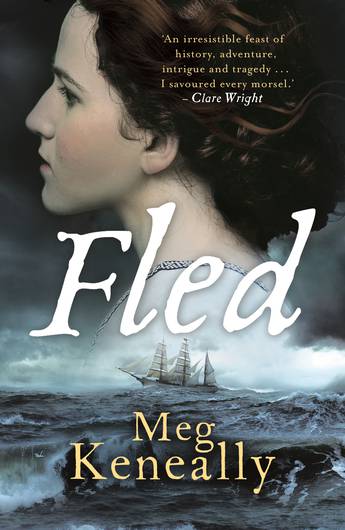
Daring Escape: Fled

Fled is based on the life of Mary (Dabby) Bryant, the woman behind one of history’s most daring escapes. Sentenced to seven years transportation to Australia, she escaped from the colony and sailed over 3,000 miles for 66 days in a stolen open boat with her husband, two children and other companions to West Timor (Coepang as it was then called). Here she was discovered, arrested and returned to Britain to be incarcerated until she was taken up as a cause célèbre by James Boswell who set her up in a house and sent her a stipend after she returned to Cornwall. In an Author’s Note, Meg Keneally stresses that this is a work of fiction, which is why she has changed some elements of the story, including names of the characters – Mary Bryant becomes Jenny Trelawny, later Gwynn after marrying Dan Gwynn.

The first part of the novel concerns Jenny’s route to crime and the highway robbery for which she was transported to the other side of the world. There is a detailed account of that trip on the Charlotte, on which she conceives and after which her daughter is named. She befriends Captain James Corbett, whose character is based on that of Watkin Tench, who tells her, “We don’t need to remake Newgate on the other side of the world. Well, I imagine there will be a guard house, or something like it. I’m sure that not everybody has left their criminal disposition back in England. But the entire place is intended as a prison. We’ll have no need of walls for the most part, it is to be hoped. We’ll have the ocean.”
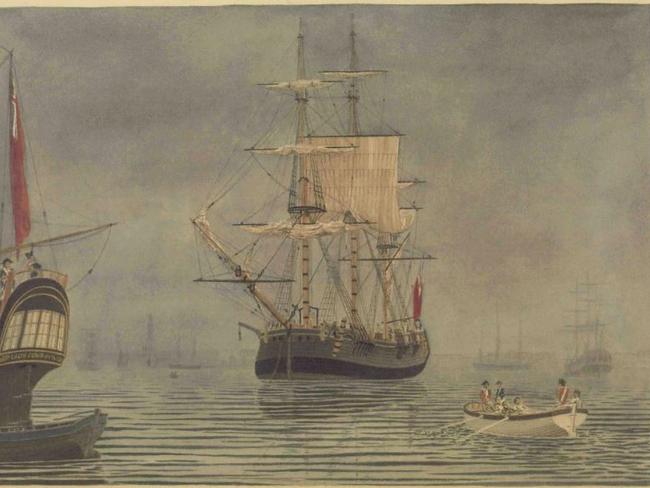
The Charlotte at Portsmouth, May 1787 from Frank Allen's The Ships of the First Fleet

Life in this colony is brutish and cruel, as it is intended to be, in a land that must seem upside-down. The triangle that is used for the floggings is “an ominous symbol, a profane and subverted trinity.” To save herself from rape and degradation by the male convicts and soldiers, she marries Dan and has another child, Emmanuel (these were the real names of Mary Bryant’s children). Married couples are given separate quarters but others, jealous of what they perceive to be her advantages, strive to bring her low. When their actions result in Jenny being expelled to the women’s camp, she reflects, “While space was the only blessing this colony provided in abundance, it was one of the many denied to the hut convicts. Jenny now lived in a place of wails and screams and sobs and fights, of stench upon stench, of dangers buried in innocent conversation.”

From the moment she lands in Botany Bay, Jenny knows she wants to leave, and it soon becomes apparent that their best chance of survival is escape. Food is scarce, supply ships are absent, farming is in its infancy, and provisions are rapidly dwindling; making theft of food a hanging offence and starving to death a distinct possibility. Perhaps if the settlers had collaborated with the local people they might have had better chances of survival, but there is limited interaction between the white settlers and the Indigenous tribes. Jenny encounters an Aboriginal woman who shows her what leaves to chew or to brew to avoid scurvy. Although these are plentiful, Jenny guards this knowledge as currency, as she does when the Indigenous people take her fishing and share their methods with her.

Questions have been asked as to why Mary Bryant would risk a journey for herself and her children on the ocean and potential drowning. As well as starvation, the new colony is rife with disease (particularly smallpox) and the dangers to the women convicts are manifold. “Emmanuel’s death at sea is a possibility. His death here is nigh on certain.”

1930s era illustration of the convict escape
Much of the action of the novel takes place on the water, either in the Charlotte, or the cutter in which Jenny and her companions make their escape. These seafaring experiences are described in some length, which is both terrifying and tedious as indeed it must have been in reality. When they land, Dan’s bragging of his expertise at sailing the boat back to Coepang, leads to them being discovered and their subsequent arrest. The governor who had supported them and admired their skill and courage when he thought they were shipwrecked, turns against them when he learns they are escaped convicts, because he is angry that he has been cheated and make to look a fool; he fears for his reputation and “Laughter, laughter on the seas as the story spreads about the dupe of a governor.” Jenny is frequently at the mercy of men and their egos.

Eventually she returns to her family in Cornwall. She had been afraid of their reaction, but they are thrilled to see her and welcome her back, so the story has come full circle. This is one of the bits that the author has invented, but it makes for a satisfying conclusion. Mary Bryant’s adventure is a fascinating story and, although she has changed the names to compensate for lack of certain facts, Meg Keneally has told it with drama and compassion.

Friday, 17 February 2023

Friday Five: Some TV Shows


I haven't done this for a while, so here are just a few shows I've been watching recently (well, in the last couple of years anyway).

5 TV Shows Watched Recently-ish:

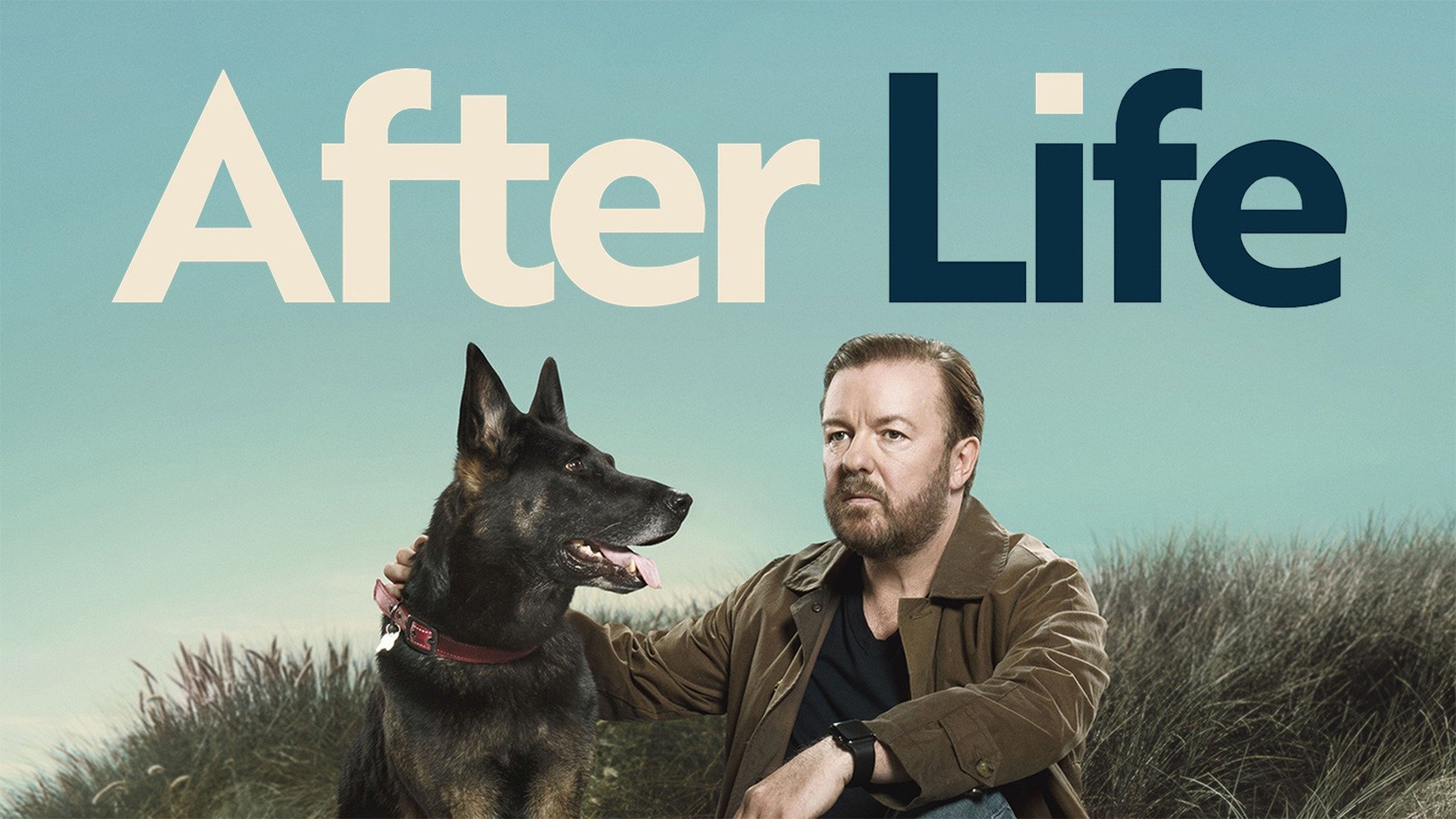
Anti and Ricky Gervais in After Life
  1. After Life, Series 1, 2 & 3 (Netflix) - Tony (Ricky Gervais) is struggling to see the point of life after his wife Lisa (Kerry Godliman) has died from breast cancer. He contemplates suicide but is gradually drawn back into the community by his colleagues (Tony Way; Mandeep Dhillon; Tom Basden; Diane Morgan), his dad (David Bradley), his dad's nurse (Ashley Jensen), a prostitute with a solid social outlook (Roisin Conalty), a fellow griever on a park bench (Penelope Wilton), his dodgy postman (Joe Wilkinson), and a beautiful dog (Anti). It's black humour written by a master of the dark art. 
  2. Handmaid's Tale, Season 5 (Hulu/ SBS On Demand) - It just keeps getting better! June Osborne (Elisabeth Moss) and Serena Joy Waterford (Yvonne Strahovski) are out of Gilead and still each other's nemeses. The cinematography is outstanding and the writing explores the nature of reproduction, rebirth and new beginnings. It is powerful drama, superbly acted and I just can't get enough of it (baby).
  3. Elisabeth Moss in The Handmaid's Tale
  4. Lucifer, Season 3 (Netflix) - Tom Ellis has great style and charisma as Lucifer Morningstar, which is essential as Lauren German as Chloe Decker, the love 'interest', is anything but. There's some biblical hokum featuring angels and demons, heaven and hell, Cain and Abel, but mainly I watch it for the sharp suits, predictable plotting and flash scenery. It's easy on the eye (and the brain) but 26 episodes in a season is too much. Why do you do this, America?
  5. Robin of Sherwood, Series 1, 2 & 3 (ITV) - I re-watched the entire box set. Such fun! That Clannad music! Michael Praed 'morphing' into Jason Connery! A young Ray Winstone being gruff as Will Scarlett! Nickolas Grace hamming it up as the Sheriff! The introduction of the Saracen character with Mark Ryan!  Maid Marian proving that frizzy hair was considered attractive! Herne the Hunter proving the writers were on drugs! Ground-breaking sets and backdrops; arrow shooting, quarterstaff fighting, horse-riding and swordsmanship! The same story trotted out 26 times! Guest appearances from the likes of Rula Lenska, Cyril Cusak, Phil Davis, Richard O'Brien and Lewis Collins! This was all so comforting and reminded me of watching television at home in my parents' house pretending I'd already done my homework. 
  6. Spirited, Season 1 & 2 (ABC iview) - The Australian supernatural comedy drama romance ticks a lot of boxes. The lead actors Claudia Karvan and Matt King have great chemistry although they are completely different people - she's an uptight dentist; he's a post-punk new romantic. Oh, and he's dead. He inhabits the apartment block she moves into after she splits up with her husband (Rodger Corser) and he haunts people because he can't leave. She is the only human who can see him, so they exchange witty banter, although other humans can only hear her side of it and think she's going crazy. She just might be. It's like Moonlighting with a ghost, and was apparently targeted at 'women in their 40s'. There probably aren't many shows aiming at that demographic. On the basis of this, there should be more.
Matt King, Claudia Karvan and Rodger Corser in Spirited

Friday, 3 February 2023

Friday Five: Books Read in January


  1. The Shadow of the Wind by Carlos Ruiz Zafon: Magnificent sweeping saga of love and literature, family secrets and a hidden bookshop, set in Barcelona. It is the second most successful novel in Spanish publishing history after Don Quixote.
  2. The Japanese Lover by Isabel Allende: Read for family book club, this is a love story told through reminisces and letters in the confines of war and a nursing home.
  3. Taste, My Life through Food by Stanely Tucci: I listened to this as an audio book because I love his voice and his charming self-deprecation, a result of growing up in America, choosing to live in England, and celebrating his Italian heritage. Through recipes, anecdotes and observations, he guides us through the highs and lows of his life in a rich and piquant memoir.
  4. Destructive Emotions and How We Can Overcome Them by Daniel Goleman: Combining Buddhist wisdom and the latest research in neuroscience and child development, these dialogues with the Dalai Lama offer insights into how we can recognise destructive emotions and how to manage them. Spoiler alert - it is not the emotion itself which is destructive (anger is an energy after all), but our reaction to it and whether we allow it to take over rational thought.
  5. Terms and Conditions by Robert Glancy: Waking up after a car accident with amnesia, Frank starts to piece together his memories only to recall that he doesn't like his job, his wife, his brother or even himself very much. As a business lawyer who specialises in terms and conditions, he reminds us with wry humour that it's always important to check the fine print. An enjoyable novel celebrating decency and standing up to the man.

Friday, 27 January 2023

Friday Five: Building Lego Words


January 28th is International Lego Day. This date marks the day when Danish carpenter, Godtfred Kirk Christiansen, first submitted his patent for the original Lego brick in 1958. The LEGO company was founded in 1932, and made a variety of wooden toys. It took the name 'Lego' from the Danish words, 'Leg godt', which translates to 'play well'. It's still a big thing among children and some adults. Some of those adult enjoy acronyms. I hope you like these ones.

Lego Titanic built with the SNOT method

5 LEGO Acronyms:

BURP - Big Ugly Rock Piece: The larger of two classic pre-fabricated Lego elements frequently included in Lego castle sets. Part number 6082
SNOT - Studs Not On Top: Building things with pieces on their sides or upside down
POOP - Parts Out of Other Parts: Single-mould pieces that could also be built from smaller existing parts
AFOL - Adult Fan Of Lego: Most adults use this acronym but there are others
BOLOCs - Built Of Lots Of Colours: Models made using the Lego you have, no matter what colour, leading to rainbow-coloured builds

Millennium Falcon built with the BOLOCs method

Wednesday, 18 January 2023

Thorny Issues: Briar Rose


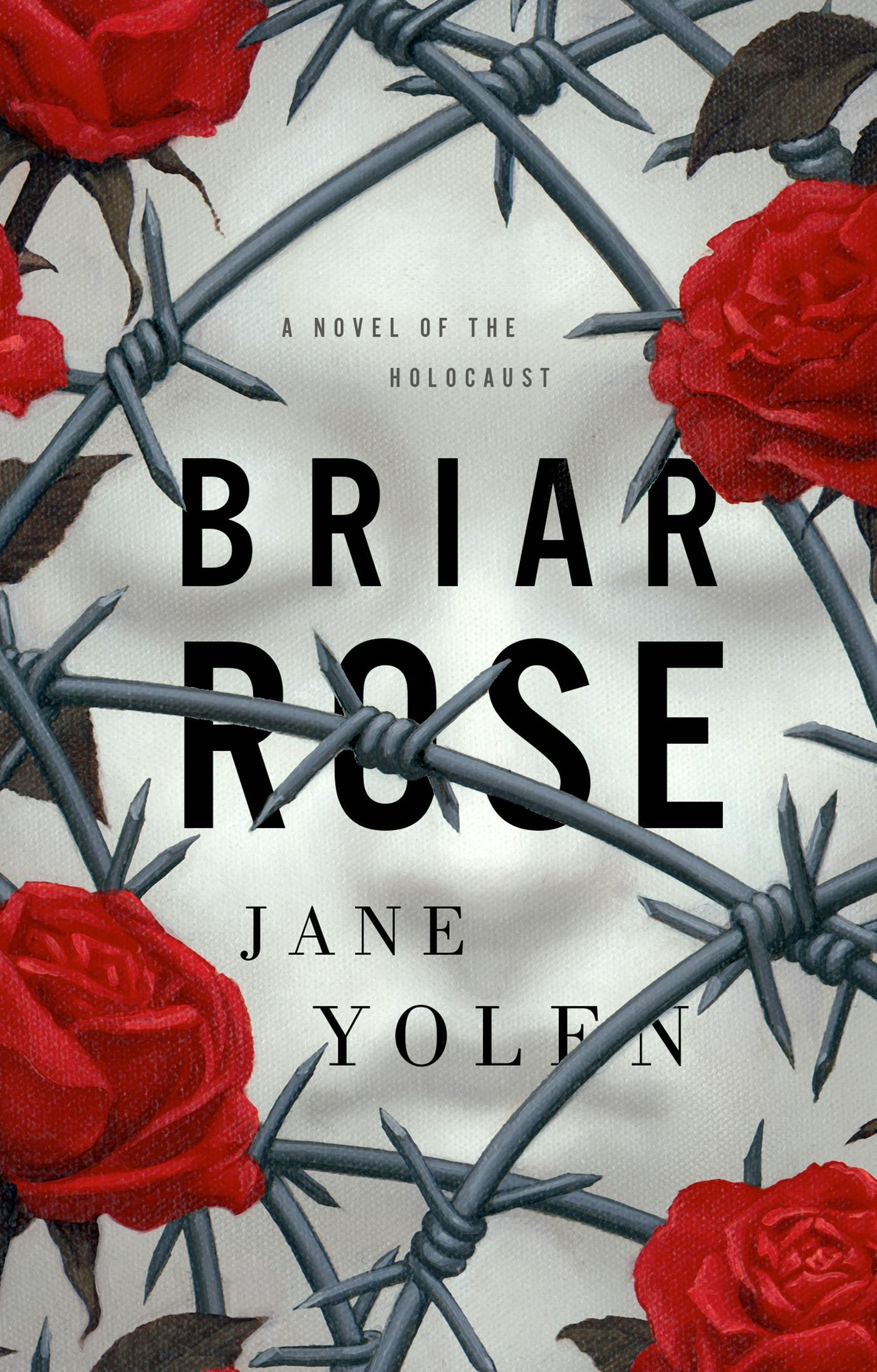
Briar Rose by Jane Yolen
Tor
Pp. 281

Jane Yolen’s Briar Rose is one of a series of re-told fairy-tales created by Terri Windling, who states in the foreword, “For countless centuries, storytellers have used the richly symbolic language of fairy tales to explore all the dark, and bright, and shades of gray of the human experience. Jane Yolen knows this better than most. And does it better than most.” Yolen takes the story of Briar Rose (also known as Sleeping Beauty) and links it to the Holocaust in ways that seems perfectly feasible while simultaneously fantastical. It is a Young Adult novel, with simplistic and unrealistic plot devices and characterisation, but it is also interesting reading for anyone who understands the power of the land of make believe.

Rebecca Berlin (Becca) is a young woman who has grown up hearing her grandmother (Gemma), always telling the same story, Briar Rose, in exactly the same words. No one knows much about Gemma, but after her death, Becca finds a box of personal effects which leads her to think there may be a war-time past. Her editor, Stan, encourages her to go to Poland to seek out the mysterious past of her grandmother. With the ease of stories over reality, he arranges her travel and translator through his journalistic contacts, so that when Becca reaches Poland she is assisted by a woman named Magda an incredibly hospitable tour-guide, translator, and unlocker of gates both literal and metaphoric.

They conveniently find a man, Josef Potocki, who knows Gemma’s story, which he relates to them in the middle third of the book – a story within a story, within a story. It transpires that the castle is a concentration camp, the brambles are barbed wire, the sleeping beauty is gassed, and the prince’s kiss is the breath of life. Tales are told as a means of coping with events, and if they are painful and don’t provide relief, one wonders what is the point. Becca is desperate to paint herself as the heroine in this tale; the Cinderella of the story. She can’t wait to return to America and boast to her sisters that she found the truth, even though they thought she was crazy for trying – yes, there are two of them with similar names (Sylvia and Shana) and she is the youngest.

The fairy-tale tropes loom large throughout the novel, and the narration is tightly constructed at the expense of character. This is satisfying in and of itself, and true to the genre. It may read like a creative writing challenge, but it certainly passes the test it has set itself.

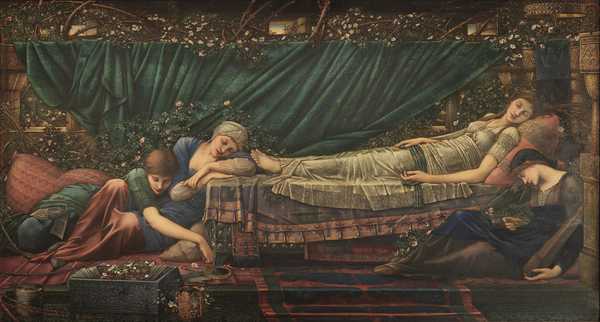
The Rose Bower from the Briar Rose series (1885-1890) by Edward Burne-Jones