Tuesday, 17 August 2021

Necessary Sacrifice? Disaster Before D-Day


Disaster Before D-Day: Unravelling the Tragedy at Slapton Sands by Stephen Wynn
Pen and Sword Books
Pp. 131

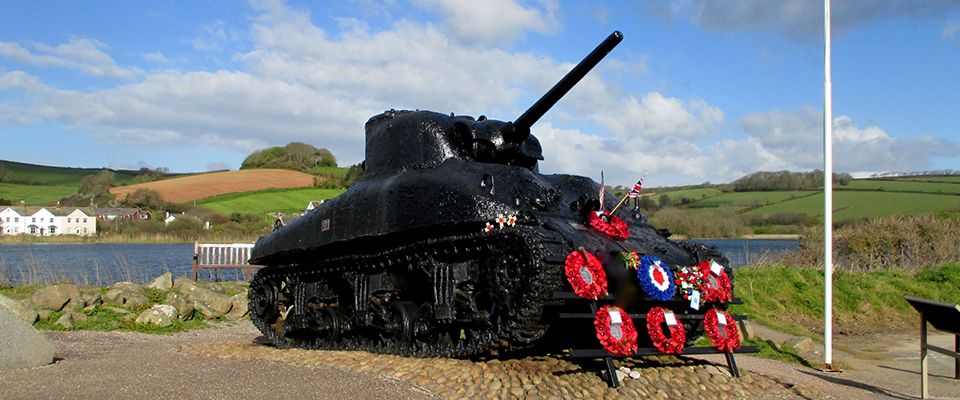
On the 27th and 28th April, 1944 a training incident at Slapton Sands, Lyme Bay, Devon, named Operation Tiger, was undertaken as a practice for the D-Day Landings. The site was chosen because of its topographical similarity to Utah Beach in Normandy. Due to friendly fire, miscommunications, ill-fitting life jackets, and undetected German E-boats, the exercise resulted in the tragic loss of 749 United States Army servicemen and 198 United States Navy personnel. Naturally there was secrecy at the time, as the training had to be kept hidden from the Germans or it would spoil the surprise of the D-Day landings, but it is still not a well-known incident.

The logistics for this exercise were considerable. If Slapton Sands were to be used for this exercise, the nearby village and surrounding area had to be evacuated, which meant “3,000 people from about 750 homes, farms, shops and pubs that made up the villages in the prescribed area, all had to be moved out.” One of the problems was overcrowding: where were they going to put everybody? Plymouth, Weymouth, Exeter and Torquay had been heavily bombed by the Luftwaffe; children and entire families had been evacuated to the countryside because it was considered safer; “by the beginning of 1944 there were tens of thousands of American soldiers dotted around the south-west of England involved in training exercises.”

“During the original planning of the exercise nobody had foreseen that Royal Navy might need to get in touch with the US Navy, so it was a situation that had never been addressed. They were operating on two different radio frequencies.” Consequently when the commanding officer delayed the timing of the exercise by an hour, this was not communicated to those involved in shelling the beach with live ammunition and the ground forces firing live rounds over the incoming troops – General Eisenhower believed that live ammunition was as an important factor set to harden the troops to the harsh reality of a naval bombardment. Originally these incidents had been planned an hour apart, but they ended up taking place simultaneously.
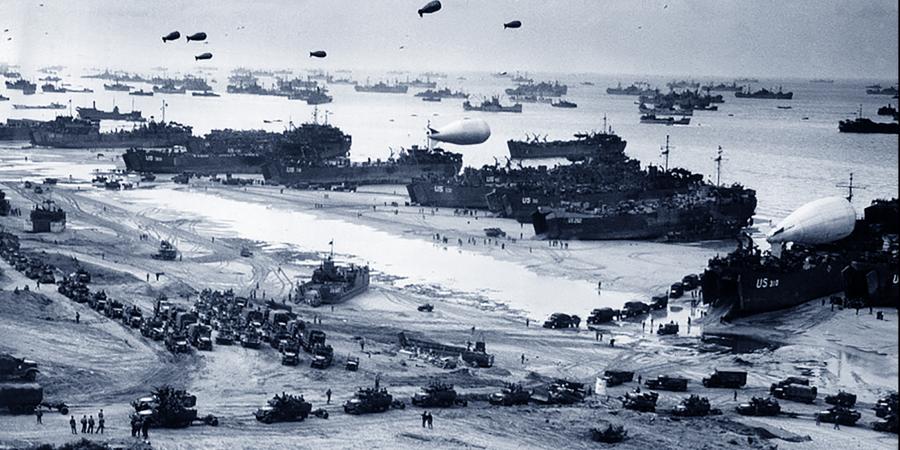
Two Royal Navy vessels should have been protecting the convoy of seven American landing craft, but one of them had been accidentally rammed the day before and was being repaired. Once again, this was not communicated between navies and so the convoy only had one escort, and the German E-boats were able to nip in unimpeded and fire torpedoes upon it: the LST-507 caught fire and was then abandoned (with 71 deaths); the LST-531 sank after suffering torpedo strikes (with the loss of 114 lives); the LST-289 was set on fire but managed to reach the shore; and the LST-511 was damaged by friendly fire in the resulting chaos and confusion. Many other servicemen drowned, waiting to be rescued. “It is believed a number of men died during Exercise Tiger because they were wearing their lifebelts incorrectly; some were also faulty. In fact, most of the casualties that died off Slapton Sands on 28 April 1944 did so from either hypothermia or drowning.”
One of the big remaining questions is whether the entire incident was deliberately covered up, and Wynn has tried to find answers. He explains that in 1954 the Americans officially confirmed the deaths from the E-boat attacks and there are personnel lists available of those killed in the incident. “But I have not seen a similar admission in relation to the friendly fire incident that took place on 27 April 1944, nor have I ever seen a list of those who died or how many there were.” This may begin to stray dangerously into conspiracy theory territory, but he tries to lay out the facts as he sees them.

While these ideas may be far-fetched, he talked to many “ordinary people” while researching his book and heard similar stories from Americans and British alike. He questions how there can be so many people who remember the events of 27 April 1944 if they never took place, as stated in repeated denials by official bodies.

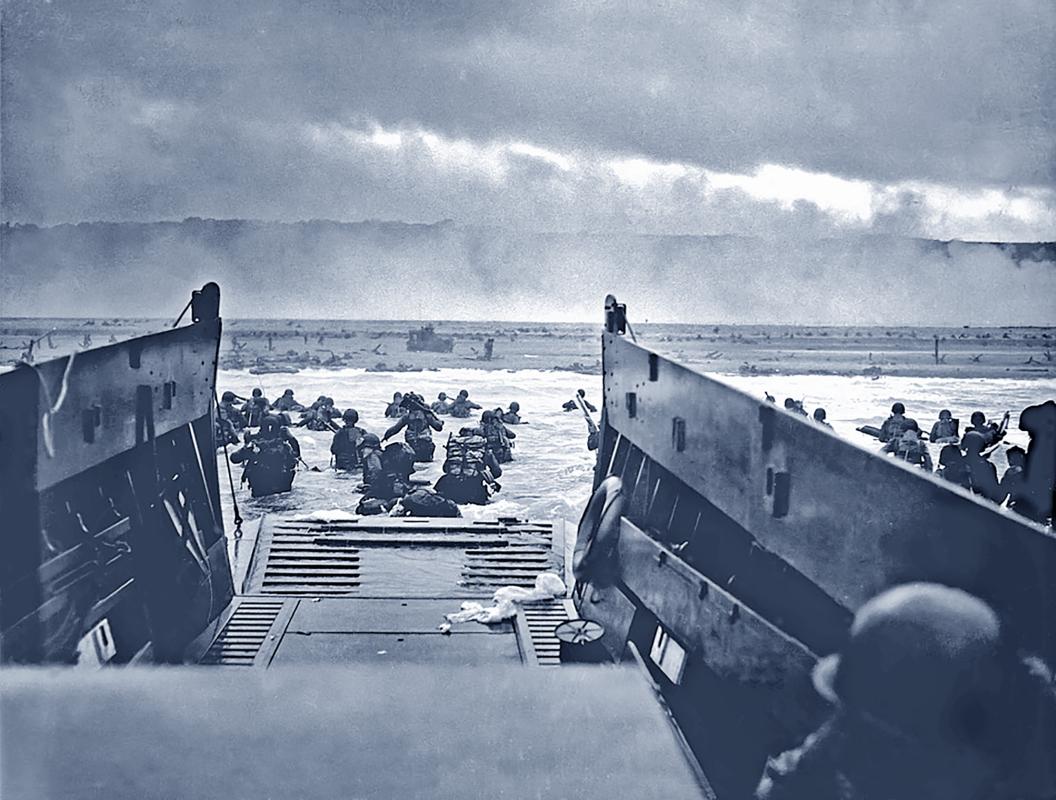
Wynn approaches this episode from a military viewpoint with great respect and logical considerations but without hyperbole or excess emotion. He lists the name and ranking of all the men killed and missing, creating a sombre picture of death and warfare. There were many unfortunate deaths in the training exercises that were meant to prepare troops for the D-Day landings (Normandy invasion – Operation Overlord) of 1 May 1944, but, Wynn argues, these preparations doubtless also saved countless lives and brought the war to a close earlier than otherwise. He concludes “that the sacrifices made during that time, whether by the hundreds of young men who lost their lives during the training exercises, or the hundreds of people and families who left their homes so that American soldiers could train there, was worth it. If these sacrifices hadn’t been made, and lessons hadn’t been learnt, then the world might have had a totally different look to it today.”


Friday, 13 August 2021

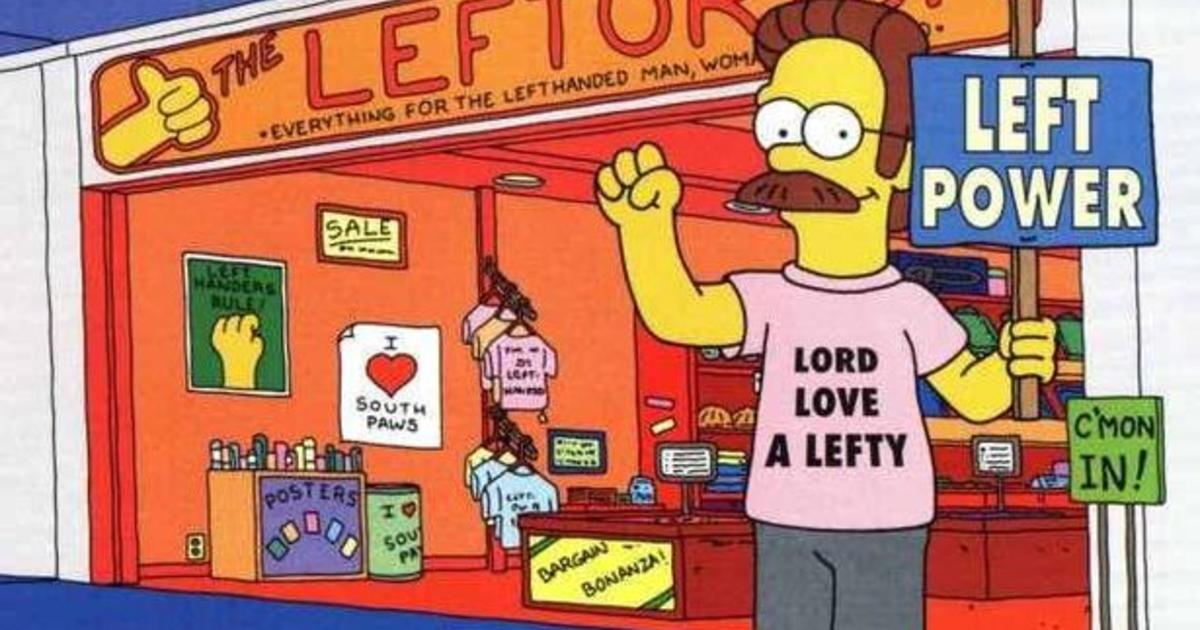
Friday Five: Lord Love a Lefty

Today is not only Friday 13th, but also International Left-Handers Day. Him Outdoors is a left-hander. He tells me that the world is set up for right-handers and that he faces challenges using everyday implements such as scissors, corkscrews and can openers. He is of the generation who were rapped across the knuckles when they wrote with their left hand, so he tried to write with his right. He is also of the generation that used fountain pens, and they are notoriously difficult to manage for those of the sinister persuasion (not my word; it's Latin!).

Barack Obama is left-handed

I admit I have not always been sympathetic, but maybe this is a case of my unconscious bias. Apparently anywhere between 7-17% of the global population is left-handed (depending on what you read) and their struggles are real. Take that comment above: the Latin for left is sinister and the French is gauche. Not very nice, is it? Especially when the relative words for right are dexter and droit, from which we get dexterity and adroit. Linguistics tells us it's right to be right. 

In their effort to counter the negative connotations, left-handedness has often been suggested to denote intelligence and creativity. Sadly there is absolutely no scientific proof for this and there is no difference in IQ levels after studies have been completed. There may be a link between a left-handed dominance and verbal skills, but this is not fully explored or understood. With Bill Gates, Mark Zuckerberg, Steve Jobs and Oprah Winfrey all being left-handed, there may also be a link between left-handedness and being rich, or maybe that's just a determination to overcome adversity and make the world conform to you, rather than the other way around.

5 Facts About Left-Handedness

  1. There is a town in West Virginia, USA called Left Hand. Apparently it was named after the nearby Lefthand Run Creek. And in a 'take that' moment, there is no equivalent town called Right Hand.
  2. The Australian children's entertainment group, Hi-5 uses a left hand in their emblem - one of the cast, Tim Maddren, is a left-handed musician who plays the guitar, piano, trumpet and 'a bit of drums'.Other famous left-handed guitarists include Paul McCartney, Jimi Hendrix, Kurt Cobain, Courtney Barnett, and David Bowie, although the latter taught himself to play right-handed due to the fact that there weren't enough left-handed guitars in shops in post-war Britain.
  3. Maybe it's because Australia is down under, but kangaroos are left-hand dominant, and all Australian sulphur-crested which cockatoos are left-handed (clawed)? I read this fact but I have yet to test it out - I'll note which talon the cockatoos use to throw tree debris at me next time I'm passing. 
  4. This year the Dutch Reach method was introduced to the Highway Code in the UK. It is a method of opening a vehicle door that sees the driver use their hand furthest from the handle to open the door (in the UK this would be the left hand), therefore turning their body and allowing them to see oncoming cyclists before opening the door. The Dutch have been using this method for many years, but they just call it 'opening the car door'. Last year there were 140 cycling fatalities in the UK, and in 2007 (the last year for which I can find the figures for this) 8% of serious injuries to cyclists were caused by dooring (opening a motor vehicle door into the path of another road user). 
  5. It is illegal to play polo left-handed - this is to do with reasons of safety, apparently for both horse and rider. Even princes are not exempt; the Prince of Wales and the Duke of Cambridge are both left-handed.

Left-hander Prince Charles playing polo with his right

Wednesday, 11 August 2021

War Artists

War is ugly and brutal. It is messy and destructive. But it also inspires creativity - from scientific, technological and medical inventions and developments to great art and culture. War artists are fascinating as they capture and portray moments in the heat of battle that inform and inspire those who weren't there. Of course this can be propaganda; slanted in whichever direction is required to get the desired message across. They highlight situations and individuals and hold them in an artistic embrace; imbuing commonplace events with eloquent significance.

Some time ago I went to the Australian War Memorial and enjoyed some of this sensational art. Here are some of my favourites in very different styles.

Moresby Picture Show (1943) by Charles Bush
Light entertainment provided a necessary distraction from the hard jungle fighting and difficult living conditions in New Guinea. In this work, a vibrant Disney cartoon is oddly set in a war zone and contrasted against the drab green of the mountainous tropical landscape. The searchlight in the distance is a subtle reminder of the war. 

The weight and weariness of the soldiers in the foreground are contrasted with the lightness of subject and the luminosity of the Disney character projected on the screen. The figures stand stoically still in the drizzling rain and uncomfortable conditions, enjoying the simple pleasures of the light entertainment. Each silhouette is unique, and the distinctive Australian slouch hat can be seen on the figure on the far left of the picture.

The tropical climate of New Guinea presented soldiers with harsh conditions for both combat and general living. Most were not accustomed to the high humidity, let alone the inhospitable jungle and terrain. Those stationed at Port Moresby would have greeted the screening of films with much anticipation, welcoming any distraction from the realities of day-to day living in New Guinea. Such events also provided the artist with atypical subject matter and an opportunity to record less grim aspects of wartime activity.

Hospital Ward, Burma-Thailand Railway (1946) by Murray Griffin
This work pictures Australian prisoners of war who were forced by the Japanese to build the Burma-Thailand railway. The artist depicted the atrocious conditions in the labour camps based on eyewitness reports by survivors. Griffin's use of light and shade in this work accentuates the physical condition and obvious suffering of the men as they struggle to survive malnutrition and disease, as well as drawing comparisons to the depths of hell. The skeletal men are barely distinguishable from the makeshift bamboo shelter. 

Griffin was serving as an official war artist in Singapore when it was captured, and became a prisoner of war in Changi. He originally volunteered to go to the railway, thinking conditions might be better, but gave up his spot for another man and remained in Changi for his entire captivity. Griffin was appalled by the condition the men returned in from the railway, and sought to make records of events and conditions that occurred on the railway from survivor testimony.

Bomber Crew (1944) by Stella Bowen
On 27 April 1944 at RAF Station Binbrook in Lincolnshire, Stella Bowen drew studies for a planned group portrait of a Lancaster Bomber crew, comprising six Australians and one Englishman, of no. 460 Squadron. This was the most highly-decorates Australian squadron in Bomber Command, but had suffered the highest casualties. Bowen was commissioned to paint a typical crew that flew Lancaster bombers on the intense bombing raids over Germany and occupied Europe. Preoccupied with their flight preparations, the men expressed no particular interest in Bowen's attempt to draw them, but their bravery, youth and vulnerability captivated the artist.

The next day the crew was reported missing, presumed dead: only Pilot Officer Thomas Lynch survived. Bowen completed the group portrait from sketches and official photographs. She wrote, "It was horrible having to paint the picture after the men were lost: like painting ghosts."The crew is depicted in front of the menacing image of their Avro Lancaster bomber, looming above them like a bird. They are shown wearing their full flying gear including 'Mae West' life jackets, flying helmets and headphones. Their names appear on the helmets and are repeated on the wreath-like ribbon that scrolls across the canvas, complete with their RAAF wings floating like cherubs.

Flak Busters (1945) by Dennis Adams
Australian Beaufighters of No. 455 Squadron, based in Norfolk, England, attack a German minesweeper off the coast of Norway. They co-operated on many shipping strikes with a New Zealand Beaufighter Torpeo Squadron (489 Squadron RNZAF). In those attacks the Australian aircraft came in and fired both rocket projectiles and 20mm cannons. The ship 'saturated' by this fire would then be attacked by the torpedo Beaufighters.

During the Second World War, Australian artists frequently drew on various modern art movements to form chaotic and jarring compositions that interpreted weapons and machines, military life, and the visual experience of battle. One such influence was the literary and artistic movement known as futurism. It developed in Italy, where it was active in various incarnations from 1909 to the 1930s.

At its core futurism celebrated the machine age. Its adherents wanted to renew cultural and artistic ideas to reflect the strengths and dynamic nature of machines and life in modern cities. In general, futurist works of art emphasised movement and dynamic tension between typically geometric pictorial elements. In this image the artist paints the ship overwhelmed by a barrage of repeated explosions and jutting shafts of water and light.

Wednesday, 21 July 2021

Wrap up Warm: The Quilter's Apprentice


The Quilter's Apprentice by Jennifer Chiaverini
Simon and Schuster
Pp. 271

For a novel with quilting at its centre, this is as homey and heart-warming as you would expect. It features friendships, family, forgiveness, sisters and sisterhood, supported by a wealth of detail about making quilts that those who do will doubtless find fascinating. Taking disparate scraps and piecing them together into a whole is an obvious metaphor for storytelling: in quilting the stitches that bind the fabric together are best if they are nearly invisible. Unfortunately the working is quite clear in this novel as some of the dialogue is clunky, and the scenarios are often unrealistic.

Sarah and Matt move to a new town for his job as a landscape architect. Matt works for an irascible client, Mrs Compson, at Elm Creek Manor restoring the grounds to their former glory while Sarah reluctantly takes up a position indoors, helping with the cleaning and taking lessons from Mrs Compson (an awarded quilter) in return. Sarah is a trained accountant but she is bored with the work. The characters are privileged, middle-class and comfortable, and Sarah’s complaints certainly seem petty.

Mrs Compson plans to sell Elm Creek Manor, but when Sarah and Matt discover that the intended buyer wants to tear it down and build student accommodation, they are appalled and try to think of a way to save it. The focus is on conserving and preserving rather than progressing and assisting potential students with their future living arrangements.

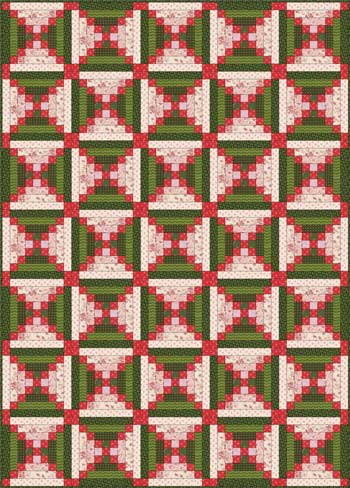
Chimney and cornerstone quilt design

Looking to make friends, Sarah joins a quilting circle, befriending the other women, although they clearly have reservations about Mrs Compson. They welcome Sarah into their group and help her practice, supporting the individual tutoring she has with Mrs Compson, expanding upon the techniques of the craft. They discuss different stitching methods; there are arguments over the preference between hand and machine stitching; and the skills required to undertake different tasks, with a level of detail that might be skimmed by those not interested in the minutiae. 

The history of quilting is mentioned, as are individual patterns with their specific meanings. Mrs Compton explains to Sarah the relevance of the Log Cabin quilt pattern to Elm Creek Manor, which was a stop on the Underground Railroad during the Civil War. “If an escaped slave saw a log cabin quilt with black centre squares hanging on the washline, he knew it was safe to knock on the door.” When Sarah asks wouldn’t bounty hunters see the quilt too, Mrs Compson replies, “Why, who pays attention to women’s work? Laundry, hanging on the line? Sorry, can’t be bothered. We’re out doing important man things.” There is a highly unrealistic conversation about craft being viewed unfavourably compared with art as it is considered women’s work, which raises some valid points, although the dialogue is stilted and deeply unlikely.

Sarah appreciates her newfound female friendships, and learns about Mrs Compson’s past through the older woman’s reminisces and reflections of life. She looks to Mrs Compson as a substitute mother-figure, while acknowledging her complicated relationship with her own mother. This dynamic is left unresolved – perhaps for the next novel; this is clearly positioned as the first in a series.

The theme returns to the purpose of making quilts, whether as a practical hobby and a leisure activity or an art form to be rewarded. Chiaverini argues that the value of a quilt is more holistic. Craft as empowerment is not a new theme, but it is one that this novel embraces warmly bringing gentle comfort.
Log Cabin quilt

Friday, 16 July 2021

Friday Five: Reviews of Penelopiad

The Penelopiad by Margaret Atwood produced by Crouching Giraffe Productions in association with papermoon theatre
The Penelopiad  by Margaret Atwood has three more performances to go - two of which are sold out. If you live in Canberra, grab the last tickets to tomorrow's matinee quickly before they're gone. You do not want to miss it. This is what the critics are saying.

5 Reviews of The Penelopiad
  1. That Guy Who Watches Canberra Theatre - "Kate Blackhurst's production brings this thrillingly to life... this is a great night of theatre, thoroughly absorbing and well worth the watch."
  2. The Canberra Critics Circle - Len Power - "Director, Kate Blackhurst, has produced a visually striking, uniquely stylised and thought-provoking production that succeeds on all levels. It's also very entertaining."
  3. The Canberra Critics Circle - Frank McKone - "The production, seemingly simple in the intimate small-scale Studio space, has all the elements of drama working together with purpose and artistic integrity... This Penelopiad is my kind of theatre - strong in its intention; powerful in its effect and its message."
  4. The Canberra Critics Circle - Bill Stephens - "an imaginative version of this epic story, directed with considerable panache by Kate Blackhurst... the central role of Penelope given a compelling performance by Elaine Noon."
  5. The Canberra Critics Circle - Peter Wilkins - "the most significant production that I have seen on a Canberra stage for quite some time... This is theatre that confronts, challenges preconceptions and entertains."

Friday, 9 July 2021

Friday Five: Depictions of Penelope

'Our' Penelope - Elaine Noon in The Penelopiad by Margaret Atwood
The Penelopiad is up and running, and audiences appear to love Margaret Atwood's re-telling of The Odyssey from Penelope's perspective. Elaine Noon is excellent as the titular character. And here are some other artistic depictions of the so-called patient and faithful wife and weaver.

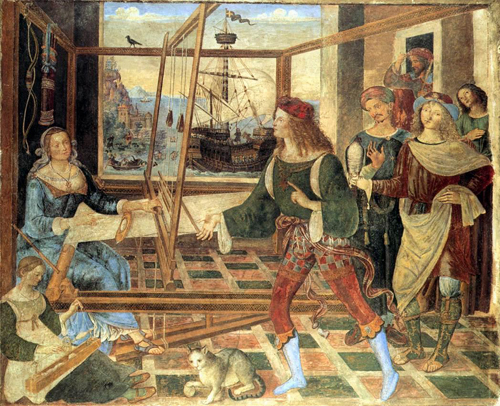
Penelope with the Suitors (1509) by Pintoriccio
Penelope (1514) by Domenico Beccafumi

The Patience of Penelope (1849) by John Roddam Spencer Stanhope

Penelope Unravelling her Work at Night (1886) by Dora Wheeler Keith

Penelope and her Suitors (1912) by John William Waterhouse

Tuesday, 6 July 2021

Ham and Pea Soup: A Rare Interest in Corpses


A Rare Interest in Corpses by Ann Granger
Headline
Pp. 410

Marketed in some territories as The Companion, this is the first novel in what becomes a historical crime series set in Victorian London. After her father’s death in 1864, the penniless Elizabeth (Lizzie) Martin takes up a position as companion to Mrs Parry, her god-father’s wealthy widow, only to find that her predecessor, Madeleine Hexham, who had supposedly run off with an unknown man, is dead (and pregnant). Madeleine’s body is discovered in the recently-demolished slums around the prestigious new railway station at St Pancras, and Inspector Benjamin Ross is in charge of the investigation. Lizzie realises that she knows Ross from her childhood (her father sponsored his education) and that ‘Aunt’ Parry, as she is encouraged to call her, was a landlord for the housing development, causing several elements to build up into a classic detective mystery.

Through the use of alternating chapters between Lizzie and Ross, we are drip-fed information about the developments and social mores of the times, ranging from scientific progress to insights into the working of and attitudes to the police force, and personal relationships.

London is changing and the era is one of rapid development: the capitalist society dictates the rich will get richer while the poor are further oppressed. Mr Fletcher runs the construction company which is building the station on the grounds of the housing Mrs Parry sold to the railway for development. He doesn’t want the police involved on his worksite, because people are fascinated when a body is found. Mrs Parry is equally uncomfortable. “No one wants to be known as a slum landlord and after Madeleine’s body was found there, she liked even less the idea that people would associate her with the place.”

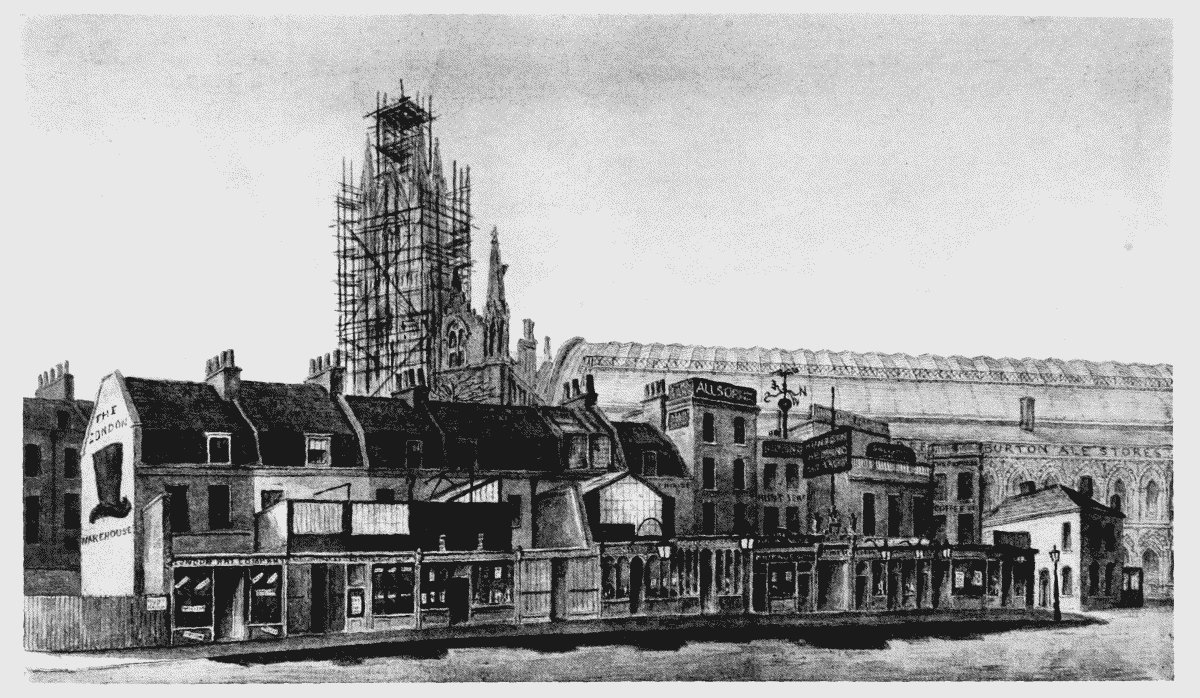
St Pancras Station in the course of building (1871)

Morals and attitudes to women are also questioned. The supposedly religious and upstanding Dr Tibbett expresses his conservative reactionary views to Lizzie in a manner that demonstrates the constraints within which she must work. “I am sorry to say I find increasingly that there is a type of modern young woman who fancies she may speak as freely as a man. I am an old-fashioned fellow who believes that woman is the greatest ornament to her sex when she realises the boundaries Nature has set for her.” He, and others, blame female victims when they are exploited and abused. “We did not know the circumstances of Madeleine’s death. Whatever Tibbett had to say it would amount to declaring that it was all her own fault.”

This is a world in which class distinctions are rife and supremely hierarchical. Inspector Ross comes from mining stock and has risen through the ranks; his superiors dislike him because he is working class. He notes that the social strata extends to the upstairs/ downstairs milieu of the masters and servants. “I reflected that below stairs there existed a world which, in true Darwinian fashion, had evolved quite differently to society above. Had the great naturalist set himself to study it, he might have found as much of interest there as he had in Terra del Fuego.” Although this is the first in the series about Benjamin Ross and Elizabeth Martin, it is evident that there will be more, and that Lizzie and Ben will end up together; they are both honest and self-aware with a strong moral backbone.

The novel is full of the classic features of the Victorian detective drama. The dim-witted Dunn (Ross’s superior officer) struggles to solve the mystery, announcing, “This is turning into a dashed complicated business, regular cat’s-cradle of possible motives.” There is a dressing table with a hidden drawer in which Lizzie conveniently finds a diary written by the dead woman. Thick Victorian fogs made of coal fire smoke and freezing atmospheric conditions add to the ambience and there is even a standard chase through the pea-souper. It is satisfying without being too demanding and a thoroughly enjoyable addition to the genre.
George du Maurier cartoon in Punch, 1889