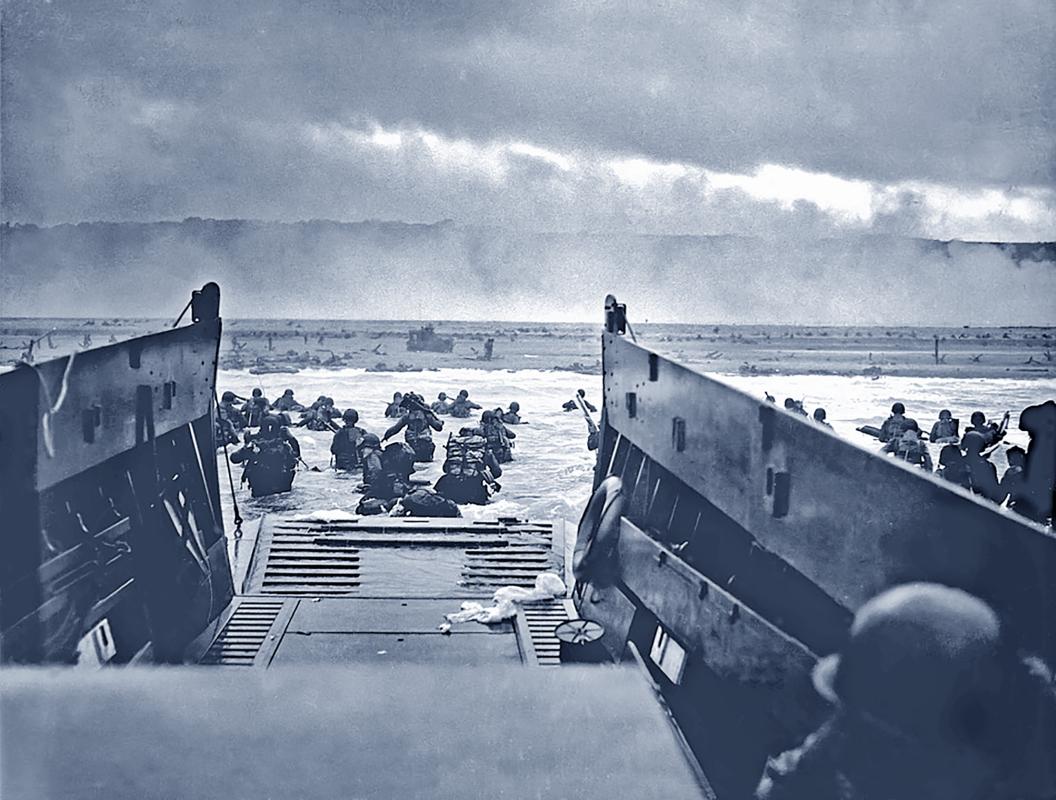
- The Exorcist (1973 Horror/ Supernatural) - Lots of male doctors lecturing a woman about how to run her life and deal with her daughter; the keepers of the knowledge deciding females they can't understand must be hysterical... It might be almost 50 years old, but some aspects still resonate. I believe good horror stories are never 'just' about horror; they connect with our deepest fears, ignorance and insecurities to explore something psychological. I feel this films does that, and Ellen Burstyn is spectacular. In conclusion: worth watching as a classic of the genre (I know all the best lines anyway), but probably not scary to a modern audience.
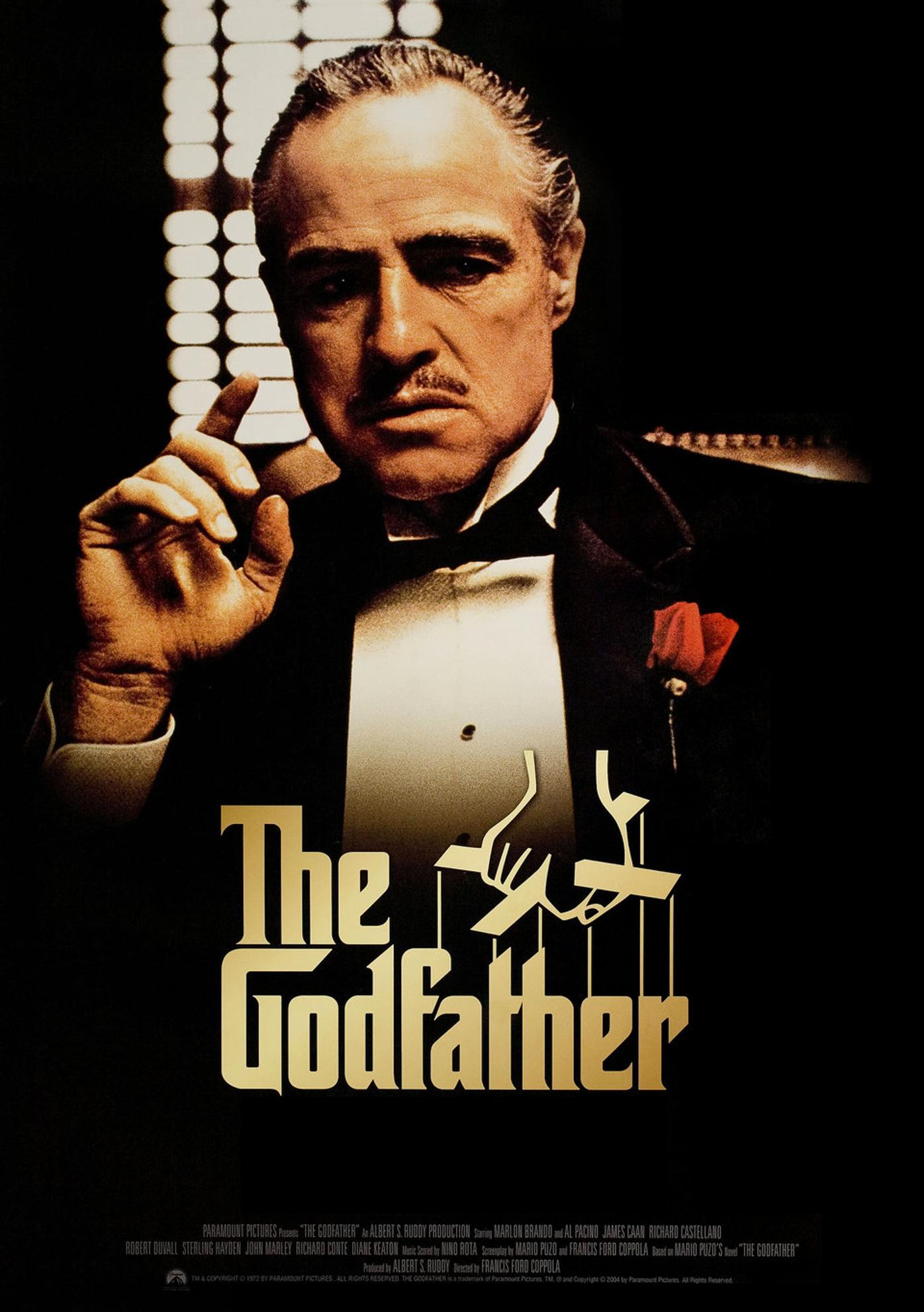
- The Godfather (1972 Crime/ Drama) - Men use their violence and strength to secure nepotistic deals and gain yet more wealth and power. How quaint. Again, all the best lines are familiar - offers you can't refuse; sleeping with the fishes etc. - the score is sumptuous, and Marlon Brando, Al Pacino and James Caan give brilliant performances. I understand that this film re-calibrated the notion of seeing gangsters as a response to a corrupt society and made them into good guys, but it really is all about the guys, isn't it - and the toxic masculinity and lack of female representation may have set the women's movement back as far as it advanced the film genre.
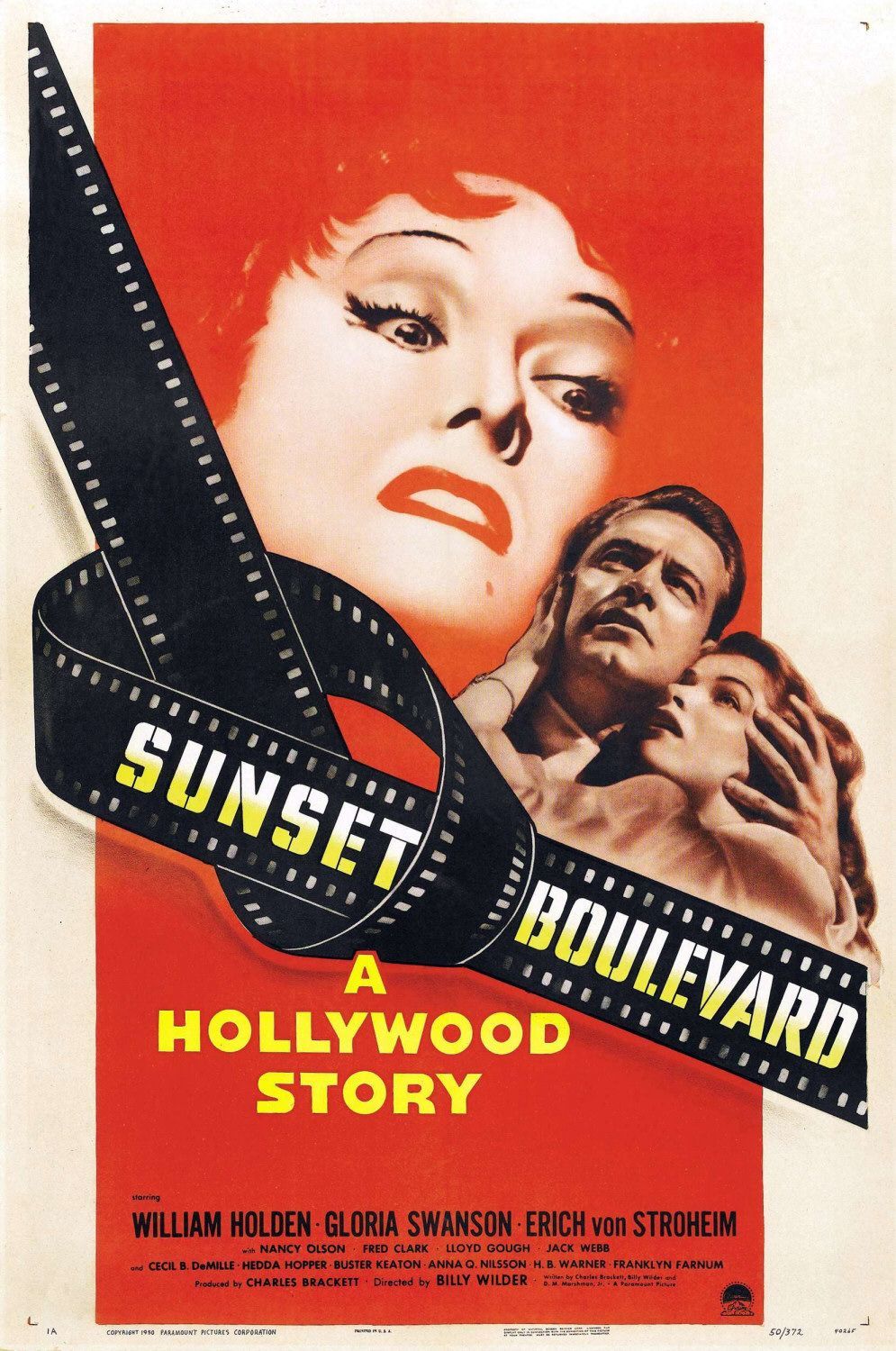
- Sunset Boulevard (1950 Noir/ Drama) - Mavellous fun; full of dramatic tension, stunning design and black comedy, with a seminal central performance from Gloria Swanson as a previous silent screen star in a world of talking pictures. "There's nothing tragic about being 50. Not unless you're trying to be 25."
- Battleship Potemkin (1926 Drama/ Silent) - I love me a good bit of revolutionary propaganda and I have particular views on borscht, so I thought I was ready for this. I wan't - it is outstanding! Those montages sequences and individual close-ups in the middle of mayhem are utterly groundbreaking, and the stirring score is thrilling. I appreciate the excellent moustache detail and I now understand the The Untouchables reference.
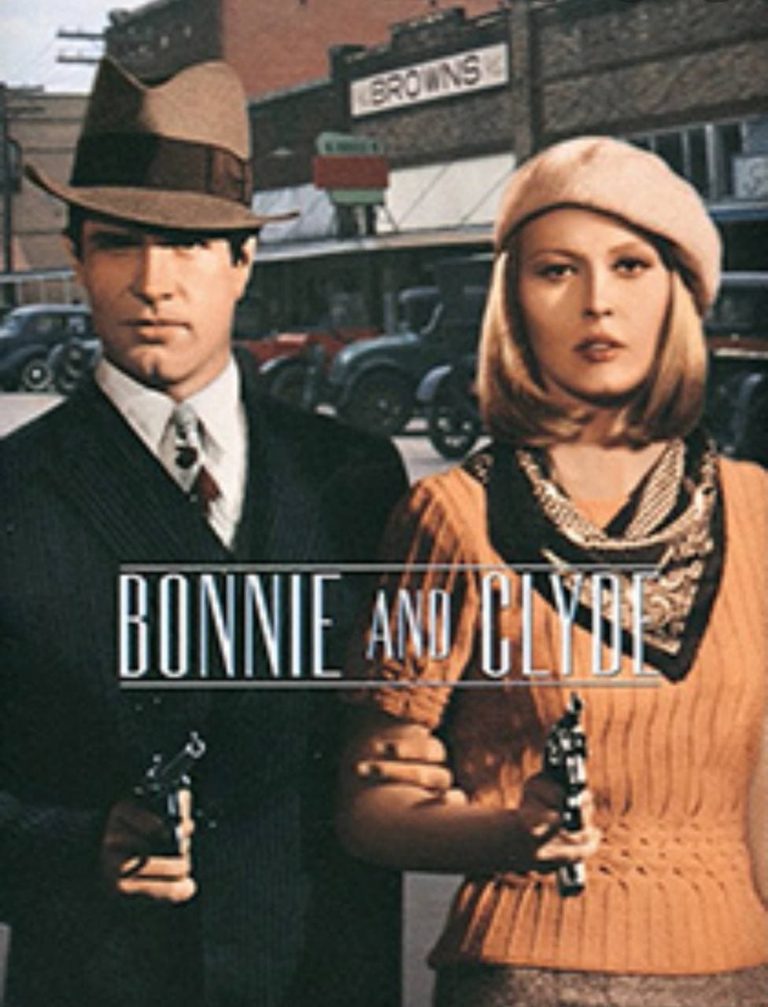
- Bonnie & Clyde (1967 Drama/ Crime) - Obviously the inspiration for The Dukes of Hazzard with a comedy-crime-committing duo who claim 'we rob banks' although there is nothing to rob because the people are so poor they've got nothing to save. I understand that life may be dull, but killing people is not the answer (although I agree with Ivan Moss's verdict on tattoos). Faye Dunaway has some fabulous outfits, Gene Wilder's screen debut is a highlight, and whatever charm and charisma Warren Beatty has (and with his reported womanising he must have some) it can only be off-screen rather than on.
Friday, 27 August 2021
Friday Five: Classic Films I 'Should' Have Watched
Friday, 20 August 2021
Friday Five: More Theatre
- Rope - Canberra Repertory Society, Theatre 3: This is a well-acted and well-staged production of an old-fashioned piece of theatre. Known to many due to the Alfred Hitchcock film, this interpretation still has sufficient bluffs and double bluffs to keep the audience hanging on until the end. The trope of a bored entitled elite killing someone just because they can and not acknowledging there will be consequences is well trod now (not least through Dostoevsky's Crime and Punishment or, more recently, Donna Tartt's 1990s book club favourite The Secret History), but at the time of writing (1929), the concept was original enough to be diverting. Patrick Hamilton's plays (he also wrote Gaslight) can be interpreted as stuffy and overwrought drawing-room dramas (and the opulence of the set threatens to overwhelm), but the fact that this still felt fresh is due in large part to the light but detailed direction by Ed Wightman and the flamboyantly compelling acting by Pippin Carroll in the lead role of Wyndham Brandon. Other acting is uneven and not all of the styles blend well together, but it is relatively tight at a one-act 90-mins running time.
- The Appleton Ladies Potato Race - Ensemble Theatre, Canberra Theatre Centre: Written by Melanie Tait, this charming, heartfelt and positively affirming play provides five great roles for women and a story that is both specific and universal. The small country town of Appleton is disturbed when returning resident and new GP Penny Anderson (Sharon Millerchip) discovers that the famous Potato Race awards $1,000 prize money to men and $200 to women. As she takes on the organisers, the competitors and the spectators she comes face to face with those who want change and those who see no problems with the way things are. Director, Priscilla Jackman teases out all the niggles, nuances, resentments and rejections as the characters try to understand and accept each other for who they really are. It's as like a fusion of Made in Dagenham with The Dressmaker served with an added side of potato puns.
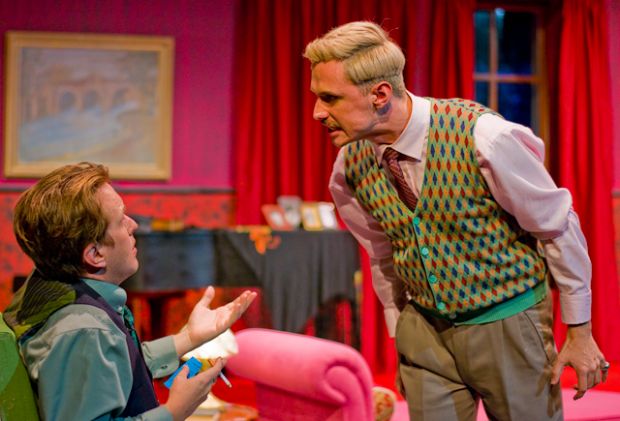
- Hello, Is There Anybody There? - Tempo Theatre, Belconnen Community Theatre: Tempo love to have fun with their productions, and they ham up this self-aware murder mystery with great delight. Lady Amelia (Cheryl Browne) is searching for a subject for her next novel, aware that it has all been done before and there are no new murder tropes - so with many a knowing nod to the audience (the fourth wall is completely demolished), she explores them all over the space of the play, aided and abetted by her drunken sot of a sexist husband (Kim Wilson) and the farcical cop duo (Michael Ubrihien and Nikki-Lynne Hunter rocking her Scottish accent for all its inherent humour). The writing is drenched in self-deprecation and deadpan delivery, and the cast milk it like the comedy cow it is with the butler and the maid (Gary Robinson and Marian FitzGerald) joining in the murderous parlour games. It's ridiculous but it's fun.
- Milk - The Street, Street Theatre: I believe the theatre is a forum for sharing stories; exploring the past; questioning the present; and preparing for the future. Milk does all of the above with superb staging and atmospheric sound and lighting featuring pivotal moments in liminal spaces. If this an ode to the writer (Dylan Van Der Burgh)'s daughter, she is one very lucky human. We stand with you. We pay our respects to the traditional custodians of the land on which we live.
- The Governor's Family - Canberra Repertory Society, Theatre 3: Plaudits to Rep for taking on this confronting work. It's not often a community theatre company with a traditionally conservative audience would program a play tackling themes of cultural appropriation, gender diversity, incest and political revolution. If it is a little packed with righteousness, that is the fault of the writing and not of the delivery. Director Tony Llewellyn-Jones has assembled a cast of considerable merit to portray the dysfunctional family of the fictional Governor of NSW, Howard Mountgarret (played with agonising guilt and torment by Peter Holland in one of his finest performances to date). Frances Pod (Kiara Tomkins) is a young indigenous woman who has been raped by a group of Irishmen. Mountgarrett takes her into his home ostensibly as a gesture of compassion, but one which is viewed with scepticism by his weary and depressed wife (Antonia Kitzel) and insurrectionist cross-dressing daughter (Caitlin Baker) and partisan interest by his poetic justice-seeking son (Robbie Haltiner). As Mountgarret has to decide how to deal with the perpetrators - brothers of the temperamental newspaper man and potential beau of his daughter (Jack Casey) - he knows his actions will have greater implications for the future of the colony, which are hammered home with a decisive lack of subtlety in the second act. Andrew Kay's versatile set is a highlight, using the potential of the revolve and the scrim to place us in different sections of society with always the suggestion of another in the periphery. The production elements add in the moments of light and shade that the script itself lacks to make this a fully challenging piece of theatre.
Tuesday, 17 August 2021
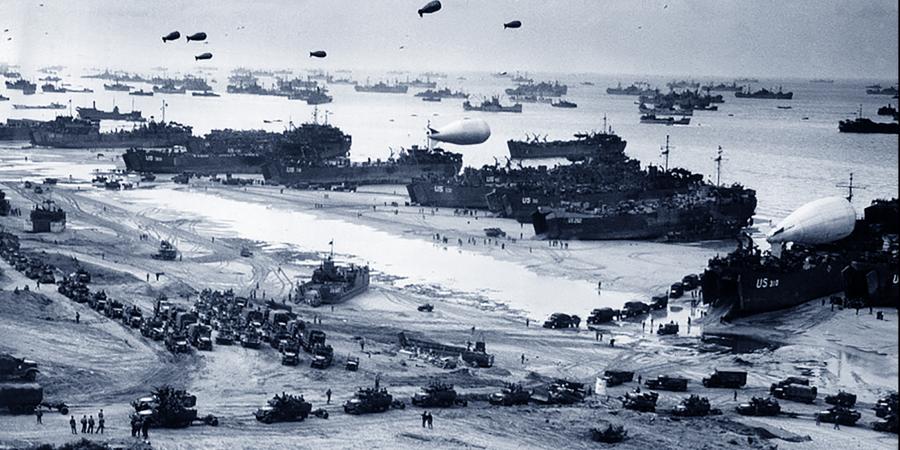
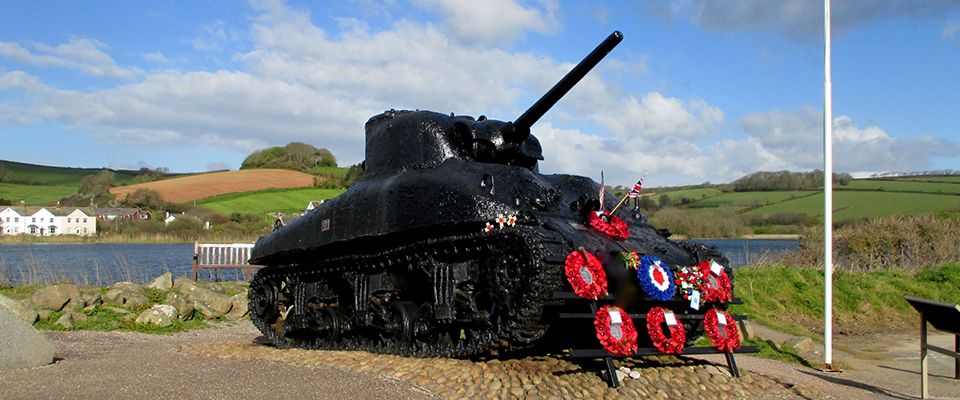
Necessary Sacrifice? Disaster Before D-Day
The logistics for
this exercise were considerable. If Slapton Sands were to be used for this
exercise, the nearby village and surrounding area had to be evacuated, which
meant “3,000 people from about 750 homes, farms, shops and pubs that made up
the villages in the prescribed area, all had to be moved out.” One of the
problems was overcrowding: where were they going to put everybody? Plymouth,
Weymouth, Exeter and Torquay had been heavily bombed by the Luftwaffe; children
and entire families had been evacuated to the countryside because it was
considered safer; “by the beginning of 1944 there were tens of thousands of
American soldiers dotted around the south-west of England involved in training
exercises.”
“During the
original planning of the exercise nobody had foreseen that Royal Navy might need
to get in touch with the US Navy, so it was a situation that had never been
addressed. They were operating on two different radio frequencies.” Consequently
when the commanding officer delayed the timing of the exercise by an hour, this
was not communicated to those involved in shelling the beach with live
ammunition and the ground forces firing live rounds over the incoming troops –
General Eisenhower believed that live ammunition was as an important factor set
to harden the troops to the harsh reality of a naval bombardment. Originally these
incidents had been planned an hour apart, but they ended up taking place
simultaneously.
Two Royal Navy
vessels should have been protecting the convoy of seven American landing craft,
but one of them had been accidentally rammed the day before and was being
repaired. Once again, this was not communicated between navies and so the
convoy only had one escort, and the German E-boats were able to nip in
unimpeded and fire torpedoes upon it: the LST-507 caught fire and was then
abandoned (with 71 deaths); the LST-531 sank after suffering torpedo strikes
(with the loss of 114 lives); the LST-289 was set on fire but managed to reach
the shore; and the LST-511 was damaged by friendly fire in the resulting chaos
and confusion. Many other servicemen drowned, waiting to be rescued. “It is
believed a number of men died during Exercise Tiger because they were wearing
their lifebelts incorrectly; some were also faulty. In fact, most of the
casualties that died off Slapton Sands on 28 April 1944 did so from either
hypothermia or drowning.”
One of the big
remaining questions is whether the entire incident was deliberately covered up,
and Wynn has tried to find answers. He explains that in 1954 the Americans
officially confirmed the deaths from the E-boat attacks and there are personnel
lists available of those killed in the incident. “But I have not seen a similar
admission in relation to the friendly fire incident that took place on 27 April
1944, nor have I ever seen a list of those who died or how many there were.” This
may begin to stray dangerously into conspiracy theory territory, but he tries
to lay out the facts as he sees them.
While these
ideas may be far-fetched, he talked to many “ordinary people” while researching
his book and heard similar stories from Americans and British alike. He
questions how there can be so many people who remember the events of 27 April
1944 if they never took place, as stated in repeated denials by official bodies.
Friday, 13 August 2021
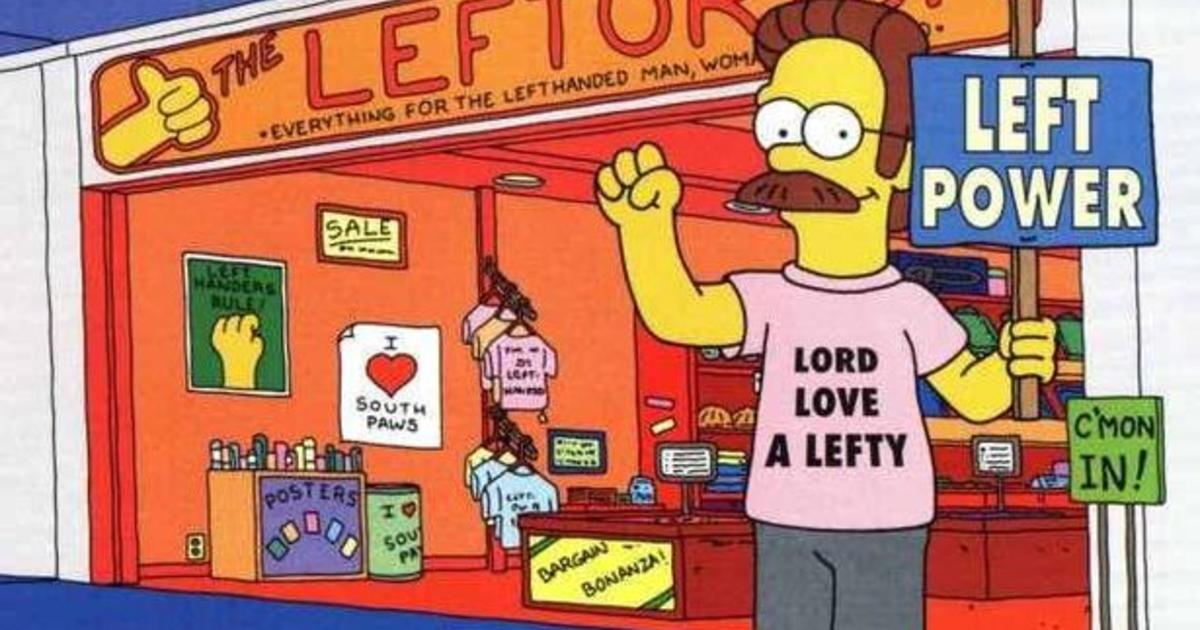
Friday Five: Lord Love a Lefty
Today is not only Friday 13th, but also International Left-Handers Day. Him Outdoors is a left-hander. He tells me that the world is set up for right-handers and that he faces challenges using everyday implements such as scissors, corkscrews and can openers. He is of the generation who were rapped across the knuckles when they wrote with their left hand, so he tried to write with his right. He is also of the generation that used fountain pens, and they are notoriously difficult to manage for those of the sinister persuasion (not my word; it's Latin!).
| Barack Obama is left-handed |
I admit I have not always been sympathetic, but maybe this is a case of my unconscious bias. Apparently anywhere between 7-17% of the global population is left-handed (depending on what you read) and their struggles are real. Take that comment above: the Latin for left is sinister and the French is gauche. Not very nice, is it? Especially when the relative words for right are dexter and droit, from which we get dexterity and adroit. Linguistics tells us it's right to be right.
In their effort to counter the negative connotations, left-handedness has often been suggested to denote intelligence and creativity. Sadly there is absolutely no scientific proof for this and there is no difference in IQ levels after studies have been completed. There may be a link between a left-handed dominance and verbal skills, but this is not fully explored or understood. With Bill Gates, Mark Zuckerberg, Steve Jobs and Oprah Winfrey all being left-handed, there may also be a link between left-handedness and being rich, or maybe that's just a determination to overcome adversity and make the world conform to you, rather than the other way around.
5 Facts About Left-Handedness
- There is a town in West Virginia, USA called Left Hand. Apparently it was named after the nearby Lefthand Run Creek. And in a 'take that' moment, there is no equivalent town called Right Hand.
- The Australian children's entertainment group, Hi-5 uses a left hand in their emblem - one of the cast, Tim Maddren, is a left-handed musician who plays the guitar, piano, trumpet and 'a bit of drums'.Other famous left-handed guitarists include Paul McCartney, Jimi Hendrix, Kurt Cobain, Courtney Barnett, and David Bowie, although the latter taught himself to play right-handed due to the fact that there weren't enough left-handed guitars in shops in post-war Britain.
- Maybe it's because Australia is down under, but kangaroos are left-hand dominant, and all Australian sulphur-crested which cockatoos are left-handed (clawed)? I read this fact but I have yet to test it out - I'll note which talon the cockatoos use to throw tree debris at me next time I'm passing.
- This year the Dutch Reach method was introduced to the Highway Code in the UK. It is a method of opening a vehicle door that sees the driver use their hand furthest from the handle to open the door (in the UK this would be the left hand), therefore turning their body and allowing them to see oncoming cyclists before opening the door. The Dutch have been using this method for many years, but they just call it 'opening the car door'. Last year there were 140 cycling fatalities in the UK, and in 2007 (the last year for which I can find the figures for this) 8% of serious injuries to cyclists were caused by dooring (opening a motor vehicle door into the path of another road user).
- It is illegal to play polo left-handed - this is to do with reasons of safety, apparently for both horse and rider. Even princes are not exempt; the Prince of Wales and the Duke of Cambridge are both left-handed.
![]() |
| Left-hander Prince Charles playing polo with his right |
Wednesday, 11 August 2021
War Artists
![]() |
| Moresby Picture Show (1943) by Charles Bush |
![]() |
| Hospital Ward, Burma-Thailand Railway (1946) by Murray Griffin |
![]() |
| Bomber Crew (1944) by Stella Bowen |
![]() |
| Flak Busters (1945) by Dennis Adams |
Wednesday, 21 July 2021
Wrap up Warm: The Quilter's Apprentice
Sarah and Matt move
to a new town for his job as a landscape architect. Matt works for an irascible
client, Mrs Compson, at Elm Creek Manor restoring the grounds to their former
glory while Sarah reluctantly takes up a position indoors, helping with the cleaning
and taking lessons from Mrs Compson (an awarded quilter) in return. Sarah is a
trained accountant but she is bored with the work. The characters are privileged,
middle-class and comfortable, and Sarah’s complaints certainly seem petty.
Mrs Compson plans
to sell Elm Creek Manor, but when Sarah and Matt discover that the intended
buyer wants to tear it down and build student accommodation, they are appalled
and try to think of a way to save it. The focus is on conserving and preserving
rather than progressing and assisting potential students with their future
living arrangements.
![]() |
| Chimney and cornerstone quilt design |
Sarah
appreciates her newfound female friendships, and learns about Mrs Compson’s
past through the older woman’s reminisces and reflections of life. She looks to
Mrs Compson as a substitute mother-figure, while acknowledging her complicated
relationship with her own mother. This dynamic is left unresolved – perhaps for
the next novel; this is clearly positioned as the first in a series.
Friday, 16 July 2021
Friday Five: Reviews of Penelopiad
![]() |
| The Penelopiad by Margaret Atwood produced by Crouching Giraffe Productions in association with papermoon theatre |
- That Guy Who Watches Canberra Theatre - "Kate Blackhurst's production brings this thrillingly to life... this is a great night of theatre, thoroughly absorbing and well worth the watch."
- The Canberra Critics Circle - Len Power - "Director, Kate Blackhurst, has produced a visually striking, uniquely stylised and thought-provoking production that succeeds on all levels. It's also very entertaining."
- The Canberra Critics Circle - Frank McKone - "The production, seemingly simple in the intimate small-scale Studio space, has all the elements of drama working together with purpose and artistic integrity... This Penelopiad is my kind of theatre - strong in its intention; powerful in its effect and its message."
- The Canberra Critics Circle - Bill Stephens - "an imaginative version of this epic story, directed with considerable panache by Kate Blackhurst... the central role of Penelope given a compelling performance by Elaine Noon."
- The Canberra Critics Circle - Peter Wilkins - "the most significant production that I have seen on a Canberra stage for quite some time... This is theatre that confronts, challenges preconceptions and entertains."