Friday, 20 January 2017

Friday Five: The Ham-over

Omelette for breakfast
For Christmas, Him Outdoors gets a ham from work. It's a really nice gesture, and I like ham a lot, but it's a little big for two of us. I tend to slice it into portions and freeze them. We buy a load of mustard, cheese, tomatoes, cucumber and pickle, and have variations on the traditional ham sandwich for our lunches. We take ham salads to every meal to which we get invited. We also try to get creative with breakfasts and dinners, and slowly we get through the ham, by about July.


Salad for lunch
5 Meals with Left-Over Ham:
  1. Ham, cheese, tomato and red pepper omelette
  2. Snowpea and ham risotto
  3. Ham, leek and egg pie
  4. Mediterranean lemon, ham and feta pasta salad
  5. German-style potato and ham salad
Pie for dinner

Wednesday, 11 January 2017

Menacing McCabe

Hello and Goodbye by Patrick McCabe
(Quercus) Pp. 272


The two stories, Hello Mr Bones and Goodbye Mr Rat, share many similar themes and horror tropes. They can be read in either order and they meet in the middle, both literally and metaphorically.  Hello Mr Bones concerns a man who was abused as a boy and later becomes a Christian Brother, only to still be haunted by the undead spirit of his former tormentor. In Goodbye Mr Rat a woman takes the ashes of a man back to his hometown in Ireland to be met by a very unwelcoming committee who cannot forgive his perceived deception and execute their revenge on the hapless woman.

The tales are both narrated by the unhappy dead, who are pursuing and tormenting the living; they have selective, ‘convenient amnesia’ and are highly unreliable. Religion, priests and angels also feature prominently – these are Irish tales, after all. Naturally where there are angels, there is evil and abuse. In Goodbye Mr Rat, Beni Banikin is raised Amish; her mother warns her, “Beware of rogue angels”, and then she meets Gabriel King, former IRA soldier. But although they are heavy on religion, the stories are light on faith: bad things happen to good people for no reason. People act ‘out of character’ and are ‘influenced’ by an evil presence.

Childhood innocence is destroyed through physical abuse, and the perversion of innocent pop culture references. The image of the evil clown and the malignant puppet is equated with the torture of children and Ian Brady. From Sooty and Sweep to Toy Story, the puppets are pulled by strings of malevolence. In a nightmare relating to previous traumatic event, Beni sees grimacing figures as though in masks, “As the commedia dell’arte pictures began to form.”

Shannon Valentine escapes Ireland to live in Manchester in Hello Mr Bones, where he works as a teacher and tries to rebuild his life. Gabriel King heads to America where he lives until dying of prostate cancer in Goodbye Mr Rat. But one can never leave the past behind. Gabriel is warned that ‘A frightful fiend doth close behind him tread’. Poetry from Coleridge, Milton, and particularly Yeats runs through both narratives. 

In mid-life, Yeats became obsessed with Japanese Noh, a form of theatre which utilises a dialogic process between reality and illusion, the living and the dead, artifice and nature, and he adopted this style to reinterpret Celtic myths and ancient symbols. After her mentor explains how, “Noh plays often focus on ghosts seeking release from passionate sins or errors of judgement committed when living”, Beni writes a successful drama based on Yeats’ Noh plays.

The masks of Noh theatre are a recurring theme, and the sense of paranoia is pervasively chilling. Gabriel writes, “There indeed can be few sensations to compare with that of being watched.” Beni is watched by the people inside her head and those who break into her room; Valentine Shannon is watched by Balthazar Bowen, both when he was alive and now he is dead. Balthazar killed himself after Shannon informed on him, Gabriel turned informant, and there is a terror in coming forward and telling the truth.


McCabe is certainly macabre. These tales are as psychologically disturbing as his novel, Winterwood. It seems that he has an extremely bleak outlook on life, so it is calculated and creepy when he expresses, “What a magnificent place, I really have to say, this wondrous world in which we all wander.”

Friday, 6 January 2017

Friday Five: Favourite Films of 2016

As I believe I've said before: my blog; my rules. The films for consideration are those with Australian releases in 2016. Also, I can't settle on five films of the year, so I've picked seven, and here they are in alphabetical order.

7 Favourite Films of 2016:


  1. Embrace of the Serpent – Black and white and red all over, this film is art-house darkness to its heart. Even the massacres, perversion and demonic shamanism are beautiful. The mysteries of lost civilizations are sublime.
  2. Eye in the Sky – Helen Mirren and Alan Rickman (in his last film appearance) attempt to justify strike action against the few for the greater good. Tellingly, just because modern warfare has become remote from the ground due to high-tech surveillance; it doesn’t make the decision-making and the personal involvement any easier. The film is utterly thrilling, and buying bread has never been made to look so tense.
  3. Hail, Caesar! – There is so much fun and talent in this film as the Coen Brothers mock every genre movie genre with reverential affection. All aspiring American comedies should take note: “Would that it were so simple.”
  4. I, Daniel Blake – A film full of heart and passion that exposes the dehumanising effects of a capitalistic institution while espousing the power of humanity that attempts to stand up to it. But don’t expect a happy ending – this is Ken Loach, after all.
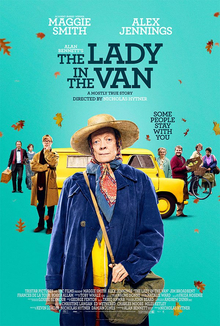
  5. The Lady in the Van – Maggie Smith plays Alan Bennett’s nemesis, the irascible Miss Shepherd, in this touching, funny, glorious film. Alex Jennings plays Alan Bennett the writer and also Alan Bennett the human, proving the dichotomy between the two. Written by Alan Bennett, directed by Nicholas Hytner, and featuring a fine cast of British theatrical talent (including a cameo appearance from Bennett himself), the film translates beautifully from stage to screen and is a masterclass in just about everything.
  6. Room – Despite the obvious horrors inherent in the story (a woman kidnapped and forced to live in a small room where she bears a son in captivity), this is really a tale about a mother’s love for her child. Written by Emma Donoghue, on whose original novel it is based, it’s touching and emotional with honest performances (Brie Larson as mother; Jacob Tremblay as son; the small supporting cast) and without mawkish sentiment or excessive manipulation.
  7. The Wait/ L’attesa) – Sparse but hypnotic Italian film directed by Piero Messina in which a mother (Juliette Binoche) entertains her son’s girlfriend (Lou de Laage) while they both wait for him to come home, which he doesn’t for an increasingly uncomfortable period of time. The lead performances are spectacular and it’s a delight to see two strong women at the height of their game work together.

Monday, 2 January 2017

Sell Our Souls


Faust by Robert Nye
Penguin Books
Pp. 277

We think we know the story of Faust. He sold his soul to the Devil in return for 24 years of corporeal pleasures. He’s demonised in literature from Goethe and Turgenev to Marlow and Mann, and is portrayed in myth and legend as a scholarly figure with a thirst for knowledge. In Robert Nye’s version, his thirst is much more carnal. He is a perverse, seedy has-been with a boil on his nose that he smears in grease, a filthy coat and an unbearable stench.

The novel is narrated by Christopher (Kit) Wagner, Faust’s sidekick. He decides to chronicle the story of Faust, so Faust is amused and may fabricate events for prosperity. Wagner doesn’t believe the tale of Mephistopheles and the pact with the Devil. There are, however, incidents that he cannot explain, such as the seven young women (ranging in age from 21 to 16) he has been given to pleasure him sexually. Their male-fantasy-succubi role ensures they are seen only as sex objects and the attitude towards them is misogynistic at best. The scatological novel is also full of references to other bodily functions. 

The book has very short chapters, as Wagner writes in a modern vernacular and assumes the reader is on his level. He tells us of his dislike for rhetoric and propounds his commoner credentials.

In a last-ditch attempt to renew his contract with the Devil, Faust sets off for Rome intending to kill the Pope with a poisoned communion wafer and thereby win favour with his satanic creditor. The grotesque cavalcade of the unholy pilgrimage includes Faust and his black dog, Satan, whom he claims to have stolen from Luther, Wagner and his harem, and a monkey in a cage, Ackercocke. A woman called Helen also accompanies them hoping that Faust will save his soul through repentance when he reaches the Holy City. Although she is not the traditional Helen of Troy, she does have visions of the Virgin Mary.

This is partly a picaresque novel following the traditional quest narrative as the troupe travel through the Alps with supernatural encounters. But it also has a point to make about the tyranny of religion. Wagner (previously a student of Divinity at the University of Wittenberg) is quick to denounce the perpetrators of doctrine and dogma. Early in the novel Faust remarks, “I’m not a fiend. I’m damned, that’s all.” He also argues that the Devil is the good guy who only wanted the restoration of his soul from God. “You call that pride? Well, I call it freedom.” Wagner applies his divination scholarship to this problem. “If you take Judas seriously, and Jesus, you end up with damnation and salvation being almost the same thing…” He seems to be counselling against living in fear of spiritual consequences.


There is deliberately nothing high-brow about this novel. Nye’s style is slangy and populist, where nothing is sacred, but while he degrades Calvin and Luther and debases the noble vision of the Faust legend, he doesn’t really replace it with anything but pornography and vulgarity.

Friday, 30 December 2016

Friday Five: Best of Theatre 2016

Looking through my notes (I keep notes of nearly everything, as I'm sure has become apparent by now), I find that I only saw 23 plays this year in six cities. That's not many for me, but it's still pretty hard to whittle it down to a top five. 

I shall start by saying that I am not including anything in which I was involved whether on or off stage. That cancels out a number of productions for Canberra Repertory, which were very good including Witness for the Prosecution, Macbeth, and She Stoops to Conquer, and also Vinegar Tom for COUP: Canberra. Because it is very hard to separate the rest then, I shall list them in alphabetical order.

Antigone, Sport for Jove
5 Best Productions I Saw in 2016:
  1. Antigone – Sport for Jove, Canberra Theatre Centre
    This is an outstanding example of how to modernise a classic. Damien Ryan's adaptation of Sophocles' Greek drama is contemporary and pertinent while losing none of the dramatic relevance. From family grief to civil war and the aching need to just make it all stop and face a brighter future; it's all here in this tight, compelling tale. The set calls to mind Aleppo; the humour (yes, humour) invokes modern sit-coms, and the political speechifying will be familiar to all. Andrea Demitriades in the titular role and William Zappa as Creon are superb performers and mine their conflict to its ultimate depths, but Greek drama is always supported by a chorus, and this ensemble is terrific. I loved it.
  2. King Lear – Sydney Theatre Company, Roslyn Packer Theatre
    Of course it's going to be all about Geoffrey Rush as he plays Shakespeare's tragic king driven to madness. But the rest of the cast provide perfect foils as the ruthless politics become personal embodied in the actions of the daughters and their consorts; exposed with rueful poignancy by Robyn Nevin's Fool. The Dover Cliff scene is sensational as Edgar (Mark Leonard Winter) leads his beloved father, Gloucester (Max Cullen) to the edge. There's nothing happy in this play, and director Niel Armfield leaves us emotionally exhausted and utterly spent. This is cathartic theatre at its very best.
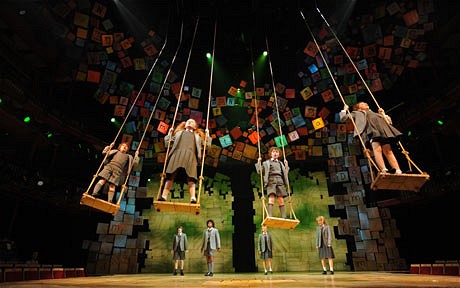
  3. Matilda the Musical – The Royal Shakespeare Company, Princess Theatre, Melbourne
    For someone who doesn't really like musicals or children (especially singing ones), but who loves Roald Dahl and Tim Minchin, this was always doing to be a close call. I'm happy to report that the pros (and they are most certainly pros in all senses of the word) substantially outweigh the cons. The acting is excellent, with the adults hitting all the comedy notes and the kids bringing the pathos. The songs are great (I was still singing All I Know I Learned from Tele several months later), even if a few of the lyrics are hard to discern in the children's harmonies. And the production values are sublime - that disappearing cake and the school gate/ building blocks sequence are spectacular. 
  4. Tales from a City by the Sea – VCE Drama, La Mama Courtyard, Melbourne
  5. This powerful and moving drama focusses on love and life in the Gaza Strip. In some ways, with its war-torn lovers and family interventions, this is a modern Romeo and Juliet. It has all the hallmarks of that classic story - duty to family and tribe set against personal fufilfment and hopeless situations - but it is set against the real experiences of people living under occupation. There are tough choices to be made when Jomana, a Palestinian woman living in a Gaza refugee camp, falls in love with Rami, an American-born Palestinian humanitarian doctor. The simple staging of a white sheet is cleverly used to conceal and reveal, while the actors remain on stage watching the action in which they do not participate: when war affects individuals (and it always does) - we are all complicit whether or not we want to be.
  6. Uncle Vanya – Canberra Repertory Society, Theatre 3
    One of the things I dislike most in theatre is when directors take over the text, trying so hard to put their own stamp on the play that they lose the original intent. Geoffrey Borny allows his actors to bring out the nuances in Chekov's great work in such a way that makes them seem fresh and new.The family lead dull and boring lives. They eat and drink and sleep, and follow a rigid routine of sandwiches and samovars, and are immensely unsettled when this banal schedule is interrupted. The aesthetics of this life are beautiful (from the set and staging to the costumes and props) but empty. It is left to the servants to provide the depth, and the richest images are drawn from the land; those who do the physical labour are the true heart of the country. Passing passions are fleeting but solid foundations will endure. As a doctor and an activist, Chekov understood the importance of substance over artifice; as a director, Geoffrey Borny does too.
Matilda, The Musical, Royal Shakespeare Company
Honourable mentions to:
  • Miss Bronte - Bravo Theatre, Queenbeyan Performing Arts Centre Mel Dodge embodies the restless spirit of Charlotte Bronte and her struggle with conformity in a sensitive and soulful one-woman play directed by Lyndee-Jane Rutherford.
  • Mother - If Theatre, Queenbeyan Performing Arts Centre Noni Hazlehurst controls the stage flawlessly and pleas for empathy in the powerful one-woman poetic drama about an ordinary person who ends up homeless due to set of depressing circumstances.
  • Playhouse Creatures – Pigeonhole Theatre, Queenbeyan Performing Arts Centre It's such a pleasure to see this great play about women in the seventeenth-century theatre of the Merry Monarch brought to the stage with energy and conviction. 
  • Shakespeare's Greatest Hits - Vol. 400 - Remarkable Theatre, Queenstown Botanical Gardens Local actors provide promenade theatre in a beautiful setting for some great excerpts of the bard's best bits, which brings back a lot of memories from previous performances. 

Wednesday, 21 December 2016

Only Connect

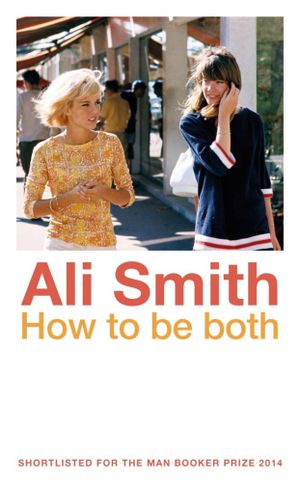
How to Be Both by Ali Smith
(Hamish Hamilton)
Pp. 371


This ambitious novel twists strands of tales together like the DNA double helix molecule that symbolises the story. The first half concerns Francesco del Cossa in an out of body experience – she may be dead, but she doesn’t remember dying; perhaps this is purgatory? She is drawn to a girl who is looking at her painting in an art gallery. The second half concerns George, the girl from the gallery, trying to cope with the death of her mother, Carol, who became obsessed with the unknown painter of frescoes in Ferrara, Italy and took her daughter there to see them in situ.

The halves of the novel are both numbered One; half of the books are printed with George’s story first and Francesco’s second. They can be read in either order because everything is connected, and all things overlap. Sitting in an Italian piazza and discussing the prevalence of over-painting images, George’s mother asks her, “Which came first? The chicken or the egg? The picture underneath or the picture on the surface?” George says the picture underneath, of course. “But the first thing we see, her mother said, and most times the only thing we see, is the one on the surface. So does that mean it comes first after all? And does that mean the other picture, if we don’t know about it, may as well not exist?”

These palimpsests become a metaphor for life. Francesco is really a girl, but disguised as a boy so that she can have a career as an artist. Pictures record things past their death; they capture immortality. Carol was an art activist, “It was her job to subvert political things with art things, and to subvert art things with political things.”

After her mother’s death, George feels as though her life has been split into two entirely separate halves. “That before and after thing is about mourning, is what people keep saying.” She discovers a woman with whom Carol had a relationship, and George stalks and photographs her every day. She recalls how her mother used to think she was being spied upon and ‘Minotaur-ed’; was she just being paranoid? Or is this the self-enveloping effect of time’s continuum? Both art and surveillance involve watching and being watched, and there is always more going on than meets the eye. Carol taught George, “Nothing’s not connected. And we don’t live on a flat surface.” History is ever-present and the weight of all this connectivity can be oppressive.


The novel is a complex work of meaning and metaphor: a classic story of love and loss, told in a fresh and modern way. Both genre and gender bending, this is a work of parallel universes, palimpsests, fluid time and space, paranoia and mystery – almost too clever by half, and certainly challenging, but definitely memorable.

Monday, 19 December 2016

It's what you make it


My Life in an Object
Canberra Writers Festival
National Museum of Australia, Visions Theatre
Saturday 27 August 2016

Objects acquire symbolism through our transference. Many people have items of ‘sentimental value’ that would mean little to anyone else. I have a quilt my sister made me when she left home. It has accompanied me around the world and graced my bed in every house I’ve ever lived in. I know that once the people and animals were safe, that would be the thing I save from a house fire. Sentimental and worthless to strangers, it connects me to my love for my family although they are many miles away.

Ahead of the National Museum’s A History of the World in 100 Objects exhibition, three authors were asked to bring along an object and explain how it had changed their life. That’s a tough request, and they all admitted that they chose something lightweight and easily portable to represent a greater truth. George Megalogenis, Karen Middleton and Nick Earls all entered into the spirit of the panel show-and-tell, My Life in an Object, with enthusiasm.


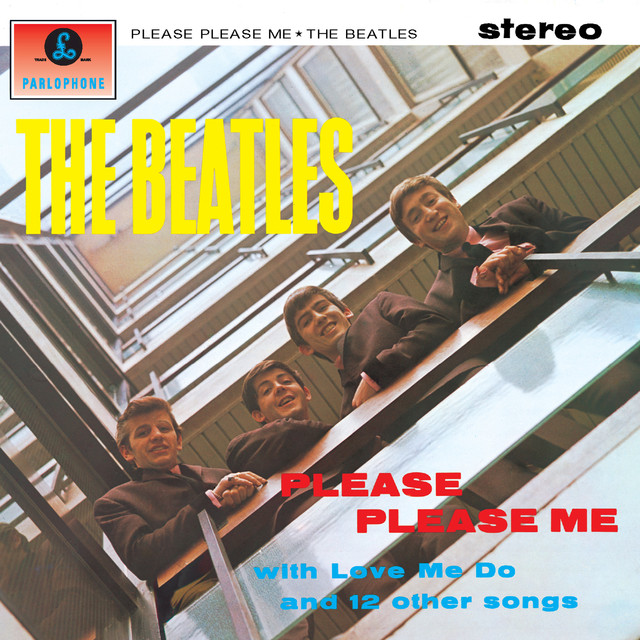
Author, journalist and political economist, George Megalogenis, brought along a Beatles record, Please, Please Me. He explained how the first time he heard it he had to have it, even though he didn’t have a record player. He was crippled with consumer anxiety that by the time he had the wherewithal to play it; the record wouldn’t be available any more. Clearly he couldn’t predict the enduring popularity of the Fab Four and the ubiquity of their songs.

He mused that it is no longer his favourite Beatles track, and that objects don’t necessarily change but people do and so the relationship alters. Our need to possess things we like is also interesting, but I wonder if it is fading in the world of digital downloads, minimalist furnishing, and premium prices on real estate space.


Karen Middleton's effect was a stars-and-stripes bandana purchased shortly after the terrorist attacks on September 11th 2001. At the time she had been in Washington DC with John Howard as a political correspondent for the West Australian newspaper, reporting on the then Prime Minister's visit to the United States. She recalled that John Howard was bundled onto Airforce 2 and flown to Hawaii, then Qantas to Canberra, but Air Traffic Control was asleep so he was diverted to Sydney where he was met by recently-sacked Ansett workers.

She, meanwhile, flew to New York to report on the scene there. The air was full of noxious dust comprised of potentially lethal asbestos from toppled buildings and human remains. Some African-American kids saw a gap in the market and sold these bandanas not as souvenirs but for practical reasons so people could mask their faces and breathe a little more easily. “They were enterprising kids – I paid way too much for it.” Even in the face of grief and horror, capitalist opportunism will triumph.

At the time she didn’t know she would become a war correspondent, but she knew this was a life-changing moment and that it would have a dramatic effect on her personal and professional development. Indeed she went to Afghanistan three times as a direct consequence of these events and published the book, An Unwinnable War: Australia in Afghanistan. In it she questioned Australia’s carte blanche commitment to help the US, for which she received hate mail and was labelled a traitor. She took the bandana with her, as a reminder of why she was doing what she was – the object became imbued with her projected focus, and although she said it is not a talisman, she has clearly made it a token.


A butter pat makes a fairly unassuming object for author, Nick Earls, to expand upon, but he soon brings the domestic wooden item to life. It was used on the farm in Ireland where he lived until he was nine. He explained that such simple appliances provide links to the land, and that the stories of nearby churches or landmarks become your stories too – we willingly assume the ties and inherently form affiliations.

Apparently we crave these connections and researching family history is the third most popular activity on the internet “after shopping and pornography”. Earls used this platform to appeal for more funding for Trove, the popular and free digital resources portal created by the National Library of Australia. “Please remove the shackles and let it run.” The on-line resource contains books, images, historic newspapers, maps, music and archives, but the Library stopped funding content in July due to government cuts. (At the time of writing, this decision has been reversed.)

Nick Earls is writing a series of novellas. He has researched the form and understands the way it works to intrigue and delight the reader in a single sitting. He complained that people now consume so much information and content and so quickly they don’t understand anticipation or deferment. He believes in enforcing breaks “to let the stories sit in your head.”

Just as the Quarterly Essay (for which George Megalogenis writes, bringing us full circle) fills the gap in the market that has been dropped from the weekend newspaper, novellas have their own place on the bookshelf. Earls claimed that while articles were getting shorter, books were getting fatter, and that we are losing the art of digesting information. He stated that novellas can give depth without padding. Similarly objects can give meanings without words.  It’s a concept worth exploring, and this panel did so convincingly.