- The Scent Keeper by Erica Bauermeister (St Martin's Griffin) - This novel blends whimsy, magic realism, coming-of-age self-discovery, fairy tale archetypes and young adult fiction. Emmeline is raised by her father, alone on an island which can only be reached once a month when the tide is right. He has a machine, which can capture scents and print them onto slips of paper, like a Polaroid camera for images. He puts these scent papers into small glass bottles, stoppered with different-coloured wax. The scents do not last forever, and he begins to burn them individually to release memories, until a tragic accident forces Emmeline to leave the island and return to the mainland. Emmeline’s father has educated her through stories, foraging and fishing, sitting her down for a lesson every morning. There is an element of Miranda and Prospero, and her awakening to the brave new world enables the author to indulge in the trope of an ‘alien identity’ discovering and describing technology. She learns to read people through their scent, like a dog does. When rescued and taken to school, Emmeline is bullied for being different and for her intense sense of smell and her natural style – she doesn’t understand falsity and masking. Later, her mother, Victoria takes her to a make-up counter and buys all the products after the ‘transformation’. Emmeline goes to work for her mother creating scents to make people spend money. Often she omits a significant element, to force the body to fill that absence. "And what if that missing thing could make a person need to buy the things around them?” Of course, the skill is used for capitalist gain, but the sentiment is true for art – visual, performance and written – the best leaves something for the audience to do; to provoke a response rather than telling them exactly how they should think and feel. Many aspects of the novel are unconvincing, and it is not enough to pass this off as magical realism when they relate to plot points. Neither is it satisfactory to suggest they don't matter as this is a coming-of-age young adult fairytale, with Emmeline learning to 'be her own person'. Who else would she be?
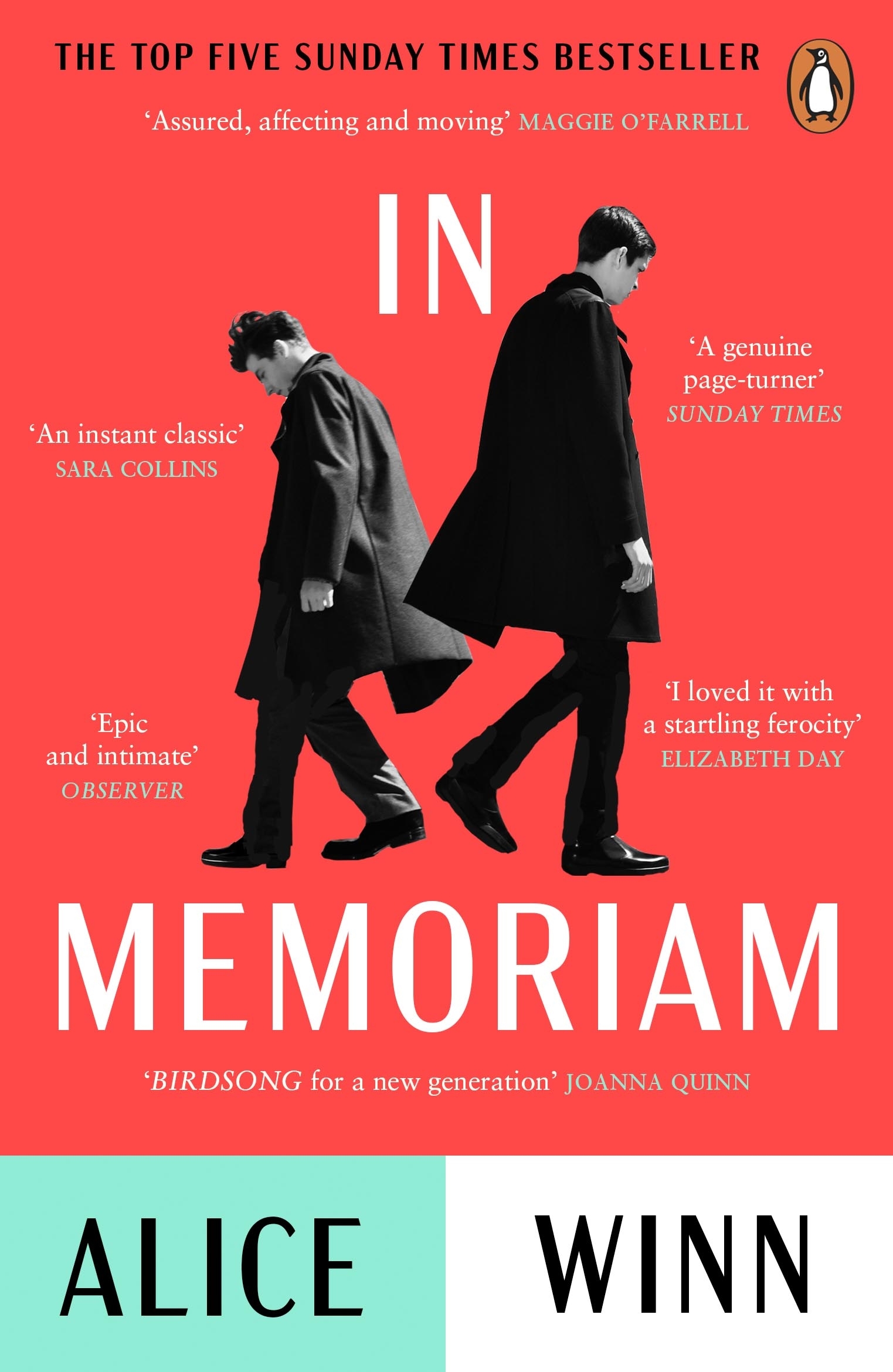
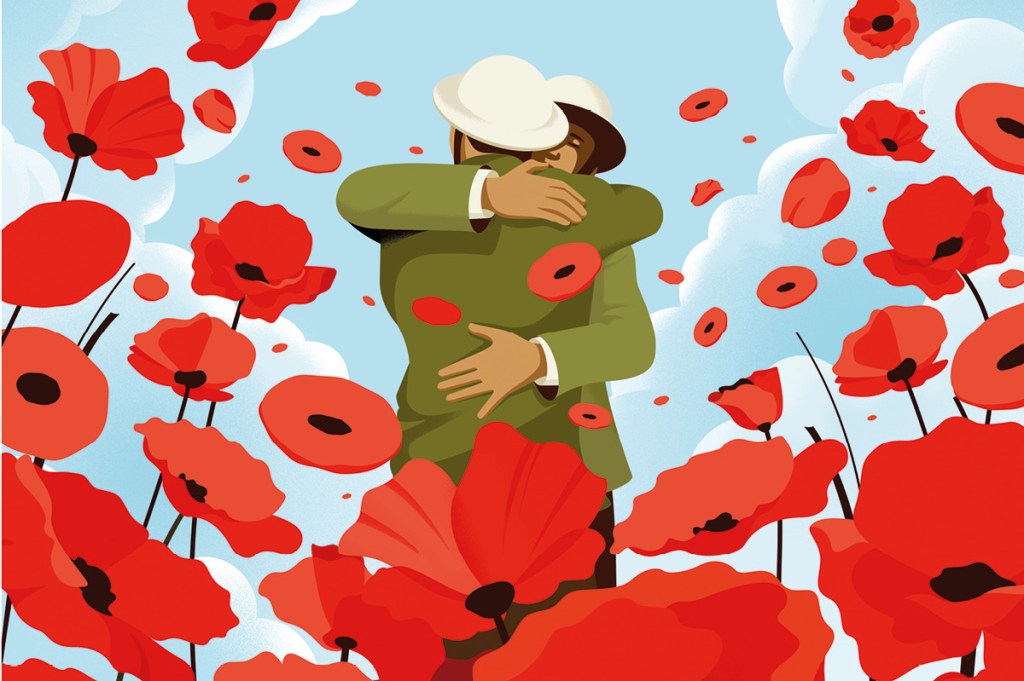
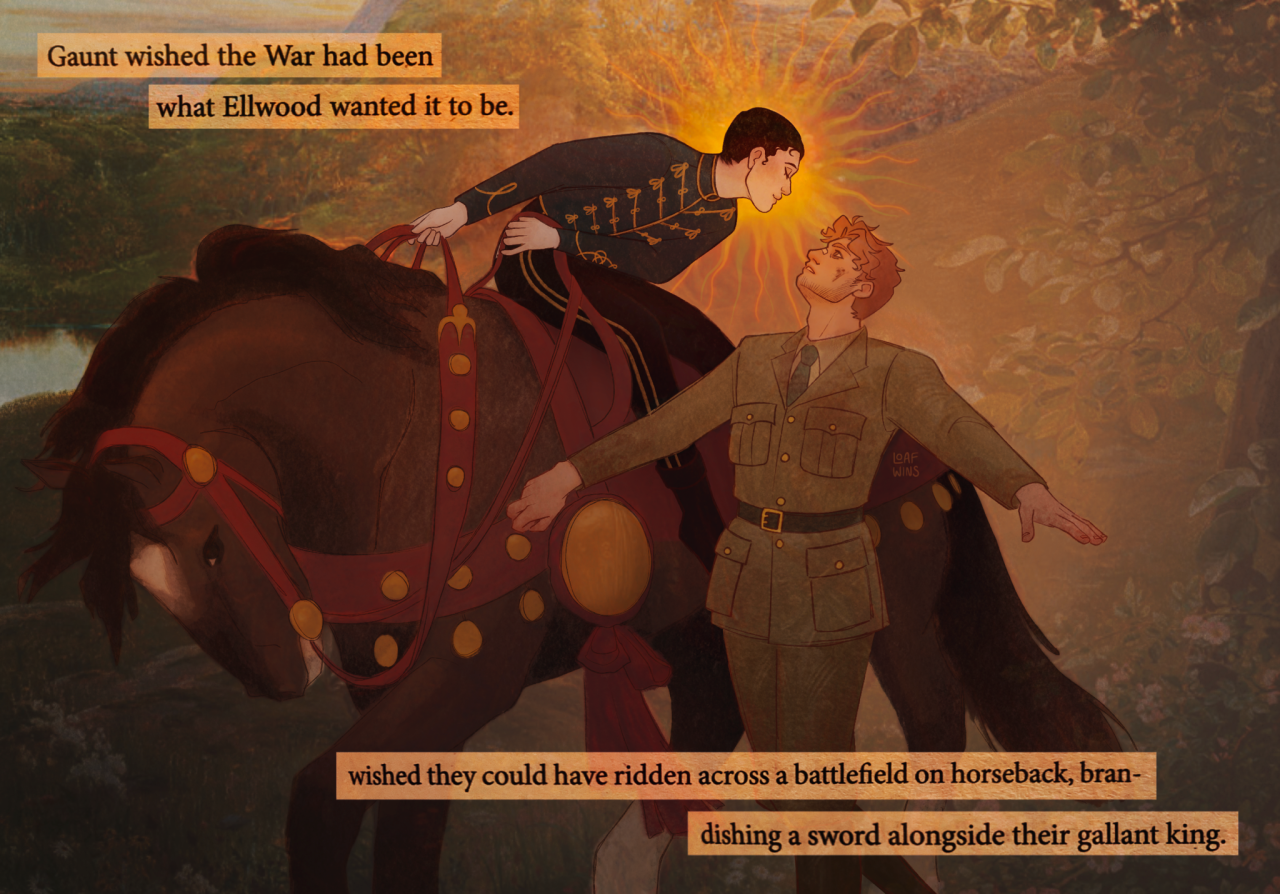
- In Memoiram by Alice Winn (Viking) - In Memoriam is reminiscent of Atonement and Testament of Youth as it covers the doomed generation of young men who went to war and never returned, either because they were killed or changed irrevocably. Also discernible are elements of Pat Barker’s Ghost Road novel, wherein, like the WWI poetry we all studied in school with the benefit of hindsight and distance, we can plot the way innocence, ideology and excitement turned to disgust, betrayal, anger and frustration. Our characters transform from schoolboys worried about their families and duty to wounded and embittered cynics whose promise was destroyed by a class system into which they had no input. And at its heart it is a love story between Gaunt and Ellwood, two young men coming of age in a time when homosexuality was still illegal. Winn writes in linear style, with sharp, clear sentences, avoiding excessive adjectives, but with a profoundly moving poetry. There are echoes of Blackadder Goes Forth in the trench talk, where there is resentment of the upper class automatically being made officers and promoted to captains, having authority over men much older and more experienced than them. Meanwhile the men are falling without class distinction in a horrifically mundane manner. “At nine, they went over the top. West’s head was shot off before they had gone two feet. Elwood paused to look at his brains. Pritchard had always said he didn’t have any, but there they were, grey and throbbing and clotted with blood.” The section set in a prisoner of war camp is almost a comic diversion. “It’s astonishing how well an English boarding school prepares one for prison.” All the prisoners are bored, chatty and trying to escape, while the guards are generally good-natured and long-suffering. In Memoriam is Alice Winn’s debut novel. It may not be an original topic, but it is excellently written. She writes captivatingly about things of which she can have no first-hand experience: life in the trenches, male sex, and English public schools with a ring of authenticity. I look forward to her next offering.
- Dancing Cockatoos and the Dead Man Test by Marlene Zuk (W.W. Norton & Company) - Subtitled, How Behaviour Evolves and Why It Matters, this book answers that question immediately. “If we assume that intelligence is predetermined, we are less likely to think interventions, say in the form of social programs to improve learning in children, will be effective. On the other hand, if we assume everything can be altered by our actions, we may blame the victim, as is sometimes seen in the suggestion that those with cancer or other serious diseases could have avoided their plight by diet or exercise, or that people can just think their way out of depression.” The nature/ nurture question is repeatedly addressed as a 'zombie idea' - one that keeps springing back to life no matter how many times it has been disproved. Most recently (in 2017) a New York Times article titled ‘The Unexamined Brutality of the Male Libido’ argued that we are simply stuck with brutish men who can't or won't examine their destructive sexuality because it's just basic male behaviour. The book also questions the theory of exceptionalism, which puts humans above other species and supposes that other species are intelligent or sophisticated the more they are like us. “It doesn’t make sense to simply pick on an animal, no matter how beloved, and try to rank it according to a scale that only works in a single dimension or on humancentric traits… In other words, dogs are good at things that make sense for dogs to be good at.” The idea of lizard brain is popular because it allows us to classify less-desirable behaviours and dismiss instincts as a holdover from the past. It is simple to understand, doesn't require complicated scientific explanations, and is completely untrue. What is true is that environment and genes interact to produce behaviour; as illustrated in a fairly devastating section on animals kept in captivity, or in the chapter on gender. This book is full of explanations, stories and science, and it is fascinating reading.
- Orphia and Eurydicius by Elsie John (Harper Collins) - In this adaptation of the Greek myth, the sex of Orpheus and Eurydice are switched, but it also concerns the story of a true love of equals without society's gender-ascribed roles. Orphia learns fighting from her brother (Apollo) and poetry from the muses; her poems make flowers bloom and waters move. As Calliope, the muse with responsibility for epic poetry, instructs, "No riches on earth compare to the arts. Tell me - what is it to feel, to express, to take delight, to see oneself reflected, to experience the stories of others?" Many of the stories Orphia learns are different from the male-centric myths that have been handed down: Hera, Medea, Atalanta and others all have greater agency. The gods use mortals as playthings and their assistance - like the advice of the Oracle - is to be treated with caution. Orphia plays games with Eurydicius and they converse as equals, as she notes, "He was gentle, and sweet; thoughtful and quietly kind. They were not the qualities that men prized, but I thought they were among the greatest qualities a man could have." When Eurydicius dies, Orphia uses her poetry as a challenge and a weapon in her desire to return to him, and when she goes to the Underworld she refuses to go gentle into that good night. "I will speak the two of us into legend, if I have to draw each letter from my own marrow. I will become poetry as I die." This is a beautiful retelling of a classic myth incorportaing poetry, creativity, unconventional love, and the courage of women who refuse to be silenced.
Friday, 6 December 2024
Friday Five: Books Read in November (Yes, it's actually just four)
Tuesday, 16 July 2024
Against All Odds: In Memoriam
Winn writes in linear style, with sharp, clear
sentences, avoiding excessive adjectives, but with a profoundly moving poetry.
Beginning in a public school, the use of last names and lack of sentiment
suggests a world of staunch young classically educated men with notions of
empire and glory. Word of the deaths begins to reach the schoolboys back in
England – those who hadn’t lied about their age to sign up – and are reported
in their school newspaper, The Preshutian. The reports begin cheerily:
every man killed dies ‘gallantly in battle’ with a smile and a quip, proud to serve
his country. Later, after The Somme, there are just lists of the dead, and the
commentary becomes much more sombre. “After the calamity of the past four
years, we look to the future with hope, determined to make Cyril’s sacrifice,
and that of a thousand others, count towards a lasting harmony in Europe. Let
us, like the soldiers of Waterloo, have our century of peace and prosperity,
for we have paid for it in blood.”
The irony of hindsight brings poignancy to scenes and
situations. “Loos hung over them, a word he felt sure would someday have black
meaning, but now was only a whisper of dread in his stomach.” There are echoes of
Blackadder Goes Forth in the trench talk, where there is resentment of
the upper class automatically being made officers and promoted to captains,
having authority over men much older and more experienced than them. One
character exclaims bitterly, “My school didn’t train me to rule an empire”, and
when he is told they are more realistically losing an empire, another character
interjects, “What rot! Losing the empire – look at how the Gurkhas fight! They
love England just as much as we do, anyone can see that.” Meanwhile the men are
falling without class distinction in a horrifically mundane manner. “At nine,
they went over the top. West’s head was shot off before they had gone two feet.
Elwood paused to look at his brains. Pritchard had always said he didn’t have
any, but there they were, grey and throbbing and clotted with blood.”
Poetry is present in the straightforward descriptions
of the terrain, “The rain came down in ropes. They climbed quietly out of the
trenches and crawled through the poisonous, corpse-studded No Man’s Land. It
was usually silent, but tonight, the thousands of wounded groaned like a ship
in a storm.” The situation becomes so surreal that there is no equivalent
behaviour. “They did not even run, but plodded to their deaths, like – There
was no comparison. No animal on earth would have suffered it. No creature would
walk so knowingly, so hopelessly into the jaws of death.”
The section set in a prisoner of war camp is almost a
comic diversion. “It’s astonishing how well an English boarding school prepares
one for prison.” All the prisoners are bored, chatty and trying to escape,
while the guards are generally good-natured and long-suffering. “The men spent
their time galloping around the dining hall, antagonising the guards, reading
and rereading Adam Bede, and, most notably, plotting elaborate escapes.”
They are happy to assist each other, as Gaunt notes, “It was much easier to be
brave for your friends than for yourself.”
After years of erotically-charged friendship, Gaunt
and Ellwood finally admit their love for each other. “A sudden, dry bleakness spread
over Gaunt’s heart as he thought of Hercules and Hector, and all the heroes in
myth who found happiness briefly, only for it not to be the end of the story.” Gaunt
and Ellwood are subsequently separated and assume each other’s death, yet love
persists despite all, in a romance like that in The Bronze Horseman by
Paullina Simons. As in The Imitation Game, men who fought for their
country are not accepted there due to their sexuality, so many of them leave
and go to Brazil. “Gaunt thought of the darkling plain, of skating in the
winter, of crunching over frosted grass early in the morning, of bluebell
meadows in spring. There was nothing he wanted more than to spend the rest of
his life on Wiltshire country lanes, Elwood at his side. It was what he had
fought for, what his friends had died for.”
Monday, 18 August 2014
Hilda Rix Nicholas: Paris to Monaro
| Pied Piper (1911) |
| Marchands du charbons de bois (Charcoal sellers) (1912) |
| The Well in the Blue, Arab Quarters (1914) |
![]() |
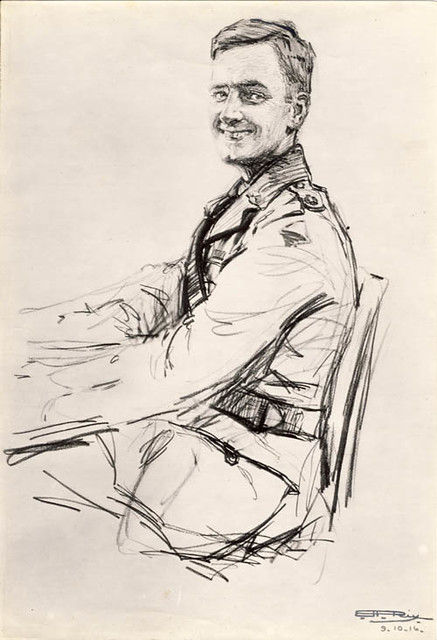
| George Nicholas (1916) |
The Fleece (1944)
|
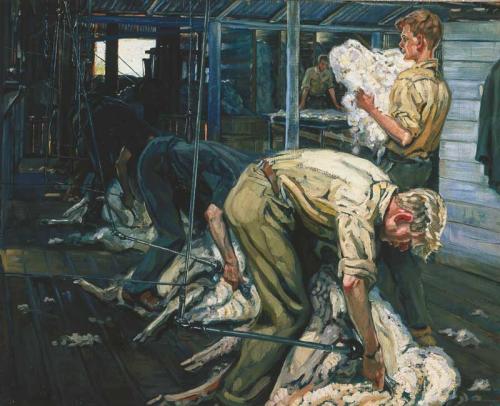
| The Shearers (1922-23) |
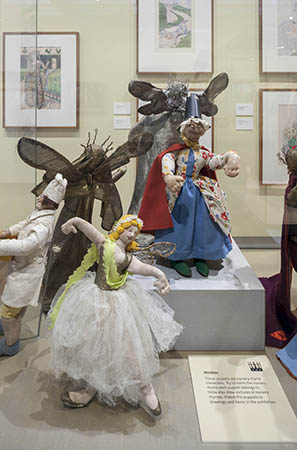
| Some of the minikins Hilda made for her son, Rix |
Spring in my garden, Knockalong (1940)
| Country Garden, Knockalong (1945) |
| Bringing in the Sheep (1936) |
| The Fair Musterer (1935) |
Tuesday, 17 December 2013
Remember Me: Forgotten pictures
National War Memorial
November 2012 - July 2013
Apparently a picture is worth a thousand words, and actions speak louder than them, but the small, sentimental exhibit at the National War Memorial references words, pictures and deeds.
For much of the First World War Vignacourt was just behind the front lines; a staging point, casualty clearing station and recreation area for troops of all nationalities moving up to and then back from the battlefields on the Somme. Passing military traffic came from the British, American, Chinese, Indian, Scottish, Nepalese and French as well as Australian diggers.
An enterprising French couple, Louis and Antoinette Thuillier, established a business taking portrait photos. They took the photos in their stables and turned them into postcards so the soldiers could send them home, and maintain a fragile link with family and loved ones back home in Australia.
“Enough of war, we are now resting in a peaceful little village and it is lovely to lay in the sweet grass under the apple trees and forget the trials of war and think of home sweet home. Bill, Ern and myself had our photos taken today and I will send you one when I get them.” – Horace Arnold Parton, 5th Battalion, 1916The negatives of these photos were discovered years later in the attic of a dilapidated farmhouse by a relative of the photographers, who generously donated many of them to the Australian War Memorial. There were over 4,000 pictorial records of soldiers on leave, tired and battle weary but having fun with their mates. AWM World War I expert, Peter Burness, says that two-thirds of these men would go on to be killed or wounded. “The losses were appalling. In all likelihood these images are the last photographs taken of many of these young men before they died.”
“By Jove! Australians! Those clean-shaven, sun-tanned, dust-covered men, who had come out of the hell of the Dardanelles and the burning drought of the Egyptian sands, looked wonderfully fresh in France. Youth, keen as steel, with a flash in the eyes, with an utter carelessness of any peril ahead, came riding down the street.” – Peter Gibbs, British War Correspondent, 1916Members of a television news programme reprinted these pictures in a dark room, using traditional techniques on fibre-based paper. They saw the soldiers emerge from the darkness, and cleaned and silvered the images with selenium toning to create the silver gelatine photographs. This exhibition features 74 of these prints and 800 digital negatives, fleshed out with written diaries and letters as part of the museum’s collection. Many excerpts are from letters written to sisters, mums or sweethearts, asking for photo-mementos and news from home. It’s noticeable and slightly sad that there are so few letters written to dads.
Although the photographers did not record the names of these men, several researches have attempted to identify them through their uniforms. Other clues to their identity can be found in their epaulettes, colour patches, badges, rank insignia on uniforms, medal bars, ribbons and wound stripes worn on uniforms, and any kit or equipment they may be carrying. In many cases the battalion is known, as men for a battalion posed together, even though they knew their battalion would be disbanded.
British censorship on the Western Front meant that few such informal photographs exist outside the official record. Australia did not have its own official war photographer until 1917 and soldiers were not able (as they ewer in the Gallipoli campaign in the Dardanelles) to sneak their personal cameras into the war zone. The Thuillier collection fills a hole in the historical record. It covers many of the significant aspects of Australian involvement on the Western Front, from military life to the friendships and bonds formed between the soldiers and civilians.
“The brightest memory of the lot is that I have known real men. Men with the cover off. Men with their wonderful nobility of character, of mateship, revealed. It’s a glorious memory to have. To have known men as men... My mates! Memories of men! Memories of mates!” – Edward P. Francis Lynch, 45th Battalion, commenting after the war
Some men were members of the newly formed (1916) cyclist battalion who traded horses for bikes and pose proudly with their metal steeds. Perhaps there might be special sympathy for them from the riders of the Paris-Roubaix or Tour of Flanders as they clatter over the greasy cobbles? There are pictures of bands playing instruments and some delightful images of people shyly celebrating the armistice.
A few of the photos have snowfall as a backdrop – between 3rd and 13th January 1917 heavy snowfalls hit the region. The Commander of British unit in Vignacourt issued an order to his men: “No snowballs are to be thrown at the drivers of passing vehicles.” That they could consider such amusements is evidence that they are really still just lads. It makes it all the more poignant to consider, “It is a poor land rich with crosses. A troubled land where brave men rest forever.”
“Many things perforce remain unrecorded. The friendships, strong and clean as new steel, forged in the desert sand or the Somme mud that will savour life for us to the very end.” – Albert William Keown, 5th Battalion, commenting after the war