Friday, 17 March 2023

Friday Five: Podcast Update


Goodness, it's been a year since I last wrote about the podcasts which accompany me on my walks, runs and drives (although never rides - it's unsafe). So it must be time for some more.
  1. Desert Island Discs (BBC Radio 4) - This has been going since 1942 and is obviously a popular and simple format, which has lasted for more than 3,000. The host (currently Lauren Laverne) asks her guest (or 'castaway') what eight tracks, book and luxury item they would take with them if they were cast away on a desert island. There's one every week and I pick people who I think might have interesting stories to tell and suitably accompanying sounds (and I always cheer when someone picks You'll Never Walk Alone). Recent episodes to which I have listened include Cate Blanchett, Baz Luhrmann, Richard E Grant, Bono, Jon Ronson, Oti Mabuse, Deborah Levy, Richard Osman, Joanne Harris, Peter Schmeichel, Tracey Ullman, Baroness Hale of Richmond, Michael Holding, Alexei Sayle, Billie Piper, Professor Sir Simon Wessley, Dame Louise Casey, Mark Strong, Malala Yousaafzai, Tim Peake, and Simon Armitage.
  2. Limelight (BBC Radio 4) - Audio drama at its most thrilling. It began with The System, a six-part thriller about a group of young radicals and the hunt for their leader. When Jake signs up to a personal training program that promises to turn the meekest man-boy into an alpha male, he hasn't got a clue what he's getting himself into. Two years later his sister Maya sets out to uncover the truth (there has been a second season that I have not yet heard). The next drama was The House that Vanished, a real-life mystery from the West Coast of Ireland that does exactly what it says on the tin, and then there was Harland, a Halloween special in which a town has been built on the site of a medieval plague village abandoned 900 years ago. These are great and there are many more in store for your listening pleasure.
  3. Something Rhymes with Purple (A Somethin' Else and Sony Music Entertainment Production) - Gyles Brandreth and Susie Dent both have voices to which I could happily listen all day. They talk about words; their origins, development and meaning. Apparently it won the Gold Award for Best Entertainment Podcast at the British Podcast Awards 2020, so it appears plenty of other people enjoy these linguistic lessons about anything from clothing to food; travel to sport; professions to poetry and anything else that verbs your noun.
  4. That Peter Crouch Podcast (BBC Radio 5Live/ Acast) - Lads talk about football. They have got knowledge; their humour is a bit blokey, but they also have clout, and have 'blockbuster guests' including premier league referees, international coaches, past and present players, and Prince William. Ostensibly a guide on how to be a professional footballer, the episodes include insight on everything from dressing-rooms, transfers, managers, training, kits, analysis, and other details of the modern game. Peter Crouch (former professional footballer - one of 33 to have scored over 100 Premier League goals), Tom Fordyce (sports journalist and author) and Chris Stark (radio personality, co-presenter and executive producer) are a good mix and present an hour-long chat full of insight and anecdote. In what is being described as a 'mass exodus of talent from the BBC', Peter Crouch has just moved to Acast for an undisclosed sum - probably quite a high one considering That Peter Crouch Podcast was the fourth most popular podcast on BBC Sounds last year and the largest sports podcast at the BBC with 60 million listeners.

  5. The Witch Trials of J.K. Rowling (The Free Press) - No one knew who she was; she wrote some books; everybody knew who she was; she championed the underdog; lots of people loved her views; lots of people hated her views; these two groups of people hated each other; she made some comments about sex and gender; lots more people hated her, including some of the ones who had previously loved her; she mentioned her privilege in that the hate mail and death threats she received didn't bother her as much as they would some younger, more vulnerable people; she was vilified. 'Witch' is a word used for a woman who doesn’t submit to patriarchal power; someone who dares to take up space and live their lives outside their socially prescribed roles. Personally, I am proud to be a witch, and I do not think that the sex/gender debate is 'binary'. Critical feminists and trans-right activists actually have a lot in common if they put the mental and physical safety of the individual first; and stridently conducting TERF wars is not helping anybody. I'm four episodes in to the seven-episode podcast series by Megan Phelps-Roper featuring extensive interviews with J.K Rowling and with several of her critics, supporters and readers. Billed as 'probably one of the most controversial podcasts of 2023 so far', it is undeniably well-made and hugely listenable, and will surely just fan those flames even higher.


Tuesday, 14 March 2023

I Hear Voices: Chatter


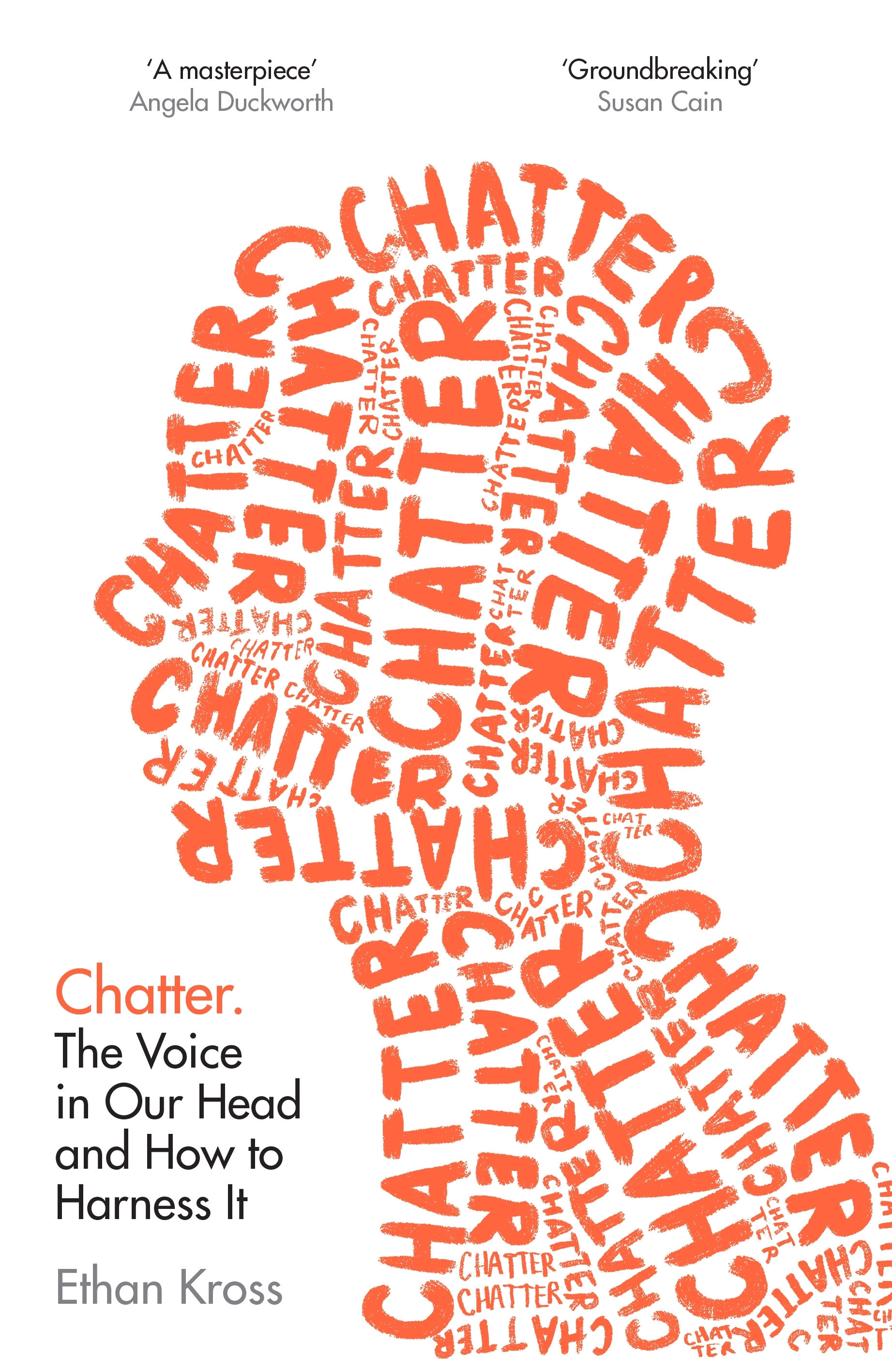
Chatter: The Voice in Our Head and How to Harness It by Ethan Kross
Vermilion
Pp. 171

We’ve all heard the expression, “it’s good to talk’. Yes, but how much, and to whom? Echo chambers can encourage us to wallow in misery, victimhood, or self-righteousness. Communication can help with our problems, however, by allowing us to distance ourselves from them and seeking practical assistance. We spend a lot of our time mentally time-travelling, remembering the future or projecting into the past, all of which can be useful as long as we don’t dwell on the negativity or foreshadow anxious situations. Ethan Kross examines the voice, or voices, in our head, and offers suggestions about which internal monologue and external advisors we should heed.

Talking to others and sharing events can be helpful. It can ‘normalise’ an experience and help a person appreciate that they are not alone. But Kross cautions that we use this sharing function with care and choose the people to whom we discuss issues on a strategic basis. If we rant at our friends about ourselves all the time, they will become disillusioned and uninterested, and feel they have not been heard or supported.

It is important to be able to share, and our support networks are crucial, but if we overshare, not only are we likely to annoy others, we can get caught in a self-destructive feedback loop, especially if we choose the ‘wrong’ people. “Other people can be a tremendous asset, but more often than we realise, they can be a liability too.” While talking about adverse events, we can focus more on the need to repeat and be heard than the need to address the issue and move on.

This process is called co-rumination in which we seek validation from others and it is harmful because, “when we’re upset, we tend to overfocus on receiving empathy rather than finding practical solutions.” While this may briefly feel good, it isn’t useful in the long-term. Naturally, this creates a vicious cycle and one in which it is easy to get stuck. And nowhere does this have greater effect than on social media, which has given us a much wider audience.

One of the ways we can manage these emotions and internal voices is to distance ourselves from them through mental time travel or the simple technique of journaling. Asking people to write about their most upsetting negative experiences for fifteen to twenty minutes leads them to feel better, visit the doctor less, and have healthier immune function. “By focusing on experiences from the perspective of a narrator who has to create a story, journaling creates distance from our experience. We feel less tied to it.”

Mental, physical and emotional welfare can be improved by simply getting out into nature. As well as the health benefits of fresh air and exercise, this is also due to experiencing the phenomenon of awe: “the wonder we feel when we encounter something powerful that we can’t easily explain.” It can be instigated by viewing a sunset or a mountain range and it is considered a self-transcendent emotion in that it allows people to think and feel beyond their own needs and wants.

Marie Kondo fans would be pleased to hear Kross state that imposing order on our environment can help reduce anxiety by getting rid of clutter. “The fascinating thing about seeking compensation for chaos in one area (that is, our minds) by creating order in another (that is, the physical environment) is that it doesn’t even have to have anything to do with the specific issue that is throwing off our inner voice.” It’s a relatively easy thing to tidy a desk, and it can have a highly positive result. Imposing order on situations is the function of rituals, which have a crucial underlying purpose. They reiterate the values of our community and help us to transcend our own concerns, connecting us with forces larger than ourselves.

Distancing is a great tool for normalising challenges, connecting with others and minimising predicaments in our mind. Kross includes a toolkit at the end of the book with practical suggestions on how to give and receive chatter support, from techniques you can implement on your own to those that involve other people. All of these are valuable for those who are overwhelmed by the voices in their head or for those who wish to understand how it affects those who are. For this particular problem, this is a highly recommended self-help book. 

Wednesday, 8 March 2023

International Women's Day: Reclaiming Hekate

At the end of last year I went to the National Museum of Australia to see the excellent exhibition, Feared and Revered: Feminine Power through the Ages. The collection of treasures from the British Museum is touring until 27 August 2023, and I would thoroughly recommend attending if you get the chance. A highlight for me was the marble statue of Hekate from Italy (161-200 AD).


In her book, Feminine Power: The Devine to the Demonic, which accompanies the exhibition, Belinda Crerar writes, "The goddess Hekate is one of the most enigmatic deities of the classical world. Her reputation as the infernal 'goddess of witchcraft' has become cemented in modern popular culture and stretched back to classical belief, but it is a narrow characterisation of a complex and multifaceted ancient divinity. To the Greeks and Romans, Hekate was associated with liminal times and places, and, importantly, stood between life and death at the entrance to the underworld; yet her powers encompassed protection and guidance." 


Hekate's famous triform image appears in Greek art from the fifth century BC onwards. The statue in this exhibition shows her with three bodies and three faces, each young, with flowing hair and crowned diadems. In her six hands she holds a roe and the handles of torches and daggers. Her flaming torches, common attributes in both sculpture and painting, situate her in darkness, but associate her with guiding light, and she is often also shown holding keys to illustrate her power to open or bar the way.


As a goddess of transition, Hekate is often represented in statues set up in entranceways to private and sacred spaces or at road junctions, where each of her three faces looks down a different path. 


Last year in Romania at the Brukenthal National Museum in Sibiu, I encountered a very similar statue in the courtyard of the Altemberger House. The attached plaque claims it is a Hekate Triformus Statue from the 2nd-3rd centuries, 'Probably Salinae (Ocna Mureș, Alba Country)'. 


Hekate's earliest and fullest description is found in Hesiod's epic poem, Theogony of the seventh century BC, which contains an extended hymn in praise of Hekate just before the birth of the Olympian gods. In Hesiod's account, she is not an underworld deity but is said to hold dominion over the earth, sea and sky. She appears to stand apart and distinct from the gods who follow, as if she is more ancient and more honoured than they are, and Hesiod is keen to stress that even Zeus, king of the Olympians, pays Hekate special respect above all others.


The reason for this reverence is made clear when Hesiod explains that success or failure is determined by Hekate's will: she can stand protectively in harm's way or step aside as she chooses. A primordial but ambivalent force, Hekate was given the epithet kourootrophos, the 'nurse of the young' by Hesiod, and the contemporary but unknown author of the Hymn to Demeter describes her as 'tender-hearted'. 


In some later Greek, but particularly Roman literature, Hekate's underworld associations become more pronounced, and she is portrayed as a more sinister force. Her approach was said to be heralded by howling dogs and she is no longer honoured by Zeus but now by Circe, Medea and Erichtho, the sorceresses and witches of classical literature who make sacrifices to her and vows before her altar for aid in their magic. 


The shift in the conception of Hekate in literature may have been influenced by actual magical rituals of the Hellenistic and Roman periods. A Greek prayer found in a handbook of incantations and magical formulas from Egypt (dated c. 275-375 AD) describes her in demonic terms as bull-faced, having snakes coiled across her brow, stalking graveyards and consuming the dead. 


As is often the case, female power is subverted by those who fear it and made to seem evil. Some male observers cannot cope with women being multi-faceted, so they cast them as two-faced as though that is a bad thing. To modern audiences, Hekate is largely known through being the 'leader' of the three witches in Shakespeare's Macbeth. She is presented as a sadistic, controlling and merciless commander of the coven, angry to have been excluded from previous plots and determined to control the prophecies and apparitions in order to maximize their manipulative affect and contribute to Macbeth's downfall. Naturally this has particular relevance for me as I played Hecate in a 2016 production of Macbeth by Canberra Repertory Society. 
"I am for the air; this night I'll spend
Unto a dismal and fatal end:
Great business must be wrought ere noon:
Upon the corner of the moon 
There hangs a vaporous drop profound;
I'll catch it ere it come to ground
And that distill'd by magic sleights
Shall raise such artificial sprites
As by the strength of their illusion
Shall draw him on to his confusion; 
He shall spurn fate, scorn death, and bear
He hopes 'bove wisdom, grace and fear:
And you all know, security
Is mortals' chiefest enemy." - Macbeth (Act III, scene v), William Shakespeare
As Hecate in Macbeth (2016)
In keeping with reclaiming mythical and magical female figures from history to embody more empathetic, inclusive and complex interpretations, it is worth noting that since the late 19th century AD, Hekate's relevance has been revived and her spiritual importance has been incorporated into religions such as Wicca and Modern Paganism. 

As a lady in Macbeth (2016)

Friday, 3 March 2023

Friday Five: Books Read in February

  1. The Seven Moons of Maali Almeida by Sethan Karunatilaka: This month's family book club selection (the choice of both me and my cousin) is more than just a pretty cover. Reminiscent of George Saunders’ 2017 Booker Prize winner Lincoln in the Bardo, the 2022 Booker Prize winner also deals with the liminal space (called the In Between) in which unsettled spirits, ghosts and ghouls roam dazed and confused. They are given seven moons to come to terms with their death and to enter into The Light, or roam this limbo land forever. Maali Almeida is dead (instantly recalling Dickens' opening lines of A Christmas Carol - 'Marley was dead: to begin with. There is no doubt whatever, about that') and has a week to find out how he died and why. The novel uses the second person, which is a bit annoying and questionable as to who is the narrator, although this becomes clear at the end. In Colombo 1990, life is risky, especially if you are a photo-journalist, as Maali was, everything is political, and people are frequently disappeared. Any one the subjects of his photos might have killed him to keep him quiet, but which one and does it ultimately matter to anyone but him? As he concludes, “All stories are recycled and all stories are unfair. Many get luck, and many get misery. Many are born to homes with books, many grow up in the swamps of war. In the end, all becomes dust. All stories conclude with a fade to black.”
  2. The Travelling Cat Chronicles by Hiro Arikawa translated by Philip Gabriel: This novel (first published in 2015) had reviewers gushing that it was gentle, wise, witty, beguiling and full of simple but deceptive prose. I didn’t realise I was quite so cynical, but I have to wonder, is it deceptive or just simple and is it really profoundly charming or just a little bit naff? The novel is mainly narrated by Nana, a cat named after the Japanese word for seven, which is considered to be lucky and the shape of the cat’s tail. Nana was a stray cat who was nursed by Satoru after being hit by a car. In return, Nana lives with Satoru and gives him affection. When Satoru knows he is dying, he wants to make sure Nana has a happy home so he sets off on a road trip to visit possible adoptive homes and friends. When we see Nana's perspective he explains feline ways (why they like boxes; why they dislike the sea), teaches kittens to stand up for themselves, and cares for his adopted human. The Travelling Cat Chronicles is a novel about the bond between humans and their animals, but it is also about the power of friendship from childhood to adults. Without the support of those he visits, Satoru would not have grown into the kind and gentle man he has become – the kind of man who would scour the country to find the perfect home for his cat.
  3. Flawsome by Georgia MurchNo one's perfect, and the sooner we accept ourselves with all our flaws, the happier we will be. That's according to feedback expert, Georgia Murch, who has written a comprehensive guide to becoming more self-aware and acknowledging that how we behave affects both ourselves and others around us. It's delivered in a punchy, positive and Aussie style, and it makes a lot of sense. She writes that 'this is a book for those who would like to stop being good enough for others, and start being themselves.' And who doesn't want that?
  4. The Time Traveller's Guide to Medieval England by Ian Mortimer: Ian Mortimer maintains that the best way to understand history is not to treat it as a dead and distant time but like a foreign land. Many aspects may be different, but people still have the same wants and needs, so he explains what to eat, drink, and wear, how to travel, where to stay, what to do and what to avoid. There are also handy hints about laws, health practices, measurements, languages, and religious customs. It's a really engaging way of bringing the past to life, and there are plenty of facts, figures and tables of data analysis if you prefer that sort of thing.
  5. The Muse by Jessie Burton: The parallel stories in this novel lead the reader to wonder just exactly who is whose muse? It begins in London in 1967 when aspiring Caribbean writer, Odelle Bastien, finds employment at an art gallery, falls under the tutelage of the enigmatic co-director Marjorie Quick, and is seduced by the charms of Lawrie Scott who appears to have a valuable painting to assess. Interwoven chapters focus on the story of Olive Schloss, daughter of Harold and Sarah, who becomes involved with wannabe artist, Isaac Robles, while in Arazuelo in Spain, 1936. Isaac also dreams of being a revolutionary much to the chagrin of his half-sister Teresa who works as a housekeeper for the Schloss family and just wants to avoid trouble. Of course the names and dates recall the Windrush generation, the Spanish Civil War and the treatment of Jews leading up to WWII. Meanwhile, there are themes of unrequited love, parent-child relationships, and the difficulties of creative women wanting their art to be taken seriously. Lots of people are manipulating each other and hiding secrets in order to score points. It all becomes somewhat messy and incoherent as the author tries to pack too much detail into her story (there is a bibliography at the back to prove she has done her research) and it doesn’t tie together very well. Although the descriptive passages are fantastically evocative, the characters are all one-dimensional and the story itself is unengaging and predictable.

Wednesday, 1 March 2023

My Newest Favourite Thing: Relay League by Angelica Mesiti

"Appel à tous. Ceci est notre dernier cri avant notre silence éternel." - Calling all, this is our final cry before our eternal silence

A few years ago when I was at the Orange Regional Art Galley, I came across this fascinating artwork comprising music, movement and sound. Initially I didn't understand it at all  but found it intriguing, so I read the information panel that accompanied the artwork. I discovered it to be about Morse code and other forms of communication - a subject that interests me deeply, so I spent some time in the gallery interacting with the artwork. The following words are from the information panel. 
Relay League, a term for a telegraphic transmission from one receiver to the next, takes as its departure point a Morse code message transmitted by the French Navy on 31 January 1997 to signal the imminent demise of this communication method. Morse code, a system of dot and dash radio signals, often utilised as a language of distress at sea, was phased out after 130 years in favour of new digital communications. Inspired by this final poetic phase, Mesiti interprets its original dots and dashed through music, choreography, and non-verbal communication.


The first of the three-channel works features the musician-composer Uriel Barthélémi translating the Morse code message into a percussive score that permeates throughout the gallery. The second shows a unique form of dialogue and exchange between two dancers, Emilia Wibron Vesterlund and vision-impaired Sindri Runudde. Together the pair has developed an intimate and corporeal language that communicates movement and gesture. Emilia guides Sindri's understanding of choreography through the touch and feel of her body against his. 


The third depicts the dancer Filipe Lourenço interpreting Uriel's percussive sounds in a new  choreography that directly references silence and vision through gestures loosely drawn from the vernacular of folk dance. This final work reveals a dialogue playing out between each of the performers, and the dots and dashes transmitted throughout the gallery produce a subtle dissonance so that the work continually slips back and forth between cohesion and dissolution. Relay League leaves a sensory impression of a language that has been transformed into a code, which in turn iterates as a score, a performance and a haptic exchange, enabling multiple acts of translation across time and space. 


Mesiti's practice chronicles our present condition. She continues to grapple with experiences such as crisis and displacement - whether economic, political, social, cultural, or otherwise - and confront the emotional states of distress, vulnerability and uncertainty. Relay League involves a fundamental humility, bringing to the surface aspects of human subjectivity that are often obscured from view. To this end the work offers a counterpoint: more than simply making visible the forms through which language and expression are silenced, she allows these complex and vital tools of human relations to materialise in ways that emphasis our need for empathy, compassion and connection.
Morse code was used as an international standard for maritime distress until 1999 when it was replaced by the Global Maritime Distress and Safety System. The final commercial Morse code transmission in the United States was on July 12, 1999, signing off with Samuel Morse's original 1844 message, 'What hath God wrought'. Everything sounds better in French (the distress signal Mayday comes from the phonetic equivalent of them asking for help, after all). And for those wanting a proper review of the art installation, there is one here, written by an art critic who understands these things.

Wednesday, 22 February 2023

Daring Escape: Fled

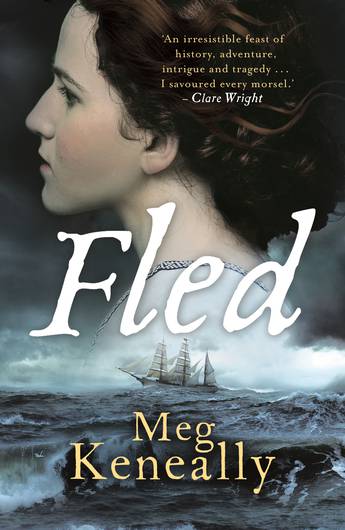
Fled is based on the life of Mary (Dabby) Bryant, the woman behind one of history’s most daring escapes. Sentenced to seven years transportation to Australia, she escaped from the colony and sailed over 3,000 miles for 66 days in a stolen open boat with her husband, two children and other companions to West Timor (Coepang as it was then called). Here she was discovered, arrested and returned to Britain to be incarcerated until she was taken up as a cause célèbre by James Boswell who set her up in a house and sent her a stipend after she returned to Cornwall. In an Author’s Note, Meg Keneally stresses that this is a work of fiction, which is why she has changed some elements of the story, including names of the characters – Mary Bryant becomes Jenny Trelawny, later Gwynn after marrying Dan Gwynn.

The first part of the novel concerns Jenny’s route to crime and the highway robbery for which she was transported to the other side of the world. There is a detailed account of that trip on the Charlotte, on which she conceives and after which her daughter is named. She befriends Captain James Corbett, whose character is based on that of Watkin Tench, who tells her, “We don’t need to remake Newgate on the other side of the world. Well, I imagine there will be a guard house, or something like it. I’m sure that not everybody has left their criminal disposition back in England. But the entire place is intended as a prison. We’ll have no need of walls for the most part, it is to be hoped. We’ll have the ocean.”

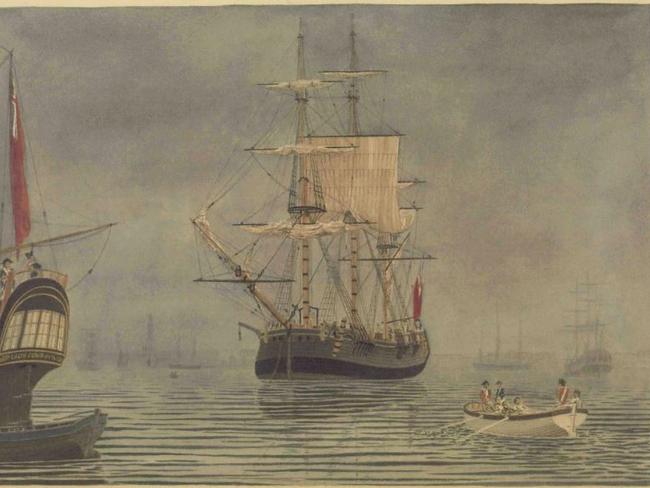
The Charlotte at Portsmouth, May 1787 from Frank Allen's The Ships of the First Fleet

Life in this colony is brutish and cruel, as it is intended to be, in a land that must seem upside-down. The triangle that is used for the floggings is “an ominous symbol, a profane and subverted trinity.” To save herself from rape and degradation by the male convicts and soldiers, she marries Dan and has another child, Emmanuel (these were the real names of Mary Bryant’s children). Married couples are given separate quarters but others, jealous of what they perceive to be her advantages, strive to bring her low. When their actions result in Jenny being expelled to the women’s camp, she reflects, “While space was the only blessing this colony provided in abundance, it was one of the many denied to the hut convicts. Jenny now lived in a place of wails and screams and sobs and fights, of stench upon stench, of dangers buried in innocent conversation.”

From the moment she lands in Botany Bay, Jenny knows she wants to leave, and it soon becomes apparent that their best chance of survival is escape. Food is scarce, supply ships are absent, farming is in its infancy, and provisions are rapidly dwindling; making theft of food a hanging offence and starving to death a distinct possibility. Perhaps if the settlers had collaborated with the local people they might have had better chances of survival, but there is limited interaction between the white settlers and the Indigenous tribes. Jenny encounters an Aboriginal woman who shows her what leaves to chew or to brew to avoid scurvy. Although these are plentiful, Jenny guards this knowledge as currency, as she does when the Indigenous people take her fishing and share their methods with her.

Questions have been asked as to why Mary Bryant would risk a journey for herself and her children on the ocean and potential drowning. As well as starvation, the new colony is rife with disease (particularly smallpox) and the dangers to the women convicts are manifold. “Emmanuel’s death at sea is a possibility. His death here is nigh on certain.”

1930s era illustration of the convict escape
Much of the action of the novel takes place on the water, either in the Charlotte, or the cutter in which Jenny and her companions make their escape. These seafaring experiences are described in some length, which is both terrifying and tedious as indeed it must have been in reality. When they land, Dan’s bragging of his expertise at sailing the boat back to Coepang, leads to them being discovered and their subsequent arrest. The governor who had supported them and admired their skill and courage when he thought they were shipwrecked, turns against them when he learns they are escaped convicts, because he is angry that he has been cheated and make to look a fool; he fears for his reputation and “Laughter, laughter on the seas as the story spreads about the dupe of a governor.” Jenny is frequently at the mercy of men and their egos.

Eventually she returns to her family in Cornwall. She had been afraid of their reaction, but they are thrilled to see her and welcome her back, so the story has come full circle. This is one of the bits that the author has invented, but it makes for a satisfying conclusion. Mary Bryant’s adventure is a fascinating story and, although she has changed the names to compensate for lack of certain facts, Meg Keneally has told it with drama and compassion.

Friday, 17 February 2023

Friday Five: Some TV Shows


I haven't done this for a while, so here are just a few shows I've been watching recently (well, in the last couple of years anyway).

5 TV Shows Watched Recently-ish:

Anti and Ricky Gervais in After Life
  1. After Life, Series 1, 2 & 3 (Netflix) - Tony (Ricky Gervais) is struggling to see the point of life after his wife Lisa (Kerry Godliman) has died from breast cancer. He contemplates suicide but is gradually drawn back into the community by his colleagues (Tony Way; Mandeep Dhillon; Tom Basden; Diane Morgan), his dad (David Bradley), his dad's nurse (Ashley Jensen), a prostitute with a solid social outlook (Roisin Conalty), a fellow griever on a park bench (Penelope Wilton), his dodgy postman (Joe Wilkinson), and a beautiful dog (Anti). It's black humour written by a master of the dark art. 
  2. Handmaid's Tale, Season 5 (Hulu/ SBS On Demand) - It just keeps getting better! June Osborne (Elisabeth Moss) and Serena Joy Waterford (Yvonne Strahovski) are out of Gilead and still each other's nemeses. The cinematography is outstanding and the writing explores the nature of reproduction, rebirth and new beginnings. It is powerful drama, superbly acted and I just can't get enough of it (baby).
  3. Elisabeth Moss in The Handmaid's Tale
  4. Lucifer, Season 3 (Netflix) - Tom Ellis has great style and charisma as Lucifer Morningstar, which is essential as Lauren German as Chloe Decker, the love 'interest', is anything but. There's some biblical hokum featuring angels and demons, heaven and hell, Cain and Abel, but mainly I watch it for the sharp suits, predictable plotting and flash scenery. It's easy on the eye (and the brain) but 26 episodes in a season is too much. Why do you do this, America?
  5. Robin of Sherwood, Series 1, 2 & 3 (ITV) - I re-watched the entire box set. Such fun! That Clannad music! Michael Praed 'morphing' into Jason Connery! A young Ray Winstone being gruff as Will Scarlett! Nickolas Grace hamming it up as the Sheriff! The introduction of the Saracen character with Mark Ryan!  Maid Marian proving that frizzy hair was considered attractive! Herne the Hunter proving the writers were on drugs! Ground-breaking sets and backdrops; arrow shooting, quarterstaff fighting, horse-riding and swordsmanship! The same story trotted out 26 times! Guest appearances from the likes of Rula Lenska, Cyril Cusak, Phil Davis, Richard O'Brien and Lewis Collins! This was all so comforting and reminded me of watching television at home in my parents' house pretending I'd already done my homework. 
  6. Spirited, Season 1 & 2 (ABC iview) - The Australian supernatural comedy drama romance ticks a lot of boxes. The lead actors Claudia Karvan and Matt King have great chemistry although they are completely different people - she's an uptight dentist; he's a post-punk new romantic. Oh, and he's dead. He inhabits the apartment block she moves into after she splits up with her husband (Rodger Corser) and he haunts people because he can't leave. She is the only human who can see him, so they exchange witty banter, although other humans can only hear her side of it and think she's going crazy. She just might be. It's like Moonlighting with a ghost, and was apparently targeted at 'women in their 40s'. There probably aren't many shows aiming at that demographic. On the basis of this, there should be more.
Matt King, Claudia Karvan and Rodger Corser in Spirited