Saturday, 15 January 2011

Cultural Obituaries

It’s been a tough time for the arts as three great proponents of culture have died recently. Elisabeth Beresford (August 1929 – December 2010) wrote an enchanting ‘Magic’ series, but is best known for her wonderful Wombles who made recycling and environmental concerns the norm for children decades before Al Gore got in on the act. I have already raved about these cuddly conservationists before so will leave it at that.

I was also sad to hear of the death of Dick King-Smith (1922-2011). When I worked at a book shop in Manchester, I knew that if children had already read Enid Blyton, Roald Dahl and Michael Bond, then Jill Murphy, Michael Morpurgo, Morris Gleitzman or Dick King-Smith would be my next recommendation. Well-written stories with solid, memorable characters and cheerfully direct narration; I like them so I’m sure that the little people must have!


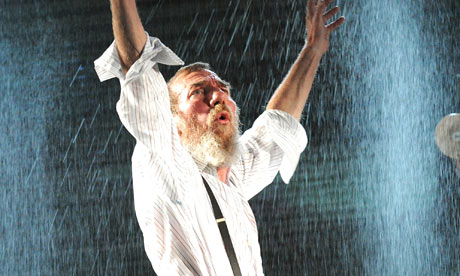
Bad news comes in threes, apparently, and the death of Pete Postlethwaite (1946-2011) rounds out the triumvirate. He was an amazing and versatile actor whom I admired in everything I saw. From early appearances in Coronation Street; Victoria Wood on TV; Minder; The Professionals; Lovejoy; Boon and Casualty to later roles in sci-fi rehashes, he always portrayed complete commitment and belief in his character. He achieved greatness through hard work and self-belief, taking a job in a sheet-metal factory to pay his way through Bristol Old Vic theatre school, before starting his career at the Liverpool Everyman theatre.

Unfortunately I never got to see him on stage, although his list of theatre credits is impressive: Scaramouche Jones; King Lear; Coriolanus; Duchess of Malfi (Antonio); Titus Andronicus (Aaron); Henry V (Exeter); Richard III (Hastings); Macbeth (Macbeth and Banquo – in different productions); Cyrano de Bergerac (Baker); A Midsummer Night’s Dream (Bottom); Every Man in His Humour; The Tempest (Prospero); The Rise and Fall of Little Voice (Ray Say). He worked with some of the best theatre directors around – Adrian Noble; Trevor Swann; Peter Brook; Trevor Nunn; Bill Alexander; Terry Hands; George Costigan; Greg Hersov; Sam Mendes – which only adds to his impressive CV.


Descriptions of his physical appearance are none-too complimentary – including a face like ‘a stone archway’ and ‘a bag of spanners’ – but no-one can doubt his acting ability (Steven Spielberg called him ‘the best actor in the world’) or his popularity (he was awarded an OBE in 2004). He is probably best-know for his film work; he appeared in over 100 films including The Usual Suspects (one of my favourite films), The Constant Gardener (a wonderful film despite the dreary title), Amistad (Spielberg’s well-meaning but glib abolition drama) and Among Giants (the only film I’ve ever seen about painting pylons, also starring Rachel Griffiths, with whom he gets a love interest).

Daniel Day Lewis generally receives all the credit for In the Name of the Father; a terribly flawed film which nonetheless captures a time and feeling in history, due in no small part to the stoic heroism of Pete Postlethwaite’s Giuseppe Conlon. He is indubitably the best thing in Baz Luhrmann’s Romeo & Juliet for the ADHD generation, and I most recently saw him playing a cameo as the dying father who is behind the whole plot in Christopher Nolan’s mind-bending Inception.

I shall remember him best, however, for his depiction of Danny the band leader of a miners’ band in the brilliant Brassed Off. With the perfect blend of pride, humility, and sensitivity, he delivers one of the best screen-monologues ever. Take it away, Pete!


Thursday, 13 January 2011

'Tis a Silly Show!

Monty Python’s Spamalot
The Ambassador Theatre Group Ltd
New Victoria Theatre, Woking
20-25 September 2010

Because the musical ‘lovingly ripped off from’ Monty Python and the Holy Grail is co-written by Eric Idle, it retains the essence of Flying Circus, while introducing a new musical theatre element. From the opening scene of the peasants debating the flight mechanics of different swallows, interrupted by King Arthur, his faithful servant Patsy, and his invisible steed (represented, of course, by clattering coconut shells) we are in familiar territory.

Much of the enjoyment of the show comes from working out how on earth they can stage your favourite scenes, such as the Black Knight (‘it’s just a flash wound’); the killer rabbit; the Knights who say ‘Ni’. These are all excellently and amusingly rendered with the correct amount of silliness, although the witch burnings are sadly cut ‘for health and safety reasons’.

Plenty of dialogue is lifted directly from the film, so you know what they are going to say next, but they do it so well! King Arthur is the lead as he never was in the film, and stand-up comic Marcus Brigstocke’s quick wit, comedy timing and audience-interaction are spot-on. Todd Carty may forever be Tucker Jenkins to my mind, but he also makes a credible Patsy, by both name and nature faithfully following his master. Hayley Tamaddon is simply brilliant as the Lady of the Lake – a demanding diva with a powerful voice and overpowering ego.

All the actors double up, as they did in the original, to play minstrels, mothers, fathers, French taunters, various other knights, and Tim the Enchanter. The sets are superb, and the clever use of staging makes steps across the stage seem like epic treks. Costumes and choreography are equally glitzy and flash, especially in the riotous He is Not Dead Yet or the sumptuously silly Knights of the Round Table. While this is a first-rate feel-good musical, it also mocks the entire genre and ridicules an art-form that attempts to take itself seriously.

One of the tasks that the knights must perform to obtain the Holy Grail (along with producing a shrubbery and chopping down a tree with a herring) is to perform a hit musical. In the song, You Won’t Succeed in Showbiz they regret that they won’t be able to rise to this challenge as it doesn’t matter how good your actors, songs or show is; no one will come and see it if you haven’t got a star. This tongue-in-cheek attitude (as they are surrounded by stars of stage and screen) is carried through to the singing of I’m All Alone by the entire company.


In her fairy godmother moment, the Lady of Lake delivers Find Your Grail; a delightful climb-every-mountain-achieve-your-dream song. Hayley Tamaddon is equally impressive in her sardonic duet with Marcus Brigstocke; The Song that Goes Like This, which mines every cliché of the Andrew Lloyd-Webber songbook, because as we all know, “Once in every show/ There comes a song like this/ It starts off soft and low/ And ends up with a kiss”. Her scene-stealing moment, however, is The Diva's Lament in which she bemoans her lack of stage-time; “Whatever happened to my part? It was exciting at the start. Now we're halfway through Act 2/ And I've had nothing yet to do.”

It is that absurdity that makes the show what it is; in fact King Arthur reflects, “Let’s not go to Camelot; ‘tis a silly place”. The cheap puns are duly groaned at from the expensive forest rather than an extensive one, to a cymbal chiming when King Arthur requests a symbol. Sir Lancelot (a versatile Graham MacDuff) pondering why someone has swallowed the missing mug when the knights are asked to search for the grail within themselves, is something you might hear down the pub, if you lived in a village with a load of very funny and irreverent inhabitants. The humour only misses its mark on one occasion – the stereotypical gay characters are dated enough to remind you that the author is from the Are You Being Served? generation.

On the whole, however, this is a high-energy, fast-paced show with an electric blend of highbrow and slapstick humour. The second act opens with Always Look on the Bright Side of Life, even though it is from The Life of Brian. This can be forgiven, as it adds to the overwhelming feel-good factor of the old-fashioned, entertaining musical – as they used to be before they got too bombastic.

Incidentally, I was lucky enough to go to an ‘assisted performance’ where a lady interpreted the whole show through sign language at the side of the stage. Although I don’t speak any sign language (apart from a couple of select words taught to me by my cousin), I found her compulsive viewing. She did a brilliant job of delivering the spoken word to another audience and her performance of the new expression from the Knights who no longer say ‘Ni’ was spectacular.

Monday, 10 January 2011

Stanley Spencer

At the Stanley Spencer Gallery in Cookham, the exhibition in the little building is Stanley and the First Mrs Spencer, reflecting the influence of Hilda Carline on his work. I really like the way he interjects religious scenes into everyday compositions, often with particular reference to his local village - or is it the other way round?

I like The Scarecrow, Cookham (1934). The Royal Academy rejected two of his paintings before accepting this one; his consequent resignation challenged the Academy's attitude to modern art. Spencer painted from what he knew and he said of this scarecrow, 'Left and deserted as it was, it seemed daily to become more a part of its surroundings. In the evening he faded into the gloaming like a Cheshire cat.'


In paintings such as Hilda and I at Burghclere (1955), he aints scenes of domestic harmony - the whole family (including the cat) is highlighted by every detail of pattern and texture. In Domestic Scenes: At the Chest of Drawers (1936) he presents himself as a diminutive man dominated by an exaggeratedly large woman - a recurring theme through his work. His Self Portrait (1923) and Hilda's Portrait of Stanley Spencer in the same year show the same view but demonstrate their quite different techniques.

View from Cookham Bridge (1936) is another favourite of mine, possibly because the quintissential summer view of the riverside of Cookham is full of naturalistic detail: the punts in the foreground; the currents on the river; the boatyards and hedgerows full of flowers; more formal walled gardens and grassy fields in the distance; the belltower of the church peeping over an uneven red roof... It's all so very familiar.

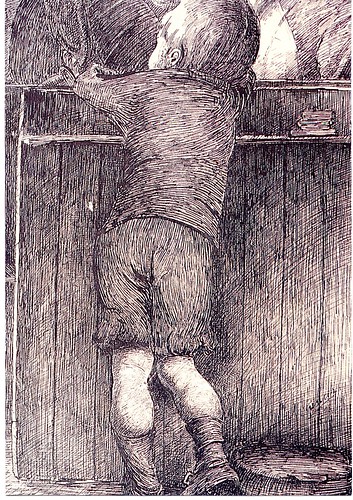
Roy (1907) is a delightful pen-and-ink drawing of a young boy leaning over the back of a pew in the village church of Holy Trinity. Spencer returned to similar motifs after many years, so there is a similar figure in In Church painted in 1958.

Spencer didn't live to complete his final work - Christ Preaching at Cookham Regatta (1952-9). This is a massive canvas and there are pictures of him paiting it while up a stepladder. Christ preaches to the assembled villagers (some wealthier folk in boats, while others picninc on the banks) from a basket chair in the old horse ferry barge. In 1952 Spencer made sixty chalk drawings as the basis of this picture to be transferred to the canvas to create a complex figure study.


The exhibition notes explain, 'Spencer grew up in the golden age of the Thames Regatta, when the river became not just a route for commerce, but a place of entertainment and leisure. Rowing and other skills, previously the province of paid watermen, became popular pastimes for amateurs. Attracting 10,000 people at its peak, the regatta at Cookham followed an established pattern, with races followed by a concert and fireworks. As in Spencer's Regatta series, fashion dictated that gentlemen wore white strousers, striped flannel coats and straw hats, and ladies elaborate hats and full-length dresses.

Another of his deservedly famous paintings, The Last Supper (1920) has pride of place on the wall. Christ sits before the wall of the grain bin in a Cookham malt house. It is beautifully simple, illuminated by golden light, and the disciples' outstretched legs and bare feet meet in the middle under the table in an earthy and rustic fashion.


Far more stylised, Wisteria at Englefield (1954) is full of exquisite, painstaking detail. It apparently took him five weeks to create this stunningly realistic image of chestnut, wisteria and ceanothus both highlighting and obscuring the red brickwork of Englefield House.

The Gallery also includes studies for the Sandham Memorial Chapel at Burghclere. This chapel was built specifically to house Spencer's war paintings - arguably his finest achievement. I particularly like Map Reading, in which an officer consults his orders and map while the men rest during a pause on a route march, and Bedmaking, as seen by Spencer at a hospital ward where he was ent to recover from malaria.

Other paintings in the series include such commonplace activities as filling the tea urns, washing and shaving, eating bread and jam, sorting the laundry, scrubbing the floor, and filling water bottles. The pictures capture the camaraderie and companionship of the men rather than the horrors of war.


Before going home I went for a walk through the village with its intricately tiled roofs, large green and friendly pub, then I strode through through brick alleyways and across fields of wheat and stubble accomapnied overhead by wheeling red kites. Sir Stanley Spencer described Cookham as 'a village in heaven' - indeed, if there are villages in heaven, they look like this.

Friday, 7 January 2011

Films seen in 2010: Part Three

And finally...

41. Letters to Juliet – Lovers write letters to Juliet and ‘post’ them through the cracks of her balcony wall in Verona. A group of dedicated romantics respond to them, and the precocious Sophie (Amanda Seyfried), joins them while on an Italian holiday, and attempts to hunt down the author of an unanswered letter from years ago (why do Americans think it’s cute to interfere in other people’s affairs?). It turns out to be Vanessa Redgrave who steals the show, along with her grandson Charlie (Christopher Egan) who is far too fun and intelligent to ever fall for the wan and whining Sophie – but, of course this is rom com so they must...


42. Lions for Lambs – Three simultaneous stories tell of our involvement in Afghanistan from the points of view of soldiers fighting, teachers debating and politicians pontificating. Two of them are worth watching; the other one stars Robert Redford. As he is also the director, it is yet more proof that you should never direct yourself because you lose all sense of critical perspective.

43. Loose Cannons – We all know how important food and family is to Italians, so when a son decides to announce that he is giving up his father’s pasta factory and that he is gay in the same evening (while sitting around the dinner table of course), all hell breaks loose. The dodgy behaviour from the hideously homophobic conservative family is only slightly worse than the stereotypically camp friends who arrive to sing Barbara Streisand in the shower.


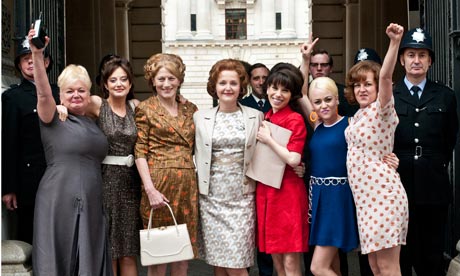
44. Made in Dagenham – A fantastic story about unions, industrial action and worker’s rights with all the sharp edges smoothed off for the mass market. Bob Hoskins and Miranda Richardson can do these roles in their sleep; Rosamund Pike and Sally Hawkins are predictably willowy and irritating respectively, but it still looks and sounds lovely.


45. Mao’s Last Dancer – This heavily doctored biopic of defected Chinese dancer Li Cunxin is far from subtle in its anti-communist propaganda and doesn’t for one second question that there may be another way. Capitalism rules – and if it doesn’t; they’ll invade and change the result anyway. If you can focus on the excellent scenes of male ballet dancing and ignore the hokey politics you might enjoy it.

46. Miss Pettigrew Lives for a Day – Amy Adams is less annoying than usual as she plays a particularly ditzy character, and Frances McDormand is sublime as ever in the sort of role usually reserved for Emma Thompson. Set in 1930s Britain, this light-hearted bedroom farce with a slight sense of urgency brought on by the imminent war is a better film than most rom com pap.

 47. Morris: A Life with Bells on – a wonderful mockumentary that affectionately examines the ‘seemingly innocent pub pastime for bearded men with hankies.’ It is filmed through a series of interviews set up in such crisp conditions they appear like portraits done by old masters, where every item in the picture is significant.

48. My Winnipeg (FS) – Canadians are weird; look no further for evidence than this film. Guy Maddin directs a documentary in black and white about his home town; the film has a deliberately hallucinogenic effect that lulls you into a sleepy sense of security before making you question as to whether any of this is actually true.

49. Nine – A musical male fantasy about the terminally self-obsessed writer/director Guido Contini, surrounded by glamorous women. The women have names, but these don’t matter as they are merely constructs to massage Guido’s ego and only exist in their relation to him; kind of Chicago for the boys.

50. Nine Queens (FS) – Argentineans make thrillers too; in this one some con-men set up a heist involving rare stamps. You just have to guess who is double crossing whom. Don’t ask me; we don’t trust them anyway!

51. Paris 36 – Murder, political intrigue, music hall actresses and 1930s Paris – what’s not to like? It’s charmingly sentimental and there’s no problem so great that it can’t be solved with a song and dance routine.

52. A Personal Journey with Martin Scorsese Through American Movies (FS) – A better director than he is a personal speaker, Scorsese still has a few gems to impart about film. ‘Spectacle alone will never make a great film. The audience want real people who they can relate to.’ This lengthy documentary (3hours and 46 minutes) is delivered directly to the camera and broken up by voice-overs over classic films, and is more educational than entertaining, like a well-worded essay with clear examples.

53. The Proposal – To stay in America, Canadian publishing tycoon Margaret Tate (Sandra Bullock) orders her young assistant to marry her, in return for promotion and publishing his first novel. He finds her demanding and over-bearing, but they are forced to spend time in each other’s company and guess what happens next... Yes, last year’s Green Card is as predictable as it sounds.

54. Public Enemies – Johnny Depp plays America’s most wanted; bank robber, John Dillinger. Despite the clear shooting of 1930s Chicago with all its glitz and glamour, the decision to play Dillinger as a normal person rather than a gangster hero makes the film seem a little flat. Even the fantastic line, ‘I like baseball, movies, good clothes, fast cars, whiskey, and you... what else you need to know?’ doesn’t thrill the way it should.

55. The Red Baron – Probably the worst film I saw this year. Baron Manfred von Richthofen discovers that shooting people out of the sky isn’t all it’s cracked up to be. It was as though cartoon characters came to life, except the drawings themselves would have been more animated.

56. Scontro di Civilta per un Ascensore a Piazza Vittorio – all of the occupants of a multi-storey apartment are connected (literally) by the lift in the heart of the building. When Lorenzo Manfredini goes up in flames in the lift, it transpires that everyone had a motive for murder, which they intone in voice-overs throughout the film. As well as being an Italian version of an Agatha Christie drama, this is also a thought-provoking and memorable parable about integration and unity.

57. Shrek Forever After – The fourth film in the franchise is exactly what you would expect –a fine blend of myth, nursery rhyme, fairytale and popular film culture played out against an eclectic soundtrack. The moral of the story appears to be that true love lasts beyond the initial flush of romance, but we are warned, ‘It’s all just a big fairytale.’ The highlight is seeing Puss in Boots’ alter-ego as a fat cat.

58. Shutter Island – Leonardo di Caprio delivers a powerful performance in Martin Scorcese’s psychological drama set in 1954 and on a rock that looks a lot like Alcatraz. The perfectly pitched gothic delusions keep you guessing to the end and thinking about it long afterwards.

59. Somersault – One word: Why? The film received many plaudits for ‘newcomer, Abbie Cornish’. I can only imagine that this is because she takes her clothes off a lot. You might like it if you are a teenaged male, but if you are looking for some acting, plot, decent direction, character development, unpretentious cinematography, clever script... look away now.

60. Sunshine Cleaning – Quite a cute film with an unusual subject matter; a crime-scene clean-up business. Although Amy Adams is terminally annoying, Emily Blunt is my new favourite actress – the story is secondary to the characters, and at least they have some.

61. Summer in Berlin (FS) – Two female flatmates live in Berlin and try to get through daily life as best they can. They make bad romance and career choices and end up drinking, smoking and talking on the balcony. Judging from this, film director Andreas Dresen must be Germany’s answer to Mike Leigh.

62. Tokyo Story (FS) – One’s duty to one’s parents is always fraught with anguish. In this black-and-white film set in Japan it takes on cultural as well as generational divides. Shot largely from low angles, there is a sense of discomfort throughout.

63. A Very Long Engagement – Mathilde (Andre Tatou) searches for her fiancé, Manech (Gaspard Ulliel) who is missing presumed dead after the Battle of the Somme in WWI. She is persistent and manipulative, using her deformity (she had polio as a child) and her winning smile to obtain information. The many threads to the story are a little distracting as Mathilde tracks down anyone who might have known Manech, but they are all well-acting, including a star turn from a cycling postman (Jean-Paul Roave). The whole is sweet rather than saccharine.


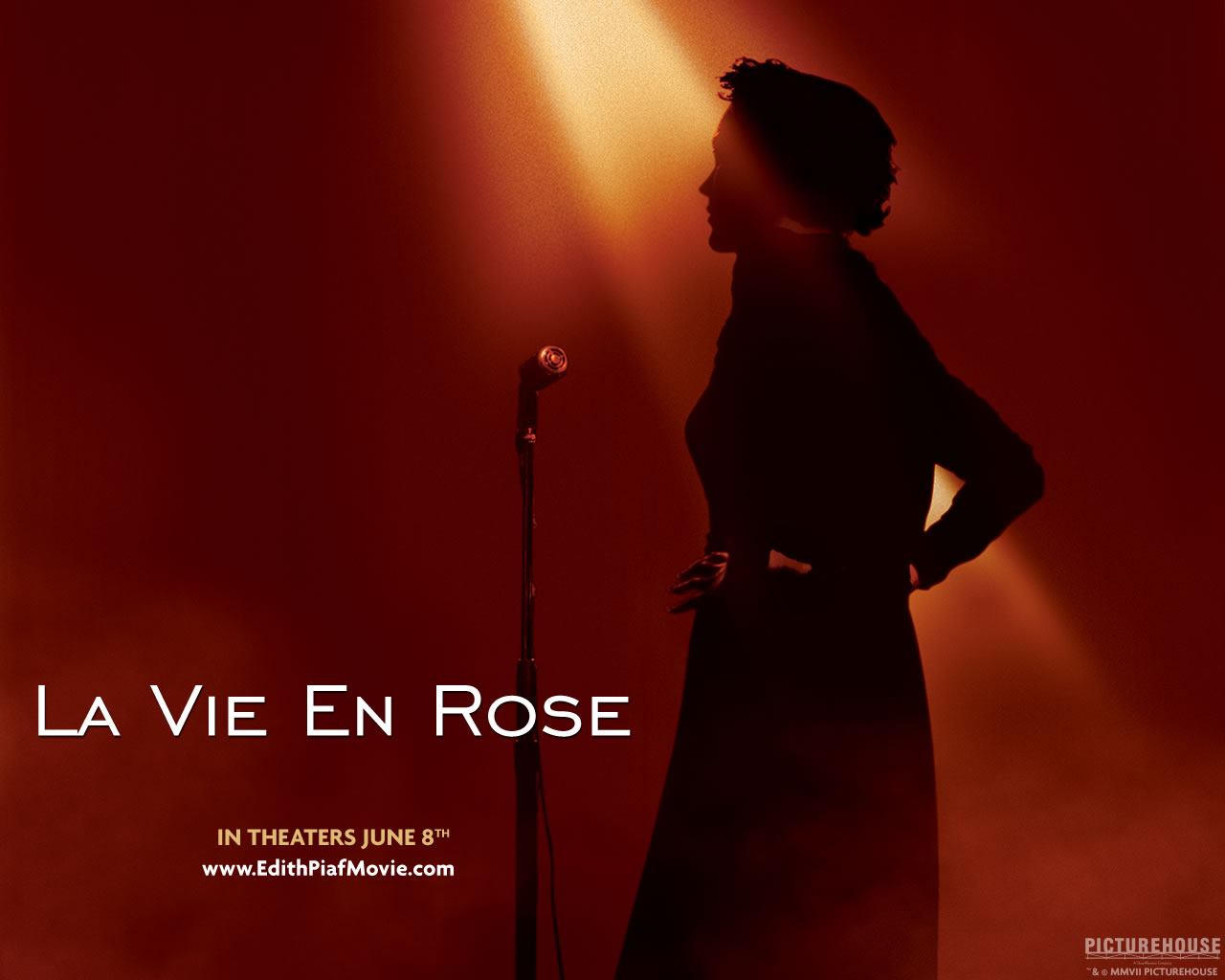
64. La Vie en Rose – Absolutely brilliant: great acting; great singing; great cinematography; great film. End of.

65. Volver – I never liked Penelope Cruz until I saw this film. When she is acting in her own language (rather than the stilted oh-so-sultry characters she normally plays in English) she is natural and wonderful, and the cute family story is a great vehicle for her obvious talent.

66. Das Weisse Band – A black-and-white psychological drama about a small village in 1914 with a group of supposedly innocent children, where there are mysterious deaths, accidents, tortures and disappearances; a sort of Teutonic Crucible if you will. The director (Michael Haneke) asks should the sins of the fathers be revisited on the children and for how long. As he is German, there is obviously an ulterior motive for this question.

67. Wild Target – The stellar cast (Bill Nighy; Emily Blunt; Eileen Atkins; Rupert Grinch; Rupert Everett; Martin Freeman) prevents this predictable rom com/ art heist thriller from becoming stale and turgid, but it is still full of obvious gags and unlikely coincidences. What it lacks in plot (a lot) it fails to make up for in originality – the constant bitching and bickering between the leads assures us they will end up together (for that is comedy convention) even if the lack of chemistry and extreme age difference make this less than convincing.

Wednesday, 5 January 2011

Films seen in 2010: Part Two

But wait, there's more: here's the second installment...

21. Date Night – Tina Fey and Steve Carrel are forced to play a variety of roles in this action/rom com when they are mistaken for big-time criminals. Their clutzy, clumsy, running into things shtick is light and entertaining, and there are also some original action sequences – a tug of war between two interlocked cars; domestic squabbles in the middle of a gunfight; and perhaps the funniest pole dancing you’ve ever seen. And it begins with The Ramones singing Blitzkrieg Bop so it can’t be all bad.

22. The Day the Earth Stood Still (FS) – This was deservedly a classic of time (1951); it’s still a classic of our times. The ‘special effects’ aren’t particularly spectacular by today’s standards (Klaatu wears a shiny silver shell-suit) but the politics (in which the aliens land on earth and tell us we must stop waging war on each other or we will destroy our planet) are remarkably familiar.

23. Daybreakers – In 2019 a plague has converted almost everyone into vampires and blood is swiftly running out. There’s got to be another way, according to researcher Ethan Hawke, but capitalist greed drives those who control the market and so keep the prices high – Sam Neill. This fails to be the analogy it wants because it can’t rise above the banality of the dialogue.

24. Die Hard with a Vengeance – Bruce Willis teams up with Samuel L Jackson to save New York from psychotic bomber Jeremy Irons. It may be fifteen years old, but if chase sequences, explosions and action plots are your thing, then it’s still a pretty good example of the genre. Yippee ki yay, motherf*%#er!

25. Disgrace – This film follows the book so faithfully, I wondered why anyone had bothered to make the film, unless it is just another chance to prove that John Malkovich is indeed, odd. If so, mission accomplished. There’s some stark and powerful imagery leaving nowhere to hide for the ugly nature of apartheid and its consequences.

26. District 9 – Township Johannesburg is invaded by aliens resembling giant prawns in a strangely moving and thought-provoking exposé of human behaviour. Directed in a fake documentary style, Neill Blomkamp manages to infuse stereotypical storytelling devices with a fresh twist. Some excellent performances and domestic politics make this a low-budget triumph.

27. Easy Virtue – So much better than I had expected, and probably equally appealing to both the British and American market. When a young Englishman marries a glamorous American and brings her home to meet the family, there is a delicious culture clash heightened by an intriguing soundtrack. Based on Noel Coward’s play, there are farcical elements but no warmth.

28. Faintheart – LARP-ing (Live Action Role Play) isn’t what you expect from an action hero, which is why this is a comedy. Eddie Marsan shows his sensitive side as he re-enacts eleventh-century battles and tries to win back his son and his ex-wife. Nice enough but nothing spectacular.

29. Fifty Dead Men Walking – An IRA film that doesn’t take sides? That’s probably because the director is Canadian (Kari Skogland) and the acting talent is British (Jim Sturgess and Ben Kingsley) rather than American. This is a political/action thriller that doesn’t spout platitudes and no-one makes any mawkish speeches about being a free man.

30. Flame and Citron – Two men in the Danish resistance during WWII start to worry that they may be being used to settle personal scores rather than secure political motives. It’s so focussed on playing up the uncertainty of the assassins that it loses its way and the plot becomes disconnected.

31. Good – Not all Nazis were nasty, apparently. Viggo Mortensen tries to convince that some were just caught up in events, but all actions have consequences, fame comes at a price, and this isn’t the best example of either platitude. I’m also still not convinced by Viggo Mortensen as anything but a slightly sulky ring fellow.

32. Green Zone – Matt Damon stars in this war film about the search for weapons of mass destruction in Iraq and the consequences of their lack of appearance. Paul Greengrass directs one incident in Rajiv Chandrasekaran’s brilliant book, and the film manages not to be too bad either.

33. The Grocer’s Son – This French tale is pleasant without being pretentious and you slowly grow to like the honesty of the well-acted characters. Although they don’t really do anything, they do it endearingly in beautiful scenery. Sometimes less really is more.

34. Harry Potter and the Deathly Hallows (Part One) – I miss Hogwarts. As with the books, I prefer the Enid Blyton to the JRR Tolkein aspects. From an exciting magical romp, the story turns into a pedestrian quest , and not even the majesty of Malham Cove can lift the tale from the slough of despond. As the first installment of the seventh part of the story, this was inevitably going to suffer from over-exposition. There are hints and flashbacks aplenty (with extra cameos for departed characters) but the story itself is stilted and reined in; waiting for the final episode to unleash the great battle between the force and the dark side.

35. The Hurt Locker – One that actually does deserve the Oscar. War is disturbing and there are no easy answers, either for the elite bomb squad in Iraq or for us on the sofa at home, watching the almost unbearably tense drama unfold. It is appalling, but for some it is also appealing and who is to say who is right? The best film of last year.

36. The Informant – Matt Damon plays against type and the result is both believable and entertaining. Bumbling and beefed up, he is a naive whistle-blower trying to protect honest folk from corporate greed. Or is he? The humour is subtle rather than sledge-hammer and the tone is sardonic rather than slick. Director Steven Soderbergh has done a great job with this material.

37. Inglourious Basterds – Tarantino does WWII in the film a lot of people were waiting for. Although there are some excellent long sequences of dialogue and tension, it’s nothing you haven’t seen before from Tarantino and in fact, the heavy-handed mix of comedy and gore doesn’t sit well with the horrors of the Holocaust. Yes, it’s still too soon, but more than enough for me from the geek-genius.

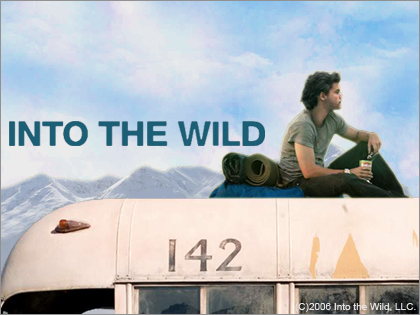
38. Into the Wild – When I read the book, I thought Christopher McCandless was a spoiled little rich kid who made some stupid decisions that led to his untimely death, and I didn’t really care. Sean Penn’s direction elicits a sympathy that was absent from the original narrative – is this because Hollywood has to identify with the hero?

39. Iron Man 2 – Over-the-top fight scenes and action sequences featuring guns, cars, machines, weaponry and lots of explosions are ten-a-penny, but as we’re talking Robert Downey Jnr. there is still a smattering of humour and flawed genius. There are spies, baddies, double-crossing, a love interest and textbook narcissism which leads to (or is the result of?) a strained father/son relationship. But really, it’s all about the toys.

40. Knight and Day – Tom Cruise and Cameron Diaz are both good action heroes but they have no chemistry together. This is still entertaining enough as an action-thriller as an everyday girl is caught up in extraordinary events. The set pieces race along although they don’t connect with any credibility.

Monday, 3 January 2011

Films seen in 2010: Part One

New Year is a time to reflect and make lists (especially for Librans). So, Happy New Year, and here are the films I watched in 2010 in alphabetical order. (Not that I watched them in that order, you understand...) FS realtes to the films I saw as part of my membership of Film Society.

1. The Accidental Husband – I got the title confused with Oscar Wilde’s An Ideal Husband, which is a witty, amusing satire with spirited dialogue, sexual politics and sympathetic characters. This drab ‘romantic comedy’ has absolutely nothing in common except for the final word of the title. Big mistake.

2. The Baader-Meinhoff Complex – Germans can be very intense and single-minded, as we know. This terrorist organisation planned bombings, kidnappings, robberies and assassinations in the late 1960s and 70s to protest against the new fascism – American capitalism. In this political drama we see how the ends are used to justify the means and how a supposedly secure unit can disintegrate from the inside. And it’s all true.

3. Berlin is in Germany (FS) – No, not a geography lesson, but a history one about a man who goes to prison when Germany is divided in two, and is released after the wall has come down. Adapting to life on the outside is even more difficult when your boundaries have literally been redrawn.

4. Bestseller – A Korean ghost story has all the requisite trappings of a classic horror story but still manages to hold some interest. A writer who may or may not be losing her mind; a silent daughter with an invisible friend; a strange old crone; a decrepit house by a lonely lake surrounded by woods – what could possibly go wrong? Plenty, it would seem.

5. Beyond the Darkside (FS) – A selection of short New Zealand films indicates that Kiwis are a little too connected to their environment and they need to stop taking themselves so seriously – themes of murder and bullying and abuse are played out against a bleak, claustrophobic landscape in which it is raining. Not exactly light-hearted...

6. Black Sheep – And so it was done; the Kiwis made a splatter-fest with sheep involved. This is an ovine version of The Birds but not as intense or self-consciously serious. It’s only got one joke and it goes on for a bit too long, but it’s amusing in a woolly sort of way.

7. The Blind Side – Sandra Bullock won an Oscar for her role in this schmaltzy and non-too realistic (although based on a true story) portrayal of a wealthy WASP momma taking in a big black homeless boy (Quinton Aaron) who can’t read but can play American football like a demon. It’s all very ‘nice’ and predictable but quite touching in parts, despite the heavy-handed ‘we’re all one people’ moments.

8. The Book of Eli – An extremely obvious and predictable parable with no surprises despite some good acting from Denzel Washington and Gary Oldman. It’s very dusty in post-apocalyptic America, but young men are still encouraged to Go West!

9. The Boys are Back – Clive Owen is a favourite of mine and he’s so good I will watch him even in a film about children. When he becomes a single parent in tragic circumstances, Supernanny probably wouldn’t approve of his child rearing methods, but he loves his children and does the best he can. I found my heart warmed and my eyes brimming despite myself.

10. Breathless (FS) – When this Jean-Luc Goddard film came out in 1960 it heralded the New Wave in French cinema and blew everyone away. Clearly times have changed. The story itself (a small-time thug who hangs out with his American girlfriend while on the run from the police) is not as important as the way it is told.

11. Bright Star – This is an utterly beautiful depiction of the three-year romance between Fanny Brawne and John Keats, and the affect it had on their families and friends. Jane Campion’s directorial focus can make anything look attractive, and the bluebell woods are simply divine. It’s heart-stoppingly, desperately romantic – one for the girls, perhaps?

12. The Brothers Grimm – Fairytales are far from cuddly and full of deception and depravity in this fable for grown-ups, starring Heath Ledger and Matt Damon. Terry Gilliam’s muddled vision is not quite Pan’s Labyrinth, but it’s a long way from Disney’s sanitised tales.

13. Cemetery Junction – Reading is boring – I could have told you that – but apparently in 1973 it was even more boring. This British comedy about coming of age and discovering sex has a cute (albeit predictable) homily about how much you should escape and how much you should honour your roots – should you ever forget where you came from? It’s an old story, well told with a script by Ricky Gervais and Stephen Merchant.

14. Cheri – This is a slightly overwrought story of a young man falling in love with an older woman, but it was written by Collette, so what do you expect? Society is scandalised although the ‘older woman’ is the still-gorgeous Michele Pfeiffer, so it really shouldn’t be. Female reviewers like it and males don’t – I guess they don’t appreciate the double standard. Plus ça change...

15. Clash of the Santas – Probably not the best Christmas film ever made, but certainly not the worst either. Robson Green and Mark Benton (among representatives from around the world) battle it out to see who is the best Santa at an international competition in Lithuania. Contests include (frozen) turkey bowling, side-car racing and chimney climbing in a cosy tale that will not cause any problems while digesting the Christmas dinner.

16. Close-Up (FS) – It’s not every day I watch an Iranian film... and on the basis of this one, it will be a long time coming before I watch another one. This is supposedly a film that makes you think about the impossibility of true documentary. I found myself looking at the radiators on the walls and thinking, ‘Oh, so that’s how Iranians heat their houses’... Compelling it wasn’t.

17. Cold Souls – Billed as a ‘weird comedy’, this is really just weird. Paul Giamatti plays Paul Giamatti (although not quite himself) as he searches for his soul in his life and his self. The navel-gazing, self-obsessed, neurotic, whiny, cynical, fed-up, depressed and depressing New York element is funny in a Woody Allen sort of way, if you like that sort of thing.

18. Confessions – This Japanese revenge tragedy was intriguing from beginning to end. No one can be trusted, and the many twists and turns to the narration are explosive. With callous youths and calculating teachers, this film refreshingly subverts the inspirational teacher genre. Brilliantly brutal; please no American remake.

19. Creation – The story of a man’s personal and familial battle – to confirm what he has proven; he must turn his back on all his wife believes. Paul Bettany embodies Charles Darwin’s inner struggle beautifully with nuances of insanity as he wrestles with the big issues.
 
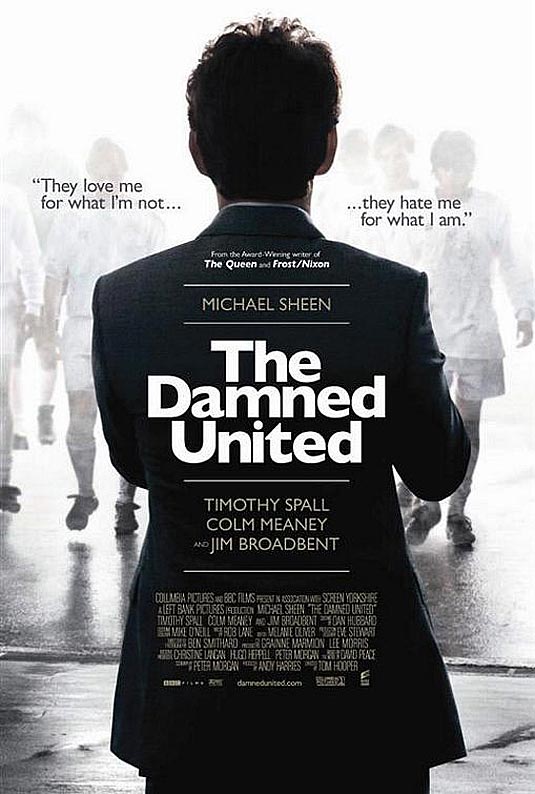
20. The Damned United – I’ve only ever seen Michael Sheen play Tony Blair, which he does frighteningly convincingly, but he does Brian Clough equally well. With sensitive portrayals of men under pressure, he and Timothy Spall bring Leeds to life – even the American critics loved this film (although they did insist on calling it soccer).

Tuesday, 28 December 2010

Fashion Matters

While I was in England, in between cultural expeditions and riverside walks to village pubs, I read the papers as I lounged around my parents’ house drinking cups of tea. They were full of reports about the impending election for the leader of the Labour Party, which is fair enough as this is of national (and potentially international) importance.

More surprising to me was the number of articles about fashion even in the ‘heavyweight’ papers. I would have thought the re-emergence of animal prints or this season’s techniques of belt-wearing were somewhat frivolous, but it appears not. London Fashion week, apparently, makes £20million a year for the capital and has wider implications for tourists attracted by the shopping in the UK.

I was always surprised by American surveys that listed ‘shopping’ as a preferred holiday activity, yet I have friends who visit Melbourne on shopping trips and when in Wellington would rather admire Lambton Quay retail outlets, than Te Papa cultural exhibitions. A friend who works in recruiting tells me that ‘fashion’ has firmly replaced ‘reading’ on young girls’ lists of interests on their CVs.

Harold Tillman, chairman of the British Fashion Council is unsurprised by a recent report that claims ‘the UK fashion industry is the largest employer of all the creative industries, directly employing 816,000 people. The industry is similar in size to food and drink services and generates more than twice as many jobs as real estate, and considerably more than telecommunications, car manufacturing and publishing put together.’

Indeed, the report finds that British fashion contributes almost £21billion to the UK economy, and in times of financial crisis, that is not to be sniffed at. Perhaps clothes really do maketh the man – or at least, the woman.