Showing posts with label The Man Booker Prize. Show all posts

Friday, 28 July 2023

Friday Five: Books Read in July


Books read in July:
  1. Quichotte by Salman Rushdie - Shortlisted for the 2019, Quichotte, is a breathtakingly sophisticated novel of postmodern genius, featuring a picaresque style and a desperately ordinary protagonist. Sam DuChamp is an Indian-born writer living in America, who has written a number of unsuccessful spy thrillers. Hoping to write a book "radically unlike any other he had ever attempted", he creates the character of Ismail Smile, a travelling pharmaceutical salesman. Having worked for unscrupulous companies and suffered a stroke in old age, Smile begins obsessively watching reality television and becomes infatuated with 'celebrity' and former Bollywood star, Salma R. Despite having never met her, Smile sends her love letters under the pen name of Quichotte and begins a quest for her across America with his imaginary son, Sancho. It is a spectacular piece of literary satire, which confounds simple synopses, as it is impossible to separate what is 'real' and what is not. That is clearly no accident in this post-truth society in which we find ourselves. 
  2. The Opal Desert by Di Morrisey - Di Morrissey sets place extremely well. In her dozens of novels, the scenery and landscape are immediate and infinitely better drawn than her characters or plotlines. The Opal Desert is, unsurprisingly, set in Lightning Ridge, Broken Hill, Opal Lake, and White Cliffs, where most people are exceptionally friendly and we learn about the precious stones and the community who mine them. The three women around whom Morrissey tells her tale, Kerrie, Shirley and Anna, are all fairly predictable stereotypes who overcome their personal obstacles in life-affirming ways, which may not be realistic, but are heart-warming. Many people head to the opal fields for a change of pace, which is admirable. One character states, “We all need time out, as they say, on occasion. But that’s all it should be, a space between decisions. It becomes very easy to drift. You see it happen out here and before you know it, you’ve lost a great chunk of your productive life.” This begs the question, why must you be productive; what is the definition of produce – is it capitalist growth, and is that why Indigenous culture is ignored because it doesn’t visibly contribute to the GDP? What is wrong with “drifting”? Perhaps it has to do with the nature of Morrissey’s storytelling, in which all is tied up neatly at the end. It seems easy to get to be a curator, train for world athletic events or have an exhibition of paintings. Other character’s mysterious circumstances are cleared up in a page or two and everyone gets closure. This makes the people instantly forgettable (so much for recording their stories) but the landscape lingers in the mind.
  3. Bewilderment by Richard Powers - Shortlisted for the 2021 Booker Prize, Bewilderment is a deeply moving and powerful novel, set in the near future. It concerns the degradation of the planet in tandem with a father's love for his neuro-divergent son. In an interview for the Booker Prize, Powers said, "It is, in part, a novel about the anxiety of family life on a damaged planet, and for that, I'm indebted to writers as varied as Margaret Atwood, Barbara Kingsolver, Evan Dara, Don Delillo, and Lauren Groff." It is a rich novel full of connections as, grieving for the loss of the wife and mother, the two embark on a camping trip in the wilderness to heal through nature. When they return to the 'real' world of work and school - competition, conformity and bullying - they are introduced to AI technology which can help connect to memories of others and suggest life in parallel universes. Some reviewers have considered it didactic and claustrophobic. Perhaps this is intentional as, if we continue to ignore the environmental portents, are we endangering our own species as the world closes in on us? 
  4. Shit, Actually by Lindy West - Lindy West is a New York Times opinion writer and best-selling author who used to be the in-house movie critic for Seattle’s alternative newsweekly The Stranger – with a genuine adoration for nostalgic trash. In this humorous feminist revisionism re-evaluation of cult and classic films (re-watched during lock-down), she ranks all films against The Fugitive, which she thinks is the perfect film – Love Actually is the worst (why don’t any of the women actually talk?). Featuring rants, all-capital letters and italics, slang, swearing, and erratic punctuation, it reads like a teenager’s texts, complete with hashtags and initialisms such as YOLO and BTW. Other than Love Actually and Harry Potter and the Philosopher's Stone (called Harry Potter and the Sorcerer's Stone here), all the films are American blockbusters. As West writes, “I’m sorry but if there’s a British guy in a suit who talks in the first five minutes of your movie, he’s the villain! If it’s Tom Wilkinson, you’re fucked.”
  5. Lessons in Chemistry by Bonnie Garmus - I have read this for not one but two book clubs, for which it is the perfect fare. Although a brilliant chemist, Elizabeth Zott is not taken seriously because she is a woman in the 1950s and, “When it came to equality, 1952 was a real disappointment.” Because she is beautiful and intelligent, the only thing the men can think of to do with her is either mock her when she spurns their sexual advances, or suggest she present a cookery show. In scenes familiar from Julia Childs' biographies, Elizabeth teaches women about self-worth as much as cooking. She focusses on the chemical aspects of cooking as she continues to refute social norms and expectations. There are some tough, hard-hitting moments, but it feels overall uplifting, and the bright primary colour scheme of the mid-century domestic sphere will look enchanting on the small screen in the inevitable TV adaptation. As she defends the importance and influence of women, Elizabeth points out, "Chemistry is inseparable from life – by its very definition, chemistry is life. But like your pie, life requires a strong base. In your home, you are that base. It is an enormous responsibility, the most undervalued job in the world that, nonetheless, holds everything together.” 
  6. After Sappho by Selby Wynn Schwartz - Mostly what we have of Sappho’s work is of fragments of writing, and this novel emulates that style with short vignettes that feel like excerpts of longer works, all relating to great female creative artists; their work, loves and lives. They work together even if they have never met in a style of sisterhood. It includes snippets of laws passed against women and miniature biographies, which lead to further exploration. Men have been cut from the stories, as women have historically been, and their absence is no great loss, as they have dominated the narrative for too long. As the author writes, “What was a man’s life but the inalienable right to verbs of action? What might Vita [Sackville-West] have become, given the transitive and a pair of sturdy boots?”

Friday, 12 July 2019

Friday Five : The Evolving Book Pile

At the beginning of the year I took a picture of the pile of books on my bedside table. By the end of year, I expect I shall still have a pile of books, but I would like them to be different ones. This is the six-monthly record of the evolving nature of that pile.

Bedside book pile January 2019
In January I read My Absolute Darling by Gabriel Tallent, The Sympathizer by Viet Thanh Nguyen, and All in the Timing by David Ives from my pile. I picked up the former while in Powell's City of Books in Portland. I was considering reading it over Christmas, but Christmas is supposed to be cheery and this book is anything but, so I waited until afterwards to embark upon it. A fourteen-year-old girl grows up dealing with nature and approaching adulthood through adventure and grit; like a female version of Huckleberry Finn with an added whack of abuse that is agonising to read. Happy New Year! 

The Symapthizer was lent to me by a friend who claimed the prose is beautiful. He's right. Mind you, it won the 2016 Pulitzer Prize for Fiction, so he's not alone in thinking that. It covers a range of genres from espionage thriller to darkly comic political commentary, and, because it deals with the Americanization of the Vietnam War, it nods somewhat vigorously towards Graham Greene. 

David Ives' All in the Timing is a collection of fourteen short plays set in surreal situations. Overlapping scenes, non-linear time, multi-faceted characters, literary allusions and fluid language make these a thoroughly entertaining cerebral challenge. David Ives is a comic genius who has put the play back into playwright. 

I also read Wicked Sisters by Alma de Groen, which was not in the pile. I am part of a committee which is producing this fantastic play in a couple of months in which four women meet up after the death of one of their husband's and learn more about him and themselves in the space of a wine-fueled evening than they ever knew or wanted to know.

Books read from pile: 3/11

Bedside book pile February 2019
In this month I read The Overstory by Richard Powers from the pile, and several others that weren't in it. The Overstory was shortlisted for the 2018 Man Booker Prize - it considers the narrative of life above ground, while maintaining that everything is connected beneath it. There are diatribes upon trees; growth; concentric circles; timelines; length of time taken to replace and regenerate; the fact that we have missed our opportunity and are now all doomed.

I also read The Mars Room by Rachel Kushner, which was similarly shortlisted - set in a women's prison and told in the first person through flashbacks, it details the lives of the inmates with a combination of mind-numbing boredom and bone-crunching brutality. We learn that these women are largely incarcerated due to poor choices made in the face of so few opportunities.

In keeping with the theme I read the winner of the 2017 Man Booker International Prize, A Horse Walks into a Barby David Grossman (translated by Jessica Cohen). It is a very short but very complex novella about a comedian who falls apart on stage. It is set in Israel and packed with lines that are certain to offend, but it presents a clever comparison between the individual and society, and how disease spreads from within to become all-consuming. 

The plays I read were Melancholy Play by Sarah Ruhl, which is admirably bonkers and addresses the issue of why we find sadness so attractive, and A Doll's House Part 2 by Lucas Hnath. I've never been a fan of people penning sequels to the works of others, but I have been asked to audition for this play, so I thought I should at least read it. I like the ideas and concepts about the need for equality in all things, but I'm yet to be convinced of its necessity.

Books read from pile: 4/14

Bedside book pile March 2019
March's reading was quite varied and included a few from the pile. Oscar Wilde's The Happy Prince, the Selfish Giant and Other Stories is full of tales of practical characters in fairy-tale situations where beauty is admired above all, which leads to bitterness and anger when youth fades. I read it as a child and dug it out again after seeing both the film The Happy Prince and the play The Judas Kiss in the space of a couple of weeks.

Silent Women: Pioneers of Cinema edited by Melody Bridges and Cheryl Robson is a collection of essays about the women who helped to shape the film industry: actors; directors; editors; marketers; producers; managers - there is a lot of historical content explaining how roles were not so strictly delineated (many women had creative control but were not called directors) and how various movements in the past affected their status in Hollywood and elsewhere. More recently, 1995 was “the peak of female director hires in the United States. For the next twenty years, women directors would face stasis and decline in employment.” In fact, only 1.9% of directors of the top-grossing one hundred films of 2013 and 2014 were women.

I'm not usually a fan of stream-of-consciousness novels (James Joyce and Virginia Wood test my patience to the limit), but the self-obsessed need to express every tiny thought no matter how banal, fits the teenage narrator of Milkman perfectly. Anna Burns' 2018 Man Booker Prize winning novel is set in Northern Ireland during The Troubles, (or 'the problems') as they are called here: it is almost comical (in a Monty Python People’s Liberation Front sort of way), but people are killed for these minor details, so the humour is very dark.

Having heard nothing about Of Love and Techno by Anthony Marra, I got it out of the library on a whim due to the title and am so glad I did. The multi-layered story about censorship and art, which covers many decades, nine narrators and a variety of styles, remains absolutely engaging throughout. It is one of those weird coincidences that one of the characters mentioned in the novel is Russian poet Anna Akhmatova, the titular character of Alma de Groen's time-travelling The Woman in the Window, in which anything is possible in a world where quantum physics explains different dimensions.This play, with its dual narrative thread of repressing poetry in the past and future for political purposes will be produced by Canberra Repertory later in the year. It's a great story with powerful themes and plentiful scenes - I'm looking forward to seeing it.

Books read from pile: 8/16

Bedside book pile April 2019
In April a friend lent me Bridge of Clay by Markus Zusak, and I liked The Book Thief, so I gave this a go. Big mistake. And I mean big. Huge. It is clearly meant to be an homage to Homer but, while Homeric epithets may work in epic poetry; repetitive descriptors, sonorous syntax and quirky sentence length are tiresome in this novel. The novel revolves around five boys growing up in a rural suburb in New South Wales, and at almost 600 pages, it reads as if Zusak doesn’t know where to start, or finish, or even what to say.

The Essex Serpent by Sarah Perry was a lot more successful, in which (to copy from a Guardian review), 'An Essex village is terrorised by a winged leviathan in a Gothic Victorian tale crammed with incident, character and plot'. From the book pile I also began to read Every Last One by Anna Quindlen, until I realised that I already had, and so returned it to the library.


Books I read that never made it into the pile were The Mao Case by Qiu Xiaolong (the sixth outing for Chief Inspector Chen, who has to solve a crime in Shanghai and Beijing, which may or may not involve Chairman Mao), The Graveyard Book by Neil Gaiman (which I read to help a student at work with a school project), and The Long Take by Robin Robertson. The latter was another shortlisted nominee for the 2018 Man Booker Prize and is a poetic work of brilliance, historical worth and impermanence, as the noir narrative exposes the black and white cinematic qualities of city developments and PTSD.

I also read Escaped Alone by Caryl Churchill because she is my favourite playwright and I am trying to find plays with strong female characters - this has four of them (all over sixty) who chat in the back garden with dialogue charged with incident and heightened reality.


Books read from pile: 11/18

Bedside book pile May 2019
I persisted with Anna Quindlen in May and read Still Life with Bread Crumbs. It's fine; gentle and comforting although occasionally it can also be a touch clichéd. The novel deals with loneliness, depression, mental illness, and creative temperament. These are big issues, which are important to address, but the treatment at times feels a little superficial. In the Blood by Lisa Unger is a perfectly readable thriller about missing college friends and maniacal children that didn't make me lose any sleep.

You Say Potato: A Book about Accents by Ben Crystal and David Crystal, on the other hand, is an absolute ripper. The father and son combination, with an almost intimidating knowledge of acting, Shakespeare and linguistics between them, riff on the topic of accents: where they come from; how they evolve; how they are influenced by fashion and attitude; and how "we think people should be proud of their accent, whatever it is.”

Not in the pile (but I read them anyway), were How to Talk to Girls at Parties by Neil Gaiman (about which I feel rather conflicted), and Votes for Women and Other Plays edited by Susan Croft - still on the lookout for strong female roles, I thought I could do worse than approach this anthology of plays, sketches and monologues to celebrate the centenary of the Suffragettes. It is, indeed, fascinating in its range and scope. 

Books read from pile: 14/ 21


Bedside book pile June 2019
I managed to read two book from the bedside pile in June, and what wonderful ones to choose. Simon Armitage wreaks amazing magic with his translation of Gawain and the Green Knight, which is funny and modern, while adhering to the style and traditions of the original. I read it and then I read it again out loud, because the words are supremely satisfying and they cry out to be spoken.

I also read Bad Feminist by Roxanne Gay, which is a well-written series of essays about feminism and other things: from the traumas of fat camp to the triumphs of scrabble tournaments; good journalism and social responsibility; lessons learned from teaching and the guilt of enjoying reality TV and rap music. 

Because we went for a long weekend to the coast and because I like to read books set in similar habitats to my environs, I finished off the mid-year by reading The Alphabet of Light and Dark by Charlotte Wood (an over-wrought piece about a woman drawn back to her home town after her father - the lightkeeper's - death, which won the Australian Vogel Literary Award in 2002 and readds like it was written by a creative writing graduate. It was.) and Dance upon the Air by Nora Roberts (in which three women represent earth, fire and air, and have brown, red and blonde hair and combine their spiritual powers to defeat men and commune with nature and blah, blah, blah...).

Books read from pile: 16/24

Total number of books still in the pile from the beginning of the year: 3/11

Saturday, 12 January 2019

A tour de force of story-telling


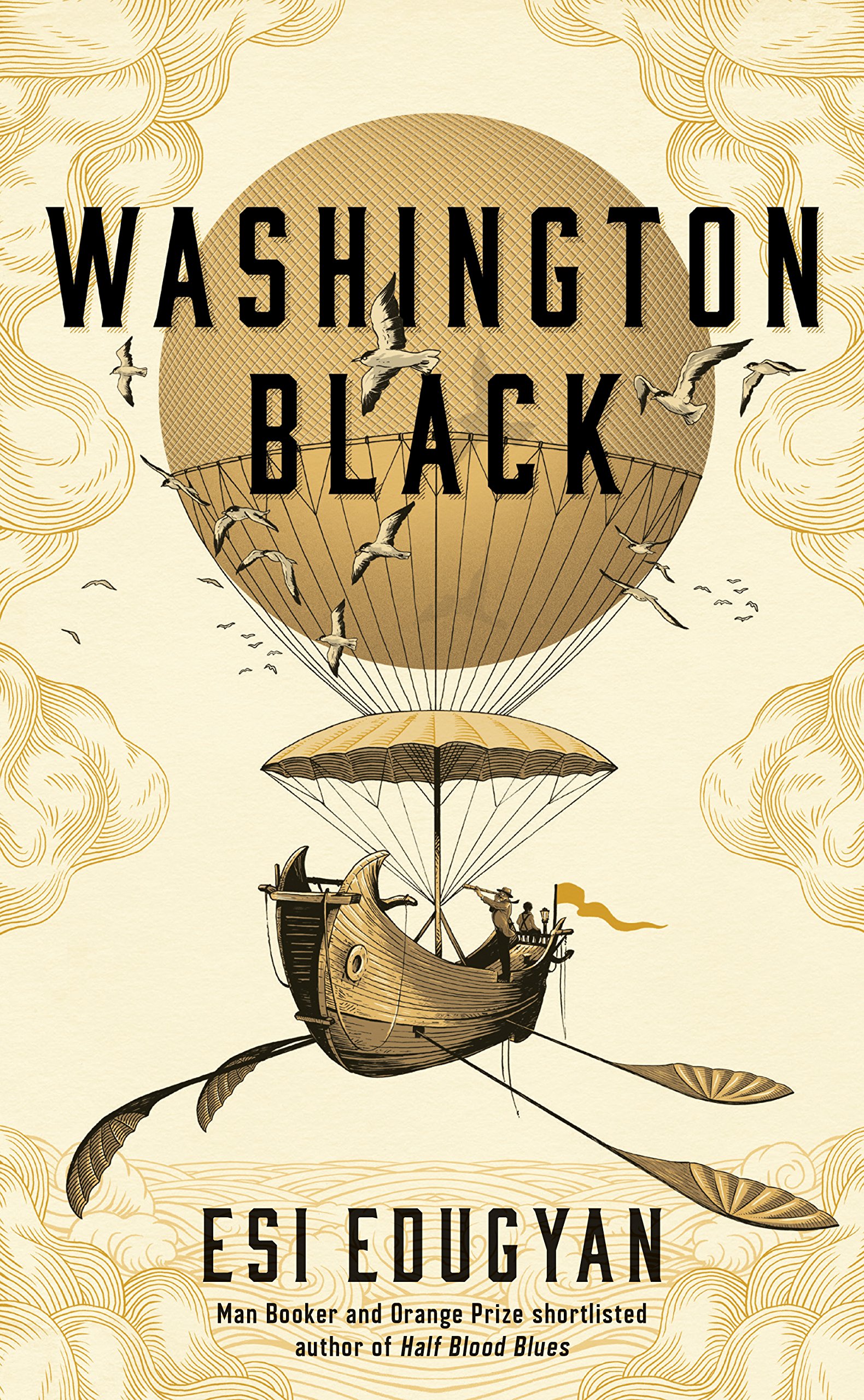
Washington Black by Esi Edugyan
(Serpent's Tail)
Pp. 417

This is a picaresque novel full of adventures and multiple locations: from the slave plantation in Barbados to the frozen wastelands of the Canadian Arctic; from the structured canals of Amsterdam to the wild coasts of Nova Scotia; from the scientific calm of the London Aquarium to the wind-swept deserts of Morocco. It is peopled by explorers, adventurers, scientists and exploiters. Everyone is seeking something: discovery; freedom; equality or survival, and it can all be realised as Washington Black says to his mentor who warns him something is impossible, “Nothing is possible, sir, until it is made so.”

Washington Black is rescued from his brother’s slave plantation by adventurer and inventor Christopher ‘Titch’ Wilde, who says he wants a young boy to help him carry his instruments and take scientific measurements. Titch is trying to sail in a cloud cutter – a craft propelled by both a hot air balloon and more prosaic oars. He encourages Washington’s prodigious gift of drawing and removes him from the daily cruelty of life he has previously experienced. Is he really benevolent, however, or simply using him for his own means?

After an incredibly unfortunate incident, Titch knows that he and Washington must flee and so they affect a wonderfully improbable escape to the Canadian Arctic. Here Washington is introduced to a new world, culture and relationships. When Titch disappears from Washington’s life, he is presumed dead, and Washington must attempt to forge his own way in the world that has hitherto denied him freedom.

Edugyan never flinches from the violence and barbarism of slavery and its consequences, but nor does she dwell upon it. Washington knows his mother was abused and raped, and he writes baldly of the horrors of the slave ships: “The stench of the holds, all of them rolling naked and ill in the dark stomach of the barquentine. The urine and excrement and vomit, men clawing their own throats open with ragged fingernails, bloodied women leaping the deck rails into waters sharp with the fins of sharks. I saw the dozens who had died on the way to Barbados, and I saw those who died once ashore.”

In striving for his freedom, Washington severs his ties with his previous existence and the people he once knew and cared for – it seems that he can only care for himself in order to survive. The novel questions the meaning of belonging. We understand that we do not belong to a person, but can we belong to a place, and how important are family connections? When Washington suspects that Titch may be alive, he begins to search for him, but why? Was he abandoned?

As well as being a sweeping saga of derring-do and outrageous plots, this novel also examines the conundrum of colonialism, survivor’s guilt, and the impossibility of altruism in a pointed and poignant manner. The language is clear and precise as Washington attempts to describe unimagined circumstances, and the fantasy and realism elements blend well in a tour-de-force of storytelling.