Showing posts with label translation. Show all posts

Tuesday, 28 June 2022

Character Sketches: Shenzheners


Shenzheners by Xue Yiwei
Linda Meith Publishing Inc. 
Pp. 176

Considered to be the Chinese Dubliners – the dedication is “To the Irishman who inspires me” – this is a collection of short stories about the people who live in Shenzhen. The young city of Shenzhen has grown astronomically to become a major metropolitan centre; a city in which everyone is a newcomer. The author writes of teachers, taxi drivers, dramatists and peddlers; we see their relationships with their family members and their environment. The prose is crisp and sparse, accompanied by simple but expressive line drawings by Chinese illustrator Cai Gao.

The blurb on the back of the book jacket claims it is, “The first book in English by acclaimed Chinese-Canadian writer Xue Yiwei) but on the front are the words, “Translated from the Chinese by Darryl Sterk”, and the acknowledgments at the end refer to “translator Darry Sterk, who has turned the original Chinese into elegant English with the skill of a magician.” The different spelling of the name may be an unfortunate typo, but the whole thing is a little confusing, especially because language and pronunciation play such a big part in the stories.

Translation battles continue between characters; “I said it was a straightforward line. I couldn’t think of a need to translate it any other way.” The unnamed, omniscient narrator considers their words carefully when describing The Dramatist. “The neighbours called him a weirdo. But I felt that weird was the wrong word for him. From the start, I felt that eccentric would be more apt.” In other stories, specifics of pronunciation place a person in a strict class hierarchy. “Most of my classmates had worse pronunciation than mine, not to mention my teacher, a lady for whom even vowels were a challenge.”

There are aspects of the Chinese culture that are specific to the place, although they are not always remarked upon. One character casually notes, “I reached under my bed to retrieve the envelope with my yearly allowance, which Chinese children receive every Chinese New Year.” We recognise the element of childhood competition in everything from reading and swimming to mastering languages, maths or chess. One character reminisces, “I was a prodigy the whole city had taken note of. I was the apple of my parents’ eye and the centre of public and media attention. I was a role model, and example other parents held up when assessing their own children, a pair of exceptional coordinates on the grid of achievement.”

Most of these characters are male, and the ones who are female are sketchy. The Taxi Driver reflects, “He had never much cared about the expression on his daughter’s face, or about her existence. He was the same with his wife. He’d never imagined that they might cease to exist.”

Apparently The Dramatist had once written a one-act play about a city bus stop. There were no protagonists in the play, just people arriving and departing, as they did every day. He said that he wanted to express the absurdity of life by means of repeated departures and arrivals.” The city bus-stop may be the perfect metaphor for this collection of stories – we only see the outlines of the characters as the stories are remote and distant as if in this society of digital hyper-connectivity, no one knows anyone else at all.

Shenzhen: the tech capital of the world

Thursday, 9 April 2020

Small Town Boy: The Ballad of Barnabas Pierkiel


The Ballad of Barnabas Pierkiel by Magdalena Zyzak 
Henry Holt 
Pp. 269

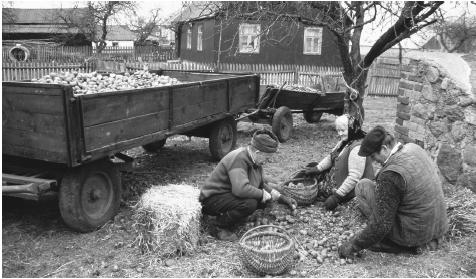
The narrator of this tale is our guide to the tiny town of Odolechka “located so far from the sea and everything else that nearly no one had known it existed, that is, until everyone knew at once.” In a cross between Borat and Gogol, she mocks the town and all the inhabitants with a gentle satire that points out both their limitations and pomposity. The parishioners and villagers hate each other and are mainly concerned with eating sausages and salted herrings. Our eponymous hero is seventeen and lazy; obsessed with Roosha, the gypsy woman, and his own appearance.

Odolechka does not have much to recommend it. Indeed, when a German spy (with the wonderfully unsubtle name of Boguswav) arrives by parachute and quizzes the mayor and the police chief about their town’s assets, they proudly show him the highlights: an abandoned barracks; haylofts; straw stacks; the windmill; the abandoned string factory; “the scarecrow in the corn field by the wheat field by the edge of town”; “our split oak tree, where Kashak crashed his bicycle” the scorched bootlegging barn; hectares and hectares of cabbage fields; some picket fences; and a well with four bricks missing.

In the true style of a picaresque novel, the town is populated by simultaneously dull and colourful characters, including the police chief who is so fat he can barely squeeze between the church pews, and the mayor who is not much thinner. There is an entrepreneur with a motor vehicle (the only one in the village) a doctor and his phlegmatic wife, and Kumashka, the drunken priest, concerned with minor points of scripture.

Much of the humour comes from the fact that the author claims this is a poor translation, while using specific expressions and complex vocabulary, which has the reader rushing to a dictionary. For example, at one point in church, Barnabas was “leaning on a splintery pilaster in the narthex” and when there is nothing to counter the religious fervour of Kumashka, “The speechlessness of the laity was so entire that borborygmus here and there was heard.” Throughout the narrative, she deliberately deconstructs and draws attention to the artifice of the novel, and frequently loses track of the main narrative, trailing off after other non-entities, only to “return to our hero, whose perspective the negligent author keeps abandoning.”

The quixotic folk tale elements cease abruptly, and a realistic WWII conflict ensues which none predicted. Zyzak’s tale is a blow to complacency. The fictional, bumbling, rural town of Odolechka and inhabitants are mocked, but the town is now destroyed by war. As such it represents a “touchstone for a hundred towns” near the Polish/ German border. We are rocked by sadness for a traditional town we never knew, but also remembrances of real residences that were similarly obliterated. By weaving a tale of froth and humour before ripping it apart with brutal force, Zyzak teaches us a lesson we cannot and should not ignore.