Showing posts with label China. Show all posts

Tuesday, 28 June 2022

Character Sketches: Shenzheners


Shenzheners by Xue Yiwei
Linda Meith Publishing Inc. 
Pp. 176

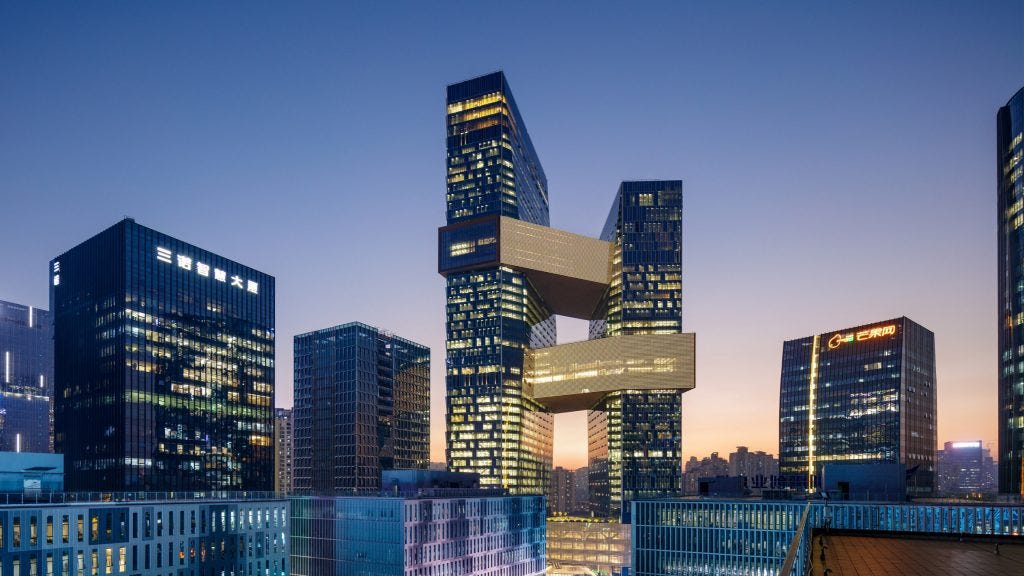
Considered to be the Chinese Dubliners – the dedication is “To the Irishman who inspires me” – this is a collection of short stories about the people who live in Shenzhen. The young city of Shenzhen has grown astronomically to become a major metropolitan centre; a city in which everyone is a newcomer. The author writes of teachers, taxi drivers, dramatists and peddlers; we see their relationships with their family members and their environment. The prose is crisp and sparse, accompanied by simple but expressive line drawings by Chinese illustrator Cai Gao.

The blurb on the back of the book jacket claims it is, “The first book in English by acclaimed Chinese-Canadian writer Xue Yiwei) but on the front are the words, “Translated from the Chinese by Darryl Sterk”, and the acknowledgments at the end refer to “translator Darry Sterk, who has turned the original Chinese into elegant English with the skill of a magician.” The different spelling of the name may be an unfortunate typo, but the whole thing is a little confusing, especially because language and pronunciation play such a big part in the stories.

Translation battles continue between characters; “I said it was a straightforward line. I couldn’t think of a need to translate it any other way.” The unnamed, omniscient narrator considers their words carefully when describing The Dramatist. “The neighbours called him a weirdo. But I felt that weird was the wrong word for him. From the start, I felt that eccentric would be more apt.” In other stories, specifics of pronunciation place a person in a strict class hierarchy. “Most of my classmates had worse pronunciation than mine, not to mention my teacher, a lady for whom even vowels were a challenge.”

There are aspects of the Chinese culture that are specific to the place, although they are not always remarked upon. One character casually notes, “I reached under my bed to retrieve the envelope with my yearly allowance, which Chinese children receive every Chinese New Year.” We recognise the element of childhood competition in everything from reading and swimming to mastering languages, maths or chess. One character reminisces, “I was a prodigy the whole city had taken note of. I was the apple of my parents’ eye and the centre of public and media attention. I was a role model, and example other parents held up when assessing their own children, a pair of exceptional coordinates on the grid of achievement.”

Most of these characters are male, and the ones who are female are sketchy. The Taxi Driver reflects, “He had never much cared about the expression on his daughter’s face, or about her existence. He was the same with his wife. He’d never imagined that they might cease to exist.”
Apparently The Dramatist had once written a one-act play about a city bus stop. There were no protagonists in the play, just people arriving and departing, as they did every day. He said that he wanted to express the absurdity of life by means of repeated departures and arrivals.” The city bus-stop may be the perfect metaphor for this collection of stories – we only see the outlines of the characters as the stories are remote and distant as if in this society of digital hyper-connectivity, no one knows anyone else at all.

Shenzhen: the tech capital of the world

Tuesday, 4 June 2019

Picking up the Pieces: The Mao Case


The Mao Case by Qiu Xiaolong
Sceptre
Pp. 289

With this novel set in Shanghai and Beijing, Qui Xiaolong introduces us to cities of growth and contrasts where modern mores sit alongside past rituals. This is a world of art and culture; teahouses and calligraphy; corrupt officials and Triad gangs; opera and poetry; ‘Big Bucks’ and ‘little concubines’; street food and emperor’s places; ballroom dancing and Buddhist scripture. And above or below everything, there is the shadow of Mao and the Cultural Revolution.

There are five previous outings for Chief Inspector Chen, but this reads perfectly well as a stand-alone novel. Chen is relieved of his regular duties to focus on a special case which may or may not involve Chairman Mao. “A case concerning Mao could have unpredictable consequences, possibly serious ones for the cops involved.” Shang Yunguan was a 1950's movie queen who became one of Mao’s many dancing partners before falling from grace and, with her daughter Qian, being denounced in the Cultural Revolution. Now her daughter, Jiao, is causing suspicion through her affluent lifestyle of parties and painting and it is feared she may be in possession of material that could harm the Party. If Chen doesn’t solve the case soon, Internal Security will become involved, and then it really will be game over.

Jiao spends a lot of time in the company of older men, which is not in itself exceptional. The practice of ‘Big Bucks’ keeping young women as concubines is commonplace. They party at an old mansion frequented by ‘Old Dicks’ obsessed with the 1930's and English manners. The treatment of women is problematic – a plot point hinges on a young women being used as bait; she will be harmed but the police will gain information so this is acceptable.

Chen, as a “capable and honest cop” was “a rarity in an age of wide-spread corruption”. He also writes poetry and so is the right person to decipher whether there is anything in the verse Mao wrote which could be personally or politically compromising. The attitude to Mao is an interesting one. The book’s dedication is, ‘For the people that suffered under Mao’. These were indisputably horrific times, and China’s attempt to come to term with this period of its history is one of progress rather than reflection. Chen understands that for the younger generation, who are not personally affected by the horrors and the massacres, Mao is becoming a mythical figure. “The past is now seen as a sort of golden Mao period where there was no gap between the rich and poor, no rampant Party corruption, no organised crime and prostitution, but instead there were free medical insurance, stable pensions, and state-controlled housing.”

Many things are altering in this new world, from attitudes to buildings. There is apparent affluence, but as in the past, it is not equally distributed. “In the fast-changing city, the gap between the rich and the poor was once again expanding. The newspapers and magazines had started talking about a harmonious society, all of a sudden and all at once, like never-tiring cicadas in the trees.” Chen is disconcerted by the modifications to a city he once knew and doubts they are entirely for the better.

The novel picks up pace in the final quarter – there are murders to be solved after all – but for most of its length it meanders through poetry and the past, as Chen reflects on his ex-girlfriend and previous experiences. Although the plot feels a little perfunctory, the setting of the novel is clear and precise, and everything is overshadowed by the spectre of Mao and his legacy.

Tuesday, 3 April 2018

How Many is Enough?


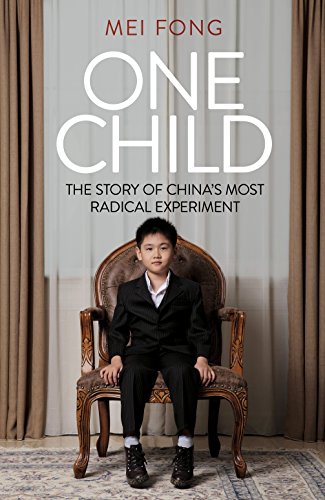
One Child: Life, Love and Parenthood in Modern China by Mei Fong 
(Oneworld Publications), Pp. 236

Pulitzer Prize-winning journalist Mei Fong has spent eight years documenting the effects of the one-child policy across Chinese society. In this critically acclaimed account, she weaves together personal stories and social politics to produce an evocative investigation into how the policy has changed China and why the repercussions will be felt across the world for decades to come.

The one-child policy was introduced in 1979; it was ‘relaxed’ in 2013 and phased out in 2016. Mei Fong argues that it was flawed from the initial concept when it was introduced as a form of population control, and that population growth would have decreased naturally without the need for such draconian measures. Even since the abandonment of the one-child policy, the birth rate in China is not increasing. Polls reveal that although couples would like to have two children, many say “it’s unaffordable, too stressful, and will impinge on their personal goals too much…by having one child, they can better concentrate their resources and have a more successful child.”

As it was, the policy led to many unforeseen issues, including the number of enforced abortions and sterilisations. “In one year alone, 1983, China sterilised over 20 million people, more than the combined population of the three largest US cities, New York, Los Angeles, and Chicago.”

During the system of the one-child policy, the law was relaxed to allow people to pay to have a second child. Naturally this benefitted the rich (and arguably led to a more affluent, urban and spoiled population) while providing a source of income for poorer counties where families were charged heavy compensation fees (shehui fuyangfei) for having more than one child. As these fines were the only income that did not have to be handed over to the central government/ national treasury ‘for redistribution’ they were rigidly enforced.

In a society which is geared towards marriage and family, this policy has long-reaching effects on cultural attitudes, such as the creation of the Little Emperor phenomenon, and the shocking treatment of elders. The author uncovered many harrowing instances of elder abuse as the spoiled single offspring no longer see the necessity of caring for their parent. “The one-child policy significantly reduced the number of care-givers for China’s elderly, not just in quantity alone, but also in quality. There are fewer women in China now – and by extension, fewer daughters-in-law, and they’re the ones who really take care of the elderly.”

There are terrible stories of geriatrics being put in pigpens by their children or shunted off to unsanitary nursing homes where they wait to die. If this trend continues there will be insufficient young people to care for the current population. According to academic predictions, “Somewhere in the decade between 2020 and 2030 China’s absolute population will hit is peak and start to decline. By 2100, China’s population could have declined back to 1950 levels of about 500 million.”

Perhaps to Western sensibilities, one of the more obvious side effects is the treatment of women. “With the current gender imbalance, women are certainly more valuable, but not necessarily more valued. In addition to a rising anti-feminist backlash, the female shortage has resulted in increasing commodification of women. Prostitution and sex-trafficking in China have been on the rise for the past decade.” Many women in neighbouring countries, such as Vietnam, Cambodia, Myanmar and North Korea, are forced or tricked into being sold as wives for Chinese men.

In the last two decades 120,000 children from China have been adopted internationally. Naturally this has “significantly shaped global attitudes toward race, family, and the ethics of intercountry adoption” but is it all ethical? Mei Fong asks, “Is the wave of Chinese adoptions, as many believe, an altruistic act that rescues hundreds of unwanted, mostly female children from a life of penury and institutionalization – or is it really baby buying on an international scale, sanctioned and even facilitated by the Chinese government?” She discovers multiple incidents of babies being stolen and sold to orphanages.

Ethical questions also arise regarding fertility and consequent eugenics. With the ability to have only one child, many people are using reproductive technologies to have the kind of children they want “This usually means choosing the sex and the number – twins are favoured – and screening out genetic diseases. In cases where an egg donor is desired – and where genetic material is passed on – Chinese parents are also trying to select traits like intelligence, height, looks, blood type, even double eyelids.”

Mei Fong argues that the one-child policy was unnecessary and cruel violating a number of human rights and leading to infinitely more problems than it solved. This is a fairly bleak outlook on the future of China due to a devastating policy that will have far-reaching and unplanned consequences.