Showing posts with label language. Show all posts

Saturday, 4 July 2026

Friday Five (on a Saturday): World Cup Wonderings Week Three

Herewith, the latest instalment:


  1. The stars are out to play. Mbappe and Haaland may be taking over from Messi and Rondaldo as the newer generation of super strikers. Goals galore are also expected from the likes of Kai Havertz and Vinicius Junior, while I am quietly keeping an eye on Harry Kane and Jude Bellingham. it was also noted that Mo Salah scored his first World Cup goal helping Egypt to win their first World Cup match (3-1 v NZ). How have they not done this before now? They are now in the round of 32: let's hope their successful run continues.
  2. Meanwhile, other so-called celebrities are less illuminating. Those from the realm of music and film are recognisable: Mick Jagger; Matt Damon; Penelope Cruz; Javier Bardem; Tom Cruise; Billy Bob Thornton; Rob Lowe; Owen Wilson; Sofia Vergara; Alanis Morisette; Ryan Reynolds, to name but several. There are also plenty of former footballers out and about, notably David Beckham, Roberto Carlos, Ronaldo, Alexia Putellas, Zinedine Zidane, and Luis Suarez. The VIP lounges are full of champagne and prawn sandwiches, but the English commentators hilariously fail to recognise any 'stars' of American sports. The cameras pan to the supposed superstar who has no interest in the match and is purely there to be seen and dead air ensues while the commentator is clearly being told who that might be, before they announce it is of course some legend from letters (NFL; NBA; MLB). Until last week I had never heard of Patrick Mahomes, Marshawn Lynch, Jalen Brunson, Dirk Nowitzki, or Aaron Judge, I'm pretty sure many of the UK commentators hadn't either. Welcome to Corporate America.
  3. Staying with transatlantic travesties, what are they trying to do to our language? When did transition become a footballing term? I know what it means, as a team tries to play out from the back through the midfield towards the opposition goal, but of course Americans need a new way to explain moving from DEEfence to OFFfence. While we're here, it is nil not zero, pitch not field, shirt not jersey, clean sheet not shut out, boots not cleats, manager not coach; striker not forward; squad not roster, and definitely club not franchise. Franchises have no place in sport. And teams are plural. You may be You Ess Eh? But We Are England.
  4. On the subject of FIFA faffing, it never rains but it pours. We are now all aware of the sporting rain and weather protocols: we learned that U.S. sporting protocol requires a mandatory wait time of thirty minutes after the last observed lightning strike or thunder before play can resume. Every time a new lightning strike occurs within the designated danger radius (typically 8 miles or 13 km), the 30-minute countdown clock resets completely. So, after the start of the Mexico v Ecuador game was delayed by an hour, we were all expecting that there would be no hydration break, especially because FIFA announced that there wouldn't be. However, as the temperatures plummeted to 14 degrees, everyone was adequately cool and refreshed, and the momentum of the match was cracking along exceptionally energetically, Fox must have called FIFA and reminded them of the money they were making through the ads, and so we were 'treated' to one after all. What an absolute shower.
  5. The super-subs: Over 20% of goals scored have been by substitutes, and many of these within mere moments of the sub coming off the bench. There are plenty of reasons for this, namely, it's only the second World Cup that has allowed teams to make five substitutions, and also, the fatigue of the existing players means the fresh legs are particularly valuable. It's hot, it's humid, some stadiums are at altitude, and this combination of factors causes players' performances to drop off towards the end of the match. It makes thing interesting if nothing else. Mattias Svanberg scored in the 84th minute for Sweden in their 5-1 victory over Tunisia, 18 seconds after stepping onto the pitch and with his very first touch in a set piece. Romelu Lukaku made a near-instant impact for Belgium in the 66th minute against Egypt. A mere 22 seconds after his introduction, his powerful run forced an Egyptian defender to turn the ball into his own net, rescuing a 1–1 draw. Coming on as a late tactical change in the 90+5 minute against Algeria, the Austrian Saša Kalajdžić met a crossed ball with his first touch to power home an equalizer just 61 seconds later. The dramatic finish meant that Iran were knocked out of the tournament as a 3rd place getter with insufficient points. When Switzerland played Bosnia and Herzegovina in their group-stage match, four of the five goals were scored by subs. As always, fans are often disappointed when their favourites are subbed off, but when it works, the manager is considered a tactical genius. Conversely, Australian manager Tony Popovic subbed on experienced captain, Matthew Ryan in the 119th minute of extra time to replace starting goalkeeper Patrick Beach for the penalty shootout against Egypt. The high-stakes strategic gamble ultimately backfired, as Ryan was unable to save any of Egypt's four penalties, resulting in elimination for the Socceroos in the round of 32.

Wednesday, 12 June 2024

Can you pass the acid test? Trout Fishing in America


Trout Fishing in America by Richard Brautigan
Canongate
Pp. 122

The novella immediately announces itself as a surreal work of post-modernism, deconstructing itself as even being a book. It is not really about trout fishing, but it hangs loosely together around that conceit as it spawns ideas and floats off down streams and meandering tributaries.  The chapters are very short – a page or two at most – and the first one explains the purpose of its own cover. The language is hallucinogenic and often touchingly whimsical as the book defies all conventions in an extremely self-aware manner.

First published in 1967, the novella has a strong element of The Machine in the Garden about it, as Brautigan seems to reflect on nature and the destruction of the environment. A child thinks he sees a waterfall, but really it is “just a flight of white wooden stairs leading up to a house in the trees.” The author remembers how he once mistook an old woman for a trout stream in Vermont. “‘Excuse me,’ I said, ‘I thought you were a trout stream.’ ‘I’m not,’ she said.” In another chapter, an abandoned shack has a notice nailed to the front door. “NO TRESPASSING 4/17 OF A HAIKU”


It is nostalgic in the way that it captures a moment in time, but then suspends it. The contemporary context may be a poor pretext for the sexism that was prevalent in the era, but it can’t excuse the fact that some passages are misogynist and highly distasteful. Brautigan was a contemporary of Kerouac, Burroughs, Kesey and other (always male) beat writers. He usually refers to “the woman I was travelling with” and women are peripheral, mentioned only in relation to their use to men. “The only woman he could find up there was a three-hundred-pound Indian squaw. She had twin fifteen-year-old daughters and he wanted to get into them. But the squaw worked it so that he only got into her. She was clever that way.”


Trout Fishing in America writes letters; it is a slogan written on the backs of first graders in chalk by a gang of sixth graders; it is a pen nib, “with a stroke of cool green trees along the river’s shore, wild flowers and dark fins pressed against the paper”; it moves to Alaska to escape the heat of New York, leaving a forwarding address; it has Maria Callas for a girlfriend; it is its own autopsy as if “it had been Lord Byron and had died in Missolonghi, Greece, and afterward never saw the shores of Idaho again”; it is an item for sale at The Cleveland Wrecking Yard where it is sold by the foot length, “You can buy as little as you want or you can buy all we’ve got left… We’re selling the waterfalls separately of course, and the trees and birds, flowers, grass and ferns we’re also selling extra. The insects we’re giving away free with a minimum purchase of ten feet of stream.”


There are oddly specific similes, many of which are fancifully extended. Dead fish “had been turned white by death, like frost on iron doors. Their eyes were large and stiff.” Some descriptions are gloriously visual. “The streets were white and dry like a collision at a high rate between a cemetery and a truck loaded with sacks of flour.” Others are nonsensical and absurdist for their own sake, such as when mentioning small wooden markers in a graveyard for the poor. “Eventually the seasons would take care of their wooden names like a sleepy short-order cook cracking eggs over a grill next to a railroad station.”


Sometimes Brautigan falls into a simpler writing that comes close to being a studied imitation of Hemingway’s plain style or even a parody of it. When travelling, the narrator gets picked up by a farmer in a truck. “The farmer did not ruin his audition for the Metropolitan Opera by making a sound. He just nodded his head again. The truck started up. He was the original silent old farmer.” He can deflate situations before they even begin. “The garbage was a problem for a little while and then we discovered a way to get rid of it.” And he can include universal transcendent hallucinogenic passages: “You made love standing, sitting, lying on the dirt floor with pigs and chickens around you. The walls, the floor and even the roof of the hut were covered with your sperm and her come.”


The book resembles an LSD trip, as if Lewis Carroll were writing it on acid. There’s clearly a time and place for this sort of this – I’m just not sure it’s here and now.

Tuesday, 13 February 2024

A Refusal to Die of White History: Modewarre


Modewarre by Patricia Sykes
Spinifex
Pp. 90

Modewarre is the indigenous word for musk duck, a creature at home on land, water and air. Through her poetry, Patricia Sykes explores various histories and the boundaries between them which blur and blend. She splits the poems into three sections: House of the Bird, House of Water, and House of Detention, examining words and their connotations, dwelling on reflections, refractions and altered perceptions.

Naming things robs them of their magic and power, as we use “language, so impossibly cumbersome/ for discovering the true weight of things/ the grandmother would have known”. The literary fragments are almost Sapphic with physical and sensual meaning: “as always the modewarre/ places faith in its eggs/ yolk and the sun/ breed each other”. The strong bonds of belonging and connection to land go beyond words, until the frustration is clear in a poem such as eponymous, “to the interrogator who keeps asking/ ‘so are you still suckling on myths of place?’/ I say try the enigma address/ the bird who keeps vanishing in water –”

The poems recall the land and the life before the colonists came, and also the sheer incomprehension of the invaders dealing with the loss. In eupathy (right feeling of the soul) she sees the land from above as though flying with the eagle. “to talk now/ of whether this is still so/ or if the eagles in free flight/ are an option/ to speak of/ options, land, again/ once more/ not as that which was taken/ is un-ownable/ contracting and crowded/ but as lava shift/ the heat of a river/ always underfoot/ in a molten indifference/ to politics”. There are layers of knowledge contained in a word, such as the poem, ‘brid’, eight darkness in which ‘brid’ is the name given by Nyangangu, a Yolgnu artist of Northeast Arnhem Land, to her bird carving. “there, where you are,/ bred of earth, breeding sky/ working the uplift, wingbeat/ as if sculpting a refusal/ to die of white history”.

The world is a palimpsest and so is the brain – our thoughts and memories are malleable. Birds connect people and places, and are often totems for Aboriginal and Torres Strait Islander people, helping to define kinship with people, their Country and nature, connecting to the roles and responsibilities of a mob, offering protection and foreshadowing danger and momentous events. This connection extends throughout the world as the birds migrate along their own songlines.

Means of expression are insufficient, with even mechanics of speech and typing unable to capture the richness of the language. “this keyboard’s/ tireless tap-tap mouth/ which cannot voice/ the interior ‘n’ in Nyangangu/ the one with the tail/ the sound of ‘ng’ in singer”. And yet the words can be damaging and belittling. “how the eyes like linguists are never satisfied/ how they’ll poke and pry into any lexicon”, wanting to preserve and capture, destroying the natural.

The poems in House of Water are concerned with childhood, disease, death, invasion, cattle, birds, and bunyips. Roads are built over traditional lands, only to crumble and fray at the edges demonstrating their impermanence in the liminal space. “what never was field/ become paddock become/ fences become livestock/ the cattle the sheep/ foraging for the hoofprints/ they lost the last time/ they departed a shore”.

In the House of Detention, the poems move on to highlight migrants trapped in refugee camps, prisoners in cells, wives in marriages, women in motherhood, caterpillars who will one day be butterflies, political constraints, and people wanting to be “at home in every world/ where exile does not exist”. In great-aunt narrative among the excised lands, Sykes leans upon the double meaning of refuse (verb and noun) as it relates to denial and pollution: “oh my Canberra…/ high city of presumptive cleanliness/ among the dirty waters exuding from the workplaces/ the smell of your refusal laws”. She uses a rare capital letter in this poem, which must surely be ironic as her punctuation is clean and almost entirely absent.

Modewarre is a great collection of powerful fragments, connecting words to the echoes of previous language both spoken and unspoken. It is a reminder that we are merely one of millions of moving parts that comprise our environment, expressing a concern for what will happen to the delicate balance once we form a pyramid and place ourselves at the apex.

Tuesday, 6 June 2023

Word of the week


Malaphor - (rare) an idiom blend: an error in which two similar figures of speech are merged, producing an often nonsensical result.

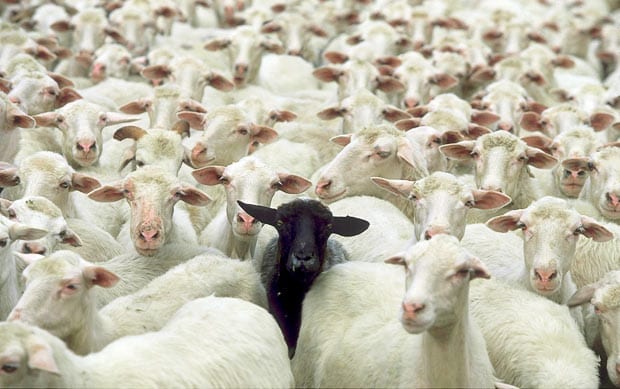
The portmanteau word is a result of blending malapropism and metaphor. A metaphor is a figure of speech that describes an object or action in a way that isn't literally true, but helps explain an idea or make a comparison. You may remember learning at school in English class that a a simile states that one thing is like another thing, whereas a metaphor states that one thing is another thing. It equates two things not because they are actually the same but for the sake of comparison, symbolism, and higher marks in your third form poetry exercise. If you take the metaphor literally, it will sound pretty odd - or are there really any literal black sheep in your family?


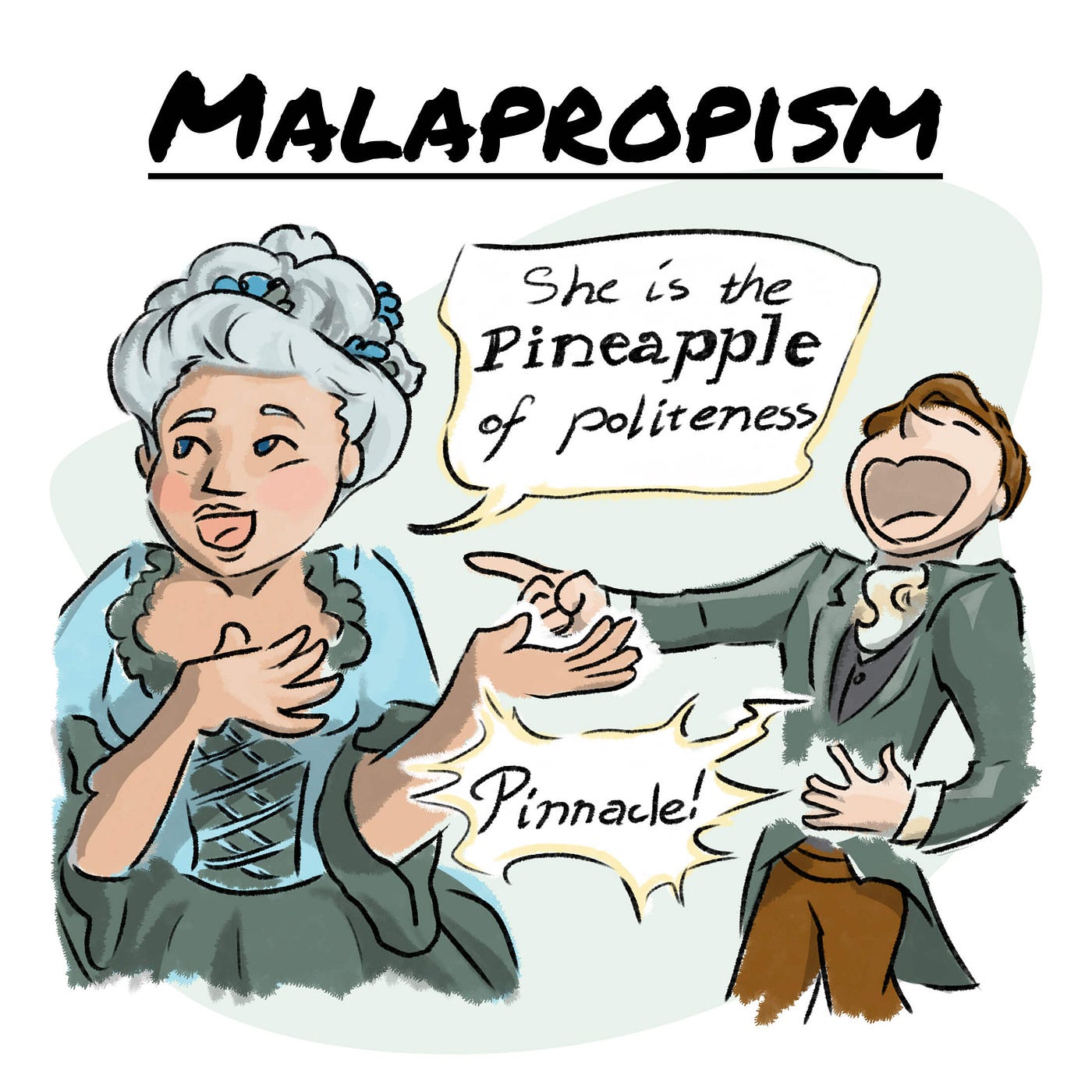
The word malapropism (and its earlier form, malaprop) comes from the character Mrs Malaprop in Richard Brinsley Sheridan's 1775 play The Rivals. She frequently misspeaks to comic effect by using words which do not have the meaning she intends but which similar to those that do. For example, she says, "illiterate him from your memory" (instead of obliterate), "he is the very pineapple of politeness" (instead of pinnacle), and "she's as headstrong as an allegory on the banks of the Nile" (instead of alligator). 


Sheridan chose her name in reference to the word malapropos, an adjective or adverb meaning inappropriate or inappropriately derived from the French phrase mal à propos (literally poorly placed). According to the Oxford English Dictionary the first recorded use of malapropos in English is from 1630, and the first person known to have used the word malaprop specifically in the sense of a speech error is Lord Byron in 1814.

Of course malapropisms appeared in many works before Sheridan created the character of Mrs Malaprop. William Shakespeare used them in a number of his plays, almost invariably spoken by comic ill-educated lower-class characters, such as Mistress Quickly (Henry IV parts 1 & 2; Henry V; Merry Wives of Windsor) and Dogberry in Much Ado About Nothing. Mistress Quickly states at one point that Falstaff has been indicted to dinner when she means invited, and I believe she also substitutes the word erection for direction, but I wasn't game to look it up on Google as a search for Mistress Quickly erection is at best blocked by a firewall and at worst likely to corrupt my computer and send pornographic images to all my contacts.

Dogberry from Much Ado about Nothing as depicted by Henry Stacy Marks (1853)

Dogberry asks "the learned writer to set down our excommunication" (instead of communication), "Dost thou not suspect my place? Does thou not suspect my years?" (instead of respect), "Our watch, my lord, have indeed comprehended two auspicious persons" (instead of apprehended and suspicious), and "thou wilt be condemned into everlasting redemption for this" (instead of condemnation). There is a term 'Dogberryism', but although Shakespeare was an earlier writer than Sheridan (Much Ado About Nothing is from 1598), 'malapropism' is an earlier coinage than 'Dogberryism', which is not attested until 1836.

Anyway, back to malaphors (also known as idiom blends) - here are some of my favourites:
  • I'll burn that bridge when I get to it
  • A bird in the hand catches the worm
  • That's a whole new kettle of worms
  • You hit the nail right on the nose
  • I can read him like the back of my book
  • She's going to hell in a handbag
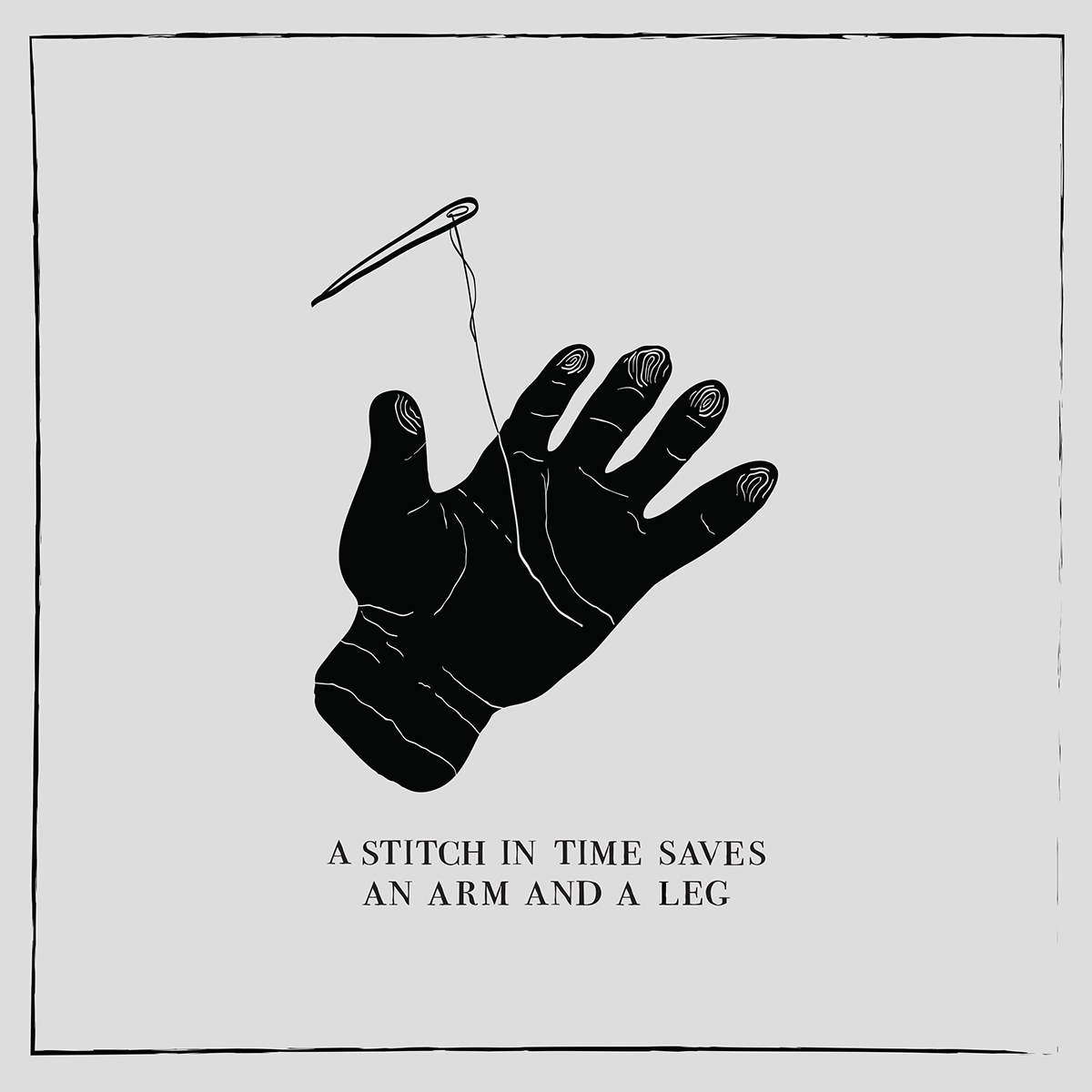
  • A stitch in time saves an arm and a leg
  • She stuck her neck out on a limb
  • You can't see the wood for the haystack
  • Does the pope shit in the woods?

Wednesday, 10 May 2023

Word of the Week


Pilgarlic - defined by the OED as (arch) bald head; bald-headed man; poor creature; a man looked upon with humorous contempt or mock pity.

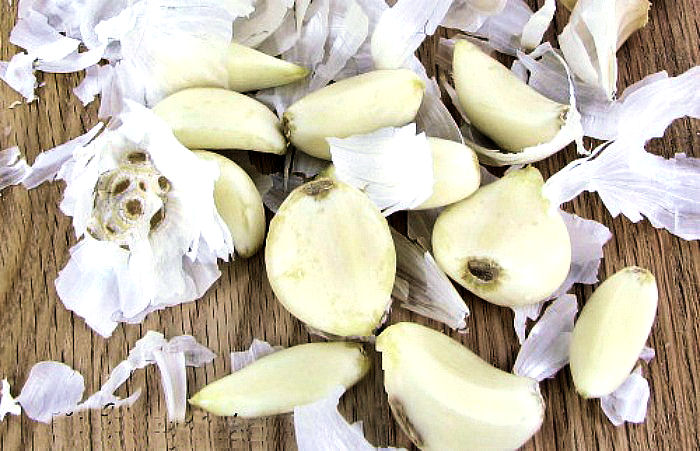
Often preceded by the epithet 'poor', the pil is (or was in the seventeenth century when the word was most common) pronounced the same way as peel, and so the image is clearly of a peeled garlic clove. Possibly this is due to the fact that a person who peels garlic would have hands that smell of it and so might be shunned or abandoned by others.

Another suggestion comes from Chaucer's Canterbury Tales. When the pilgrims arrived in Canterbury, the Pardoner gave a barmaid money to buy a good supper, but when he returned, he found another man enjoying her company and eating his food, making him sleep under the stairs. “And ye shall hear the tapster made the Pardoner pull/ Garlick all the long night till it was near end day.” In this context, it sounds somewhat obscene, if we imagine what part of the man's anatomy looked like peeled garlic.

Either way, it is a pretty solid insult and one it might be fun to slip into conversation and see whether you can get away with it.

Wednesday, 1 March 2023

My Newest Favourite Thing: Relay League by Angelica Mesiti

"Appel à tous. Ceci est notre dernier cri avant notre silence éternel." - Calling all, this is our final cry before our eternal silence

A few years ago when I was at the Orange Regional Art Galley, I came across this fascinating artwork comprising music, movement and sound. Initially I didn't understand it at all  but found it intriguing, so I read the information panel that accompanied the artwork. I discovered it to be about Morse code and other forms of communication - a subject that interests me deeply, so I spent some time in the gallery interacting with the artwork. The following words are from the information panel. 
Relay League, a term for a telegraphic transmission from one receiver to the next, takes as its departure point a Morse code message transmitted by the French Navy on 31 January 1997 to signal the imminent demise of this communication method. Morse code, a system of dot and dash radio signals, often utilised as a language of distress at sea, was phased out after 130 years in favour of new digital communications. Inspired by this final poetic phase, Mesiti interprets its original dots and dashed through music, choreography, and non-verbal communication.


The first of the three-channel works features the musician-composer Uriel Barthélémi translating the Morse code message into a percussive score that permeates throughout the gallery. The second shows a unique form of dialogue and exchange between two dancers, Emilia Wibron Vesterlund and vision-impaired Sindri Runudde. Together the pair has developed an intimate and corporeal language that communicates movement and gesture. Emilia guides Sindri's understanding of choreography through the touch and feel of her body against his. 


The third depicts the dancer Filipe Lourenço interpreting Uriel's percussive sounds in a new  choreography that directly references silence and vision through gestures loosely drawn from the vernacular of folk dance. This final work reveals a dialogue playing out between each of the performers, and the dots and dashes transmitted throughout the gallery produce a subtle dissonance so that the work continually slips back and forth between cohesion and dissolution. Relay League leaves a sensory impression of a language that has been transformed into a code, which in turn iterates as a score, a performance and a haptic exchange, enabling multiple acts of translation across time and space. 


Mesiti's practice chronicles our present condition. She continues to grapple with experiences such as crisis and displacement - whether economic, political, social, cultural, or otherwise - and confront the emotional states of distress, vulnerability and uncertainty. Relay League involves a fundamental humility, bringing to the surface aspects of human subjectivity that are often obscured from view. To this end the work offers a counterpoint: more than simply making visible the forms through which language and expression are silenced, she allows these complex and vital tools of human relations to materialise in ways that emphasis our need for empathy, compassion and connection.
Morse code was used as an international standard for maritime distress until 1999 when it was replaced by the Global Maritime Distress and Safety System. The final commercial Morse code transmission in the United States was on July 12, 1999, signing off with Samuel Morse's original 1844 message, 'What hath God wrought'. Everything sounds better in French (the distress signal Mayday comes from the phonetic equivalent of them asking for help, after all). And for those wanting a proper review of the art installation, there is one here, written by an art critic who understands these things.

Tuesday, 22 November 2022

Ahead of the Tide: To Calais, in Ordinary Time


To Calais in Ordinary Time by James Meek
Cannongate
Pp. 389

Mixing elements of The Canterbury Tales and Shakespearean comedy, this story takes place in South-West England in 1348 as a group of bowmen (led by a man called Hayne) travel through the country from Outen Green in Gloucestershire to Calais to fight the French, as the plague is advancing steadily towards them. As the novel was published in 2019 all the reviewers drew contemporary parallels with Brexit and the existentialist threat of the climate crisis, but anyone now would automatically think of the Covid pandemic.

The novel is narrated from three different people’s perspectives, all with a clearly different voice. Will Quate is a serf who is bound to work the land of a nobleman, and he is betrothed to local beauty, Ness, but he sees a better future in proving himself an archer and buying his freedom through his service. The Lady Bernadine is the daughter of the aforementioned nobleman and betrothed to his friend in a deal done between them which favours the old men and not their promised daughters. Seduced by romantic notions inspired by a French novel, Le Roman de La Rose, she believes herself in love with a young knight, Laurence Haket who happens to be the owner of the troop of archers. Lastly, Thomas Pitkerro is a proctor or clerical administrator from Avignon on secondment to Malmesbury Abbey, who just wants to go home. He provides a record of the journey and acts as a substitute priest to the travellers.

The bowmen are earthy and brutal: with the exception of Quate, who has joined them later, they are rough men who kill, kidnap and rape. There are stories of fights and people being put in the stocks; there are set pieces of violent battles and startling frank sex scenes. Lady Bernadine thinks she is in love with Laurence Haket, but he has failed in her ideas of courtly love and has got a country woman, Ness, pregnant. While she steals away from her father, she disguises herself as Madlen, who is pretending to be Lady Bernadine, but Madlen is actually Hab – a rough young serf, pretending to be his sister, Madlen, wearing a dress he stole from Bernadine. Will Quate has agreed to marry Ness, but he falls for Madlen, while knowing she is an incarnation of Hab. It’s a mixed up muddled up shook up world indeed; one could almost call that a Shakespearean plot.

Some of the etymology is intriguing in itself: a river full of fish is ‘fishous’; once a woman is pregnant, she becomes the responsibility of the man who impregnated her – she must marry him and become his burden/ burd/ bird. The language is part French and part old English: the common-folk do not understand the words of the nobles and vice versa. The adventures and exploits will end at the sea, but for some, it ended when they left their village. “Only in Merioneth are there true things. Only there is the world true and forever. Here, or in France, everything is a tale. All shifts. Everything haps once, no more, and then it’s gone, out-take that some bard like me minds it.” If stories aren’t remembered, they might as well never have occurred. James Meek suggests that we need a common language to understand them.

Tuesday, 28 June 2022

Character Sketches: Shenzheners


Shenzheners by Xue Yiwei
Linda Meith Publishing Inc. 
Pp. 176

Considered to be the Chinese Dubliners – the dedication is “To the Irishman who inspires me” – this is a collection of short stories about the people who live in Shenzhen. The young city of Shenzhen has grown astronomically to become a major metropolitan centre; a city in which everyone is a newcomer. The author writes of teachers, taxi drivers, dramatists and peddlers; we see their relationships with their family members and their environment. The prose is crisp and sparse, accompanied by simple but expressive line drawings by Chinese illustrator Cai Gao.

The blurb on the back of the book jacket claims it is, “The first book in English by acclaimed Chinese-Canadian writer Xue Yiwei) but on the front are the words, “Translated from the Chinese by Darryl Sterk”, and the acknowledgments at the end refer to “translator Darry Sterk, who has turned the original Chinese into elegant English with the skill of a magician.” The different spelling of the name may be an unfortunate typo, but the whole thing is a little confusing, especially because language and pronunciation play such a big part in the stories.

Translation battles continue between characters; “I said it was a straightforward line. I couldn’t think of a need to translate it any other way.” The unnamed, omniscient narrator considers their words carefully when describing The Dramatist. “The neighbours called him a weirdo. But I felt that weird was the wrong word for him. From the start, I felt that eccentric would be more apt.” In other stories, specifics of pronunciation place a person in a strict class hierarchy. “Most of my classmates had worse pronunciation than mine, not to mention my teacher, a lady for whom even vowels were a challenge.”

There are aspects of the Chinese culture that are specific to the place, although they are not always remarked upon. One character casually notes, “I reached under my bed to retrieve the envelope with my yearly allowance, which Chinese children receive every Chinese New Year.” We recognise the element of childhood competition in everything from reading and swimming to mastering languages, maths or chess. One character reminisces, “I was a prodigy the whole city had taken note of. I was the apple of my parents’ eye and the centre of public and media attention. I was a role model, and example other parents held up when assessing their own children, a pair of exceptional coordinates on the grid of achievement.”

Most of these characters are male, and the ones who are female are sketchy. The Taxi Driver reflects, “He had never much cared about the expression on his daughter’s face, or about her existence. He was the same with his wife. He’d never imagined that they might cease to exist.”

Apparently The Dramatist had once written a one-act play about a city bus stop. There were no protagonists in the play, just people arriving and departing, as they did every day. He said that he wanted to express the absurdity of life by means of repeated departures and arrivals.” The city bus-stop may be the perfect metaphor for this collection of stories – we only see the outlines of the characters as the stories are remote and distant as if in this society of digital hyper-connectivity, no one knows anyone else at all.

Shenzhen: the tech capital of the world

Wednesday, 27 January 2021

At Least It's Not a Marathon: Sprint: How to Solve Big Problems and Test New Ideas in Just Five Days


Sprint: How to Solve Big Problems and Test New Ideas in Just Five Days by Jake Knapp with John Zeratsky & Braden Kowitz
Bantam Press
Pp. 264

In this ‘How to’ manifesto, a group of guys from Google Ventures show us a ‘new’ business method. Of course, it is not really new and we’ve heard it all before, packaged differently. A rich white guy has a period of self-reflection, which leads him to want to work smarter rather than harder. As one would expect of a Google product, it’s written in an approachable and accessible sanitised way, with some good basic knowledge and an eye on the bank account.

The question the boys tackle is how to take an individual activity and focus on finding a solution. The basic idea is to provide a DIY guide for running your own sprint (five-day problem-solving exercise) with a clear daily focus and checklists (including shopping lists for necessary materials) in the back, along with FAQs and a link to the website (thesprintbook.com) for more information and resources.

The authors recommend removing all phones, laptops and tablets from the room to focus more fully on the immediate task. “These devices can suck the momentum out of a sprint. If you’re looking at a screen, you’re not paying attention to what’s going on in the room, so you won’t be able to help the team. What’s worse, you’re unconsciously saying, ‘This work isn’t interesting.’” They acknowledge that not everyone has the luxury to set other work aside for a week (who picks up the slack?), so this method can only really work in a big organisation. Interestingly, it can only really work in person, which is a shame in these ‘unprecedented’ times when nearly all meetings are conducted over video conferencing systems. The concepts involve using simple graphics and sketch designs: many of the suggestions are worked out on white boards and with sticky notes.

They maintain that deadlines force one to focus when pitching ideas while they also recognise that smaller parts of the sprint can be used if there is insufficient time to run the whole week. The ideology can be applied to making a small decision or dealing with a frustrating problem, and customer interviews can be conducted at any time. The highlights of the process are the focus on asking the experts, interviewing potential users, and making decisions on solutions.

They make an effort to use female pronouns – “The Decider needs to choose one target customer and one target event on the map. Whatever she chooses will become the focus of the rest of the sprint.” – but all the references are Silicon Valley frat boy (Star Wars; Apollo 13; Ocean’s Eleven; Lord of the Rings; Led Zeppelin; Huey Lewis and the News). The examples they use for the businesses which benefited from a sprint are: a coffee outlet; a hospitality robot; a software company; and a medical assessment service. A quick glance at the bios at the back (masquerading as thank-you notes), reveals that they spent their ‘ordinary’ childhoods computing, recording, designing sailing yachts, playing basketball and producing music.

There are some good ideas in this sprint methodology, but you have heard them all before. Now that they are repackaged in a slick, accessible, practically comic-book-style, you are likely to hear them repeated again and again, if you strain to hear the sound over that of the cash registers ringing.

Friday, 4 September 2020

Friday Five: Inverse Positivity

One of my favourite words is discombobulated. The sound of the perfect match of vowels and consonants goes some way to making up for the slightly weird effect of the feeling. It led me to wonder if there is such a thing as combobulated, and I was interested to learn that there isn't. Similarly, one can be overwhelmed or underwhelmed, but never simply whelmed (although the word 'whelmen' is a Middle English term meaning to turn over.) In an article from 1953 entitled The Mystery of the Vanished Positive, J.H. Parker wrote about this phenomenon known as unpaired words or absent antonyms.

One of the ways in which these words are created is through 'back-formation' in which a new word is created by removing affixes. For example, the noun 'resurrection' was borrowed from Latin and then the verb 'resurrect' made its way into the language hundreds of years later by removing the '-ion' suffix. Many English words are formed this way but because they may sound odd, they are often used to humorous effect. 

'Far from being quite gruntled'

Novelist, humourist and all-round wit, P.G. Wodehouse, made good use of this when he writes in The Code of The Woosters, "I could see that, if not actually disgruntled, he was far from being quite gruntled." In Scrubs, Turk tells another character, "I don't disdain you! It's quite the opposite - I dain you!"

One of my favourites is the word 'ruthless'. One expects there to be a corresponding 'ruth-full', but it appears not. I like it particularly because one of the characters in Arthur Ransome's Swallows and Amazons, Ruth Blackett, captain of the Amazon, changes her name to Nancy because she wants to be a pirate and her Uncle Jim tells her that pirates are ruthless. 

Swallows and Amazons in which pirates are ruthless

5 Unpaired Words:

  1. Disgusting - from Latin gustare, meaning to taste; the antonym, desgouster, appeared in Old French, but there is no English reverse equivalent. Although wind can be 'gusting', that comes from a different root altogether, gustr, being the Old Norse word for 'cold blast of wind' (circa 1580)
  2. Gormless - Once again Old Norse used the word gaumr meaning care or heed. In dialect English, the word gome is found to mean notice or understanding (circa 1200). In the 18th Century there is evidence of the use of gaumless or gawmless to mean wanting sense/ stupid. One cannot generally be gorm-full
  3. Feckless - Clearly meaning lacking in feck, but what is feck? It is a Scots/ Northern English corruption of the Middle English word effect, so feckless is synonymous with effective. Unfortunately the use of 'feckful' as a substitute for effective is no longer common
  4. Inept - Similarly, we rarely describe someone as being ept, due to a linguistic quirk. The word inept comes from the Latin root in + aptus (not + able/fit). Whereas English kept both inapt and inept, the language decided to only retain apt and ditch ept. Shame.
  5. Nonchalant - Sadly, there is no word 'chalant' in English. The word 'nonchalant' derives from the Old French word nonchaloir meaning to disregard (non + chaloir = not + to concern) Therefore the opposite of nonchalant is concerned or interested, not chalant.

The English language is beautiful and rich and multicultural. I love it, and I love writing and playing games with it. This is a poem by the aforementioned J.H. Parker being comically feckful with absent antonyms.

A Very Descript Man

I am such a dolent man,
I eptly work each day;
My acts are all becilic,
I've just ane things to say.

My nerves are strung, my hair is kempt,
I'm gusting and I'm span:
I look with dain on everyone
And am a pudent man.

I travel cognito and make
A delible impression:
I overcome a slight chalance,
With gruntled self-possession.

My dignation would be great
If I should digent be:
I trust my vagance will bring
An astrous life for me.

Friday, 3 July 2020

Friday Five: Cross-Stitch on a Theme

Sometimes everything gets 'a bit much' and, in these times, I have found that working designs from Really Cross Stitch: For when You Just Want To Stab Something a Lot helps. Of course, I am not advocating violence, but I am hoping for progress, and there is a theme in my latest five patterns about who or what I would like to change. As previously, all the words are from Rayna Fahey, and all the complete lack of ironing is my own.

"Politicians and toddlers have a lot in common. They are both prone to tantrums and act unreasonably, especially when they don't get their own way. Every now and then - just like a toddler - you have to give them a good talking-to!"
"Contending for the misogynist comment of the millennium, a presidential candidate's suggestion that he was at liberty to grab female genitalia due to his privilege was dismissed as 'locker room talk'. Whilst this overheard vulgarity wasn't enough to kill an election campaign, it certainly put feminists on a war footing well before Trump took office.

This pattern attests to the fact that kitty has claws. The only pricks we will tolerate come from our cross stitch needle."
"Now it's really not nice to attack someone you don't like politically based on their appearance. But this time the temptation was too strong.

"For someone who is world-record-breakingly quick to insult someone, Trump's skin does appear to be diaphanously thin when it comes to people discussing the size of his hands. But in the scale of things, this is the guy that reinstated the Global Gag Rule and wants to ban the world's 1.6 billion Muslim people from America. So there's plenty of actual policy to organise around while you're doing this cross stitch."
"Cunts are deep, warm, and delightful; indeed the place from which the majority of us astoundingly enter this fragile world. Yet no single word creates as much division and carries as much power as this little number.

"One thing activists are super-good at is dissecting the meaning of language, until letters break down into pixels. Give us another decade and everyone will know that vagina is 16th century slang for a place to keep your sword. Ouch."
"Language can be used to persuade, amuse, insult, and mobilise action. Few formats can accomplish these goals as ably or succinctly as the protest sign.

"Of course, sometimes the words just won't come. Or there are too many of them to fit on one sign. Or you're just so tired of being angry and upset that you just want to go UGH; which is fine. 'Just, Ugh' conveys all the despair, rage and hopelessness in just seven easy letters, and of course, can be used for virtually any occasion as it works for anything. Plus, it's nice and easy to stitch."

Tuesday, 26 May 2020

Life and Death: The House of Broken Angels


The House of Broken Angels by Luis Alberto Urrea
Little Brown
Pp. 321

Big Angel (Miguel Angel de La Cruz) is planning his last birthday party before he succumbs to the cancer that is killing him. And then his mother dies. The family gathers to commemorate her life and to celebrate his over one Rabelaisian weekend of relationships and recriminations in San Diego. Among the guests is Little Angel, Big Angel’s half-brother, who shares the same father, Don Antonio, but a different life: his mother was not Mexican as the rest of the family are, and the racial resentments are evident as stereotypes rub shoulders with sensitivity.

The party is raucous with lots of food and all its cultural associations, and the novel is peopled with a host of characters; there are so many people (and lots of children), that it is hard to keep up with who is related to whom by marriage or previous entanglements, especially when people have nicknames too. When Little Angel arrives he has a notebook in which he keeps a cheat sheet; this is a great idea and one that is highly recommended for the reader.

The divide between the Mexicans and the Americans is blurred. Little Angel wants to speak Spanish to his family, but they don’t accommodate this wish. “He tried, and they insisted on answering him in English. Though they knew perfectly well that he spoke Spanish as well as they did and better than their children did. Each side had something to prove, and none of them knew what it was.” Two different worlds and cultures collide in an unspoken competition. Little Angel feels torn between the nationalities and he refutes the glib assumptions that one has for the other. For many, America is better, but for others, Mexico is superior in its transparency.

The brothers share a father and the memories of his toxic masculinity. Although he was a dominating brute who abandoned both of their mothers, Big and Little Angel loved him and learned some of their behaviour from him. They share experiences in a series of picaresque reminisces. “The brothers lay side by side, shuffling through so many memories. So many imperfect scenes. It felt as though they had opened a box of old photographs, each of the pictures torn and tattered.”

Big Angel also thinks in scents and smells, which trigger memory. As his body deteriorates, other senses float forward: “Early morning before dawn was best, when he didn’t remember he was dying. For a moment, he thought he had a future. And he savoured his past. Today, it tasted of butterscotch.” The novel is elegiac, but it also fluidly distorts linear timelines. It is a riotous, messy book that depicts a celebration and observance of both life and death with a backdrop of cultural confusion. Perhaps we shouldn’t have to identify with one thing or another, but can select the aspects on which we would like to focus, and drift along on currents of abandon.

Thursday, 26 March 2020

Walking in Circles: London Overground


London Overground by Iain Sinclair
Hamish Hamilton
Pp. 258

In 2012 Iain Sinclair and his walking companion, Andre Kötting (British artist, writer and film-maker b.1959) spent a day tramping around the London Overground circuit, and Sinclair recounts the journey by weaving in references to others who have come before. Processions and pilgrimages are evoked from Chaucer’s Canterbury Tales to Bunyan’s Pilgrims Progress, as the duo walk just for the sake of walking. He is at his best when describing the physical mechanics of motion. “Refuelling was a requirement, but sitting down would carry the risk of our not being able to rise again. Pints were delivered, swilled back, replenished, before a bowl of steaming fish pie made it from microwave to table.”

He likes to walk. He has walked around Hackney, the M25, and areas that have been cleared for the Olympics before, and written books about all of them.  Understanding the needs for a hook with which to draw in the reader, he chooses routes that are frequently travelled, but by different forms of transportation. Above all, he fears bland homogenisation and he despises shopping centres, such as Clapham Junction, in a sentiment familiar from Ghost Milk.

Sinclair writes with a sense of nostalgia, and is proud of his grumpy old man status: “This old-man sourness is addictive. Period pains from the inability to accommodate change. When nature pricks and the heart engages, people go on long pilgrimages”. Resistance to progress tends towards snobbish bigotry. He dislikes popular culture; he dislikes cyclists, mothers with pushchairs, and people on mobile phones; anyone, in fact, who enters ‘his’ space.

His references are deliberately esoteric but they are overwhelmingly white, middle-class, and decidedly male. The number of name drops becomes exhausting – there are 387 in 258 pages (I counted and catalogued them all, with their Wikipedia entries as interpretation). Of these 387 authors, artists, poets, politicians, film-makers, architects, actors, explorers, scientists and activists who people this particular landscape, only 43 are female: that’s fewer than 12%. Women may be mentioned as eye witnesses to events, nameless passers-by to whom he talks, or memories of previous lovers (again nameless), but they make no significant impression on this history of London.

Sinclair writes in truncated sentences, which can be punchy but soon grow tiresome: “He put his money where his mouth was. And his tongue was blistered with diamonds.” It can be difficult to tell whether the prose is clever or just obtuse: are these profound analogies or empty aphorisms?

One of Sinclair’s bugbears is the commercialisation of the environment. He notes the areas of desirable real estate: “Even a minor physical elevation comes with entitlement to upward social mobility.” He admits, “We would all live on the river if we could, waiting for the rains of Schadenfreude to wash us away. Climate is another word for conscience.” He shuns the wealthy and the nouveau riche. “Fundamentalism of every stamp, including the fundamental decencies of the old Surrey stockbroker belt (now given over to Russian oligarchs and Premier League footballers), is suspect. Bourgeois marriage is a lie. Property is debt.”

While mourning the past, he invokes the present in poetic language, “The Thames riverbank would, in a few years, become a circus with a Ferris wheel, chair-lift rides, millennial (discon)tent on the East Greenwich swamps, and a shockheaded mayor as a public clown, swinging from wires or falling off a trick bicycle.” His associations with the city are intense, and he refutes any that don’t align with his emotions. “Maybe that’s it: the memory-place should remain fixed. The attitude to the great sprawl of the metropolis is verging on Oedipal.” London changes constantly, and while everyone is defensive of their own version, they should probably be more tolerant of the fact that there is room for many more.

Tuesday, 24 December 2019

God Help Us: Winter


Winter by Ali Smith
Penguin
Pp. 322

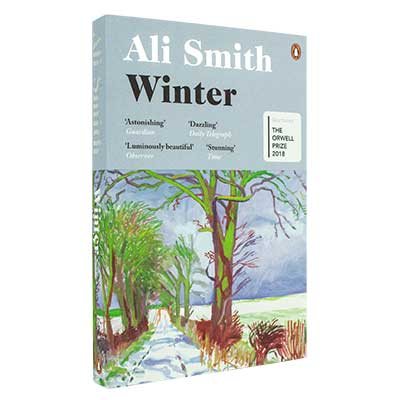
Ali Smith’s seasonal quartet began with Autumn, published last year, and continues here with Winter. The subject is quite different but many of the themes are familiar. It is written in a continuous fluid style, but with short sentences and without irksome stream-of-consciousness. The novel embroiders snatches of literature and legend into a rich tapestry: a retelling of Dickens’ A Christmas Carol for our times. Dickens opened his festive novel with the words, “Marley was dead, to begin with. There is no doubt whatever about that.” Smith riffs on this idea. “God was dead: to begin with. And romance was dead. Chivalry was dead. Poetry, the novel, painting, they were all dead, and art was dead. Theatre and cinema were both dead. Literature was dead. The book was dead.”

So, what’s left? An ageing woman called Sophia imagines a child’s floating head to keep her company. She is visited by her son, Arthur (Art for short), who writes a blog called Art in Nature, which his ex-girlfriend, Charlotte, hates because it isn’t political. He explains, “What I do is, by its nature, not political. Politics is transitory. I watch the progress of the year in the fields, I look closely at the structures of hedgerows. Hedgerows are, well, they’re hedgerows. They just aren’t political.” Not wanting to admit he is alone, Art pays Lux, a girl he spotted in a bus-stop, to accompany him and pretend to be his girlfriend. When Sophia appears to be very ill, Lux contacts her estranged sister, Iris, to whom she no longer speaks. Iris turns up on the doorstep and recriminations and family resentments rise to the surface. The names with their connotations of sleeping heroes, guiding light and Greek gods are all pertinent.

The treatment of nature is centre stage – if Autumn was about Brexit; then Winter is about the environment, and the disasters destroying the planet and humanity. Iris is politically motivated, and the sisters dredge up memories of the Greenham Common protests, about which Smith seems almost nostalgic. She suggests that individuals can still make a different if they work together, as topics range from the Grenfell Tower to the insistence on stopping migrants; the political becomes personal and vice versa. The novel contains CND songs, and 1960-style rhymes about poisonous gasses and noxious chemicals. Horrifyingly, people are crowdfunding to raise money to stop rescue boats from helping refugees.

Having been impressed by Cymbeline, Lux originally came to England because it is the land of Shakespeare. In an obvious political metaphor, she says, “If this writer from this place can make this mad and bitter mess into this graceful thing it is at the end, where the balance comes back and all the lies are revealed and all the losses are compensated… then that’s the place I’m going. I’ll go there, I’ll live there.”

Language and communication are themselves under threat in this modern world. To glean information, people no longer talk to each other; they google things and the results are listed. Just as there is a disembodied floating head in Sophia’s imagination, words are split in half to create new meanings: get ahead; get a head; “I’m nobody’s child. I’m no body’s child.” Art examines the concept of snow and the connotations of the word ‘snowflake’. In one section, Art asks Lux a series of questions, and then we see her side of the dialogue separately as she answers them. Further indications that cohesive dialogue is breaking down is seen in parliament when a man barks like a dog at a woman who is trying to make a speech.

This is a novel of stories and interpretations. We are given tales of fertility; the Green Man, Sir Gawain and the Green Knight, and defenders of past rituals and natural bounty. Smith combines the richness of the past with the frustrations of the present and a glimmer of hope for the future, believing that communities and compassion can overcome division and isolation. Winter is an incredible achievement – it was written to reflect the immediacy of the time (even the text is not justified, implying a sense of urgency), yet it feels fresh rather than hurried. It ends with another echo from A Christmas Carol: “In the middle of summer it’s winter. White Christmas. God help us, every one. Art in nature.” It’s enough to make the reader want to take to the streets.

Friday, 30 June 2017

Friday Five: Nouns that are not verbs

And the logical continuation of last week's post...


5 Nouns that are not verbs:
  1. Parent - a parent is a person. A parent (hopefully) loves, nurtures, raises, cares for, looks after, educates, protects, cherishes, tends, nurses, encourages, reprimands and inspires their child. Any one of those words provides meaning and clarification. Interestingly (well, I think so anyway) - 'mother' and 'father' can act as both nouns and verbs. The verb 'mother' apparently means to bring up a child with care and affection. It can also mean to look after someone kindly and protectively, sometimes excessively so. The verb 'father' means to become the father of a child be making a woman pregnant. There seems to be an incompatibility between those words.
  2. Medal/ Podium - if someone trains or works hard and has talent and aptitude, he or she may compete in events and win/ obtain/ achieve/ secure a medal. The medal in question could be gold, silver or bronze, in which case the contestant may win/ obtain/ achieve/ secure a place on the podium in first, second or third place. The person does not 'medal' or 'podium', whatever the commentators and newsreaders may say.
  3. Top Score/ Red Card - another commentating misdemeanour found in many sports is the usage of 'top score' as a verb, when someone has actually scored the most points. This offence is usually committed in basketball, which is American, so what would you expect? It is worse when one hears it from cricket commentators who should know better. When a player is shown a red card in football, we used to hear that they had been sent off; nowadays they are more likely to be said to have been red carded, which used to be something that happened to wool. 
  4. Friend/ Unfriend - I admit this is an interesting one as it has come about as a reaction to a specific technological development. When one sends a friend request on Facebook and is accepted, one is said to have been friended. "I'll friend you on Facebook," say young people when they are seeking cyber social interaction. After a while someone makes a snap judgement which offends the sensibilities of someone else and rather than having a rational discussion which could possibly inform and educate both parties, one 'unfriends' the other by blocking their future banal posts. Friendship is no longer a relationship to be nurtured and grown through good times and bad; it has become something which happens at the touch of a button.
  5. Action - Employing the worst of business-speak, some people say they are going to 'action an item', when they mean they are going to do a thing. I presume this is because an agenda will have items that result in action points as people take on tasks. Once again, there are many words that could be used to inform others of the intention to execute/ carry out/ accomplish/ implement/ enact/ engineer/ administer/ put into practice/ perform or simply 'do'. It seems that business types don't like to use a simple word where a trendy or convoluted one will do. They think it makes them sound more important and intelligent. They should know that the exact opposite is true.