Showing posts with label feminism. Show all posts

Friday, 2 August 2024

Friday Five: Books Read in July

  1. Redback by Howard Jacobson (Black Swan) - I struggled with The Finkler Question, so thought it was worth giving Howard Jacobson another go; he is well-known for being funny and writing award-winning fiction. I suspect, however, his may be a style of humour (self-indulgent, middle-class, academic white man) that has passed me by. Think Tom Sharpe and Kingsley Amis, but more Jewish. Dense paragraphs, picaresque style, random characters, anxious first-person narrator, excessive hyperbole, roughly linear narrative peppered with tangents, flashbacks and digressions, and a barely-there storyline all appear to be hallmarks of the author's practice. The plot, such as it is, is that Karl Leon Forelock receives a double-first in Moral Decenies from Cambridge, is recruited by the CIA, and heads to Australia as a spy where he attends a lot of parties and makes sweeping generalistions about the country and women, whom he clearly doesn't understand. While he claims to have resolutely, "kept my nose out of politics", he feels entitled to comment on such matters, occasionally with amusing results. “Liberal in Australia, incidentally, means Conservative (unlike in England where it means nothing very much in particular), and is not to be confused with Labour. Which also means Conservative only not to quite the same degree.” Written in the 1980s, and set in the 1960s, the tone of this novel is very much last century.
  2. An American Marriage by Tayari Jones - The winner of the 2019 Women's Prize for Fiction is an extremely engaging and accessible novel, narrated by the main three protagonists. Celestial and Roy are happily and newly married when he is arrested and sentenced to twelve years in prison in Louisiana for a crime Celestial knows he didn’t commit. She finds comfort in her childhood friend, Andre, Roy’s best man at their wedding. As their feelings develop, Roy’s conviction is overturned and Celestial has big decisions to make. Celestial is an artist; Roy is a business executive – they are not the blue-collar stereotypes of the American South, but because they are African-American, their lives are destroyed by a system which is prejudiced against them. On the evening of the alleged crime (a woman was raped and claims Roy was the perpetrator and, as a black man in the wrong place at the wrong time, he is almost automatically convicted) Roy and Celestial had had a big fight. This is their last interaction before he is hauled away by the police, and the situation throws their 'perfect' marriage into question. Jones has expressed that her novel is a version of The Odyssey, with Celestial playing the role of the waiting wife, unsure how to handle the return of her man. The men are infuriating as they fight over Celestial - "You don’t have to pee on her like a dog marking your territory. Have some manners.” They may well have suffered hardship and institutionalised racism, but that does not excuse their machismo and their sexism. This was a favourite of Oprah, Obama, and books clubs all across America.
  3. The Windsor Knot by S.J. Bennett - This is the first in what has become a series of cosy crime novels, described as ‘Miss Marple meets The Crown’ in which the Queen solves mysteries. It was written in 2020, when the author went on a writer’s retreat during the pandemic to write something else entirely and came up with this instead. It’s highly implausible but thoroughly entertaining, as we are told, “The Queen solves mysteries. She solved the first one when she was twelve or thirteen, so the story goes. On her own. She sees things other people don’t see – often because they’re all looking at her. She knows so much about so many things. She’s got an eagle eye, a nose for bullshit and a fabulous memory. Her staff should trust her more.” At the behest of Prince Charles, the Queen hosts a ‘dine and sleep’ for Russian dancers, composers, and selected glitterati. When a pianist is found strangled the next day, hanged by the cord of his dressing gown in a wardrobe at Windsor Castle, the optics aren’t good. Initially it appears that it may have been a case of autoeroticism gone wrong, although the aides are hesitant to alert the Queen to this fact. She, meanwhile, tells Prince Philip that she is unshockable because “I’ve lived through a world war, that Ferguson girl and you in the Navy.” The MI5 suspect political involvement, but the Queen disagrees and sets out to solve the crime herself. Which, of course, she does.
  4. Murder in Paradise by Ann Cleeves - Set on Kinness, an island off the coast of Scotland (bleak and misty with 'traditional values' and sheep), this is billed as a George and Molly Palmer-Jones mystery, but George is on his own, and Molly is back at home. George works with Sarah instead, a new bride who has just got married to Jim and returned to the island (where he grew up) for celebrations. It is difficult for her to adjust as everyone has secret alliances and their own ways of being. There is very little bird-watching (they ring some swans and shoot some geese) and George is cross and irritable with everyone and everything including himself and his feelings about retirement. “How pagan they are still, he thought… They pretend to be Christian, but when they’ve had a few drinks, they still behave like loutish Norsemen.” George is determined to solve the crime – the death of a girl who is believed to have fallen to her death – and even this annoys him. “He felt the weight of responsibility. It was as if the police had given up, and had handed over the task of finding the murderer to him.” The murder seems incidental to the narrative, which is more about adaptability. There is an entire red herring thread about child abuse, but mostly the islanders are afraid of change and the pervasive question is whether they can preserve the island as it is, or does that make it a museum?
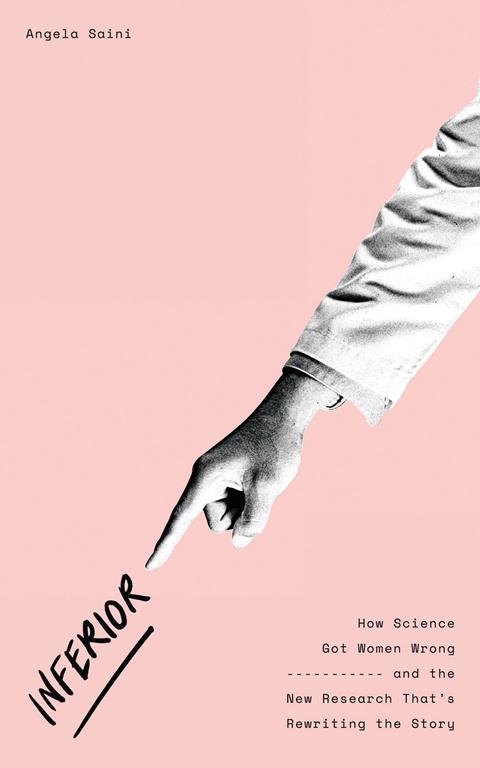
  5. Cassandra Speaks: When Women Are the Storytellers, the Human Story Changes by Deborah Lesser - Inspired by a woman at a conference who was exploring 'the power of myth in modern culture' (basically, my university dissertation), the author decides to look at how female stories are interpreted, such as those of Eve, Pandora, Athena. It has a very Western focus.  Her tone is irritating - telling people what to do and treating the audience as if they haven’t considered this before she brought it to our attention. I am not surprised to learn she delivers TED talks; her approach is didactic, individual, and lecturing. She comments,“Everything I knew about European history had to do with wars and kings, trade routes and power plays between religions, royalty and tyrants. Why did we only know and care about those aspects of being human?” Speak for yourself! Maybe stop blaming education from fifty years ago and look into things yourself, like those of us who are interested already have. It may appeal to young people (as the alarming pink jacket suggests) as their first foray into this sphere, but there is nothing in here that I haven't read (in better formats) before.

Tuesday, 16 January 2024

Entry-Level Feminism by the Book: A Month of Sundays


Four people who have met as part of an on-line book group take a month to go to a cottage in the Blue Mountains to talk about books – what bliss! When the club set out ten years ago, there were more members, but over the years the numbers decreased, leaving these four women who still had their regular meeting via Skype. Although they have been part of the book club for ten years, they have never met in person before, so this is the perfect opportunity to get to know each other.

Adele, who has organised it (and everything else), suggests they each chose a book, “that will tell us all something significant about you. Be prepared to be honest about why you have chosen it and why it matters to you. This makes it more than just a suggested read, it is an invitation from each one of us to the others to get to know each other better.” They will then discuss the book, but of course, “it’s true that we all bring something of ourselves to what we read” so they learn more about each other as the book progresses.

They are all reaching retirement age so they have the luxury of time, and they can indulge in self-reflection and learn more about female friendship and feminism, which they might not have thought was right for them when they first encountered its concepts. In that regard, it is frustrating to read, like listening to a group of grandmothers explaining how it was not like that in their day.

Judy runs a knitting shop but feels overwhelmed with the business; Ros comes with a dog called Clooney and a dead husband, James, who died jumping off a bus and she has yet to come to terms with it. She also has Parkinson’s disease, about which she is in denial. Lastly Simone does yoga and seems to have it all together, until she discovers she has a long-lost sister who was the result of a hitherto unknown relationship of her father.

Other reviewers have been coy about mentioning the books discussed in case it ruins the suspense of the story. It doesn’t. They are Tirra Lirra by the River by Jessica Anderson, Sacred Country by Rose Tremain, Truth and Beauty by Ann Patchett, and Unless by Carol Shields. These are all celebrated and acclaimed novelists. They are also all white, Western and middle class. That’s definitely the territory in which we find ourselves. For all that the characters have their dramas and personal experiences, there is little variety or plot in this novel. They plod on and hopefully find friendship, learning better late than never that women can support each other and they don’t have to fit into society’s expectations. Their reference points are Helen Reddy’s I Am Woman and Julia Gillard’s misogyny speech.

Society has changed a lot more than they know, and if they take refuge in a cutesy Blue Mountain town to talk to like-minded people about their social epiphanies, they will probably never develop past the pages of a book. Maybe they don’t want to, and that’s fine, but it’s not a journey on which most women would choose to embark, having been past the point way before.

Tuesday, 25 July 2023

You Keep It All In: A Clear Conscience


A Clear Conscience by Frances Fyfield
Corgi
Pp. 284

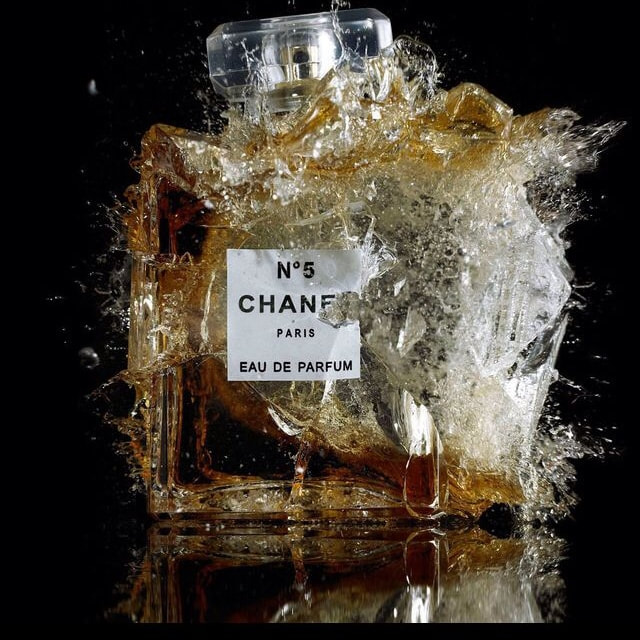
Helen West is a prosecutor in domestic violence cases, and this is her fifth outing in novels by Frances Fyfield, although that is not obviously apparent from this edition. The fast-paced and bleak thriller is set in the world of back-street boozers, wife abusers, ex-boxers, and knock-off perfume. The crime is both petty and serious, as passion erupts into fights over office romance and much darker offences. The characters are criminals, cleaners, bar staff, ex-army personnel, lawyers, policemen and caseworkers.

The writing style is almost breathless, and grammar seems optional as the prose gathers pace along with the narrative. The author constantly switches point of view so it appears to be third-person omniscient but we are always in the mind of the subject, blurring the lines between reality and perception. Helen’s friend Emily employs Cath as a cleaner; Cath’s brother Damien is the murder victim of a case investigated by Bailey, Helen’s partner; Damien was killed after a night at the pub where Joe, Cath’s abusive husband works. There are no easy answers or definitive source of truth; law and justice are explicitly not the same thing.

Everyone lies to a certain extent, and no one tells the whole truth to anyone, even themselves. “We are all at cross purposes, he thought, every one of us a little mad, each of us with a piece of puzzle in our hands, while the truth floats up there like that big, black raincloud.” In an attempt to feel better about one’s self-image, characters believe their own narrative and don’t examine their motives too closely. Helen is obsessed with home decorating, Cath smells of bleach, Emily dismisses Cath for suspected theft of perfume – the interior renovation metaphor alludes to the patina of gloss that covers cracks but doesn’t mend them. Perfume serves a similar masking purpose. “What a terrible gift was perfume, always given by a man to make you wear it and please him, while you stank of blackmail.”

Written in 1994, the novel has an end-of-the-century feminism feel as the author questions women’s roles and their need to validate themselves in society. Helen claims to be determinedly independent and happily childfree. “I’d hate to be a megalomaniac wife and mother. Mothers run a closed book. They shut the world out, close off anything inconvenient, as if being mum in charge of a family is so self-satisfying, so sanctifying, they never need have a conscience about anything else.” And yet, she is yearning for something intangible. “It was useless pretending she was not influenced by what she saw and read; she was not immune to the contagion of the romantic or the desire for security purveyed by mothers and magazines…but she did not quite know how to not want it either, or how to close her ears to the blandishments of marriage propaganda.”

Although short and sharp, this is an oppressive novel in which women are struggling to stand alone without being defined by men – partners; bosses; social constructs. There is a menacing tone and a fear that they will never be enough – but by whose standards? It reminds me of that playground 'joke', Q: Why do women wear make-up and perfume? A: Because they're ugly and they smell. They are not and they do not, but our patriarchal capitalist society has a vested interest in making them think thus.

Wednesday, 17 May 2023

Debunking the Myths: Inferior


Inferior by Angela Saini
4th Estate
Pp. 237

Angela Saini contends that the so-called science which has labelled women as ‘the weaker sex’ is biased and influenced by politics, history, and social culture. Sick of people (men) telling her that women are inferior to men based on dubious scientific data, she wrote this book in an attempt, “not to lose control but to have at hand some hard facts and a history to explain them”. She challenges myths and provides explanations as to why some assumptions were made in the first place. Even though science is perceived to be neutral, women have historically been excluded from research, experiments, and theories. “Women are so grossly under-represented in modern science because, for most of history, they have been treated as intellectual inferiors and deliberately excluded from it.”

Darwin in his The Descent of Man believed that women were inferior because he couldn’t see any women doing the same intellectual things. “The evidence appeared to be all around him. Leading writers, artists and scientists were almost all men. He assumed that this inequality reflected a biological fact.” In evolutionary terms, drawing assumptions about women’s abilities from the way they happened to be treated by society at the moment is narrow-minded and dangerous.

Those ‘Men are from Mars; Women from Venus’ type ‘theories’ remain popular because anything that claims to explore sex differences is highly sought-after by media outlets looking for clickbait articles. People who counter that differences are not wholly due to genetics are often labelled sex difference deniers, in a way that would never be introduced in debates about race or colour; not since the 1950s, anyway. Sexual selection theories which were proven to be incorrect and unscientific, however, are making a popular comeback.

People are messy and come with preconceptions and prejudices. Saini argues that it is impossible not to politicise scientific data and that neuroscience has profound repercussions for how people see themselves. Humans are bound to pick up attitudes and adopt behaviours based on societal expectations rather than independent biological factors or sex chromosomes. We are also able to change and adapt as recent research into neuroplasticity confirms that the brain isn’t set in stone in childhood but is in fact mouldable throughout life.

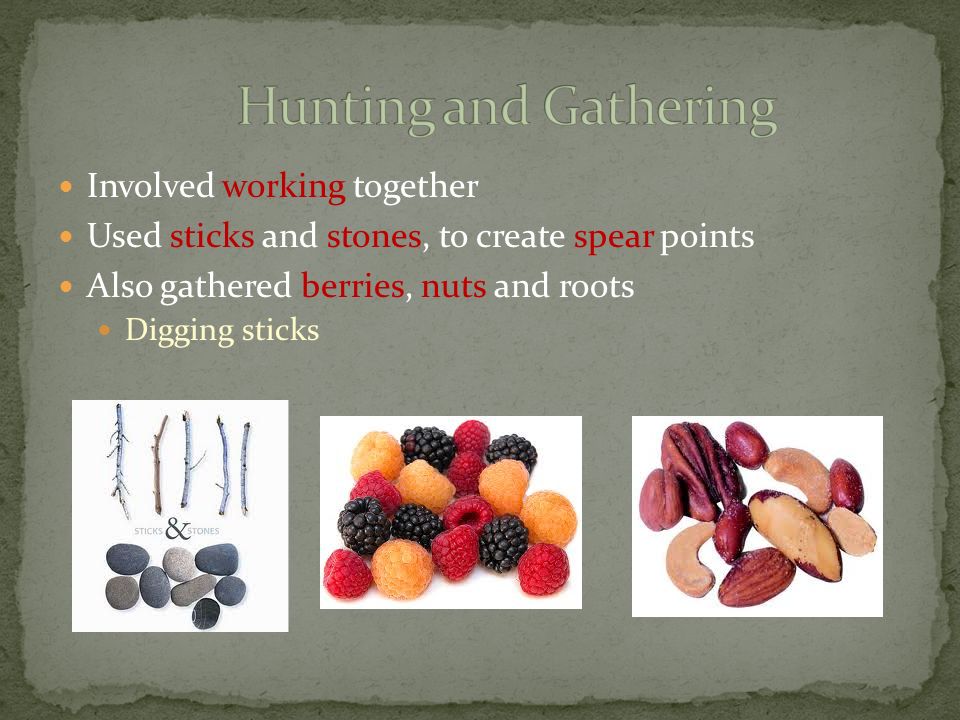
Saini also debunks several myths, such as the one that women are better at multi-tasking than men. The paper that was published on this subject, actually never reported this claim, but the cultural and gender stereotypes were stressed in the press release. A further belief is that in previous cultures men went hunting while women gathered, making the males dominant. Research by Bion Griffin and Agnes Estioko-Griffin into the Nanadukan Agta refutes this assumption, suggesting that males did some tasks and females did others. “By and large people did whatever they wanted to do. There was no sphere of work that was exclusively male or female – except perhaps the killing of other people.  Women would stay back when groups of men went out on raids of their enemies”.

Hunting was not the primary source of nutrition anyway, so the group that hunted did not have the most crucial task. While studying the !Kung hunter-gatherers in southern Africa in 1979, Richard Borshay Lee noted that women’s gathering provided as much as two-thirds of food in the group’s diet, so gathering was arguably a more important source of calories than hunting. It is also likely that the first tools were digging sticks and containers for the food, which, being made from wood, skin or fibre, would break down and disappear over time leaving no record, unlike the hard-wearing stone tools that archaeologists have assumed were used for hunting. “This is one reason that women’s invention, and consequently women themselves, have been neglected by evolutionary researchers.” Many of these myths began because they fitted the dominant – male – narrative that positioned women as inferior.

Humans are not automatically the same as other animals, and much of our behaviour is more likely due to societal pressure than biological expression. Women are not inferior, and the science that seeks to suggest this is the case is inevitably flawed. It is time for this to be recognised and stopped. Sarah Hrdy argues, “A feminist is just someone who advocates for equal opportunities for both sexes. In other words, it’s being democratic. And we’re all feminists, or you should be ashamed not to be.” This is the science we should all follow.

Wednesday, 14 September 2022

Ordering Chaos: The Mercies


The Mercies by Kiran Millwood Hargrave
Picador
Pp. 336

With echoes of The Crucible, The Handmaid’s Tale and My Antonia, this is a fascinating tale of how the women in a remote society cope after a natural disaster wipes out most of the male population. The novel begins with the (real life) sudden storm on December 24, 1617 just off the coast of the island of Vardø, Norway’s north-easternmost point, which caused forty fishermen to drown in minutes. The women are left to mourn and bury their dead, and to try to work together to survive, until ‘a stranger comes to town’ and changes everything, resulting in accusations of witchcraft and a (again, real life) ‘trial’ held on 29 March 1620.

At the outset, there are stories of the women working together at domestic chores, after their men have been lost at sea; they undertake soothing rituals of the home (bread making and sewing), but they must also put to sea to fish, and butcher the meat – things the menfolk did but they are no longer here. The action of rowing becomes a metaphor for cooperation which, despite personal differences, is essential for survival. “They pull together as men rowing a boat. It is a closeness born of necessity: they need each other more than ever, especially as food begins to scarcen.” Maren observes that there is a rhythm and a natural order to their society, which we know will be overturned, because that is the chaos that makes drama.

Women are expected to fit a mould, and they cause discomfort to others when they break out of it. Men from the mainland come to bury the bodies when the earth has thawed enough to dig. They wish to wish to control women; they dislike seeing women doing manual labour such as fishing and butchering, and they disapprove of them wearing practical clothing (trousers) to do so.

Absalom Cornet is appointed by Lensmann Cunningham to visit the island, with his new wife, Ursa, and hunt out any instances of witchcraft. The sense of unease throughout the novel is palpable, and the reader may be horrified at the ending but not surprised. Hargrave is portentous in her foreshadowing from Maren’s dreams of dead whales to more explicit warnings that the arrival of men, and Absalom Cornet in particular, will have dire consequences. “They imagine he will be like their minister, have as little impact as snow falling into the sea. They imagine that their lives will go on, and that the worst is behind them. They imagine all sorts of silly, inconsequential things, and every bit of it is wrong.”

Some of the women have relied upon ritual to deal with grief and help them to feel safe; in some cases using runes and leaving food out for trolls. Maren is comforted by the Sámi ceremonies of Diina, her sister-in-law. “She had believed it, because in those months she was grasping for something, anything, to order the chaos that the storm had set among them.” Many of the women submit to soothing domestic routines, rather than praying in the church to a stern deity. Ursa has been brought up with housekeepers and no idea how to provide for herself; when Maren teaches her how to bake bread, the description is sacramental.

The men also need to find order in the chaos, so they choose to blame witchcraft. The clear rift between the meeting house and the kirke women is embodied between Kirsten and Toril. Kirsten is stronger, but Toril speaks the right words to the church men and there is nothing anyone can do against the charge of witchcraft. The things by which they accuse the women of witchcraft are very mundane. “It reads like a list of women’s gossip, from arguments over fish-drying racks to saying the Lord’s Prayer backwards.” The women collude with the practice and find that once accusations of witchcraft begin, they are as impossible to stop as the weather. “Oh, God have mercy on us. We have begun it, and cannot end it.”

The arrival of the witch finder destroys everything the women have built, but his wife also leads to conflict from the moment she alights from the boat in her vibrant yellow dress so dramatically different from the drab outfits of the island women. Ursa and Maren seek physical comfort in each other’s arms, but not until their emotions have threatened to overrun them and left them dumb. Kiran Millwood Hargrave has taken the bare facts of witchcraft trials in a Norwegian island, and woven them into a most intriguing tale full of contemporary themes. The lessons of how an isolated community is broken by those wanting power are ringing loud and clear. 
Steilneset Memorial in Vardo, Norway, commemorating the trial and execution in 1621 of 91 people (77 women and 14 men) for witchcraft

Tuesday, 12 October 2021

How Beauteous Mankind Is!: Circe


Circe by Madeline Miller
Bloomsbury
Pp. 333

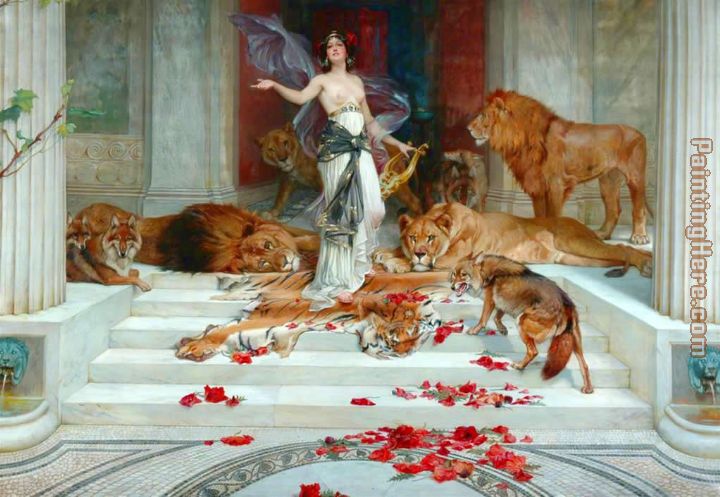
The retelling of classical stories and myths from the female perspective is currently all the rage (The Penelopiad by Margaret Atwood; The Silence of the Girls by Pat Barker; A Thousand Ships by Natalie Haynes) and Madeline Miller is part of this welcome revolution. Here she tells the story of Circe, a semi-goddess often described as a witch, best known for her role in Homer’s Odyssey, where she detained Odysseus and his men, turning some of them into swine. Miller relates this tale in the first person, providing a back-story and reasons for Circe’s behaviour, like the unravelling of a fairy-tale.

Circe (1911) by Beatrice Offor

Circe is the daughter of Helios, Titan god of the sun and, from childhood, she is ridiculed for not shining brightly enough in his eyes. Her name means Hawk because of “my yellow eyes, and the strange, thin sound of my crying”. The gods think her voice is weedy and screechy, but it transpires it is simply like that of a mortal. She is fascinated by humans and shares an affinity for them with Prometheus, who shaped man out of mud. As a child, Circe asks Prometheus what a mortal was like and he tells her, “There is no single answer. They are each different. The only thing they share is death.” She questions how they bear the burden of this knowledge and he replies, “As best they can”.

Bored with the smooth symmetry of the gods, Circe loves the diversity of humans. She is fascinated by mortals, and her words are like those of Miranda in Shakespeare’s Tempest or reminiscent of Doctor Who, who admires mortals but is not one. She has no god-like powers, although she does have knowledge of herbs and potions; medicine to be used for healing and harm, the Greek word for which is pharmakis, ‘a preparer of drugs, a poisoner, a sorcerer’, from which we derive the word pharmacy, and which wisdom led her to be called ‘witch’.

The Wine of Circe (1900) by Edward Burne Jones

Just as she studies the mortals, she also philosophises about the gods. She knows that they are cruel and curious, and that they rule by fear through a hierarchical chain that recalls various political parties and governments.

The gods also “love their monsters” because it gives them something to threaten mortals with, and something for heroes to challenge. They look down upon mortals and heroes, and enjoy toying with them – the Trojan War and its consequences are all a result of their petty squabbles – and they like to see what the mortals will do next when put into impossible situations. “Gods love novelty… They are curious as cats.” These gods are equally childlike and cruel, with a unique morality. “They do not care if you are good. They barely care if you are wicked. The only thing that makes them listen is power… They take what they want and in return they give you only your own shackles.” They also punish those who help mortals; they want the mortals to be afraid because they give better offerings.

Circe (1889) by Wright Barker 

The most important thing to these gods is their reputation. They are similar to the Knights of King Arthur, who vied for quests to prove their honour, but these gods want only fame – they don’t care how they come by it. Most mortals also want fame above anything: when Odysseus travels to the underworld to consult Tiresias, the blind seer, Achilles tells him it is better to live a quiet life than die a hero’s death. He disagrees. When Telemachus turns down Athena’s offer of adventure, she is bewildered. “There will be no songs made of you. No stories. Do you understand? You will live a life of obscurity. You will be without a name in history. You will be no one.”

Miller uses the style of Homeric language and epithets about Helios, “My father’s chariot slipped into the sea and began to douse itself in the waves” but she also has an individual style as she reinterprets classic myth from a modern angle and damns the ostensible glory of the gods.

After displeasing her father, Circe is exiled to an island, Aiaia, which she cannot leave, but she can receive visitors (including Hermes, Jason and Medea, Daedalus, and, of course, Odysseus). She becomes a magnet for reckless and randy sailors (these are the ones she turns to swine as they try to rape her) and her island a place for disgruntled fathers to send their disobedient daughters, like some mythical convent. She casts her feminist viewpoint on her treatment. “Brides, nymphs were called, but that is not really how the world saw us. We were an endless feast laid out upon a table, beautiful and renewing. And so very bad at getting away.”

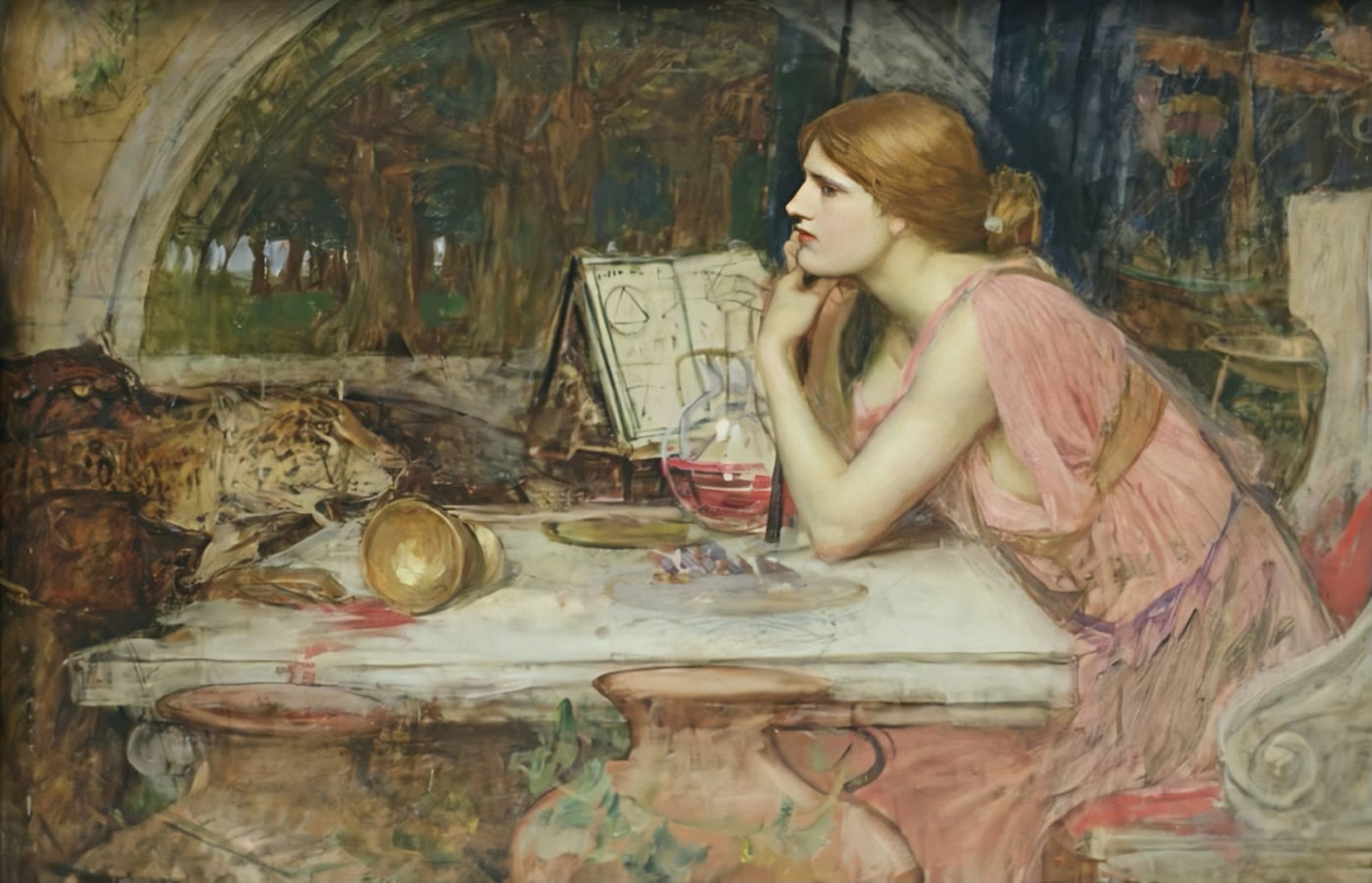
The Sorceress (1911) by John William Waterhouse 

Circe’s story is one that has only previously been told through the eyes of others and the tangential effects she has on their narrative. Miller presents us with another side to wily Odysseus, “The spiral shell. Always another curve out of sight.” She also shows us a fresh perspective on Penelope when Odysseus’ wife and son visit Circe on Aiaia, and the use of the word ‘weaving’ to describe spells and craft unites the women through something other than the lover and mother trope.

Circe is immortal, and she sees many changes, but she does not wish to see destruction. During her early experiments, Circe discovers the limits of her powers. “However potent the mixture, however well woven the spell, the toad kept trying to fly, and the mouse to sting. Transformation touched only bodies, not minds.” To her mind the greatest transformation is life into death. The idea that there is an undying spirit is comforting; it is the same as a story which can be endlessly retold. And this is a version I would be more than happy to hear again.

Circe and Her Swine (1896) by Briton Riviere

Tuesday, 22 June 2021

Cliched Romantic Claptrap: A Matter of Grave Concern


A Matter of Grave Concern by Brenda Novak
Montlake Romance
Pp.325

Brenda Novak has written over 50 novels and is a New York Times Bestselling Author, so she clearly has a following, although if trying to place her genre it would be somewhere on the misogynistic side of historical romance. This novel begins with an interesting premise about Abigail Hale, a woman who buys corpses to supply the medical school, run by her father, with cadavers. These corpses are often found illegally by grave robbers or, worse, people who kill in order to have a fresh stock of bodies. 
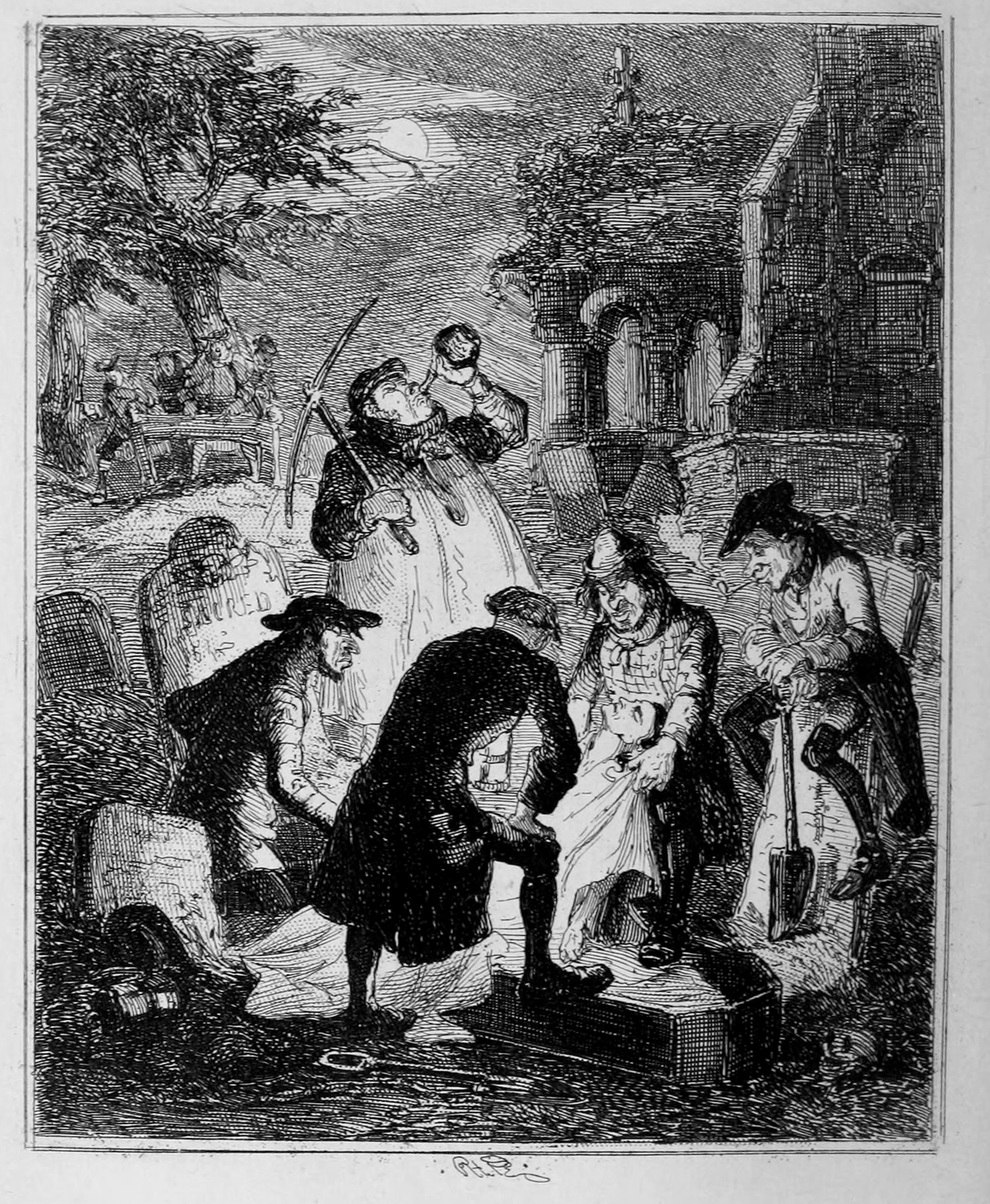
Resurrectionists by phiz

One of the grave robbers in The London Supply Company, Max Wilder, is actually a nobleman in disguise, trying to find out what happened to his step-sister who has disappeared and he fears she has been murdered. This scenario is interesting, but it all goes rapidly downhill when Abby goes to the home of the leader of the gang, Big Jack, to recover the money they took from her. She is captured and she falls in love with Max, who supposedly protects her, but also initiates her sexually while holding her captive; it’s all very distasteful and the sexual fantasy element seems misguided.

Abby dreams of being a surgeon, although women are forbidden from practicing medicine. Supposedly she has some feminist leanings, but she still likes to be dominated and falls for her captor. She refers often to the plight of women in the late Regency period, “Because she refused to adopt the role society tried to press upon her, she had always fought to fit in, even at the college. Lecturers and students alike couldn’t understand why she couldn’t be content to sit in the corner and darn socks.” Women have few options, apart from to go to the alms-houses, which “provided such a cruel and meagre existence that no one wanted to end up there”, and of course, there is prostitution.

There are offerings of historical information which do not blend with the plot, and land with a clang, such as the mention of “Sir Robert Peel’s new police force” or “the notorious gentleman’s guide to the current brothels and prostitutes in London – Harris’s List of Covent Garden Ladies.” It is as though Novak wants to educate as well as titivate, and she is far from subtle with the introduction of knowledge, but she also writes of England for an American market, as evidenced by her slips of language. Although Max is a high class noble (Lucien Cavendish, the Duke of Rowenberry), he tells Abby to, ‘Quit being so smug”, which is not an English expression of any era.

Interior with a Sleeping Man and a Woman Darning Socks by Wybrand Hendricks

Max is supposedly heroic and appealing in the way he cares for Abby, and she is drawn to his male magnetism and controlling aspect. “Max Wilder couldn’t be classified as a saint. There was something dangerous about him, something bordering on the uncivilized. From what she had seen so far, he dared more than a man should. He flouted whatever rule he chose to flout, and seemed to have no compunction about asserting his will in any given situation, regardless of how it affected others.” The novel constantly switches viewpoint, and we are meant to believe that a man so used to getting his own way is attracted to someone who might question his authority.

Abby admits her love for Max only to discover he is betrothed to another woman through an old alliance between families; of course it wouldn’t do for him to have any romantic attachment to anyone but her. Although she is now pregnant with his child (and we have been told about the consequences of unwed motherhood), she does the ‘decent thing’ by not telling him. “If she loved him, she would support him in what would make him the happiest, and she knew what that was.” This is patently ridiculous and a romance novel trope; one of many. There are long scenes of what Max and Abby feel for each other, but the actual plot hurries towards the end. In the last few chapters there are stabbings, abduction, hangings, and circumnavigations of the globe which appear to take weeks rather than months.

The sexual politics are at best uncomfortable and at worse downright offensive. As for the narrative, all of the potential interest in a story about grave robbers, medical science, and a young woman trying to negotiate a life in a man’s world is swept away on a torrent of clichéd romantic claptrap.

Wednesday, 2 June 2021

Women's Health Matters: Pain and Prejudice


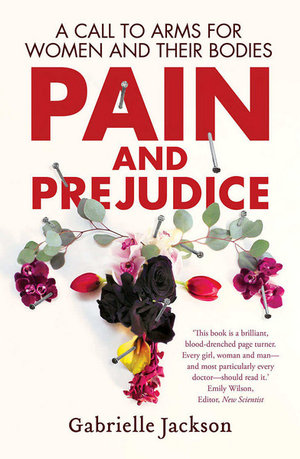
Pain and Prejudice by Gabrielle Jackson
Allen & Unwin
Pp. 321

Subtitled ‘A Call to Arms for Women and Their Bodies’, this book focuses on how women have been badly treated by the medical profession in the ‘Western World’ (there are many studies, figures and reports, all from the UK, the USA, Australia and New Zealand) and suggests that the times are ripe for revolution. It centres on the fact that medicine was traditionally a male profession and that the male was considered the default, so the difference in women was barely acknowledged let alone appreciated. In a similar line to that taken by Caroline Criado Perez in her book, Invisible Women: Exposing Data Bias in a World Designed for Men, Jackson argues that women are being ignored at best and killed at worst due to this gender bias in medicine.

In general women live longer than men, but they are in more pain. They are not taught to know their bodies or talk about their ailments; they are meant to nurture and support others before themselves. Women aren’t accustomed to discussing ‘female ailments’ – menstruation, menopause and sexual pain are still relatively taboo topics. Many women can’t identify their reproductive organs on a diagram and are certainly not meant to talk about them, as it is considered shameful. An influential study by Melissa Parker on Australian girls found that 93% of them experienced some period pain. About 20% experience severe pain, 24% say their period interferes with four out of nine life activities, and 26% miss school because of pain. “So a quarter of girls are missing school because of pain, and nobody thinks it’s a problem?”

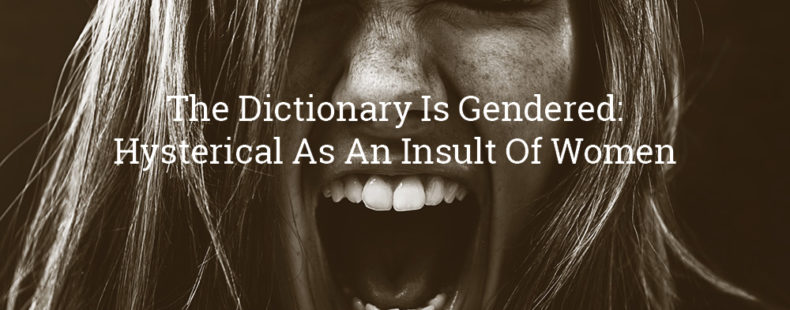
When women demand attention, over their health or issues of equality, they are often labelled as hysterical, and “As an insult, ‘hysterical is still disarmingly effective.” Yet, when men present with the exact same symptoms, it is called shellshock or PTSD. Traditionally medicine was a male profession, and women are often not believed about their own health. In the late nineteenth and early twentieth century, “medicine became an elite profession and took over from religious institutions as the primary enforcers of the social roles of women.”

Because the default case study for all ailments is male, “We assume that the ways in which women are different from men must be the ways in which women are inferior or broken or diseased when in fact it might be that women are just different.” Symptoms of heart attacks are different in women and often misdiagnosed. A World Health Organisation report explains, “It has traditionally been thought of as a man’s disease which has led to deadly consequences for women – in 2004, 7.4 million women over 60 years of age died of cardiovascular disease compared with 6.3 million men.” Stress is a factor in heart disease, but women are often dismissed as suffering from nothing but anxiety when men who present with the same symptoms are diagnosed with heart disease.

Before 1993 there was no legal requirement to include women in clinical trials 

Many clinical tests only use men in their trials, which can prove fatal to women. In 1993, the US Food and Drug Administration and the National Institutes of Health mandated the inclusion of women in clinical trials. Before then, trials were routinely carried out on men only, including: a twenty-year longitudinal study (began in 1958) to explore whether taking an aspirin every day could reduce the risk of heart disease (conducted in 22,071 men and no women); a 1982 trial looking at whether dietary change and exercise could help prevent heart disease (conducted in 13,000 men and no women), and even a trial in the 1960s to investigate whether supplementation with oestrogen was an effective preventive treatment for heart disease (conducted in 8341 men, and no women).

Women generally experience more chronic pain than men – they suffer pains that cannot be seen, so they are often discounted, and pelvic pain is “also beset by stigmas and taboos that make it difficult for women to talk about their sex organs or anything related to them.” When women are believed about experiencing pain, they are often thought to be exaggerating. “Even female doctors, after training and working in the heavily masculinised medical culture, can view this language as confronting and histrionic.”

Women suffer more chronic pain than men

There are several overlapping pain conditions and women who suffer from one are likely to also suffer from others. These include endometriosis; vulvodynia; fibromyalgia; chronic fatigue syndrome/ myalgic encephalomyelitis; interstitial cystitis/ painful bladder syndrome; temporomandibular joint disorders; irritable bowel syndrome; chronic tension-type headache; chronic migraine and chronic low back pain. “Chronic pain conditions aren’t conditions that kill us but they radically alter our opportunities to reach our full potential in life… Pain doesn’t actually kill people – it keeps women in the home and out of work, which has no effect upon the power structures of society, providing no incentive for action.”

Doctors don’t really want to see patients who are difficult to diagnose and harder to fix as it looks bad for their figures and solved statistics: they even call them ‘heart-sink patients’. Women are aware of this stigma, and when they are told they have medically unexplained symptoms, anxiety, depression or are disbelieved, they can move from doctor to doctor in order to find a diagnosis or treatment relief. “In an exasperating development, ‘doctor-shopping’ has come to be seen as an indicator that pain is made up, rather than a result of pain doctors won’t believe.”

Women’s pain is not treated as seriously as men’s pain, and Jackson suggests that women should not simply accept this, but educate themselves about their bodies and demand that they be treated with equal funding and respect. It would be a brave and/or stupid person who would argue with that.

Wednesday, 13 January 2021

You'll do girl, you'll do: Finding Baba Yaga


Finding Baba Yaga by Jane Yolen
Tom Doherty Associates
Pp. 131

This contemporary retelling of an iconic myth is written entirely in blank verse. It is reminiscent of the artful design of a Russian Matryoshka nesting dolls, as elements of Slavic myth, Russian folklore and fairy tales cleverly fit among the contours of American realism. It also explores a number of themes including the nature and power of language, the journey from childhood to adulthood, the relationship between religion and language, ‘good’ and ‘bad’ words, the unique dynamic of female friendships and the mother/daughter relationship. Yolen begins her tale, “You think you know this story. / You do not.”

Teenaged Natasha lives with her parents, and knows she must get away from them and their constant fighting. Ever since her father has discovered religion, it has become worse as he monitors her language and behaviour. She runs away into the forest but, although the woods, stones and water are a recurring fairy tale image or reference, this is not the one familiar from storybooks and the settings are slightly skewed; “The forest opens like a yawn,/ as if it knew I was coming,/ has seen me before,/ can’t be bothered to resist.” We recognise the motifs of the lost child in the woods, but Yolen suggests there is more to the story if we look, listen, and abandon our preconceptions. At the end of Chapter Two, The Runaway, in This Is Not a Fairy Tale she writes, “Expect no princes./ Expect no magic rings./ Expect no glass slippers./ Expect no fairy godmothers. / Expect no singing dwarfs. / Expect no talking dragons. / Expect only/ seven deadlies delivered:/ exhaustion,/ boredom,/ regret,/ hunger,/ anger,/ danger,/ death./ All part of God’s taketh away.”

And then she encounters Baba Yaga, with all of her traditional traits. She lives in a house which turns about on its chicken legs: “It is like living on a house boat:/ the swell of the waves, the turn of the tides,/ a moment of emotion, with the ‘e’ removed.” She is a tough old woman with an iron nose, and the contemporary references to strong women are apparent; “She’s tougher than Clinton or Thatcher ever were.” This clash of realism and magical imagery continues as she explains how Baba Yaga flies through the sky in her mortar, guided by her pestle, but no one see her “unless you count bad dreams”. She flies “across tundra, taiga, major highways,/ avoiding traffic jams, roundabouts,/ only bothering the occasional helicopter/ or low-flying private planes.”

Natasha learns to tell her story, and that “A story is, not always means.” It may be grim – “I think I know now/ there are no happy evers./ Only happy moments.” – but she grows as a narrator, examining the meanings of words and exploring postmodernism through form and structure, drawing attention to the artifice of the narrative. “I am becoming a poet./ I am thinking in metaphors./ I am walking through a poem.”

As Natasha rewrites the myth with herself as the hero of her own story, she discovers that “Stories retold are stories remade.” After all, if we believe critical analysis, there are only seven stories anyway, so we need to refresh them every now and then. In searching for (and finding) Baba Yaga, Natasha is really on a quest to discover her own inner vice, strength and truth. By the end of the book she states, “So, this is a tale/ both old and new,/ borrowed, narrowed,/ broadened, deepened,/ rethreaded, rewoven,/ stitches uneven,/ re-plastered, re-harled, rehearsed, reworked/ until it’s my own.” It is familiar and unique. It is brilliant.

Monday, 23 November 2020

Craft is a Feminist Issue: The British Textile Biennial

I like cross-stitch. I have posted many images of my work here. I particularly like subversive images that challenge expectations. Last year I saw an exhibition of the British Textile Biennial, which appeared to have been curated by Mr X Stitch.  He opened with a quote from Wikipedia (sure, we can be snobby about that, but we all use it as a common source).
"Cross-stitch is the oldest form of embroidery and can be found all over the world. Many folk museums show examples of clothing decorated with cross-stitch, especially from continental Europe, Asia, and Eastern and Central Europe."
He continued that those who do cross-stitch are taking part in a cultural craft that spans generations and continents. In 2009 at the Kostyonki evacuation site in Russia, they found ivory needles that were dated to 30,000 years ago. Embroidery has been around for millennia. Some of the world's most precious historical events are immortalised in stitch, from the Bayeux Tapestry to the Great Tapestry of Scotland. 

Cross-stitch samplers were commonly used as a way of teaching embroidery, and the crafter would literally pinpoint their place in space and time among the flowery borders and earnest phrases. A cross-stitch sampler, however, was not only a way of learning stitches, but also promoted workmanship, and for the professional embroiderers of the eighteenth century, it was a mobile CV that could be shared with potential clients. 

The industrial revolution transformed the mass production of embroidery; however, the basic cross stitch remains an important practice for embroidery students and professionals as the samples from Royal School of Needlework Degree apprentices from the twentieth century will attest.

Heartfelt and You See Food, I See Numbers by Caren Garfen
The title of Caren Garen's artwork, You See Food, I See Numbers, and the hand-stitched text on the fabric bag come directly from a tweet on the Twitter account of a young woman with anorexia nervosa. The words read 'You see tomato I see 24; You see Coke I see 454; You see noodles I see 307; You see chicken pie I see 654; You see food I see numbers'.

An innocent bag of sweets becomes a disturbing vessel for medicine capsules which spill out over a worktop. The viewer is drawn in by the miniature sweets, chocolate, fruit and vegetables, only to find text and numbers are part of the mix. A person with disordered eating will lose sight of actual food and will concentrate on its calorific value - food becomes numbers rather than an ingredient for health or pleasure. 

Detail from Heartfelt
In Heartfelt, above, the stethoscope takes on a new meaning when the hand-stitched text disc replaces the chest-piece's diaphragm. It reads, 'The mirror, in which she examines every inch of herself for hours reflects the bulges and blemishes no one else sees'.

Identity Crisis and That's How the Cookie Crumbles by Caren Garfen
In another couple of works, Caren Garfen continues this theme. The five hospital identity wristbands in Identity Crisis shrink sequentially in size as the eating disorder takes hold of the malnourished body. The text is drawn from a conversation had with a young woman who suffered from anorexia nervosa. She was admitted into emergency care on numerous occasions.  Each bracelet is stitched with the motif of a cannula. 

Detail from That's How the Cookie Crumbles
It is known that people with anorexia nervosa view their bodies as much larger than they actually are. Hand-stitched cookie motifs, each with their own text, are enlarged under an LED magnifier. The words such as 'self hate', 'restrict', 'fat' and 'struggle' obsessively turn inside the minds of those with eating disorders. 

Mr X Stitch asks if cross stitch is an art form, and immediately answers his own question; 'You bet your life it is'. He continues,
"There's a debate about art vs craft that has been going on for centuries, and it's intrinsically connected to the concept of a patriarchally dominant social paradigm. It goes something like this: 'Men are great and they make art and are powerful and strong, whereas women are meek and should sit at home crafting things like embroidered homewares.'

"It'is all a bit ridiculous, but that storyline, which I have somewhat paraphrased, has led to the idea that only certain media (painting and sculpture for example) should be labelled as art, and that crafts like cross stitch cannot achieve such spiritually lofty goals. Suffice to say, this is not the case. Just believe me when I say that any medium can be used for art as it's the creative expression that makes the difference."
Images by Crapestry
Clockwise from top left the above images are: Tourists from the Tourists collection; Gary Just Wants to Be a Real Cow from the Livestock collection; Gerberas from the Bad Kitty collection; Elwood from the Big Cats in Shades collection.

Crapestry claims to invented the word, 'a rather obvious contraction of the words crap and tapestry'. They continue,
"Contemporary commercial tapestries might be argued to be the exemplification of superficial chintz; spectacularly vapid, vividly dull, unquestioningly conformist, gaudily bourgeois, and at the same time unyieldingly time-consuming. The subject matter is often romanticised, uncritical and both exploits and reinforces established stereotypes. The outcome? Standardised 'precious things' cherished by the softly smiling, callous fingered Grandmas of the world, harmless old dears who quietly revel in the creation of 'cheeky terrier' and 'dewy chrysanthemum' cushions or 'God bless this house' picture frames. No mention of mortality, no depiction of suffering, nothing surprising, nothing funny.

"Crapestry capitalises on cross-stitch orthodoxies, exploiting their established themes. Some crapestries are funny, some are sad, and some may cause offence; but that's fine. Even the desperately sad crapestries make many people laugh, whether by a curious schadenfreude or simply because they are unaccustomed to encountering troubling subjects addressed through the medium of tapestry; its incongruous." 
More Images by Crapestry
The above images are (clockwise from top left) Five Meddling Sparrows Tear a Pentagular Rift in Our Realm and Briefly Glimpse an Unspeakable Evil from the Abominations collection; Sunset Barn from the War collection; Lamb from the Abominations collection; 1984 from the Wolves with Good Books collection.

On their website, Crapestry explains how they create these images, by 1. purchasing a cross stitch kit, 2. having an idea about how to modify it, 3. taking a digital photograph of the naked canvas, 4. using Photoshop to modify the photo of the canvas, 5. creating crapestry designs by adding coloured dots to the original canvas photograph to represent new stitches, 6. painting the new digitally modified design onto the canvas with acrylic paints, 7. stitching the kit to the new design. 


One could admire the mix of traditional and contemporary techniques: if we're sticking with those gender stereotypes; women do craft-work (as opposed to krafwerk) while men do I.T. (as opposed to 'it', which may not be capitalised or considered as important, but encompasses pretty much everything). Another angle which blends the metal with the material is that taken by Severija Inčirauskaitė-Kriaunevičienė. She writes,
"The gradual crackling of the Iron Wall which began in the 1980s brought refreshing gusts of the westerly wind not only to adults. The growing thirst for superior ideals and freedom of speech was accompanied by an inexorable hunger for material novelties and commodities. It was not consumerism in today's sense when we are spoiled by both the excessive supply and the possibility to buy almost anything our eyes and heart desire. Back then we, the Soviet Generation X, were hungry indeed. It was a time when we took turns chewing the same piece of bubble gum with our classmate, biting into the red wrap of basically the only available option, the Lithuanian-made Paršiukas Čiukas (Chook the Piggy) gum, to tint it red, while the Estonian Kalev gum was extremely hard to come by. Then the corroded iron wall began to erode rapidly and real Western wonders entered the world of deficit.
"Among the first arrivals were the Donald Bubble Gum, valued not only for their main pre-coloured chewable content but also the inlays with adventure comic strips. We were ready to sacrifice for these wonders as much as the Native Americans or the Aborigines had been willing to exchange the last pelt for European glass beads and add a bonus gold nugget to that. In other words, giving away all the money our parents gave us for the summer holidays for a carton of Donald Bubble Gum was seen as a fair deal.


Just as the dollar assumed a very important role among the adults, bubble gum inlays did the same in the parallel children's world. It was not a vain childish whim, as these pieces of paper were not less valuable than the adults' paper bills. It was the children's hard currency which could be traded, exchanged for other commodities, gambled away, and, most importantly, used to buy status, peers' respect, friendship and popularity. 
"The other Donald, who seems to surpass Donald Duck and his fellows in popularity and influence, brings out these real childhood memories, which may look like cartoons to those who were born in the post-Soviet years or who have never lived this side of the Iron Wall. The two Donalds have some traits in common. Both of them attract the masses, generate a huge income, and are excellent at blowing bubbles. Yet there is also a fundamental difference - while Donald Duck has made walls fall, the other Donald is busy building them." 

Taking corporate logos and altering them with names of controversial bands seems like a simple thing to do, but someone still has to do it. And Marina Bolmini is that someone.
"I am strongly influenced by the world of media. I work on the slip of meanings relating to highly iconic images, using diverse media and techniques. I am passionate about the art of embroidery using it to produce several cycles of works of great visual impact and subtle conceptual charm."

Equally confronting although less amusing is the work of Danish artist, Lærke Jessen. She embroiders nontraditional images including still frames from You Tube videos, close ups of faces in pornography, feminine hygiene products and more. 


Finally, I really liked this string and peg board depiction of a monochrome Elvis, which has given me ideas about possibly interpreting some of my smaller pieces into larger canvases. I couldn't see any information about the artwork or the artist so I have come to my own interpretation. Perhaps it is hung on a door because Elvis has left the building.