Showing posts with label thriller. Show all posts

Wednesday, 28 January 2026

Everyone Knows Tipping Point: We Solve Murders


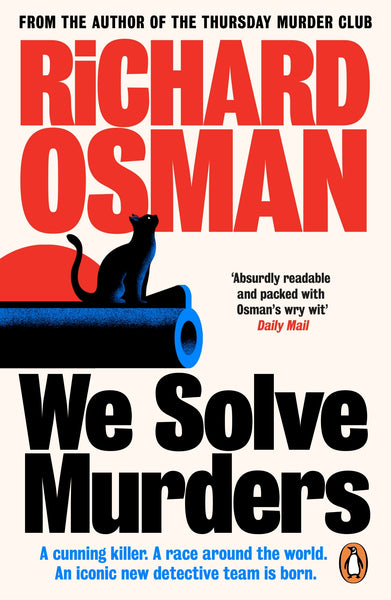
We Solve Murders by Richard Osman
Penguin
Pp.438 

Richard Osman created the wildly popular Thursday Murder Club, and now he has published a standalone novel, We Solve Murders, which looks perfectly set to be the beginning of a new series. The main characters are Amy Wheeler, an assassin/ private security officer to billionaires and her father-in-law, Steve Wheeler, who used to be in the business but now likes spending time with his cat, Trouble, and his quiz team down the pub. “Steve Wheeler still reads about murder, of course he does. Just as a retired centre-forward still looks at the football scores on a Saturday afternoon. Takes a professional interest, with his feet up.” Amy’s husband, Adam, is mostly absent.


It is a fast-paced thriller packed with guns and humour. Influencers are being murdered in a spat between money launderers, but no one really cares about influencers because they are so shallow, until we meet Bonnie Gregor, one with a family and a conscience. Amy is meant to be protecting famous author, Rosie D’Antonio who loves flirting – with danger and men – as they encounter lots of action in multiple locations. The New Forest; South Carolina; Dubai; St Lucia; County Cork. “Amy has been in mortal danger in many countries over the last few years, but St Lucia has to be one of the most beautiful.”


There is a cast of hundreds – François Loubet; Henk van Veen; Jeff Nolan; Susan Knox; Max Highfield; Felicity Woollaston; Jo Blow; Andrew Fairbanks; Bella Snachez; Mark Gooch; Gary Gough; Tony Taylor; Rob Kenna; Mickey Moody; Vasily Karpin; Eddie Flood; Carlos Moss; Kevin the ex-Navy SEAL – and it’s quite hard to keep track of who is whom. It doesn’t really matter though, as the action, locations and opportunity for cameo roles all combine to make this novel a dying-to-be-made-into-a-film script, with actors queuing up to play the characters. I read recently about a woman who said she thought being an assassin was a reasonable career due to the number of TV shows, books and films about them. “Needs must, and murder’s not so difficult. Wear gloves, and don’t drive the getaway car too fast.”


Pedantry provides humour, such as when Rosie asks Henk if he has proof “in that little envelope of yours?” He replies that is “not a little envelope, it is an A4,… and yes, I have proof in this normal-sized envelope.” A character quotes Eric Cantona, revealing the aimed-at demographic, while another ruminates on property prices. “If he was moving to the village today, he wouldn’t be able to afford it. The only way anyone can afford to buy a house these days is to have bought it fifteen years ago.” There is an allusion to modern social interaction as François Loubet sends emails via Chat GPT in the style of “a friendly English gentleman”. “Most communication is by message or email. High-end criminals are much like millennials in that way.” Meanwhile, another character is obsessed with road routes.


“The journey had been a pleasant surprise, if Tony Taylor is honest. The A31 turned out to be clear as a bell – couldn’t believe his luck there. M27, no major problems. The traffic backed up around Junction 2 of the M3 – but when doesn’t it? The usual fun and games on the M25, but then clear from Junction 9 all the way to Letchworth Garden City. So, all in all, Tony couldn’t complain. Should have taken two hours and twenty-three minutes, actually took two hours and fifteen minutes.”


It may ostensibly be about Amy, but Richard Osman proves he relates more to middle-aged men than he does to young women. Steve knows crisp flavours, road routes and daytime TV. “Sometimes Steve wonders what world Amy is living in. Everyone knows Tipping Point.” Even when Steve loses his cool with Henk, he does so with self-deprecation. “I’ve put my priorities on hold for a number of days now. I’ve been tied up, I’ve been threatened with a gun, I’ve been in a helicopter, and I’ve eaten kale.” Steve is spoiled, however, by having flown on a private jet. “This private jet – it’s a Learjet – is slightly smaller than the ones he has become used to in the last week and he is feeling a little cramped. He’s also just found out there is no private chef, and he had really been looking forward to a bacon sandwich. So, just as cat food has been ruined for Trouble [after the cat ate leftover roast chicken], so air travel has forever been ruined for Steve.”


It’s a very decent book with a central character who talks to his dead wife while sitting on a small bench by a quiet pond and is trying to come to terms with his grief and her absence. “Steve has learnt you must never resent other people for their happiness. Everyone is taking the best shot they’ve got and some shots are just luckier than yours. Any time you feel your unhappiness turning into bitterness, you have to check yourself. You can live with unhappiness, but bitterness will kill you.” Steve is a character who could be played by someone like Jim Broadbent or Hugh Bonneville, and he will certainly make more appearances in future with his new detective partnership with Amy (and possibly, Rosie): We Solve Murders.

Friday, 19 July 2024

Friday Five: More Theatre

Lexi Sekuless as the prosecutor in Terror
  1. Terror - Lexi Sekuless Productions, Mill Theatre on Dairy Road - This is a really interesting and interactive piece with audience voting on a jury decision. A pilot (played by Mark Lee, who can stand looking inscrutable for a long time) has shot down a plane full of hijacked passengers, on his own initiative and contrary to an official order. The lawyers arguing for the prosecution and defence (Lexi Sekuless and Tim Sekuless respectively) deliver convincing arguments and appeal to the audience directly. As the judge, Tracy Noble is inimitable in her summing up and control of the situation. Director Kim Beamish has a tight rein on the cast and the raw, industrial set, with expertly choregraphed moments representing the dramatic events and the claustrophobic atmosphere both of a targeted plane and a tense courtroom. 
  2. Streetcar Named Desire - Free-Rain, ACT Hub - This is known as a vehicle for female actors to shine, and there is, indeed, great acting from the female leads, although the men have a little more issue being authentically oafish, and the ensemble is uneven, with some of the muttering being distracting rather than supportive of the main cast. Amy Kowalczuk as Blanche DuBois is one of the best Blanches I've ever seen. It's a vile role but she approaches it with depth and nuance. Fluttery hand gestures and quick movements highlight her stressed (bordering on neurotic) attitude. Her playful sister moment with Stella (Meaghan Stewart) is beautiful as a glimpse of what could have been. The switch to flirtation and girlishness powerfully shifts to predatory, and the moment when she realises she has lost everything and has no autonomy is frightening and heartbreaking. Alex Hoskison as Stanley Kowalski is powerful and wounded with an inner strength and plenty of charisma, but not brutish or disgusting enough. He doesn't play ignorant and always looks as though he has a plan, making him defensive rather than cruel. Meaghan Stewart as Stella is charming and convincingly caught between her man and her sister, wanting to do right by both and failing to please either. Her compassion and need shine through on stage with only occasional slips into the actor instead of the character, with accent and mannerisms. Lachlan Ruffy gives the character of Harold Mitchell more nuance than it often receives, wanting to be the gentleman and look after the vulnerable, but fiercely wounded when he thinks he has been duped. He is the real toxic male of this production. Sarah Hull's Eunice is a perfect antidote to the heightened situation of the downstairs flat - she is earthy and sensual, putting up with the situation and trying to find positives where she can, providing sympathy, understanding and compassion as a real good Southern neighbour should. The tight, cramped set implies the situation and environment well, although there are some issues with sightlines. The bathroom is such a large presence in the play that it could have been incorporated, and there is no obvious indication where Blanche is actually sleeping. Tennessee Williams has a very specific attitude to light expressing truth in his plays, which can be intrusive but works well here. Blanche says, 'I don't want realism. I want magic' and this is reflected in the chase light scene and the abrupt changes. As she is afraid of bright lights and prefers the softening glow, more shade and contrast could have been provided. Sound is very clear and obvious - perhaps too much so, as it comes in single chunks rather than spread throughout - but the nightmare tune ending in a gunshot is well played. 


  3. American Idiot - Queanbeyan Players, The Q - It's a juke box musical with privileged young people trying desparately hard to be desparate and hard. Three wannabe incel lads (Johnny, Tunny and Will, played by John Whinfield, Darcy Kinsella and Zac Izzard) want to get out of town and have adventures, seeing women as handbrakes to their careering egos. As it is sung through, there are some strong songs (HolidayKnow Your Enemy, She's a RebelWe Are the Waiting, and the titular track) but not a lot in between. The choreography seems very out of place and era (there is a lot of jumping, hand flicking and weird lurching, which is more reminiscent of Michael Jackson's Thriller than post-punk angst), whereas the inclusion of some older, steadying hands in the ensemble (I'm looking at you, David Cannell), may bring experience to the stage but their presence is questionable. A standout is Declan Pigram in the role of St Jimmy, a creepy, sunglasses-wearing dealer who is revealed to be a drug-addled manifestation of Johnny's subconscious (occasionally portrayed by Green Day's lead singer and guitarist, Billie Joe Armstrong). It doesn't really matter what the audience feel as this is paean to the fans and the friends; the cast all have a fantastic time (and I'm sure they all think they look cute in their costumes - they do), as is exemplified by them draping their arms around each other in the high-school-esque final number/ curtain call, Good Riddance (Time of Your Life). This is a passion project for director, Bradley McDowell, and I like the laughably faux-punk Green Day just fine, but this doesn't add anything to my appreciation of the band or their music.
  4. Crime and Punishment - The Street, Street Two - In this claustrophobic production, Christopher Samuel Carroll plays the anti-hero of Dostoyevsky's novel with a range of emotion that compels the audience to side with him at times despite his heinous deed. His vocal and physical presentations cover a gamut of feelings and experiences that are quite exquisite. PJ Williams is remarkably phlegmatic as the inspector who goads his friend/ confidant/ suspect into a confession (come on - no one can accuse this of spoilers since the seminal work of psychological fiction was first published in 1866). Josephine Gazzard is perhaps the weak link as she plays all the female characters, some with a lack of focus and a listlessness that threatens to derail the play. The adaptation by Marilyn Campbell-Lowe and Curt Columbus condenses the towering novel into a mere 90 minutes, which could have been even more taut if Sonia, the street-walker character, had more impetus and energy. Designer Kathleen Kershaw has given us levels and surfaces to consider, with the idea of self-reflection never far from the surafce.
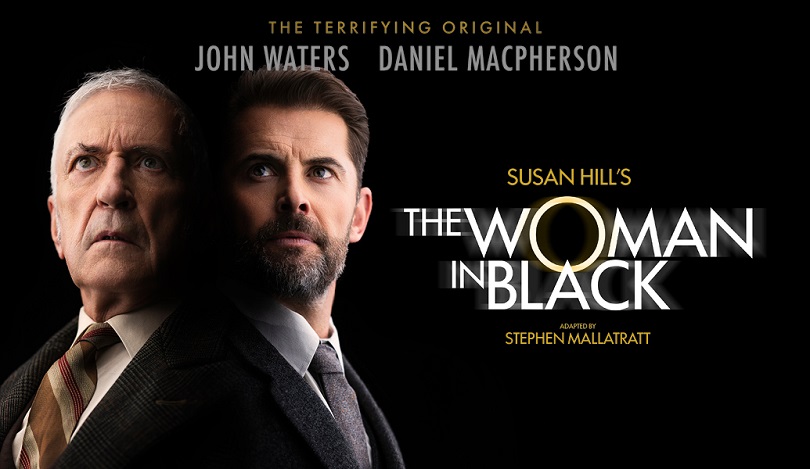
  5. The Woman in Black - PW Productions, Woodward Productions & Neil Gooding Productions, Canberra Theatre Centre - The play relies upon actors who elicit empathy and technical elements that create suspense. Fortunately, this production has all that in spades. John Waters plays Arthur Kipps, the narrator of the story, complete with framing device, and proceeds to assume all the other parts with aplomb. Daniel Macpherson acts out the story that Waters narrates, as the young Arthur Kipps, and the unreliable narrator trope weaves in and out of the production with fascinating and thoroughly engaging stagecraft. The set is sparse (designer - Michael Holt), allowing the audience to picture the scenes as described in their imagination, the lighting is effective (Kevin Sleep) and the sound dramatic (Sebastian Frost). The rocking chair that rocks by itself; the door that opens with no-one there; the galloping horse and the sudden jump scares are all genuinely scary. Director, Robin Herford has given us a wonderfully atmospheric piece of theatre, which is worth going out in the cold to experience.

Tuesday, 21 May 2024

How to Survive in Suburbia: Takes One to Know One


Takes One To Know One by Susan Isaacs
Grove Press UK
Pp. 355

Corie has retired from her role as a counter-terrorist agent for the FBI to become a wife to federal judge, Josh, and a mother to his daughter, Eliza. Although she still does some consultation work for the FBI, she ostensibly leads the perfect suburban life complete with a dog called Lulu, a ‘cover’ job recommending Arabic literature to a publishing house, and weekly lunch meetings with fellow freelancers at a French restaurant. And she is bored senseless. So, when she suspects a member of the group of being up to no good – he always picks the same seat to watch his car, changes phones often and makes frequent interstate trips – she imagines that he must have a secret life, and she sets out to investigate. Are her instincts, honed by training at the Bureau, correct, or is she desperately trying to create some excitement, and Pete from packaging really is simply bland?

Corie had approached marriage and suburban life with positivity and enthusiasm, but now she struggles to feign interest in her new environment talking about children’s homework and kitchen renovations. “I had opted for normality and gotten far better than I’d dreamed of. But the trade-off was giving up exciting, sometimes risky work and leaving the exploits to someone else. For family’s sake. Adventure for moms? The dads got that one.” So, she begins to examine Pete and his potential motives more closely. She thinks he may be creating an alter-ego to conceal his nefarious purposes because she recognises behaviour patterns she has displayed – hence the title.


The author includes a lot of research as to the way that agents conduct their business, and, while Cories makes sardonic remarks about some of the training she received – “The bureau had been big on mindfulness, though they called it something more butch back then: staying in the alert zone” – her instincts also lead to valuable insights. Corie confides in her father, who is ex-NYPD and loves watching cosy British crime shows like Father Brown and Death in Paradise. “Like a lot of cops, he was a major mystery fan.” He reads Sherlock Holmes and puts some of the elimination processes to work, casting a net and then narrowing it.


The novel contains some typos and grammatical errors that should have been corrected by a more watchful editor, but these are mitigated by the fact that, as mentioned in the acknowledgement at the end, some people made donations to Long Island charities by bidding to have a character named after them, which is a great idea. This is a very easy-to-read novel, which combines the excitement of law enforcement with the tedium of suburban domesticity. It may hurry to its conclusion, but the characters are warm and engaging, which makes them enjoyable company.

Tuesday, 25 July 2023

You Keep It All In: A Clear Conscience


A Clear Conscience by Frances Fyfield
Corgi
Pp. 284

Helen West is a prosecutor in domestic violence cases, and this is her fifth outing in novels by Frances Fyfield, although that is not obviously apparent from this edition. The fast-paced and bleak thriller is set in the world of back-street boozers, wife abusers, ex-boxers, and knock-off perfume. The crime is both petty and serious, as passion erupts into fights over office romance and much darker offences. The characters are criminals, cleaners, bar staff, ex-army personnel, lawyers, policemen and caseworkers.

The writing style is almost breathless, and grammar seems optional as the prose gathers pace along with the narrative. The author constantly switches point of view so it appears to be third-person omniscient but we are always in the mind of the subject, blurring the lines between reality and perception. Helen’s friend Emily employs Cath as a cleaner; Cath’s brother Damien is the murder victim of a case investigated by Bailey, Helen’s partner; Damien was killed after a night at the pub where Joe, Cath’s abusive husband works. There are no easy answers or definitive source of truth; law and justice are explicitly not the same thing.

Everyone lies to a certain extent, and no one tells the whole truth to anyone, even themselves. “We are all at cross purposes, he thought, every one of us a little mad, each of us with a piece of puzzle in our hands, while the truth floats up there like that big, black raincloud.” In an attempt to feel better about one’s self-image, characters believe their own narrative and don’t examine their motives too closely. Helen is obsessed with home decorating, Cath smells of bleach, Emily dismisses Cath for suspected theft of perfume – the interior renovation metaphor alludes to the patina of gloss that covers cracks but doesn’t mend them. Perfume serves a similar masking purpose. “What a terrible gift was perfume, always given by a man to make you wear it and please him, while you stank of blackmail.”

Written in 1994, the novel has an end-of-the-century feminism feel as the author questions women’s roles and their need to validate themselves in society. Helen claims to be determinedly independent and happily childfree. “I’d hate to be a megalomaniac wife and mother. Mothers run a closed book. They shut the world out, close off anything inconvenient, as if being mum in charge of a family is so self-satisfying, so sanctifying, they never need have a conscience about anything else.” And yet, she is yearning for something intangible. “It was useless pretending she was not influenced by what she saw and read; she was not immune to the contagion of the romantic or the desire for security purveyed by mothers and magazines…but she did not quite know how to not want it either, or how to close her ears to the blandishments of marriage propaganda.”

Although short and sharp, this is an oppressive novel in which women are struggling to stand alone without being defined by men – partners; bosses; social constructs. There is a menacing tone and a fear that they will never be enough – but by whose standards? It reminds me of that playground 'joke', Q: Why do women wear make-up and perfume? A: Because they're ugly and they smell. They are not and they do not, but our patriarchal capitalist society has a vested interest in making them think thus.

Tuesday, 21 March 2023

Flight of Fancy: When the Wind Blows


Described as a mystery thriller with fantasy elements, this novel is the first in a series which sparked the Maximum Ride spin-off series. It concerns genetic experiments on babies which produce children with wings: what could possibly go wrong? There are evil manipulators behind these cruel experiments, but there are also those with strong moral instincts. Innocent people who stumble across the flying kids suspiciously vanish. The novel is fast paced with short (two-paged) chapters, clearly-drawn lines between the good and bad guys, little room for ambiguity, and an element of romance with an eye to the big screen: she’s a vet; he’s a ‘troubled and unconventional FBI agent’.

All of the action is described in literal detail, and much of it would look better on screen than it does on the page. “We gathered up the children, kept them moving. We slid and fell and scraped our way down the hillside into a small valley. Then we climbed painfully up the side of a facing hill. Then down the opposite side. We ran until we couldn’t run anymore, and then we ran some more.” The short sentences and minutiae are clunky and dated in a way that recalls Stieg Larsson’s product-placement-crime-fest novels. “Kit continued to work furiously at the desktop. Like many of the younger agents in the Bureau, he was good at it. He likes computers most of the time, and was comfortable around them. He brought up Netscape, then opened it. In the location field, he typed – about:global.” Other aspects of science are explained for dummies to seem technical.

Maximum Ride fan art

The obvious moralising also becomes tedious. When the children escape from the lab, the baddies chase them down with a justification that “The good that will ultimately come will justify everything. The most important days in history are almost here.” Just in case we might have missed the point, it is reiterated several times. “Biotech was definitely the new frontier in science. It can, and undoubtedly will, push evolution farther and faster than anything has in history. The question, though, is whether we’re ready, emotionally and morally, for what we will be able to create in the very near future.” The novel is an undemanding, fairly gripping page-turner that you could read on a plane between interrupted dozes and not be upset if you left it behind in the seat-pocket.

Tuesday, 25 October 2022

Le Carre's Last Stand: Agent Running in the Field


Agent Running in the Field by John Le Carré
Viking
Pp. 281

The last book that John Le Carré wrote is, perhaps unsurprisingly, a fast-paced action with a clear story and credible characters. Themes of espionage, defection and loyalty may have seemed passé, but nationalism and protectionism are once again current: the old enemy is back, reinvented as the new enemy and we may need to defend our nation and concepts of freedom and democracy all over again from plutocrats like Putin. The novel is crammed full of code names and secret spy business, played out against a backdrop of Brexit, Trump and greedy oligarchs in a contemporary environment.

Nat is a forty-seven-year-old veteran of Britain’s Secret Intelligence Service who plays badminton and lives a pleasant and seemingly settled life in London with his wife, Prue, who does pro bono legal work for worthy causes. He is somehow manoeuvred into playing badminton at his exclusive private club against a young upstart, Edward Shannon, who has ideas, and he is not afraid to expound them. With an older mentor’s indulgent attitude, Nat finds himself looking forward to these meetings, although the book is written in retrospect as he reflects upon them.

The premise is that Trump has helped to engineer Brexit so that Britain has to rely on Russia for financial and political assistance, which is obviously going to be grubby, and be beholden to the USA once again. Tellingly, Trump does Putin’s dirty work for him: “pisses on European unity, pisses on human rights, pisses on NATO. Assures us that Crimea and Ukraine belong to the Holy Russian Empire, the Middle East belongs to the Jews and the Saudis, and to hell with the world order.”

There may possibly be “an Anglo-American covert operation already in the planning stage with the dual aim of undermining the social democratic institutions of the European Union and dismantling our international trading tariffs.” This operation will also “disseminate fake news on a large scale in order to aggravate existing differences between member states of the Union.” One former spy is horrified to think that he risked his life to see the Great British Empire, liberal conscience and Christian values replaced by “a cartload of hypocritical horseshit”. In present circumstances, division and in-fighting will not be difficult to engineer.

The language of spies follows form: a newspaper in which hand determines whether it is safe to talk or not; letters written suggest the opposite of what is declared. There is, however, a refreshing respect for women, which is often absent from male hard-boiled thrillers. The novel is elevated by its use of witty and decisive one-liners to describe characters and actions. For example, one high-ranking official has a “cheery port-and-pheasant voice”, while another “doesn’t do confrontation, which is something we both know. His life is a sideways advance between things he can’t face.”

At 281 pages the novel is shorter than many of Le Carré’s previous heavyweight thrillers, but it is engrossing and entertaining, packed with set pieces, old tropes and new angles. We live in a world of surveillance and, while anyone may express almost anything on the surface, there are people watching our utterances and manipulating our movements, biding their time until we can become useful to support a pet project. Gripping stuff.

Friday, 2 September 2022

Friday Five: Books Read in August

Once again it turns out that I have (conveniently for blog purposes) read five books in a month. These are they.

5 Books Read in August:
  1. Chatter: The Voice in Our Head and How to Harness It by Ethan Kross (Vermilion) - We all have voices in our head; some supportive and encouraging; others belittling and disruptive. Kross provides pop-scientific reasons for why and which ones count. Talking to ourselves and others can be beneficial to help us distance ourselves from traumatic experience, but it can also lead us into a vicious cycle of repetition, particularly in the echo chambers of social media. This book presents ways to normalise and contextualise confronting events and suggests methods that enable us to take back 'control'. Easy to read and with a practical 'toolkit' of strategies, this is recommended for anyone struggling with daily overwhelm. 
  2. Cow by Susan Hawthorne (Spinifex) - A sublime book of poetry inspired by the humble (or scared in some societies) bovine beast. From ancient aurochs to nursery rhyme moon jumpers; cattle chattel of Lakshmi, the Hindu goddess of wealth and good fortune to the shape-shifting Io of Greek myth who became a white heifer due to Zeus' lust and Hera's rage, there are cows, "at the edges of every known world/ like it or not we are everywhere."
  3. The Club: Johnson, Boswell and the Friends Who Shaped an Age by Leo Damrosch (Yale University Press) - Named one of the ten best books of 2019 by the New York Times Book Review, this is the story of the phenomenal London club, established in 1764, and the men (and it was only men) who comprised it. It was established in a tavern and was the meeting place of writers, thinkers, economists, philosophers, artists, actors, playwrights, politicians, historians, lawyers, doctors, musicologists, poets, clergymen, botanists, chemists, scholars and statesmen - a who's who of the mid-late eighteenth century. Told mainly through the eyes of James Boswell (he wrote a lot), it captures the characters and the events of the times, such as the cultural climate and political happenings, but, "Above all the Club existed for conversation: not just small talk, but wide-ranging discussion on topics of all kinds."
  4. Fled by Meg Keneally (Echo Publishing) - This novel tells the story of Mary (Dabby) Bryant, who was transported to the fledgling colony of New South Wales for highway robbery. Once there, she manipulated the system as much as possible until she escaped to make her way back to  England, where she thought she had a better chance of survival for herself and her children. She is renamed Jenny Trelawney for the purposes of fiction, and while the 'real' Mary Bryant was illiterate and never wrote down any thoughts or feelings, many of the facts are true and make for an incredible historical adventure. In the Mobius strip-like way that art can unfold, Meg Keneally's father, Thomas wrote a book, The Playmaker, based on the story of the first play ever performed in Australia, with Dabby Bryant being one of the actors - this book was the basis for a play by Timberlake Wertenbaker, Our Country's Good, in which I am currently performing (as Dabby Bryant) at Canberra Repertory.
  5. The Secrets of Strangers by Charity Norman (Allen & Unwin) - When a bloke marches into a café in London and shoots the proprietor, several of the patrons get caught up in the cross-fire and the ensuing hostage situation. We learn about them all individually in a highly stylised manner that makes the novel seem more like a stage play or a series of TV episodes. Among those captive in the café are a grandmother looking after her grandson, a lawyer who is meant to be defending her client in court, a former teacher who is now homeless due in part to a gambling addiction, and a waitress who is hiding in the cleaning cupboard, her presence unknown to the gunman. Their stories all wrap up neatly - everyone has to have a backstory to provide context for their actions, many of which are glossed over or shoehorned into the story as the cause du jour (coercive control; refugee experience; infertility obsession) - and the reader has very few gaps to fill, removing any tension necessary for a thriller. We also hear from Eliza, the police negotiator who is talking to the gunman and trying to secure the release of the hostages - hers is the most interesting and realistic voice in the novel. While the pace is fast enough that one does want to keep turning the pages, there are no surprises and the need to keep everything tidy and completed is distancing and unsatisfying to the point of triteness. 

Friday, 26 August 2022

Friday Five: TV Viewing

I've not done a recap of the TV I've been watching for a while, so there's a fair bit of catching up to do. Here are five recent viewing choices.

5 TV Shows I've Watched Recently:

  1. Jekyll (BBC One) - Proving that he would have made a great Dr. Who, James Nesbitt stars in the Steven Moffatt-written 2007 TV series, Jekyll. It has all the hallmarks we have grown to expect from the man who went on to write Sherlock and Dracula also for the BBC. Described by its creators as a sequel to the 1886 novella, Strange Case of Dr. Jekyll and Mr. Hyde, rather than as an adaptation of it, it positions Nesbitt as Tom Jackman, a modern-day descendant of Dr. Jekyll, who has recently begun transforming into a version of Mr. Hyde (also played by Nesbitt, having fun exploring the dark side of a character). Michelle Ryan plays the psychiatric nurse who assists him in his experiments, recording evidence for further interpretation of the deeper workings of the inner mind. It's slick and stylish sci-fi with lashings of horror and a splash of humour, and because it's British it consists of six episodes and then it stops leaving the viewer wanting more rather than dribbling on for several seasons and outstaying its welcome. 

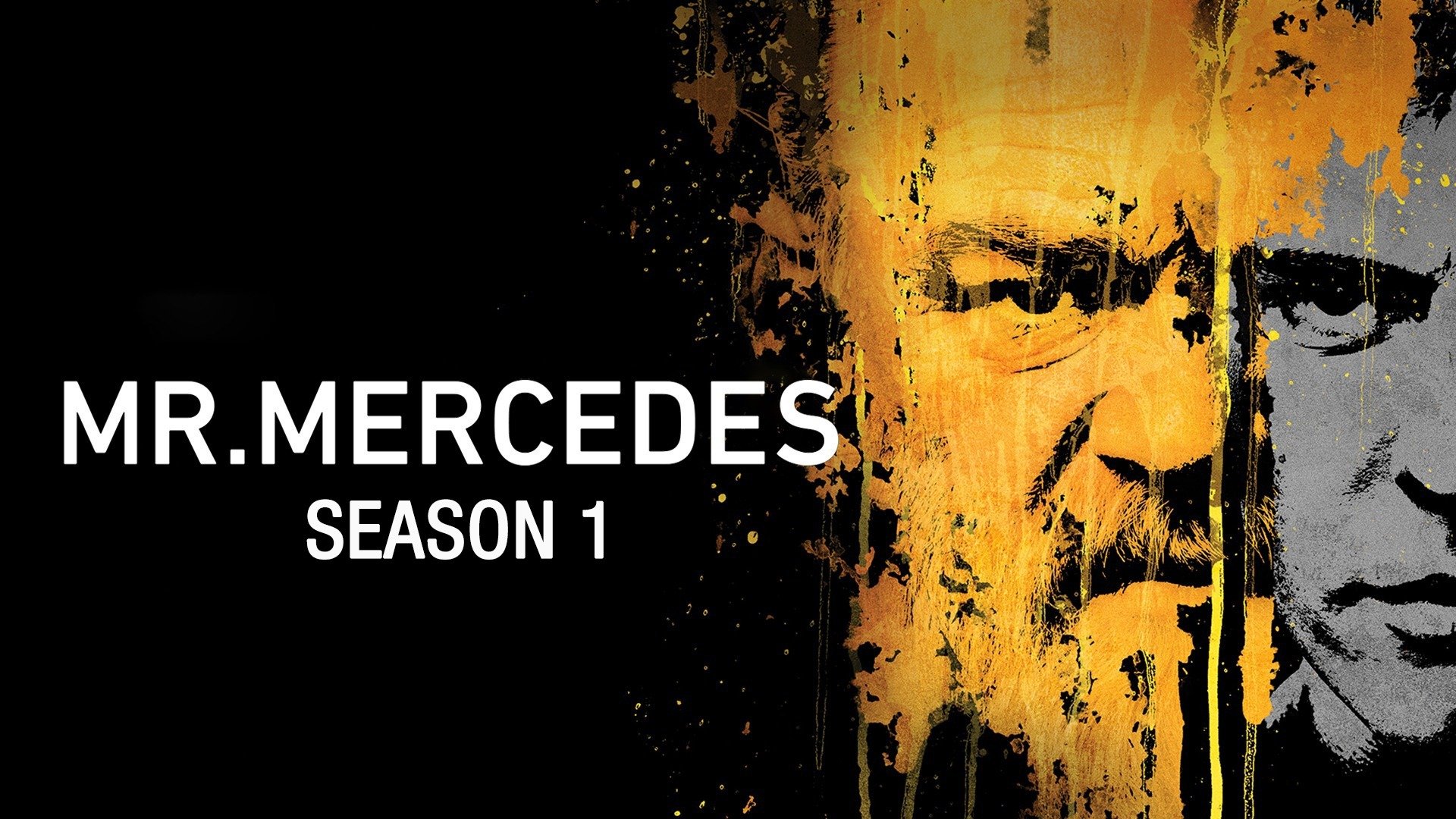
  2. Mr. Mercedes, Season One (SBS On Demand) - Based on the Steven King novel, this TV series is part supernatural horror and part detective fiction. Brendan Gleeson is Bill Hodges, the recently-retired detective who drinks too much, hates everyone and everything except his pet tortoise, and can't seem to let go of an unsolved case from two years previously, when a driver in a clown mask ploughed through a crowd of people waiting outside a job fair. Hodges may not know who the killer was, but the audience does, as Harry Treadway is introduced as Brady, calling himself Mr. Mercedes and taunting the detective with his criminal past. The show begins with a seedy ambience (Brady's family situation is a far-cry from the wholesome American Brady Bunch set up, and his place of work isn't much better) but it is highly polished with snappy dialogue and credible characters - all provided with backstories and sympathetic motivations (created by David E. Kelley). There are another two seasons after this; I'll probably watch them. 
  3. The North Water (BBC First) - A bunch of men go whaling in the mid-nineteenth century. None of them are particularly pleasant, but some even less than others. They drink and fight and kill. Testosterone abounds in the ports and the ship as it travels to the Arctic with a secret agenda and a lot of laudanum. It feels nightmarish and disturbing, as writer/director Andrew Haigh intended: "I always wanted the audience to feel at sea. So they were never quite sure what this was going to become or what it was." The chiaroscuro effects are dazzling - if we are not in the dark belly of the ship we are on the blinding white landscape of ice and snow, splatted with blood and seal carcasses. The acting is excellent (Colin Farrell; Stephen Graham; Jack O'Connell; Sam Spruell; Roland Møller; Tom Courtenay), the motives are shady, the concept is brutal, and the scenery is spectacular. 
  4. Emma Mackey, Asa Butterfield and Ncuti Gatwa in Sex Education
  5. Sex Education, Season Three (Netflix) - After having binged the first two seasons in a weekend a couple of years back, I admit I watched this mainly after the announcement that Ncuti Gatwa was going to be the new Dr. Who - I didn't want to confuse him with Eric in my  mind, so watched this to get it out of my head(and he is the best thing in it). The first few episodes started slowly but then it picked up momentum, diving deeper into the stories of the talented ensemble than previously. Connor Swindells (Adam), Aimee-Lee Wood (Aimee), Tanya Reynolds (Lily), Chinenye Ezeudu (Viv) are among those who get to flex their acting muscles and create showreels for future auditions. It still tackles tough issues of adolescence and identity, but each one is neatly wrapped up as it begins to feel more American than British. The diversity and inclusion is a bit unicorns and rainbows, the humour is glib and obvious rather than sarcastic and subtle, and I keep expecting the cast to break into harmonised song and choreographed dance.
  6.  
  7. Vigil (BBC First) - Imagine you're in a confined space with a group of people you don't really like. There's a murder and you have to solve it. Did I mention the confined space is a submarine? Did I mention you're claustrophobic and need to take medication to remain calm, but that medication is prohibited on the vessel? And that the submarine is a nuclear stealth submarine? And that it's just been hit? By a suspected ally? And you can't communicate with the outside world because it would give your position away? And no one knows you're there? Right- that's the premise, created by Jed Mercurrio and the team that brought us Line of Duty and Bodyguard. Suranne Jones is both tough and vulnerable as DCI Amy Silva in this preposterous position, and her partner above the waves, DS Kirsten Longacre is Rose Leslie in a performance that is almost good enough to atone for her irritating turn in The Good Fight. Martin Compston (Steve Arnott in Line of Duty), Gary Lewis (My Name is Joe, Billy Elliot), Shaun Evans (Morse in Endeavour), Connor Swindells (Adam in Sex Education), Paterson Joseph (Benjamin in Jekyll and Lyndon in Teachers amongst other things), Adam James (John Bellasis in Belgravia and multiple stage appearances), all give committed and credible performances, and the tension is palpable, although the plot is a bit leaky and the conclusion is all too neat - with an eye on the US market perhaps?

Friday, 5 August 2022

Friday Five: Books Read in July

By sheer coincidence it appears that I have read five books in July, and that red features quite prominently in the covers. Here, then, are brief overviews (full reviews to follow later).

5 Books Read in July:
  1. To Calais in Ordinary Time by James Meek (Canongate) - Mixing elements of The Canterbury Tales and Shakespearean comedy, this story takes place in South-West England in 1348 as a group of bowmen travel through the country from Outen Green in Gloucestershire to Calais to fight the French, while the plague is advancing steadily towards them. As the novel was published in 2019 all the reviewers drew contemporary parallels with Brexit and the existentialist threat of the climate crisis, but anyone now would automatically think of the Covid pandemic. The novel is narrated from three different people’s perspectives, and the voices are clearly different - there is much merit in juxtaposing the courtly language and behaviour of French romance with the idioms and earthy attitudes of the English soldiers, and the novel was unsurprisingly on many newspapers' 'Books of the year' lists. 
  2. An Anonymous Girl by Greer Hendricks & Sarah Pekkanen (Picador) - this is one of those currently fashionable psychological thrillers about women behaving badly. New York psychologist, Dr Shields conducts an experiment on morality and ethics which make-up artist, Jessica wangles her way onto - fraudulently taking the place of the 'real' subject. It soon transpires that all is not as it seems (surprise!) and that everyone is manipulating each other. The two characters are meant to be written individually but they sound exactly the same, apart from one of them refers to 'you' throughout, which soon becomes intensely irritating. We are meant to find the vapid minutiae of their existence fascinating - from how they dress to what they eat - and it won't be long before someone snaps up the rights and makes another tediously glib and glossy film.  
  3. Breath: The New Science of a Lost Art by James Nestor (Riverhead Books) - Every living body breathes, but it turns out that half of us are doing it wrongly. Ancient humans and Eastern mystics knew the correct methods, but modern lifestyles have ignored them leading to multiple health issues including tooth decay, sleep apnoea, anxiety, asthma, and the preponderance of choking. It may be skewed towards anecdotes and storytelling rather than academia and science (think popular American documentary podcast) but there's enough insight to challenge conventional wisdom and make the case for nasal breathing over mouth breathing.
  4. The Good People by Hannah Kent (Picador)Set in 1825 in South-West rural Ireland, this novel explores liminal spaces and inexplicable things: “The strange hinges of the world, the thresholds between what was known and all that lay beyond”. In this world many follow the ‘old’ beliefs that children (and adults) could be stolen (swept) by the fairies to be replaced by changelings. It is dripping with pathetic fallacy as the female power (herbs and agricultural lore represented by the Wise Woman) is challenged by that of the male (a priest with punishments and preaching of sin). A great one for book clubs, it gives rise to much discussion, but - as to be expected - things are pretty grim. 
  5. Briar Rose: A Novel of the Holocaust by Jane Yolen (Tor) - Jane Yolen has form for taking mythical legends and fairy stories, and twisting them into contemporary tales with relevance and meaning. In this YA novel of a young woman, Becca, trying to find out more about her grandmother's mysterious past; the castle is a concentration camp; the sleeping beauty is gassed; and the prince's kiss is the breath of life. That's not a spoiler, because all of that is obvious from the title, but Yolen believes it is not the past that makes us who we are, but the way we tell our histories. Every other chapter returns to the recounting of the familiar fairy tale interspersed by Becca's explorations into the unknown; a way in which ritual can help us comprehend the horrific and inexplicable truth.

Tuesday, 4 January 2022

Cold as Marble: A Likeness in Stone


A Likeness in Stone by J.Wallis Martin
New English Library
Pp. 361

In the powerful opening scene of the novel, two divers exploring an old flooded house at the bottom of a reservoir find a decomposed body in a wardrobe. We soon discover it is that of Helena Warner, an undergraduate reading English at Somerville College, Oxford, who went missing twenty years ago. At the time, Thames Valley Chief Inspector Bill Driver, was convinced that she had been killed by her lover, Ian Gilmore, but with no body, the case was never solved. Now it is re-opened by the new policeman on the job, Detective Superintendent Rigby, who works with Driver to try to bring Gilmore to justice. It may be set in the same cosy world as Morse and Midsommer Murders (and it was made into a miniseries starring Andrew Lincoln and Ruth Jones) but it is far more grim than that, because, “horror wasn’t choosy. It manifested in the most unlikely of places, and in various guises.”

Of course, this is a mystery, so nothing is as it initially appears, and submerged secrets rise to the surface, as the timeline shifts back and forth. Helena was part of a group of friends who don’t actually like each other very much and still have affiliations and implications many years later. These three university associates are all implicated in a very dark world which includes sadism and psychopaths.

Rigby and Driver must work together to solve the case despite their different methods. Driver looks down upon Rigby whom he dismisses as, “Well-dressed, intelligent-looking; no doubt the product of one of these new-fangled schemes that sends graduates shooting up a ladder Driver had to climb rung by painful rung, year after frustrating year.”

Women are victims; objects to be possessed and preserved in youth before they age and supposedly lose their beauty. Other examples of casual sexism and lazy stereotypes are scattered throughout the novel. Artists are troubled and odd; mental health facilities are a comfortable alternative to a hard life; computers are new (it was published in 1997) and, apparently, the police one is female, “What’s more, this little sweetie was a redhead. One false move and she could go off on one, no trouble.”

This gripping and clinical, fast-paced police procedural has been likened to the work of Ruth Rendell or Minette Walters. It is certainly dark and moody with a chilling aspect. “Real evil, unlike the romanticised fantasy of evil, was merely gloomy, monotonous and boring… The majority of murders were committed not with malice, but with indifference, by people who lived in the type of environment that deadened the soul.” It is eerie, creepy, and a thoroughly captivating thriller.

Tuesday, 25 August 2020

Victorian Thriller of Modern Manners: A Particular Eye for Villainy

A Particular Eye for Villainy by Ann Granger

Set in Victorian London, this novel (the fourth in a series of seven so far, but perfectly readable as a stand-alone novel) concerns a husband and wife ‘team’ who are not exactly working together. Narrated in alternate voices, the story follows Elizabeth Martin Ross and her husband, Inspector Benjamin Ross as they attempt to solve the mysterious murder of a man on their street, Thomas Tapley. No one knows anything about Mr Tapley, where he comes from, what he does, or where he goes during the day. He was taken in by a respectable landlady (Mrs Jameson, a neighbour of the Ross’s) and accepted because he “was possessed of a certain charm and innocence of manner. For all his down-at-heel appearance, the street soon decided he was ‘an eccentric’ and approved his presence.”

Naturally, discoveries are soon made, such as the fact that he has a brother, Jonathan Tapley, who is a barrister, a daughter, Flora, who is soon to be married, and a secret from his past. The novel is also peopled with earthy characters such as cab drivers, prize fighters, street urchins and policemen. Superintendent Dunn exclaims to Inspector Ross, “Only think of the players in this drama! Beautiful and pure young woman – I suppose Flora Tapley to be both – on the brink of marriage. Son of a peer. Eminent barrister. Mysterious Frenchwoman of dubious background seen with the victim on the beach at a Continental watering hole. Good grief, Ross, this business has all the ingredients of a shilling shocker!” And all this is before Superintendent Dunn even knows about the private detective disguised as a clown.

Ann Granger makes the most of her setting, with the time and location being of paramount importance. As it is before telephones and cars, characters are constantly sending telegrams and catching a cab to deliver news or collect people. The novel ranges from Southampton to Harrogate via London and France, infused with a suspicion of foreigners and seaside towns, which “tend to have a racy reputation.” Deauville and Trouville are apparently known “as the sort of place fellows take their mistresses.” There are, of course, grim and criminal elements: there is an altercation at a graveyard and a chase across rooftops like something out of Oliver Twist and the accounts of the less salubrious parts of the city are imitations of Dickensian descriptions.

As with another Ann Granger novel I have read, there is a focus on the process of the law. In many aspects detection is a puzzle, and Inspector Ross searches for clues, but the author points out that people’s lives can depend upon this game and that they need compassion and humanity. If the law is a game, policemen and lawyers don’t always play on the same side, and they often compete. Inspector Ross battles with Jonathan Tapley and clearly does not like him: “I could not let him win. I would not let him win. We were like a pair of duellists, facing one another in a misty dawn, pistols drawn and having one shot each.

Part of this antagonism is motivated by class: Inspector Ross’s parents were coal miners; he was brought up ‘on charity’ and sent to school by the largesse of his benefactor. Because it is written by a woman, the consideration of female treatment is prominent. At times it provides wry humour, but there is also social commentary; women have limited options as they ‘belong’ to their men folk. Ann Granger may have grafted some more modern ideas on the sensibilities of the characters, but the anachronisms are forgivable in the nature of humour and irony.

Tuesday, 17 March 2020

Second Person Singular: You


You by Caroline Kepnes
Simon & Schuster
Pp. 422

Joe Goldberg narrates this erotic thriller in a way which is intended to be claustrophobic and creepy, but just results in being tired and formulaic. Maybe it is because Gone Girl ruined everything and there have been so many imitations of the toxic controlling relationship and the unreliable narrator that we are no longer shocked by the horrible things people do to each other in the name of their warped ‘love’. Perhaps the advent of the Fifty Shades phenomenon leads us to an expectation of more dominant sexual content in contemporary novels. Whatever the reason, this novel does not surprise, titivate, nor really even register interest.

The USP of the novel is that it is narrated not only in the first person, but that it is addressed to the second, so the ‘you’ of the title is both a character in the novel, and also potentially the reader. Joe Goldberg is the owner of a bookshop, into which walks his obvious love interest, Guinevere Beck (who prefers to be called Beck, as you would). The interaction between them is what is known in the movies as the ‘meet-cute’, and it is meant to recall scenes from rom-coms such as You’ve Got Mail.

Because it is a first-person narration, the reader is drawn into his world and perspective, but alarm bells ring straightaway. Stalkers are not sexy. Joe likes to observe people without them being aware they are being watched, which is uncomfortable when he preys on Beck, stealing her phone, hacking her emails and stalking her on Twitter, analysing every message and tweet that she sends, trying to fathom hidden meanings and monitor her behaviour under the guise of being her protector. He also stalks her physically, following her home and watching her through the windows – she doesn’t close her curtains – perhaps she does know and her behaviour is intentionally that of an exhibitionist.

Joe likes to play games, but it seems that Beck does too. She leads him on and then turns away, which infuriates him, but is she really teasing him or is that just his interpretation? Beck is not an attractive character either; she seems narcissistic and self-obsessed, but is that his portrayal of her? Beck is studying for an MFA in creative writing, and thinks of herself as a writer inventing scenarios, although feedback from her fellow students suggests her short stories are thinly-disguised diary entries. Joe’s record of the relationship makes his reasoning sound acceptable, until his violence and depraved actions surface. Is it interesting or depressing to be inside the mind of a privileged, entitled predator?

Joe uses many popular culture references of disturbed minds to drop clues that all is not rosy in his world. The allusions begin innocuously enough although they rapidly get darker as elements of fantasy, delusion and mental illness creep in to the descriptions. People with mental conditions are often aware of them in others but blind to them in themselves. In mentioning American Psycho he deliberately draws attention to the artifice and the twisted imagination of certain people. We are cautioned that this may not be real (there is a cage in the basement of the bookshop; few other characters with whom he interacts etc.), but the characters are so dislikeable, and the novel appears to be derivative and playing on all the popular tropes of the recent erotic thriller glut, making it impossible to care.

Wednesday, 15 January 2020

It's Not About the Girl: The Girl Before


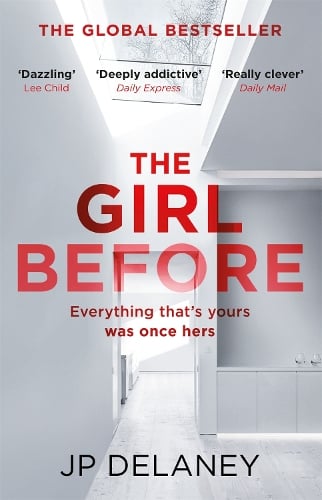
The Girl Before by JP Delaney
Quercus
Pp. 406

Edward has designed a house that is minimalist in appearance, with all the modern technology to make it seem almost sentient. To rent One Folgate Street, with its open-plan features, floating staircase and clean spaces, potential tenants must answer a series of questions before gaining admittance. Once they have been accepted, they understand that he has a sense of authority over them. Everything in the house is computerised and Edward controls the computer; if the tenants don’t answer the questions to his satisfaction, he will turn off the lights or the hot water for the shower. The questions get increasingly pertinent and personal, as the house computer search engine will only respond with certain information, and it collates all the findings to provide ‘helpful hints’. The novel questions when being cared for becomes being spied on; when does being protected become being stifled?

It is clear that Edward is a control-freak. He needs to control all aspects of his – and others’ – lives; not just their living arrangements. He cooks in a very methodical manner with precisely the right hard-to-find ingredients; he admires foreign things so that he can appear knowledgeable and correct people’s pronunciation to constantly assert authority. He also likes the Japanese custom of hitobashira, which he tells a tenant is about burying dead people under buildings, but she later finds out it refers to burying the living. So far; so creepy.

But wait; there’s more. He has very similar relationships with very similar women, two of whom live in his house and narrate alternate chapters. Jane is ‘now’. She has had a stillbirth which makes her vulnerable; she has memories which Edward triggers, she thinks accidentally. Emma was ‘then’. She had been attacked and raped by burglars – her partner, Simon, adores her, but can’t live by her stringent rules or those of the house. Jane’s friend, Mia, points out how much Jane looks like Emma, the previous tenant, who died in the house, and Edward’s wife, Elizabeth, before that. Emma defends him, “Men often go for the same type. Women do too, of course. It’s just that in our case, it isn’t usually physical resemblance so much as personality.” But when does it stop being a ‘type’ and become a fetish?

Past experiences are repeated in the present; the lines Edward uses echo over each other as he says them to both women and they find themselves starting to question his past. When Jane questions Edward about his former relationship (his wife and previous tenant both died in suspicious circumstances), he tells her not to look into it. “The past is over; that’s why it’s the past. Let it go, will you?” There are heavy-handed metaphors about clean slates with faintly discernible chalk marks from previous writings, and if we hadn’t already got the point, Jane spells it out for the hard of understanding with a high-school art essay about palimpsests and pentimenti.

As with any novel including the word ‘girl’ in the title, it seems we must have sex, violence, and an unreliable narrator. It is also worth bearing in mind that it is written by a man. A policeman advises Emma, “We take cases of rape very seriously. That means assuming every woman who says she’s been raped is telling the truth. The flipside of that is that we take false rape allegations equally seriously.” This suggests they are equally common. Fact check: over the past 20 years, only 2% of rape accusations proved to be false. It’s not that men can’t write realistic female characters, but a reliance on pop psychology and simplified gender stereotypes doesn’t help.

The Girl Before is not about a girl, before, after or present. It is about a house and a man’s viewpoint of manipulation and control. It is an entertaining read, but it is not earth-shattering. Shock value isn’t everything, and its veneer wears off very quickly.

Thursday, 27 November 2008

Wait Until Dark

Wait Until Dark
Circa Theatre, 11 Oct - 8 Nov

I remember seeing this as a film when I was a child and I was terrified. I wondered whether the fear and suspense would translate to the theatre, and it did. I knew the story but still felt the thrill. I went with some friends and they were all on the edge of their seat staring at the stage.

Despite Circa being an open-style performance area, a curtain is rigged up and footlights placed on stage to make it more 'theatrical' and as though you are a fourth wall. At the climactic moment when all the lights go out, the audience experiences exactly the same blind isolation as the characters in the play. There are a few nervous titters at this point, but it is a powerful moment of intense drama.

Ban Abdul is excellent as Susy - she is blind but not disabled, with a sharp mind and a quick temper. Her physicality is excellent and I love her fluttering hands. Her husband, Sam, is played by Robert Tripe, and he seems brusque and demanding - his 'encouragement' of Susy to make her extend herself appears mean and bullying rather than playful and challenging. Perhaps this is just my interpretation, but I don't feel that Kiwis do playful.

Toby Leach is Croker; a comedy villain - a little over-the-top with his skittish indecision - where Tom Gordon is cold, clinical and precise. He invests the character of Roat with the chilling mien I would expect from a suspense thriller. Mike is a kindly baddie who doesn't want anyone to get hurt, and Paul McLaughlin plays the role with smooth gentleness but firm persuasion that I thought might have been more suited to Sam.

Gloria, the little girl, is played by either Holly McDonald or Rebekah Smyth (I'm not sure which - they alternate nights). She was is as child actors usually are - unnatural, exaggerated gestures and gabbled speech; too loud on some lines, inaudible on others; unable to read the nuances of the particular perfomrance and unable to adapt. I find children on stage a chore which has to be endured for plot purposes, but I generally wish they'd hurry up and get off so we can concentrate on the real acting.

The
Lumiere review made me wonder if our differences are generational. I didn't feel that the first half dragged, nor did my three companions. It was all part of the set-up which you expect, and in return you get the pay-off later, which was very well done. She questions the modern relevance to which I would answer, it was entertaining and isn't that the purpose of theatre? Aren't home invasion and human vulnerability - needing to trust someone and rely upon them - still pertinent?

I also have no problem with nostalgia - not everything has to be new and ground-breaking. Sure, modern theatre eschews convoluted plots, but a lot of people still like them. There is a place for good old-fashioned drama, complete with red velvet curtain and footlights, just as there is for avant-garde, surrealist, Brechtian, improvisation and musical theatre.

Also, most people who pay to go the theatre are over 50, and they like dramatic suspense - they are the ones who have made The Mousetrap the longest-running show in the West End. It is not innovative or modish and it sticks to well-known conventions, but I would never dismiss its relevance simply because it didn't appeal to me. Is this a Gen X/Y thing?