Showing posts with label Holocaust. Show all posts

Wednesday, 18 January 2023

Thorny Issues: Briar Rose


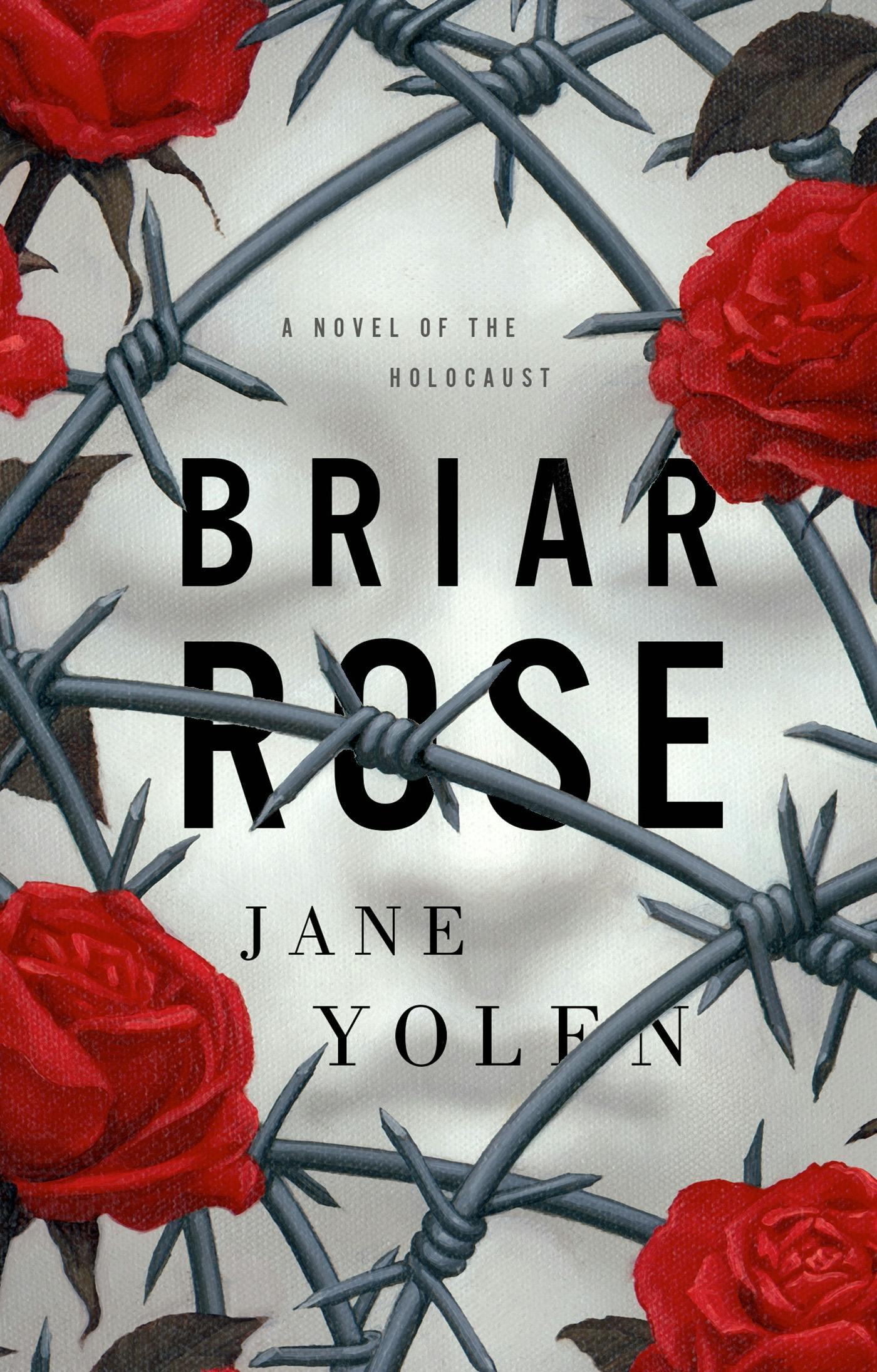
Briar Rose by Jane Yolen
Tor
Pp. 281

Jane Yolen’s Briar Rose is one of a series of re-told fairy-tales created by Terri Windling, who states in the foreword, “For countless centuries, storytellers have used the richly symbolic language of fairy tales to explore all the dark, and bright, and shades of gray of the human experience. Jane Yolen knows this better than most. And does it better than most.” Yolen takes the story of Briar Rose (also known as Sleeping Beauty) and links it to the Holocaust in ways that seems perfectly feasible while simultaneously fantastical. It is a Young Adult novel, with simplistic and unrealistic plot devices and characterisation, but it is also interesting reading for anyone who understands the power of the land of make believe.

Rebecca Berlin (Becca) is a young woman who has grown up hearing her grandmother (Gemma), always telling the same story, Briar Rose, in exactly the same words. No one knows much about Gemma, but after her death, Becca finds a box of personal effects which leads her to think there may be a war-time past. Her editor, Stan, encourages her to go to Poland to seek out the mysterious past of her grandmother. With the ease of stories over reality, he arranges her travel and translator through his journalistic contacts, so that when Becca reaches Poland she is assisted by a woman named Magda an incredibly hospitable tour-guide, translator, and unlocker of gates both literal and metaphoric.

They conveniently find a man, Josef Potocki, who knows Gemma’s story, which he relates to them in the middle third of the book – a story within a story, within a story. It transpires that the castle is a concentration camp, the brambles are barbed wire, the sleeping beauty is gassed, and the prince’s kiss is the breath of life. Tales are told as a means of coping with events, and if they are painful and don’t provide relief, one wonders what is the point. Becca is desperate to paint herself as the heroine in this tale; the Cinderella of the story. She can’t wait to return to America and boast to her sisters that she found the truth, even though they thought she was crazy for trying – yes, there are two of them with similar names (Sylvia and Shana) and she is the youngest.
The fairy-tale tropes loom large throughout the novel, and the narration is tightly constructed at the expense of character. This is satisfying in and of itself, and true to the genre. It may read like a creative writing challenge, but it certainly passes the test it has set itself.

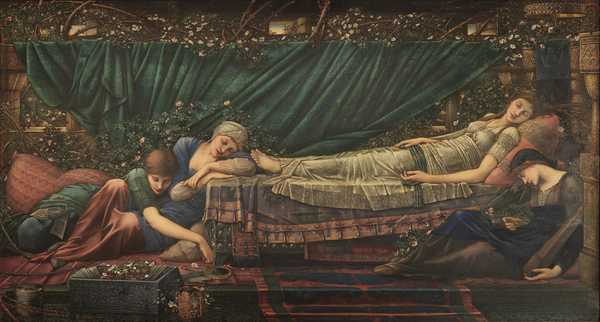
The Rose Bower from the Briar Rose series (1885-1890) by Edward Burne-Jones 

Friday, 5 August 2022

Friday Five: Books Read in July

By sheer coincidence it appears that I have read five books in July, and that red features quite prominently in the covers. Here, then, are brief overviews (full reviews to follow later).

5 Books Read in July:
  1. To Calais in Ordinary Time by James Meek (Canongate) - Mixing elements of The Canterbury Tales and Shakespearean comedy, this story takes place in South-West England in 1348 as a group of bowmen travel through the country from Outen Green in Gloucestershire to Calais to fight the French, while the plague is advancing steadily towards them. As the novel was published in 2019 all the reviewers drew contemporary parallels with Brexit and the existentialist threat of the climate crisis, but anyone now would automatically think of the Covid pandemic. The novel is narrated from three different people’s perspectives, and the voices are clearly different - there is much merit in juxtaposing the courtly language and behaviour of French romance with the idioms and earthy attitudes of the English soldiers, and the novel was unsurprisingly on many newspapers' 'Books of the year' lists. 
  2. An Anonymous Girl by Greer Hendricks & Sarah Pekkanen (Picador) - this is one of those currently fashionable psychological thrillers about women behaving badly. New York psychologist, Dr Shields conducts an experiment on morality and ethics which make-up artist, Jessica wangles her way onto - fraudulently taking the place of the 'real' subject. It soon transpires that all is not as it seems (surprise!) and that everyone is manipulating each other. The two characters are meant to be written individually but they sound exactly the same, apart from one of them refers to 'you' throughout, which soon becomes intensely irritating. We are meant to find the vapid minutiae of their existence fascinating - from how they dress to what they eat - and it won't be long before someone snaps up the rights and makes another tediously glib and glossy film.  
  3. Breath: The New Science of a Lost Art by James Nestor (Riverhead Books) - Every living body breathes, but it turns out that half of us are doing it wrongly. Ancient humans and Eastern mystics knew the correct methods, but modern lifestyles have ignored them leading to multiple health issues including tooth decay, sleep apnoea, anxiety, asthma, and the preponderance of choking. It may be skewed towards anecdotes and storytelling rather than academia and science (think popular American documentary podcast) but there's enough insight to challenge conventional wisdom and make the case for nasal breathing over mouth breathing.
  4. The Good People by Hannah Kent (Picador) - Set in 1825 in South-West rural Ireland, this novel explores liminal spaces and inexplicable things: “The strange hinges of the world, the thresholds between what was known and all that lay beyond”. In this world many follow the ‘old’ beliefs that children (and adults) could be stolen (swept) by the fairies to be replaced by changelings. It is dripping with pathetic fallacy as the female power (herbs and agricultural lore represented by the Wise Woman) is challenged by that of the male (a priest with punishments and preaching of sin). A great one for book clubs, it gives rise to much discussion, but - as to be expected - things are pretty grim. 
  5. Briar Rose: A Novel of the Holocaust by Jane Yolen (Tor) - Jane Yolen has form for taking mythical legends and fairy stories, and twisting them into contemporary tales with relevance and meaning. In this YA novel of a young woman, Becca, trying to find out more about her grandmother's mysterious past; the castle is a concentration camp; the sleeping beauty is gassed; and the prince's kiss is the breath of life. That's not a spoiler, because all of that is obvious from the title, but Yolen believes it is not the past that makes us who we are, but the way we tell our histories. Every other chapter returns to the recounting of the familiar fairy tale interspersed by Becca's explorations into the unknown; a way in which ritual can help us comprehend the horrific and inexplicable truth.

Wednesday, 29 January 2020

Just right: A Universe of Sufficient Size


A Universe of Sufficient Size by Miriam Sved
Picador
Pp. 311

Spanning continents and three generations, this rich novel of mathematics, politics, friendship, family, sexuality and love, features numerous time and narrative shifts. Illy discovers a diary written by her mother, who has left it deliberately where she can find it, and reading it changes Illy’s perception of history and her self. It takes her back to 1930s Hungary, when Jews are barred from attending university, so a group of five friends and mathematicians (two couples – Ildiko and Levi; Eszter and Tibor; and Pail) meet beneath the statue of Anonymous in Budapest to expound upon their theories.

This desire for anonymity is unusual as nationalities fight to be the one to make mathematical breakthroughs that can be given military applications. Ildiko considers how one can know what future use will be made of the science, maths and physics they think they are discovering in isolation.

The friends cannot know that the Holocaust is coming, but they are aware that the future will be dangerous and that their group will dissolve. They can’t imagine marriage or children, because they live in such uncertain times. They all, particularly Eszter, want to protect Pail from the real world and shield his genius, worrying that he is not equipped to deal with the coming war and its consequences. While Pali remains entrenched in his theoretical problems, not all of the friends agree he needs extra attention. Ildiko tells Eszter, “Someone will always look after Pali, because he is brilliant and hopeless at the same time. I have noticed that people can’t resist the combination of brilliance and hopelessness in men.”

This world is echoed in the present when Josh, Illy’s son, attempts to find applications for his version of theoretical mathematics. He is aware of the work of Pali Kamar, but thinks the internet provides practical applications, which he explains to his grandmother, Nagymama, not knowing she was a friend of Kali’s. Josh is excited by finding order in chaos; to understand the universe; to feel less insignificant, which he (and Pali before him) demonstrates through Euclidean planes. Josh searches for order and predictability, trying to shape the situation to fit.

Everyone in the novel tries to find their own pattern and shape their own narrative, while accepting difference and factoring it into individual and societal equations. When Nagymama moves to America, “It still surprises her how everything in this ridiculous country seems brighter, bursting with its own youth; even the vegetables have a juvenile optimism.” Infinite possibilities provide exciting concepts, but is it necessary to try and define them when there are constant breakthroughs and alternate opinions which subvert preconceived notions about everything from sexuality and religion to mathematics and astrophysics?