Showing posts with label storytelling. Show all posts

Tuesday, 23 April 2024

Bedtime stories: Witches Abroad


Witches Abroad by Terry Pratchett
Corgi Books
Pp.286
This, the twelfth novel in Terry Pratchett’s Discworld series, is the second that revolves specifically around the three witches: Granny Weatherwax; Nanny Ogg and Magrat. In Wyrd Sisters, readers were introduced to these characters, and it is a delight to welcome them back like old friends. Magrat inherits a wand from Desiderata so she must become a fairy godmother and interfere in stories: she can’t help but turn things into pumpkins and she tries to stop Embers from going to the ball and marrying a prince, who is, in fact, a frog. Stories have power because they inform belief, and those who control the narrative have the greatest power of all.

It transpires that Granny Weatherwax has a sister, Lily – now calling herself Lilith – who wants to force people into enacting the stereotypes of the fairytales, living in a land where everyone must be happy whether they like it or not. Lily lets several stories happen simultaneously; like the evil queen who appears in the mirror, she uses mirror magic as a form of control. She has her own form of power (is she the good or the bad witch, and which one does that make Granny Weatherwax?). “She had buried three husbands, and at least two of them had been already dead.” Pratchett touches upon myths and legends as well as fairytales, so Circe, Bluebeard, Casanova, vampires and the Wizard of Oz intermingle with Cinderella, Rumpelstiltskin, the Three Little Pigs, Little Red Riding Hood, the Three Bears, Snow White and Sleeping Beauty – “There’ll be a spinning wheel at the bottom of all this, you mark my words.”


As the witches set off to right the wrongs of the world, they learn about the structure of stories: “Three was an important number for stories. Three wishes, three princes, three billy goats, three guesses… three witches. The maiden, the mother and the… other one. That was one of the oldest stories of all.” Naturally, not all these conventions are true, for example, “The natural size of a coven is one. Witches only get together when they can’t avoid it.” Meanwhile, Nanny Ogg sends postcards home to our Jason, about what it’s like to be abroad or in foreign parts (where they do odd things like ‘drink fizzy wine out of ladies’ boots’) and obviously the structure and convention of writing postcards is its own artform – sadly, practically lost in 2023.


Granny Weatherwax dislikes stories because she thinks they are unnatural, and they try to make people conform. “You get too involved with stories, you get confused. You don’t know what’s really real and what isn’t. And they get you in the end. They send you weird in the head. I don’t like stories. They’re not real. I don’t like things that ain’t real.” She explains the laissez-faire approach to life. “You can’t go around building a better world for people. Only people can build a better world for people. Otherwise it’s just a cage.” One could contend that she (and by association Pratchett) is arguing against interventional socialism. “No more stories. No more godmothers. Just people, deciding for themselves. For good or bad. Right or wrong.” Or one could just enjoy it as a right rollicking story of witches abroad.

Tuesday, 23 January 2024

What Lies Beneath? The Opal Desert


The Opal Desert by Di Morrissey
Macmillan
Pp. 406

Di Morrissey sets place extremely well. In her dozens of novels, the scenery and landscape are immediate and infinitely better drawn than her characters or plotlines. The Opal Desert is, unsurprisingly, set in Lightning Ridge, Broken Hill, Opal Lake, and White Cliffs, where most people are exceptionally friendly and we learn about the precious stones and the community who mine them. The three women around whom Morrissey tells her tale, Kerrie, Shirley and Anna, are all fairly predictable stereotypes who overcome their personal obstacles in life-affirming ways, which may not be realistic, but are heart-warming.

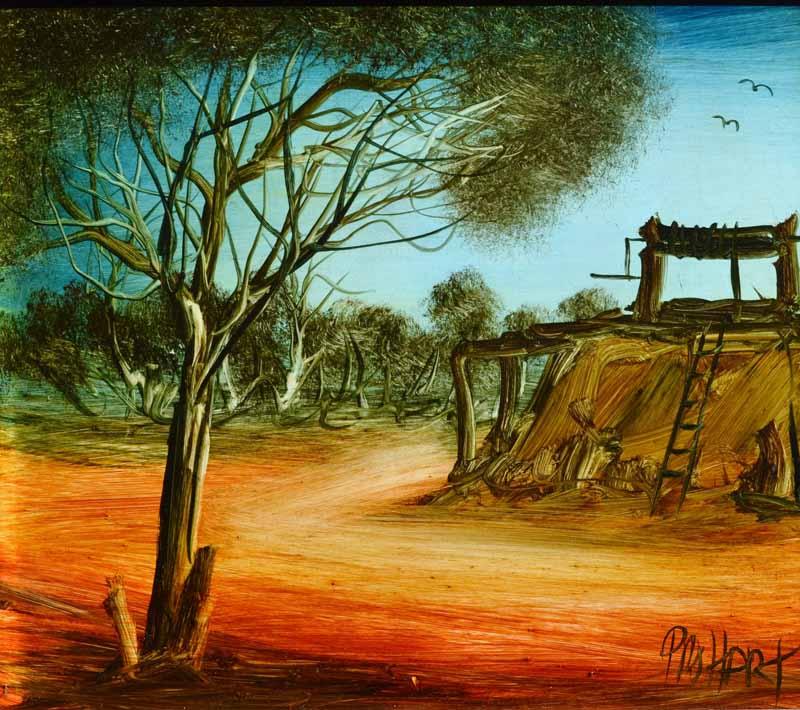
Kerrie is our main character who realises, after her sculptor husband dies, how much he absorbed her life into his, and that she doesn’t get on with his children. For spurious reasons (a recommendation from a friend’s lawyer), she decides to head to opal country to find herself and reconnect with her own artistic side. She encounters a land rich with visual treasures, art galleries and bush art, inspired by painters such as Pro Hart and Jack Absalom. She admires the light and bright colours.

The Windlass by Kevin Charles (Pro) Hart

Naturally, Kerrie also learns about the flash of opals – white, fire, black – and their addictive appeal. She appreciates the act of opal mining because it is “relatively small-time… unlikely to ever become a huge and invasive industry like gas, oil and iron ore.” As well as the beautiful stones, she learns, “Sometimes miners dig up fossils of shells and sea creatures, even dinosaurs.” She is told that, “Australia is the only place in the world which has opalised animal fossils. They’re not only beautiful, but important scientifically.” There is some friction between those who want to collect the fossils for their historical value, and those who want to break them up and create unique pieces of jewellery for sale. This is an interesting aspect of the book and even non-geologists will appreciate the basic descriptions of which rock formations lead to which varieties of opals.

Our next character is Shirley, an elderly woman who lives in a dugout she rarely leaves (due to a mysterious past event), but she socialises with everyone. “Shirley’s just Shirley, but she knows a bit about everything. She’s our local historian, sort of. Lovely, lovely lady.” Shirley decides to record the stories of the old miners so they might pay testament to a way of life that was fast disappearing. “The mantle of keeper of the stories, the one who held remnants of a life that might otherwise be forgotten, settled gently and easily on Shirley’s shoulders.” Di Morrissey’s evocation of time and place make her a type of archivist too.

People who mine (and live underground) are often a little odd; they live on the fringes and have personal reasons for being there. One character states, “I like going out to the opal fields. Special people out there, too. There’re some gems, some oddballs, some creative types and those with opal fever. It’s a place that affects everyone. There are friendly people, and most don’t ask questions, but there are also shady characters and blatant sexism. When the young woman, Anna, is introduced, she has justifiable concerns about the tactile and intrusive nature of some men she encounters. Others become paranoid, afraid of gangs coming to steal their stones. “It’s not always sunshine and glittering opals… the dark underbelly of the opal fields… murders, mystery, ratters and ratbags.”

Beneath the rose-tinted idealism, lies hidden bias and unconscious racism. Young Shirley tells her partner, Stefan, “Our history comes from the continent itself, the landscape, and the opportunities for people to carve their own paths, using their skills and knowledge.” This becomes complicated when she ignores Aboriginal history, “It must be stultifying being lumbered with thousands of years of history. Here, in Australia, you have the opportunity to be creative and original without the burden of the past. This country is like a clean slate.” Clearly this was written before the words ‘young and free’ in the Australian national anthem were changed to ‘one and free’ in an attempt to ‘foster a spirit of unity’, acknowledge ‘the fact that we have the oldest continuous civilisation on the planet right here with First Nations people’ and ‘honouring the foundations upon which our nation has been built and the aspirations we share for the future.’

Many people head to the opal fields for a change of pace, which is admirable. One character states, “We all need time out, as they say, on occasion. But that’s all it should be, a space between decisions. It becomes very easy to drift. You see it happen out here and before you know it, you’ve lost a great chunk of your productive life.” This begs the question, why must you be productive; what is the definition of produce – is it capitalist growth, and is that why Indigenous culture is ignored because it doesn’t visibly contribute to the GDP? What is wrong with “drifting”? Perhaps it has to do with the nature of Morrissey’s storytelling, in which all is tied up neatly at the end. It seems easy to get to be a curator, train for world athletic events or have an exhibition of paintings. Other character’s mysterious circumstances are cleared up in a page or two and everyone gets closure. This makes the people instantly forgettable (so much for recording their stories) but the landscape lingers in the mind.

Lightning Ridge

Wednesday, 18 January 2023

Thorny Issues: Briar Rose


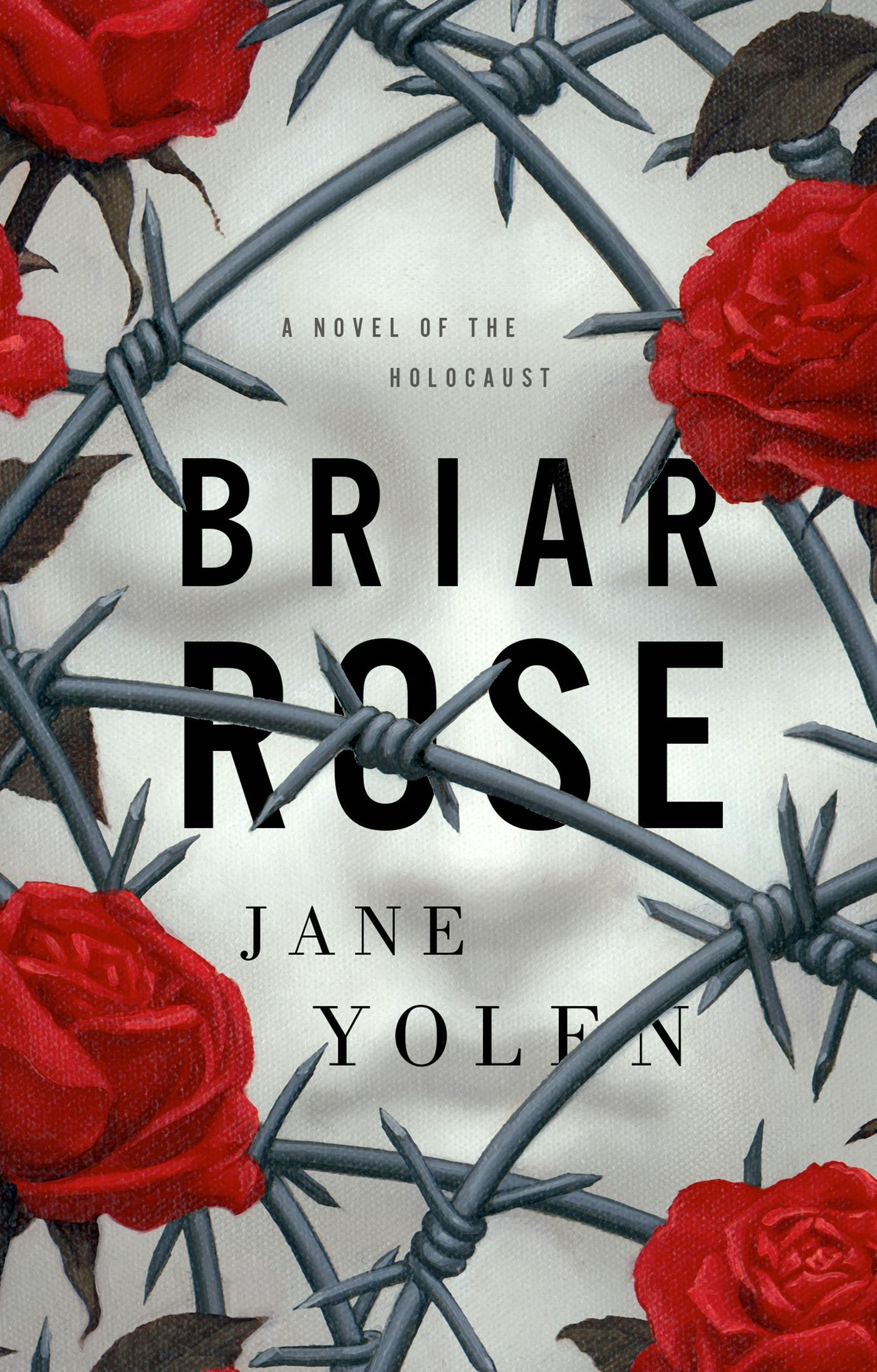
Briar Rose by Jane Yolen
Tor
Pp. 281

Jane Yolen’s Briar Rose is one of a series of re-told fairy-tales created by Terri Windling, who states in the foreword, “For countless centuries, storytellers have used the richly symbolic language of fairy tales to explore all the dark, and bright, and shades of gray of the human experience. Jane Yolen knows this better than most. And does it better than most.” Yolen takes the story of Briar Rose (also known as Sleeping Beauty) and links it to the Holocaust in ways that seems perfectly feasible while simultaneously fantastical. It is a Young Adult novel, with simplistic and unrealistic plot devices and characterisation, but it is also interesting reading for anyone who understands the power of the land of make believe.

Rebecca Berlin (Becca) is a young woman who has grown up hearing her grandmother (Gemma), always telling the same story, Briar Rose, in exactly the same words. No one knows much about Gemma, but after her death, Becca finds a box of personal effects which leads her to think there may be a war-time past. Her editor, Stan, encourages her to go to Poland to seek out the mysterious past of her grandmother. With the ease of stories over reality, he arranges her travel and translator through his journalistic contacts, so that when Becca reaches Poland she is assisted by a woman named Magda an incredibly hospitable tour-guide, translator, and unlocker of gates both literal and metaphoric.

They conveniently find a man, Josef Potocki, who knows Gemma’s story, which he relates to them in the middle third of the book – a story within a story, within a story. It transpires that the castle is a concentration camp, the brambles are barbed wire, the sleeping beauty is gassed, and the prince’s kiss is the breath of life. Tales are told as a means of coping with events, and if they are painful and don’t provide relief, one wonders what is the point. Becca is desperate to paint herself as the heroine in this tale; the Cinderella of the story. She can’t wait to return to America and boast to her sisters that she found the truth, even though they thought she was crazy for trying – yes, there are two of them with similar names (Sylvia and Shana) and she is the youngest.

The fairy-tale tropes loom large throughout the novel, and the narration is tightly constructed at the expense of character. This is satisfying in and of itself, and true to the genre. It may read like a creative writing challenge, but it certainly passes the test it has set itself.

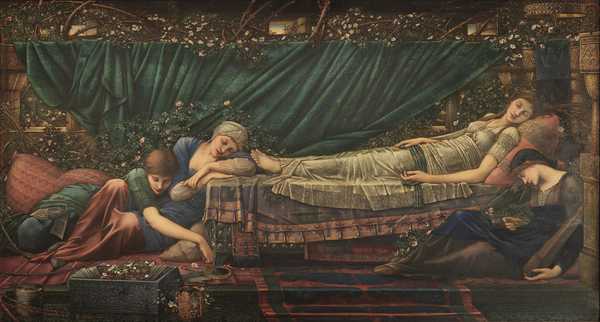
The Rose Bower from the Briar Rose series (1885-1890) by Edward Burne-Jones 

Friday, 5 August 2022

Friday Five: Books Read in July

By sheer coincidence it appears that I have read five books in July, and that red features quite prominently in the covers. Here, then, are brief overviews (full reviews to follow later).

5 Books Read in July:
  1. To Calais in Ordinary Time by James Meek (Canongate) - Mixing elements of The Canterbury Tales and Shakespearean comedy, this story takes place in South-West England in 1348 as a group of bowmen travel through the country from Outen Green in Gloucestershire to Calais to fight the French, while the plague is advancing steadily towards them. As the novel was published in 2019 all the reviewers drew contemporary parallels with Brexit and the existentialist threat of the climate crisis, but anyone now would automatically think of the Covid pandemic. The novel is narrated from three different people’s perspectives, and the voices are clearly different - there is much merit in juxtaposing the courtly language and behaviour of French romance with the idioms and earthy attitudes of the English soldiers, and the novel was unsurprisingly on many newspapers' 'Books of the year' lists. 
  2. An Anonymous Girl by Greer Hendricks & Sarah Pekkanen (Picador) - this is one of those currently fashionable psychological thrillers about women behaving badly. New York psychologist, Dr Shields conducts an experiment on morality and ethics which make-up artist, Jessica wangles her way onto - fraudulently taking the place of the 'real' subject. It soon transpires that all is not as it seems (surprise!) and that everyone is manipulating each other. The two characters are meant to be written individually but they sound exactly the same, apart from one of them refers to 'you' throughout, which soon becomes intensely irritating. We are meant to find the vapid minutiae of their existence fascinating - from how they dress to what they eat - and it won't be long before someone snaps up the rights and makes another tediously glib and glossy film.  
  3. Breath: The New Science of a Lost Art by James Nestor (Riverhead Books) - Every living body breathes, but it turns out that half of us are doing it wrongly. Ancient humans and Eastern mystics knew the correct methods, but modern lifestyles have ignored them leading to multiple health issues including tooth decay, sleep apnoea, anxiety, asthma, and the preponderance of choking. It may be skewed towards anecdotes and storytelling rather than academia and science (think popular American documentary podcast) but there's enough insight to challenge conventional wisdom and make the case for nasal breathing over mouth breathing.
  4. The Good People by Hannah Kent (Picador)Set in 1825 in South-West rural Ireland, this novel explores liminal spaces and inexplicable things: “The strange hinges of the world, the thresholds between what was known and all that lay beyond”. In this world many follow the ‘old’ beliefs that children (and adults) could be stolen (swept) by the fairies to be replaced by changelings. It is dripping with pathetic fallacy as the female power (herbs and agricultural lore represented by the Wise Woman) is challenged by that of the male (a priest with punishments and preaching of sin). A great one for book clubs, it gives rise to much discussion, but - as to be expected - things are pretty grim. 
  5. Briar Rose: A Novel of the Holocaust by Jane Yolen (Tor) - Jane Yolen has form for taking mythical legends and fairy stories, and twisting them into contemporary tales with relevance and meaning. In this YA novel of a young woman, Becca, trying to find out more about her grandmother's mysterious past; the castle is a concentration camp; the sleeping beauty is gassed; and the prince's kiss is the breath of life. That's not a spoiler, because all of that is obvious from the title, but Yolen believes it is not the past that makes us who we are, but the way we tell our histories. Every other chapter returns to the recounting of the familiar fairy tale interspersed by Becca's explorations into the unknown; a way in which ritual can help us comprehend the horrific and inexplicable truth.

Tuesday, 12 July 2022

Courtroom Drama: The Appeal


The Appeal by Janice Hallett
Viper
Pp. 447

The tagline for this novel is “One murder. Fifteen suspects. Can you uncover the truth?” It is set in a country village, Lockwood, where “life revolves around two interlocking family dynasties... A person’s closeness to the alpha family – the Haywards – determines their social status.” Many of the villagers form the Fairway Players, an amateur dramatic society who are currently producing All My Sons. Martin Hayward is chair of the Fairway Players, his wife, Helen, is the secretary and leading actress, and their son-in-law, James, is directing the play. Martin and Helen raise an appeal for their granddaughter, Poppy, a young child with a rare form of cancer (or has she?) who needs unsubsidised drugs (or does she?). Everyone is dodgy, and there are affairs, blackmail, official work complaints, obsession, past secrets and mysterious circumstances, so when someone is murdered (over halfway through the book), it seems likely that anyone could have done it.

What elevates the novel above the usual run-of-the-mill cosy murder genre is the way in which the narrative unfolds through emails, text messages, newspaper articles and interview transcripts. A couple of law students, Charlotte and Femi, are assigned the case by their Senior Partner, Roderick Tanner QC, and they read through all the documents, trying to keep track of events, motives and alibis. Periodically they paste post-it notes asking pertinent questions or drawing attention to relevant information. Also every now and then they confer to recap events so far with text comments such as “Are you clear what happened at the Yogathon? Could you possibly summarise it for me? Please.”

It is an obvious device and one which the author subtly highlights. Isabel likes to email her every thought so that Sarah-Jane replies, “You were standing right here only moments ago. Why not just speak to me?” After being duped, one character tells another, “It seems there’s only so much you can know from letters. A man can hide a world behind words” and when Mr Tanner supplies extra information, he suggests, “As usual with this case, the meat is all between the lines.”

Into this milieu enter a couple, Sam and Kel, who have returned from Africa where they worked for Medicin Sans Frontiers and left under a cloud. There are scams from people claiming they want to invest in charities and offering quick returns on funds, and Tish Bhatoa, the woman supposedly providing the drugs for Poppy’s treatment, is also suspicious. Tish knows Sam and Kel from their overseas medical exploits, and precious African artefacts are mixed up with heroin addicts and a break in. The summing up ponders, “The African connection, and how something a world away can have such a profound influence.”

Isabel is on the outside and desperate to break in, to which end she joins the drama group and attempts to make herself useful by rehearsing lines with other actors and taking the minutes at committee meetings, but surely she can’t be as ditzy as she pretends. Actually, her version of the minutes are hilarious and a highlight of the book. After she has sent them out (complete with ruminations, recriminations and things that probably shouldn’t be repeated), Sarah-Jane reproaches her, “There’s all sorts of nonsense in there that we never even mentioned at the meeting. What’s more, it’s full of your opinions. That’s not the point of the minutes. No one cares what you think.” Working at the same hospital and eager to find new friends Isabel introduces Sam and Kel to the drama group, and she combines the interests of theatre and law, surmising, “A courtroom is very like a theatre. It has a stage, an audience and actors – it’s just the barristers know their lines while the witnesses improvise.”

The Appeal is an intriguing debut from an accomplished author. With touches of Agatha Christie in a modernist style, it brings a fresh perspective to the epistolary novel and to crime fiction in general. Clever and funny, it has quickly amassed a plethora of awards and is deservedly becoming a book-club favourite.

Tuesday, 28 December 2021

As the Worlds Turn: The Gospel of Loki


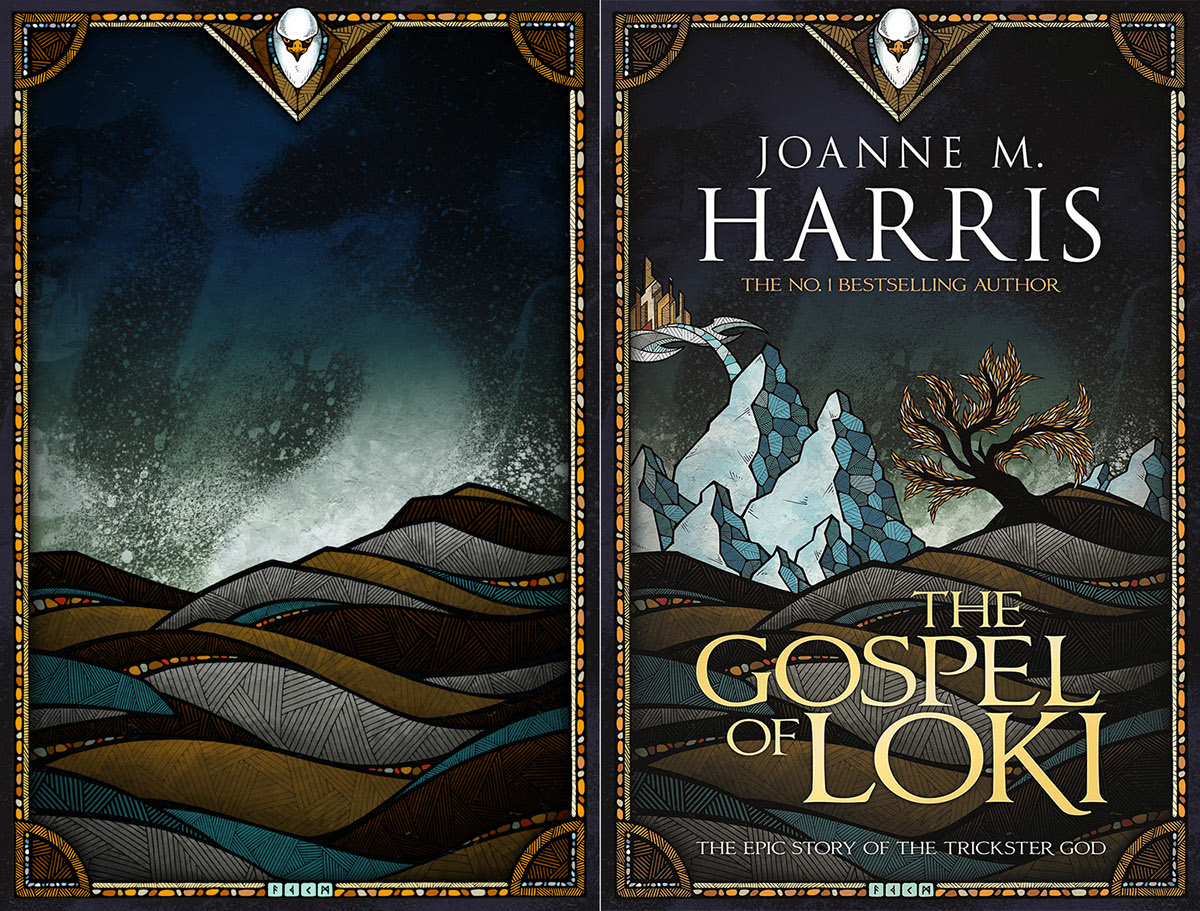
The Gospel of Loki by Joanne M. Harris
Gollancz
Pp. 302

Subtitled The Epic Story of the Trickster God, this is the story of Ragnarok from the perspective of Loki. Loki is often blamed for his tricks and his part in the downfall of Asgard, but he laments that he was tricked too and that the Worlds of Order and Chaos will perpetually battle each other. “The Worlds never really end – just the folk who have made it their own. And Order and Chaos never end, but the balance of power is in constant flux.” He is known as a storyteller and one who bends the truth, but he suggests this is no different from anyone else, and he understands that truth is not the same as history. He explains that religion and history come into being, “not through battles and conquests, but through poems and keenings and songs, passed through generations and written down by scholars and scribes.”

The tone of his narrative is gossipy and engaging, with wry asides and perceptive commentary. Loki is arrogant and confident; he loves causing chaos and tricking people into believing what he wants them to. He is seduced from the world of Chaos by Odin who brings him to the world of Order and sets him up as his son, but he is never accepted by the other gods and feels his difference. He also understands, however, that he can never return to his former way of life, as Sturt, god of the world of Chaos, will never take him back. As a result of this, he is brutally aware that he will have to take care of himself. His chapters are in the form of lessons with subtitles, such as “Never trust a ruminant”; “Never trust a wise man”; “Never trust a relative”; until he comes to the conclusion, “Basically, never trust anyone”.

While he likes some aspects of this world, not everything meets with his approval, and he is particularly dismissive of sentiment and love. “Love is boring. People in love are even more so… As far as I could understand, love made you weak and boring.” Loki doesn’t understand the concept of punishment either, which he criticises with a wry aside at modern culture. “Punishment is futile, of course. It doesn’t stop crime, or undo the past, or make the culprit sorry. In fact, all it does is waste time and cause unnecessary suffering. Perhaps that’s why it’s the basis of so many world religions.”

Loki’s account takes a modern world view: one in which we have to protect our world or risk losing it. But he is quick to point out the difference between the civilization and the earth, which will survive with or without us. “The Worlds have ended before, many times, and been remade. Nothing lasts. History spins its yarn, breaks threads, spins again, like a child’s top, going back to the beginning.” It is not the planet we seek to save, but ourselves, and he understands that we may have left it too late: change is inevitable. This is a frightening commentary on the hate-filled, virtue-signalling, self-preservation, capitalist society in which we live.

The implication is that the Worlds move between Chaos and Order with different gods in charge, depending on who writes the stories. “And that’s how, five hundred years later or so, a new religion with its new god came to supplant us; not through war, but through books and stories and words.” And, as if this was his plan all along, Loki emerges as the new central god. This is clever. And there is a sequel (The Testament of Loki). Of course there is; it’s fantasy.

Wednesday, 21 July 2021

Wrap up Warm: The Quilter's Apprentice


The Quilter's Apprentice by Jennifer Chiaverini
Simon and Schuster
Pp. 271

For a novel with quilting at its centre, this is as homey and heart-warming as you would expect. It features friendships, family, forgiveness, sisters and sisterhood, supported by a wealth of detail about making quilts that those who do will doubtless find fascinating. Taking disparate scraps and piecing them together into a whole is an obvious metaphor for storytelling: in quilting the stitches that bind the fabric together are best if they are nearly invisible. Unfortunately the working is quite clear in this novel as some of the dialogue is clunky, and the scenarios are often unrealistic.

Sarah and Matt move to a new town for his job as a landscape architect. Matt works for an irascible client, Mrs Compson, at Elm Creek Manor restoring the grounds to their former glory while Sarah reluctantly takes up a position indoors, helping with the cleaning and taking lessons from Mrs Compson (an awarded quilter) in return. Sarah is a trained accountant but she is bored with the work. The characters are privileged, middle-class and comfortable, and Sarah’s complaints certainly seem petty.

Mrs Compson plans to sell Elm Creek Manor, but when Sarah and Matt discover that the intended buyer wants to tear it down and build student accommodation, they are appalled and try to think of a way to save it. The focus is on conserving and preserving rather than progressing and assisting potential students with their future living arrangements.

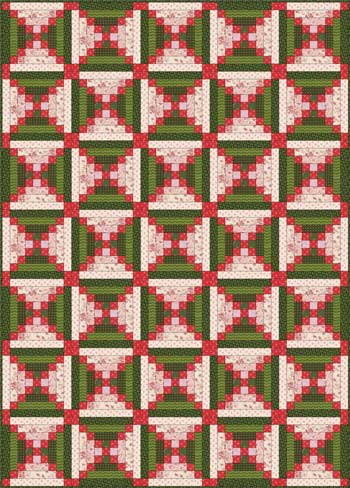
Chimney and cornerstone quilt design

Looking to make friends, Sarah joins a quilting circle, befriending the other women, although they clearly have reservations about Mrs Compson. They welcome Sarah into their group and help her practice, supporting the individual tutoring she has with Mrs Compson, expanding upon the techniques of the craft. They discuss different stitching methods; there are arguments over the preference between hand and machine stitching; and the skills required to undertake different tasks, with a level of detail that might be skimmed by those not interested in the minutiae. 

The history of quilting is mentioned, as are individual patterns with their specific meanings. Mrs Compton explains to Sarah the relevance of the Log Cabin quilt pattern to Elm Creek Manor, which was a stop on the Underground Railroad during the Civil War. “If an escaped slave saw a log cabin quilt with black centre squares hanging on the washline, he knew it was safe to knock on the door.” When Sarah asks wouldn’t bounty hunters see the quilt too, Mrs Compson replies, “Why, who pays attention to women’s work? Laundry, hanging on the line? Sorry, can’t be bothered. We’re out doing important man things.” There is a highly unrealistic conversation about craft being viewed unfavourably compared with art as it is considered women’s work, which raises some valid points, although the dialogue is stilted and deeply unlikely.

Sarah appreciates her newfound female friendships, and learns about Mrs Compson’s past through the older woman’s reminisces and reflections of life. She looks to Mrs Compson as a substitute mother-figure, while acknowledging her complicated relationship with her own mother. This dynamic is left unresolved – perhaps for the next novel; this is clearly positioned as the first in a series.

The theme returns to the purpose of making quilts, whether as a practical hobby and a leisure activity or an art form to be rewarded. Chiaverini argues that the value of a quilt is more holistic. Craft as empowerment is not a new theme, but it is one that this novel embraces warmly bringing gentle comfort.
Log Cabin quilt

Thursday, 10 June 2021

Life's Nourishment: Milk by Dylan Van Den Berg

Dylan Van Den Berg, Katie Beckett and Roxanne McDonald in Milk

Milk by Dylan Van Den Berg

Directed by Ginny Savage
The Street Theatre
3 -12 June, 2021

The theatre is a forum for sharing stories; exploring the past; questioning the present; and preparing for the future. ‘Milk’ does all of the above with superb staging and atmospheric sound and lighting featuring pivotal moments in liminal spaces, directed with depth and nuance by Ginny Savage.

We are taken to a metaphysical Flinders Island off the coast of Tasmania, which is created instantly through imagery and sound (Peter Bailey) – the wind is a constant presence. The design of the rock-strewn stage (Imogen Keen) is evocative and versatile; piles of stones can be interpreted as cairns and path-markers, burial sites and weapons. Ranging in size they indicate the passage of time through erosion, and they can be put in a pocket and transplanted to another time and place.

Spanning two centuries the play tracks the conversation between three Aboriginal ancestors coming together on the verge of life-changing moments. The characters are nameless – known only as Character A, B, and C – which suggests a blending of personalities and continuation of stories. Playwright and Character C, Dylan Van Den Berg has just become a father, which has made him introspective. He wants to know where he came from and what he might be passing on to a future generation.

Character A (Roxanne McDonald) and Character C (Dylan Van Den Berg) 

He and the other characters, A (Roxanne McDonald) and B (Katie Beckett), attempt to reconcile what came before invasion and colonisation of Tasmania with what is yet to come. Roxanne McDonald (portraying an old woman from the 1840s) tells her story with honesty and heartbreaking integrity. While the horror and violence of the past is not dwelt upon, there are certainly uncomfortable scenes and a few tears were shed in the audience. A note in the programme reminds us that “a group of Palawa people, mostly women, were removed from their country and taken to the Bass Strait Islands in the early-to-mid 1800s. They were sold, bartered, and gifted as ‘wives’ to the white sealers who lived there.”

Katie Beckett plays Character C’s grandmother, although the actors are similar in age, which leads to an intimacy and shared understanding of identity. The difference is that “You’re lucky with that milky skin. You get no trouble. You get to carry it all on the inside – all the knowledge. Some of us gotta carry it on the outside for everyone to see.” Character B is a middle-aged woman from the 1960s who is attempting to find fun and explore the world through various encounters and relationships, while refusing to be confined by convention. 

Katie Beckett as Character B

Through outstanding physicality, the actors all embody greatly varying experiences and shifts of mood that are entirely convincing and utterly compelling. The costumes, also by Imogen Keen, are designed to accentuate the details of their circumstances, from the rough-looking, sturdy coverings, fashioned like a blanket, of Character A, to the impractical and uncomfortable shiny fabric worn by Character B as she prepares to go on a date and sell herself as something she is not – “I’m a natural blonde, baby… this is just a dye-job.”

They progress and move past grief, shame and self-loathing by literally picking themselves up and carrying on. Lighting by Gerry Corcoran illuminates, defines and conceals spaces in intriguing ways that create conversation. We all have blind spots in our family history, but learning about the past can inform our present and teach us to be more compassionate towards the people around us.

It is apt that Milk opened in a world premiere during Reconciliation Week. It may be a personal story about loss and survival, but it asks us all to question our heritage and to consider our relationship to the land we live on. Again, the programme notes that, “For many years it was said that the Palawa people were ‘extinct’. White history has swallowed our stories. This is just one of many.” A lot of stories and knowledge have been lost through lack of sharing, but in the words of character C, “It’s all out there. Even the stuff we think is gone. We just – have to listen. We just – have to dance.”

This play is stunning and heartfelt. It is personal and it is broader than one man’s story. It affects all of us, as it should. See it; feel it; share it. That is all.

Thursday, 10 September 2020

Get Orf My Land: The Shepherd's Life


The Shepherd's Life: A Tale of the Lake District by James Rebanks

Penguin

Pp. 287

Sheep are big business. Last month (August 2020) in Lanark, Scotland, a sheep called Double Diamond sold for a world-record sum of £367,500. James Rebanks knows that sheep are important. As a shepherd, he understands that farming and shepherding are crucial to the economy and the livelihood of many. He explains that this is hard work but that he loves it and enjoys the connection that he gets from the land. What he doesn’t seem to understand is how privileged he is and how many of the people he scorns would love to have been given his opportunities.

The Shepherd’s Life is not particularly well-written but Rebanks received an advance from an agent before he had written it. Although he appears to despise people who don’t do his work, they seem to be interested in him. He writes a sort of auto-biography, which also contains a lot of information about farming and a lot of assumptions about what non-farmers think of him and his industry. Many of his blunt and antiquated attitudes are irritating and arrogant, such as his inherent sexism and antipathy towards intellectuals, but the sections on sheep-farming itself are interesting and the most engaging.

As a child he followed his grandfather around the place knowing that he would inherit the farm because he is male. He has sisters, but it was “different for girls…their role is to leave and do something else to earn respect.” This knowledge of his purpose in life means that he feels ownership of the land. “We owned the earth. We’d been here forever. And we always would be. We would get battered from time to time, but we would endure and win.”

For him and his family, “our sense of belonging is all about participation. We belong because we are part of the work of this place.” And what if we can’t inherit a farm? Will we never ‘belong’? He dislikes Alfred Wainwright, Chris Bonnington and William Wordsworth because they’re ‘not from round here’ and so have no right to talk about ‘his’ land; he thinks climbers, poets, walkers and daydreamers are pointless, and that tourists are “minor irritants, like ants – they got in the way and they had strange ideas, but a little bit of bad weather and they’d be gone again to get on with stuff that mattered.”

The book itself is poorly written, grammatically clunky and very repetitive; a lot of sections start out telling us what someone is doing in the present tense, as he tries to set a basic scene: “My father is wielding a white-handled meat saw…” “My mother is sitting on a wooden chair in our barn…” “We are working in the sheep pens.” The use of generic pronouns is also problematic, for example, he writes of his grandfather, “He had a rough whiskery face when you kissed him goodnight.” This begs the questions, when did I kiss him, and what was his face like when I didn’t? He acknowledges, “We are, I guess, all of us, built out of stories” and yet, he doesn’t narrate his own very well.

He became inspired by books when he picked up a copy of A Shepherd’s Life by W.H. Hudson (the story of a shepherd called Caleb Bawcombe) and says he admires “the brilliant plain storytelling, no messing about”. It is predictable when he talks of reading; it is of male authors – Camus, Salinger, A.J.P. Taylor, Orwell – and that his biggest inspiration is the hyper-masculine Hemingway. After criticising the poets, he tries to write his own, and I certainly hope he’s a better sheep farmer.


He is at his best when writing about the sheep, the dogs, and the cyclical nature of farming. When told without prejudice, these snippets are interesting and engaging, including the shepherding chores of lambing, making hay, shearing (“It is a carefully choreographed thing in which the sheep is turned, shuffled and rolled in clever purposeful ways”), dipping, and training sheepdogs.

He divides the book into four seasons, as everything they do is connected to the weather and the natural cycle. In many respects, shepherding and farming have not changed in centuries. “You could bring a Viking man to stand on our fell with me and he would understand what we were doing and the basic pattern of our farming year. The timing of each task varies depending on the different valleys and farms. Things are driven by the seasons and necessity, not by our will.”

If you remove the tractors and the machinery, the farming practices are ancient, and it upsets him that these traditions, skills and knowledge are being lost or dismissed. He commends the ‘old ways’ and wants future generations to see the reality of farming and agriculture. His book is almost a call to arms to protect the natural mechanics and importance of farming.

James Rebanks is a tough person to like – he has some interesting things to say about sheep and the farming of them in the Lakeland fells, but he tells them in a didactic and hectoring tone. If he could climb down from his privileged perch, his message about sustainable farming might be easier to hear.

Friday, 28 August 2020

Friday Five: More Podcasts

Back in May I wrote a blog post about the podcasts to which I was listening in COVID-19 times. Well, it's still going on, and I'm still listening. I just keep adding them to the list, and they roll around and keep me entertained alongside my regular favourites. Here are five more recently-listened-to podcasts.

5 Recent Podcasts:

  1. The Guilty Feminist (Patreon) - Deborah Frances-White hosts this podcast which ranges from stand-up comedy to interviews about hard-hitting topics such as domestic abuse and genital mutilation; recent episodes have covered Justice, Satire, Rebellion, Shame, Education and Credibility. Every episode kicks off with a round of  'I'm a Feminist, but...' as hosts and guests confess to 'shameful' double standards which we can all recognise. While mixing up the tone, the message remains firmly to fight for gender equality, and this is also the podcast that introduced me to the wonderful protest folk music of Grace Petrie. 
  2. The Anfield Wrap (TAW Player) - Yes, it's all about Liverpool F.C. and yes, it has over 28 million downloads worldwide. Neil Atkinson hosts a group of blokes (and it is nearly always blokes, unfortunately) who sit around discussing the highs (of which there are many lately) and lows of the club. There are a number of levels to which one can subscribe, but the free content is sufficient for me, covering transfers, signings, matches (both before and after), player interviews and a plethora of awards. Bonus 'cup of tea' episodes address current issues and how they affect the club from supporting foodbanks to LGBTQI rights and kicking racism out of football. 
  3. The lads of The Anfield Wrap with the manager of the Anfield team
  4. No Filter (Mamamia) - If interviews with interesting folk are your thing, then this Australian podcast hosted by Mia Freedman might be for you. With a fresh approach and a candid attitude she chats to well-known celebrities (Julia Gillard and Osher Gunsberg) and 'ordinary people' with incredible stories, such as a mother of a trans child or the bloke whose wedding sparked a COVID outbreak. 
  5. Have You Heard George's Podcast (BBC Sounds) - George Mpanga (aka George the Poet) delivers a highly individual take on societal issues through a mixture of music, poetry and storytelling. The first series, which came out in 2018, won four gold awards at the British Podcast Awards, plus two silvers and the podcast of the year.  His subjects included blaxploitation films, Reaganomics and why drug dealing and murder can seem the only options for black youth, whether in the 1970s and 80s US or contemporary UK.
  6. Newscast (BBC News) - I started listening to this when it was Brexitcast, then it became Newscast, then Coronaviruscast, and now I think we're back to Newscast. It might be tricky to keep up with the title but the premise is the same - intelligent, topical political and social issues introduced by Adam Fleming, and discussed 'with the BBC's best journalists and other people who know what they're talking about'. It's basically how I check in with what's going on back in Blighty; it's interesting informative and measured with lots of heft and a touch of levity.

Sunday, 3 May 2020

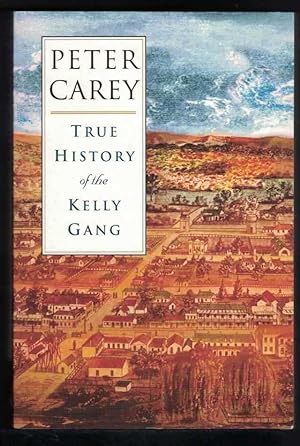
What is Truth? - True History of the Kelly Gang


True History of the Kelly Gang by Peter Carey
University of Queensland Press
Pp. 400

Peter Carey is often touted as Australia’s literary representative, so his take on one of its biggest questionable icons is bound to be interesting and exciting. The book purports to be written by Ned Kelly in thirteen parcels of stained and dog-eared papers, and it includes excerpts from newspapers and transcripts of conversations. Towards the end of the novel, the printer, Thomas Curnow, purportedly says, “What is it about us Australians, eh? What is wrong with us? Do we not have a Jefferson? A Disraeli? Might not we find someone better to admire than a horse-thief and a murderer? Must we always make such an embarrassing spectacle of ourselves?” This is the question which Carey address in his ‘true’ history.

The beginning contains accounts of Ned’s upbringing, schooling, interactions with the police, his father’s brutality (beatings with the belt and drunken rages), and his mother’s (Ellen) subsequent suitors, one of whom is Bill Frost (whom Ned later shoots. Life was hard and brutal with death and violence all around. His uncle tried to burn their house down after being rejected by Ellen, and he was sentenced to hang. Ned was a Catholic amongst mainly Protestants; the family was poor and anti-establishment so they were picked upon and bullied in “a district of English snobs”.

It is written in a sort of vernacular, but the narrator is very erudite and falsely descriptive. There is no swearing; ‘bastards’ is redacted and other words are substituted with “adjectival”. His use of metaphor is rich and, while the structure is unrealistic for a poorly educated farm boy, the vocabulary is credible. “The memory of the policeman’s words lay inside me like the egg of a liver fluke and while I went about my growing up this slander wormed deeper and deeper into my heart and there grew fat.” His similes enrich the novel and raise it above the monotonous account it might otherwise have been, and he employs pathetic fallacy in a way that would make Thomas Hardy proud.


Peter Carey paints Ned as a rural lad who wants nothing more than to support his family, farm the land and breed horses, but his plans are thwarted by perceived persecution and his mother’s men. The nature of the relationship between Ned and his mother, Ellen, has long been a topic of historical debate. Ned is the oldest son with a primitive love for his family and a macho need to protect them. He cares for the family, although he doesn’t notice that his sister has grown into a young woman, and he is mainly concerned for his mother, rushing to defend her and fighting over her reputation. 

He loves his mother – some say to an unseemly extent – although she sells him into apprenticeship with Harry Power, and seeks out the company of other men. Ned takes up with Mary Hearn, in a supposedly touching but very plain fashion, and introduces her to his mother although he claims not to know that his mother and his girlfriend share a lover (George King) who has made both of them pregnant.


Mary Hearn pleads for Ned to leave Australia with her and their child for their safety, but obviously he doesn’t. Her lines are very similar to those spoken by Etta Place in the film, Butch Cassidy and the Sundance Kid, suggesting a very limited view of roles for women in stories of legend. Ellen, however, has a rebellious spirit (the spade is her favoured weapon), and she tells stories of the Irish legends, heroes and great women.

Ned holds some belief in fairy stories of banshees, curses and bad luck, but also understands the realities and corruption of the world. The police slander his family; he is angry and hungry and carries within “that flame the government of England lights in a poor man’s guts every time they make him wear the convicts irons.” He dislikes talk of colonials not being able to farm properly, and despite his Irish heritage, he considers himself Australian. In Peter Carey’s telling, he becomes one of the original founders, and claims he and his ilk were formed by the harsh treatment they received.


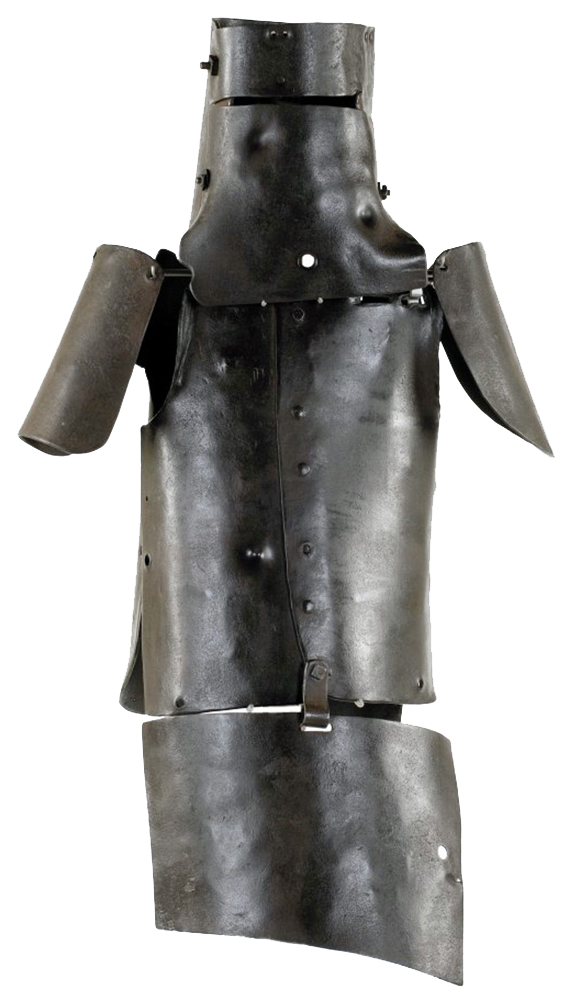
Carey includes all the details of the legend in his ‘history’. He mentions the undertakers, leather cords specifically created for the purpose of binding a body to horseback, which were used as evidence that the policemen had come to the Kelly gang with the intention of killing them. He also devotes pages to the creation of the iconic suits of ‘armour’. In 1879 Ned Kelly dictated an 8,000 word manifesto to Joe Byrne, known as the Jerilderie Letter, in which he tried to justify his crimes. Intended for publication, it was instead handed in to the police. Carey questions the making of the legend – was Kelly seeking fame, justice or acknowledgement? There is a great legend woven around Ned Kelly, and although Peter Carey suggests he will clarify it with his ‘true history’, he gleefully obfuscates even further.

Tuesday, 24 March 2020

COVID-19: Dreaming is Free


Stories are my saviour. Whether told on the page, stage, screen (large or small) or radio, they inspire, enlighten, challenge and comfort me. It may not be the best idea to be watching World on Fire at the moment, but last night we watched the final episode of the first series. The series is set during the Second World War in France, Germany, Poland and the U.K. and it follows several families and characters from 1939-1940. It's tough to watch at times (and there seem to be a few anachronisms in terms of speech and accent), but it is well acted and sufficiently tense and dramatic to keep me involved.

I am tempted to see parallels with our current global situation, and slightly reassured that I 'mustn't grumble: things could be worse'. No one is shooting at me, or trying to bomb me, or threatening to hang me because I am the 'wrong' race, colour, ability, sexuality or political persuasion. Not yet, anyway: I don't live in America - cheap jibe, sorry. But there is a preponderance of panic buying, propaganda, misinformation, uncertainty and an extremely rapid pace of change. Life (and death) goes on in altered circumstances; people still get born; get married; fall in love; fall out... not necessarily in that order. And like World War II, those in the midst of it have no idea of when and how it will finish. Trust me, I've just seen the last episode of World on Fire and there is no satisfying sense of closure - sorry if that's a spoiler.

Our COVID-19 situation also sees leadership, and the lack thereof. Boris has been chewing his way through speeches by Churchill and Plato and now emerges blinking from his shabby chrysalis as a somewhat unlikely statesman; Prince-Hal-like, the foppish fool has sobered up to face the future. Jacinda is calm and firm; just and fair, dealing with a hideous situation with sense and sensibility. Scotty is floundering about like a lumpfish in shallow water but out of its depth. Make some decisions; be bold and resolute; lead!

In Australia we are told that schools are 'pupil-free' but they remain open and no one is turned away. We are told that only essential services should remain open - yet many businesses have not been made to close, so people are still heading to the office, hoping for a gold star from the boss. We are not allowed to gather so theatres, cinemas, gyms, pubs, clubs and restaurants have been closed. Art galleries and museums are choosing to close. There is no statewide ban on beaches, although people are 'advised not go' - yep, we've all seen how well people are following those guidelines.

Hairdressers and beauty salons are still open - it's important to look good in your coffin, apparently - but no one will be there to see you. Churches and places of worship are closed except to very small gatherings; weddings and funerals are not allowed indoors except in small groups observing the one person per four square metres rule. I am a sporadic church-goer; my places of worship are hills and woods and the great outdoors. I worship a mixture of myth and religion - I would like to believe in a golden thread that we can follow out of this darkness into the light once more.

I do usually go to church at Christmas, Easter, and Whitsun, however: they are the significant touchstones of my faith. This year, I will not be attending live services, but I will be commemorating the occasion in my way. Many people are suggesting ways to occupy their time in isolation (although Australia has not moved to this yet, and people are still congregating in entirely unnecessary groups); one of my pass-times is cross-stitch. I have been stitching little Easter designs of baskets and bunny rabbits, surrounded by eggs and flowers.

All this is probably what informed my dream last night in which I was trying to stitch together a Polish fabric that had been destroyed by Germany. It was my duty to reconnect the border by unpicking the existing stitches and working them back into an unbroken line with a golden thread. I believe our dreams are important - not in a Freudian way, but because they are a coping mechanism in which the brain shuffles events and tries to impart some meaning. My bible is the bard, and I find words to fit every event in his plays and poetry. And so it is with dreams, which come to us in sleep:
"Sleep that knits up the ravell'd sleave of care,
The death of each day's life, sore labour's bath,
Balm of hurt minds, great nature's second course,
Chief nourisher in life's feast."
I know I have employed that quote before (it's one of my favourite, from one of my favourite plays), so here's something else that's been on my mind.


Tuesday, 17 September 2019

Making it Up: Today I Am A Book


Today I Am A Book by xTx
CCM Design
Pp. 117

All of the short, poetic segments (it feels wrong to call them stories, and, besides, they have the tart juiciness of an orange) in this collection are introduced with the words ‘Today I am a…’ It is a great creative writing exercise, and a way to express thoughts and feelings, but a lot of them are complicated and negative.

Many are tales of abuse, violence, sexuality and shame, with cripplingly low expectations; a woman goes to bed early because she wants to masturbate without her husband disturbing her; a woman seeks out compliments from a man she knows “isn’t good at saying nice things”; a woman desperately wants to hear the words ‘You are wanted’. In Today I am a Slave, the author writes, “Except for trying to kill me every day, Pepito is pretty nice. He’s definitely getting better at it though. Surprising me now, but I am vigilant. I don’t want to die and I don’t think he wants to kill me. Yet.”

Let’s get the question of authorship out of the way. Who is xTx, and does it matter? I assume the author is female, although some segments are written from a male point of view. The first page announces, “Today I am a dedication. Today, and everyday you are my driving force. Thank you, Roxane Gay, for making me believe. Still.” Many of the themes are similar to those found in Roxane Gay’s book Bad Feminist. For example, one harrowing piece reveals, “Today I am a bulimic. I take in the world. I throw it up. Do you want to see pain? Hold on for a minute. Just one minute. That’s all it takes for me to work it back up. Do you have patience? Are you a patient person? The one who waits the longest gets the best payoff. Please trust me.”

The narrator goes on to list the things she has swallowed; “An ongoing gorging since I was a girl: Frosted Flakes, a handful of bow shaped barrettes, twelve ice creams, seven fingers of my brothers’ friends inside me”. She explains, “The time it takes doesn’t matter. What matters is how you feel afterwards.” Her specific instructions of what to do are heartbreaking and visceral (don’t read them while you’re eating) from “1. Eat enough to make you feel sick and/ or hate yourself” through “4. Approach the toilet. Make sure it hasn’t been cleaned in a while. The filth will help you” and “7. Stare at the toilet water. Feel how gross you are, how utterly disgusting and worthless you are” until “11. After each hurl reach again. Keep fucking puking. Empty your fucking guts. Remember to breathe. Remember you are a big piece of shit.” That is absolutely raw and confronting; it is shocking and emotional; it is exceptional.

She is often the gateway for someone else’s needs or frustrations. In Today I Am A Time Machine she writes, “He has made me his time machine so he can stay there. He tells me this. He wants me to open myself wide enough that he can crawl through. Go back to the boy he once was… Back to when his life wasn’t as tarnished as it is now.” She is not often considered as a person in her own right but in how she relates to others and what they can take from her. In Today I Am A Lion she confirms “It’s hard being everything for everyone when you just want to be someone else’s everything.”

But women are expected to be all things to all people, and that is exhausting, even though we should be prepared for it. “It’s easy to be a make-up artist when you’re a female. So much of what we’re meant to be is pretend anyway.” As she continues in Today I Am A Make Up Artist, she can no longer tell tall tales and make up big stuff as an adult, so she has to “resort to little things like giving the guy at Starbucks a fake name just so I can see it black Sharpied on the cup… convincing my boss I am completely on top of things, assuring my two kids that everything will be okay, telling my husband I love him.” This story switches from comic to bleak in the twist of a sentence.

Her prose is sparse but full of imagery. The analogy in Today I Am An Outlier is breathtaking when considered more deeply: “My period blood is made for bigger things. It’s an important liquid made waste when not called upon. It’s like the genie from the lamp giving up and leaving, bags slung over shoulder, after eons of nobody rubbing.” And, like all good story-tellers, she returns to the beginning with Today I Am A Writer: “Today I am a writer. I say this thirty-three times while forcefully bashing my head into the metal keys of a typewriter. I want the answers to imprint my face. I want its ribbon to birth answers. Tell me what I need to say… All the blood mars any facial embossing and I am still sitting where I began – blank.”

There is a lot of style in these segments, but there is also deep substance. The stories that seem short and even superficial are full of meaning. Much of that meaning is grim and dark; this is an uncomfortable glimpse into a tormented mind that is trying very hard to make up.

Wednesday, 21 October 2015

How can you be sure: The Invisible Gorilla


The Invisible Gorilla and Other Ways Our Intuition Deceives Us by Christopher Chabris and Daniel Simons
Harper
Pp. 242

If you were watching a basketball game on television and a person walked onto the court in a gorilla suit, you’d notice, wouldn’t you? Even if you were concentrating on counting the number of passes executed by one of the teams? Apparently not. In a now-famous survey conducted in 1999 by Christopher Chabris and Daniel Simons, half of the subjects didn’t ‘see’ the gorilla, although 75% swore they would have seen it if it had been there. The fact that it was, and they didn’t, has led the two experimenters to investigate the human limits of concentration and assumption of knowledge and ability.

It’s not good news for anyone who talks on a mobile phone (hands free or otherwise) while driving. We only have a limited amount of attention, and if we split its focus, then we are not able to perform either task to full competence.

The book is subtitled ‘And other ways our intuition deceives us’, and these ways are many and varied. Generally we think we are smarter than we are, and the less ability we have, the more confidence we have in it. This illusion of confidence extends to others, as we are more likely to trust someone who expresses absolute certainty, than one who consults their colleagues and considers their opinion. 

This illusion of confidence ties in to the illusion of knowledge, by which we think we know more about a subject than we do. We understand many things on a superficial level, but not at greater depth, because we don’t have to. We may all think we know how a bicycle, a zipper or a toilet works, and this comprehension carries us through life quite adequately. But do we really know how such things operate? Try explaining it in detail and, unless you have had to fix one, you will probably soon come unstuck.

We are also under the illusion that technology is all-powerful. This is evident in examples of people blindly following sat-nav directions until they end up hundreds of miles from where they intended, or in the sea. “Technology can help us to overcome the limits on our abilities, but only if we recognise that any technological aid will have limits too. If we misunderstand the limits of the technology, these aids can actually make us less likely to notice what is around us.”

Part of this confidence trick is the use of ‘neurobabble’, in which scientific terminology is used to lend dubious theories the ring of authenticity. We have long been seduced by talk of the brain’s functioning power, and the myth that we only use 10% of its capacity is commanding. There is a widely-held belief that listening to Mozart makes us more intelligent, and although we like to think we could get smarter by doing nothing, there is no scientific basis for this illusion of potential.

And then there is the illusion of causality: people tend to find the link that suits them, even if there were other factors which have a more influential bearing on the incident, hence conspiracy theories. Because we can relate to the personal rather than the general, we are far more likely to believe an isolated anecdote from a person we know than banks of statistics.

The Invisible Gorilla suggests that we are constantly being duped – often by ourselves – and asks us to question our emotional responses. It’s not so much that everything we know is wrong, as that we don’t know nearly as much as we think we do.