Showing posts with label COVID-19. Show all posts

Tuesday, 30 May 2023

Newspaper Analysis - The Weekend Australian Inquirer 27-28 May


When I returned to Australia after five weeks in Europe, I thought I would have a slow Sunday of reading the paper in the pub and catching up with local news and events. I forgot that the selection of Sunday papers in this country is strictly limited to a tabloid gutter-press and right-wing Murdoch-owned subsidies of an American mass-media cartel. 

So, I was stuck with The Weekend Australian from which I learned that the country is up in arms over The Voice referendum, which seeks to give Indigenous Australians representation in the constitution. Apparently it is divisive and unclear, although how they reach that conclusion is difficult to say as they also argue that the government has not released enough detail about something which will make the people 'bound in perpetuity'. 

Many other articles criticise Stan Grant, who questioned the role of the monarchy in contemporary Australia during the coverage of King Charles III's coronation on the ABC network, the country's national broadcaster, principally funded by direct grants from the Australian Government and  administered by a government-appointed board. Opinion pieces opine that Stan Grant is out-of-step with public opinion and this six-and-a-half-hour broadcast was not the place to raise this issue. It doesn't help The Australian's cause that the multi-award-winning journalist Stan Grant is a proud Wiradjuri man. He has since quit television-hosting duties in response to online racist abuse over his coronation comments about historic Aboriginal dispossession. The Australian does not suggest when would have been a good time to make these comments. 
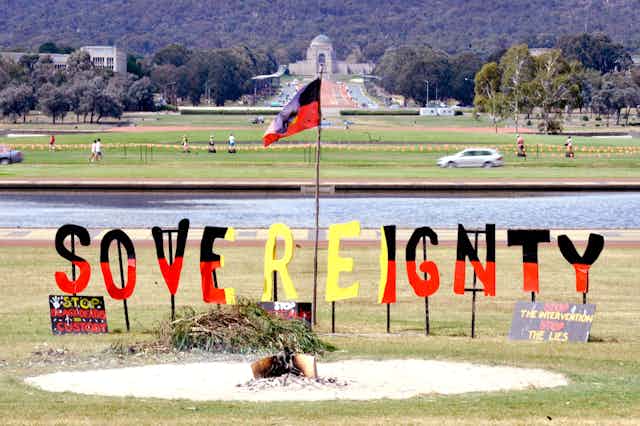

Without a hint of irony or awareness of hypocrisy, other articles claim that police tactics over COVID-19 were regressive as they shut down free speech based on questionable science. The Australian thinks there should be an inquiry into why people's Twitter comments were shut down. Speaking your mind in a time of great uncertainty in the midst of a pandemic with the potential of whipping up hysteria and pandemonium is clearly fine - as long as your view is individualist and supports capitalism. 

There is much frothing at the mouth about body dysmorphia, transgender popularity, and the discomfort of listening to women when they tell their stories. Brittany Higgins (a Liberal party junior staffer who alleged that she she was raped by a Minister in Parliament House) is a particular target for villification.

According to journalist Janet Albrechtsen, Brittany Higgins had a 'strategy' to go to the media first and the police second. She is the face of the #MeToo movement and, as a role model for other women, her 'tactics' 'may be mimicked by other women'. Albrechsten claims that, "Decisions by her and those around around her to air her allegation in the media have undermined key features of our criminal justice system." She continues, "The more times Higgins gave her version of events to the media, the more likely there may be inconsistencies in what she said happened."

Of course it helps The Australian to have a female reporter discrediting the words of an alleged rape victim. Albrechsten takes pot shots with sneering comments such as, "On more than a few occasions, the normal rules and sound judgements appear to have been discarded for Higgins." And she affirms this position with, "So many people in positions of power who were caught up in the hype of the Higgins media storm appeared to have made more decisions." Albrechsten appears to pander to the notion that size matters in the hunt for more column inches, and whereas I believe we should listen to women and take their accounts of abuse seriously, this article has me agreeing with one thing at least: #notallwomen
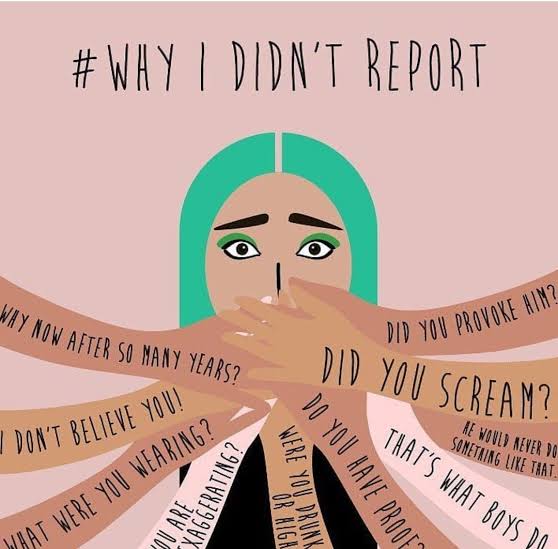

Richard Guilliatt weighs in on the debate (how is it even a debate?) by trashing as unreliable the memories of abuse victims after recovering repressed memories of trauma through a counselling technique called eye movement desentsitisation and reprocessing (EMDR) conducted by "so-called experts." He argues that, "sexual assault allegations were no taken as seriously as they should have been in the past but the public mood has shifted towards believing an allegation must be the truth." While neatly glossing over all that messy trauma, Guilliatt is upset that, "prosecutors in the current climate appear to see their role as supporting claimants rather than assessing cases on their viability." Heaven forfend any abuse victim might actually receive support as well as justice. 

More examples of the smug, patronising, sexist, ageist, scaremongering, homophobic, racist tone of the paper follow. But that's just my opinion. 

Dangers of AI risk smothering its benefits by Natasha Bita

I'm not saying it's alarmist but, "Like Siri on steroids, AI super-intelligence is rapidly disrupting the world of teaching and learning in ways that threaten to make reading and writing redundant." OK, so I am saying it's alarmist. The danger is, according to Bita, that "AI has caught most educators unprepared for its potential to turbo-charge teaching while giving lazy students an easy opportunity to cheat." She goes on to ask, "Will AI make students so lazy that they don't learn to think for themselves? What if AI re-writes history, spouts propaganda or 'hallucinates' by generating the wrong information?" What, like certain newspapers do now? 


She warns that "schools and universities will need to change assessment methods, relying less on take-home assignments and more on supervised exams, spoken tasks, and video assessments". It's almost as if educational institutions haven't been constantly adapting and changing their assessment methods every single year anyway. While one might think that drawing attention to the digital divide is a left-wing concern and an opportunity to talk about class and wealth inequality. "All state governments have blocked ChatGTP in state schools but many private schools are embracing its use, potentially giving their students an academic headstart." However, the example used of the school that is reaping the rewards of this unfair advantage is the Islamic Collage of Brisbane, because of course, why would you miss an opportunity for ramping up a touch of Islamophobia?

Left Dangling in a climate protest crackdown by David Penberthy

David Penberthy writes about the new laws in South Australia which impose greater financial accountability on protestors, or "those causing the mayhem", His language includes describing some of said protestors as, "retiree revolutionaries", "a small but crafty band of elderly 'rebels', as the XR activists call themselves", and "XR rebel Meme Thorne, a 69-year-old actor from the hippie haven of Willunga." 

Thorne abseiled down a bridge and "dangled above the traffic" in Adelaide as part of a protest against the Australian Petroleum Production and Exploration Association conference. While Penberthy makes no mention of the political motivation of this group, apart from the glib "in defence of Mother Earth", he expands upon the potential threat to the good citizens of Adelaide. "Her actions brought the city to a halt for an hour, even preventing some patients from making appointments at the Royal Adelaide Hospital".

The tone is exasperated and patronising, hiding a credible death threat behind an attempt at blokish banter. "Capturing the frustration of South Australians, Police Commissioner Grant Stevens spoke for many when he said dryly: 'The ropes are fully extended across the street so we can't, as much as we might like to, cut the rope and let them drop.'"

In response, Opposition Leader David Spiers, announced on talkback radio proposed amendments to the Summary Offences Act, increasing fines for such protests from $750 to $50,000 or three months' imprisonment. "It was a hitherto unseen moment of gut-instinct politics from the new SA Liberal leader and was lapped up by talkback listeners, many ringing in with messages of support from inside their stationary cars." Do we really want policy to be decided by knee-jerk reactions and people who lap things up like dogs and make phone-calls while driving?

Surprising life of the accidental president - review by Troy Bramston 

In an article about a new book, An Ordinary Man: The Surprising Life and Historic Presidency of Gerald R Ford by Richard Norton Smith (in which Smith describes Ford as being "charismatically challenged"), the reviewer, Troy Bramston adds this reflection:
"You can pass judgment on Ford or any other president by any standards you want, including contemporary standards. But it seems to me that you can only understand Ford or any other president or any other difficult decision, by immersing yourself in the context of the time."
Harpy Daniels wants YOU: US military goes for woke by Adam Creighton, Washington Correspondent

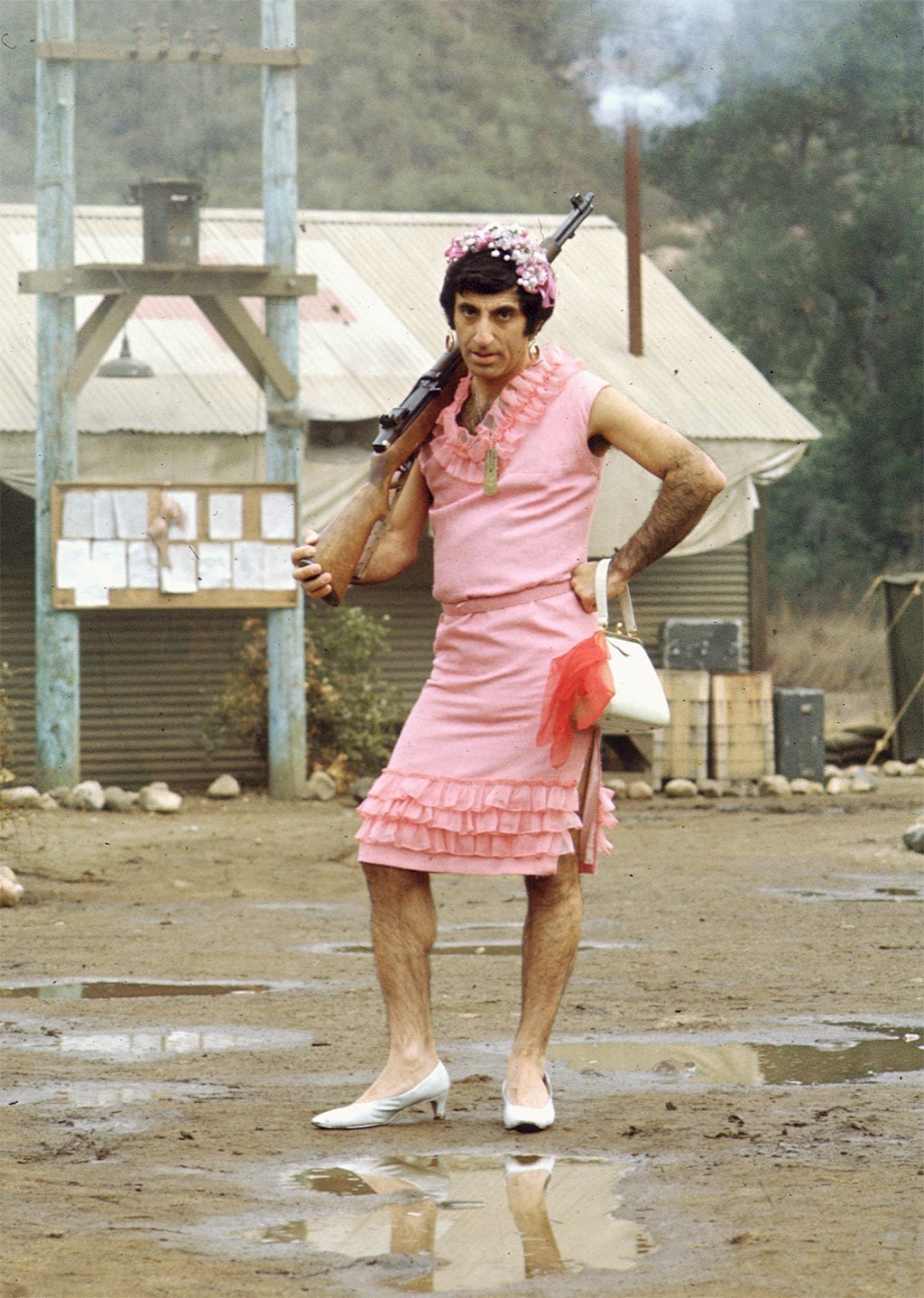
US Navy Yeoman 2nd Class Joshua Kelley appeared in persona as drag queen Harpy Daniels in a TikTok video encouraging young Americans to join the service. Creighton reports that, "Republican senators, former marines and much of the American public were shocked that the navy employed drag queens, let alone endorsed them to boost recruitment." Except, it doesn't. Kelley may be employed by the US Navy but, as the articles admits, this was not a sanctioned video. "The navy, which at first defended the promotional decision publicly, later denied Kelley was part of any formal program."

It transpires that the US military is struggling to meet its recruitment targets. "The US military, which has about 1.35 million active-duty personnel spread across the navy, air force, army, marine and space forces, requires more than 155,000 new recruits this year to replace departing personnel." Apparently this tough recruitment environment is comprised of "a perfect storm of low unemployment and steadily declining patriotism, fitness and interest among young Americans. Covid-19 made all this even worse."

Many young people are rejecting active military service because they don't see a need to ask what they can do for their country. "A prominent survey of Americans published in the Wall Street Journal in March revealed a huge drop in traditional values - patriotism, religion, family, community service - since 1998, especially among young people. Overall, only 38 per cent of respondents said patriotism mattered, down from 70 per cent."

In an outstandingly hypocritical swipe at the audacity of young folk to want decent compensation for their labour, the article goes on, "The only priority the Journal tested that has grown in importance in the past quarter-century is money, which was cited as very important by 43 per cent in the new survey, up from 31 per cent in 1998, the paper said, in what was a depressing read for anyone with traditional values." Well, curse those young people for needed money to survive in a consumerist world of high rent, fuel and commodities of someone else's making.

Could it be possible that environmental factors and toxic politics have leached the sense of service from young men?  Being told what to do without rhyme or reason is unappealing. This would indicate that the conservative role model is failing to attract young folk, and the 'values' of docile following of a capitalist construct is no longer something towards which they slavishly aspire. But sure, blame the drag queen. Perhaps Kelley should change their moniker to Red Herring.

Urban planning design transformed post-COVID by Bernard Salt

It's well written and well argued, and it definitely wants to give power to the individual and wrest it away from the 'nanny state'. Might that be because individuals can be persuaded to do what they are told, while collectives can stir up trouble for corporations? It starts out well, as Salt claims, "It makes sense that Australia, a nation largely founded on immigration [once again, the Indigenous contribution to nationhood is completely overlooked, but that's a whole different Stan of Grants], should evolve as a proving ground for town planning. Since European settlement we have created new cities and accommodated urban growth on a vast scale. And there is every reason to expect our cities to grow further in the years ahead." 

He can't resist a dig, however; "Modern homes typically have water tanks which (notionally) reduce demand for municipal water supplies. Solar panels and battery storage also shift responsibility for power generation and storage from the collective to households. It's all done to help the environment, of course, but it also has the advantage of freeing up funds that in a previous era would have been directed to creating public assets." This is a hugely selfish way of looking at things that supports the wealthy individual who can, and leaves those who can't afford such modifications out in the cold.

We can make people responsible for their own amenities and claim it is all in their best interests. "Knowledge workers living and working together in the dense inner city generate a frisson that creates entrepreneurial and/or economic activity. This idea supports the argument for density. But the pandemic unleashed powerful new forces that challenge the logic of how a city should operate. The reign of the knowledge worker is giving way to new roles such as carers, who live and work mostly in the suburbs. Plus there is a proportion of people who will work from home several days a week." Yes,this doesn't mean they don;t want city amenities or public transport, and it doesn't support any user-pays theory. If you can't pay; you can't use them. That doesn't mean you don't want to. 

"I think the narrative of city life is changing in the post-pandemic era. Our priorities have shifted towards security and the home, and our tolerance for commuting has lessened... It suggests a rising empowerment of moderately skilled workers based in the suburbs and regions, who, therefore, should have a greater say in how collective resources might be allocated." In other words, keep people in their homes, don't encourage them to become involved in community enterprises, and you won't have to build any facilities or infrastructure, unless people are prepared to pay for it themselves. Sorted. 
Wednesday, 27 July 2022

A Doctor Calls: Intensive Care


Intensive Care: A GP, a Community & COVID-19 by Gavin Francis
Profile Books
Pp. 198

Gavin Francis’ memoir about the outbreak of the coronavirus pandemic provides a fascinating first-hand account of how the medical profession dealt with the infection in the face of changing priorities and conflicting information. As a GP in Edinburgh, he also writes proudly of the city’s history, particularly in terms of medical science, and how that relates to current procedures. Published in 2021, this takes a contemporary view of the situation, and certain cautionary tales have proved true in upsetting ways, such as the prioritising of physical health to the detriment of mental health, and the long-term effects of this approach.

We have become inured to the word ‘unprecedented’ – indeed a popular internet meme reads ‘I could really go for some precedented times’ – but the pace of the spread of the virus was extraordinary. Francis writes, “In the space of days, what had seemed like a surreal joke became reality.” Originally doctors were ‘assured’ there was no evidence of human to human transmission, but within weeks the guidelines changed. Doctors dealt with uncertainty, lack of clear messaging and trying to allay fears as well as treat illness.

Of course things are more obvious with hindsight (although this book is written only halfway through the pandemic), and Francis is cautious with his criticism of the politics involved, but he is clearly frustrated about the lack of guidance. He believes that social distancing measures should have been introduced as soon as it became clear that the virus could spread through contact, but understands the hesitancy. While health is his priority – he is a doctor after all – he understands that not everyone will react in the same way. While noting enforced quarantines overseas, he is aware this would be problematic at home. He further appreciates the dichotomy between the suffering of the global economy compared with the recovery of the environment.

There are one or two positives to be drawn from the response to the pandemic, as Francis clutches at straws of hope, such as the speed of the response to the homeless crisis, and the recalibration of which jobs are important, “as if all the old hierarchies were being pushed aside and new possibilities were emerging.”

Some people found that after years of agoraphobia and anxiety, they now felt better as they were not pressured into going out and doing things: introverts were more accepted and acceptable. On the other hand, however, strides taken in the advance of understanding of mental health were now being pushed back. As a GP, his job is to attend to all aspects of his patients’ health, and he finds the crisis causing phenomenal mental health consequences. “Some days every call I took was about loneliness, self-harm, anxiety, panic attacks.” The lockdown may have slowed the pace of transmission, but it provoked “a silent epidemic of despair: panic and anxiety are the virus’s dark refrains, a second pandemic leaching into everyone’s lives.”

Francis writes of the history of epidemics and how public health awareness is the greatest weapon against disease. “More lives have been saved though better housing, sanitation and vaccination than were ever saved by a surgeon’s knife or a physician’s drugs.” He also writes of the development of vaccines and the public attitude to them, both contemporary and historic: it turns out the anti-vax movement is nothing new.

Francis offers some glimpses of hope and humanity, with examples of what we can achieve when we care for each other. But he also presents us with a world that has changed and will never again be the same. How we handle this crisis or challenge depends on our viewpoint and whether we believe in the overwhelming good or bad of society – and yes, there is such a thing.

Saturday, 16 October 2021

Friday Five COVID-19: More ISO TV


We're coming out of lockdown today - hurrah! While we will be cautiously allowed out to pubs, cafes and restaurants; theatres and cinemas are not operating at capacity so there will be more TV watched for visual input. Meanwhile, these programs have been on my recent watched list. 

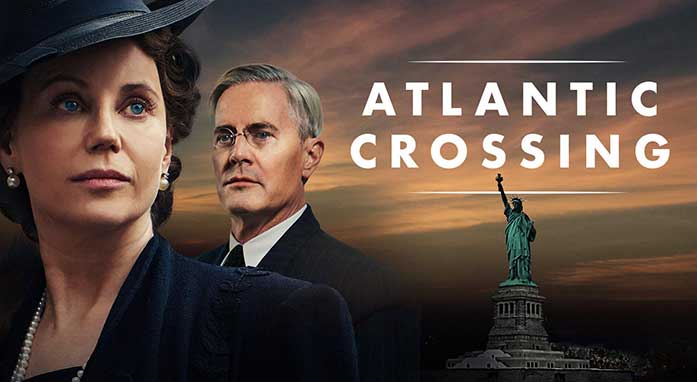
  1. Atlantic Crossing (SBS On Demand) - A Norwegian/ American drama miniseries addresses the issue of trying to get Allied support for Norway against the Nazis, who had invaded their country in WWII. Allied intervention was not assured, as the forces were busy on multiple fronts, so while the King of Norway and the Crown Prince Olav were in England, trying to drum up European support, Crown Princess Martha took her children to the U.S.A., where she becomes the guest of President Franklin D. Roosevelt. because this is a drama, the script implies there may be more than friendship between these characters. Production values are sleek, design and costumes are exquisite, and the acting varies from subtle and inscrutable to histrionic. Soapy romance elements aside, the politics is fascinating to view from a different historical perspective.  
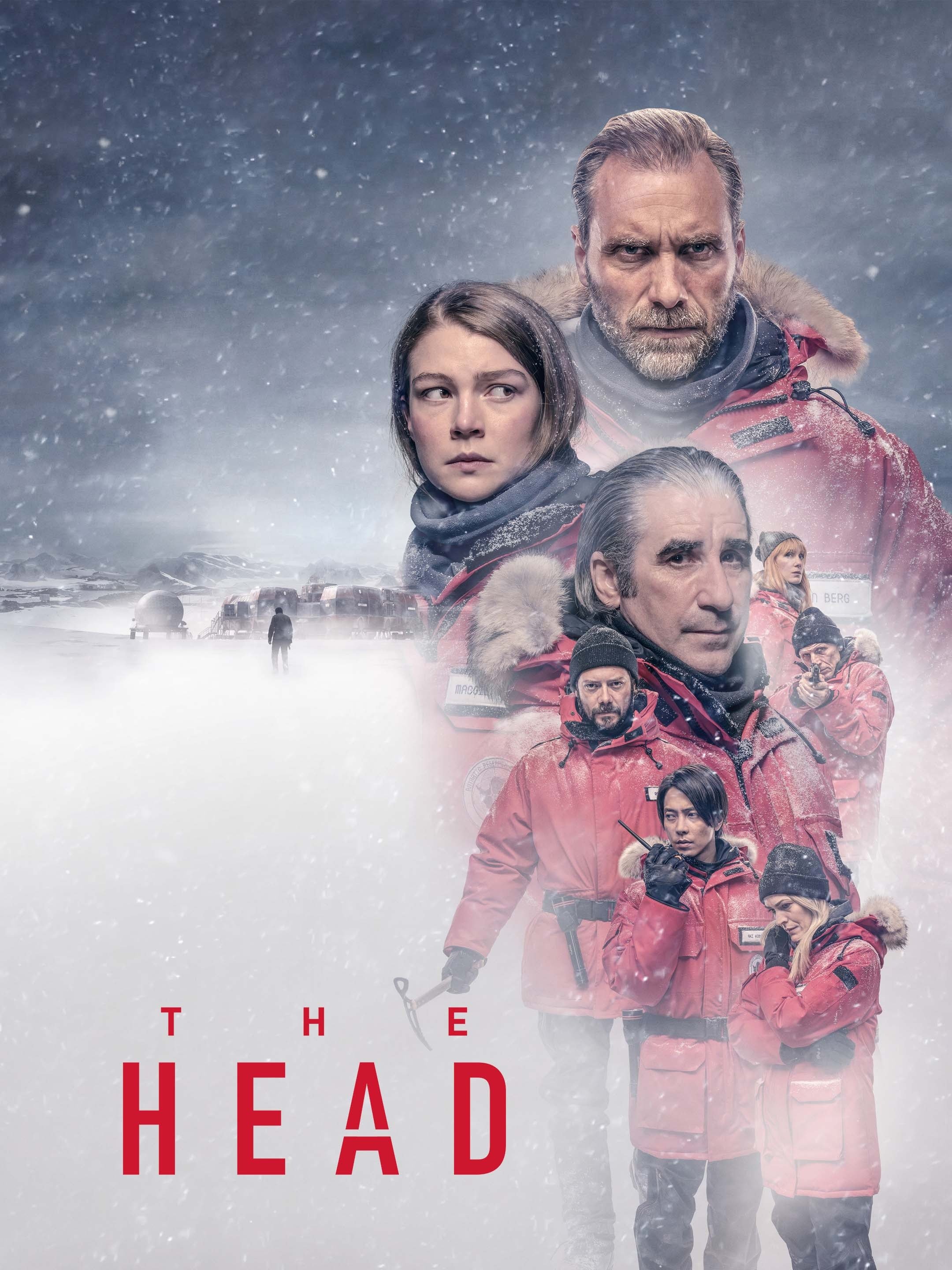
  2. The Head (SBS On Demand) - This Spanish-made, English-language psychological thriller ticks all my boxes; set in a snowy, cold location (The South Pole), a group is left in isolation as the Winterers remain at Polaris VI Antarctic Research Station to continue their research to assist in the fight against climate change. Immediately cracks begin to appear. Fast forward to six months later when the summer team return to find all the Winterers are dead or missing and there is a killer on the loose. Flashbacks indicate that everyone was shifty with a metaphorical axe to grind or a point to prove. It is logical, but I didn't work it out until the very end. It's like Agatha Christie on ice.

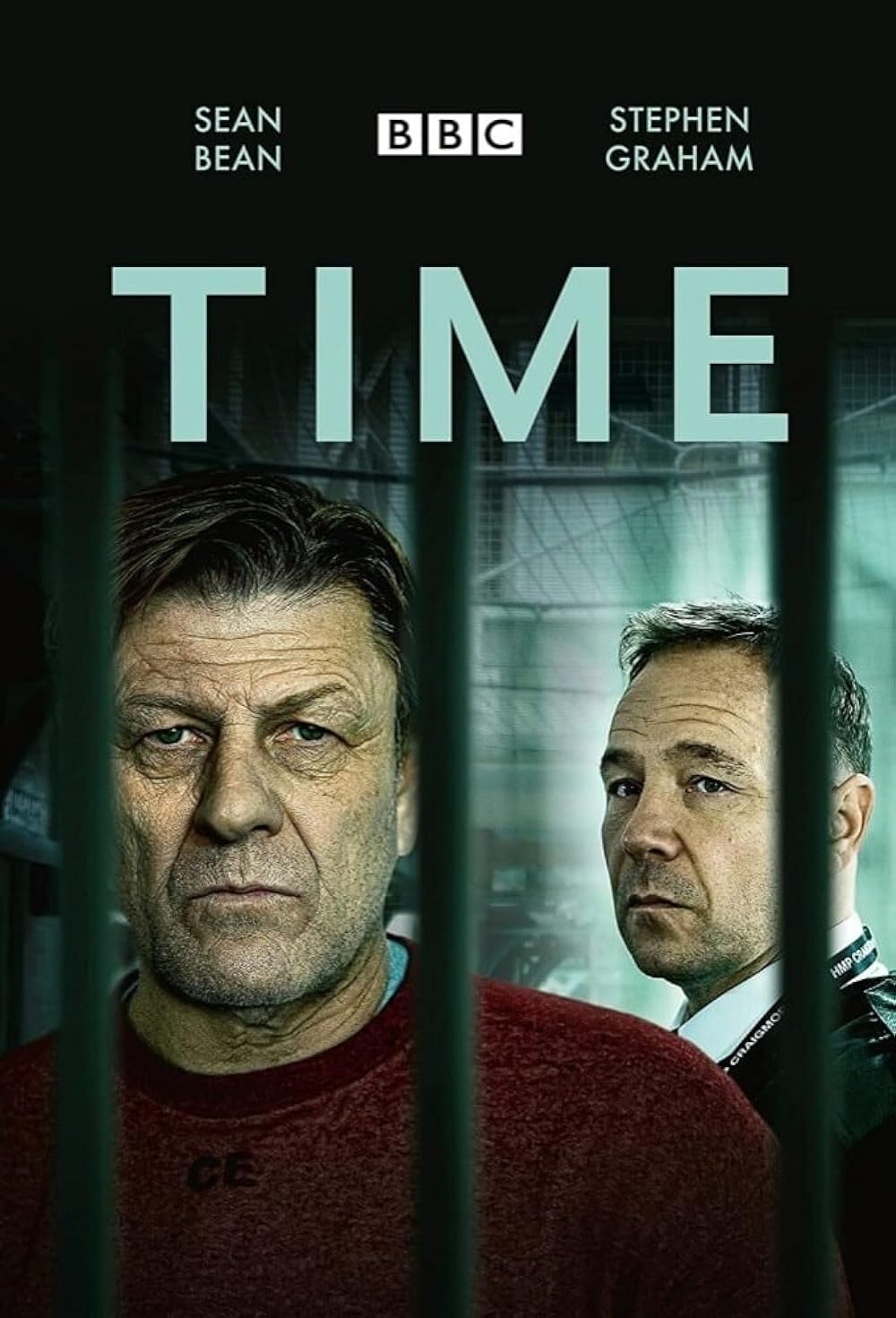
  3. Time (BBC First) - All praise the new three-part drama miniseries by Jimmy McGovern set in a prison, starring Stephen Graham, Sean Bean, Sue Johnston and Siobhan Finnernan. It's exactly as cheery as one would expect, but the acting and the writing is almost criminally good.
  4. Wentworth, Season 5 (ABC iview) - I'm a long way behind with this series - Season  5 finished in 2017, and Season 8 is halfway through (with filming interrupted due to COVID). It chucks in every prison cliché - don't go in the showers; get on gardening detail if you can; beware the butch lesbian; the kitchen deals drugs; most of the screws are bent, but it is one of few mainstream TV dramas that passes the Bechdel Test.

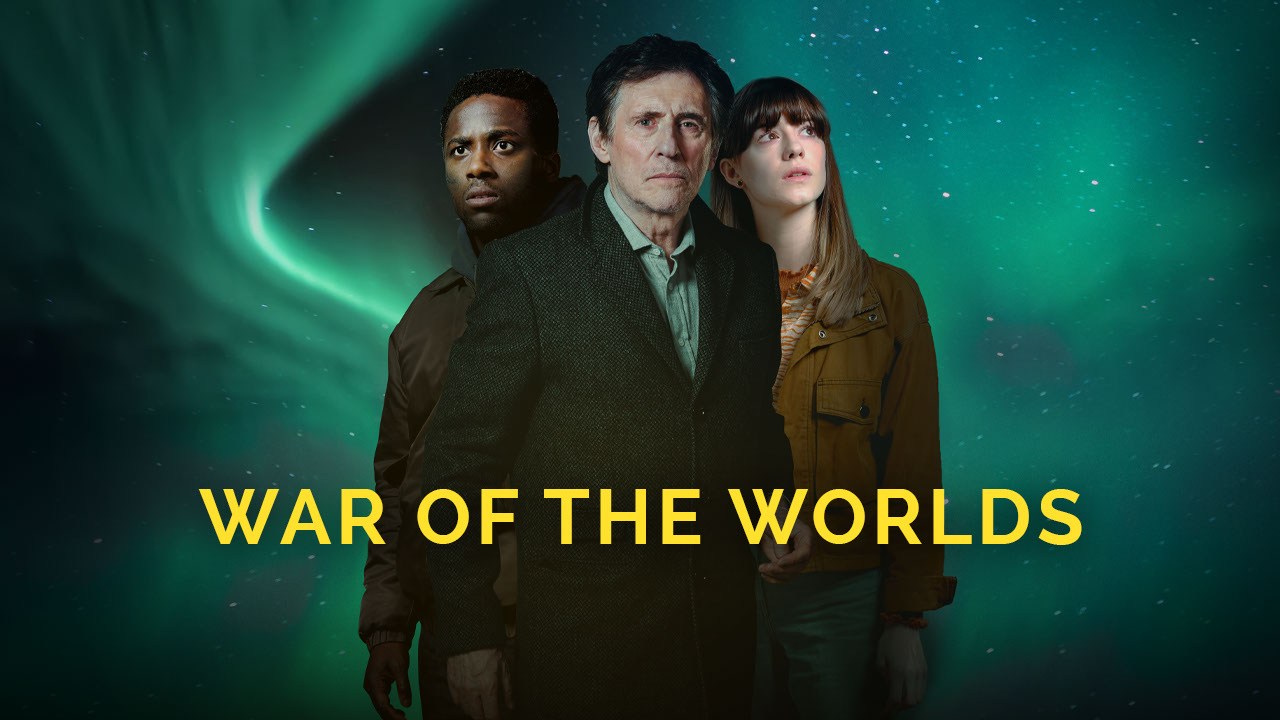
  5. War of the Worlds, Seasons 1 & 2 (SBS On Demand) - There are a lot of versions of this story. According to this one (produced by Fox Networks Group and StudioCanal-backed Urban Myth Films), if you send Nick Cave songs out into the cosmos, you might get invaded by aliens from the future. "I don't believe in an interventionist God" has never seemed so apt. The bleak and deserted landscapes are reminiscent of 28 Days Later or The Day of the Triffids, but Gabriel Byrne lends it a touch of gravitas, and the blend of English and French gives it a certain je ne sais quoi. 

Friday, 3 September 2021

COVID-19 Friday Five: ISO TV We've Been Watching

We're in lockdown - sorry, maybe you weren't aware? Well, we are. And everyone is watching TV. I've scrolled through my notes to see what's been keeping me entertained on the small screen.


5 TV Shows We've Been Watching:
  1. Fisk (ABC) - Written and starring Kitty Flanagan, this show is light-hearted and fun, even though it is set in a law firm specialising in wills and probate, and the main character is Helen Tudor-Fisk, a woman whose career and marriage has fallen apart. The writing is smart and there are featured roles for a number of favourite Aussie comedians (Marty Sheargold; Julia Zemiro; Aaron Chen), with cameo appearances by many others (Ed Kavalee; Sam Pang; Dave O'Neil). It's a total contrast to the dark, gritty drama I tend towards, and I enjoy it greatly for the light relief. So far there is only one season of six episodes, but I hope there will be more. 
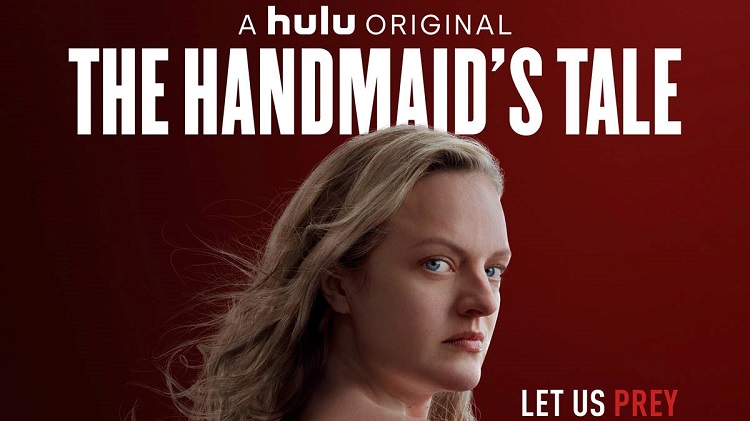
  2. Handmaid's Tale, Season 4 (Hulu/ SBS On Demand) - The story continues to be as gripping and the production values as scrupulous as ever. June Osborne (Elisabeth Moss) makes it out of Gilead, but how does she cope in Canada? Can she reconnect with her past life? How does she make sense of the fact that people are literally dying to help her? Gilead still exists, and her daughter is still there, so what can she do about that? And will she ever forgive the Waterfords (Joseph Fiennes and Yvonne Strahovski) for what they did to her? So many questions - some of them are answered. It looks beautiful when it's at its most grim.
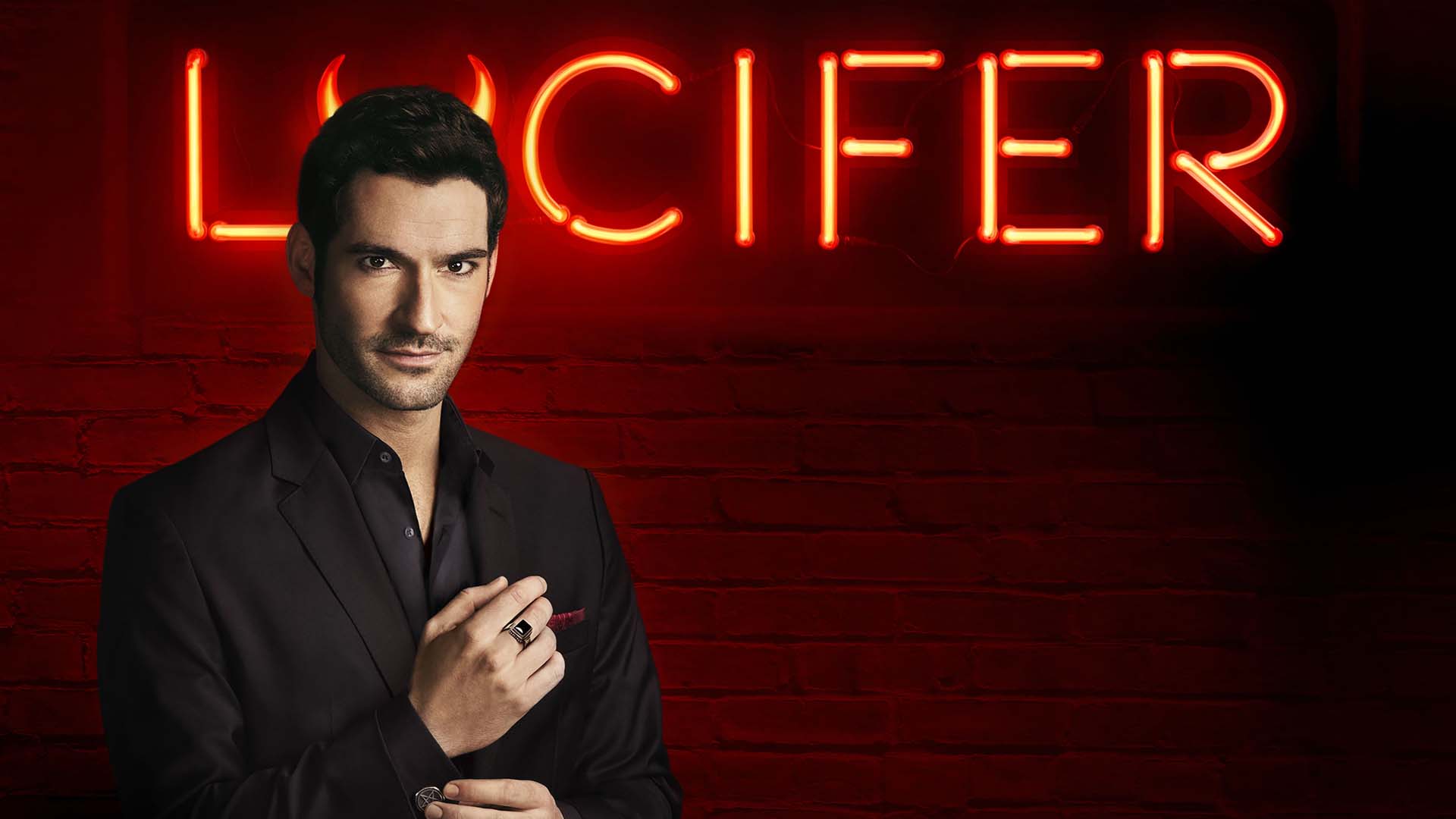
  3. Lucifer, Seasons 1 & 2 (Netflix) - Described as an American urban fantasy television series, it revolves around the story of Lucifer Morningstar (Tom Ellis), aka the Devil, who abandons Hell for a stint in Los Angeles where he runs a nightclub called Lux and becomes a consultant to the LADP. Yes, that's ridiculous and it is glib and flashy - apparently based on a character in the comic book series The Sandman. It has elements of comic book conversions about it - lots of sidekicks and pointless characters, most of whom are one-dimensional, with the possible exception of Lesley-Anne Brandt who plays Lucifer's ass-kicking demon ally, Mazikeen. It's worth watching for the way Tom Ellis delivers his narcissistic dialogue with such delight - he is one sexy little devil.
  4. National Treasure (Channel 4/ ABC iview) - The four-part 2016 British drama written by BAFTA-award-winning writer, Jack Thorne, is inspired by Operation Yewtree, a police operation begun in 2012 that resulted in the prosecution of a number of veteran TV performers. One such veteran TV performer is Paul Finchley, played by Robbie Coltrane, a once-successful comedian of the 1980s and early 1990s, now hosting a TV quiz show. When he is accused of raping several young women in the early 1990s, he fights to clear his name with the help of his former comedy partner and current star, Sir Karl Jenkins (Tim McInnery), while trying to explain his actions to his wife (Julie Walters) and daughter (Andrea Riseborough). It's unpleasant at times but very well written and acted. 
  5. Tin Star, Season Three (Sky Atlantic/ SBS On Demand) - The wildly dysfunctional Worth family are back in Liverpool, making a list and checking it twice. I have really come to care for these characters over the past few series. Even if their actions are morally questionable (i.e. killing people is never a good thing), they are disarmingly charming, and no one does cheeky criminal banter quite like Tim Roth. But three season are enough, and judging from the unequivocal ending, I think we all know that.

Friday, 12 February 2021

COVID-19 Friday Five: Anxiety Dreams


I'm having trouble sleeping. When I do sleep I have anxiety dreams. I have lived with anxiety for a long time and, as I grow to understand it, probably even longer than I first thought. It comes - resulting in panic attacks at its most extreme - and goes (although it never goes completely), and most of the time I try to externalise it and can lessen its harmful effects that way. I know I am not alone and that a lot of people have anxiety (approximately 18% according to a recent survey, although only about a third of those seek professional treatment).

I also know that COVID-19 has led to an understandable increase in anxiety and feelings of helplessness, many of which manifest in dreams.  A research paper published in Scientific American found that 37% of people had 'pandemic dreams', many of them marked by themes of insufficiently completing tasks and being threatened by others. Here's an example of one of mine.

I was in a very quiet (English-looking) pub with a group of Aussie theatre friends. I had taken them there to introduce them to 'my other community' (although I don't know where it was and I didn't recognise any of the other patrons). I was trying to get a round in with the help of another person, but each time we thought we had ordered the correct number of drinks, someone else walked in and we had to get one for them too - it took so long to process the order that some people had finished theirs before we had even sat down, so we thought we had to get them another one. 

By the time I finally sat down at the table I realised I didn't have a pint and, although I really wanted one, I couldn't be bothered to go through all the rigmarole again, and so when my friend noticed I hadn't got a drink, I said it was okay and that I didn't really want one anyway, which I did. Everyone else was talking amongst themselves and laughing at something that I hadn't heard, and no one involved me in the conversation. I knew that there were some people missing whom I really wanted to be there, and that they would have made me feel better if they were around, but as they weren't, I was going to have to deal with it myself. 

I nonchalantly got up to go and look at a picture on the wall, and I realised it was actually a jigsaw puzzle when it all fell apart in front of me. The pieces were tiny, but I thought I had to try and put it all back together before anyone noticed - there was a spare table so I scooped all the tiny pieces on to it and frantically started to reassemble it, although the light in the pub was dimming and I was finding it really hard to see the picture. 


A group of people walked in (some of whom I recognised) and asked if they could use this table because they needed to have their meeting. I tried to stall for time by asking them what their committee was, and regretted it instantly when they told me they were the Committee Against Colour-and-Gender-Blind Casting (CACAGBC). The rest of the pub fell silent and all I was afraid it was all going to kick off and somehow it would all be my fault... and they'd notice I'd wrecked their puzzle picture. 

I woke up sweating in fear and gasping for breath. It took a while to calm down and convince myself that I hadn't broken or destroyed anything, from inanimate objects (such as the jigsaw puzzle) to friendships (particularly among my theatre community). I am still tired, emotional and a little bit nauseous. I know this may sound ridiculous to some, but these things affect me on a daily basis. While I cannot stop these dreams, I can identify what is bothering me in them - thoughts and feelings which I try to repress in my waking hours.

5 Anxiety Issues in My Dreams:
  • Feeling responsible for things which are beyond my control
  • Stress of trying to plan something within shifting and uncertain parameters
  • Feelings of isolation - trying to reconcile different aspects of my life
  • Feeling overlooked and excluded but trying to pretend it doesn't bother me
  • Wanting to 'return' to a time and place but not knowing when I will be able to get there and afraid that things will have changed so much that I won't recognise anyone when I do

Friday, 6 November 2020

COVID 19 Friday Five: Even More ISO TV

I would watch Keeley Hawes in anything; so would Richard Madden in Bodyguard
As we have continued our strange year, I have been watching TV series in groups; trying to mix up the comedy, tragedy, period drama and police procedural. This is a snapshot of some of that.

5 TV Shows Recently Watched:
  1. Bodyguard (7plus) - I think Keeley Hawes is excellent and will happily watch her in anything from Life on Mars or Line of Duty to The Missing or The Durrells, so when I saw she had a starring role in a British police political thriller, I wasn't going to miss it. The Jed Mercurio-written drama has garnered rave reviews and high ratings from critics and viewers alike. Hawes is Julia Montague, the Home Secretary battling corrupt politicians, international terrorism and secret schemes to overthrow the government. Richard Madden is David Budd, the special protection officer who is charged with keeping her safe, but he has issues of his own, including PTSD from Afghanistan, burning resentment and a tendency towards anger. Nothing is as apparent as it seems, and story arcs are not always concluded in conventional ways - sometimes irritatingly so - but it is both bright and dark, and ultimately binge-worthy.
  2. Dracula (BBC One and Netflix) - sexy and hysterical; the three-part series is as if three different script-writers and directors had a go at bringing together a story. In truth, the drama-horror series was developed and written by Mark Gatiss and Steven Moffat, but there is indeed a different director for each installment (Jonny Campbell; Damon Thomas; Paul McGuigan). We follow Dracula (Claes Bang) from his origins in Eastern Europe to his battles with Van Helsing (Dolly Wells) and her descendants. It's all slick and sensual, but the middle episode, confined to a boat with a claustrophobic sense of impending doom and psychological terror, is my clear favourite.
  3. Sex Education (Netflix) - We binged two whole seasons of this show one wet weekend, and I'm still trying to work out why I was so invested in watching a series about teenagers and their hormones. Forays into adulthood are fraught with angst and we all remember our own with less than fondness, so to watch others deal with feelings, emotions and sexual expectations is probably better than having to relive our own experiences. Asa Butterfield stars as an insecure young lad at a highly progressive high school doling out advice he has gleaned from his sex therapist mother, Gillian Anderson, who has her own unresolved relationship conflicts. Although it is a British series (created by Laurie Nunn; a variety of British accents; filmed in Wales), the aesthetic is highly mixed with an American-style high school and education system, but beautiful British scenery and sensitivity. The time period in which it is set is also deliberately disorientating with many modern references, but fashion, decor and bicycles from the 80s. It's an intriguing and generous mash-up; sort of like The Breakfast Club meets Gregory's Girl. Strangely recommended.
  4. Michael Sheen and David Tennant in the lockdown drama for our times

  5. Staged (ABC iview) - And now, for our times, this is a lock-down comedy about actors who desperately want to act, but the theatres are closed, so they take out their frustrations and their theatrical rivalries over Zoom meetings. David Tennant and Michael Sheen play hyper-real versions of themselves which are equally irritating and fabulous. The six episodes are only fifteen minutes long (the perfect length for a Zoom call) and prove that you can pack a lot in if you know what you are doing. The pair were due to star in a production of Six Characters in Search of an Author on the West End but the pandemic has put paid to that. Not wanting to let this opportunity slip through his fingers, their director Simon Evans (who also wrote the script) attempts to get them to rehearse over the internet, if only they can overcome their distractions, boredom and egos to read the first scene. There are some brilliant cameo appearances from Samuel L. Jackson, Nina Sosanya, Adrian Lester and Dame Judi Dench, and evidence-based research (Him Outdoors and me) proves this is entertaining fare for theatre and non-theatre types alike.
  6.  Vanity Fair (BBC First) - I love the novel; I love the character of Becky Sharp; and I love this adaptation by writer Gwyneth Hughes. Olivia Cooke is bold and beguiling (unlike many insipid heroines of period drama) and all her relationships, with Amelia (Claudia Jessie), Jos (David Fynn), George (Charlie Rowe), Rawdon (Tom Bateman), Martha (Sian Clifford), Sir Pitt (Martin Clunes), and Aunt Matilda (Frances de la Tour) are honest and brilliantly played. It's colourful and gaudy and breathtakingly bedazzling. The fact that each episode is opened by a top-hatted Michael Palin orchestrating the carousel at the titular carnival can't do any harm either.
Olivia Cooke is brilliant as Becky Sharp in Vanity Fair

Friday, 17 July 2020

COVID 19 Friday Five: More ISO TV

The A Word, season one

Following a previous post, I am still watching far more television that I normally would. But, hey, I think we've all agreed that nothing is 'normal' anymore.
 
5 More COVID-Friendly TV Series:
  1. The A Word (BBC First) - With a punk, post-punk, new wave and indie classic soundtrack of the best music evs (download it from Spotify: it's six hours long) and the stunning backdrop of Lake District fells (often with Christopher Eccleston running over them), this drama looks and sounds exceptional. The titular A word is autism as a family comes to the realisation that their son has it, how they incorporate it into their daily lives, and how the wider community accepts it. It's a rather air-brushed version of reality (no one is mean or petty) but the dialogue (Peter Bowker) and character dynamics are superb. There are currently three seasons (2016; 2017; 2020) and I'm bereft now that I have watched them all.
  2. The Capture (ABC iview) - In a society where we rely on surveillance to protect us, it is terrifying to think that it may be easily manipulated. This tense British crime drama written by Ben Chanan and starring Holliday Granger and Callum Turner is gripping, intelligent and startlingly contemporary. With a tagline of 'Seeing is Deceiving', it is the homage to Orwell's Big Brother that we've been waiting for. 
  3. Dublin Murders (SBS On Demand) - A crime drama that follows in the footsteps of Broadchurch or Shetland with a mardy moodiness, intriguing writing, and enough flashbacks and plot twists to keep things interesting. Sarah Phelps has adapted Tana French's best-selling novels to a binge-worthy small screen format. However, none of the characters are at all sympathetic, and when one actor/character pretends to be someone else, viewers with prosopagnosia may lose the plot. 
  4. The New Pope (SBS On Demand) - If you thought The Young Pope was bonkers (and you'd be right), wait until you see The New Pope. With the incumbent lying in a coma (providing several cameo opportunities for Jude Law), it is up to the cardinals to choose a new leader. After a few false starts they settle on John Malkovich who plays his part with delicious inscrutability. The serious side explores the dichotomy between those who think the Catholic Church represents compassion, and those who fear it has been irrevocably corrupted by sexual and financial scandals. Meanwhile, the throbbing soundtrack and camp, raunchy undertones entertain with twenty-first century sentiment. 
  5. Sanditon (BBC First) - Andrew Davies has adapted Jane Austen's unfinished novel (her material covers half of the first episode) into a period drama which will delight Janeites and Regency fans alike. There is a typical predictable romance between an insipid female and a dull and pompous male, but all the subplots and actors are excellent. We have the injustice of female marital imprisonment, an employer's legal and moral responsibilities to their employees, a matter of race and preconception, and a rotten pineapple. All of these are framed by charming set pieces such as a picnic among the bluebells, a rowing regatta on the river or a cricket match on the beach. And Anne Reid takes over from Dame Maggie Smith as the indomitable dowager.

Friday, 5 June 2020

COVID-19 Friday Five: Sometimes When we Touch

Chester and me

Touch is natural. It is healing. It is how we calm, reassure and express our affection. For the people who like to hug, this has been a tough few months. Even for those who don't, we have had to modify our behaviour and attempt to alter our instincts. Thank goodness we are still allowed to pet animals and cuddle the cat.

A couple of weeks ago I was out walking when I came across a woman who had sprained her ankle. Others were with her, assisting, and we stopped to check she was okay. Someone was crouching beside her, placing their arm around her shoulders in a universal gesture of support.  She and her walking companion had a phone between them them and they were able to call for help.

The first responder on the phone was asking lots of questions and giving medical advice (they were on speaker-phone so we could all hear) and at the end of the call the person stated that they had to ask some COVID-19 questions and began to ask whether the patient had recently been overseas or come into contact with anyone who had, or had symptoms or had been in contact with anyone who had symptoms. 

At that moment, the assistant looked shocked - "I hadn't even thought of that" he said. Of course not, because as a decent human being, our first reaction when we come across an injured person (or animal) is to help. And that help often expresses itself through contact. It's who we are. And, while the current medical guidelines suggest that we don't for our own health, it is really difficult to overcome that instinct. 

Physical proximity of the kind about which we are now warned, also indicated trust. Some sources suggest that the history of the handshake dates back to the 5th century B.C. in Greece, and was a symbol of peace, showing that neither person was carrying a weapon. Similarly, one of the theories about why we clink glasses before drinking is also about trust and intimacy. Back in the days when poisoning a foe's drink was a convenient way to kill him off, it was believed that if glasses were filled to the brim and clinked hard, a bit of liquid from each glass would slop into the other. Mixing drinks and then taking a sip was, therefore, a gesture that you trusted your drinking partner (at least not to murder you). 


Whereas these are extreme measures, it would be a shame if our lack of touch led to a lack of trust. These times make me really conscious of the physicality of our communications.

5 Touch-related common expressions:
  1. Get in touch/ keep in touch/ lose touch
  2. Lend a (helping) hand
  3. Welcome with open arms
  4. Reach out 
  5. Give a hand up/ hand out
And this is my performance of Mrs Midas by Carol Ann Duffy; a poem that explores the effect of the tactile. Enjoy!


Friday, 15 May 2020

COVID-19 Friday Five: ISO TV

The Durrells Third Series
While I cannot watch live sport or live theatre, I have had to find other ways to entertain myself. As well as listening to a lot of podcasts and reading a lot of books, I have also been watching a lot of TV series. I've been finding it hard to concentrate of late so my usual art-house films and documentaries are on hold, and I don't really like reality TV. I haven't got Netflix or Stan so these are all on free-to-air services.

Harlots Second Series
5 COVID-Friendly TV Series:
  1. The Durrells (BBC First) - practically the definition of comfort TV; the adventures of a dysfunctional but charming family led by the matriarch played by Keeley Hawes, and set on the idyllic island of Corfu just before the outbreak of WWII 
  2. Friday Night Dinner (ABC iview) - brothers Adam and Jonny Goodman, siblings in an eccentric Jewish family, return home each week for a free meal and to deal with their wonderful parents (Tamsin Greig; Paul Ritter) and their weird neighbour (Mark Heap) - there are six series of this spanning nine years, and I've only just found it! 
  3. Harlots (SBS On Demand) - strong roles for women (excellent portrayals from Samantha Morton and Lesley Manville, although the less said about Liv Tyler; the better) as the feuding brothel keepers spit insults at each other in an almost obscenely enjoyable period drama  
  4. No Offence (ABC iview) - UK police drama set in Manchester, and in which the three main leads are women with all the ballsy dialogue and attitude you would expect from creator Paul Abbott - also, coincidentally, starring Paul Ritter 
  5. Stateless (ABC iview) - excellent Aussie drama with great acting (including Cate Blanchett, Yvonne Strahovski, Asher Keddie and Marta Dusseldorp) and directing but, set around the world of detention camps and illegal immigration, it can be a bit hard to watch in places 

Friday, 1 May 2020

COVID-19 Friday Five: Podcast Listening


I have a colleague who became a friend, who used to start many conversations of a morning with, "I was listening to this podcast..." and she would proceed to regale us with an 'interesting fact'. Obviously, the idea of whether something is interesting or not is highly subjective, so we decided in the office that we would be the judge of the fascinating factor of her shared information. Her name is Lyn so we would ask her if it was really interesting, or just 'lynteresting'. I miss seeing her in the office, so in her honour, here are five podcasts to which I have been listening a lot in the coronaverse (this is in addition to my usual favourites).


5 Current Podcasts:
  1. You're Dead to Me (BBC Radio 4) - "The history podcast for people who don’t like history… and those who do. Greg Jenner brings together the best names in comedy and history to learn and laugh about the past." Recent episodes have seen the Horrible Histories author and historical consultant tackle topics such as Eleanor of Aquitaine, The History of Chocolate and Neanderthals (Tim Minchin was the featured comedian on that one).
  2. Is it Just Me (acast) - "Each week Jo Elvin, James Williams and a celebrity guest debate the funniest, weirdest and most pressing dilemmas: from social media to mental health, to, erm… bra washing. Are you alone in your strong opinions on trivial stuff? Tune in and find out!" Guests have included Ben Miller, Claudia Winkleman, Marcus Wareing and Lisa Snowdon.
  3. The Infinite Monkey Cage (BBC Radio 4) - "Witty, irreverent look at the world through scientists' eyes. With Brian Cox and Robin Ince." In the last few weeks I have both learned things and been entertained by discussions on quantum worlds, coral reefs, fire, and conspiracy theories - among the featured guests on these podcasts, comedians (Shazia Mirza; Marcus Brigstocke; Ed Byrne; Katy Brand) sit alongside marine biologists, physicists, psychologists, and forensic chemists. 
  4. Ladies, We Need to Talk (ABC) - "a podcast for women, by women, that isn’t afraid to dive head first into the tricky topics we often avoid talking about. Join host Yumi Stynes as she tears open the sealed section on life. With sensitivity, personal stories, and serious smarts, this is for women who feel the squeeze between work, their private life, and their pelvic floor." This podcast addresses a variety of issues about which you might have wanted to know but been afraid to ask: erotic literature; toxic mums; body image; coronavirus anxiety; how to make friends as an adult, to name but five.
  5. Evil Genius with Russell Kane (BBC Radio 4) - "It’s good, bad, ugly - and very very funny. Changing the way we see heroes and villains in history." No (deceased) subject is safe from Russell Kane and his panel of guests as he detonates 'fact bombs' and forces them to make the reductive choice of evil or genius about icons from Emmeline Pankhurst to Pablo Picasso; Winston Churchill to Joan Crawford; Enid Blyton to Albert Einstein. You thought you knew them? Think again. 

Wednesday, 15 April 2020

COVID-19: We Aren't Gathered Here Together


Last weekend it was Easter. I am a 'wishy-washy Anglican' (not actually my words, but I have been called thus) and only really attend Church at the major religious festivals - Christmas, Easter and Whitsun being the big dates in my calendar. Of course, this year I could not go to Church - no one can - and I missed it. I missed singing the songs and saying the prayers; I missed turning to my fellow members of the congregation and wishing them peace and good will. And I missed them doing the same for me. I missed that communal feeling.

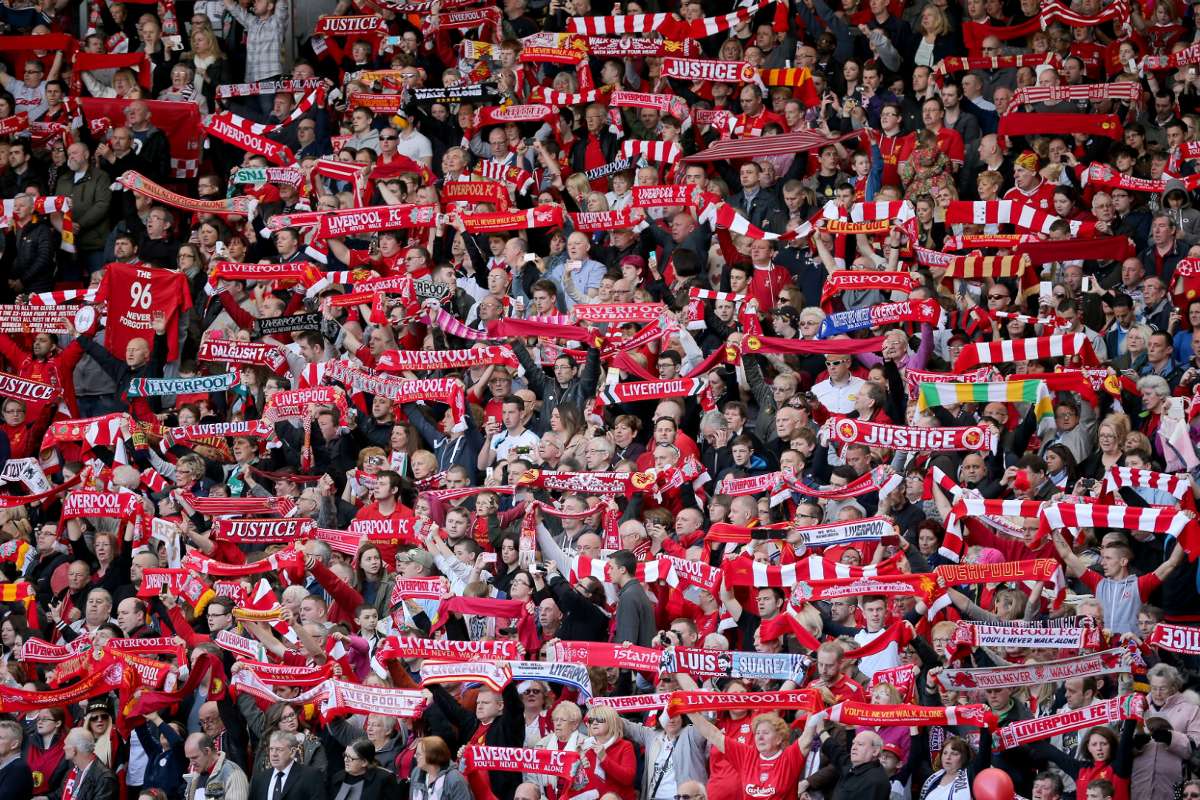
For the same reason, I love watching sports and theatre; I enjoy a shared experience. Knowing that you feel the same thing as others is a wonderful thing. When I breathe in the hallowed turf of Anfield, it is a spiritual moment; all the home players and supporters know what I mean - we stand and sing together and no one cares how out of tune we are; we are in time. Our time. Any true fan will tell you the same (although they will worship at a different shrine). 


When the curtain raises on the stage and everyone takes a collective breath, we are all waiting to see what unfolds together. This moment will never be repeated - every performance is different - and we know we are privileged to witness it. And when the curtain falls and people applaud, they do it together. I have been part of a cast that received a standing ovation. It was magical and unforgettable. We did it for the audience and the audience appreciated us; and we were one. It was incredible.

I like listening to a band, but I prefer going to a gig or a festival. I don't need to then hear this gig again; I'm not a fan of live albums because generally the sound quality isn't as good, and the whole point is the being there. I am pleased the National Theatre, The Globe and the RSC are screening some of their performances so we can all enjoy things that we couldn't otherwise see - but we are still watching them alone. The roar of the greasepaint and the smell of the crowd is missing. (Yes, that was deliberate.)

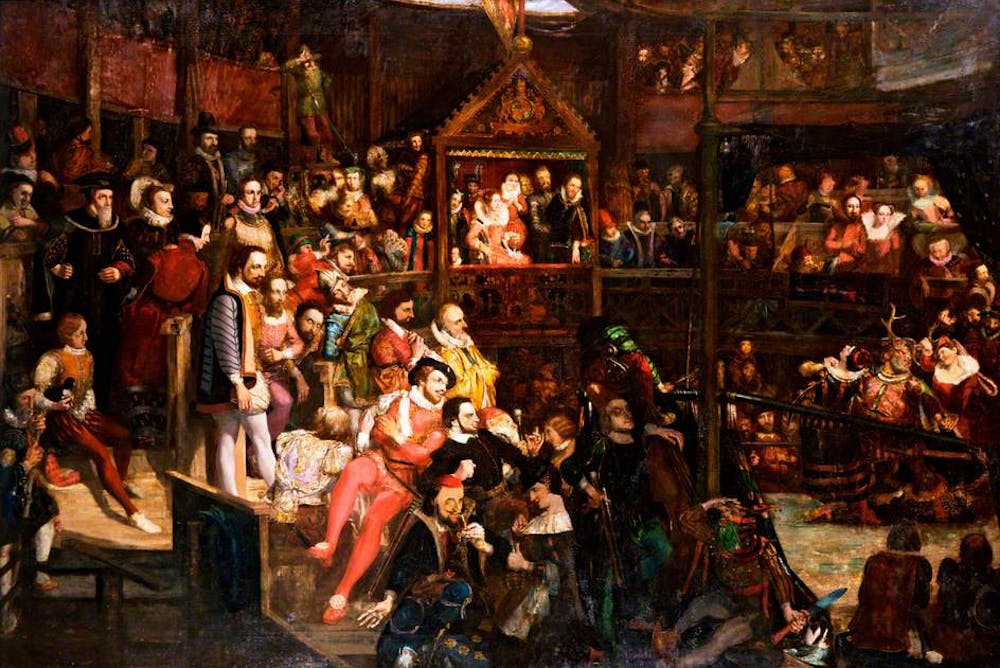
'Queen Elizabeth viewing the performance of The Merry Wives of Windsor, at the Globe in Merrie England' by David Scott
I like a drink as much as the next person. But there's a reason I go to pubs and clubs, even if the beer is often ridiculously overpriced. I like the atmosphere of sharing things with like-minded folk. Restaurants and cafes are better when they're busy (not cramped and heaving full, but with a low-level hum of noise). Silence is good when it is shared. Have you had a moment's silence in public? Then you know what I mean: there is nothing more moving than a collective memorial. 

Over the last few weeks I have held many on-line conversations and 'attended' conferences and meetings; I have done group trivia quizzes and play readings; I have watched re-runs of football matches and 'live' theatre. But I have missed the physicality. I will stay at home, and I will practice the physical distancing, because it saves lives and that's what matters. But when all this is over, I will find my flock and I will join them again, and we will sing our songs. 

Because it may be elitist; it may be exclusive; but being there is everything.


Tuesday, 7 April 2020

COVID-19: Keep Your Distance


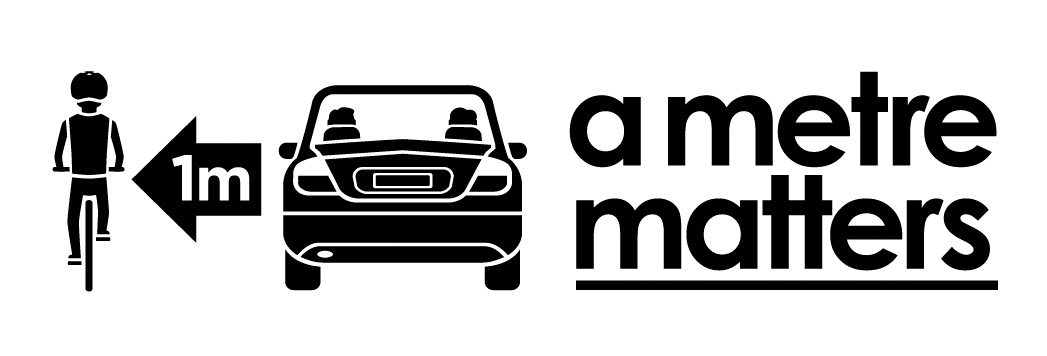
Cyclists have long known that a metre matters. Launched in 2009, the Amy Gillett Foundation's A Metre Matters campaign focuses on advising drivers how to pass cyclists safely. The research and evidence shows that when passing cyclists drivers need to allow a minimum passing distance of one metre (or 1.5 metres in speed zones over 60km) to reduce the number of cyclist fatalities, Over the past few years this recommendation has become law in several Australian states. 

Due to COVID-19 and the fear of infection, in Australia we are meant to be practicing physical distancing, which includes keeping 1.5m between you and another person to help to stop the spread of the virus. In the U.K., this recommended distance is two metres - I'm not sure who calculates this distance and on what exact science it is based. But we get the picture; back off buddy. 


Whereas people are pretty good at observing these measures in shops and work spaces, I have noticed they are not so compliant when it comes to exercising. I have a handful of regular routes that I walk, jog or cycle four-five times week. On my usual walk up Mt Painter I see maybe a couple of other people; last week I saw 49. The same sort of figures are true when jogging around Umbagong Park or cycling trails in Black Mountain. Great. I'm all for people getting out and about to get their exercise, and this is a wonderful country with space for everyone to share. 

But, can we still please adhere to the physical distancing guidelines? I know many walkers wear earphones so if I am coming up behind them, I feel it is up to me to move out the way. If a cyclist is approaching from behind and really feels that they can't move out of the way, then they should alert the person in front to their presence (in the ACT it is mandatory for a bike to have 'a warning device such as a bell'), unlike the person on the e-bike (don't get me started) who overtook me while I was jogging within a foot with no previous indication. 


I don't care who comes here more regularly (it's me), but surely people must realise that we can't share the path in the same way as we used to, and be prepared to give way. I would expect, what with this flurry of exercise being a new thing for some and people not used to the etiquette yet, that when it comes to a case of who blinks/ moves out the way first, it would be about 50/50. Remember that walk I mentioned last week with the 49 fellow folk out enjoying the fresh air and the exercise? Guess how many moved out of my way rather than holding their line on the narrow path. One would expect approximately 20, right? None. Not one person thought they should yield. I felt like I was fighting a battle and losing every single time. I know it's not about winners and losers, but that was ridiculous. It's about compromise, surely? 

And another thing, we are still allowed to smile at each other and say hello. You can be social while maintaining physical distance. As far as I am aware coronavirus is not transmitted through eye contact. So, if you're new to this getting out for a walk/ run/ cycle malarkey, welcome. And please play nicely. 

Saturday, 28 March 2020

COVID-19: Under Pressure

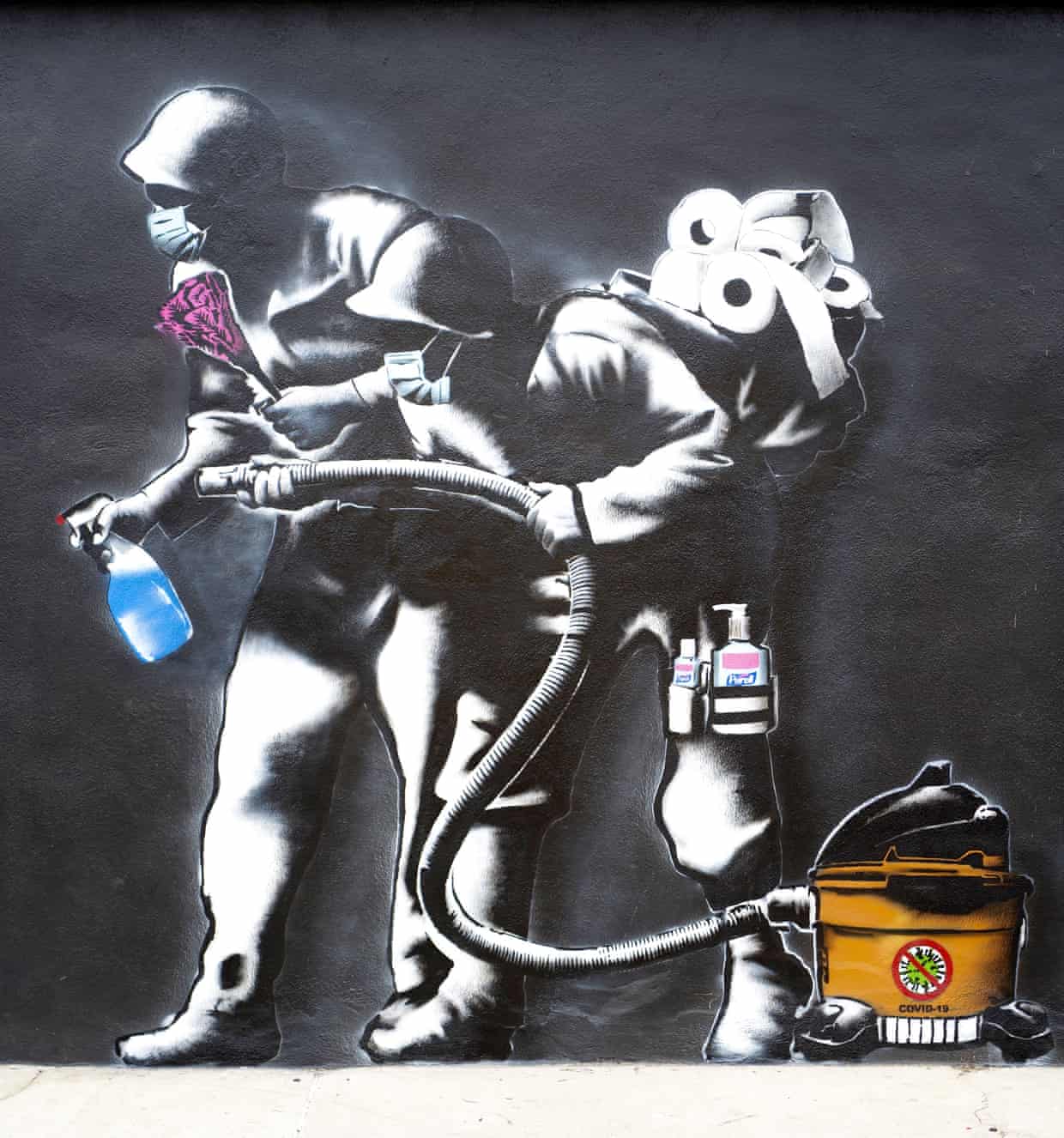
Street art by @hijackart
There are posts doing the rounds on social media of how this enforced isolation might be good for some of us. People are proposing that we could take this opportunity to create a new work or learn a new skill. I have seen suggestions that people could paint a picture, learn a language, master an instrument, take up horticulture, or improve their culinary skills. Several well-meaning people have asked if this is not the perfect time for me to write my second novel.

The short answer is 'no'.

My fist novel took me about 25 years to write. A lot of that was research, and a lot of it was reflection. To do this I need to feel safe and have a routine; an acknowledgment that if things don't go well, or if I unearth something painful (believe me, memories of death, bombs, muggings and other trauma are not things I deal with easily), I will be able to mentally and emotionally decompress in my chosen environment (a walk in the hills; a swim in the ocean; a pint or two in the pub with my friends). This is clearly not the case at present.

I cannot speak for everyone - there are far too many people purporting to do that at present for my liking - so I shall speak only for myself. The current situation is causing me extreme anxiety. I cannot sleep. I am having frequent panic attacks which cause shortness of breath and nausea. I have a constant headache and am permanently fatigued.  

I worry. I worry about my health and that of my husband (who, performing an essential service, must leave the house every day). I worry about my family - none of them live in the same country as me and I'm not sure when (and in some cases if) I will see them again. I worry about my friends, in different countries around the world with different governments taking different precautionary measures (or not, in some cases). I worry about my community - if I don't support it, will there be one when all this is over?  I worry about losing my job. If there is no community and there is no work for me to do, how can I continue; how can I support anyone else? I worry that I am not being a good enough wife, daughter, sister, friend, neighbour, citizen, employee... when did this turn into a competition?

I try not to think too deeply about anything because I will cry, so I am currently existing on a superficial level, or a submerged one. I do not feel safe. I do not feel secure. I know I am lucky to have a house with a garden and access to fresh air and open spaces. I know others are in a far worse position than me. Anyone who has ever suffered with depression will tell you that this doesn't necessarily help. It makes me feel selfish for having these concerns, and that makes me feel like a bad person. It's a very dark vortex into which I do not want to be drawn.

So, no, do not expect anything creative from me at this time. My imagination is not in a good space. There is too much pressure to perform - and no good performances come from fear. 

Tuesday, 24 March 2020

COVID-19: Dreaming is Free


Stories are my saviour. Whether told on the page, stage, screen (large or small) or radio, they inspire, enlighten, challenge and comfort me. It may not be the best idea to be watching World on Fire at the moment, but last night we watched the final episode of the first series. The series is set during the Second World War in France, Germany, Poland and the U.K. and it follows several families and characters from 1939-1940. It's tough to watch at times (and there seem to be a few anachronisms in terms of speech and accent), but it is well acted and sufficiently tense and dramatic to keep me involved.

I am tempted to see parallels with our current global situation, and slightly reassured that I 'mustn't grumble: things could be worse'. No one is shooting at me, or trying to bomb me, or threatening to hang me because I am the 'wrong' race, colour, ability, sexuality or political persuasion. Not yet, anyway: I don't live in America - cheap jibe, sorry. But there is a preponderance of panic buying, propaganda, misinformation, uncertainty and an extremely rapid pace of change. Life (and death) goes on in altered circumstances; people still get born; get married; fall in love; fall out... not necessarily in that order. And like World War II, those in the midst of it have no idea of when and how it will finish. Trust me, I've just seen the last episode of World on Fire and there is no satisfying sense of closure - sorry if that's a spoiler.

Our COVID-19 situation also sees leadership, and the lack thereof. Boris has been chewing his way through speeches by Churchill and Plato and now emerges blinking from his shabby chrysalis as a somewhat unlikely statesman; Prince-Hal-like, the foppish fool has sobered up to face the future. Jacinda is calm and firm; just and fair, dealing with a hideous situation with sense and sensibility. Scotty is floundering about like a lumpfish in shallow water but out of its depth. Make some decisions; be bold and resolute; lead!

In Australia we are told that schools are 'pupil-free' but they remain open and no one is turned away. We are told that only essential services should remain open - yet many businesses have not been made to close, so people are still heading to the office, hoping for a gold star from the boss. We are not allowed to gather so theatres, cinemas, gyms, pubs, clubs and restaurants have been closed. Art galleries and museums are choosing to close. There is no statewide ban on beaches, although people are 'advised not go' - yep, we've all seen how well people are following those guidelines.

Hairdressers and beauty salons are still open - it's important to look good in your coffin, apparently - but no one will be there to see you. Churches and places of worship are closed except to very small gatherings; weddings and funerals are not allowed indoors except in small groups observing the one person per four square metres rule. I am a sporadic church-goer; my places of worship are hills and woods and the great outdoors. I worship a mixture of myth and religion - I would like to believe in a golden thread that we can follow out of this darkness into the light once more.

I do usually go to church at Christmas, Easter, and Whitsun, however: they are the significant touchstones of my faith. This year, I will not be attending live services, but I will be commemorating the occasion in my way. Many people are suggesting ways to occupy their time in isolation (although Australia has not moved to this yet, and people are still congregating in entirely unnecessary groups); one of my pass-times is cross-stitch. I have been stitching little Easter designs of baskets and bunny rabbits, surrounded by eggs and flowers.

All this is probably what informed my dream last night in which I was trying to stitch together a Polish fabric that had been destroyed by Germany. It was my duty to reconnect the border by unpicking the existing stitches and working them back into an unbroken line with a golden thread. I believe our dreams are important - not in a Freudian way, but because they are a coping mechanism in which the brain shuffles events and tries to impart some meaning. My bible is the bard, and I find words to fit every event in his plays and poetry. And so it is with dreams, which come to us in sleep:
"Sleep that knits up the ravell'd sleave of care,
The death of each day's life, sore labour's bath,
Balm of hurt minds, great nature's second course,
Chief nourisher in life's feast."
I know I have employed that quote before (it's one of my favourite, from one of my favourite plays), so here's something else that's been on my mind.