Showing posts with label writing. Show all posts

Friday, 19 February 2021

Friday Five: Autological Words

Drawing Hands by Maurits Cornelis Escher

Here's a question I like to ask in a pub conversation: What's your favourite autological word? If I were ever single, I would ask it of prospective partners (possibly assuring that I would remain single). The way one answers is revealing. To not have a favourite might imply indecision or inclusion: it might imply lack of knowledge of the subject, which is fine, but how one responds to lack of knowledge is telling. I'm curious about things - I like to learn. I hate to be lectured; so it would depend how the information is imparted as to whether or not I would be interested.

An autological word is one that describes itself. 

Five Favourite Autological Words:
  1. Word - it is what it says it is (as is noun)
  2. Unhyphenated - can't argue with that
  3. Pentasyllabic - pentasyllabic is a five-syllable word; it is itself pentasyllabic and, therefore, autological
  4. English - indeed it is
  5. Obfuscatory - it's not exactly straightforward

Monday, 9 November 2020

The Sting in the (Fairy) Tale: The Bee and the Orange Tree


The Bee and the Orange Tree by Melissa Ashley
Affirm Press
P. 362

Think ‘fairy tales’, and the Brothers Grimm and Charles Perrault are probably the names that spring to mind. What about Baroness Marie Catherine D’Aulnoy, the woman who coined the term ‘fairy tale’, and who published the very first one – The Isle of Happiness – in 1690? Probably less so. She burst onto the Parisian salon scene at age forty, a fully formed writer, and during the next decade, along with holding a salon in her home on Rue Saint-Benôit, she published thirteen books comprising novels, courtly histories, travel memoirs, two volumes of fairy tales and two sentimental pamphlets. Melissa Ashley is keen to reclaim women’s stories and make them as well recognised as those of their male counterparts, so she focuses this novel on the later years of Marie Catherine.

We are welcomed into the literary world of seventeenth-century France where writers tried out their stories and poems before a receptive audience at a salon and asked for their feedback. Marie Catherine encourages female authors and, “She had wanted to create a place where women might recite their works, rejecting the cruel satirising of female writers by famous men of letters – Molière, Boileau, Perrault. She felt it her duty to lay bare the dark and piquant potential of women unafraid of their own minds.” She advises one young protégé, “An author must be brave. You can say whatever you like in your writing. It’s your opportunity to reimagine the world as you would have it turn.”

She is justifiably proud of her tales, and enjoys creating stories of fabulous kingdoms, ageing monarchs and ambitious offspring; heroic quests; magnificent palaces; miniature worlds – many containing hidden messages of daring triumph. She is principally concerned with the plight of women and fears that marriage and children do not necessarily serve their best interests. The dichotomy of a woman needing protection yet seeking freedom is explored through the character of Angelina who leaves a convent to act as a companion to Marie Catherine. There are several anachronisms, and many other sentiments seem borrowed from our own age and grafted onto a previous time, such as gender fluidity and double standards, meritocracy and fashion influencers.

A couple of subplots feature the Affair of the Poisons and the public executions surrounding the incident at the court of Louis XIV, and Angelina’s father, who is estranged from Marie Catherine after a spell in the Bastille. The novel is written as though it expects to be read aloud, perhaps in one of the salons Marie Catherine conducts. The language is rich and the sounds of the words work well together with poetic assonance and alliteration. It builds drama and tension; then deflates it with a stroke of the pen. Catherine devotes herself so much to her art, that her language becomes that of physical creation, and her struggle with writer’s block is like a fairy-tale itself: “If it were her last act, she would again seduce the gods of story to toss their net of wonders at her feet, to strew their gifts before her, and out she would pluck one starfish, one mushroom, one invisible cloak, one prince dressed as a pauper, one naked king. Oh, she would take it all and rush, her apron lifted and bulging with treasure, back to her desk to make sense of the hoard.”

The Bee and the Orange Tree is instructional and Ashley has a clear message that she wants to impart, re-instating credit to female icons where it is due. At times the narrative is rambling and strays beyond its contemporary boundaries in its need to make satirical stings, but it can be forgiven because it is well-meaning and beautifully written.

Thursday, 10 September 2020

Get Orf My Land: The Shepherd's Life


The Shepherd's Life: A Tale of the Lake District by James Rebanks

Penguin

Pp. 287

Sheep are big business. Last month (August 2020) in Lanark, Scotland, a sheep called Double Diamond sold for a world-record sum of £367,500. James Rebanks knows that sheep are important. As a shepherd, he understands that farming and shepherding are crucial to the economy and the livelihood of many. He explains that this is hard work but that he loves it and enjoys the connection that he gets from the land. What he doesn’t seem to understand is how privileged he is and how many of the people he scorns would love to have been given his opportunities.

The Shepherd’s Life is not particularly well-written but Rebanks received an advance from an agent before he had written it. Although he appears to despise people who don’t do his work, they seem to be interested in him. He writes a sort of auto-biography, which also contains a lot of information about farming and a lot of assumptions about what non-farmers think of him and his industry. Many of his blunt and antiquated attitudes are irritating and arrogant, such as his inherent sexism and antipathy towards intellectuals, but the sections on sheep-farming itself are interesting and the most engaging.

As a child he followed his grandfather around the place knowing that he would inherit the farm because he is male. He has sisters, but it was “different for girls…their role is to leave and do something else to earn respect.” This knowledge of his purpose in life means that he feels ownership of the land. “We owned the earth. We’d been here forever. And we always would be. We would get battered from time to time, but we would endure and win.”

For him and his family, “our sense of belonging is all about participation. We belong because we are part of the work of this place.” And what if we can’t inherit a farm? Will we never ‘belong’? He dislikes Alfred Wainwright, Chris Bonnington and William Wordsworth because they’re ‘not from round here’ and so have no right to talk about ‘his’ land; he thinks climbers, poets, walkers and daydreamers are pointless, and that tourists are “minor irritants, like ants – they got in the way and they had strange ideas, but a little bit of bad weather and they’d be gone again to get on with stuff that mattered.”

The book itself is poorly written, grammatically clunky and very repetitive; a lot of sections start out telling us what someone is doing in the present tense, as he tries to set a basic scene: “My father is wielding a white-handled meat saw…” “My mother is sitting on a wooden chair in our barn…” “We are working in the sheep pens.” The use of generic pronouns is also problematic, for example, he writes of his grandfather, “He had a rough whiskery face when you kissed him goodnight.” This begs the questions, when did I kiss him, and what was his face like when I didn’t? He acknowledges, “We are, I guess, all of us, built out of stories” and yet, he doesn’t narrate his own very well.

He became inspired by books when he picked up a copy of A Shepherd’s Life by W.H. Hudson (the story of a shepherd called Caleb Bawcombe) and says he admires “the brilliant plain storytelling, no messing about”. It is predictable when he talks of reading; it is of male authors – Camus, Salinger, A.J.P. Taylor, Orwell – and that his biggest inspiration is the hyper-masculine Hemingway. After criticising the poets, he tries to write his own, and I certainly hope he’s a better sheep farmer.


He is at his best when writing about the sheep, the dogs, and the cyclical nature of farming. When told without prejudice, these snippets are interesting and engaging, including the shepherding chores of lambing, making hay, shearing (“It is a carefully choreographed thing in which the sheep is turned, shuffled and rolled in clever purposeful ways”), dipping, and training sheepdogs.

He divides the book into four seasons, as everything they do is connected to the weather and the natural cycle. In many respects, shepherding and farming have not changed in centuries. “You could bring a Viking man to stand on our fell with me and he would understand what we were doing and the basic pattern of our farming year. The timing of each task varies depending on the different valleys and farms. Things are driven by the seasons and necessity, not by our will.”

If you remove the tractors and the machinery, the farming practices are ancient, and it upsets him that these traditions, skills and knowledge are being lost or dismissed. He commends the ‘old ways’ and wants future generations to see the reality of farming and agriculture. His book is almost a call to arms to protect the natural mechanics and importance of farming.

James Rebanks is a tough person to like – he has some interesting things to say about sheep and the farming of them in the Lakeland fells, but he tells them in a didactic and hectoring tone. If he could climb down from his privileged perch, his message about sustainable farming might be easier to hear.

Friday, 4 September 2020

Friday Five: Inverse Positivity

One of my favourite words is discombobulated. The sound of the perfect match of vowels and consonants goes some way to making up for the slightly weird effect of the feeling. It led me to wonder if there is such a thing as combobulated, and I was interested to learn that there isn't. Similarly, one can be overwhelmed or underwhelmed, but never simply whelmed (although the word 'whelmen' is a Middle English term meaning to turn over.) In an article from 1953 entitled The Mystery of the Vanished Positive, J.H. Parker wrote about this phenomenon known as unpaired words or absent antonyms.

One of the ways in which these words are created is through 'back-formation' in which a new word is created by removing affixes. For example, the noun 'resurrection' was borrowed from Latin and then the verb 'resurrect' made its way into the language hundreds of years later by removing the '-ion' suffix. Many English words are formed this way but because they may sound odd, they are often used to humorous effect. 

'Far from being quite gruntled'

Novelist, humourist and all-round wit, P.G. Wodehouse, made good use of this when he writes in The Code of The Woosters, "I could see that, if not actually disgruntled, he was far from being quite gruntled." In Scrubs, Turk tells another character, "I don't disdain you! It's quite the opposite - I dain you!"

One of my favourites is the word 'ruthless'. One expects there to be a corresponding 'ruth-full', but it appears not. I like it particularly because one of the characters in Arthur Ransome's Swallows and Amazons, Ruth Blackett, captain of the Amazon, changes her name to Nancy because she wants to be a pirate and her Uncle Jim tells her that pirates are ruthless. 

Swallows and Amazons in which pirates are ruthless

5 Unpaired Words:

  1. Disgusting - from Latin gustare, meaning to taste; the antonym, desgouster, appeared in Old French, but there is no English reverse equivalent. Although wind can be 'gusting', that comes from a different root altogether, gustr, being the Old Norse word for 'cold blast of wind' (circa 1580)
  2. Gormless - Once again Old Norse used the word gaumr meaning care or heed. In dialect English, the word gome is found to mean notice or understanding (circa 1200). In the 18th Century there is evidence of the use of gaumless or gawmless to mean wanting sense/ stupid. One cannot generally be gorm-full
  3. Feckless - Clearly meaning lacking in feck, but what is feck? It is a Scots/ Northern English corruption of the Middle English word effect, so feckless is synonymous with effective. Unfortunately the use of 'feckful' as a substitute for effective is no longer common
  4. Inept - Similarly, we rarely describe someone as being ept, due to a linguistic quirk. The word inept comes from the Latin root in + aptus (not + able/fit). Whereas English kept both inapt and inept, the language decided to only retain apt and ditch ept. Shame.
  5. Nonchalant - Sadly, there is no word 'chalant' in English. The word 'nonchalant' derives from the Old French word nonchaloir meaning to disregard (non + chaloir = not + to concern) Therefore the opposite of nonchalant is concerned or interested, not chalant.

The English language is beautiful and rich and multicultural. I love it, and I love writing and playing games with it. This is a poem by the aforementioned J.H. Parker being comically feckful with absent antonyms.

A Very Descript Man

I am such a dolent man,
I eptly work each day;
My acts are all becilic,
I've just ane things to say.

My nerves are strung, my hair is kempt,
I'm gusting and I'm span:
I look with dain on everyone
And am a pudent man.

I travel cognito and make
A delible impression:
I overcome a slight chalance,
With gruntled self-possession.

My dignation would be great
If I should digent be:
I trust my vagance will bring
An astrous life for me.

Sunday, 3 May 2020

What is Truth? - True History of the Kelly Gang


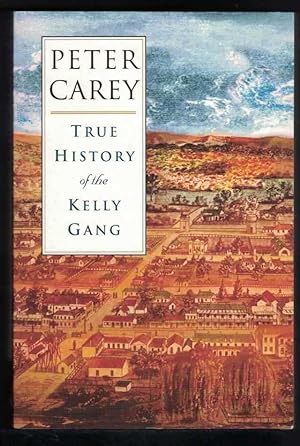
True History of the Kelly Gang by Peter Carey
University of Queensland Press
Pp. 400

Peter Carey is often touted as Australia’s literary representative, so his take on one of its biggest questionable icons is bound to be interesting and exciting. The book purports to be written by Ned Kelly in thirteen parcels of stained and dog-eared papers, and it includes excerpts from newspapers and transcripts of conversations. Towards the end of the novel, the printer, Thomas Curnow, purportedly says, “What is it about us Australians, eh? What is wrong with us? Do we not have a Jefferson? A Disraeli? Might not we find someone better to admire than a horse-thief and a murderer? Must we always make such an embarrassing spectacle of ourselves?” This is the question which Carey address in his ‘true’ history.

The beginning contains accounts of Ned’s upbringing, schooling, interactions with the police, his father’s brutality (beatings with the belt and drunken rages), and his mother’s (Ellen) subsequent suitors, one of whom is Bill Frost (whom Ned later shoots. Life was hard and brutal with death and violence all around. His uncle tried to burn their house down after being rejected by Ellen, and he was sentenced to hang. Ned was a Catholic amongst mainly Protestants; the family was poor and anti-establishment so they were picked upon and bullied in “a district of English snobs”.

It is written in a sort of vernacular, but the narrator is very erudite and falsely descriptive. There is no swearing; ‘bastards’ is redacted and other words are substituted with “adjectival”. His use of metaphor is rich and, while the structure is unrealistic for a poorly educated farm boy, the vocabulary is credible. “The memory of the policeman’s words lay inside me like the egg of a liver fluke and while I went about my growing up this slander wormed deeper and deeper into my heart and there grew fat.” His similes enrich the novel and raise it above the monotonous account it might otherwise have been, and he employs pathetic fallacy in a way that would make Thomas Hardy proud.


Peter Carey paints Ned as a rural lad who wants nothing more than to support his family, farm the land and breed horses, but his plans are thwarted by perceived persecution and his mother’s men. The nature of the relationship between Ned and his mother, Ellen, has long been a topic of historical debate. Ned is the oldest son with a primitive love for his family and a macho need to protect them. He cares for the family, although he doesn’t notice that his sister has grown into a young woman, and he is mainly concerned for his mother, rushing to defend her and fighting over her reputation. 

He loves his mother – some say to an unseemly extent – although she sells him into apprenticeship with Harry Power, and seeks out the company of other men. Ned takes up with Mary Hearn, in a supposedly touching but very plain fashion, and introduces her to his mother although he claims not to know that his mother and his girlfriend share a lover (George King) who has made both of them pregnant.


Mary Hearn pleads for Ned to leave Australia with her and their child for their safety, but obviously he doesn’t. Her lines are very similar to those spoken by Etta Place in the film, Butch Cassidy and the Sundance Kid, suggesting a very limited view of roles for women in stories of legend. Ellen, however, has a rebellious spirit (the spade is her favoured weapon), and she tells stories of the Irish legends, heroes and great women.

Ned holds some belief in fairy stories of banshees, curses and bad luck, but also understands the realities and corruption of the world. The police slander his family; he is angry and hungry and carries within “that flame the government of England lights in a poor man’s guts every time they make him wear the convicts irons.” He dislikes talk of colonials not being able to farm properly, and despite his Irish heritage, he considers himself Australian. In Peter Carey’s telling, he becomes one of the original founders, and claims he and his ilk were formed by the harsh treatment they received.


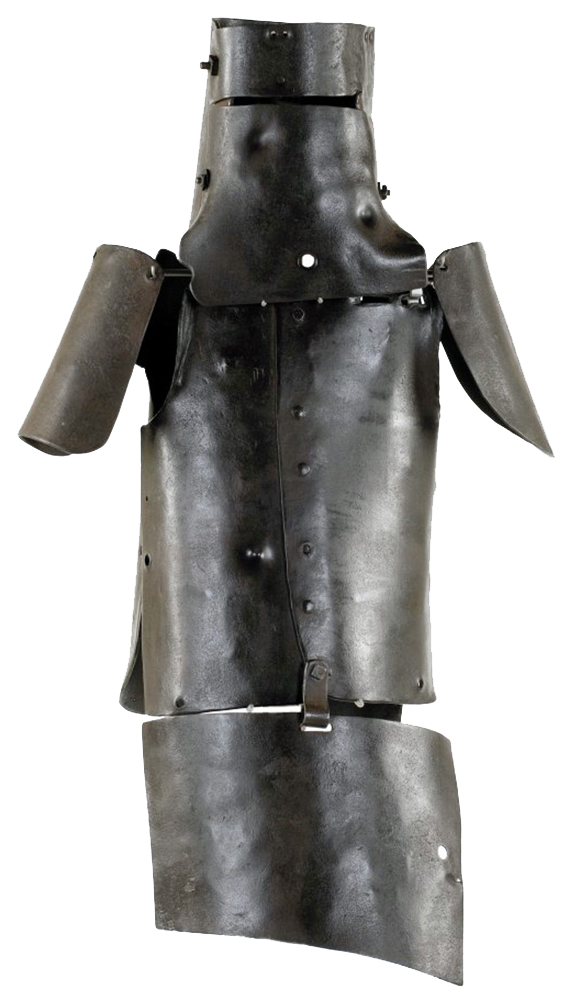
Carey includes all the details of the legend in his ‘history’. He mentions the undertakers, leather cords specifically created for the purpose of binding a body to horseback, which were used as evidence that the policemen had come to the Kelly gang with the intention of killing them. He also devotes pages to the creation of the iconic suits of ‘armour’. In 1879 Ned Kelly dictated an 8,000 word manifesto to Joe Byrne, known as the Jerilderie Letter, in which he tried to justify his crimes. Intended for publication, it was instead handed in to the police. Carey questions the making of the legend – was Kelly seeking fame, justice or acknowledgement? There is a great legend woven around Ned Kelly, and although Peter Carey suggests he will clarify it with his ‘true history’, he gleefully obfuscates even further.

Tuesday, 21 April 2020

One Trick Pony: Boy Swallows Universe


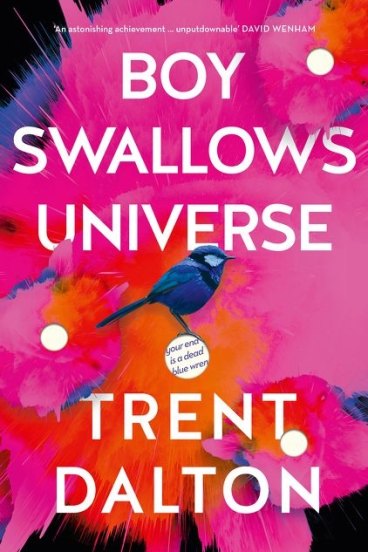
Boy Swallows Universe by Trent Dalton
Fourth Estate
Pp. 471

Set in Brisbane in 1985, this novel focuses on a boy, Eli Bell, and his terrible life. His father is absent; his drug-addicted mother is in gaol; his brother, August, doesn’t speak but writes words in the air with his finger, predicting things he couldn’t possibly know and that don’t make any sense; his stepfather is a dealer; and he’s surrounded by violent criminals. It is reminiscent of Bridge of Clay in style, where a young boy narrates but with a much older voice than the teenage kid he is meant to be.

Eli seems anxious to show off his disadvantage; he is brought up by drug-dealing thugs and potential killers, and told many prison stories. At one point his mother’s boyfriend drags her by the hair down to the dog kennel and forces her to eat their food from the dog bowl; at another he has his index finger chopped off with a cleaver. Referring constantly to the seedy underside of life and proudly intent on exposing the dark side of the country,, his unrelentingly grim descriptions sound like a kid trying to be hard-boiled, thinking he’s Holden Caulfield and hiding behind a tough exterior.

The style constantly gets in the way of the story, to the point that it is tedious to follow. Dalton writes in the present tense, in frequently overblown prose, with short snatches of description that aren’t actually sentences. “This room of true love. This room of blood. Sky-blue fibro walls.” The many full stops do not create emphasis, but merely sound like empty aphorisms; one could try to work out whether they mean anything, but mainly they just sound like an advert for carpet. Many of the references are to male narratives he probably wouldn’t have read: Ken Kesey; Henry Miller; Papillon by Henri Charriere; Steinbeck’s The Grapes of Wrath; Patrick White; Hermann Hesse; John Le Carré; Joseph Conrad; Hemingway and Herman Melville.

There are also allusions to The Wizard of Oz and The Jungle Book, and a scene in which Eli escapes from hospital by getting another child patient to create a diversion, which is his take on the escape from One Flew over the Cuckoo’s Nest. Eli’s mute brother, August, writes words in the air: Your end is a small blue wren; Caitlin Spies. These all, obviously, turn out to be prophetic. Eli ruminates, “Maybe we’d all be much more effective communicators if we all shut up more.” Ooh, deep!

Eli writes to Slim’s friends in prison, and Slim (his babysitter and a previous criminal who served time) advises him to put details into the letters: “The boys appreciate all that detailed daily life shit they don’t get any more.” Eli hones his observation skills because this builds up knowledge, which leads to power. It is, also, however, monotonous and smacks of product placement. The number of times he mentions the brand of his shoes and tracksuits; he could be sponsored by Dunlop and Adidas.

He thinks of his mother as a saint or an angel, but she’s a dealer and a junkie who winds up in gaol. There is a sentimental view of mothers which is familiar from stock criminal narratives. His father (Robert), Slim (Arthur) and Lyle are men who teach Eli wisdom whereas women don’t teach him anything; they are mothers, nurses, and love interests. He is well aware of the toxic masculinity that surrounds him and believes that “every problem in the world, every crime ever committed, can be traced back to someone’s dad... Mums maybe too, I guess, but there ain’t no shit mum in this world that wasn’t first the daughter of a shit dad.”

All of the chapters are introduced with three-word headings such as Boy Writes Words, Boy Receives Letter, Boy Meets Girl, Boy Seeks Help, Boy Parts Sea, Boy Steals Ocean, Boy Conquers Moon. The reason for this becomes apparent later when a newspaper editor asks Eli to describe his story in three words: Boy Swallows Universe.

The novel certainly contains a lot of detail, is grimly pessimistic and, although Dalton claims it is a love story, it is more of a tirade. He may claim that love and family is the answer rather than drug addiction, but he has a good wallow in poverty porn before he reaches that conclusion.

Saturday, 28 March 2020

COVID-19: Under Pressure

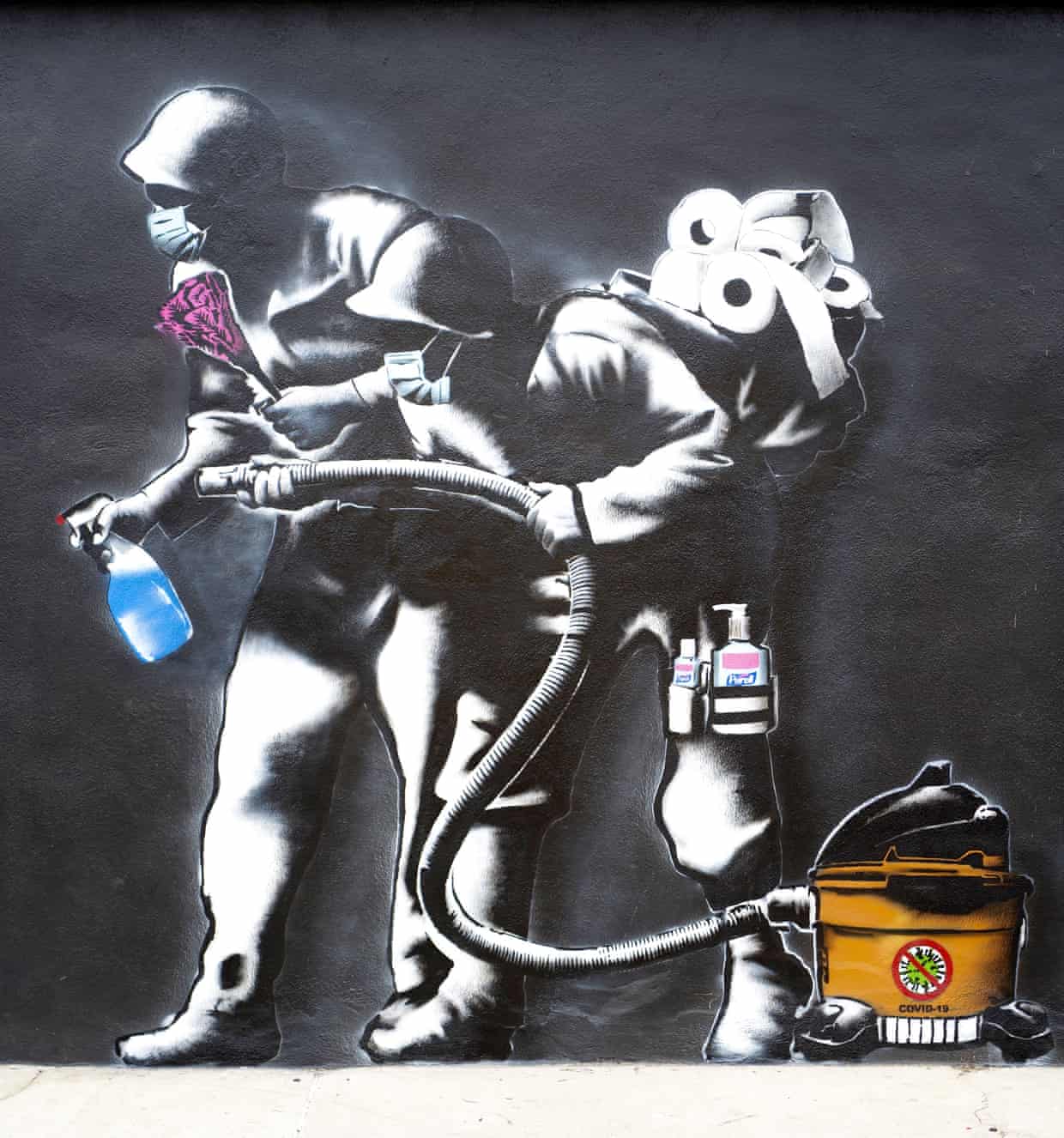
Street art by @hijackart
There are posts doing the rounds on social media of how this enforced isolation might be good for some of us. People are proposing that we could take this opportunity to create a new work or learn a new skill. I have seen suggestions that people could paint a picture, learn a language, master an instrument, take up horticulture, or improve their culinary skills. Several well-meaning people have asked if this is not the perfect time for me to write my second novel.

The short answer is 'no'.

My fist novel took me about 25 years to write. A lot of that was research, and a lot of it was reflection. To do this I need to feel safe and have a routine; an acknowledgment that if things don't go well, or if I unearth something painful (believe me, memories of death, bombs, muggings and other trauma are not things I deal with easily), I will be able to mentally and emotionally decompress in my chosen environment (a walk in the hills; a swim in the ocean; a pint or two in the pub with my friends). This is clearly not the case at present.

I cannot speak for everyone - there are far too many people purporting to do that at present for my liking - so I shall speak only for myself. The current situation is causing me extreme anxiety. I cannot sleep. I am having frequent panic attacks which cause shortness of breath and nausea. I have a constant headache and am permanently fatigued.  

I worry. I worry about my health and that of my husband (who, performing an essential service, must leave the house every day). I worry about my family - none of them live in the same country as me and I'm not sure when (and in some cases if) I will see them again. I worry about my friends, in different countries around the world with different governments taking different precautionary measures (or not, in some cases). I worry about my community - if I don't support it, will there be one when all this is over?  I worry about losing my job. If there is no community and there is no work for me to do, how can I continue; how can I support anyone else? I worry that I am not being a good enough wife, daughter, sister, friend, neighbour, citizen, employee... when did this turn into a competition?

I try not to think too deeply about anything because I will cry, so I am currently existing on a superficial level, or a submerged one. I do not feel safe. I do not feel secure. I know I am lucky to have a house with a garden and access to fresh air and open spaces. I know others are in a far worse position than me. Anyone who has ever suffered with depression will tell you that this doesn't necessarily help. It makes me feel selfish for having these concerns, and that makes me feel like a bad person. It's a very dark vortex into which I do not want to be drawn.

So, no, do not expect anything creative from me at this time. My imagination is not in a good space. There is too much pressure to perform - and no good performances come from fear. 

Tuesday, 6 September 2016

Getting to Know 'The Other'

Climbing Mountains and Writing Stories: In Conversation with Yann Martel
Canberra Writers Festival
Llewellyn Hall, 26 August, 2016


Yann Martel looks a little like a scruffy and earnest student. He talks like one too, frequently wandering off on tangents and occasionally forgetting what he’s talking about. But he is so erudite, charming and fascinating, that he is captivating as he describes his attitude to religion, politics, art, and life (both of Pi and in general).

He studied philosophy at university, which he claims is a good way of being reasonable; of “scouring the wonder from religion and art”. And yet he is fascinated by religion and he loves religious texts, which both tell stories and entail the suspension of disbelief. He laments that our culture is so cynical and explains that if you can set that aside, the texts of the gospels can open up to faith and wonder. Admitting that there is no proof for faith, he confesses, “it is comforting and it makes me feel better.”

He asks us to consider why Agatha Christie is so popular? Her novels all follow the same framework and they are very English in their setting, humour and morals, and yet she has sold five billion copies of her books worldwide. He suspects this is because she writes about death in a way that is entertaining rather than depressing. We are all going to die in the end, so it is comforting to think of death in terms of faith. The Jesus event is a bit of an anomaly, because gods are usually omnipotent and don’t die. But this one resurrects; death is not a finality, but merely a threshold.

This returns him to his interest in religious faith and Life of Pi. He feels there is a proximity of animals to the divine, stating where there are lots of animals (India), there is a strong manifestation of religion. Gods and animals are always in the moment (not worried about the past or thinking about something else), and have a strong sense of presence. They can play the role of the witness, and he has put a chimpanzee into his latest book, The High Mountains of Portugal. The chimpanzee is an interesting choice as it is the closest animal to a human, sharing 98% of the same DNA as us, but what a difference that 2% makes!

With little prompting, Martel speaks about the film adaptation of Life of Pi. He accepts that adapting a novel to screen is challenging. For a start, there is the need to use different language. He may write, ‘the ship sank’, because he is more interested in the effect this has on Pi than the event itself, whereas in the film, it becomes a visually dramatic and engaging scene. His reaction to the film was mixed due to the difference of perspective and point of view. In the book we see everything through Pi’s eyes; in the film we see Pi himself. Naturally the ruminations of the book are lost. Martel considers the film is a nice compliment to the book if you read the book first. If you see the film first, it seems a little lacking. He was slightly disappointed in the film but, he laughs, no one ever blames the author for a bad adaptation of their novel, and anyway, “I cried all the way to the bank”.

When asked which version of Life of Pi really happened, he throws it back to the audience – which did we prefer? Obviously the first one with the animals is more marvellous and remarkable. We tend to prefer metaphors; who cares if they are true? If we are obsessed with facts and the truth alone, we would never read novels or poetry. We also tend to believe what we last see, which becomes problematic in a film. In a novel we don’t see anything; we create it all mentally, and because the ‘real’ story is macabre and horrible, most people want to believe the first story, even if it is incredible. Life of Pi is going to be adapted for the stage in London (cue gasps of delight from the audience), and Martel hopes to involve himself more and suggesting that the storyline is inverted, putting the grim one first, and allowing the fable to be teased out by the investigators in the Mexican hospital.

Martel has a shack to write in, in which he isolates himself. Before he begins a novel he reads books, asks questions and researches. Then, “I close my eyes and try to imagine being the other”. He wrote about a man who became a woman and returned to being a male with a new sense of awareness in Self (1996). Interested in sexual identity, he asked women about all aspects of their sexuality and physicality and concluded there is a greater sorority of women than there is fraternity of men. Beatrice and Virgil (2010) is an allegorical tale about the Holocaust featuring a donkey and a monkey. He believes that a great story creates empathy, and the best way of understanding ‘the other’ is to be ‘the other’ through fiction. It is a matter of concern to him that the largest group of people who don’t read is that of middle-aged males; the ones who tend to run the world, and therefore, need the most understanding.

One of his more controversial actions was his attempt to educate former Canadian Prime Minister, Stephen Harper, whom he describes as a “tight, narrow little man”. Harper had no life/ work/ travel experience and famously never read. When asked what his favourite book was, he replied “The Guinness Book of World Records”. Shocked by this gulf between the political and the arts, as Harper was meant to be the people’s representative of both, Martel sent him a book every two weeks with a short note. The first was The Death of Ivan Ilyich by Leo Tolstoy, for which he was accused of being elitist – “We can’t all read Tolstoy!”

Martel continued to send Harper a variety of books from Agatha Christie to Harlequin Romances (The Virgin Secretary’s Impossible Boss) over four years – 101 books and letters – and received no reply. People accused Martel of arrogance and asked him, “What does it matter if Harper doesn’t read?” He counters that it is important to read the imaginative word; “If you have power over other people; you must know these other people.”

Naturally, this statement lead to a question from the audience asking what he would recommend our own Prime Minister read. After commenting, “You make me feel like a literary oncologist”, Martel fielded the question deftly, suggesting that, as he needs courage and serenity, perhaps a war novel would be appropriate – something like The Red Bad of Courage. Playing expertly to the crowd, Martel concluded, “but I understand that Turnbull likes the arts – he’s just in the wrong party…”

Tuesday, 19 November 2013

A sense of place: writing the environment


A Sense of Place
Snowy Mountains Readers Writers Festival
Jindabyne, 31 March 2013

I have a friend in New Zealand who told me that the things she was most excited about seeing on her first ever trip to England were a meadow and a badger. She had read about them in childhood stories by Enid Blyton and others, yet she had never experienced these concepts. I wondered at the time whether authors knew that certain things were particular to their shores and people living in other places might not recognise them, and if they felt the need to explain certain physical details such as flora and fauna?

Everyone knows that kangaroos are endemic to Australia but Rose Tremain suffered howls of outrage and accusations of insufficient research when she put a vole in the Arrow in The Colour. She assumed that the little round rodent was everywhere, but it doesn’t live in New Zealand, and the veracity of her novel was ruined. By including such specifics of setting – the books’ equivalent of stage directions – an author may instantly expand or limit their readership. I loved exploring new worlds through novels when I was a child, but several education authorities now claim that children need stories set in places to which they can relate.

At A Sense of Palce, chaired by Lisa Sweeney, previously a manager of radio and television programmes across the country for the ABC network, four authors gather in a hotel in Jindabyne to discuss the effect of the environment on their work before a (predominantly female, as these things always are) audience of about thirty. It seems appropriate that we are in Silver Brumby territory; some of the most descriptive scenery I ever read about as a child.

Writing in a variety of genres – chick-lit, travel, crime and investigative journalism – all said that the setting is crucial to their work, contributing essential elements to what makes a narrative believable. One of the panellists, Barry Maitland suggests that profession may have as much of an influence as setting (he has studied, practiced and taught as an architect) but that is possibly a debate for another time.

Lisa Walker grew up in Fiji and Brisbane, and has worked as a guide in National Parks and taken people to build and stay in snow caves. She now writes and surfs near Byron Bay and says her books are firmly situated in a place. She admits that she is almost cheating with her latest work in progress, which she has set in her own house so she knows the site very well. Sex, Lies and Bonsai is set in a small beachside town and this suits her exploration of outsider themes and the difficulty of returning to a childhood home.

With her interest in zoology, the wildlife that lives in each area is essential to her stories. One of her characters asks, “Do you ever worry that all the wildlife will gang up and drive us out?” Walker also says that in one of her descriptive passages she writes of a person eyeballing a magpie with black eyes. She received a letter pointing out that magpies have brown eyes and that she should have known that as a National Park employee. She agrees that this is true but juveniles have black eyes so she wrote back with a ‘so there’ letter.

Details of the scene are immensely important to Barry Maitland in his crime fiction. He has written six books (with the same two detectives) and sets them in different parts of London. He describes the city as being a series of little villages, and each has its idiosyncrasies. He grew up in London and moved to Australia to head the school of architecture at Newcastle University.

His 2011 novel, Chelsea Mansions, is set among the golden postcodes of the extremely wealthy, as he says wryly, “There hadn’t been a murder in Chelsea for a long time.” The Raven's Eye, his newest novel, concerns the nature of surveillance in modern times and is set among the narrow boats on the Regent’s Canal. He writes from his memories of the capital but also returns to refresh details and he sees it through the critical eyes of a stranger. He says that people will always correct minor details or assert that they know the exact street about which he’s writing, even when he has made it up.

Matthew Condon agrees with the ability of the readership to identify unintended parallels. He claims that no matter what he writes, even if he were to portray an alien from an undiscovered galaxy, “My mother will phone and say, ‘will you stop writing about your father’.” Later, AJ ‘Sandy’ Mackinnon added that when he was writing his first book he couldn’t type so he handwrote the pages and his mother typed them up, editing and deleting as she saw fit, expressing that Great Aunt Mary wouldn’t like it, even though “Great Aunt Mary had been dead for twelve years”. On the other hand, some people don’t recognise themselves, which might be just as well when Condon fears they might take offence at his descriptions.

As a journalist and fiction writer, he has learnt the necessity of attention to detail in a short space of time and words. In the industry they call this a ‘colour writer’. He used to work on the Gold CoastBulletin but hates the landscape of the Gold Coast – there are murmurs of support from the audience for this dislike. Obviously the specifics have to be correct for his latest book, Three Crooked Kings, which is a true crime/ political exposé of police corruption in Queensland. He is working on its follow-up but says he can’t wait to finish with non-fiction as he has many more fiction projects in mind, with which he can be freer with details.

For AJ ‘Sandy’ Mackinnon place or landscape is not just a pretty backdrop but a challenge. He writes of adventures taken in new places, so this setting provides physical as well as literary obstructions. He also sees difficulties in writing originally about a place that others have already covered. Whenever he sees a new place he relates it to somewhere he has read about, from Narnia to the Victorian England of Dickens or the Dr Doolittle stories, and he refers to the “thrill of recognising a place that an author has explained”.

Having grown up in Wollongong, Mackinnon moved to England when he was eight. The family travelled by ship and when he returned to Australia two years ago, he chose the same mode of transport. The outward journey in 1971 (visiting locations such as Cape Town, the Canary Islands and Lisbon) fitted the storybook elements of travel in books he had read as a child. The return leg made him feel like an adventurer.

His travel books began as a correspondence with a friend. He wrote letters of 150 pages, illustrated around the edges because you have time to do such things on a sea voyage. Self-depreciatingly he says, “While everyone else was out playing sport, we were getting pale and writing letters.” Such letters are the forerunners of books because they are instinctively written to amuse an audience, so events are heightened and people turned into characters. He sees no necessity to keep a diary.

The elements of sea, islands and shipwrecks are clearly important to him as they are reflected in his latest work, a retelling The Tempest set on Iona, where the headmasters of posh private schools are at a conference in 70s/80s Britain. He says that “even in fiction landscapes are obstacles to be overcome”.

Friday, 12 July 2013

Countdown quotes to At Home at the Zoo: 2


"I don't express myself too well, sometimes. I'm in publishing, not writing." - Peter

Friday, 14 December 2012

Friday Five: Non-competitive pursuits


I think it's fair to say that I don't like reality TV. I have mentioned this before. One of my least favourite sub-genres is the competition variety. You know the type of thing, where people are pitted against each other to paint a room or build a wall and then someone wins and everyone at home thinks they could have done the same and the real decorators and stonemasons go out of business while general standards plummet.

Although I like the celebrity dancing ones (especially the ice-dancing one), I know I am no expert. This is not true of the people who routinely watch the singing shows and then feel free to critique performances about which they know nothing. It also means that we are left with chanteurs who think that to belt and warble is the epitome of 'singing' and we are left without subtlety, nuance or character. Bob Dylan or Florence Welch wouldn't make it through the first round.

With performance and artistic pursuits, a lot is left to personal preference - A might like sci-fi or farce; B might prefer romance or Jacobean drama; C might swoon at ballet and metaphysical poetry and so on. It doesn't mean any one is 'better' than the other - it just means they shouldn't be judged against each other. In 'pure' sport if you run fastest, jump highest or throw something furthest, you win. You are the best at that particular thing. Don't get me wrong, some things lend themselves to competition and this is a good thing (not keeping the score during football games because 'it's all about participation' is ridiculous!) but when subjectivity creeps in, nothing is so clear.

Acting, comedy and writing awards are often suspect. Yes, they are worth something when awarded by your peers, but often they are voted for by a partisan panel - the more friends you have in the audience; the more likely you are to win. These tributes might provide a feel-good factor, but they are relatively worthless. Entertainment is not a science; nor should it be a competition.

5 Things that should never be a competition:
  1. Cooking - as far as I am concerned you either cook because it is your job and you are paid, or because it is a way of expressing love and friendship to those around you. Eat with me and know you are welcome. Do not judge the temperature of the soup or the slicing of the vegetables. I have prepared this gift for you in my own way.
  2. Surgery - there will come a day when cameras go into operating theatres and viewers vote on who best wields the scalpel. I'm surprised it hasn't happened already. Health is personal, although you wouldn't know it from those shows which 'expose' physical deformities and laugh at fat people. Some things should be conducted behind the curtained cubicle - pull yourself together.
  3. Sex - it's personal and not up for discussion apart from between the relevant parties. According to late-night phone-ins (you hear a lot driving home from rehearsals) many people seem to be concerned about whether or not their sex-life is 'normal'. As long as you and your partner are happy with it, whatever you're doing, or not doing, is fine.
  4. Raising children - I hate the use of nouns as verbs, so have resisted the urge to call it parenting. I'm sure it's pretty difficult to raise a child to be a reasonable and responsible human being. Just do your job and stop comparing yourself and your child to others. In some respects they're all the same; in others they're all different - don't bother worrying or boasting, and if you must do either, do it to yourself as no one else cares. Really.
  5. Friendship/love - when I was little I used to refer to 'best friends'. Now I know that best is a superlative meaning 'of the most excellent or outstanding or desirable kind' there can only be one, by definition. I would now say I have many good or close friends - all of them special to me in individual ways and I love and admire them for their specific qualities. I would never try to rank one above the other. That's not how this love thing works.

Monday, 16 April 2012

Quote for Today

"I've always written to read out loud - that's my reward for writing it. When you're writing, you're all alone in your room; when you're reading, you're getting attention. Plus you can sort out and fix things, you can speed things up and control how the characters talk. Sometimes the biggest laugh can come from a pause." - David Sedaris, as quoted in New Zealand Listener, January 14-20, 2012

Monday, 5 March 2012

Symphony of Birdsong in the Land of the Lawnmower


My mum sends me articles from newspapers - I carry them in their brown envelope in my handbag and pull them out to read when I have to wait in queues or when the person I am meeting hasn't yet arrived at the cafe or the pub and I don't want to look like I've been stood up - they're very useful for that.

They usually concern books or films, or the English language, or the changing face of feminism, or the state of community values in the face of virulent capitalism. And sometimes they are about the beauty of the English countryside. You see, I'm sure my mother is trying to lure me back to Blighty and so the articles she sends are resolutely positive.

If she doesn't win me back with brilliant writing ('the land of the lawnmower' is as good a description of suburbia as any I have read), it will be with nostalgia for the inimitable scenery and the quintessential sound of the dawn chorus, as in this bucolic column by Mike McCarthy, part of which I have copied below (follow the link to read the full article):
"I live in the suburbs; I live in a land of neat gardens, estate agents' boards, car ports, walked dogs, lawnmowers, endlessly similar houses and nothing much happening, a land which my generation, the baby boomers, excoriated as the epitome of boring and sell-out (in songs such as Pete Seeger's 'Little Boxes'), a land which no one would ever describe as resplendent; yet the dawn chorus transforms it entirely.
"Like the visits of Father Christmas or the Big Friendly Giant, it takes place when most of us are asleep and so we miss it, and I feel as if in the last few weeks I have discovered a secret: that even the land of the lawnmower can approach perfection, and that in the shower of birdsong cutting through the silence, the stillness and the great bursting light overhead, for a brief half hour of transformation, even suburbia can become a place of wonder."