Showing posts with label Ned Kelly. Show all posts

Sunday, 3 May 2020

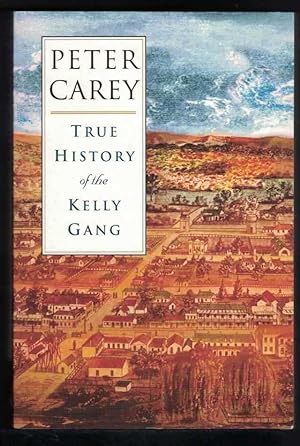
What is Truth? - True History of the Kelly Gang


True History of the Kelly Gang by Peter Carey
University of Queensland Press
Pp. 400

Peter Carey is often touted as Australia’s literary representative, so his take on one of its biggest questionable icons is bound to be interesting and exciting. The book purports to be written by Ned Kelly in thirteen parcels of stained and dog-eared papers, and it includes excerpts from newspapers and transcripts of conversations. Towards the end of the novel, the printer, Thomas Curnow, purportedly says, “What is it about us Australians, eh? What is wrong with us? Do we not have a Jefferson? A Disraeli? Might not we find someone better to admire than a horse-thief and a murderer? Must we always make such an embarrassing spectacle of ourselves?” This is the question which Carey address in his ‘true’ history.

The beginning contains accounts of Ned’s upbringing, schooling, interactions with the police, his father’s brutality (beatings with the belt and drunken rages), and his mother’s (Ellen) subsequent suitors, one of whom is Bill Frost (whom Ned later shoots. Life was hard and brutal with death and violence all around. His uncle tried to burn their house down after being rejected by Ellen, and he was sentenced to hang. Ned was a Catholic amongst mainly Protestants; the family was poor and anti-establishment so they were picked upon and bullied in “a district of English snobs”.

It is written in a sort of vernacular, but the narrator is very erudite and falsely descriptive. There is no swearing; ‘bastards’ is redacted and other words are substituted with “adjectival”. His use of metaphor is rich and, while the structure is unrealistic for a poorly educated farm boy, the vocabulary is credible. “The memory of the policeman’s words lay inside me like the egg of a liver fluke and while I went about my growing up this slander wormed deeper and deeper into my heart and there grew fat.” His similes enrich the novel and raise it above the monotonous account it might otherwise have been, and he employs pathetic fallacy in a way that would make Thomas Hardy proud.


Peter Carey paints Ned as a rural lad who wants nothing more than to support his family, farm the land and breed horses, but his plans are thwarted by perceived persecution and his mother’s men. The nature of the relationship between Ned and his mother, Ellen, has long been a topic of historical debate. Ned is the oldest son with a primitive love for his family and a macho need to protect them. He cares for the family, although he doesn’t notice that his sister has grown into a young woman, and he is mainly concerned for his mother, rushing to defend her and fighting over her reputation. 

He loves his mother – some say to an unseemly extent – although she sells him into apprenticeship with Harry Power, and seeks out the company of other men. Ned takes up with Mary Hearn, in a supposedly touching but very plain fashion, and introduces her to his mother although he claims not to know that his mother and his girlfriend share a lover (George King) who has made both of them pregnant.


Mary Hearn pleads for Ned to leave Australia with her and their child for their safety, but obviously he doesn’t. Her lines are very similar to those spoken by Etta Place in the film, Butch Cassidy and the Sundance Kid, suggesting a very limited view of roles for women in stories of legend. Ellen, however, has a rebellious spirit (the spade is her favoured weapon), and she tells stories of the Irish legends, heroes and great women.

Ned holds some belief in fairy stories of banshees, curses and bad luck, but also understands the realities and corruption of the world. The police slander his family; he is angry and hungry and carries within “that flame the government of England lights in a poor man’s guts every time they make him wear the convicts irons.” He dislikes talk of colonials not being able to farm properly, and despite his Irish heritage, he considers himself Australian. In Peter Carey’s telling, he becomes one of the original founders, and claims he and his ilk were formed by the harsh treatment they received.
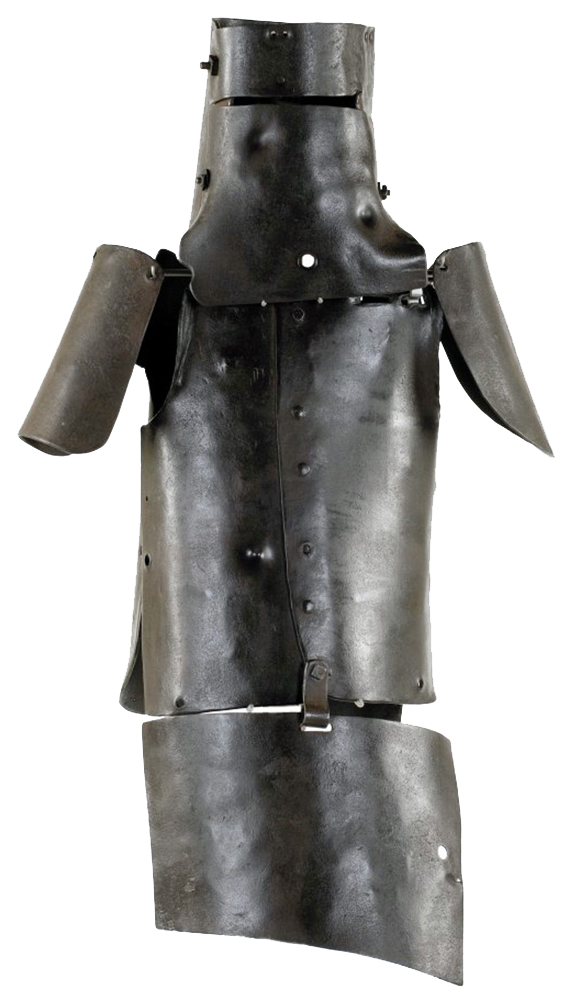

Carey includes all the details of the legend in his ‘history’. He mentions the undertakers, leather cords specifically created for the purpose of binding a body to horseback, which were used as evidence that the policemen had come to the Kelly gang with the intention of killing them. He also devotes pages to the creation of the iconic suits of ‘armour’. In 1879 Ned Kelly dictated an 8,000 word manifesto to Joe Byrne, known as the Jerilderie Letter, in which he tried to justify his crimes. Intended for publication, it was instead handed in to the police. Carey questions the making of the legend – was Kelly seeking fame, justice or acknowledgement? There is a great legend woven around Ned Kelly, and although Peter Carey suggests he will clarify it with his ‘true history’, he gleefully obfuscates even further.

Friday, 25 April 2014

Friday Five: Victorian Alpine weekend

Last weekend we went to the Victorian Alps area for a few days and had a great time. Here are the edited highlights.

5 Highlights of the Easter weekend:


Happy and hoppy at Bridge Road Brewers
  1. Two breweries and a winery - Bridge Road Brewers at Beechworth and Bright Brewery at Bright (oddly enough) both craft some excellent brews. My favourites were the Bling IPA from the former and the Razor Witbier from the latter. Bridge Road has a particularly pleasant ambiance and is tucked down a side alleyway, opening into a sun-drenched courtyard.
    Amulet Winery, with sheep
    Amulet winery makes sensational sparkling tipples from prosecco and moscato to Beechworth cider. They host a Highland Games next weekend, which apparently involves lots of fun, booze and caber tossing.
    Squeezing through boulders at Chalwell Galleries
  2. Mt Buffalo - we went for a walk/run around this brilliant lump of rock that opens out into a massive plateau. There is a part of the track which squeezes between massive boulders, called Chalwell Galleries.
    The Horn, Mt Buffalo National Park
    The highest peak on the plateau is called The Horn, which is a cue for much giggling and striking views. 

    Beechworth town centre during the Golden Horseshoes Festival
  3. Beechworth - the beautiful little town (population 2,645) is reminiscent of Arrowtown with its Easter Festival, including 'biggest crowd for the smallest parade in Australia' and the deciduous trees turning fabulous colours in the crisp autumn climate.


  4. The heritage - the area is famed for its goldrush history (gold was discovered here in 1952); its links to Robert O'Hara Burke (leader of the ill-fated Burke and Wills expedition) ; and Ned Kelly connections - the notorious bushranger was imprisoned here and tried at the courthouse.


  5. A number of culturally significant buildings line the main street and a cute little museum is full of information about all of these disparate of history.

    Warning: Here Be Hippies


  6. Shopping - Him Outdoors likes to talk to strangers and, as we pottered about the shops, cafes, museums and galleries of the district he chatted to everyone including talking to the ladies at the museum about the possibility of reinstigating a famous wheelbarrow race, and the bloke in the Trade Aid shop about the necessity and humanity of a national pensions scheme. For the record, we bought cycling gear, brewery merchandise, poncy soap, licorice root (for the beer), and lots of food and drink.
Him Outdoors with a Ned Kelly pie

Monday, 5 November 2012

Australian Portraits 1880-1960 (Part Three)

The portraits of the Forties and Fifties explore the question, 'who am I?' None of these artists made their living by painting portraits. They liked instead to depict themselves, friends, family and colleagues rather than 'important people' from whom they would get a commission. Sometimes they chose disreputable subjects, such as criminals, murderers and outlaws.


Sidney Nolan's Daisy Bates at Ooldes (1950) is a remarkable study of an eccentric character who created her own mythologies. Daisy Bates was most recognised for her work as a journalist and welfare worker with Aboriginal communities. This is an imagined portrait of her in beekeeping gear, in the centre of an expansive and seemingly hostile landscape, with its red earth, hillocks and dead trees. What was Sidney Nolan thinking? Who knows? It's often difficult to tell.

For example, this monochrome version of Ned Kelly (1946) has blurred eyes as if they are shifting too fast to capture. Nolan's more famous Kelly series features the bushranger with a tin hat with the eyes the only things visible, so this is the inverse or the negative. There is no landscape or back story in this posthumous portrait, although the surrounding circle may suggest a noose. The image resembles a photo of Ned Kelly when he was aged 18.

 The Head of a Soldier (1942) is a Dali-esque portrait by Sidney Nolan of a man with bloodshot eyes in an Australian army uniform. The model was Captain Bilby, Nolan's commanding officer. Nolan tried to avoid the army but ended up serving between 1942 and 1944. He depicted the soldier stripped of any form of identification, and the portrait lays bare Nolan's strong personal reaction to Australia's involvement in the war.

Man's Head by Albert Tucker is a portrait of a man in a collar-less shirt, with a crooked, craggy face, wiry hair and fleshy lips. Tucker used his art to convey his anger and distress at the darker aspects of humanity, either through social-psychological landscapes, or portraits such as this one based on newspaper photographs of criminals. This man was charged with kicking a small dog to death.

His portrait of Sydney Fox (1946) is an eerie, psychologically disturbing image. The lop-sided lazy eye, the smooth sallow skin, and the blue and yellow hues suggest bile, anger and depression.

Sydney Fox was an English serial killer who murdered his mother in 1929 in an attempt to obtain money from her life insurance policy. At the age of 31 in 1930 he was the last man hanged in Maidstone Prison, Kent. This portrait is based on Fox's police photo.

Jude Rae's Interiors (1956) is a series of portraits of  fellow Canberra artists with their eyes closed to negate the aphoriosm that eyes are the windows to the soul. The subjects, by closing their eyes, render themselves vulnerable, but they are also complete in their interior world. This art-work is quiet, reflective and poetically intense.

The Girls at School (1959) by John Brack is odd. Three girls in their gingham dresses and school cardigans stand against a brick wall, one holding a bunch of daisies. Their neat hair, pulled off their face and tied back in pig-tails emphasises their flat faces and slightly down-turned mouths.

Brack was a skilled draughtsman and master of composition. He depicted his daughters in a bold, stylised way, by limiting the colour palette as if in a sepia photograph, and by flattening the frame.

It's quite a disturbing finish to the exhibition, and suggests that these Australians aren't all of such a cheerful, sunny disposition as many of us have been led to believe!