Showing posts with label words. Show all posts

Friday, 17 March 2023

Friday Five: Podcast Update


Goodness, it's been a year since I last wrote about the podcasts which accompany me on my walks, runs and drives (although never rides - it's unsafe). So it must be time for some more.
  1. Desert Island Discs (BBC Radio 4) - This has been going since 1942 and is obviously a popular and simple format, which has lasted for more than 3,000. The host (currently Lauren Laverne) asks her guest (or 'castaway') what eight tracks, book and luxury item they would take with them if they were cast away on a desert island. There's one every week and I pick people who I think might have interesting stories to tell and suitably accompanying sounds (and I always cheer when someone picks You'll Never Walk Alone). Recent episodes to which I have listened include Cate Blanchett, Baz Luhrmann, Richard E Grant, Bono, Jon Ronson, Oti Mabuse, Deborah Levy, Richard Osman, Joanne Harris, Peter Schmeichel, Tracey Ullman, Baroness Hale of Richmond, Michael Holding, Alexei Sayle, Billie Piper, Professor Sir Simon Wessley, Dame Louise Casey, Mark Strong, Malala Yousaafzai, Tim Peake, and Simon Armitage.
  2. Limelight (BBC Radio 4) - Audio drama at its most thrilling. It began with The System, a six-part thriller about a group of young radicals and the hunt for their leader. When Jake signs up to a personal training program that promises to turn the meekest man-boy into an alpha male, he hasn't got a clue what he's getting himself into. Two years later his sister Maya sets out to uncover the truth (there has been a second season that I have not yet heard). The next drama was The House that Vanished, a real-life mystery from the West Coast of Ireland that does exactly what it says on the tin, and then there was Harland, a Halloween special in which a town has been built on the site of a medieval plague village abandoned 900 years ago. These are great and there are many more in store for your listening pleasure.
  3. Something Rhymes with Purple (A Somethin' Else and Sony Music Entertainment Production) - Gyles Brandreth and Susie Dent both have voices to which I could happily listen all day. They talk about words; their origins, development and meaning. Apparently it won the Gold Award for Best Entertainment Podcast at the British Podcast Awards 2020, so it appears plenty of other people enjoy these linguistic lessons about anything from clothing to food; travel to sport; professions to poetry and anything else that verbs your noun.
  4. That Peter Crouch Podcast (BBC Radio 5Live/ Acast) - Lads talk about football. They have got knowledge; their humour is a bit blokey, but they also have clout, and have 'blockbuster guests' including premier league referees, international coaches, past and present players, and Prince William. Ostensibly a guide on how to be a professional footballer, the episodes include insight on everything from dressing-rooms, transfers, managers, training, kits, analysis, and other details of the modern game. Peter Crouch (former professional footballer - one of 33 to have scored over 100 Premier League goals), Tom Fordyce (sports journalist and author) and Chris Stark (radio personality, co-presenter and executive producer) are a good mix and present an hour-long chat full of insight and anecdote. In what is being described as a 'mass exodus of talent from the BBC', Peter Crouch has just moved to Acast for an undisclosed sum - probably quite a high one considering That Peter Crouch Podcast was the fourth most popular podcast on BBC Sounds last year and the largest sports podcast at the BBC with 60 million listeners.

  5. The Witch Trials of J.K. Rowling (The Free Press) - No one knew who she was; she wrote some books; everybody knew who she was; she championed the underdog; lots of people loved her views; lots of people hated her views; these two groups of people hated each other; she made some comments about sex and gender; lots more people hated her, including some of the ones who had previously loved her; she mentioned her privilege in that the hate mail and death threats she received didn't bother her as much as they would some younger, more vulnerable people; she was vilified. 'Witch' is a word used for a woman who doesn’t submit to patriarchal power; someone who dares to take up space and live their lives outside their socially prescribed roles. Personally, I am proud to be a witch, and I do not think that the sex/gender debate is 'binary'. Critical feminists and trans-right activists actually have a lot in common if they put the mental and physical safety of the individual first; and stridently conducting TERF wars is not helping anybody. I'm four episodes in to the seven-episode podcast series by Megan Phelps-Roper featuring extensive interviews with J.K Rowling and with several of her critics, supporters and readers. Billed as 'probably one of the most controversial podcasts of 2023 so far', it is undeniably well-made and hugely listenable, and will surely just fan those flames even higher.
Friday, 27 January 2023

Friday Five: Building Lego Words


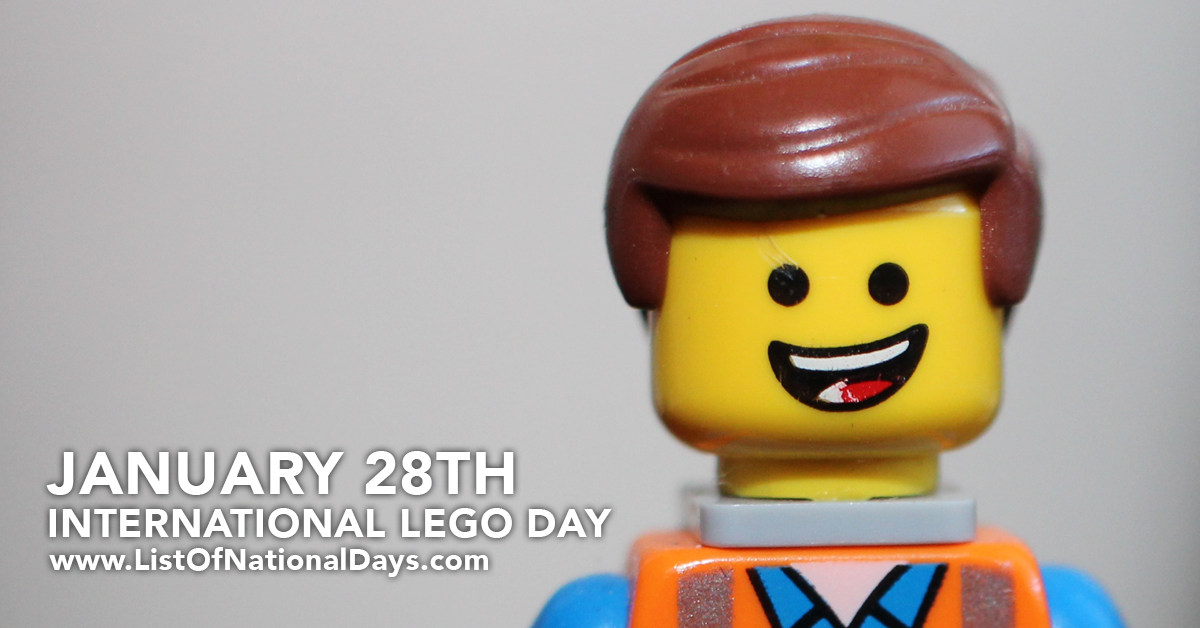
January 28th is International Lego Day. This date marks the day when Danish carpenter, Godtfred Kirk Christiansen, first submitted his patent for the original Lego brick in 1958. The LEGO company was founded in 1932, and made a variety of wooden toys. It took the name 'Lego' from the Danish words, 'Leg godt', which translates to 'play well'. It's still a big thing among children and some adults. Some of those adult enjoy acronyms. I hope you like these ones.

Lego Titanic built with the SNOT method

5 LEGO Acronyms:

BURP - Big Ugly Rock Piece: The larger of two classic pre-fabricated Lego elements frequently included in Lego castle sets. Part number 6082
SNOT - Studs Not On Top: Building things with pieces on their sides or upside down
POOP - Parts Out of Other Parts: Single-mould pieces that could also be built from smaller existing parts
AFOL - Adult Fan Of Lego: Most adults use this acronym but there are others
BOLOCs - Built Of Lots Of Colours: Models made using the Lego you have, no matter what colour, leading to rainbow-coloured builds

Millennium Falcon built with the BOLOCs method

Tuesday, 1 November 2022

My Newest Favourite Thing: Galeanthropy

Penelope pretending to be a cat

I have learned a new word, which I absolutely love.

Galeanthropy: A mental condition of thinking that one has become a cat, usually manifest in the adoption of feline mannerisms and habits.

I think Penelope may have it. That is all. 

Friday, 29 April 2022

Friday Five: Endurance: What Does it Mean to You?


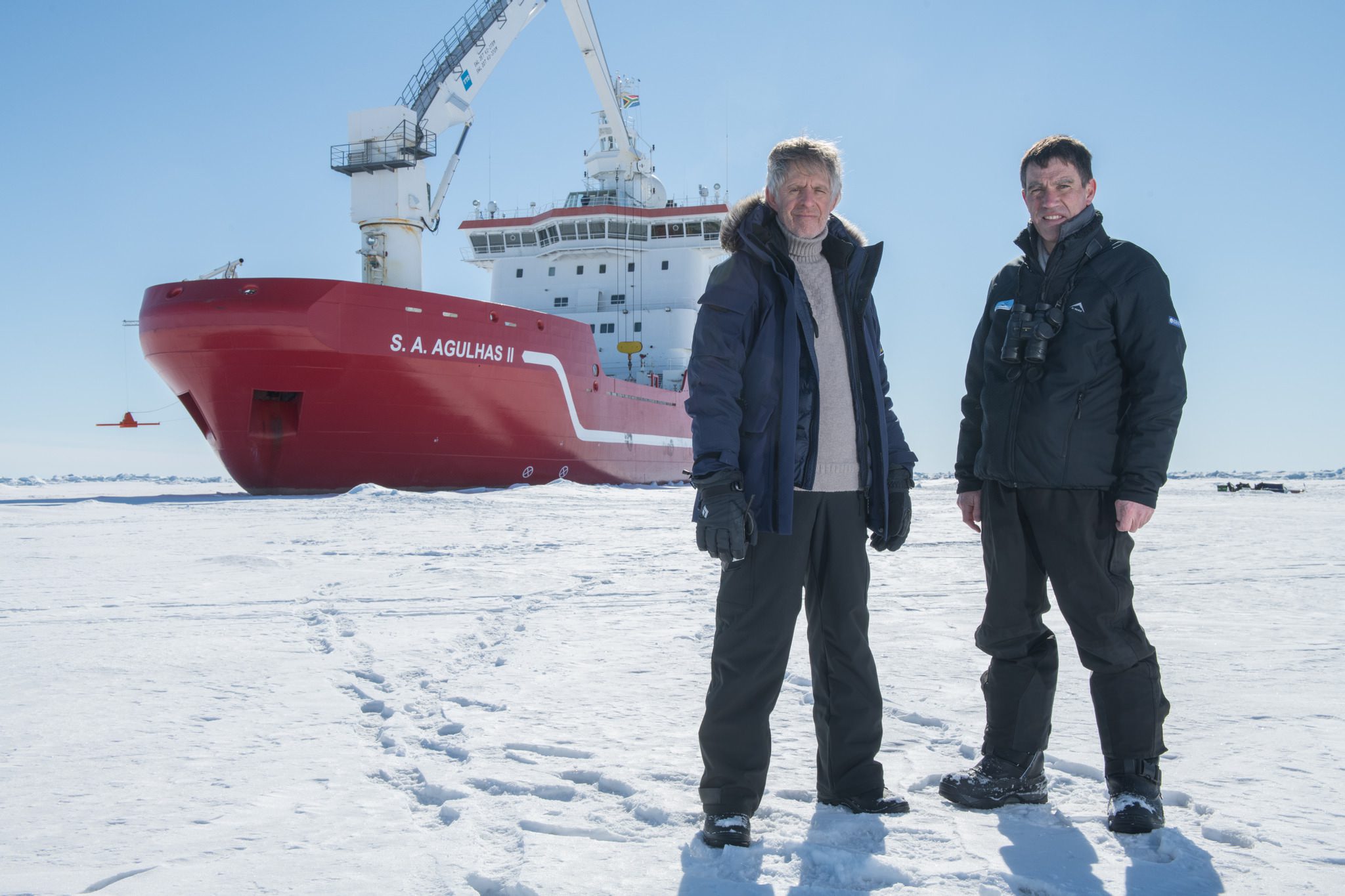
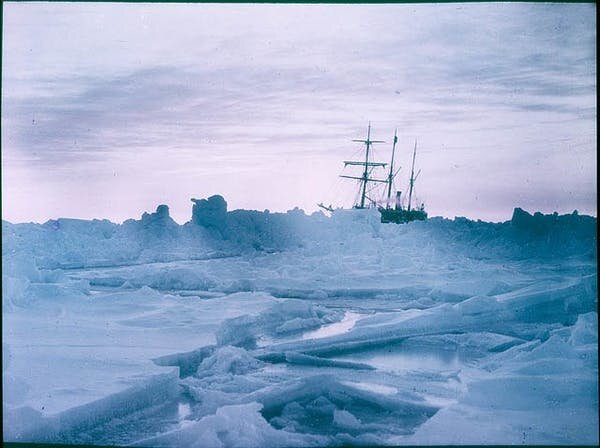
Last month, The Endurance, the lost vessel of Antarctic explorer Sir Ernest Shackleton was found at the bottom of the Weddell Sea. It was discovered by an expedition mounted by the Falklands Maritime Heritage Trust, led by veteran polar geographer, Dr. John Shears, using a South African icebreaker, Aguhlas II, equipped with remotely-operated submersibles.

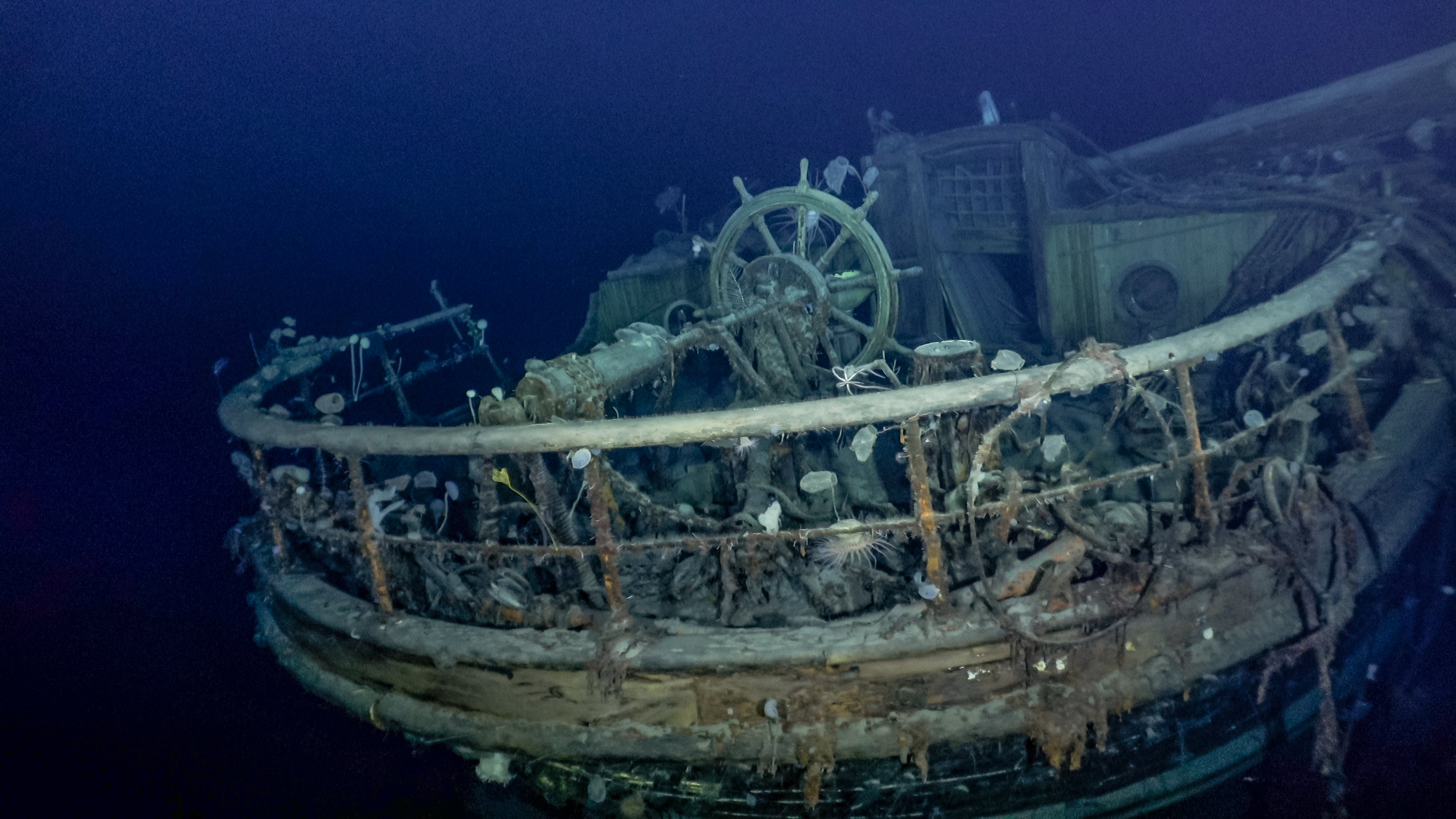
Looking like a ghost-ship, the vessel is remarkably intact. It was crushed by sea-ice and sank in 1915 and was found resting in 3,008m (approx. 10,000ft) of cold, deep water. Due to the temperature of the water, the timbers are in remarkable condition, with the name Endurance still clearly visible on the stern over a century afterwards. The water is too cold for wood-eating organisms, although other deep-sea marine lifeforms have colonised the ship, including stalked sea squirts, anemones, sponges of various forms, brittlestars and crinoids (related to urchins and sea stars).


This story is an incredible achievement on many levels. The discovery of the wreck itself is remarkable, or, as Dr. Shears described it, 'jaw-dropping'. He explained, "We have successfully completed the world's most difficult shipwreck search, battling constantly shifting sea-ice, blizzards, and temperatures dropping down to -18C. We have achieved what many people said was impossible." 

Mensun Bound and John Shears stand by the icebreaker SA Aguhlas II 

It was an enormous challenge to find the ship at all. The Weddell Sea is pretty much permanently covered in thick sea-ice, the same ice that ruptured the hull of Endurance in the first place. Getting near to the presumed sinking location is hard enough, let alone being able to conduct a search The last month, however, showed the lowest-recorded extent of sea-ice since these records began (1970s) so in that respect, conditions were favourable.

For over to weeks the subs had combed a predefined search area, investigating various interesting targets, before finally uncovering the wreck site and making a detailed photographic and video record of the timbers and surrounding debris field. Because the wreck is a designated monument under the International Antarctic Treaty, it must not be disturbed in any way and no physical artefacts can be brought to the surface.


The ship looks much the same as when photographed for the last time by Shackleton's filmmaker, Frank Hurley in 1915. The masts are down, the rigging is in a tangle, but the hull is broadly intact. Some damage is evident at the bow, presumably where the descending ship hit the seabed. The anchors are present and the subs even spied some boots and crockery.

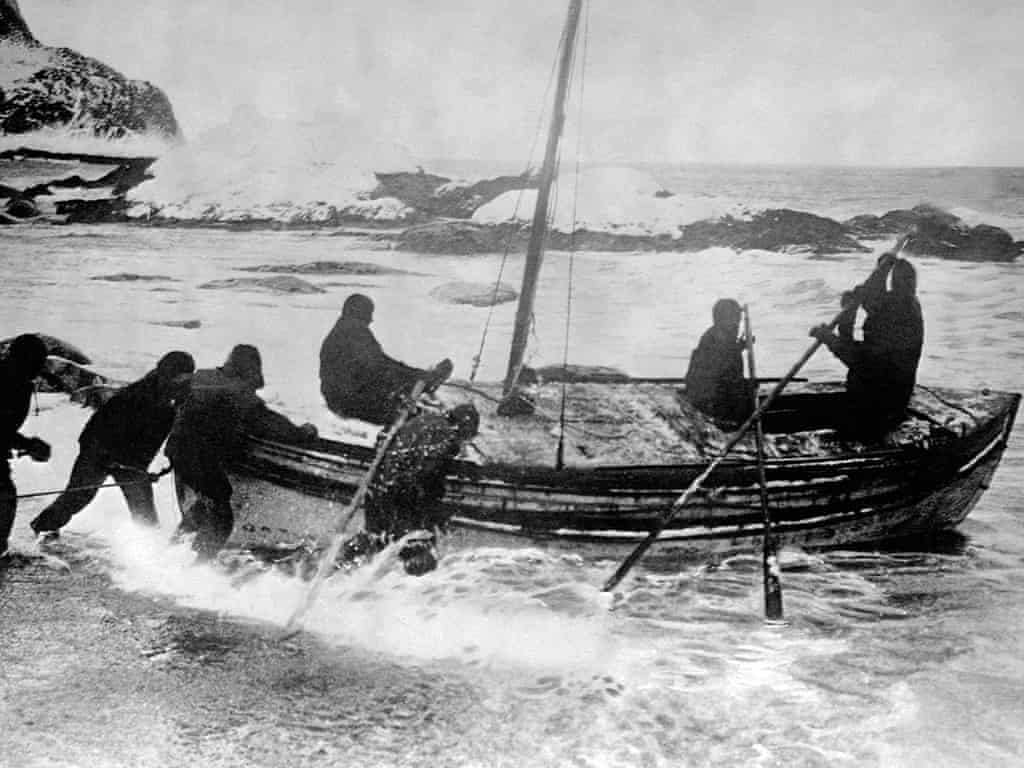
The other incredible thing about this story is Shackleton's amazing 'escape' which he and his men undertook on foot and in small boats. After Endurance was crushed, Shackleton organised the crew to take a couple of the lifeboats across ferocious seas to get help after months spent in makeshift camps as the ice drifted northwards. The party took the lifeboats to reach the inhospitable, uninhabited Elephant Island. Shackleton and five others then made an 800-mile (1,300km) open-boat journey in the James Caird to reach South Georgia. From there, Shackleton was eventually able to mount a rescue of the men waiting on Elephant Island and bring them home without loss of life.

Sir Ernest Shackleton and his crew of five men launching the James Caird 

The dictionary definitions of endurance seem to sum up all of the above:
  1. The ability to endure an unpleasant or difficult process or situation without giving way
  2. The capacity of something to last or to withstand wear and tear
  3. Denoting or relating to a race or other sporting event that takes place over a long distance or otherwise demands great physical stamina
  4. The ability to continue doing something for a long time
  5. Stamina; persistence; especially in the face of hardship, distress or pain

Friday, 15 April 2022

Friday Five: Autumn Arts Part Two


Following on from last week's Friday Five, here are the rest of the questions from the Autumn Arts section of the quiz, with answers at the end.

5 more Autumn Arts questions:
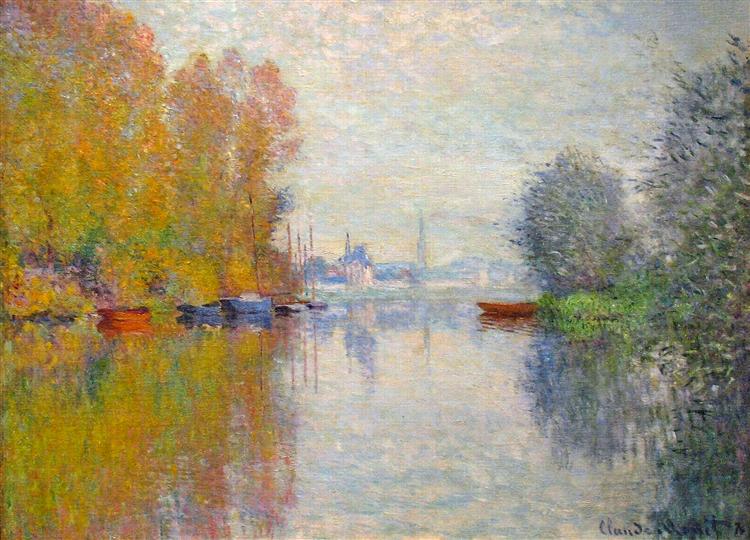
  1. Description of a painting from Wikipedia: “This painting captures the moody atmosphere of an autumn day on the Seine River, also known as La Seine. The sky is dark and cloudy, but there are spots where light shines through to illuminate the water and buildings that line its banks. There are a few trees on either side of the river that have not yet lost their leaves, while others have already turned brown and orange. It is a beautiful painting that captures the mood of a late September day in the region, with its changing light and gentle breezes. The river, which is usually so busy, becomes calm and reflective. The reflection of the trees and buildings on the water’s surface can be seen in full detail as well as their reflections in the windows of houses near by.” What is the name of the painting and the artist?
  2. Dictionary definition of a word beginning with 's': “A rustle or soft, whispery sound, particularly of leaves in the wind” What is the word?
  3. The publisher's blurb from the fourth book in a series: "What if you knew someone you loved was going to die? What if you thought you could save them? How much would you risk to try? How far will a woman travel to find a father, a lover a destiny? Across seas, across time – across the grave itself?” What is the name of the book, the series and the author?
  4. Description of an English post-punk group formed in 1976 band by music critic, Simon Reynolds in the NME: "A kind of Northern English magic realism that mixed industrial grime with the unearthly and uncanny, voiced through a unique, one-note delivery somewhere between amphetamine-spiked rant and alcohol-addled yarn." What is the name of the band and the lead singer?
  5. Description of a film from Wikipedia:  “A 1994 American epic Western film directed by Edward Zwick and starring Brad Pitt, Anthony Hopkins, Aidan Quinn, Julia Ormond and Henry Thomas. Based on the 1979 novella of the same title by Jim Harrison, the film is about three brothers and their father living in the wilderness and plains of Montana in the early 20th century and how their lives are affected by nature, history, war, and love.” What is the name of the film and what Oscar did it win that year?

  6. Answers: 1. Autumn on the Seine at Argenteuil by Claude Monet 2. Sussuration 3. Drums of Autumn from the series Outlander by Diana Gabaldon 4. Legends of the Fall; Best Cinematography (John Toll); 5. The Fall; Mark E. Smith

Friday, 19 February 2021

Friday Five: Autological Words

Drawing Hands by Maurits Cornelis Escher

Here's a question I like to ask in a pub conversation: What's your favourite autological word? If I were ever single, I would ask it of prospective partners (possibly assuring that I would remain single). The way one answers is revealing. To not have a favourite might imply indecision or inclusion: it might imply lack of knowledge of the subject, which is fine, but how one responds to lack of knowledge is telling. I'm curious about things - I like to learn. I hate to be lectured; so it would depend how the information is imparted as to whether or not I would be interested.

An autological word is one that describes itself. 

Five Favourite Autological Words:
  1. Word - it is what it says it is (as is noun)
  2. Unhyphenated - can't argue with that
  3. Pentasyllabic - pentasyllabic is a five-syllable word; it is itself pentasyllabic and, therefore, autological
  4. English - indeed it is
  5. Obfuscatory - it's not exactly straightforward

Friday, 3 August 2018

Friday Five: Random Thoughts

Here are some thoughts for the week, which are in no particular order and bear no discernible relation to each other.


5 Random Thoughts:
  1. We have just had our oven fixed. It has been out of order for about two weeks. The first thing I made in it was baked potatoes. I think they are the food of the Gods. Someone told me they are the meal of poverty. Whatever, they taste great with butter, baked beans and grated cheese. 
  2. I was talking to a friend's teenage boy child, and he told me that his three favourite things are Bionicles (a line of Lego construction toys), his family, and food. This seems like a solid, no-nonsense list to me. I remember at a slightly younger age telling my mother I loved her almost as much as my bed. I do greatly value my sleep, and probably meant this as a compliment, but it is patently unfair. I'm sure she's long since forgotten the comment, but I am still racked by guilt - sometimes even to the point that it stops me sleeping at night.
  3. I have recently been irritated by advertising slogans, which fail to follow the rules of grammar. For example, an investment finance company advertises itself with the slogan, 'Be ready for next.' Next what? Unless they are referring to the British clothing retailer, founded in Leeds in 1861, which in 2012 overtook Marks and Spencer as the UK's largest clothing retailer, this is an incomplete sentence. It requires a noun at least, if not a definite article. A car manufacturer heralds its brand with the tagline, 'Experience amazing'. Again, I question, amazing what? Grace? Gross disregard for basic syntax? Another culprit that uses adjectives as nouns with car(e)less abandon begs us to 'unlock the more'. I don't even know where to begin with this abomination. Or should I say, 'Witness the wrong'? I read a report this week for the UK Department of Education which claims that more than a quarter of children starting primary school are unable to communicate in full sentences. Is this surprising when so-called educated marketing graduates can't either?
  4. My car has been recalled because it has a faulty airbag. I have been sent dire warnings that, 'If you are involved in a collision, the airbag can go off with too much explosive force, causing sharp metal fragments to shoot out and and kill or seriously injure people in your vehicle.' (The bold type is theirs.) This will apparently be fixed free of charge, which is as it should be, and there is no implied fault on behalf of the owner. I phoned up my Toyota dealer to book in for the free replacement, and they informed me that they were not taking bookings for this procedure until next week. You can probably imagine how terrified I am of driving right now. 
  5. All of which leads me nicely to the point that I suffer from anxiety. I count things as part of daily life. My morning ritual involves counting how many minutes to steep the teabag (three) to how many times I brush and rinse my teeth (five). When I fold the washing I fold five items before I put them away. When I do the washing up I place four items into the basin each time. When I adjust the sound or the time on a digital device, I always have to settle on an even number (I don't care if this makes my clocks a minute fast: that's just how reckless I am). One of the skills I learned through orienteering as a young child was literally how to pace myself. I would count my steps and know how many steps I walked/ran in 100 metres so, therefore, could work out how far I had travelled on the map, which topographical features I could expect to see around me, and where that elusive control should be. I also know how many strokes it takes me to swim a length of the pool whether I'm doing butterfly, backstroke or front crawl, and I count them to myself to ensure I remain consistent. This is a technique I use whenever things start to get a little too much for me. I love to count - the simple rhythm and predictable pattern is reassuring. I find it interesting that I consider myself a wordsmith, and yet it is numbers that have the power to calm. 

Wednesday, 28 November 2012

Word of the week

Crapulent - yes, it's a real word! I know it sounds like something that Tilly from Miranda might say, but actually, according to the Concise Oxford Dictionary, it means 'given to or suffering from effects of, resulting from, intemperance'. It is derived from the Latin crapulentus meaning 'very drunk' or possibly the Greek kraipale, meaning 'drunken headache'.

So, to use in a sentence: 'Unsurprisingly after drinking two bottles of red wine and a couple of whiskies last night, I am feeling somewhat crapulent this morning.'

Friday, 7 September 2012

Friday Five: Rhyming Slang

While I was back in England, I went to the Museum of London, which is an excellent museum, about which I will blog at a later date. While there I learned the reason that my mum refers to headgear as a titfer. I just assumed it was because she's a mum and they say odd things at times - best to ignore it.

However, I found out that it is rhyming slang for hat as in 'tit for tat'. I was quite excited by this and told some other people, who didn't share the (admittedly not large) thrill of linguistic discovery; several of them claiming that they had never heard anyone actually use the expression 'titfer' before. What do their mums talk about, I wonder?

Anyway, here are some everyday rhyming slang expressions that really have passed into common parlance (as far as I'm concerned!).

5 Rhyming Slang Expressions:
  1. Butcher's (hook - look; as in, 'Go on then, give us a butchers')
  2. Alans (Whickers - nickers; as in, 'Alright, alright, keep your alans on!')
  3. Ruby (Murray - curry; as in, 'Let's go for five pints and a ruby')
  4. Rosy (Lee - tea, as in 'Put the kettle on; let's have a cup of rosy'). Sometimes, although not as often round my way, referred to as a gypsy (both from Gypsy Rose Lee, an American burlesque entertainer, otherwise known as stripper).
  5. Tod (Sloan - own, as in, 'Did you come with someone or are you on your tod?')

Friday, 15 June 2012

Friday Five: Current Favourite Words


Once as an undergaduate when I was writing an essay about eighteenth-century drama, a friend challenged me to get in the words paradiddle, iconoclastic and whirligig - which I managed. I actually got an A for the essay so either the lecturer wasn't reading it very closely, or he appreciated the linguistic contortions necessary to fit in seemingly irrelevant words.

Ever since then, I have loved the appearance of slightly out-of-the-ordinary words popping up in unusual places, whether it be football commentary or furniture assemblage leaflets. Perhaps it is not so, but I always imagine that the author/ speaker has had a bet with someone that they will somehow insert this word into their particular piece of prose. My favourites change often, but here are the current crop.

5 Words to Slip into Sentences:
  1. Scatological - often applied to humour
  2. Discombobulated - a state I find myself in a lot
  3. Anthropomorphise - mum used it just the other day and it reminded me what a great word it is to use (and say!)
  4. Kerfuffle - a close cousin of the equally appealing shemozzle
  5. Peripatetic - indeed, I used it to descibe myself very recently
There's a whole load of other words like that I like because of their plosive qualities (pepperpot; bumpkin; bombastic), onomatopeic merits (effervescent; gargle; clatter) or because of their associations (champagne; sleep; laughter), but these are the words I favour presently. What are yours?