Showing posts with label author. Show all posts

Tuesday, 26 March 2024

Separating Fact from Fiction: The Chimney Sweeper's Boy


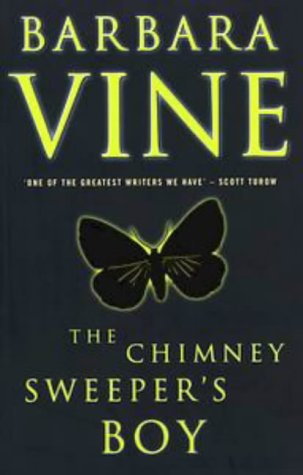
The Chimney Sweeper's Boy by Barbara Vine
Viking
Pp. 343

When Gerald Candless, a critically acclaimed author dies, his daughter, Sarah, is asked to write a memoir of her beloved father. As she starts to research his childhood and origins – i.e. his life before she was born – she soon discovers multiple discrepancies in the narrative. There follows a domestic investigation into family secrets that might make a man change his name and adopt an entirely new persona.

As with many Barbara Vine novels, the timeframe switches back and forth between past and present, and all the family members are affected by the consequences of one man’s actions. Each chapter begins with a ‘quote’ from one of Gerald Candless’ novels, allowing the author to play with her story-within-a-story motif, as Sarah plays amateur sleuth and attempts to mine fact from fiction. The moth on the spines of Gerald Candless’ books (and the jacket of this novel) proves to be a ‘clue’ in the manner of an old-fashioned detective novel, and simultaneously represents a subtle homage by Barbara Vine to the art of cover design.


The secrets are often to cover historic scandals, such as illegitimacy, unwed mothers, class distinctions and homosexuality, which would not raise an eyebrow today. She writes with sadness that such issues could lead to misunderstanding and even murder.  Another familiar trope is the notion of blood being a metaphor for generational inheritance (both positive and negative), while also being a vital fluid.


Like PD James or Robert Goddard, Barbara Vine writes literary suspense novels where the characters are more engaging the plot, and the themes are apparent from the start. Rather than racing to the end to find out whodunnit, the reader spends time with the characters wondering how they feel and what they are going to do about it.

Friday, 9 February 2024

Friday Five: Books in Song


One of the books I read last month was by Richard Brautigan. I read it because of the song, Have You Ever Heard a Digital Accordion by the fabulously bonkers band, The Lovely Eggs. And it made me think how much I have learned from music, as lyrics have frequently piqued my interest to learn more about historical, political and literary facts and figures. So here are five authors referred to in song that I have investigated further due to a lyric or two, or an entire song, or several. 
  1. Brendan Beehan - there are many Pogues songs which namecheck the Irish poet, novelist, playwright and activist. Due to songs such as Streams of Whiskey and Thousands are Sailing I read The Quare Fellow, An Giall (The Hostage), Borstal Boy, Confessions of an Irish Rebel, and a couple of biographies by Michael O'Sullivan and Ulick O'Connor. As a man who joined the IRA aged 16 (after having been a member of the 'boy scout group' of the organisation aged 14), embarked on an unauthorised solo mission to blow up the Liverpool docks (for which he was imprisoned in a borstal), was sentenced to prison for attempted murder aged 19, promoted the use of Gaelic (which he taught himself to write and speak while in prison), lived in Paris and New York, and suffered alcoholism and related health complications including diabetes, it is little wonder that Brendan Beehan appealed so much to The Pogues. Some of his writing is exceptional, and he is largely known for his pithy epigrams, such as 'I only drink on two occasions - when I'm thirsty and when I'm not' or 'There's no bad publicity except an obituary'. 
  2. Albert Camus - A favourite of pretentious young men who liked to be thought of as enigmatic and tortured while having existentialist crises, but who actually turned out (as I learned to my cost) to be self-obsessed and intensely dull. Camus was born in 1913 in Algeria to French parents, and he was in Paris when the Germans invaded France during World War II in 1940. He joined the French Resistance and edited outlawed newspapers, opposing Stalin and the totalitarianism of the USSR - his politics were more libertarian socialism and anarcho-syndicalism. After the war he became a celebrity speaker, had numerous affairs, published novels, essays and plays, and won the Nobel Prize for Literature in 1957, becoming the second youngest recipient of the award (after Rudyard Kipling). Killing an Arab by the Cure makes a lot more sense after reading L'Etranger (The Outsider), I'm a big fan of isolated community narratives, so I was intrigued by La Peste (The Plague), and the name for the Prestwich post-punk band fronted by Mark E. Smith was taken from his last novel, La Chute (The Fall). 
  3. Jack Kerouac - Natalie Merchant (lead vocalist and primary lyricist of the band 10,000 Maniacs from 1981-1993) probably is influenced by the Beat Generation of American novelists, poets, and self-entitled young men. They included Jack Kerouac, William S. Burroughs, Allen Ginsberg and Charles Bukowski, and favoured stream of consciousness writing, jazz music, spontaneous travel, heavy drinking and widespread promiscuity... for men. Kerouac published wrote over a dozen novels and as many poems, with On the Road being the most famous and the only one I could bring myself to read. On the Road is a rambling, indulgent, misogynistic account of a road trip taken by Jack Kerouac with Neal Cassady across the United States and Mexico full of drugs, violence, soul-searching and machismo. It's greatly lacking in chapters, paragraphs or general structure and reading it feels like being bludgeoned by a Hemingway wannabe. Apparently Kerouac wrote it in 1951 with the assistance of his pregnant wife, Joan, 'supplying him with Benzedrine, cigarettes, bowls of pea soup, and mugs of coffee to keep him going', while he lived at home with his mother. In thanks, they got divorced and he refused to acknowledge paternity of the child until it was proved through a blood test when she was ten. He only saw her twice in his life, which ended aged 47 when he died from an internal haemorrhage caused by cirrhosis. The lyrics to Hey, Jack Kerouac by 10,000 Maniacs (released 1987) includes the lines, "You chose your words from mouths of babes got lost in the wood/ The hip flask slinging madman, steaming café flirts,/ In Chinatown howling at night." The music of the song is exquisite; the inspiration for the lyrics tiresome and disappointing.
  4. Sylvia Plath - If all of the other authors mentioned here are read by every teenage boy who fancies himself as a misunderstood genius, then Sylvia Plath is the female equivalent for girls. Naturally, it doesn't end well for her and after being clinically depressed for most of her adult life, she died by suicide in 1963 aged 30. Incidentally, while many women read the male authors, I wonder how many men read the female ones. Apparently Nigel Blackwell (singer, guitarist and songwriter for Half Man Half Biscuit) does, or at least he refers to Sylvia Plath in the brilliant song, The Light at the End of the Tunnel (Is the Light of an Oncoming Train), which was released in 2002. Of course, I had already Sylvia Plath poetry collections, The Colossus and Other Poems, and Ariel, the semi-autobiographic novel The Bell Jar, and Janet Malcolm's biography about Plath's tumultuous relationship with Ted Hughes, The Silent Woman before this particular song came out (I was an undergraduate of English Studies in Manchester after all), but it's harder than you might think to find songs that refer to female authors. As Half Man Half Biscuit lament the loss of a relationship with a woman who has moved to Notting Hill and changed her sphere of social influence, they state, "For when you're in Matlock Bath/ You don't need Sylvia Plath/ Not while they've got Mrs Gibson's jam".
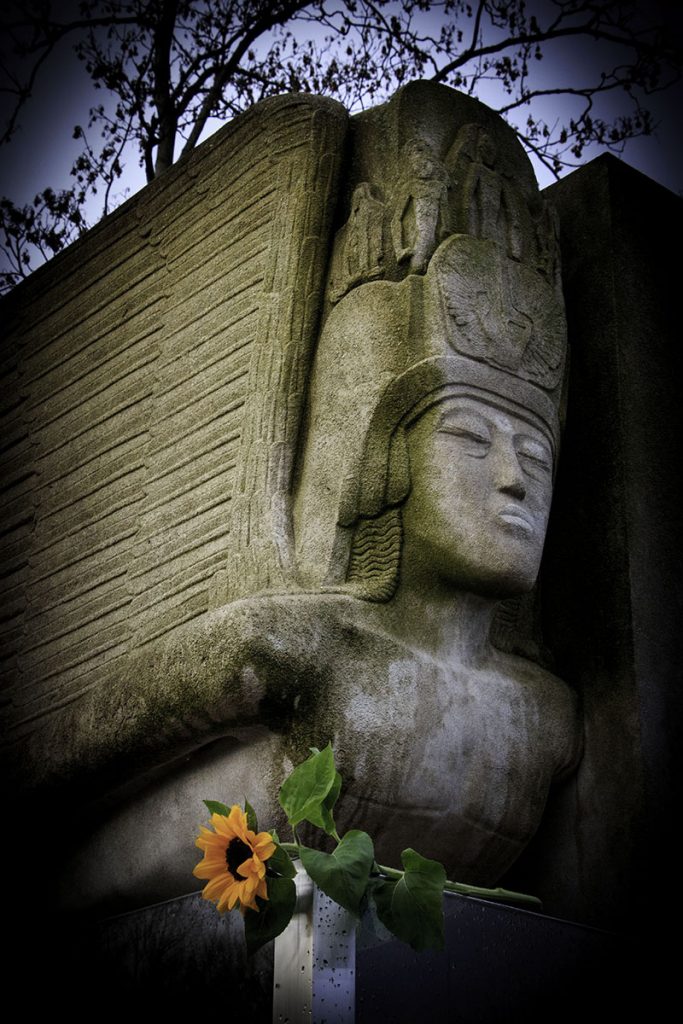
  5. Oscar Wilde - It's almost impossible to imagine that The Smiths would exist if Oscar Wilde had not gone before. Screamingly pretentious with gladioli hanging out of his back pocket, Morrissey had that same pathological need to be noticed and considered witty and brilliant above all else. Despite the recent fall from grace - embracing a far-right political party and publicly spouting racist and sexist views - his lyrics from the cutting edge albums of the mid 1980s were instantly appealing to those who felt they were the social underdogs of Thatcher's Britain. The musical brilliance of Johnny Marr (guitarist), Andy Rourke (bassist) and Mike Joyce (drummer) certainly didn't hurt, and elevated the band to indie-god-like status, but it was the lyrics (written mainly by Morrisey and Marr) that were taken to heart in teenage bedrooms across the country.  "A dreaded sunny day/ So let's go where we're wanted/ And I meet you at the cemetery gates/ Keats and Yeats are on your side/ But you lose/ 'Cause weird lover Wilde is on mine." I became utterly obsessed with Oscar Wilde as a result of The Smiths and read every one of his plays, short fictions, poems, essays and novel (there was only one). I also practically haunted Cimetière du Père-Lachaise (where the body of Wilde is interred) when I lived in Paris (before the frankly repulsive habit caught on of people kissing the tomb and leaving lipstick marks), reading Richard Ellman's definitive biography (for which he posthumously won a Pullitzer Pride) while sighing dramatically and occasionally weeping. Pretentious, moi?

Monday, 27 March 2017

A portrait of an author ahead of her time


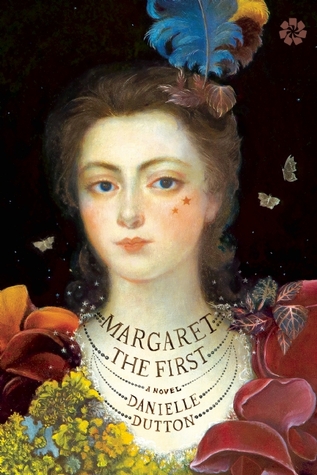
Margaret the First by Danielle Dutton
(Scribe)
Pp. 160

Margaret Cavendish was a poet, philosopher and visionary. As a child she created imaginary worlds (populated with thinking-rocks, humming-shoes, her favourite sister and Shakespeare, Ovid and Caesar) and stitched little books together with yarn. “Eventually she achieved fame, but it was not necessarily that which she sought, as children chased after her carriage calling out to ‘Mad Madge’ and she became a cautionary tale for young girls who dreamed of becoming too intelligent.

With the civil war raging, she joined the court of Queen Henrietta Maria and followed her into exile in France, where she met and married the much older William Cavendish, Duke of Newcastle. William was generally very supportive of her work and encouraged her to speak up and express her thoughts. Through him, Margaret came into contact with many of Europe’s leading thinkers; but she was bashful and awkward in society. When she was invited to speak at The Royal Society (the first woman to be so invited, and the last for 200 years) she could only stammer appreciation and rush away; causing Samuel Pepys to write, “A mad, conceited, ridiculous woman. I do not like her at all.”

As a woman who published books of her thoughts, she was considered doubly shocking. First that she had them, which was scandalous enough, but to voice them was even more so. Furthermore, she was childless, attempted cures for which included syringing herbs into her womb and “a drench that would poison a horse.”

Many of her thoughts centred on the physical world. As well as poetry and philosophy she wrote and published works of extraordinary utopian science fiction and fantasy. In her book, Philosophical and Physical Opinions, 1655, against the prevailing ideas of the time, “I argued all matter can think: a woman, a river, a bird. There is no creature or part of nature without innate sense and reason, I wrote, for observe the way a crystal spreads, or how a flower makes way for its seed.”  

In contrast with much current weighty (in size) historical fiction, this short novel (160 pages) covers historical events in brief detail; The English Civil War is dealt with very succinctly:
“The King of England was convicted of treason. Then the King of England was dead. It was Tuesday. It was 1649. Parliament hacked off Charles I’s head outside the Banqueting House at Whitehall.” Halfway through the novel, Danielle Dutton changes from first-person to third-person narration. This ambitious move reflects the fame Margaret sought as people began to talk about her after the coronation of Charles II, and the Cavendishes’ return to London.

While Danielle Dutton doesn’t claim Margaret specifically as a proto-feminist, she does dwell on her issues with equality, or the lack thereof. Indeed, the title comes from her own self-honorific. “Though I cannot be Henry the Fifth, or Charles the Second, yet I endeavour to be Margaret the First”. She was far from saintly, however, and, jealous of William’s success, she upstaged him at the opening of his play by attending the theatre with her breasts bared and her nipples painted.

Margaret Cavendish was a remarkable woman. She has been championed by Virginia Woolf and deserves wider renown. Unfortunately, with society’s attitude towards women, she will be better remembered for her outfits and her manners than her literary and artistic achievements.
Tuesday, 19 November 2013

A sense of place: writing the environment


A Sense of Place
Snowy Mountains Readers Writers Festival
Jindabyne, 31 March 2013

I have a friend in New Zealand who told me that the things she was most excited about seeing on her first ever trip to England were a meadow and a badger. She had read about them in childhood stories by Enid Blyton and others, yet she had never experienced these concepts. I wondered at the time whether authors knew that certain things were particular to their shores and people living in other places might not recognise them, and if they felt the need to explain certain physical details such as flora and fauna?

Everyone knows that kangaroos are endemic to Australia but Rose Tremain suffered howls of outrage and accusations of insufficient research when she put a vole in the Arrow in The Colour. She assumed that the little round rodent was everywhere, but it doesn’t live in New Zealand, and the veracity of her novel was ruined. By including such specifics of setting – the books’ equivalent of stage directions – an author may instantly expand or limit their readership. I loved exploring new worlds through novels when I was a child, but several education authorities now claim that children need stories set in places to which they can relate.

At A Sense of Palce, chaired by Lisa Sweeney, previously a manager of radio and television programmes across the country for the ABC network, four authors gather in a hotel in Jindabyne to discuss the effect of the environment on their work before a (predominantly female, as these things always are) audience of about thirty. It seems appropriate that we are in Silver Brumby territory; some of the most descriptive scenery I ever read about as a child.

Writing in a variety of genres – chick-lit, travel, crime and investigative journalism – all said that the setting is crucial to their work, contributing essential elements to what makes a narrative believable. One of the panellists, Barry Maitland suggests that profession may have as much of an influence as setting (he has studied, practiced and taught as an architect) but that is possibly a debate for another time.

Lisa Walker grew up in Fiji and Brisbane, and has worked as a guide in National Parks and taken people to build and stay in snow caves. She now writes and surfs near Byron Bay and says her books are firmly situated in a place. She admits that she is almost cheating with her latest work in progress, which she has set in her own house so she knows the site very well. Sex, Lies and Bonsai is set in a small beachside town and this suits her exploration of outsider themes and the difficulty of returning to a childhood home.

With her interest in zoology, the wildlife that lives in each area is essential to her stories. One of her characters asks, “Do you ever worry that all the wildlife will gang up and drive us out?” Walker also says that in one of her descriptive passages she writes of a person eyeballing a magpie with black eyes. She received a letter pointing out that magpies have brown eyes and that she should have known that as a National Park employee. She agrees that this is true but juveniles have black eyes so she wrote back with a ‘so there’ letter.

Details of the scene are immensely important to Barry Maitland in his crime fiction. He has written six books (with the same two detectives) and sets them in different parts of London. He describes the city as being a series of little villages, and each has its idiosyncrasies. He grew up in London and moved to Australia to head the school of architecture at Newcastle University.

His 2011 novel, Chelsea Mansions, is set among the golden postcodes of the extremely wealthy, as he says wryly, “There hadn’t been a murder in Chelsea for a long time.” The Raven's Eye, his newest novel, concerns the nature of surveillance in modern times and is set among the narrow boats on the Regent’s Canal. He writes from his memories of the capital but also returns to refresh details and he sees it through the critical eyes of a stranger. He says that people will always correct minor details or assert that they know the exact street about which he’s writing, even when he has made it up.

Matthew Condon agrees with the ability of the readership to identify unintended parallels. He claims that no matter what he writes, even if he were to portray an alien from an undiscovered galaxy, “My mother will phone and say, ‘will you stop writing about your father’.” Later, AJ ‘Sandy’ Mackinnon added that when he was writing his first book he couldn’t type so he handwrote the pages and his mother typed them up, editing and deleting as she saw fit, expressing that Great Aunt Mary wouldn’t like it, even though “Great Aunt Mary had been dead for twelve years”. On the other hand, some people don’t recognise themselves, which might be just as well when Condon fears they might take offence at his descriptions.

As a journalist and fiction writer, he has learnt the necessity of attention to detail in a short space of time and words. In the industry they call this a ‘colour writer’. He used to work on the Gold CoastBulletin but hates the landscape of the Gold Coast – there are murmurs of support from the audience for this dislike. Obviously the specifics have to be correct for his latest book, Three Crooked Kings, which is a true crime/ political exposé of police corruption in Queensland. He is working on its follow-up but says he can’t wait to finish with non-fiction as he has many more fiction projects in mind, with which he can be freer with details.

For AJ ‘Sandy’ Mackinnon place or landscape is not just a pretty backdrop but a challenge. He writes of adventures taken in new places, so this setting provides physical as well as literary obstructions. He also sees difficulties in writing originally about a place that others have already covered. Whenever he sees a new place he relates it to somewhere he has read about, from Narnia to the Victorian England of Dickens or the Dr Doolittle stories, and he refers to the “thrill of recognising a place that an author has explained”.

Having grown up in Wollongong, Mackinnon moved to England when he was eight. The family travelled by ship and when he returned to Australia two years ago, he chose the same mode of transport. The outward journey in 1971 (visiting locations such as Cape Town, the Canary Islands and Lisbon) fitted the storybook elements of travel in books he had read as a child. The return leg made him feel like an adventurer.

His travel books began as a correspondence with a friend. He wrote letters of 150 pages, illustrated around the edges because you have time to do such things on a sea voyage. Self-depreciatingly he says, “While everyone else was out playing sport, we were getting pale and writing letters.” Such letters are the forerunners of books because they are instinctively written to amuse an audience, so events are heightened and people turned into characters. He sees no necessity to keep a diary.

The elements of sea, islands and shipwrecks are clearly important to him as they are reflected in his latest work, a retelling The Tempest set on Iona, where the headmasters of posh private schools are at a conference in 70s/80s Britain. He says that “even in fiction landscapes are obstacles to be overcome”.

Friday, 27 September 2013

Friday Five: Fame. What's your name?

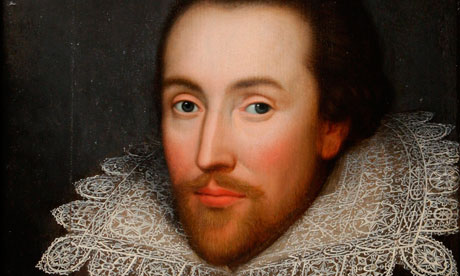
The Master: William Shakespeare
What is the height of fame for a writer? Arguably it would be that your name has become an adjective, the meaning of which is known to people who haven’t even read your books because you epitomised a style or a genre.

I ran a few of these past Him Outdoors, to see if he recognised them too or whether it was just me assuming that everyone had heard of them. He rejected Homeric, Jamesian, Proustian and Kafka-esque; they are obviously more literary criticism than common parlance.

I rejected Freudian on the grounds that it is not his writing that is acknowledged by the term, but his theories. Many people have only a loose understanding of what they are anyway, and simply think it means mentioning sex in an inadvertent manner. So these are the words on which we agree.

5 Common Adjectives Taken from the Names of Authors:
  1. Shakespearean – can mean almost anything from his language to his characters to the time in which he lived. If you are going to use this word to describe anyone’s writing, they had better be bloody brilliant.
  2. Orwellian – most usually associated with Big Brother, the thought police, doublespeak and the invasion of personal freedom by state intervention; it’s never a good thing.
  3. Dickensian – often linked with squalor and poverty, particularly of London, or jolly Christmases. Also relates to random well-drawn dramatic characters who linger on the periphery of the action.
  4. Wildean – witty and epigrammatic with acerbic undertones; dandyish for men; serious ‘with a past’ for women; and a suggestion of peacock feathers all round.
  5. Hardyesque – doom and gloom and pathetic fallacy, which is when nature, the weather and the seasons echo mood and foreshadow story. He is most famous for his tragedies in which people struggle against the great unfeeling world, and their minor faults are counted against them for the rest of their lives. NB – don’t ever sell your wife at the county fair.