Showing posts with label Charles Dickens. Show all posts

Tuesday, 24 December 2019

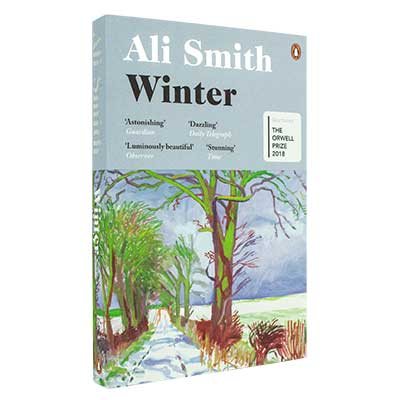
God Help Us: Winter


Winter by Ali Smith
Penguin
Pp. 322

Ali Smith’s seasonal quartet began with Autumn, published last year, and continues here with Winter. The subject is quite different but many of the themes are familiar. It is written in a continuous fluid style, but with short sentences and without irksome stream-of-consciousness. The novel embroiders snatches of literature and legend into a rich tapestry: a retelling of Dickens’ A Christmas Carol for our times. Dickens opened his festive novel with the words, “Marley was dead, to begin with. There is no doubt whatever about that.” Smith riffs on this idea. “God was dead: to begin with. And romance was dead. Chivalry was dead. Poetry, the novel, painting, they were all dead, and art was dead. Theatre and cinema were both dead. Literature was dead. The book was dead.”

So, what’s left? An ageing woman called Sophia imagines a child’s floating head to keep her company. She is visited by her son, Arthur (Art for short), who writes a blog called Art in Nature, which his ex-girlfriend, Charlotte, hates because it isn’t political. He explains, “What I do is, by its nature, not political. Politics is transitory. I watch the progress of the year in the fields, I look closely at the structures of hedgerows. Hedgerows are, well, they’re hedgerows. They just aren’t political.” Not wanting to admit he is alone, Art pays Lux, a girl he spotted in a bus-stop, to accompany him and pretend to be his girlfriend. When Sophia appears to be very ill, Lux contacts her estranged sister, Iris, to whom she no longer speaks. Iris turns up on the doorstep and recriminations and family resentments rise to the surface. The names with their connotations of sleeping heroes, guiding light and Greek gods are all pertinent.

The treatment of nature is centre stage – if Autumn was about Brexit; then Winter is about the environment, and the disasters destroying the planet and humanity. Iris is politically motivated, and the sisters dredge up memories of the Greenham Common protests, about which Smith seems almost nostalgic. She suggests that individuals can still make a different if they work together, as topics range from the Grenfell Tower to the insistence on stopping migrants; the political becomes personal and vice versa. The novel contains CND songs, and 1960-style rhymes about poisonous gasses and noxious chemicals. Horrifyingly, people are crowdfunding to raise money to stop rescue boats from helping refugees.

Having been impressed by Cymbeline, Lux originally came to England because it is the land of Shakespeare. In an obvious political metaphor, she says, “If this writer from this place can make this mad and bitter mess into this graceful thing it is at the end, where the balance comes back and all the lies are revealed and all the losses are compensated… then that’s the place I’m going. I’ll go there, I’ll live there.”

Language and communication are themselves under threat in this modern world. To glean information, people no longer talk to each other; they google things and the results are listed. Just as there is a disembodied floating head in Sophia’s imagination, words are split in half to create new meanings: get ahead; get a head; “I’m nobody’s child. I’m no body’s child.” Art examines the concept of snow and the connotations of the word ‘snowflake’. In one section, Art asks Lux a series of questions, and then we see her side of the dialogue separately as she answers them. Further indications that cohesive dialogue is breaking down is seen in parliament when a man barks like a dog at a woman who is trying to make a speech.

This is a novel of stories and interpretations. We are given tales of fertility; the Green Man, Sir Gawain and the Green Knight, and defenders of past rituals and natural bounty. Smith combines the richness of the past with the frustrations of the present and a glimmer of hope for the future, believing that communities and compassion can overcome division and isolation. Winter is an incredible achievement – it was written to reflect the immediacy of the time (even the text is not justified, implying a sense of urgency), yet it feels fresh rather than hurried. It ends with another echo from A Christmas Carol: “In the middle of summer it’s winter. White Christmas. God help us, every one. Art in nature.” It’s enough to make the reader want to take to the streets.

Friday, 27 September 2013

Friday Five: Fame. What's your name?

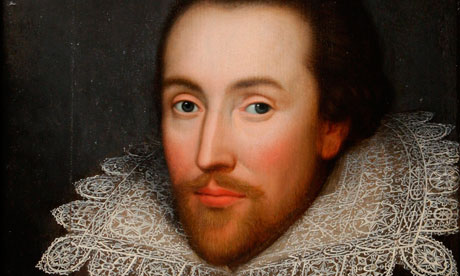
The Master: William Shakespeare
What is the height of fame for a writer? Arguably it would be that your name has become an adjective, the meaning of which is known to people who haven’t even read your books because you epitomised a style or a genre.

I ran a few of these past Him Outdoors, to see if he recognised them too or whether it was just me assuming that everyone had heard of them. He rejected Homeric, Jamesian, Proustian and Kafka-esque; they are obviously more literary criticism than common parlance.

I rejected Freudian on the grounds that it is not his writing that is acknowledged by the term, but his theories. Many people have only a loose understanding of what they are anyway, and simply think it means mentioning sex in an inadvertent manner. So these are the words on which we agree.

5 Common Adjectives Taken from the Names of Authors:
  1. Shakespearean – can mean almost anything from his language to his characters to the time in which he lived. If you are going to use this word to describe anyone’s writing, they had better be bloody brilliant.
  2. Orwellian – most usually associated with Big Brother, the thought police, doublespeak and the invasion of personal freedom by state intervention; it’s never a good thing.
  3. Dickensian – often linked with squalor and poverty, particularly of London, or jolly Christmases. Also relates to random well-drawn dramatic characters who linger on the periphery of the action.
  4. Wildean – witty and epigrammatic with acerbic undertones; dandyish for men; serious ‘with a past’ for women; and a suggestion of peacock feathers all round.
  5. Hardyesque – doom and gloom and pathetic fallacy, which is when nature, the weather and the seasons echo mood and foreshadow story. He is most famous for his tragedies in which people struggle against the great unfeeling world, and their minor faults are counted against them for the rest of their lives. NB – don’t ever sell your wife at the county fair.

Monday, 26 October 2009

Oliver! overload

I seem to be suffering from Oliver! overload. In what seems like a dreadfully short space of months I’ve seen it performed at Porirua and Alexandra. The Auckland Theatre Company are currently in the throes of the musical and I have just heard that my local musical society (Showbiz Queenstown) have lined it up to be next on their programme. Please God, don’t let any of my friends play the lead role of Nancy (as they did in the last two productions I saw) or I shall have to go and see it again.

It’s not that it’s bad (it can actually be pretty good), but it is certainly problematic. These are the main problems as I see them:

· The staging – there are many different scenes and settings. They range from the workhouse and the undertaker’s parlour, to the thieves’ kitchen and public house, and out into the street by way of an upper-class family home. That’s a lot to contend with.

There are some intimate scenes and some large rousing numbers. Do you have the Company at the forefront of the stage where they can dance, confining the more personal moments to the sides or the back of the stage with connotations of privacy? This is all well and good but can lose the dramatic impact if the cast are too far away from the audience.

For example the flirtation between Mr Bumble and the Widow Corney is amusing and effective if played up-close, but dull and dreary if positioned towards the back of the stage. Similarly, Nancy’s altercation with Bill can get lost if not sufficiently highlighted, and yet it is a pivotal moment of the production.

An apron extending past the proscenium arch might be a successful way to deal with this, but is potentially cumbersome and costly in many a town hall with limited space and resources. Sliding flats have similar benefits and drawbacks. Having forked out a small fortune on a revolve, Showbiz Queenstown would be mad not to utilise it to solve this predicament.

· The lighting – I once read a
Guardian guide to critic-speak in which the term ‘crepuscular lighting’ was translated to mean ‘I couldn’t see a thing’. This is a problem. Yes, Dickensian London was dark and dingy – especially in the alleyways and orphanages – but the stage doesn’t have to be.

It’s necessary to convey the atmosphere while still being able to see the characters. In one performance, Nancy walked from side to side of the stage through a big black hole. I only knew she was there because she was singing at the time. If you combine the ‘can’t see’ factor with the ‘can’t hear’ factor mentioned above, you have two major difficulties that would plague any musical.

· The leads – the problem with many amateur musical societies (which most are) is that they tend to cast singers who can dance, and if they can act a bit that’s a bonus. Almost more than any other musical (with the possible exception of My Fair Lady), this show demands actors who can sing, and if they can’t dance, find them something else to do on stage. This is why, among local shows, I would always go and see whatever Geoff Turkington directs.

Apparently in one of the shows, there was a 16-year old girl recalled for the part Nancy. I’m sure she looked pretty and sang nicely, but if you have a schoolgirl playing the part of the archetypal ‘tart with a heart’ then it makes all her customers and associates appear twisted and perverted in a way that isn’t going to do your show any favours.

Incidentally, both of the Nancy’s I saw were excellent – both were past 30 and had an understanding of character that made them react well with children and abusive lovers alike.

Fagin needs to be strong and convincing. Whether you decide to play him as callous or misguided is up to the director, but you have to have conviction and consistency. I’ve seen elements of comedy, cruelty, paternalism and paedophilia in this role. That’s a lot to ask from an actor. Alec Guinness, Timothy Spall and Ben Kingsley, among others have answered the call. Just because it is a musical, there is no need to skimp on the acting talent – Rowan Atkinson is receiving plaudits for his role in the latest Drury Lane revival.

· The cameos – this is a musical that proves the adage about there being no small parts...
Mr and Mrs Sowerberry, the funeral directors, are essential to establish the mood in the third scene before they disappear from the story, and Mr Brownlow, who also only turns up in the second half has a tough task to be sympathetic but not saccharine.

Bill Sykes doesn’t appear at all in the first act, and only a couple of times in the second – yet his brooding and menacing presence overshadows everything. With or without his dog, when I first read the book, this man gave me nightmares. One of Dickens’ great talents as an author that has kept him relevant throughout the ages is his brilliant creation of ‘minor’ characters. To ignore that in any version of his work is heretical.

· The children – I may have mentioned my feelings about children on stage before. This show has a lot of them. Unless they are excellent actors with proven ability, the advice would be: give them something to do and keep it strong but simple. Otherwise you get a heap of kids shuffling about on the stage looking at their feet and murmuring – their parents will find it adorable but no one else will.

Oliver is not a great character – he is a pawn in everyone else’s game and after he asks (for some reason frequently with a lisp), ‘Please sir, can I have some more?’, he doesn’t actually do a lot. He gets to sing the mawkishly manipulative Where is Love? and is then thankfully subsumed by Fagin’s gang of ragamuffins. He is possibly the one character who needs to look cute.

I fell in love with the Artful Dodger as a child. He gets all the best lines and songs and swaggers with an early eighteen-hundred cockney cockiness. Not a modern ‘what’s up bro’ or a down with the homies attitude; this could ruin his character. He has to know what it is to be in context, and act accordingly. Not many kids can do this and it can threaten the credibility of the entire production.

· The company numbers – there are some great songs in this show for the chorus. Whatever you think of Food, Glorious Food, Consider Yourself, It’s a Fine Life, and Who Will Buy?, you know the songs. Lionel Bart wrote some catchy numbers and there are plenty of sing-along tunes and some decent harmonies. The question is what to do with the people on stage? If they stand about singing there is no visual impact and if they are too busy with movement they will invariably drop their voices.

Again, a large stage with additional areas or moving furniture could help here, along with an understanding of the context. Oom Pah Pah can be the world’s worst dirge or the supreme social commentary depending on the staging. A look at a
Hogarth painting suggests its true potential. Better yet, a read of the pub scene in the original book will reveal that it’s not all beer and skittles.

· The story – Dickens is renowned for his convoluted plots with outrageous coincidences that make everything alright in the end. If you haven’t read Oliver Twist you may well ask, as my friend did when we saw the musical production, ‘Who the hell is that woman?’ Oliver’s mother, Agnes, died in childbirth while at the workhouse and his father is mysteriously absent.

There is a locket, a picture, a resemblance and a dying secret, all of which is explained in the novel and glossed over in the musical. Basically, it makes very little sense – you just have to hope that no one really cares. But in the way that they are diverted by the spectacle of the show and the strength of the characterisation, not in the way of the teenager in the seats behind us who tried to persuade her mother to leave at the intervel because, 'this is so boring!'

· The social conscience – Another of Dickens’ great talents was his mastery of social commentary. He wrote with grim realism and merciless satire of the effects of Industrialism on nineteenth century England. He criticised the Poor Laws and the capitalist ethic which led to greed and debauchery and extreme poverty and crime. A pure heart was the only way to overcome this, with weapons of charity and love.

If the show emphasises the ‘knees up Mother Brown’ motif to the detriment of the dark side of Dickensian London then it simply hasn’t done its job. Musicals aren't always light entertainment - some pack a punch. If done correctly, this can be a knock-out. However, to continue the boxing metaphor, if you're not even going to try and address the social issues, you might as well just throw in the towel.