One of the books I read last month was by Richard Brautigan. I read it because of the song, Have You Ever Heard a Digital Accordion by the fabulously bonkers band, The Lovely Eggs. And it made me think how much I have learned from music, as lyrics have frequently piqued my interest to learn more about historical, political and literary facts and figures. So here are five authors referred to in song that I have investigated further due to a lyric or two, or an entire song, or several.
- Brendan Beehan - there are many Pogues songs which namecheck the Irish poet, novelist, playwright and activist. Due to songs such as Streams of Whiskey and Thousands are Sailing I read The Quare Fellow, An Giall (The Hostage), Borstal Boy, Confessions of an Irish Rebel, and a couple of biographies by Michael O'Sullivan and Ulick O'Connor. As a man who joined the IRA aged 16 (after having been a member of the 'boy scout group' of the organisation aged 14), embarked on an unauthorised solo mission to blow up the Liverpool docks (for which he was imprisoned in a borstal), was sentenced to prison for attempted murder aged 19, promoted the use of Gaelic (which he taught himself to write and speak while in prison), lived in Paris and New York, and suffered alcoholism and related health complications including diabetes, it is little wonder that Brendan Beehan appealed so much to The Pogues. Some of his writing is exceptional, and he is largely known for his pithy epigrams, such as 'I only drink on two occasions - when I'm thirsty and when I'm not' or 'There's no bad publicity except an obituary'.
- Albert Camus - A favourite of pretentious young men who liked to be thought of as enigmatic and tortured while having existentialist crises, but who actually turned out (as I learned to my cost) to be self-obsessed and intensely dull. Camus was born in 1913 in Algeria to French parents, and he was in Paris when the Germans invaded France during World War II in 1940. He joined the French Resistance and edited outlawed newspapers, opposing Stalin and the totalitarianism of the USSR - his politics were more libertarian socialism and anarcho-syndicalism. After the war he became a celebrity speaker, had numerous affairs, published novels, essays and plays, and won the Nobel Prize for Literature in 1957, becoming the second youngest recipient of the award (after Rudyard Kipling). Killing an Arab by the Cure makes a lot more sense after reading L'Etranger (The Outsider), I'm a big fan of isolated community narratives, so I was intrigued by La Peste (The Plague), and the name for the Prestwich post-punk band fronted by Mark E. Smith was taken from his last novel, La Chute (The Fall).
- Jack Kerouac - Natalie Merchant (lead vocalist and primary lyricist of the band 10,000 Maniacs from 1981-1993) probably is influenced by the Beat Generation of American novelists, poets, and self-entitled young men. They included Jack Kerouac, William S. Burroughs, Allen Ginsberg and Charles Bukowski, and favoured stream of consciousness writing, jazz music, spontaneous travel, heavy drinking and widespread promiscuity... for men. Kerouac published wrote over a dozen novels and as many poems, with On the Road being the most famous and the only one I could bring myself to read. On the Road is a rambling, indulgent, misogynistic account of a road trip taken by Jack Kerouac with Neal Cassady across the United States and Mexico full of drugs, violence, soul-searching and machismo. It's greatly lacking in chapters, paragraphs or general structure and reading it feels like being bludgeoned by a Hemingway wannabe. Apparently Kerouac wrote it in 1951 with the assistance of his pregnant wife, Joan, 'supplying him with Benzedrine, cigarettes, bowls of pea soup, and mugs of coffee to keep him going', while he lived at home with his mother. In thanks, they got divorced and he refused to acknowledge paternity of the child until it was proved through a blood test when she was ten. He only saw her twice in his life, which ended aged 47 when he died from an internal haemorrhage caused by cirrhosis. The lyrics to Hey, Jack Kerouac by 10,000 Maniacs (released 1987) includes the lines, "You chose your words from mouths of babes got lost in the wood/ The hip flask slinging madman, steaming café flirts,/ In Chinatown howling at night." The music of the song is exquisite; the inspiration for the lyrics tiresome and disappointing.
- Sylvia Plath - If all of the other authors mentioned here are read by every teenage boy who fancies himself as a misunderstood genius, then Sylvia Plath is the female equivalent for girls. Naturally, it doesn't end well for her and after being clinically depressed for most of her adult life, she died by suicide in 1963 aged 30. Incidentally, while many women read the male authors, I wonder how many men read the female ones. Apparently Nigel Blackwell (singer, guitarist and songwriter for Half Man Half Biscuit) does, or at least he refers to Sylvia Plath in the brilliant song, The Light at the End of the Tunnel (Is the Light of an Oncoming Train), which was released in 2002. Of course, I had already Sylvia Plath poetry collections, The Colossus and Other Poems, and Ariel, the semi-autobiographic novel The Bell Jar, and Janet Malcolm's biography about Plath's tumultuous relationship with Ted Hughes, The Silent Woman before this particular song came out (I was an undergraduate of English Studies in Manchester after all), but it's harder than you might think to find songs that refer to female authors. As Half Man Half Biscuit lament the loss of a relationship with a woman who has moved to Notting Hill and changed her sphere of social influence, they state, "For when you're in Matlock Bath/ You don't need Sylvia Plath/ Not while they've got Mrs Gibson's jam".
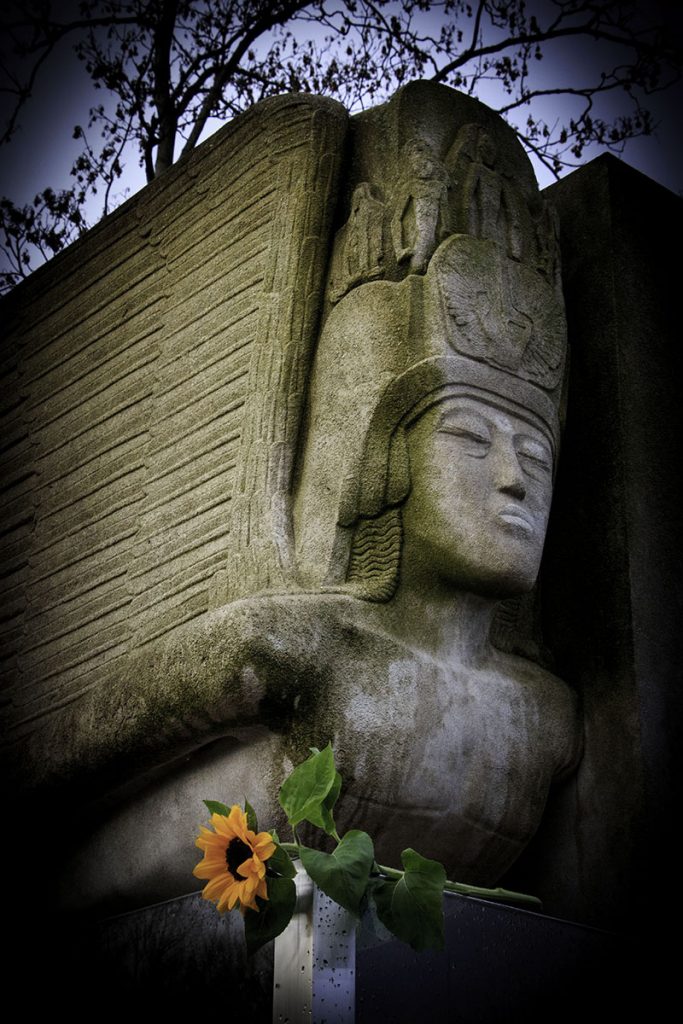
- Oscar Wilde - It's almost impossible to imagine that The Smiths would exist if Oscar Wilde had not gone before. Screamingly pretentious with gladioli hanging out of his back pocket, Morrissey had that same pathological need to be noticed and considered witty and brilliant above all else. Despite the recent fall from grace - embracing a far-right political party and publicly spouting racist and sexist views - his lyrics from the cutting edge albums of the mid 1980s were instantly appealing to those who felt they were the social underdogs of Thatcher's Britain. The musical brilliance of Johnny Marr (guitarist), Andy Rourke (bassist) and Mike Joyce (drummer) certainly didn't hurt, and elevated the band to indie-god-like status, but it was the lyrics (written mainly by Morrisey and Marr) that were taken to heart in teenage bedrooms across the country. "A dreaded sunny day/ So let's go where we're wanted/ And I meet you at the cemetery gates/ Keats and Yeats are on your side/ But you lose/ 'Cause weird lover Wilde is on mine." I became utterly obsessed with Oscar Wilde as a result of The Smiths and read every one of his plays, short fictions, poems, essays and novel (there was only one). I also practically haunted Cimetière du Père-Lachaise (where the body of Wilde is interred) when I lived in Paris (before the frankly repulsive habit caught on of people kissing the tomb and leaving lipstick marks), reading Richard Ellman's definitive biography (for which he posthumously won a Pullitzer Pride) while sighing dramatically and occasionally weeping. Pretentious, moi?