Showing posts with label Richard Brautigan. Show all posts

Wednesday, 12 June 2024

Can you pass the acid test? Trout Fishing in America


Trout Fishing in America by Richard Brautigan
Canongate
Pp. 122

The novella immediately announces itself as a surreal work of post-modernism, deconstructing itself as even being a book. It is not really about trout fishing, but it hangs loosely together around that conceit as it spawns ideas and floats off down streams and meandering tributaries.  The chapters are very short – a page or two at most – and the first one explains the purpose of its own cover. The language is hallucinogenic and often touchingly whimsical as the book defies all conventions in an extremely self-aware manner.

First published in 1967, the novella has a strong element of The Machine in the Garden about it, as Brautigan seems to reflect on nature and the destruction of the environment. A child thinks he sees a waterfall, but really it is “just a flight of white wooden stairs leading up to a house in the trees.” The author remembers how he once mistook an old woman for a trout stream in Vermont. “‘Excuse me,’ I said, ‘I thought you were a trout stream.’ ‘I’m not,’ she said.” In another chapter, an abandoned shack has a notice nailed to the front door. “NO TRESPASSING 4/17 OF A HAIKU”


It is nostalgic in the way that it captures a moment in time, but then suspends it. The contemporary context may be a poor pretext for the sexism that was prevalent in the era, but it can’t excuse the fact that some passages are misogynist and highly distasteful. Brautigan was a contemporary of Kerouac, Burroughs, Kesey and other (always male) beat writers. He usually refers to “the woman I was travelling with” and women are peripheral, mentioned only in relation to their use to men. “The only woman he could find up there was a three-hundred-pound Indian squaw. She had twin fifteen-year-old daughters and he wanted to get into them. But the squaw worked it so that he only got into her. She was clever that way.”


Trout Fishing in America writes letters; it is a slogan written on the backs of first graders in chalk by a gang of sixth graders; it is a pen nib, “with a stroke of cool green trees along the river’s shore, wild flowers and dark fins pressed against the paper”; it moves to Alaska to escape the heat of New York, leaving a forwarding address; it has Maria Callas for a girlfriend; it is its own autopsy as if “it had been Lord Byron and had died in Missolonghi, Greece, and afterward never saw the shores of Idaho again”; it is an item for sale at The Cleveland Wrecking Yard where it is sold by the foot length, “You can buy as little as you want or you can buy all we’ve got left… We’re selling the waterfalls separately of course, and the trees and birds, flowers, grass and ferns we’re also selling extra. The insects we’re giving away free with a minimum purchase of ten feet of stream.”



There are oddly specific similes, many of which are fancifully extended. Dead fish “had been turned white by death, like frost on iron doors. Their eyes were large and stiff.” Some descriptions are gloriously visual. “The streets were white and dry like a collision at a high rate between a cemetery and a truck loaded with sacks of flour.” Others are nonsensical and absurdist for their own sake, such as when mentioning small wooden markers in a graveyard for the poor. “Eventually the seasons would take care of their wooden names like a sleepy short-order cook cracking eggs over a grill next to a railroad station.”


Sometimes Brautigan falls into a simpler writing that comes close to being a studied imitation of Hemingway’s plain style or even a parody of it. When travelling, the narrator gets picked up by a farmer in a truck. “The farmer did not ruin his audition for the Metropolitan Opera by making a sound. He just nodded his head again. The truck started up. He was the original silent old farmer.” He can deflate situations before they even begin. “The garbage was a problem for a little while and then we discovered a way to get rid of it.” And he can include universal transcendent hallucinogenic passages: “You made love standing, sitting, lying on the dirt floor with pigs and chickens around you. The walls, the floor and even the roof of the hut were covered with your sperm and her come.”


The book resembles an LSD trip, as if Lewis Carroll were writing it on acid. There’s clearly a time and place for this sort of this – I’m just not sure it’s here and now.

Friday, 9 February 2024

Friday Five: Books in Song


One of the books I read last month was by Richard Brautigan. I read it because of the song, Have You Ever Heard a Digital Accordion by the fabulously bonkers band, The Lovely Eggs. And it made me think how much I have learned from music, as lyrics have frequently piqued my interest to learn more about historical, political and literary facts and figures. So here are five authors referred to in song that I have investigated further due to a lyric or two, or an entire song, or several. 
  1. Brendan Beehan - there are many Pogues songs which namecheck the Irish poet, novelist, playwright and activist. Due to songs such as Streams of Whiskey and Thousands are Sailing I read The Quare Fellow, An Giall (The Hostage), Borstal Boy, Confessions of an Irish Rebel, and a couple of biographies by Michael O'Sullivan and Ulick O'Connor. As a man who joined the IRA aged 16 (after having been a member of the 'boy scout group' of the organisation aged 14), embarked on an unauthorised solo mission to blow up the Liverpool docks (for which he was imprisoned in a borstal), was sentenced to prison for attempted murder aged 19, promoted the use of Gaelic (which he taught himself to write and speak while in prison), lived in Paris and New York, and suffered alcoholism and related health complications including diabetes, it is little wonder that Brendan Beehan appealed so much to The Pogues. Some of his writing is exceptional, and he is largely known for his pithy epigrams, such as 'I only drink on two occasions - when I'm thirsty and when I'm not' or 'There's no bad publicity except an obituary'. 
  2. Albert Camus - A favourite of pretentious young men who liked to be thought of as enigmatic and tortured while having existentialist crises, but who actually turned out (as I learned to my cost) to be self-obsessed and intensely dull. Camus was born in 1913 in Algeria to French parents, and he was in Paris when the Germans invaded France during World War II in 1940. He joined the French Resistance and edited outlawed newspapers, opposing Stalin and the totalitarianism of the USSR - his politics were more libertarian socialism and anarcho-syndicalism. After the war he became a celebrity speaker, had numerous affairs, published novels, essays and plays, and won the Nobel Prize for Literature in 1957, becoming the second youngest recipient of the award (after Rudyard Kipling). Killing an Arab by the Cure makes a lot more sense after reading L'Etranger (The Outsider), I'm a big fan of isolated community narratives, so I was intrigued by La Peste (The Plague), and the name for the Prestwich post-punk band fronted by Mark E. Smith was taken from his last novel, La Chute (The Fall). 
  3. Jack Kerouac - Natalie Merchant (lead vocalist and primary lyricist of the band 10,000 Maniacs from 1981-1993) probably is influenced by the Beat Generation of American novelists, poets, and self-entitled young men. They included Jack Kerouac, William S. Burroughs, Allen Ginsberg and Charles Bukowski, and favoured stream of consciousness writing, jazz music, spontaneous travel, heavy drinking and widespread promiscuity... for men. Kerouac published wrote over a dozen novels and as many poems, with On the Road being the most famous and the only one I could bring myself to read. On the Road is a rambling, indulgent, misogynistic account of a road trip taken by Jack Kerouac with Neal Cassady across the United States and Mexico full of drugs, violence, soul-searching and machismo. It's greatly lacking in chapters, paragraphs or general structure and reading it feels like being bludgeoned by a Hemingway wannabe. Apparently Kerouac wrote it in 1951 with the assistance of his pregnant wife, Joan, 'supplying him with Benzedrine, cigarettes, bowls of pea soup, and mugs of coffee to keep him going', while he lived at home with his mother. In thanks, they got divorced and he refused to acknowledge paternity of the child until it was proved through a blood test when she was ten. He only saw her twice in his life, which ended aged 47 when he died from an internal haemorrhage caused by cirrhosis. The lyrics to Hey, Jack Kerouac by 10,000 Maniacs (released 1987) includes the lines, "You chose your words from mouths of babes got lost in the wood/ The hip flask slinging madman, steaming café flirts,/ In Chinatown howling at night." The music of the song is exquisite; the inspiration for the lyrics tiresome and disappointing.
  4. Sylvia Plath - If all of the other authors mentioned here are read by every teenage boy who fancies himself as a misunderstood genius, then Sylvia Plath is the female equivalent for girls. Naturally, it doesn't end well for her and after being clinically depressed for most of her adult life, she died by suicide in 1963 aged 30. Incidentally, while many women read the male authors, I wonder how many men read the female ones. Apparently Nigel Blackwell (singer, guitarist and songwriter for Half Man Half Biscuit) does, or at least he refers to Sylvia Plath in the brilliant song, The Light at the End of the Tunnel (Is the Light of an Oncoming Train), which was released in 2002. Of course, I had already Sylvia Plath poetry collections, The Colossus and Other Poems, and Ariel, the semi-autobiographic novel The Bell Jar, and Janet Malcolm's biography about Plath's tumultuous relationship with Ted Hughes, The Silent Woman before this particular song came out (I was an undergraduate of English Studies in Manchester after all), but it's harder than you might think to find songs that refer to female authors. As Half Man Half Biscuit lament the loss of a relationship with a woman who has moved to Notting Hill and changed her sphere of social influence, they state, "For when you're in Matlock Bath/ You don't need Sylvia Plath/ Not while they've got Mrs Gibson's jam".
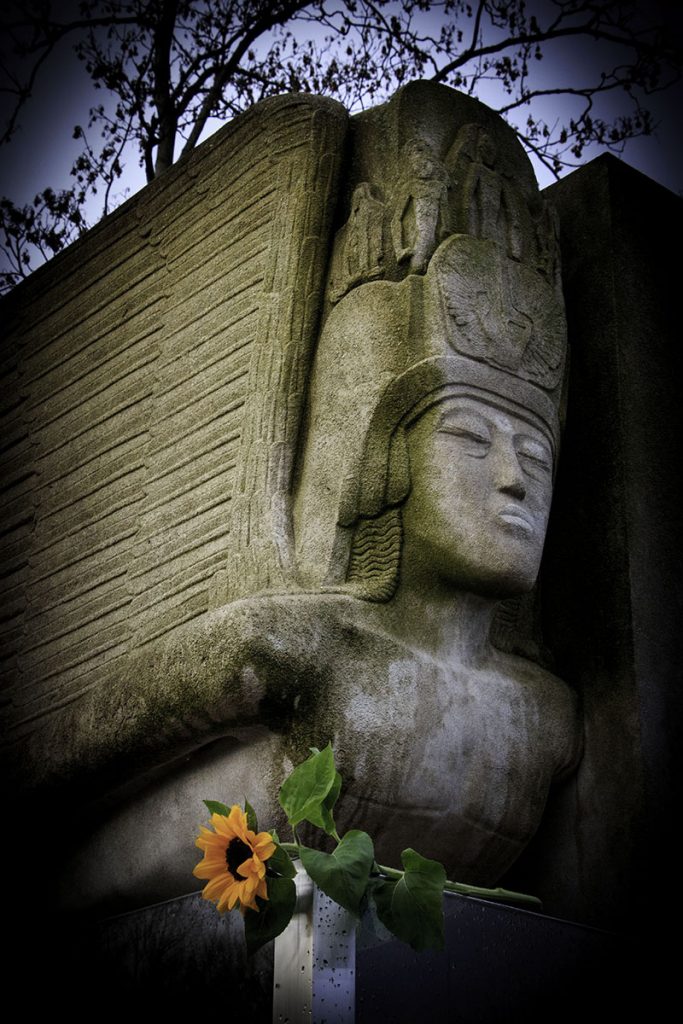
  5. Oscar Wilde - It's almost impossible to imagine that The Smiths would exist if Oscar Wilde had not gone before. Screamingly pretentious with gladioli hanging out of his back pocket, Morrissey had that same pathological need to be noticed and considered witty and brilliant above all else. Despite the recent fall from grace - embracing a far-right political party and publicly spouting racist and sexist views - his lyrics from the cutting edge albums of the mid 1980s were instantly appealing to those who felt they were the social underdogs of Thatcher's Britain. The musical brilliance of Johnny Marr (guitarist), Andy Rourke (bassist) and Mike Joyce (drummer) certainly didn't hurt, and elevated the band to indie-god-like status, but it was the lyrics (written mainly by Morrisey and Marr) that were taken to heart in teenage bedrooms across the country.  "A dreaded sunny day/ So let's go where we're wanted/ And I meet you at the cemetery gates/ Keats and Yeats are on your side/ But you lose/ 'Cause weird lover Wilde is on mine." I became utterly obsessed with Oscar Wilde as a result of The Smiths and read every one of his plays, short fictions, poems, essays and novel (there was only one). I also practically haunted Cimetière du Père-Lachaise (where the body of Wilde is interred) when I lived in Paris (before the frankly repulsive habit caught on of people kissing the tomb and leaving lipstick marks), reading Richard Ellman's definitive biography (for which he posthumously won a Pullitzer Pride) while sighing dramatically and occasionally weeping. Pretentious, moi?

Friday, 2 February 2024

Friday Five: Books Read in January

  1. The Chimney Sweeper's Boy by Barbara Vine (Viking) - When Gerald Candless, a critically acclaimed author dies, his daughter, Sarah, is asked to write a memoir of her beloved father. As she starts to research his childhood and origins – i.e. his life before she was born – she soon discovers multiple discrepancies in the narrative. There follows a domestic investigation into family secrets that might make a man change his name and adopt an entirely new persona. The secrets are often to cover historic scandals, such as illegitimacy, unwed mothers, class distinctions and homosexuality, which would not raise an eyebrow today. Like PD James or Robert Goddard, Barbara Vine writes literary suspense novels where the characters are more engaging the plot, and the themes are apparent from the start. Rather than racing to the end to find out whodunnit, the reader spends time with the characters wondering how they feel and what they are going to do about it.
  2. Treacle Walker by Alan Garner (4th Estate) - This short and pithy fantasy was shortlisted for the Booker Prize in 2022. Using the language of folklore and myth, it imbues trees, birds, stones and bogs with specific meanings, as linguistic word play heightens the fairytale elements of the power of nature and the land. Young Joe, trying to make sense of his world, meets the rag and bone man, Treacle Walker, who leads him through mirror worlds and comics that come alive with characters such as Stonehenge Kit, the Ancient Brit, who fights Whizzy the Wicked Wizard and his chums the Brit Bashers. Hiding behind antiquated and poetically nonsensical language that calls to mind Dylan Thomas, Gertrude Stein, Roald Dahl and Lewis Carol, Garner explores the world of modern politics, environmental crises and whether or not to 'correct' neurodiversity with medication. For a short work, it has received a lot of attention with very mixed reviews - many American critics found it 'boring', 'not easy or accessible' and are frustrated by its lack of linear narrative, which is like catnip to me.
  3. Eric by Terry Pratchett (Gollanz) - When feeling down or overwhelmed, I find Terry Pratchett reliable in cheering me up and relaxing me. Of course I read the books in order, but for some reason I missed this one out - it may be the fact that the title consisted of the crossed out Faust replaced by the name Eric. Eric is a teenage boy who is seeking world domination, and intimate relations with beautiful women. He manages to hack into the demon world (full of endless meetings, memos and policy statements) but unfortunately for him, he summons up the ineffective Rincewind (last seen in Sourcery). It's a welcome return from the hapless chap and his savage but loyal luggage. Rincewind still has glaring gaps in his knowledge (quantum mechanics are 'people who repair quantums, I suppose') but he is still making valiant attempts to save humanity and, more importantly, stay alive. Chortles aplenty.
  4. The Diversity Gap by Bethaney B. Wilkinson (Harper Collins Leadership) - The subtitle of this book is Where good intentions meet true cultural change, where the diversity in question is mainly race-related. It offers suggestions of how to make meaningful progress rather than simply ticking boxes or attempting to improve the public image. These things take time, involve actually listening to people, welcoming all opinions (especially uncomfortable ones), believing in the experience  and perception of others, paying people for their 'diversity leadership' (informal as well as formal), and sharing power. The last one seems particularly difficult to accomplish as leadership roles tend to be filled by the dominant cultural vision who want to hoard the power of decision-making to themselves and conduct projects their way, claiming it as a kind of perfectionism as if that were a good thing. The author uses corporate jargon and marketing speak, and repeats phrases immediately in bold as if they were giving a TED talk for the hard of understanding. Despite this being extremely off-putting, they do make some good points. “If we focus on questions related to diversifying teams, but fail to ask questions about sharing power, we miss the mark.”
  5. Birnam Wood by Eleanor Catton (Granta) - Eleanor Catton was the youngest winner of the Booker Prize with the longest book in 2013 (The Luminaries). She clearly has talent, and she displays it again here in Birnam Wood. It's quite a lengthy novel (423 pages) and there is a lot of exposition, with the balance too much in favour of tell rather than show. Birnam Wood is the name of a renegade group who want to take back the land for common ownership and guerrilla gardening. The members make strange bedfellows with a billionaire who made his money in drone technology and says he wants to build a doomsday bunker but will let them use the land above ground and even finance their project. One former member of the group, feeling jilted by the organisation in its current form and desperate to make a name for himself in investigative journalism, decides to dig a little deeper. Of course there are Shakespearean parallels - powerful ambition is ultimately destructive, there is an integral struggle over whether it is better to be right or rich, innocent casualties accumulate, and 'Birnam Wood was going to a better form of camouflage than he had ever dreamed'. None of this should be a spoiler, unless you've never read/ seen/ heard of Macbeth, in which case, it's a spoiler for that too. Lengthy debates about patriarchy, economics, nationalism, identity politics, intersectionality and capitalism - 'Didn’t we already solve that one?' - are reminiscent of those earnest down-the-pub conversations we used to have as students. Despite the cleverly-designed cover, not everything is black and white. 
  6. A Bird in the Hand by Ann Cleeves (Pan Books) - The author of the books on which the series Vera and Shetland are based, Ann Cleeves wrote the first in this George and Molly Palmer-Jones series in 1986. The couple in question are retired, happy to travel the British Isles birdwatching, and solving the murders which invariably occur. George used to work at the Home Office (doing secret business), is good with details and has bouts of depression; Molly is a retired social worker who is good at listening and brings out the best in people. Naturally, they make a great couple. Both are restless with their current life and enjoy a new challenge. When a birdwatcher is found dead on a marsh with his head bashed in and his binoculars still around his neck, it is a great surprise to everyone in the small community because everyone loved him. Or did they? Of course, they didn’t, as this is an old-style mystery and secrets soon come to light complete with multiple suspects, red herrings, precise timings of the murder, poison pen letters, and suspicious alibis. 
  7. Trout Fishing in America by Richard Brautigan (Canongate) - This is not a book about trout. It is a cult classic that is part commentary on American society, part surreal absurdism, and part hallucinogenic travel memoir where the pictures from the trip (in every sense of the word) are not yet developed. First published in 1967, the book is whimsical in the way that it captures a moment in time, referring to undeveloped photographs as "in suspension now like seeds in a package." Short chapters, oddly specific similes and a total disregard for character development or narrative arc, mark it as a work of post-modernism that deconstructs itself, talks about its own front cover, writes and receives letters and is an item for sale at The Cleveland Wrecking Yard where it is sold by the foot length. Brautigan is the slightly more obscure favourite of the boys in college who also read Kerouac, Kesey , Burroughs and Vonnegut, which should indicate to a potential reader whether they will like him or not. 
  8. The Price of Salt by Patricia Highsmith (W.W. Norton & Company) - This novel was filmed in 2015 (by Todd Haynes) as Carol starring Cate Blanchett as Carol and Rooney Mara as Therese. The fact that I can only remember Cate Blanchett is telling, as Carol is so wholly the focus of the novel that Therese is tantalisingly indistinct. Written in a world-weary glamourous style, it recalls the novels of Fitzgerald, Collette or Nabokov: everything is mentioned, but nothing is understood. Therese begins an infatuation with Carol which leads to a clandestine relationship - is it love, or is the much-older Carol toying with her affections to discard her like a plaything? As a set designer, Therese should be used to miniature worlds and deceptive appearances, yet she seems drawn into the dream as though Carol had some White Witch potential.