Showing posts with label domestic violence. Show all posts

Wednesday, 20 March 2024

Trouble in Paradise: How the One-Armed Sister Sweeps Her House


How the One-Armed Sister Sweeps Her House by Cherie Jones
Tinder Press
Pp. 308

The title refers to a cautionary tale parents tell their daughters not to be willful, as the child in the narrative loses an arm due to curiosity when she enters a tunnel despite dire warnings. The message misfires when Lala (she who is told the tale by her grandmother, Wilma) wonders whether the girl could cope without the limb, swapped for following passion. She is cautioned, ‘but how will she sweep the house with only one arm’? She questions whether a woman’s worth is judged by her housekeeping, and maybe she would rather lead an adventurous life.


Unfortunately, her adventures do not lead to happiness. The novel is set in Barbados on a beach straight from the brochures of paradise. White folk live in tall, gated houses, while violence, prostitution, drug smuggling, murder and other criminal activities exist beyond their gardens, and everyone carries a gun. The police turn a blind eye to the abuse (particularly of women) until it enters those houses of those who go to embassies and ruin the tourist trade.


The community is steeped in intergenerational violence and abuse. Mothers beat their children because they do not want them to go bad and need to whip the devil out of them; they fear that sparing the rod is the cause of the child’s failings. Lala marries Adan, who regularly beats and rapes her, even while she is recovering from a traumatic birth. He commits robberies to pay for his lifestyle, which escalate to drug smuggling and murder in a sort of subplot to the novel. His cruelty leads to a tug of war with their newborn (known only as Baby because they have not yet decided on a name), which results in the death of the child as she is dropped on the floor.


Girls are routinely raped by their male relatives: Lala is the child of her mother, Esme, and her grandfather, Carter. The young women are sent away to remove the temptation, while the man is not considered to be at fault. Lala is made to sleep in the outhouse to avoid her grandfather’s attentions, or how else can he resist? Women are pursued by men. The policeman who investigates the Baby’s death pursues Sheba and refuses to accept that she doesn’t want his protection; Adan fixates on his ‘outside woman’ despite being married to Lala.

"A grown man cannot help himself, she explains, in the presence of a young Wilkinson girl. This is the way it has been for generations. It is not the man’s fault, says Wilma, there is nothing he can do about it. It was this way with her mother before her, her daughter and granddaughter after her. It was this way with her."

In some ways, the novel, full of descriptive scenes and local patois, is reminiscent of those by Alice Walker, Toni Morrison or Alan Duff. Characters struggle to connect with community and lash out at those who seek to reinforce their culture without understanding the roots of reggae or Rasta, merely turning gangsta. When Wilma holds a funeral for Baby, Adan does not attend because he is wary of her connection to culture, although he tells his friends that she is a bitch and “he not going anywhere around her or her house.” He is alone and left behind in the world where he has lost his local bonds.


Even Lala is infused in her beliefs, although they may not support her – her grief, trauma and post-partum depression are explained in superstition. “She is convinced also that supernatural beings are conspiring on her daughter’s behalf to make her understand that she will pay for her part in her death.” She fears a “wicked duppy” is playing tricks on her, putting cans of formula in the cupboard, although she knows she has thrown them all out, sprinkling the scent of baby powder in the house, and “It is this duppy, or another, equally malevolent, who infuses the peculiar sound the paper bag of flour makes when she is making dumplings and it hits the floor with the same sound she heard when Baby was dropped.”


Reviewers have called the book unflinching, claustrophobic, pitiless, and relentless. Focussing on murder, abuse, a violent marriage and the death of a baby, it is certainly no light-hearted tale, but there is a slight glimmer of hope towards the end, and it is ultimately compelling. It is exquisitely constructed, with flashbacks to flesh out the characters and the pathways that have led them to this Barbadian beach, and it is a great achievement for a debut novel.

Friday, 8 March 2024

IWD Autumn Haiku


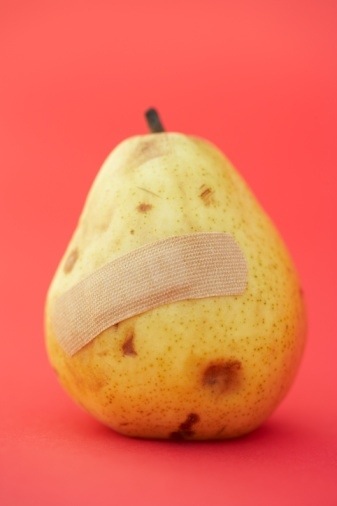
Like fruit, you say I 
bruise too easily, but you 
make me fall so hard.

Tuesday, 25 July 2023

You Keep It All In: A Clear Conscience


A Clear Conscience by Frances Fyfield
Corgi
Pp. 284

Helen West is a prosecutor in domestic violence cases, and this is her fifth outing in novels by Frances Fyfield, although that is not obviously apparent from this edition. The fast-paced and bleak thriller is set in the world of back-street boozers, wife abusers, ex-boxers, and knock-off perfume. The crime is both petty and serious, as passion erupts into fights over office romance and much darker offences. The characters are criminals, cleaners, bar staff, ex-army personnel, lawyers, policemen and caseworkers.

The writing style is almost breathless, and grammar seems optional as the prose gathers pace along with the narrative. The author constantly switches point of view so it appears to be third-person omniscient but we are always in the mind of the subject, blurring the lines between reality and perception. Helen’s friend Emily employs Cath as a cleaner; Cath’s brother Damien is the murder victim of a case investigated by Bailey, Helen’s partner; Damien was killed after a night at the pub where Joe, Cath’s abusive husband works. There are no easy answers or definitive source of truth; law and justice are explicitly not the same thing.

Everyone lies to a certain extent, and no one tells the whole truth to anyone, even themselves. “We are all at cross purposes, he thought, every one of us a little mad, each of us with a piece of puzzle in our hands, while the truth floats up there like that big, black raincloud.” In an attempt to feel better about one’s self-image, characters believe their own narrative and don’t examine their motives too closely. Helen is obsessed with home decorating, Cath smells of bleach, Emily dismisses Cath for suspected theft of perfume – the interior renovation metaphor alludes to the patina of gloss that covers cracks but doesn’t mend them. Perfume serves a similar masking purpose. “What a terrible gift was perfume, always given by a man to make you wear it and please him, while you stank of blackmail.”

Written in 1994, the novel has an end-of-the-century feminism feel as the author questions women’s roles and their need to validate themselves in society. Helen claims to be determinedly independent and happily childfree. “I’d hate to be a megalomaniac wife and mother. Mothers run a closed book. They shut the world out, close off anything inconvenient, as if being mum in charge of a family is so self-satisfying, so sanctifying, they never need have a conscience about anything else.” And yet, she is yearning for something intangible. “It was useless pretending she was not influenced by what she saw and read; she was not immune to the contagion of the romantic or the desire for security purveyed by mothers and magazines…but she did not quite know how to not want it either, or how to close her ears to the blandishments of marriage propaganda.”

Although short and sharp, this is an oppressive novel in which women are struggling to stand alone without being defined by men – partners; bosses; social constructs. There is a menacing tone and a fear that they will never be enough – but by whose standards? It reminds me of that playground 'joke', Q: Why do women wear make-up and perfume? A: Because they're ugly and they smell. They are not and they do not, but our patriarchal capitalist society has a vested interest in making them think thus.

Monday, 14 November 2022

Due Care and Attention

Due Care and Attention

I lead an active life
But I’m very clumsy
And I bruise easily,
like when I give blood,
or bump into furniture,
or trip over uneven paths.

He always comes with me
And waits while I’m treated,
like when I fell off my bike
and smashed my front teeth,
or skied into a tree
and fractured my arm,
or tipped over the roast pan
and burned the skin off my hand.

Today I played netball,
collided with a player,
and broke my nose.
The nurse looks at me
and at him, waiting,
and she asks, quietly,
“Is that netball?”

I say yes. Out loud.
For the first time ever.
What happens
Now?

Wednesday, 13 January 2021

You'll do girl, you'll do: Finding Baba Yaga


Finding Baba Yaga by Jane Yolen
Tom Doherty Associates
Pp. 131

This contemporary retelling of an iconic myth is written entirely in blank verse. It is reminiscent of the artful design of a Russian Matryoshka nesting dolls, as elements of Slavic myth, Russian folklore and fairy tales cleverly fit among the contours of American realism. It also explores a number of themes including the nature and power of language, the journey from childhood to adulthood, the relationship between religion and language, ‘good’ and ‘bad’ words, the unique dynamic of female friendships and the mother/daughter relationship. Yolen begins her tale, “You think you know this story. / You do not.”

Teenaged Natasha lives with her parents, and knows she must get away from them and their constant fighting. Ever since her father has discovered religion, it has become worse as he monitors her language and behaviour. She runs away into the forest but, although the woods, stones and water are a recurring fairy tale image or reference, this is not the one familiar from storybooks and the settings are slightly skewed; “The forest opens like a yawn,/ as if it knew I was coming,/ has seen me before,/ can’t be bothered to resist.” We recognise the motifs of the lost child in the woods, but Yolen suggests there is more to the story if we look, listen, and abandon our preconceptions. At the end of Chapter Two, The Runaway, in This Is Not a Fairy Tale she writes, “Expect no princes./ Expect no magic rings./ Expect no glass slippers./ Expect no fairy godmothers. / Expect no singing dwarfs. / Expect no talking dragons. / Expect only/ seven deadlies delivered:/ exhaustion,/ boredom,/ regret,/ hunger,/ anger,/ danger,/ death./ All part of God’s taketh away.”

And then she encounters Baba Yaga, with all of her traditional traits. She lives in a house which turns about on its chicken legs: “It is like living on a house boat:/ the swell of the waves, the turn of the tides,/ a moment of emotion, with the ‘e’ removed.” She is a tough old woman with an iron nose, and the contemporary references to strong women are apparent; “She’s tougher than Clinton or Thatcher ever were.” This clash of realism and magical imagery continues as she explains how Baba Yaga flies through the sky in her mortar, guided by her pestle, but no one see her “unless you count bad dreams”. She flies “across tundra, taiga, major highways,/ avoiding traffic jams, roundabouts,/ only bothering the occasional helicopter/ or low-flying private planes.”

Natasha learns to tell her story, and that “A story is, not always means.” It may be grim – “I think I know now/ there are no happy evers./ Only happy moments.” – but she grows as a narrator, examining the meanings of words and exploring postmodernism through form and structure, drawing attention to the artifice of the narrative. “I am becoming a poet./ I am thinking in metaphors./ I am walking through a poem.”

As Natasha rewrites the myth with herself as the hero of her own story, she discovers that “Stories retold are stories remade.” After all, if we believe critical analysis, there are only seven stories anyway, so we need to refresh them every now and then. In searching for (and finding) Baba Yaga, Natasha is really on a quest to discover her own inner vice, strength and truth. By the end of the book she states, “So, this is a tale/ both old and new,/ borrowed, narrowed,/ broadened, deepened,/ rethreaded, rewoven,/ stitches uneven,/ re-plastered, re-harled, rehearsed, reworked/ until it’s my own.” It is familiar and unique. It is brilliant.

Tuesday, 2 June 2020

The 2018 Archibald Prize - Part Four

Further to previous posts, here is the fourth installment in my visit last year to see the touring Archibald Prize at the marvellous Orange Regional Art Gallery. The Archibald Prize is awarded annually to the best portrait 'preferentially of some man or woman distinguished in art, letters, science or politics, painted by any artist resident in Australia.' Often I don't know the subject, so I really enjoy finding out about the people as much as I appreciate the artwork itself.

Treatment, day 49 (sorbolene soak) - Nicholas Harding

In a room full of colourful portraits, the stark black-and-white rendering of this one, really stands out. It's craggy and straightforward at first glance, but a close inspection reveals lines and years of knowledge and expression. The self-portrait was made after the artist was diagnosed with cancer at the base of his tongue. He commenced seven weeks of treatment at Lifehouse, keeping a visual journal to record the process. After 35 sessions of radiation and seven doses of chemotherapy, his treatment finished on day 49. At the time of the exhibition, he was cancer-free.
"One of the compounding side effects of the radiation is the burning of the skin, so when my neck was blistered and bleeding it would be treated with sorbolene, Flamazine cream and ice-cold wet bandage wraps. On the last day of treatment I took a selfie on my iPhone during one of these regular sorbolene soaks and later did a drawing from it, which I used for this self-portrait. Once the colour was removed, it achieved the stark quality I was after."
Herb and Flan by Julian Meagher

There is something fabulously flamboyant about this portrait. The presence of the galah lightens what might otherwise be a sombre palette with dark greys and blues. The subject has piercing blue eyes and a gaze that is full of inquisitive intelligence and confidence.  This is Richard Flanagan, a man whose novels have received numerous honours and awards (including the Commonwealth Writer's Prize in 2002 for Gould's Book of Fish and the Man Booker Prize in 2014 for The Narrow Road to the Deep North). 
"He is one of my favourite novelists but it is his writing and interviews on literature, the environment, art and politics that particularly make him one of Australia's most important voices. Herb, Richard's writing partner, was pretty insistent that he be included in the painting."
Self Portrait by Amanda Davies

I knew nothing at all about this person, but I liked the shiny forehead and the natural skin without enhancements or embellishments - it struck me as a stark, almost communist-style depiction where modern expressions of beauty were to be discouraged, as the inner personality shone through. It turns out that this is a recent self-portrait in a new series of figurative paintings 'addressing the theme of decay and remedy, where the relationship between body, mind and emotion is heightened'.
"In response to a story where an elderly woman mistakenly applied toothpaste to her face instead of moisturiser, I put toothpaste on my face and washed it off numerous times. Toothpaste is very astringent. It gets in your eyes and it stings. Taking hundreds of self-timer photos, I felt numb, exhausted, and relieved afterwards. This self-portrait is drawn from the en of that process and reveals a shifting emotional state between distress and relief.

"I set up situations in my studio that engage the tradition of theatricality in painting - performance being part of the process in developing my work. Here the figure lies horizontally - the position for sleeping, dreaming, healing and dying - yet the painting is exhibited vertically, eliciting a sense of disorientation.

"At the point of decay, the perceived boundaries of the body dissolve ad our sense of self can shrink or expand, allowing us to experience the edge of the self as elastic."
Self-portrait after George Lambert by Yvette Coppersmith

I'm including this one not because I like it (it's fine but doesn't particularly appeal to me) but because it won the Archibald Prize, showing how much (or, rather, little) I know about art. To me, the posture is unnatural, the subject a little bland (with that trout pout beloved of insipid teenagers in selfies, thinking cheekbones are a substitute for personality), and the focal point seems to be the golden curtains behind the subject, rather than the subject itself.  Apparently I am wrong.

The artist, Yvette Coppersmith, has had five previous entries into the Archibald Prize and she is drawn to the self-portrait because, 'it allows me to work from life, with intense absorption in the painting process'. Her theme is female empowerment and she originally wanted to paint Jacinda Ardern, the Prime Minister of New Zealand. I believe the rationale is more impressive than the painting.
"Ardern wasn't available but I thought I might channel something of her in my self-portrait... I had several reasons for asking Jacinda Ardern, but through her role she expands what an image of a young woman can signify - inspiring others to think beyond any perceived limits of their own image in relation to the contemporary political landscape. 

"[George Lambert's] style was academic, yet he supported the avant-garde in Australia and painted portraits of his artistic contemporaries Thea Proctor and Hera Roberts - both independent, self-possessed style makers at a time of burgeoning female empowerment. In referencing George Lambert's style, it's like an outfit slipped on, creating a fixed image of an ever-changing self."
Guy by Ann Middleton

Or perhaps I am in tune with the public after all, because this portrait of Guy Pearce by Ann Middleton won the People's Choice Award. And I like it a lot too. It is a familiar face, but I think the artist captures his expression with all its quirky sensitivity, intelligence and sense of fun. Perhaps it is the blank background which draws me in to focus purely on him; perhaps it is the light which illuminates half of his face, recalling the comedy/ tragedy theatre masks; perhaps it is his naked torso indicating a certain vulnerability; whatever it is, I find this portrait deeply affecting and extremely personal.
"I see profound depth of emotion and some sadness in Guy's eyes, however, his gaze is direct and bold. It was this curious melding of uncompromising determination and a certain boyish sweetness that led me to ask if I could paint his portrait. 

"My portrait of Guy was inspired by early photographic portraits of Indigenous people using tintype photography, the otherworldly translucency of skin it imparts and the compelling directness of an unselfconscious gaze.

I painted Guy in the natural light of my studio. One side of his face is in deep shadow. Obscure and mysterious, it speaks of hidden difficult times. The other side is brilliantly lit. It is an uncompromising light, honest and unflinching. This extreme tonality enabled me to explore Guy's chameleon nature and his personal awareness of the light and dark within that makes him both an extraordinary actor and a kind, funny and unassuming bloke."
Insert headline here by Amani Haydar

Initially the bold print, bright colours, and wonky expression make this appear to be a child's drawing or collage which seems fun and frivolous. Closer inspection, however, reveals the subject has a determined focus and that she is holding an image of a woman holding an image. It has a surreal Russian Doll effect suggesting a mysterious background. The fact that the picture within the picture is a black and white photograph also hints at some sort of reportage or story-telling. I did not know who this person was, but I wanted to. I learned that this is a self-portrait in which the artist holds a photograph of her mother, who holds a photograph of her own mother.
"When my mum was murdered in her home by my abusive father on 30 March 2015, some media outlets circulated a Fairfax photo taken in 2006 while my mum was grieving the death of her own mother, who was killed in an Israeli airstrike while fleeing the southern villages of Lebanon. 

"I incorporated the photo, which I printed straight off the internet (you have to pay for a proper print) as a way of reclaiming my story from the headlines. By painting a self-portrait, I was able to reinstate its personal significance to me.

"I also saw it as an opportunity to challenge assumptions that women victims of crime are helpless, weak or subservient. I have used vibrant colour to convey a sense of hope, while the repetition of patterns echoes the repetition of trauma in my life, but also draws on the type of art found in mosques, which for me symbolises faith, survival and regrowth."

Wednesday, 6 November 2019

Innermost thoughts: Someone Like Me


Someone Like Me by M.R. Carey
Orbit
Pp. 500

In many ways this novel by M.R. Carey reminds me of those by Stephen King. It is rooted in reality with a strong dose of pop culture. The relationships seem true and sympathetic, with natural dialogue and some elements of humour. The concept of split personalities, or multiple characters in different dimensions, is a good one, and the supernatural elements creep in subtly. It would make a great film, with strong visuals and spooky scenes, but the ending is ultimately unsatisfactory and leaves the reader (or potential viewer) wondering how on earth they are ever going to get away with telling that story to the police.
 
It begins with a sadly familiar tale of domestic violence, as Liz Kendall is being strangled by her ex-husband, Marc. It appears that has another character inside her, Beth, who comes out after years of abuse to fight back. The abuse is documented as part of an on-going case: “That was a lot less exciting and TV-movie-forensic than it sounded.” The author is aware that this is commonplace and that we have seen it all before in modern culture, so he has to make it about more than ‘just’ domestic violence.


We sympathise with Liz; she is poor with two kids to raise (Zac and Molly), an abusive ex-husband and a terrible medical insurance policy. When she is first ousted by Beth, there may be sympathy for her too, as Beth has been repeatedly killed by Marc in different times and other realms. We feel for her absence and all the things she has missed, as she hugs Molly, “It was the first human contact Beth had experienced in what felt like a hundred years that wasn’t born out of violent rage.” But Beth will then use anything to survive, even at the expense of the children, and we begin to wonder about her motives.


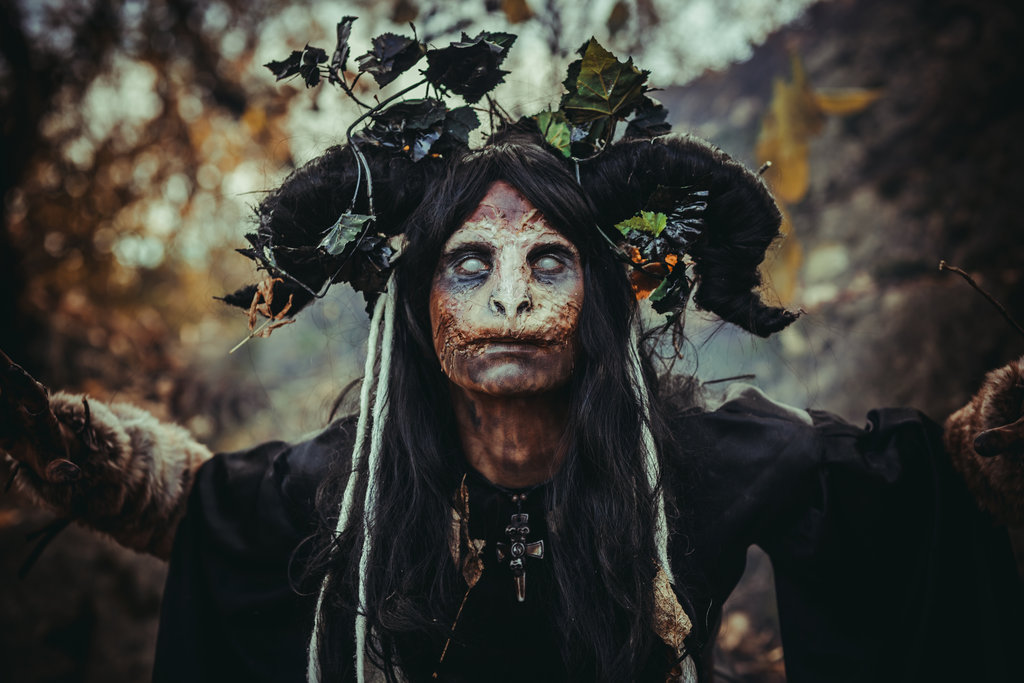
Meanwhile, Zac’s schoolmate, Fran, is also one of these people who is aware of the multiple options of things happening in different futures or pasts, and she recognises the duality of Zac’s mum, Liz/Beth. When she was a child, Fran was abducted and taken to the Perry Friendly Motel by a man (Bruno Picota) who saw two personalities in her and tried to kill one. Throughout the trial that led to his incarceration in an asylum, he became known as the Shadowman because he constantly referred to shadows that move independently of their host or ‘skadegamutc’ from Native American culture. He describes this (in a transcript that Fran and Zac conveniently locate) as “the ghost of a witch. A ghost, but it’s got magic. An evil spirit. And you can’t ever see where it might have come from. You just see that it’s there.”

Skadegamutc or forest witch
Fran also has an alter-ego who is a cartoon fox with a sword and armour, Lady Jinx from Knights of the Woodland Table. Fran comes to understand that Picota was obsessed with split personalities or detached characters, who have been separated from the original. He thought he had killed one of hers. Did he?

As in Fellside, M.R. Carey takes us to a world of psychologists and criminals as he explores the dark places of the mind. Is this what happens to the brain when it tries to shield the body from pain, or to remove the memories of experiences that are too traumatic to confront? Are these supernatural elements based on self-delusion, or is medication involved? There is enough ambiguity to interest the reader as the novel crosses from the solid world we know to the less certain one we fear.

Like Stephen King, Carey incorporates Native American elements, pop culture references, ‘innocent’ children involved in violent and spooky situations, cinematic and comic book devices (he used to write comics for DC including Lucifer and Hellblazer), and a denouement at a creepy, deserted motel. The genre-crossing thriller ghost story is domestic in scope with science-fiction undertones, but there are sufficient similar themes to those found in Fellside, which I read earlier this year, that I don’t think I need to read any more of Carey’s novels for a while.