The retelling of classical stories and myths from the female perspective
is currently all the rage (The Penelopiad
by Margaret Atwood; The Silence of the
Girls by Pat Barker; A Thousand Ships
by Natalie Haynes) and Madeline Miller is part of this welcome revolution. Here
she tells the story of Circe, a semi-goddess often described as a witch, best
known for her role in Homer’s Odyssey,
where she detained Odysseus and his men, turning some of them into swine.
Miller relates this tale in the first person, providing a back-story and
reasons for Circe’s behaviour, like the unravelling of a fairy-tale.
 |
| Circe (1911) by Beatrice Offor |
Circe is the daughter of Helios, Titan god of the sun and, from
childhood, she is ridiculed for not shining brightly enough in his eyes. Her name
means Hawk because of “my yellow eyes, and the strange, thin sound of my crying”.
The gods think her voice is weedy and screechy, but it transpires it is simply like
that of a mortal. She is fascinated by humans and shares an affinity for them
with Prometheus, who shaped man out of mud. As a child, Circe asks Prometheus what
a mortal was like and he tells her, “There is no single answer. They are each
different. The only thing they share is death.” She questions how they bear the
burden of this knowledge and he replies, “As best they can”.
Bored with the smooth symmetry of the gods, Circe loves the diversity of
humans. She is fascinated by mortals, and her words are like those of Miranda
in Shakespeare’s Tempest or reminiscent
of Doctor Who, who admires mortals
but is not one. She has no god-like powers, although she does have knowledge of
herbs and potions; medicine to be used for healing and harm, the Greek word for
which is pharmakis, ‘a preparer of
drugs, a poisoner, a sorcerer’, from which we derive the word pharmacy, and
which wisdom led her to be called ‘witch’.
 |
| The Wine of Circe (1900) by Edward Burne Jones |
The gods also “love their monsters” because it gives them something to
threaten mortals with, and something for heroes to challenge. They look down
upon mortals and heroes, and enjoy toying with them – the Trojan War and its
consequences are all a result of their petty squabbles – and they like to see
what the mortals will do next when put into impossible situations. “Gods love
novelty… They are curious as cats.” These gods are equally childlike and cruel,
with a unique morality. “They do not care if you are good. They barely care if
you are wicked. The only thing that makes them listen is power… They take what
they want and in return they give you only your own shackles.” They also punish
those who help mortals; they want the mortals to be afraid because they give
better offerings.
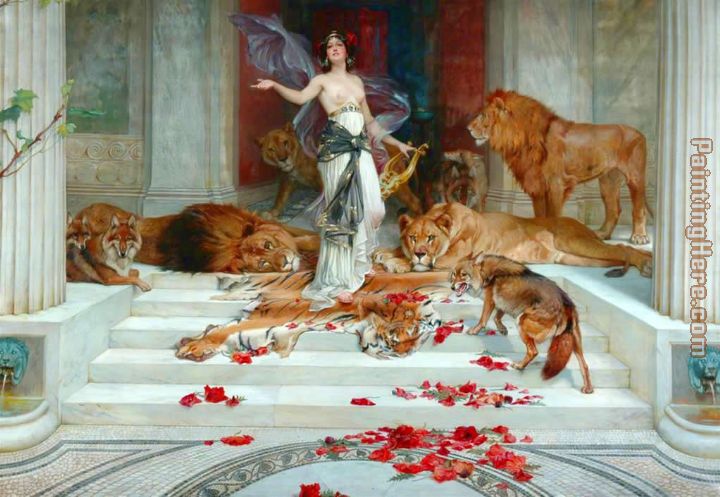 |
| Circe (1889) by Wright Barker |
The most important thing to these gods is their reputation. They are
similar to the Knights of King Arthur, who vied for quests to prove their
honour, but these gods want only fame – they don’t care how they come by it. Most
mortals also want fame above anything: when Odysseus travels to the underworld
to consult Tiresias, the blind seer, Achilles tells him it is better to live a
quiet life than die a hero’s death. He disagrees. When Telemachus turns down
Athena’s offer of adventure, she is bewildered. “There will be no songs made of
you. No stories. Do you understand? You will live a life of obscurity. You will
be without a name in history. You will be no one.”
Miller uses the style of Homeric language and epithets about Helios, “My
father’s chariot slipped into the sea and began to douse itself in the waves” but
she also has an individual style as she reinterprets classic myth from a modern
angle and damns the ostensible glory of the gods.
After displeasing her father, Circe is exiled to an island, Aiaia, which
she cannot leave, but she can receive visitors (including Hermes, Jason and
Medea, Daedalus, and, of course, Odysseus). She becomes a magnet for reckless
and randy sailors (these are the ones she turns to swine as they try to rape
her) and her island a place for disgruntled fathers to send their
disobedient daughters, like some mythical convent. She casts her feminist
viewpoint on her treatment. “Brides, nymphs were called, but that is not really
how the world saw us. We were an endless feast laid out upon a table, beautiful
and renewing. And so very bad at getting away.”
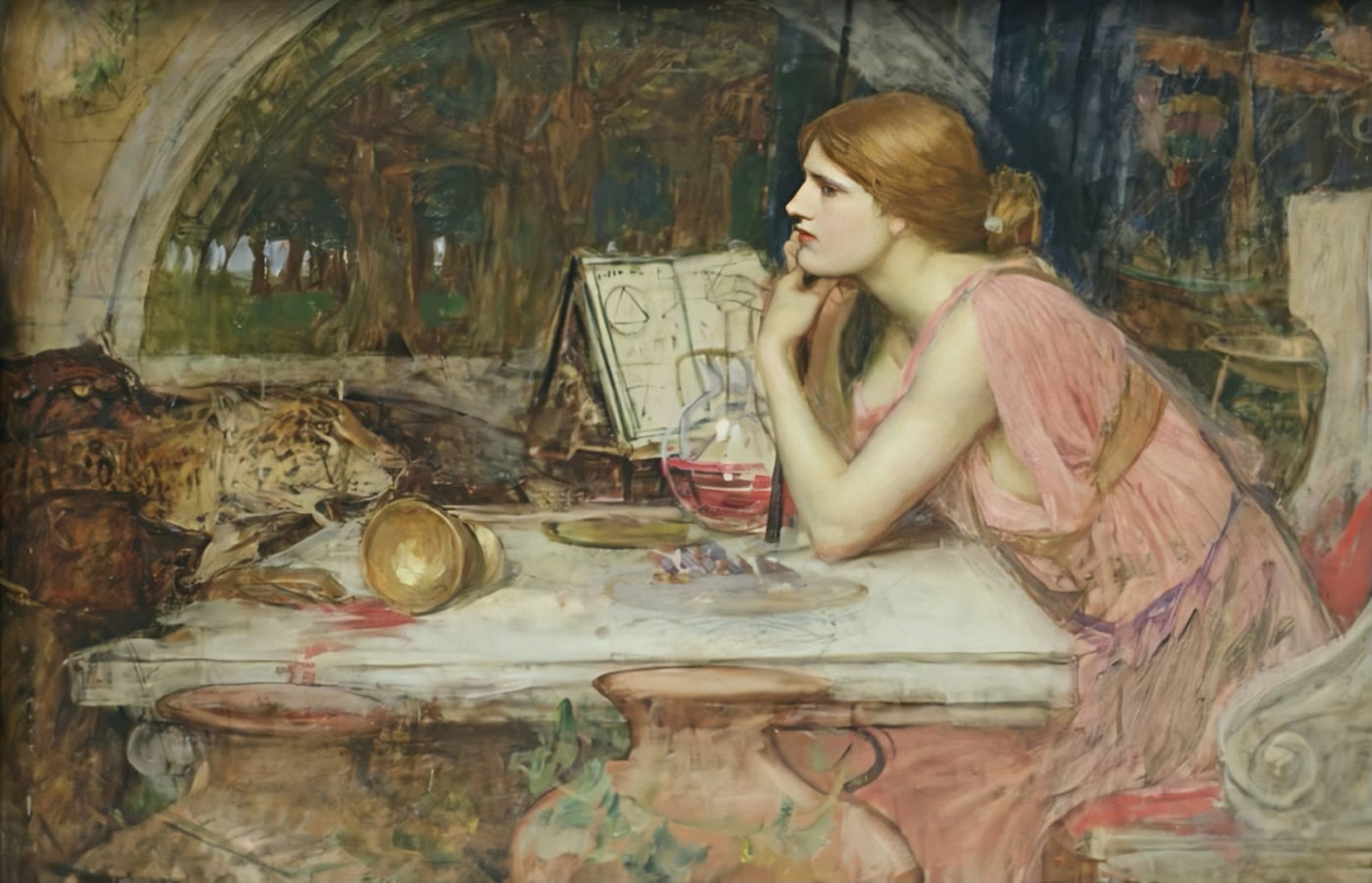 |
| The Sorceress (1911) by John William Waterhouse |
Circe’s story is one that has only previously been told through the eyes
of others and the tangential effects she has on their narrative. Miller
presents us with another side to wily Odysseus, “The spiral shell. Always
another curve out of sight.” She also shows us a fresh perspective on Penelope
when Odysseus’ wife and son visit Circe on Aiaia, and the use of the word ‘weaving’
to describe spells and craft unites the women through something other than the
lover and mother trope.
 |
| Circe and Her Swine (1896) by Briton Riviere |