Thursday, 3 December 2009

Films of the decade?


'Tis the season to compile lists of 'best of's. As it is a year with a 9 at the end, we can extend that for a whole ten years! The latest list from The Times sent to tyrannise me is The 100 Best Films of the Decade. Unlike The Telegraph list of 100 Books That Defined the Noughties, this list goes further by suggesting they are the best films.

I have of course had a look, and find I have seen 41 of their 100. I then realised that The Telegraph had done a list of 100 Films That Defined the Noughties, so I had a look at that too. Curiously, I discovered I had seen 41 of their choices too (20 of which were the same). I neither agree nor disagree with thier order on the list, but these are my comments on what I have seen of their chosen films, in alphabetical order:


28 Days Later: According to Him Outdoors, this is the perfect Valentine’s Day flick. Great opening scene - kind of like The Day of the Triffids but with zombies

About Schmidt: Sometimes I just don’t understand why films get nominated for Oscars

Amelie: Utterly nauseating. Some of my best friends liked it; I try not to hold that against them

Atonement: I liked the film almost as much as the book - high praise, indeed!

Billy Elliot: Any film with The Jam and The Clash on the soundtrack has got to be good, and this is superb

Bend it Like Beckham: Some fantastic actors explain the off-side rule. And some others launch their career

Borat: Cultural Learnings of America for Make Benefit Glorious Nation of Kazakhstan:is niiiice. How that man is still alive is beyond me

Bowling for Columbine: Guns don’t kill people: highly-charged testosterone-fuelled morons do

The Bourne Supremacy / The Bourne Ultimatum: Good action films but I’ve seen better. I suppose they were filmed in tandem (like LOTR) so should get similar kudos, but I wish cinematographers would learn to hold the camera steady!

Brokeback Mountain: What is it about the words ‘short story’ that Ang Lee failed to understand? Two men lie and cheat on their wives – why is this a big deal? Why should I feel sorry for them? Because they’re gay? So what? Lying and cheating is lying and cheating.

Casino Royale: Bond is back – I wasn’t sure about a blonde Bond, but he really is a living action man

Children of Men: In the future there is Clive Owen and no children – I can’t wait!

Chopper: Played ‘drink along a swear word’ to this – got very very drunk

The Constant Gardener: Despite the bland title, this was a spectacularly good film

Control: Great music; great acting (even from Samantha ‘yes, it-would-kill-me-to-smile' Morton); great directing; great city – what more can I say?

Crash:
We learn that racism is like so not cool

Dancer in the Dark: Bjork is just plain weird

The Dark Knight: I know it’s sacrilegious, but I preferred Jack Nicholson’s Joker

The Departed: Classy drama/thriller from the in-crowd

The Devil Wears Prada: Saw this on a plane and was surprised to find myself enjoying it. I liked the Meryl Streep character – and Emily Blunt – but wanted to slap the insipid assistant

Downfall: Powerful, frightening, mesmerising, German

Erin Brockovich: Julia Roberts proves she's not just a pretty face

Gladiator: It took a long time for Russell Crowe to worm his way back into my good books after this talent-free epic. I bet he was gutted

Good Night, and Good Luck: I so wanted to like it and yet I can barely remember it

Gomorrah: The matter-of-fact unglamorous violence scared the shit out of me – I never liked Naples much anyway

Gosforth Park: Brilliantly acted upstairs/downstairs drama works on so many levels - ha!

Harry Potter and the Sorcerer's Stone: It's not the best but it was the first. Apparently J.K. Rowling stipulated that all the actors must be British, which is why the deries of films remains so fine

In the Loop: One of the best films I’ve seen this year
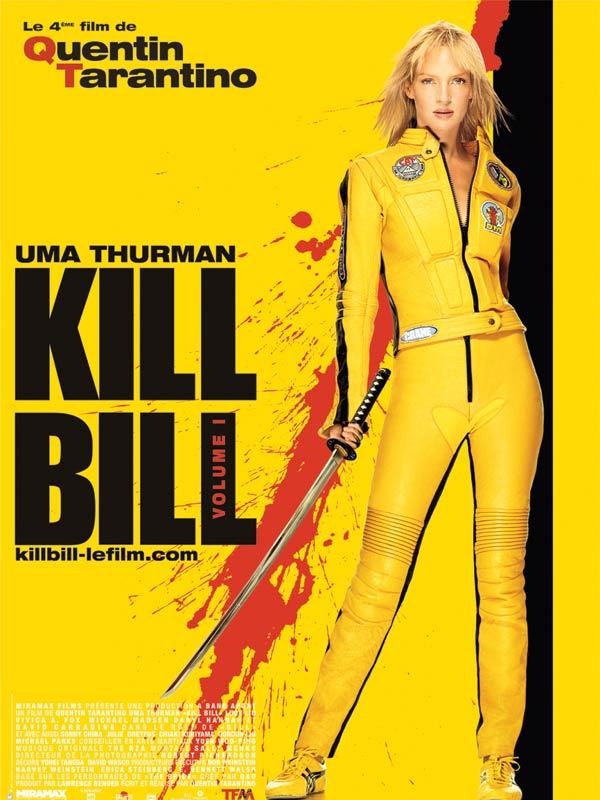

Kill Bill: Women with good figures everywhere drove blokes wild dressing up in yellow leather. As far as I'm concerned, the 2000s was simply not Tarantino's decade.

I'll continue this later...

Wednesday, 2 December 2009

Books read in June

The following are short reviews of the books that I read in June. The marks I have given them in the brackets are out of five.

Luncheon of the Boating Party – Susan Vreeland (3.3)
This novel is the imagined story of the Impressionists; in particular, Auguste Renoir and in even more particular, his painting of the Luncheon of the Boating Party. It’s not especially well written with too much repetition and off-putting changes in narrative voice, but when it focuses on the art and technique of painting it is at its best. The depictions of regatta races, lengthy meals, indolent bicycle rides and languid afternoons are ideal for a film. The motif and historic interest is supplied by the group of painters that created a movement and challenged a regime.


Vreeland writes well of the emerging style, explaining how Renoir and Monet had discovered together that “juxtaposed patches of contrasting colour could show the movement of sunlit water”. She notes that the tantalising impressions rather than faithful reproductions owe much to train travel. “The squinting and the speed made the countryside whiz by, transforming market gardens and houses into blurred shapes, momentary sensations of colour and light without detail.” Renoir believes that everything has layers which he builds into his paintings, loving the texture of the paint and the shapes, sounds and sensuality of a place.

Vreeland’s Renoir is lusty and full of life. He chronicles actors and actresses, dancers, boating parties, friends, wine, prostitutes and duels. He favours the low-brow and although he knows there is an underside to this style of life, he doesn’t dwell on depression. He champions the seductive life of Montmartre that we have come to recognise from romantic novels and films about this period.

Of course, part of his love of life is a love of women and he paints them as he would like to touch them, admitting that he can’t paint a woman he doesn’t love, which makes him sound like a dirty old man. He views them as objects and the sexual analogy is far from subtle as “With his brush loaded and juicy, he pushed the wet tip gently into the hidden folds of her skirt, and stroked again and again, pushing farther, gently, wet into the wet already there.” We get the picture.


Will & Me: How Shakespeare Took Over My Life – Dominic Dromgoole (4.3)
In this semi-autobiography about his relationship with the bard, Dromgoole (artistic director of the Globe Theatre) contends that Shakespeare wields a massive influence over the English in both language and culture. He writes a little about Shakespeare the man, mentioning his politics, his religion and his background, but these snippets of information about Shakespeare’s life and times probably tell us more about Dromgoole himself than his subject.


In fact, this is definitely not a book about Shakespeare but rather about Dromgoole’s experience of him. His private history mingles with generalities and concepts and he writes about himself as a social misfit with brutal candour. He is unaware that he doesn’t exactly have a stereotypical upbringing (his mother was an actress turned teacher and his father a theatre director and TV executive) and his upper middle-class genes practically scream out from the page.

He writes well about the plays themselves – their language and characters which give them their magic. The biggest threat to Shakespeare, as Dromgoole sees it, is the over-analysis of what he calls the ‘Shakespeare industry’ who give the plays an interpretation comprising modern constructs that simply had no place in his time. He scorns the concept production in which a director “who has only half or quarter understood a play” chooses a style and then “relentlessly forces everything to fit.” He argues that there is no consistent style in the world, so why should there be in the theatre?

Some of the most interesting aspects of the book are about stagecraft and the art of acting. He also has words of wisdom about the process of theatre including the stage itself, the wings and the rehearsal room.

On the whole it is Dromgoole’s eulogy to Shakespeare, the human not the god, tempered with realism and sounding a cautionary note to would-be scholars.


Valeria’s Last Stand – Marc Fitten (4.5)
In describing this novel, I want to use such words as whimsical, delightful and charming. Like a mediaeval morality tale, it proves that foolishness in love is not the sole prerogative of the young. In deepest Hungary, Valeria, a grumpy old battleaxe, is smitten by a potter who adopts her as his muse. This angers the proprietor of the local pub, Ibolya, who has designs on him herself. The village depends on her favours as she is the one who controls the alcohol, so everyone takes sides.


Meanwhile Ferenc is hopelessly in love with Ibolya, despite having a wife himself, and the potter’s assistant attempts to ignore the attentions of Zsofi who he thinks is just a good friend. The mayor has them all dancing to his tune as he parades his pretty young wife and promises development that never materialises, despite the frequent visits from Korean dignitaries.

When a chimney sweep arrives (most of the men are known only by their profession), the villagers take heart, as apparently chimney sweeps are lucky, according to rural superstition. He quickly seduces the women (many of whose flues haven’t had a thorough sweeping in ages) and antagonises the men, but he is unaware that the bicycle he rides into town is profoundly unlucky. With overtones of Annie Proulx’s Accordion Crimes we are treated to a quick history of how the contraption has passed through many tragic circumstances. The novel is earthy, rustic and ribald, almost like one of the Canterbury Tales, with a moral twist of mob mentality, manipulation and turning on the weak.

The writing is both magnificently evocative language and eminently readable. Fitten’s characters come to life through his rudimentary and ironic descriptions. It is light-hearted in the vein of The Number 1 Ladies’ Detective Agency by Alexander McCall Smith or A Short History of Tractors in Ukrainian by Marina Lewycka. Like these novels, there is a cynical edge, and the seam of politics is never far from the surface. There is a conflict throughout between the pride of history and traditions, and the irritation that these are only preserved because no one cares enough to attack them.

Friday, 27 November 2009

Lake Hayes Mistake


A couple of weeks ago I had occasion to go to a newish housing development – Lake Hayes Estate – and it got me thinking about homes and communities.

This place was originally established as ‘affordable family housing’ although with an average sale price of $604,000, I’m not sure about their definition of the word ‘affordable’; a vile subjective term anyway.

Some of the houses are well-appointed and incorporate some intelligent examples of design. Others are simply hideous. And they are all lined up in neat little rows with double garages and tidy lawns.

They are surrounded by mountains and sunk down in a dip so you can’t see from the road, which means they can’t see the beautiful lake for which they are named. In fact, many of them can’t see anything except next-door’s fence.

So I suppose their occupants go to work all day in Queenstown, or possibly Arrowtown, while their children are at schools or kindergartens. They come home to their fortress, pull the curtains, and put their feet up, happy in their nuclear, suburban, Stepford Wives existence.

When I was there I didn’t see a soul, apart from the rubbish collector. There is a park where children can play, which is laid with Astroturf and fenced off from predators. There is no cafĂ©, there are no shops and there is certainly no pub.

When we moved to our house, one of the reasons for choosing the location was so that we could walk to the local village and go to the pub. I realise this may not be everyone’s priority, but what happens when they run out of bread or milk? They have to get in a car and drive to the supermarket. It’s not the sort of place that encourages ‘thinking outside the box’ (another vile expression). Living in one? That’s another matter.


Neither does it encourage community. The propaganda calls it a township, which to me has sinister connotations of segregation and apartheid. There are walkways so you can pop round to your friend’s house, if they live in the same estate as you. As it is not on the way to anywhere, the roads are quiet so the kids could ride their bikes, if there were any in evidence. It is safe and secure and sterile. We used to call these sorts of places cul-de-sacs, or dead ends.

William Morris promoted the idea of community or fellowship – “Fellowship is heaven, and lack of fellowship is hell; fellowship is life, and lack of fellowship is death; and the deeds that ye do upon the earth, it is for fellowship’s sake ye do them.”

But there is no evidence of fellowship here. No laughter or conversation. But wait, I saw one – a tree house in a walnut grove. It was a prime example of youthful enthusiasm and breaking the rules in a totally harmless way. It will probably be removed soon. This is not a place for fun, learning, or exploration.

Sadly these days people are forming ‘communities’ with virtual strangers on their electronic antisocial networking pages. They would rather stay in their house with the metaphorical drawbridge firmly raised rather than meet folk for a pint down the pub. The clean, barren impersonality of Lakes Hayes Estate may well be the way of the future. I hope not. I think it’s a big mistake.

Wednesday, 25 November 2009

The tyranny of book lists


The Telegraph has released a list of 100 books that defined the noughties. It's interesting. It doesn't claim these are the best books written in the past decade; just the ones that have had the most impact on the book-reading (and even non-book-reading) populace.

Top of the list is J.K. Rowling's Harry Potter and the Deathly Hallows - fair enough. The publishing world would certainly be a different place if it weren't for the boy wizard. As the author of the piece, Brian MacArthur notes, "If you don’t know what a Muggle is by now, you’re either Rip van Winkle or enormously stubborn."

He also points out the influence of the Richard and Judy book club (the 100 titles they selected sold 30 million copies), the politics of the Blair years, and the impact of the war on terrorism and the resulting conflicts in Iraq and Afghanistan. It was the decade of the rise of the non-celebrity (Jade Goody) and the runaway best-seller (Dan Brown).

Of course, there are the usual spurious splutters of indignation from the faux-literati; "Can't believe you've not included..."; "Don't make me laugh"; "I'm not being a snob, but..."; "Are these things written to reflect the vox populai?"; "A list to give any aspiring writer who still has a clean conscience a lifelong stomach ache. Filled with trivia, morbidity, and sheer horror."; "You missed..." These from people who clearly didn't get the point of the article.

And MacArthur writes well - how about this description of Speaking for Myself by Cherie Blair - "Prime Minister’s wife turns into Lady Macbeth. The rest of the country cringes." - this one of Eats, Shoots and Leaves by Lynne Truss - "Bossy, humorous punctuation primer that taught us to love the semicolon." - or this of The Lovely Bones by Alice Sebold - "Grim, grim grim: teenage girl is raped and murdered, and watches her family from heaven. Everyone loved it."

Naturally, being a list-loving Libran, the first thing I did was see how many books on the list I have actually read (14), how many are on my bookshelves waiting to be read (14) and how many others I might actually read having seen this list (19).

I say I love lists, but actually they tyrannise me. When I see such a list, I feel compelled to somehow validate myself by measuring up to it. And I end up buying more books. Every time we move house, we cart boxes and boxes of my books from place to place and yet I still buy more and go regularly to the library. It's a serious addiction.

I realised recently that even if I never buy another book and live to an average life expectancy, I won't be able to read all the books I own. It was a sobering thought. And yet I still buy them. I blame the reviews and the lists which point out failings in my literary knowledge. I think perhaps I need help.

Susan Hill has the same problem as me, but she is famous, so she has written a book about it. In Howard's End is on the Landing she describes how she eschewed bookshops for a year and only read books from her own bookshelves. She came up with a list of 40 books that "I think I could manage with alone, for the rest of my life". I don't think I need to read this list as it would only put more pressure on me.

Also, despite assurances that the book is "charming", I'm really not sure that I could cope with the envy sure to ensue from reading descriptions of cosy farmhouse life snug around the aga in the sumptuous kitchen while her Shakespearean scholar husband (I didn't know she was married to Stanley Wells) potters about in the background. They're bound to have a big ginger cat too.

Anyway, I have my own system. It's not exactly fool-proof, but it sort of works, and I do work my way through several of my volumes. I'll tell you about it in another post. Meanwhile, I've got some books to return to the library...

Monday, 23 November 2009

Hard work doesn't pay


Last weekend we went down to Invercargill so that Him Outdoors could run the Southland Marathon. It was celebrating its one hundredth anniversary and is the oldest full distance marathon in the Southern Hemisphere.

I hobbled around the 10km on a dodgy knee, and Him Outdoors ran the marathon in a personal best time (2:52:15) – he doesn’t really ‘do’ marathons unless they are off-road and over mountains.

But this isn’t really the point. What I noticed was that he was equal 23rd overall and 14th Master (a ‘Master’ is over 35 on race day). Twelve of the top 20 males were Masters. There were 33 Open men, and 159 Masters. In the women’s category the top two women were Masters. The ratio of Open to Masters was 17:58.

In the half-marathon, Bernie Portenski ran 1:27:27, the second fastest half marathon ever by a woman over 60. She was just over a minute outside the world record. I don’t suppose you heard about it.

You probably did hear about the LG Text championships, because it was on national news. The national ‘champion’ won $10,000 and a trip to New York to represent NZ in the world championships where the winner gets USD100,000.

Despite all the talk about battling obesity and pushing play, sport is not really encouraged for young folk. Obviously the bright lights and big dollars have allure. In real sport (from which I am excluding X-games, Monopoly, poker and paintball), there isn’t any for anything other than rugby. Hopefully the fantastic All Whites victory (although they might have to change that moniker in South Africa) might change this. But I doubt it.

Apart from some nationalistic flag waving, the Olympic rowing and cycling medals had little effect on the youth psyche. Why? Because it’s hard work. It’s a hell of a lot of training for a number of years to perhaps get a medal, and you probably won’t be that good. Early morning starts, quantified nutritional intake, sacrifices of nights out drinking and partying, commitment and dedication… Why not just press a few buttons or throw a few dice instead?

Peter Snell, John Walker, Murray Halberg, Dick Quax, Arthur Lydiard, Marise Chamberlain, Alison Roe – these are legendary names and rightfully so. They earned their reputation and respect by quite literally doing the hard yards.

Times have changed and what kids want these days, according to career surveys and interviews, is money and the ‘fame’. Often they have no concept that they actually have to earn that fame.

A friend of mine who interviewed potential hosts for a radio station told me that when she asked the candidates why they wanted to be on the radio, they nearly all said because they wanted to be famous – not a good journalist, a knowledgeable presenter, a music lover, a comedian, or even (perhaps knowing that they lacked any aptitude) a personality.

With the comparable rewards that are being offered, no wonder kids would rather sit on their arses text messaging their friends than go out training for five hours a day, fitted around their ‘real’ job because they can’t get sponsorship to be an athlete. They may be lazy, but they’re not stupid.

Tuesday, 17 November 2009

Edward Woodward (1930-2009)


I first heard of Edward Woodward when we were living in America and The Equalizer was on television. Apart from my parents, the only English accents I heard regularly were the ones on television – you know, how Americans thought we talked in the 80s; the Joan Collins/Stephanie Beacham type – they were good for playing the cold-hearted bitch on soap operas it seemed – or the stuffy housekeeper Mr Belvedere type.

I was desperately missing tough gritty English accents and so I loved The Equalizer immediately. Edward Woodward was a British former secret agent or something who was now working for the Americans and cleaning up the stuff that they couldn’t (often involving pesky Ruskies) like a slightly more contained Michael Caine – he didn’t blow any bloody doors off that I recall. Actually, I don’t recall much about it at all apart from the voice, the fact that he wore a long gangster/football manager coat and looked like he couldn’t run to save himself. And yet, curiously, I loved it!

I later discovered that he was a very fine actor and a pretty good footballer. He apparently played for both Leyton Orient and Brentford and studied at RADA. He trod the boards as a real Shakespearean actor in Romeo and Juliet and Hamlet in the West End in the mid 1950s, before taking his talents to Broadway and Australia. It’s rare for an actor to be so well received on both side of the Atlantic so that’s a fair testament to his appeal.

Him Outdoors rates The Wicker Man (1973) as one of the scariest films ever – he says there’s atmospheric tension and a horrific final scene that makes you question human nature – I’m too scared to ever watch it. So Edward Woodward’s versatility spanned stage, film, TV and even musical comedy; High Spirits (1964-1965) won three Tony Awards.

However, I remember him most fondly because he features in one of my favourite jokes.

Q: What do you call a man with a tree on his head?
A: Edward
Q: What do you call a man with three trees on his head?
A: Edward Woodward
Q: What do you call a man with four trees on his head?
A: I don’t know either but I bet Edward Woodward would
Q: Why has Edward Woodward got so many ‘d’s in his name?
A: Because otherwise he’d be called Ewar Woowar.

Apparently this is a Morecambe & Wise joke, but I first heard it from a friend whom I ever afterwards called Ewar – that’s how he is programmed into my phone. He disappeared into the mountains for a while and I hadn’t seen him for a couple of years, until I saw someone who looked a lot like him running around the Southern Bays in the Harbour Capital Wellington Marathon.

I yelled out “Come on Ewar” and he grinned (grinned, I tell you, at about 30km into the race) and laughed, “No one’s called me that for a while!” I was riding my bike and he kept pace with me chatting for a bit. Perhaps he shouldn’t have done that. He came fourth in a time of 2:49:57 (30 seconds behind the chap in third). I wonder what Edward Woodward would have done.

Monday, 16 November 2009

Books read in May


The following are short reviews of the books that I read in May. The marks I have given them in the brackets are out of five.

Pynter Bender – Jacob Ross (4)
Pynter Bender is born sightless, two days after his twin brother, Peter. He is raised by his female relatives in Grenada, in the Caribbean who believe he is bestowed with magical powers. They love and hate with a fierce passion. When Pynter’s eyesight returns to him, he tries to illuminate their metaphoric blindness, by proving that there can be tenderness and that love and violence don’t have to go together. Women are all powerful in this novel, but they still cannot tame their men.

The men are surrounded by the tall sugar canes and they work the land, hemmed in by the sea which they fear. They feel they are still slaves to the owners of the island and they ‘walk’, leaving the women behind as they explode in violence and recrimination. Revolution or education seem to be the only ways to escape this troubled island. Pynter will not hide behind hope or optimism but wants to face things with knowledge. He has to find his own voice to tell his own story, which is not like the government or the education authorities or the politicians or the military who all speak volumes in this novel.

Boys mysteriously disappear, picked up by the soldiers and the men seek revenge, but Pynter refuses to yield to aggression. He is almost a Christ-like figure in the face of Leninist views. Although drawn into the civil war, Pynter knows that anger and hatred only destroy a person from within. Do you nurture the hatred and the hurts, or do you allow yourself to move on? Is it weakness or maturity not to seek retribution?

Jacob Ross writes with a beautiful, descriptive, lyrical mixture of poetry and politics. When Pynter hears chicken hawks, “Their cries reminded him of bright sharp things – knives and nails and needles.” This novel is full of bright sharp things but introduces the prospect of something softer that can smooth off the rough edges and produce a pearl from the grit in the oyster.

Ill Met By Moonlight – Sarah A. Hoyt (3.8)
This is a preposterous but rather fun Elizabethan fantasy weaving elements of elfish legends and Shakespearean sonnets and plays into a finely crafted folklore. The background is earthy and real, full of details of bread making and ale brewing, although the fanciful speech and Shakespearean quotes sprinkled throughout seem to work because we accept that fairies or elves speak in an ethereal way.

The forest is established as the seat of myth where the young Will Shakespeare encounters strange creatures, magical worlds and – straight from the realm of fantasy – a knife inscribed with ancient designs that glows with a bright blue/white fire when elves are near. He naturally explains such things away as a midsummer madness or a wild dream.

Much of the novel is simply a story of a young man growing up in a repressive society and learning to be a man. He considers going to London but he has no trade and knows intelligence is no substitute. His imagination is stirred by a royal pageant where he is seduced by the dancers, the plays and the tableaux – in fact, the wonderful world of theatre. Real life is full of debts and hard work, but this fantasy world offers irresistible riches.

Hoyt fashions a novel explanation for the bewitching dark lady; she is an elf who changes from male (Quicksilver) to female (lady Silver) form and has ‘glamoury’, a power that humans are largely unable to resist. Shakespeare is a mere mortal and of course falls for him/her, which allows the author to hint at the homosexual content of some of the bard’s great works. She incorporates aspects of much of the cannon – of course Midsummer Night’s Dream with the magical and otherworldly aspects, but also Hamlet with revenge for the unnatural death of the parents and the spurned advances of a young beauty (Ariel). She alludes to Romeo and Juliet with the feuding fairies resulting in death of friends in fatal duels, and even MacBeth with equivocating creatures and over-reaching ambition.

If nothing else, her interpretation is original. Academics have puzzled endlessly over how a provincial boy became the world’s greatest playwright. This is certainly not a scholarly explanation but is an entertaining one.

Shakespeare’s Wife – Germaine Greer (4.4)
The prospect of rampant feminist Germain Greer taking on one of the least known and most derided of literary anti-heroines is an intriguing one and it doesn’t disappoint. It is no surprise that Greer launches a spirited defence of Ann Shakespeare, nĂ©e Hathaway. More than merely defending a much-maligned woman, she also attacks the (male) fanciers of William who despise his wife without knowing anything about her. “The Shakespeare wallahs have succeeded in creating a bard in their own likeness, that is to say, incapable of relating to women, and have then vilified the woman who remained true to him all his life, in order to exonerate him.”

Greer debunks all the theories against Shakespeare’s wife – she was too old; she was ugly; she trapped him into marriage; there are no records of affection between them; he spent a lot of his time away in London; he wrote the sonnets clearly pining for some other lover, etc. Shakespearean scholars generally accept that Ann had nothing to do with the publication of her husband’s work and certainly didn’t inspire any of it. Greer discounts both of these assumptions. She suggests that Ann was actually quite a catch, and explores some of the occupations that she might have done, including brewing, farming or some involvement in textiles.

As well as a defence of Ann, Greer also questions the commonly held theory that the Shakespeare family were Catholic and afraid of persecution. The biography also contains a lot of interesting background information and social setting. There is lots of information about marriage, domestic arrangements, employment prospects, medical practices of the day, the treatment of syphilis and the brewing of ale. There are also some fascinating anecdotes about land enclosures and protests that may or may not have involved Ann Shakespeare.
Greer is happy to admit that most of the positive things she has to say about Ann are based on conjecture and speculation, but are “probably neither truer nor less true than the accepted prejudice.” Her spirited defence of Shakespeare’s wife is no more or less than I would have expected from one of the world’s leading feminists.