Friday, 27 July 2012

Friday Five: Picture Books

Children's author Margaret Mahy died earlier this week. Her books are beloved by millions, and many are the tributes pouring in, from adults saying how much they had loved her tales when they were young. I'm sure many of them still do. I do.

This led me to think about my favourite picture books from when I was a child. I decided not to include those by Beatrix Potter or Dr Seuss, as they should have a category in their own right. Neither am I including fairy tales. And they have to be the books that I loved then and still do, so recent favourites (such as Hairy Maclary, Jolly Tall, Six Dinner Sid, Winnie the Witch or Wombat Stew) can't count either.

I love the story of Ferdinand the Bull, but this was my brother's favourite, apparently, so to chose that would be cheating. I'm sure my mother will correct me or add any I have missed out that I used to enjoy, although maybe I don't like them so much any more? Some tastes change as we get older, but not all.

5 Favourite Picture Books:
  1. A Lion in the Meadow - Margaret Mahy
  2. The Tiger Who Came to Tea - Judith Kerr
  3. The Story About Ping - Marjorie Flack
  4. The Story of Little Black Sambo - Helen Bannerman
  5. The Very Humgry Caterpillar - Eric Carle

Wednesday, 25 July 2012

A Bridge Too Far

The Olympics have not yet even begun and already the non-British media coverage is annoying me. Perhaps the British press will be equally appalling in the weeks to come, but for the moment let me just point something out.

There are 24 bridges across the Thames in London; the first one was built by the Romans between the City of London and Southwark. It was wooden and there were many vaiations on it, which burned down, collapsed and slid into the mud. There is some evidence that this is the basis for the nursery rhyme, London Bridge is Falling Down.

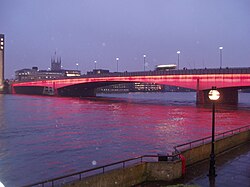
A stone bridge was built in 1176 and was lined with shops - the most famous bridge in the country at the time. Fires, floods and other natural and non-natural disasters all took their toll and many bridges were built on this site. In 1973 the present London Bridge was erected. It looks like this:


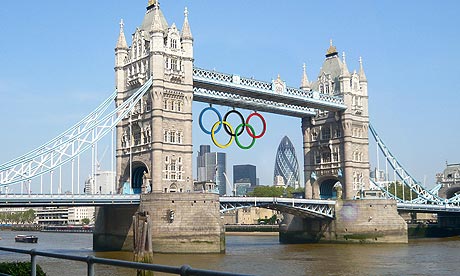
As part of the lead-up to the Olympics, the ring logo has appeared on Tower Bridge, one bridge downstream from London Bridge. Tower Bridge was built between 1886-94 and looks like this:


London Bridge was bought by an American in 1967 and rebuilt in Lake Havasu City, Arizona. Both the buyer and the vendor vehemently deny the popular rumour that he actually thought he was buying Tower Bridge. The mistake is common, but no less annoying for all that.

Monday, 23 July 2012

My Newest Favourite Thing: Team Sky

Wow! What a team. What a performance. What a commitment! I've heard people say that they are boring - clearly these people know nothing about cycling and are probably the same people that say that Spain are boring at football. It's a team sport. And what a sport. These guys are supreme athletes. I'm speechless. All aboard the Sky Train!

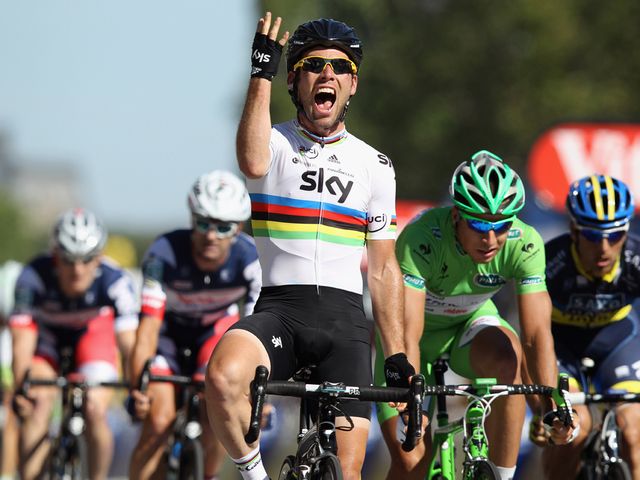
And I know I've banged on about Cavendish before, but he is truely remarkable, so I will again. The acceleration is incredible, and to win on the Champs Elysees for the fourth time in a row, is a stunning achievement. He'll always have Paris.

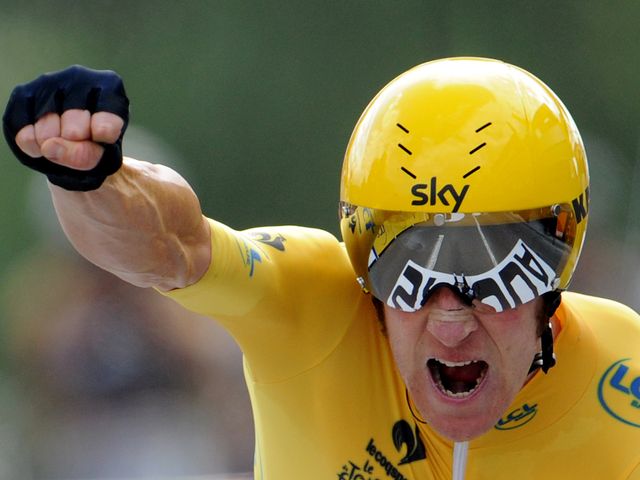
And Bradley Wiggins... what can I say? A fabulous and worthy winner. A great winning speech - 'It's time to draw the raffle numbers' - and a passion and to commitment to the sport. Yes, I'm patriotic and yes, it's wonderful to see a British rider win Le Tour. But it's even more amazing to see the yellow jersey lead out the World Champion in the final sprint. The Sky Train has been brilliant. Every rider has pedalled his socks off and I love it all.
 
And the Olympic road race is in less than a week's time. At the last Olympics I was suffering slightly from dual nationality syndrome. No such dilemmas this time. You go boys; bring it home!

Friday, 20 July 2012

Friday Five: Super Heroes!

Last night I went to watch The Dark Knight Rises. With the exception of Anne Hathaway, everything about it was brilliant, and, in her defence, she does have a nice bum. It got me thinking about the whole super hero thing (Super Hero is actually a trademark co-owned by Marvel Characters Inc and DC Comics, but I'm sure they won't mind me using it here). I asked Him Outdoors who was his favourite super hero, and he said Thermoman, so I stopped asking him.

According to Wikipedia, a super hero is 'a type of stock character possessing extraordinary or superhuman powers and dedicated to protecting the public.' Although there is no specific mention of 'human', let's assume this is so, and therefore rule out Danger Mouse and Hong Kong Phooey. They also 'do not strictly require actual superhuman powers' and can be 'costumed crime fighters'. So that includes Ironman, but I only like that (and I do like that) because of Robert Downey Junior's performance.

Now, I know he's up there on a lot of people's favourite superhero lists, but I just don't get the whole Spiderman thing. I mean, he's nice enough, but what's he got that you can rely on in a crisis? He spins webs, he catches flies... why is that a good thing? I'd take Bear Grylls over Spidey any day. In fact, I'd just take Bear Grylls.

5 Favourite Super Heroes:
  1. Batman - It's not just the outfit (although that's pretty fine); he's dark and disturbed and has great toys and fast cars and a mansion with a cool butler. His moral sense of justice and defence of his fabulous city are legendary.
  2. Superman - He was the first. In the Great Depression era, America needed heroes, so they invented them. Superman was created by Jerry Siegel and Joe Shuster in 1932. This era is excellently described in Michael Chabon's The Amazing Adventures of Kavalier and Clay. Superman is 'faster than a speeding bullet, more powerful than a locomotive, and able to leap tall buildings in a single bound.' Of course he can fly, has super strength, speed, vision, hearing and even breath. His main failing for me is that he is too perfect, and good.
  3. Wonder Woman - Okay, so who didn't play at spinning round and repelling bullets with magic bracelets? The truth-lasso was a thing of beauty. And those boots! Lynda Carter was a wonderful feminist icon of the 70s. We loved her.
  4. Dr Who - Well, maybe he doesn't count as an official superhero, but he can travel through time and space, has amazing geeky intelligent powers, can regenerate, and has a charming determination to save the human race for all the evils that beset it.
  5. James Bond - And while we're on the subject of stylish dudes with fast cars and flashy gadgets who selflessly defend the world (and specifically Great Britain) from evil, I would happily put my money on Bond, James Bond.

Monday, 16 July 2012

Books read in March 2012

The following are short reviews of the books that I read in March 2012. The marks I have given them in the brackets are out of five.
 
The 10pm Question – Kate de Goldi (3.9)

Frankie’s mother doesn’t leave the house because she suffers from depression. Is it hereditary? This is one of the many things that Frankie worries about, but is unable to ask her with all his other questions, which he poses each night at 10pm before he goes to bed. Frankie seems to be a normal, inquisitive 12-year-old boy. His aunties come to visit regularly; he leads a terribly active life playing cricket and taking lessons for everything from trampoline to trumpet; he has a cat with the fabulous name of The Fat Controller, a big brother, Louie, and sister, Gordana, with whom he has the usual sibling spats, and a best friend, Gigs, with whom he shares a secret vocabulary named Chilun.

Frankie worries about almost everything and mentally recites lists to keep calm and stop him worrying. He likes order and routine. And then he meets a new friend, Sydney (her sisters are called Galway and Calcutta), a girl who has lived everywhere, can play cricket, and asks even more questions than he does. He enjoys her company and, despite guilt that he may be disloyal to Gigs, shares his secrets with her, although he withholds the details of his mother’s illness because he doesn’t understand it himself.

When Sydney’s mother (who chooses not to work but relies on rich boyfriends to supply her necessities – such as a Porsche) decides they will move on, Frankie is devastated by the loss of his friend and withdraws into a self-obsessed bundle of anxiety and misery. His own mother isn’t much help, but his siblings come to his assistance.

Someone who has or knows someone with depression or anxiety will understand the mental health issues in this novel. Someone just reading it as a story, waiting for something dramatic to happen, (and De Goldi’s target audience is young adults) will be disappointed, because it doesn’t. Frankie himself notes, “It really was a continual disappointment, how all the little pieces of story magic were eventually crushed by the weight of reality.” Frankie is a normal child in a typical world, but the prescriptive nature of modern society insists that everybody has to be diagnosed with something to make them feel special.

The Limpopo Academy of Private Detection – Alexander McCall Smith (3.6)
This is the latest (thirteenth) in the No. 1 Ladies Detective Agency series. I have missed the last eight but it doesn’t seem to matter because all the characters have been previously established and they remain true to their attributes. The storylines are not as important as the style and tone of the novels with their strong sense of morality and understated humour. In this particular instalment, one of the local mechanics is accused of handling stolen goods, Mma Potokwani is summarily sacked from her position at the orphanage, and, most thrilling of all, Mma Ramotswe and her (recently promoted) associate, Mma Makutsi, meet Clovis Andersen, the author of The Principles of Private Detection, by which they have devotedly run their agency.

This is a world where loyalty and polite manners are paramount; Botswana stands for “decency, quiet, courtesy – the things that were slipping away in the world but that were remembered and pined for.” McCall Smith fills in all the small-talk, and random pleasantries of daily communication, which gives his dialogue authenticity. People like to know family links or have at least a tiny bit of personal knowledge of a people or place. Mma Ramotswe is patient and tolerant, Mma Makutsi loves shoes, and imagines that they talk to her, and inanimate objects take on personalities.

The laconic style is full of deliberate contradictions. Chapter headings such as ‘A Lawyer Spills Tea Over His Shirt’, ‘There Are Some Nice People on the Road’ and ‘I Shall Simply Look Up in the Sky’ could be intellectual profundities or empty aphorisms, or perhaps both. In many respects, this is a calm and gentle vision of Botswana, but we are reminded of the inhospitable land in which they live. “A journey out into the Botswana bush was not something that could be undertaken lightly” featuring pitted roads, limited fuel and water, and the possibility of being stuck miles from civilisation in extreme temperatures with wild beasts. Once again, Alexander McCall Smith draws us into his charming world, but there is always an element of danger lurking beneath.

Witch Light – Susan Fletcher (4.3)
Corag is a legendary figure, who was accused of being a witch, but also warned the MacDonalds of Glencoe to flee before the king’s soldiers, so many of them escaped massacre (although many others were killed). In this novel, she relates her story to Charles, a fanatic Jacobite from Ireland, who interviews her in prison. He also writes letters to his wife, Jane, and slowly his feelings towards ‘the witch’ alter and soften until he pities her plight and attempts to prevent her from being burned at the stake.

The novel is atmospheric with the mists, mountains, forests and lochs of the Scottish Highlands. Corag escapes here, to avoid being taken as a witch as her mother and grandmother both are before her. She loves nature in all its guises: the curl of a leaf; the movement of a snail; the majesty of a stag; the patterns of the clouds. Her weather is winter, for she was born in the winter and seems impervious to cold. It is her friend as she waits in her cell, for they will not burn her until the snow and ice thaws, and she sits listening to the drips in fear.

Originally Charles is anti-witchcraft and believes Corag is a heathen. Through talking to her over time, however, he comes to realise that she merely has a different attitude to God and prayer to his limited strictures.

If there is a criticism of the novel, it is that it is too childlike and simplistic, with irritating passages of over-explanation and repetition. Perhaps this would be an ideal introduction for a young adult into a shameful period of history in which horrors were inflicted on brave, solitary women who loved the outdoors, practiced traditional medicine and lived simply with the seasons. It offers no great insights, but is written in a calm and fluid, almost Zen style that calms the reader with a gentle embrace.

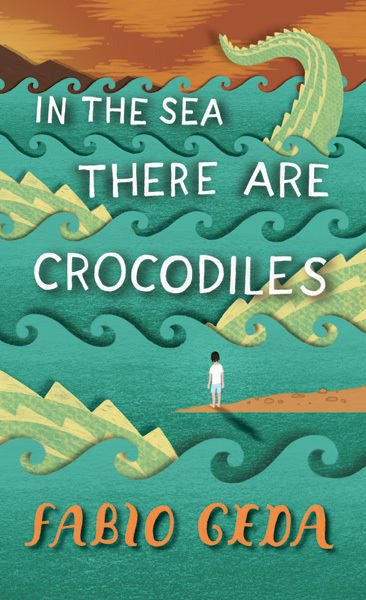
In the Sea There Are Crocodiles – Fabio Geda (3.8)
This is the story of a young boy, Enaiatollah Akbari, who escapes from Afghanistan to Italy to find refuge. He travels as an illegal immigrant in horrifically dangerous circumstances, and his plight reminds me a bit of The Silver Sword, or I Am David although I read both of them a long time ago so perhaps I am wrong. Just before Enaiatollah goes to sleep, his mother tells him three things: don’t use drugs; don’t use weapons; don’t steal. When he wakes up the next morning, she is gone and he must fend for himself (he is about ten). She has returned to his younger siblings and started him on his journey through Asia and Europe.

The story is told to an Italian (Fabio Geda) and then translated by Howard Curtis. Enaiatollah Akbari explains to Fabio Geda, “I don’t want to talk about people, I don’t want to talk about places. They aren’t important. Facts are important. The story is important. It’s what happens to you that changes your life, not where or who with.” This might be the voice of youth (albeit told by an adult through his childhood reminisces) or just an excuse for the lack of detail, but either way, we could do with more padding, as the bones are extremely bare.

As promised, he doesn’t dwell on anything but the linear narrative, which is certainly tough as he journeys through freezing mountain passes without food, hides in the fake bottom of a lorry packed in with others so he can barely breathe, and stows away in a container on the sea. As well as hardship, he encounters great kindness but there is no time for introspection as he struggles to stay alive. He merely seeks out shelter, food and work.

Enaiatollah uses references both from his rural Afghanistan childhood, and his Americanised present – even though he lives in Italy, MacDonalds and baseball are ubiquitous, which is sad in itself. When he meets some lads from France and Brazil, he can’t speak their language and they all try to get by in English. All he knows of their country is Zidane and Ronaldinho respectively: the language of football is universal. All they know about Afghanistan is Taliban. History precedes him.

He decides to stay in Italy because of the kindness he has been shown there and because he is tired of travelling. His physical journey may have finished, but one suspects his inner searching has just begun. With very little descriptive colour, Enaiatollah Akbari presents us with a very different kind of travelogue through some countries we may have heard a lot about, but from a wholly different and starker perspective.

Friday, 13 July 2012

Friday Five: Bears!

I love bears. Since the turn of last century, inspired by President Theodore Roosevelt, thousands of toy bears have been produced so that children can cuddle them, talk to them, take them to tea parties and rely on them for safety and protection night.

They are perfectly suited to this role, being round, cuddly and just a little bit rough. I would have to say that cats are my favourite animal, but they are largely indifferent and affection towards them isn't always reciprocal. In the words of Elvis Presley, 'I don't wanna be a tiger, cause tigers play too rough, I don't wanna be a lion, cause lions ain't the kind you love enough.'

5 Favourite Bears:
  1. Winnie the Pooh - obviously
  2. Paddington Bear - I just loved how he was always 'accidentally' getting into trouble and he had the best hard stare. I'd like to think we would still look after a hapless refuge if we found one at the station with a luggage tag around their neck.
  3. Barnaby the Bear - Originally French and slightly bonkers in translation
  4. Lars the little polar bear - so cute! The eternal dilemma; to travel and seek out new and potentially challenging adventures, or to stay safely at home?
  5. Bear Grylls - don't tell me you didn't see that one coming...

Monday, 9 July 2012

Automatic for the People


According to a recent 'fact' I heard on morning television (so it must be true), nine out of ten new drivers learn to drive in an automatic car. They can't actually drive a manual.

Now, I know I've gone on about this before, but I don't consider sitting in a seat and looking out of the window occasionally, so as to know where to steer or turn on the windscreen wipers (although some cars do that for you autonatically too), to be driving.

The breakfast show interviewed an 'expert' about this issue. He claimed that one in ten people like driving and they probably drive a European car. The other ninety percent just want to get from A to B as quickly and comfortably as possible. If they don't have to change gear or worry about the clutch pedal, they can enjoy their coffee more.

I'm sorry, what? Aren't they meant to be driving? Aren't there places where you can pull over and stop for a rest and a coffee if you need/ want one to break up the journey? Are you going to say they prefer to have their hands free so they can do their hair or play games on their i-Phone?

This is the unfortunate legacy of the dreaded multi-tasking; the scourge of the twenty-first century. We expect to be able to do more than one thing at once, which is fine if you are watching morning television and eating your breakfast, folding the washing, getting dressed or cleaning your teeth.

But when you are driving, you are supposedly in charge of a potentially lethal weapon and you should be giving it your full attention.If you have to remain alert to choose which gear to use, then so much the better. If you can't drive a manual, you can't drive.