Friday, 11 December 2020

Friday Five: Christmas Tree Ornaments


As we now have kittens in our lives, I managed to persuade Him Outdoors that we needed a tree for their first Christmas. Cats of any age love Christmas trees; all those shiny things to play with and pull off: such fun! I was a little concerned that they might hurt themselves or cut their paws if they broke anything, so I only decorated the tree with robust and non-shatter items. There are still many precious memories among the branches.

7 Christmas Tree Decorations:
  1. A football - of course 
  2. A fantail - given to us by The Weevil and a reminder of New Zealand
  3. A tui - a gift from another Kiwi friend
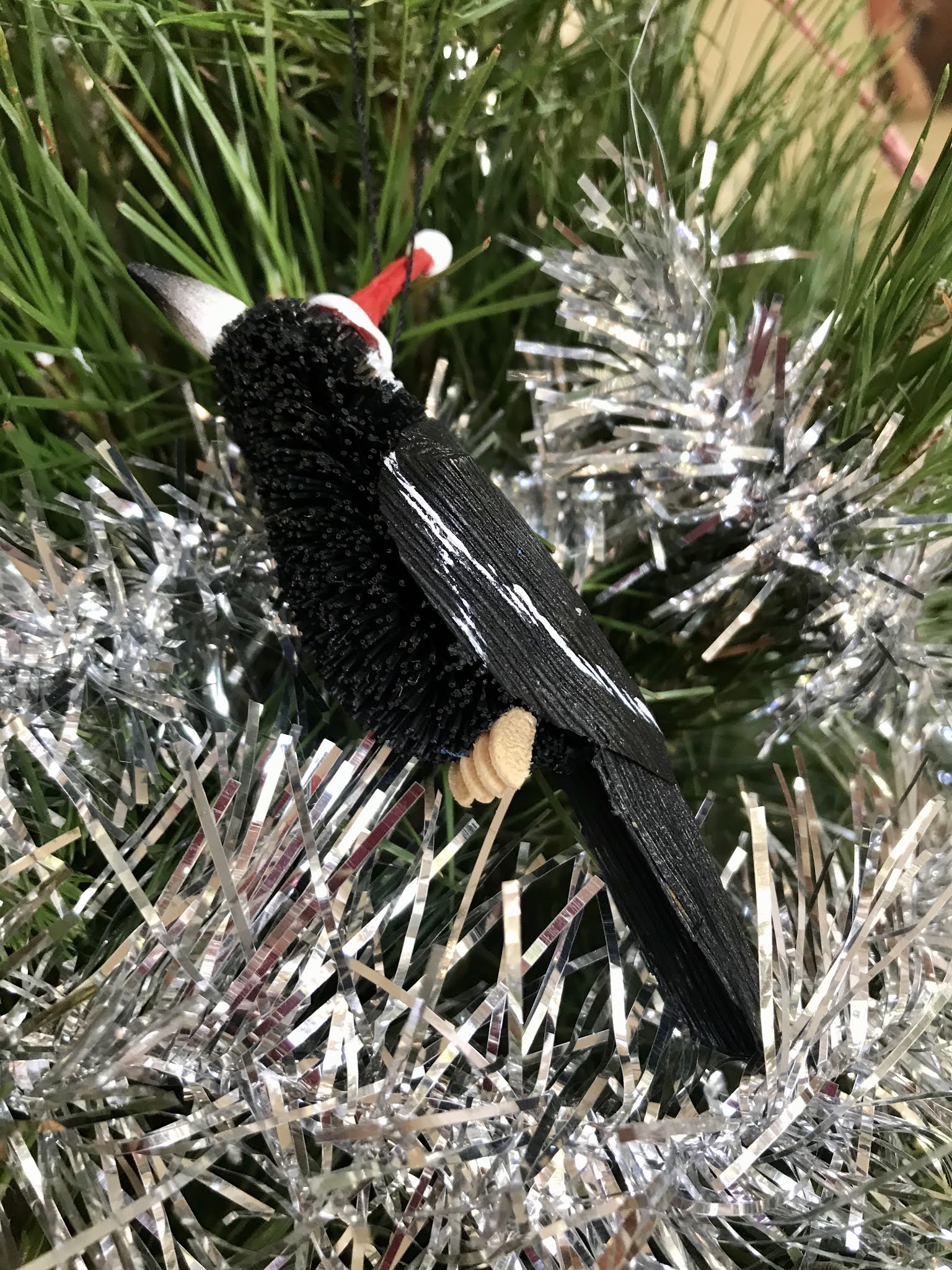
  4. A magpie - we've also got a couple of doves nestling among the branches - I love to see birds in the trees
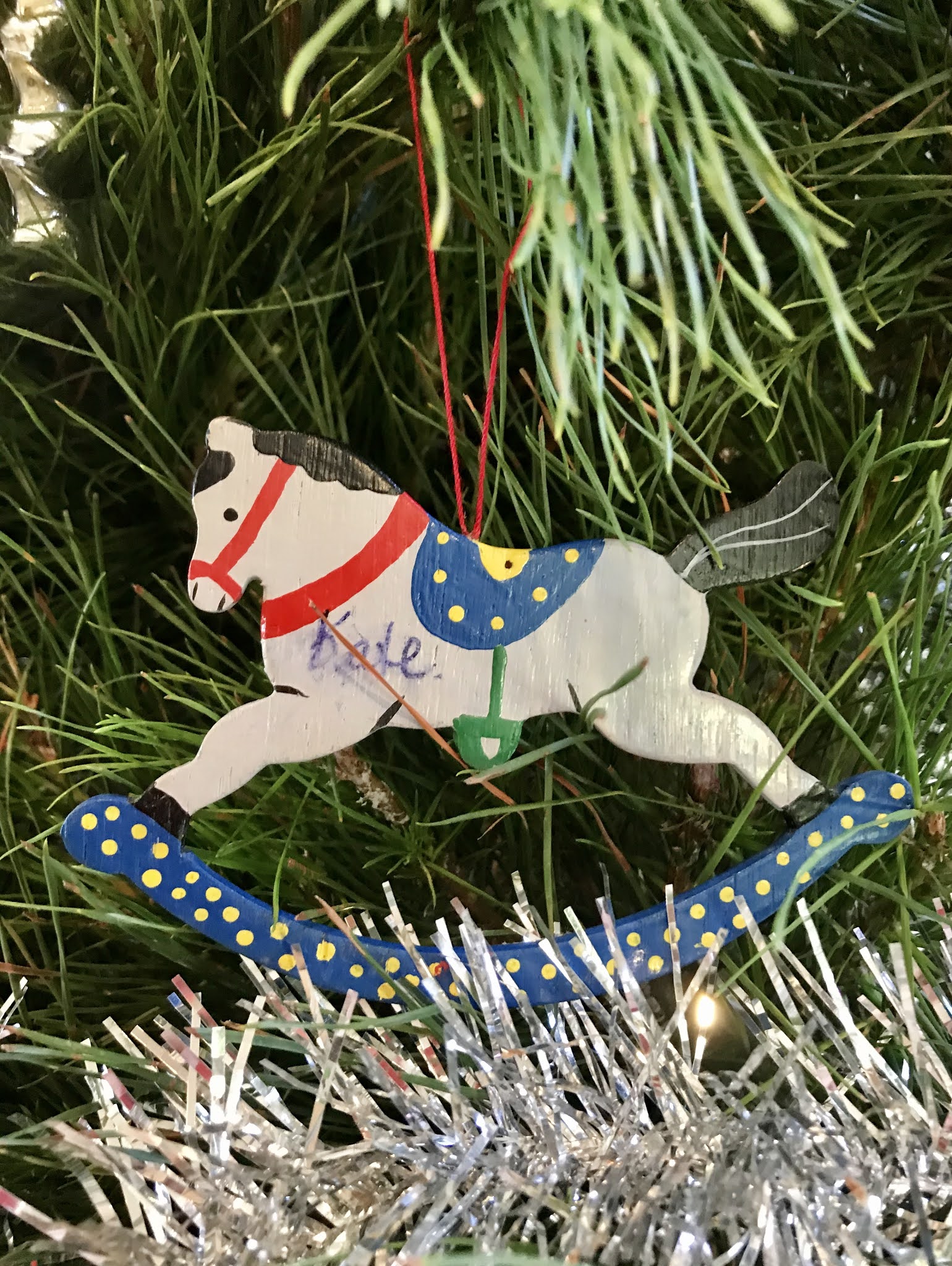
  5. A rocking horse - my mother decided this one was for me - you can tell because she wrote my name on it
  6. A collage Christmas tree on a Christmas tree - very post modern from Nephew Aidan
  7. Pom poms - as you do (if you're Niece Niamh)

Friday, 4 December 2020

Friday Five: Stitching and Bitching

Here are another five of my latest cross-stitch creations. The first two patterns and explanations are taken from Really Cross Stitch; for when You Just Want to Stab Something a Lot by Rayna Fahey.

No borders unless they're pretty and floral
"This pattern is dedicated to people fleeing persecution who, despite all obstacles still strive to create a clean, tidy, safe space for their loved ones to rest before facing another day.

The women who sew together rags for their wee ones 'cause they know how important it is for a two-year-old to have a cuddly friend. The women who dress in black and march for peace amid gunfire and tear gas. All the while carrying giant handbags with keys and snacks and hankies for small runny noses."
C'mon gang: Be excellent to each other
"Stop for a moment and imagine what the world would be like if everyone did one simple act of kindness for a stranger, every single day.

"Old ladies would get safely across roads, lost wallets would be returned to their owners, wars would stop breaking out all over the place. the possibilities are truly endless. Pay it forward people, I think we're onto something here!

"Fucking kindness. It just works every time."

The remaining images are little kits by Thomas Joseph that I picked up back in the UK, where we like cheap gags and sheep. Well, wouldn't ewe?

Wednesday, 2 December 2020

On Shifting Sands: Celestial Bodies


Celestial Bodies by Jokha Alharthi
Sandstone Press
Pp. 243

Originally titled Sayyidat al-Qamar (Ladies of the Moon), Celestial Bodies is the third of Alharthi’s novels, but the first novel by an Omani woman to be translated into English and the first novel in Arabic to be awarded the Man Booker International Prize (which Alharthi shared with her translator, the Oxford academic Marilyn Booth in 2019). It spans several generations, from the final decades of the 19th century to the early years of the new millennium, and captures the changing mores and traditions in society, particularly in how they relate to women.

The family tree at the beginning of the book is crucial, and even with constant reference to it, the timelines can be a little hard to follow. The novel focusses on three sisters and their marriage prospects. Mayya marries Abdallah as she is told to after a heartbreak; Asma marries Khalid out of a sense of duty; Khawla rejects all offers while waiting for her beloved, who has immigrated to Canada. It is narrated by an omniscient narrator (who knows all about the women) and alternate chapters (in a different font) by Abdallah (who doesn’t).

Abdallah’s chapters are narrated as he is on a flight from Muscat to Frankfurt and he dreams fretfully of women accused of witchcraft and of the source of his father’s wealth back in his hometown of al-Awafi. Now little more than an oasis for nostalgia, it was once a hub for the slave trade, a practice that was not outlawed in Oman until 1970. It is no accident that the named narrator is not grounded as Alharthi inhabits the liminal space between memory and forgetting; the truth and the stories.

Marriage and childbirth are centre stage: customs are followed or disregarded and everyone has an opinion about how to follow them or not. Asma reads all the books and religious texts that she should, including On Matters of Purity although she finds the chapters so boring that she stops, but not before she gently mocks the highly restrictive guidelines on personal matters. Customs which are only followed for form are ridiculed, whereas those that come from logic and reason are upheld. It is still a patriarchal society, but there are social benefits to marriage. “Now she would be one of the women who sat around their coffee in the late mornings and then again at the end of the day. She would be invited to lunch and dinner, and she would issue her own invitations, since she was no longer merely a girl. Marriage was her identity document, her passport to a world wider than home.”

Women must still strive for individual recognition. When Mayya has her first child, it is a girl, which is considered lucky as it means that boys will follow. “The first one’s a girl, and a girl comes to raise her little brothers.” She calls her London, which name the family ridicule, but Mayya wants to give her a future elsewhere in the world.

The changes are occurring slowly, and the generations have different ideas and ideals. The novel is short and contains vignettes of multiple characters, such as Bedouin businesswomen, slave owners, gossips, poets and arms dealers. Celestial Bodies leaves an ethereal impression of vibrant sketches rather a chronological saga, and it provides a new and appealing voice. In a land of shifting sands, Jokha Alharthi is a shaping energy.

Jokha Alharthi and Marilyn Booth share the Man Booker International Prize for writing and translating Celestial Bodies 

Friday, 27 November 2020

Friday Five: Inveraray Castle

While we were in Scotland last year, we paid a visit to Inveraray Castle with the family. It was a great day out and there was a lot to see and inwardly digest. In the evening we went out to dinner and discussed the five main things we had learned and remembered from our day's outing. There were ten of us in the group so there are a few crossovers (and more than five altogether).

  1. The building itself - Although there has been a castle on the shores of Loch Fyne since the 1400s, the present Inveraray Castle wasn't built until the late eighteenth century (the entire village of Inveraray was moved in the 1770s to give the castle a more secluded setting). Inspired by a sketch by Vanbrugh, the architect of Blenheim Palace and Castle Howard, it is baroque, Palladian and gothic in style, and was architecturally ahead of its time. There is a difference between a castle and a palace mainly that a castle is built for defence (with thick walls, heavy gates, high towers, parapets or slits in the walls, gatehouses, moats and the like) and a palace is just for showing off. I'm not sure if Inveraray ever had to go all defensive, but it has got a moat.
  2. Family home - Inveraray Castle is the ancestral home of the Dukes of Argyll and the seat of the Clan Campbell.  In the picture turret, there is information about the history of the Campbells' once the most powerful clan in the Highlands. There are pictures of the present Duke as Marquess of Lorne, his wedding to Eleanor Cadbury (yes, of the chocolate empire), and their son Archie, the present Marquess of Lorne. There are two other children as well and they all live here, although presumably not in the part of the house that is open to the public. It can't be pleasant having a load of commoners traipse through your house gawping at your things, but the upkeep on these places can't be cheap either.
  3. Highest ceilings - The dramatic armoury hall soars to 21 metres in height - the highest ceiling in Scotland. The central ceiling displays the impressive family crest, and on the ceilings on either side are the crests for the various cadet branches of the Campbells. The armoury itself displays a spectacular collection of arms, including more than 1.300 pikes, swords, muskets and other weapons. Displayed in elaborate patterns adorning the walls are 16th and 17th century pole arms and roundels of Brown Bess muskets dating from around 1740, with spandrels of muskets alternated with Lochaber axes. The latter and 18th century Scottish broadswords date from the time of Queen Victoria's first visit to Inveraray in 1847. The showcases contain pieces of relevance to the Campbell Clan and their historic connection with Britain. A highlight of the collection is the dirk and sporran belonging to Rob Roy MacGregor (1671 - 1743). 
  4. Antique Spanish Silver Neff - In the elaborate dining room, there is a gorgeously ornate model silver sailing boat on the dining table. The neff (originally spelled 'nef') is an ornamental model ship made specially for the dinner table. They are usually quite elaborate with masts, sails, rigging and various figures on board. Early examples (13th - 16th century) were drinking vessels (do you see what I did there?) or receptacles for dining implements. Nefs originated from the continent and were used in  France, Germany, Spain and Italy, but most nefs found today were made in Germany at the end of the nineteenth century. Traditionally the dining table nef was made in two sections and the top half was removable so that the hollow hull could be used to contain the spoon, knife, napkins and spices of the host. When the use of great dining halls waned, the hull was fashioned to hold wine, sweetmeats or a variety of special condiments.
  5.  Artwork - There is amazing artwork throughout the house, from the displays of Campbell family portraits through history to the lavishly painted interiors. There is art by Thomas Gainsborough, John Hoppner, and French artists Girard and Guinard, whose only work survives at Inveraray, in the painting of the walls and ceilings, which is of a quality unparalleled in Britain at the time. Girard was one of the principle decorative artists employed by the young Prince of Wales when decorating his grand residence, Carlton House.
  6. Furnishings - the tapestries, furniture, and chandeliers are all remarkable and opulent. The dining table, by Gillow of Lancaster, dates from about 1800, the outstanding ormolu-mounted sideboards are from the late 18th century, and the Waterford chandeliers (of which there is one large one in the dining room and a smaller pair in the drawing room) are circa 1830. The glorious Tapestry Room still retains the original set of Beauvais tapestries in the setting specifically designed for it. The delicate tapestry dining chairs with gilding by Dupasquier and original Beauvais tapestry upholstery were commissioned by the 5th Duke on one of his visits to France in the 1780s.
  7. Hidden Room - There's a fabulous concealed door from the Tapestry Drawing Room that leads to the China Turret. The entrance is ingeniously concealed by a pair of double doors covered with tapestry panels integrated into the design on the Tapestry Room.  This used to be a library and while it now houses a very fine collection of Oriental and European porcelain (including Japanese Imari-ware, of the early 18th century, a Meissen dessert service, and a large Derby dinner service from the early 19th century), I feel sad that it is no longer a secret place for hiding away and reading. It is presided over by a portrait of the 3rd Duke of Argyll in the robes of Lord Justice-General of Scotland by Allan Ramsay. 
  8. Lerner & Loewe - In the Salon is a grand piano on which Lerner and Loewe composed the songs for the musical My Fair Lady while they were staying as guests at the castle. Since the early 1780's the main displays of Campbell family portraits have been arranged here, and it is possible to follow the family through history starting with a portrait of the 1st Duke and going right up to the Marquess of Lorne. The family famously switched their allegiance from Charles II to Oliver Cromwell and, then at the restoration, back to the monarchy. 
  9. Wedding Dress - The North West Hall contains a collection of costumes worn by the family through history to the present day. The display includes the Coronation robes of HRH Princess Louise, the robes of the Knight of the Thistle and the present Duke's uniform of the Royal Company of Archers. A more recent addition is the stunning cream gown designed by Bruce Oldfield and worn by the current Duchess at her wedding to the 13th Duke in June 2002.
  10. Spooky Stories - The ghostly bed in this room is elaborately carved and belonged to the MacArthurs of Loch Awe. Legend has it that a young Irish harpist was murdered by the Duke of Montrose's men in 1644. The bed was moved to the present castle from the old Inveraray Castle and the boy's ghost was so attached to the bed it travelled with it. When a member of the family is about to die, it is said that harp music is heard coming from the room. Other resident ghosts are said to include the 'grey lady', only seen by daughters of a Duke of Argyll, a floating boat or ‘Galley of Lorne' which floats away on the horizon on the death of the Duke, and a raucous kitchen maid.
  11. Drums - The Clan Room conveys the many fascinating historical aspects of the great Clan Campbell, from its origins right through to the present day, with the Duke of Argyll as Clan Chief or MacCailein Mor. The room includes the remarkable and detailed family tree which adorns the South Wall and traces the Campbell lineage and its various branches of the family from the present day back to Colin the Great in 1477. A map of Scotland shows the lands possessed by the Clan at the height of their power. In addition to most of Argyll, the Campbell strongholds stretched as far East as Taymouth in Perthshire, a castle which in many ways replicates Inveraray; North to Cawdor Castle in Inverness-shire; and South to the now ruined Louden Castle in Ayrshire. There is also a fine collection of military drums loaned by the Caledonian Schools Trust.
  12. Kitchen and cafe - The original kitchen at Inveraray Castle was last used by the current Duke's grandmother, Duchess Louise in the 1950s. It features seven fireplaces for different methods of cooking, two stewing stoves, two baking ovens, a hot plate, boiling stove and a roasting fire with working spit which would have originally been operated by a fan in the chimney. Visitors can also see a fine collection of copper utensils known as "batterie de cuisine" together with various utensils of the Victorian, Edwardian and pre-war eras. The current cafe is run personally by the Duchess of Argyll, it serves up a mouth-watering menu using the best of Argyll ingredients (I can recommend the scones for afternoon tea).
  13. The gardens - The castle's beautifully maintained gardens and estate offers wonderful walking with stunning Highland views. The garden covers sixteen acres of which around two acres are formal lawns and flowerbeds, the remainder being parks and woodlands (full of squirrels and deer). The gardens feature daffodils around Easter, bluebells in May, and rhododendrons throughout the summer. The climate in Argyll with its yearly average rainfall of 230cm (90 inches) is ideally suited to rhododendrons and azaleas. Conifers also grow well in the poor acidic soil of a high rainfall area as can be seen by the fine specimens such as Cedrus Deodars, Sequoiadendron Wellingtonia, Cryptomeria Japonica and Taxus Baccata.
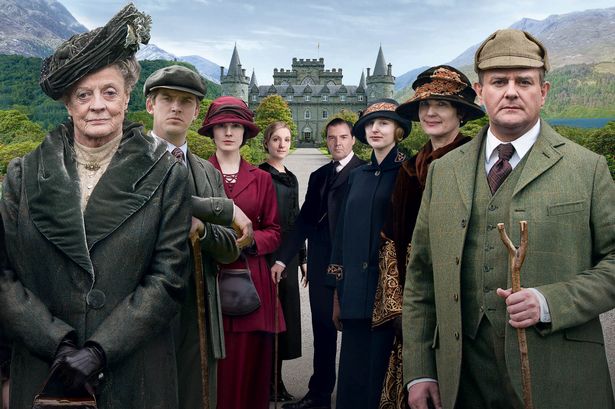
  14. Downton Abbey - If it looks familiar, it might well be because in a 2012 two-hour Christmas special, the Grantham family and staff travelled north to the home of their cousins, the Marquess and Marchioness of Flintshire in their mythical Scottish home, ‘Duneagle Castle’. The castle was closed to the public for a week during filming, but apparently the loss of tourism revenue was made up for by the fact that the cast and crew stayed in the village of Inveraray. Locals were thrilled with the star sightings, and the star who stirred more excitement than any other was Dame Maggie Smith. We're not quite the Granthams, but I don't think we're a bad-looking bunch (although with slightly more fleece, puffer jackets and denim).