Friday, 7 May 2021

Friday Five: Oscar-Nominated Films in 2021

Chloe Zhao with her Oscars for best picture and best director

The 93rd Oscar ceremony was odd. It is a shame that it will be remembered for the fact that it was held in a train station and that half of the nominees weren't there. I would rather remember it as being the night that Chloe Zhao went home with the best director gong, making her only the second woman in the Academy Awards' history to do so. 

It was the night that the award for best picture was moved from its final glory spot to make way for the best actor picture because everyone expected Chadwick Boseman to win it, thus providing an emotional end to the ceremony. He didn't, and there wasn't. Anthony Hopkins won it for his role in The Father, and he wasn't even there - not even via Zoom - so everyone just shuffled awkwardly off-stage and anyone watching was left going, 'Wait, was that it?'

Frances McDormand in Nomadland
I haven't watched all of the nominations for best picture, but I have watched five of them, and as it's a Friday, it seems appropriate to do this:

5 of 2021 Oscar-Nominated Films I've Seen:
  1. Mank - I finally watched Citizen Kane in preparation for this film. That's probably the best thing about it. Writer, Jack Fincher, and director, David Fincher, have created an homage to what many critics consider the best film ever by celebrating the work of the disputed screenwriter, Herman J Mankiewicz. Black and white highly stylised cinematography, and a keep-your-eyes-on-the-prize performance from Gary Oldman make this an artistic exercise but not necessarily a great picture. Sure, if you're into Hollywood history and you care about William Randolph Hearst and the background to the film, it would be one to add to the bingo cards of name-dropping references, but it's all a bit smug and self-assured.  And I'm just a bit tired of watching men stand or sit around and shout at each other.
  2. Nomadland - Frances McDormand plays Fern, a woman who is 'not homeless but houseless' as she travels the United States looking for work as if in a modern version of The Grapes of Wrath. She is seen cleaning toilets in truck stops, boxing up goods in the soulless Amazon warehouse, or sorting beets in Hardy-esque scenes, but there are also wide sweeping vistas of the incredible scenery of this beautiful country - the sunsets and dawn are breathtaking, despite the harsh bleakness of landscape, often boiling in summer and literally freezing in winter. She meets up with other itinerants (many playing versions of themselves as the characters of the original source material book) as they all traverse the land that doesn't belong to anyone, and they talk of seeing each other again 'down the road'. These people reject the American dream of home ownership and fixed roots; they do not claim exclusivity and nights spent in houses - that of her sister or companion, Dave (David Strathairn) - are claustrophobic and limiting. There is only a finite space for self-made millionaires, capitalist growth and rampant individualism - the rest of us have to share the planet, and the conversations held at a closed dinosaur park are laden with metaphor. At the awards ceremony, McDormand howled like the 'lone wolf' that Americans like to admire, calling on their romanticised visions of outlaws, cowboys and pioneers, but the reality is very different and isolation is often not chosen but due to circumstance. Many of these travellers have lost their position in life and society because they can't afford to pay for their medical needs, and the film is a searing indictment of the plight of older people and the truth of the health 'industry' in the States. Nothing is definite - friendship; parting; life itself - and humanity is found in home-made spas and campfire meals: they may travel alone but there is beauty when they come together. 

  3. Promising Young Woman - Yes, we’re f*#^ing angry! I loved this film; not sure it was entirely suitable for date night! Carey Mulligan is amazing and the treatment of this horrendous material is sensitively handled by director, Emerald Fennell. At times it has a graphic novel/ raunchy thriller vibe, because, like, how else are you going to get the entitled would-be rapist frat-boys to watch it, right? These are the boys that whine, ‘Why do you have to ruin everything?’ when a woman dares to stop their 'fun' with an accusation of abuse.
  4. Sound of Metal - If you're a drummer in a metal band who loses his hearing it must be very tough personally and professionally. Riz Ahmed portrays Ruben going through this nightmare, and we suffer through it all with him. His movements and facial expressions are simultaneously contained and eloquent, and he fully deserves his best actor nomination.  It seems to encompass the experiences of the deaf community, but what would I know? The film plays with sound in a way that enhances more than it limits and is a total shoo-in for the newly created 'sound' Oscar (which combines the previous sound editing and sound mixing awards). Our hero is also a recovering heroin addict, and his world is insular as a result, which is naturally self-obsessed and not appealing. This is doubtless a deliberate ploy by director Darius Marder, but it risks putting style over engagement.
  5. The Trial of the Chicago 7 - We know what to expect from writer and director, Aaron Sorkin: lots of sharp dialogue and walking and talking down corridors. We know what to expect from a courtroom drama about Vietnam War protestors: disparate voices of Students for a Democratic Society; Youth International Party; National Mobilization Committee to End the War in Vietnam; Black Panthers; all of whom are charged with trying to incite a riot at the Democratic National Convention in Chicago in August 1968. The lawyers, Schulz and Kuntsler battle it out in front of a prejudiced judge who is suspected of senility. We know what to expect from the outstanding ensemble of actors playing these parts including Eddie Redmayne, Sacha Baron Cohen, Mark Rylance, Joseph Gordon-Levitt, and Michael Keaton: passionate dedication to a script and a compelling delivery. And the film produces the goods, right down to the mawkish Dead Poets Society ending scene. It's a history lesson served up as entertainment. Exactly as expected.


Tuesday, 4 May 2021

It Comes to Us All: Reaper Man


Reaper Man by Terry Pratchett
Corgi Books
Pp. 287

Reaper Man is the eleventh Discworld novel and fleshes out the character of Death, as it were. In this adventure, Death’s time is running out; things aren’t dying the way they should be, which interrupts the fabric of existence; and everything is “filling up the world with life force.” Windle Poons is the oldest wizard in the world, and he is supposed to die, but Death doesn’t show up to collect him, so he doesn’t. Instead, he becomes a member of the Fresh Start Club, a dead rights activism group led by Reg Shoe and comprising other undead folk, such as a vampire and his wife who is desperately trying to conform to stereotype; including wearing certain clothes and speaking with a strong Eastern European accent. We also encounter Ludmilla, a werewolf who changes from woman to dog at full moon, a male dog, Lupine, who changes to human form at the same time, and a bogeyman called Schleppel who likes to lurk behind doors, so much so that he carries his own with him.

Meanwhile, oblivious to all the chaos, Death assumes the mantle of Bill Door and finds work at Miss Flitworth’s farm as an actual reaper man, helping with the harvest, leading to an extended gag about a scythe vs a Combination Harvester. As his time runs out both literally and metaphorically through a sort of egg-timer/ hour glass, he attempts to fit in with the villagers, drinking beer and playing darts. “It was amazing how many friends you could make by being bad at things, provided you were bad enough to be funny.” He is not used to living, which he finds odd, but also confronting. “Was that what it was really like to be alive? The feeling of darkness dragging you forward? How could they live with it? And yet they did, and even seemed to find enjoyment in it, when surely the only sensible course would be to despair.”

Delightful cameo appearances and side swipes at conventional wisdom, recall a fantasy Dickens. Mrs Cake is a clairvoyant who is able to answer questions before people have asked them – they still have to ask them anyway. The faculty wizards at the Unseen University get all sorts of things muddles, which makes for moments of humour, for example, when the Archdeacon (Ridcully) suggests that an RSVP is requested to an invitation, the Bursar exclaims, “Oh, good, I like sherry.” Ridcully himself is “simple-minded. This doesn’t mean stupid. It just meant that he could only think properly about things if he cut away all the complicated bits around the edges.”

The plot is suitably fanciful as evil snow globes hatch into shopping trolleys that converge on places, operating like worker ants or bees around a queen. This might or might not be the case; it is difficult to know for sure. As with all of Terry Pratchett’s work, there is a comically reverent tone to the rituals of human life. He refers to belief as an entity that “sloshes around in the firmament like lumps of clay spiralling into a potter’s wheel” seeking to attach itself to things, such as gods and icons.

Despite all this absurdity and hilarity, there is a touching homily on the nature and meaning of life. “No one is finally dead until the ripples they cause in the world die away – until the clock he wound up winds down, until the wine she has made has finished its ferment, until the crop they planted is harvested. The span of someone’s life, they say, is only the core of their actual existence.” Terry Pratchett is comfort reading for a variety of reasons: his turn of phrase; his ridiculous characters; his twinkling humour and his gentle satire, but above all it is his strong moral compass that truly points the way and keeps his readers coming back.

Friday, 30 April 2021

Friday Five: Women of the Odyssey

I'm in the middle of rehearsals for The Penelopiad by Margaret Atwood, which is a retelling of The Odyssey, focussing on Penelope, who was left behind while Odysseus went off to war and then travelled around having adventures rather than returning to her in a timely manner. I'm co-producing and directing the play which will be on at the Courtyard Studio in Canberra from 7-17 July. I have always loved mythology and the value of storytelling, so have thoroughly enjoyed providing a bit of context to some of the characters mentioned in the text. 

5 Female Characters mentioned in The Penelopiad

Pallas Athena (1898) by Gustav Klimt
1. Athena, also spelled Athene, in Greek religion, is the protector of Athens, and the goddess of war, handicraft, and practical reason – her Roman equivalent is Minerva. She was essentially urban and civilised, the antithesis in many respects of Artemis, goddess of the outdoors.

 She was the daughter of Zeus, produced without a mother – the myths tell how she emerged fully-formed from Zeus’s head, after he swallowed Metis (the goddess of counsel) when she was pregnant with Athena. Being the favourite child of Zeus, she had great power.

She represents the intellectual and civilised side of war and the virtues of justice and skill. In the Iliad, Athena is the divine form of the heroic, martial ideal: she personifies excellence in close combat, victory, and glory. The qualities that lead to victory are found on the aegis, or breastplate, that Athena wears when she goes to war: fear, strife, defence, and assault. Athena appears in Homer’s Odyssey as the Odyssey’s goddess guardian. As the guardian of the welfare of kings, Athena became the goddess of good counsel, of prudent restraint, and practical insight as well as of war. She is often depicted in art with armour, a golden helmet, a shield, and holding a spear. Her armour is the aegis made, in some accounts, from the skin of a Giant, hung with tassels of gold, and featuring the head of the Gorgon given to her by Perseus.

Athena became the goddess of crafts and skilled peacetime pursuits in general. She was particularly known as the patroness of spinning and weaving. That she ultimately became allegorized to personify wisdom and righteousness was a natural development of her patronage of skill.

Circe Offering the Cup to Ulysses (1891) by John William Waterhouse

2. Circe is a sorceress known for her vast knowledge of potions and herbs, and her ability to use these enchantments to transform her enemies, and those who offended her, into animals. In myths she is known to turn an Italian king who spurned her advances into a woodpecker, and when a sea-god preferred the nymph, Scylla, to her, Circe poisoned the water where her rival bathed and turned Scylla into a dreadful monster.

In the Odyssey she is described as a beautiful goddess surrounded by tame wolves and lions. She lures any who land on her island to her home with her lovely singing while weaving on an enormous loom, and then drugs them so that they change shape. When Odysseus visits her island, she invites his crew to a feast and turns them into swine - Odysseus is protected by Athena from drinking the drugged wine that effects the transformation, and he is able to rescue his men, although he then remains on the island for over a year and has several sons by Circe.

She became representative of the results of drunkenness and gluttony over abstinence and self-control. Because she made men lose their reason and act like lustful beasts she was accused of witchcraft and considered the archetypal seductress and whore - clearly female sexual desire was perverted and the poor men couldn't possibly remain chaste and faithful in the face of such evil. 

It has been argued that the fairy Titania, in William Shakespeare's A Midsummer Night's Dream, is an inversion of Circe. In this case the tables are turned and she is made to love an ass after, rather than before, he is transformed into his true animal likeness. Naturally, feminist interpretations reveal her in a more flattering light, and in her poem of 1870, the English poet Augusta Webster posits that when she met Odysseus and his men Circe did not turn them into pigs but merely removed their disguise which made them seem human.

The Three Fates (circa 1855) by Paul Thumann

3. The Three Morai also known as the Three Fates, are three goddesses who determine the course of human life. According to Thomas Bullfinch in Bullfinch's Mythology, they are described as the daughters of Night – to indicate the darkness and obscurity of human destiny – or of Zeus and Themis (Law), that is ‘daughters of the heavens.’ They were Clotho, who spun the thread of life; Lacheisis, who held it and fixed its length; and Atropos, who cut it off.”

Stephen Fry in his book, Mythos, instructs, "Their name derives from a word that means ‘portion’ or ‘lot’ in the sense of ‘that which is allotted to you’. ‘It was not her portion to be loved’, or, ‘It was his lot to be unhappy’, are the kinds of phrases Greeks employed to describe attributes or destinies apportioned by the Moirai. Even the gods had to submit themselves to the Fates’ cruel decrees.”

He continues, “The Fates seldom allowed glory and triumph without the accompaniment of suffering and sorrow... The Greeks felt that for every individual there was a personal, singular moira that could be expressed as a mixture of necessity, doom, justice and fortune. Something between luck and kismet.” Isn't it interesting that the Greeks had a world of gods doing terrible things to humans (raping, abducting, torturing...) and it's the women who get blamed?

The Delphic Sibyl (detail from the Sistine Chapel) (1509) by Michelangelo
4. The Oracle “answers from the gods to questions from mortals seeking knowledge or advice on the future. They were usually given in equivocal form so as to fit an event. Also the places where such answers were given forth by a priest or a priestess.” - Thomas Bullfinch

“In a trancelike state of prophetic ecstasy the priestess would sit out of sight on her interrogator, above a chasm in the ground which channelled down to the womb of the earth itself, and call her ambiguous prognostications up into the chamber above where the anxious petitioner awaited her proclamation… Oracle never lies, but nor does (s)he ever give a straight answer, finding it amusing to reply with another question or a riddle so obscure as only to make sense when it is too late to act upon it.” - Stephen Fry

Lilaia the Naiad (2013) by Annie Stegg

5. Naiads are water nymphs of lakes, rivers and fountains. They derived their vitality and in turn gave life to the water in which they dwelled. Generally speaking, Naiads were not considered to be the most helpful of nymphs, for they could be vengeful when angered.

Tuesday, 20 April 2021

Blue Mountains Graffiti

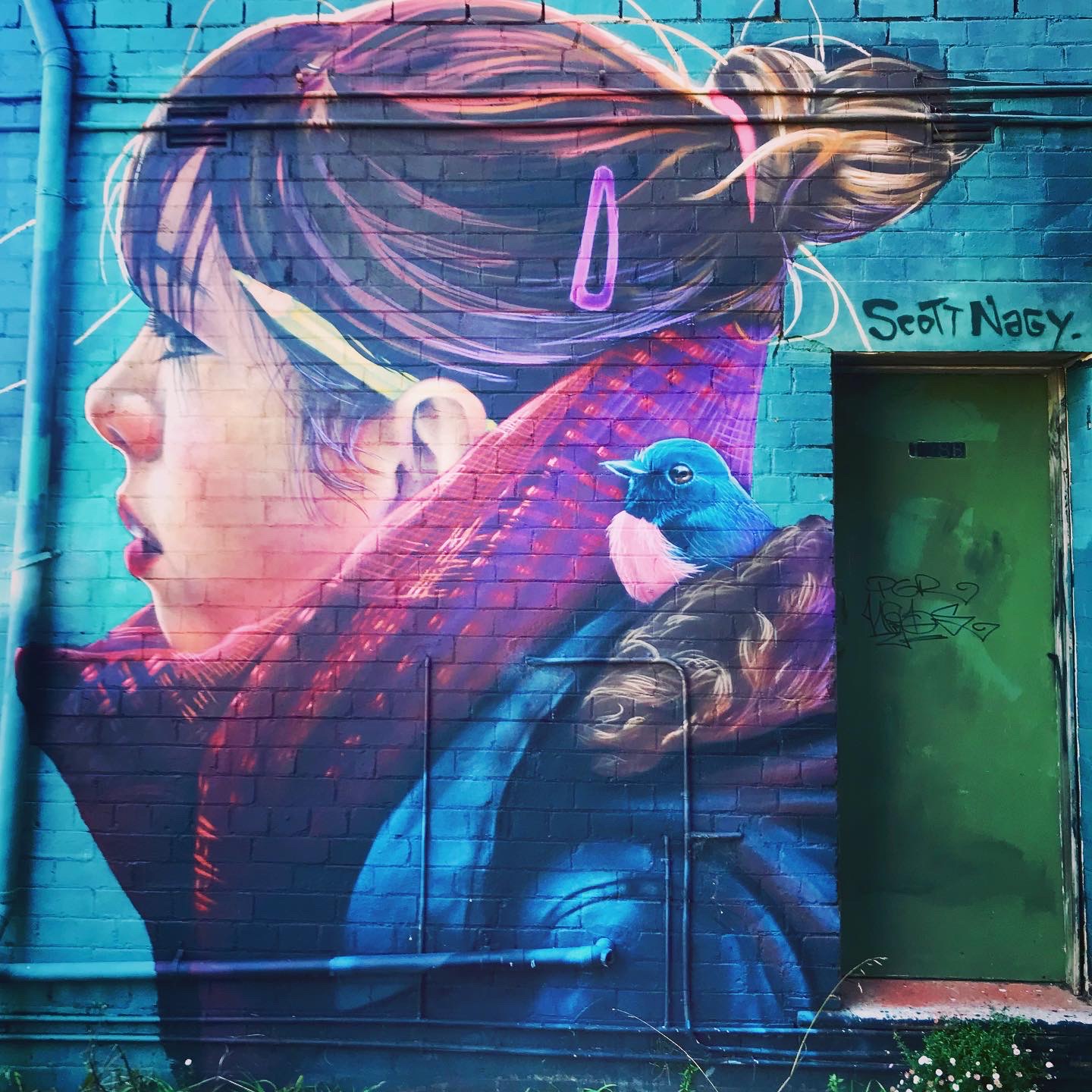
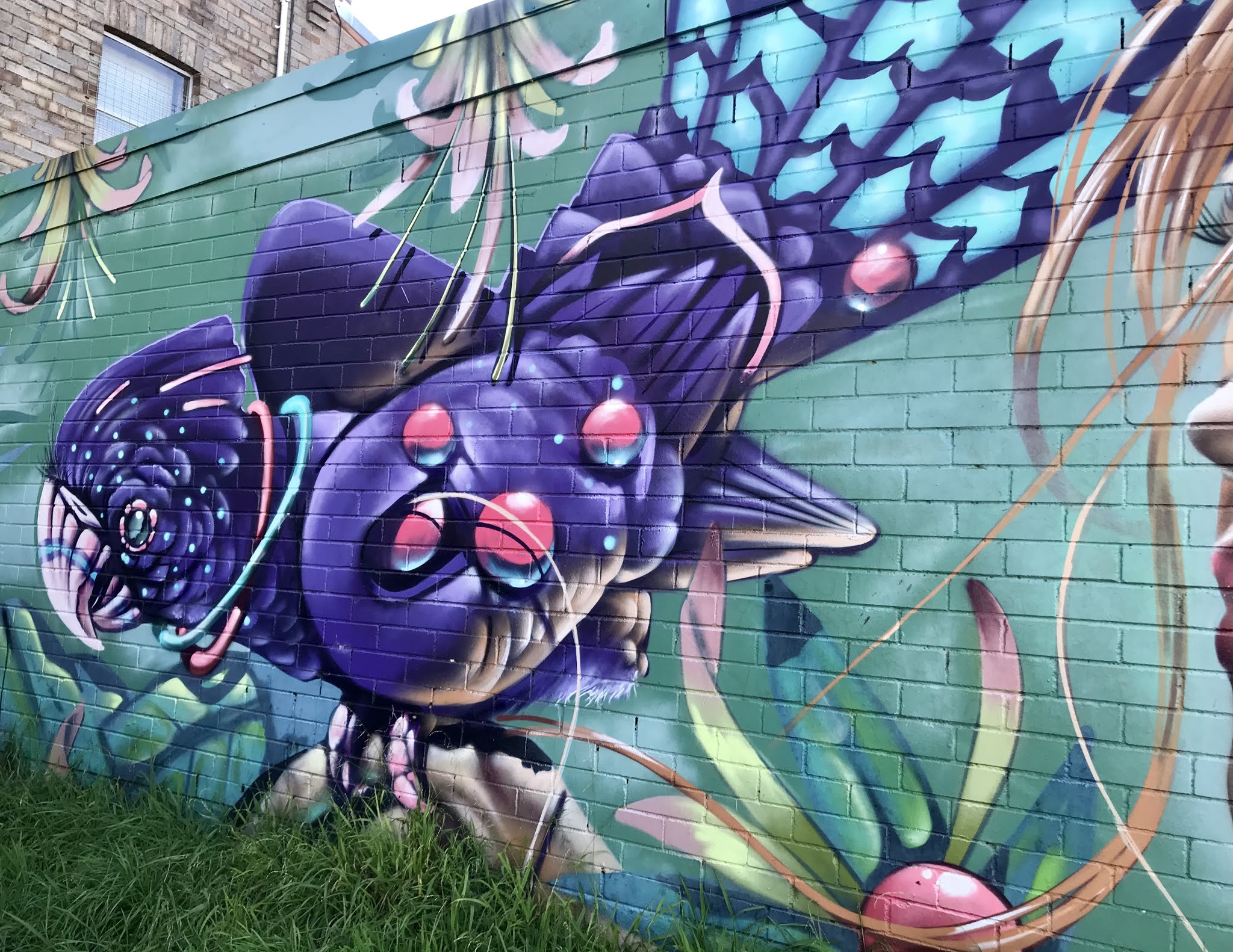
We had a long weekend in the Blue Mountains over Easter. It was beautiful - the scenery is stunning (and I've blogged about our walks and the food elsewhere) - but the graffiti is also worth a post of it's own. So here is one.

Katoomba

It all starts (as many things do) with the brewery.


There's a great opportunity for artistic impression down a back alley in the Street Art Walk. I don't know any of these artists, but I am impressed by their work. 


Another alleyway between shops features murals of birds and a climber. Interesting combination.


And I rather liked this piece artwork on the side of a water tower on the edge of town, which seems amusingly appropriate.
 

Friday, 16 April 2021

Friday Five: More TV

Here is a sample of some more TV series I've been watching - some are better than others, but they have all kept my interest up to a point. I've been keeping a list over the past year or so, so not all of these are bang up-to-the minute, but they are all on free-to-air services.

The women of The Split
5 Recent TV Shows I've Watched
  1. Cardinal (SBS On Demand) - There are four seasons of this Canadian series (each of six episodes) which are thoroughly enjoyable in a classic crime-drama fashion. The series adapts the novels of crime writer Giles Blunt, focusing on police detective John Cardinal (Billy Campbell) and his partner, Lise Delorme (Karine Vanassa). They investigate crimes in the fictional city of Algonquin Bay, involving corruption, drug dealers, serial killers, politics, suspicious deaths of family members and all the usual tropes. It is the pace and the setting that make this stand out; it is cold and so everyone is careful and needs to plan ahead, while the lead actors are thorough and understated rather than displaying any of the histrionics and hyperbole one would expect from a US equivalent.
  2. Cobra (BBC First) - I'll watch almost anything starring Robert Carlyle (*cough* Once Upon a Time *cough*), and so I was automatically drawn to this political drama. It's tonally a bit odd at the beginning when the UK's power is wiped out by a solar storm causing planes to fall from the sky and we're not sure if it's a thriller or a disaster series. Carlyle is the relatively new Prime Minister, Robert Sutherland, who has to deal with this crisis, as criminals and rioters take advantage of the situation and his daughter becomes embroiled in a drug scandal. Instead of working together, there are factions in the cabinet (mainly between Victoria Hamilton as Downing Street Chief of Staff and David Haig as Home Secretary) that attempt to score points rather than save community. Sound familiar?

  3. Last Tango in Halifax (ABC iview) - It is a joy to see great actors (Sarah Lancashire; Nicola Walker; Anne Reid; Derek Jacobi) playing great characters with well-written, humorous dialogue in credible and entertaining situations (series created and written by Sally Wainwright). Set in the beautiful but bleak Yorkshire and Lancashire country and towns, it could probably be described as following the fortunes or otherwise of a blended family. The central couple (both widowed and in their seventies) reunite and act upon their past youthful affection for each other, and the series was praised by critics and endorsed by the charity, Age UK as, 'a triumph against TV's ageism'.
  4. The Split, Season 2 (ABC iview) - This was a welcome return after Season One a couple of years ago - I was happy to see Nicola Walker back in her family of divorce lawyers and misfits. Supporting cast members of Stephen Mangan, Deborah Findlay, Annabel Scholey, Fiona Button, Meera Syal, and Anthony Head,  bring kudos to the series. The writing is still excellent (as one would expect from Abi Morgan), and it's refreshing to see a female-led series, but the will-she-won't-she storyline started to drag a little, and I would have liked to see more of the client drama - as apparently the legal focus is to protect women and ensure they get what they deserve from their divorces.
  5. Wild Bill (7 Plus) - Rob Lowe is similar to Robert Carlyle in the 'must watch' stakes to me, so I gave this series a chance, which is more than ITV did (they pulled it after one series). Lowe is an archetypal American who arrives as chief constable in Boston, Lincs, tasked with cleaning up crime, which he sets about doing through statistics and a whiteboard. No one really likes the arrogant Yank except salt-of-earth farming type, Muriel (played by Bronwyn James, last seen by me in Harlots). There is some understated British humour and sarcasm, which grates against the American schmaltzy daddy daughter relationship scenes, indicating the potential difficulty in pitching this to the right audience.

Tuesday, 13 April 2021

There's Method in It: The Psychopath Test


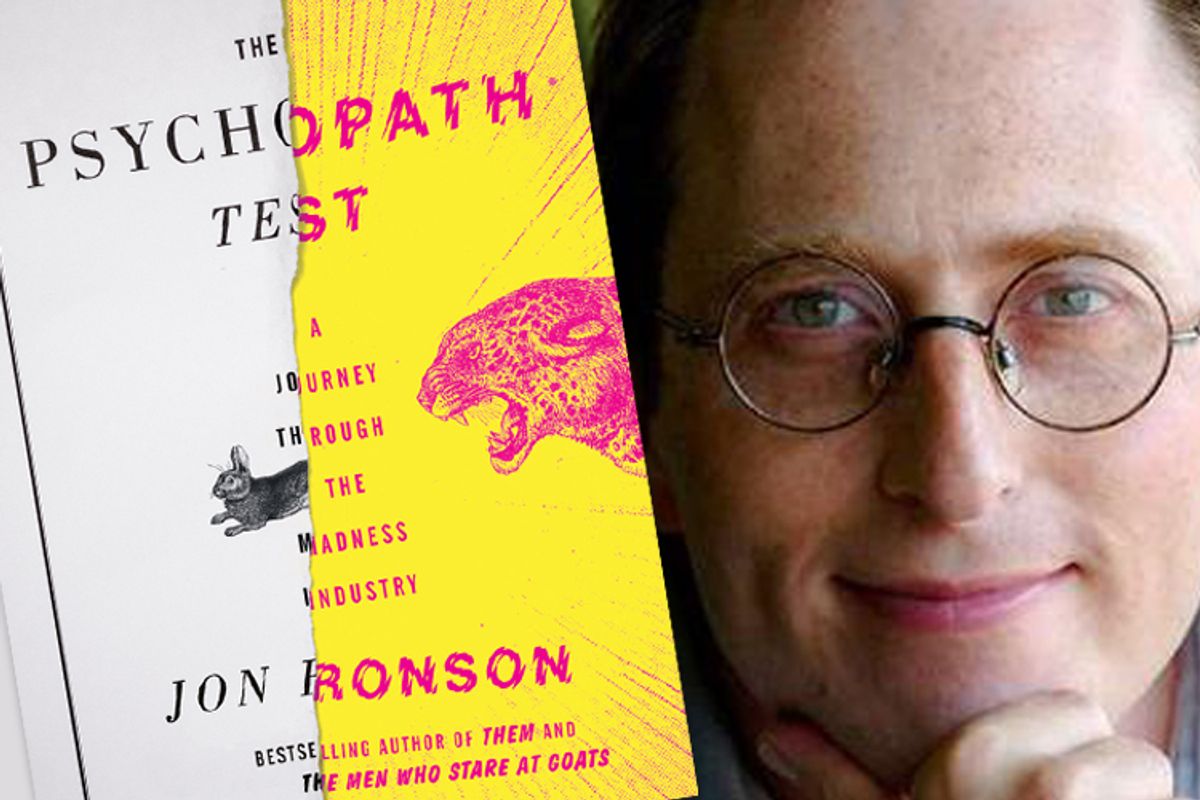
The Psychopath Test: A Journey Through the Madness Industry by Jon Ronson 
Riverhead Books
Pp. 272

We have a lot of examples in popular culture of what it looks like to be ‘mad’. The mental health industry has become increasingly prevalent and topical. Journalist Jon Ronson explored this phenomenon through a series of interviews and other research methods to publish this highly accessible study in 2011. While many people now self-diagnose, due to the availability of tests and checklists, others exhibit psychopathic behaviour almost undetected, and often end up running companies or countries.

He begins with the premise that it can be harder to persuade people you are ‘sane’ than it is to convince them you are ‘mad’. Ronson is allowed access to one of the most notorious psychopaths, incarcerated in Broadmoor Clinical Lunatic Asylum, Tony, who is allowed to read his own medical files and pass them on to Ronson. Tony claims that he faked madness and now no one believes he is sane when he tries to deny it. “Tony said faking madness was the easy part, especially when you’re seventeen and you take drugs and watch a lot of scary movies. You don’t need to know how authentically crazy people behave. You just plagiarize the character Dennis Hopper played in the movie Blue Velvet.”

Often psychopaths can present as totally charming, which makes it difficult to detect. Ronson says, “The moment I’d first seen Tony, he had strolled purposefully across the Broadmoor Wellness Centre in a pin-striped suit, like someone from The Apprentice, his arm outstretched.” (That particular TV reference is unintentionally relevant). Dressing smartly and being personable (“Glibness/ Superficial Charm”) is the first indication on the most available test; the twenty-point Hare Checklist, devised by Canadian psychologist Bob Hare, “the gold standard for diagnosing psychopaths.” The checklist is included in the book , so that readers can take it for themselves. Find it here: http://www.clintools.com/victims/resources/assessment/personality/psychopathy_checklist.html

It is common to redefine the psychopathic traits on the checklist as Leadership Qualities and the crossover can be a very fine line. In examining ‘lack of remorse or guilt’ and ‘callous/ lack of empathy’, Ronson highlights CEO Al Dunlap, formerly of Sunbeam. It is evident that if this book had been published ten years later, Donald Trump and Jeff Bezos would have been prime case studies. Ronson wonders whether highly driven and successful people are actually insane, and if what makes psychopaths so scary – no fear, filter, no conscience – also makes them good executives. Hedge funds, pension funds and investment banks advise their clients which companies to invest in, and they rejoice in job cuts and applaud as research facilities, tech areas and training centres get destroyed. Psychopathic behaviour is on prominent display on Wall Street.

Mental health disorders are listed in the DSM (Diagnostic and Statistical Manual of Mental Disorders), which lists mental disorders. It is used by clinicians, researchers, psychiatric drug regulation agencies, health insurance companies, pharmaceutical companies, the legal system and policymakers. Robert Spitzer, who worked on DSM-III explained that the idea was to list potential new mental disorders and a checklist of their overt characteristics. “It seemed a foolproof plan. He would eradicate from psychiatry all that crass sleuthing around the unconscious. There’d be no more silly polemicizing… Instead it would be like science. Any psychiatrist could pick up the manual they were creating – DSM-III – and if the patient’s overt symptoms tallied with the checklist, they’d get the diagnosis.”

DSM-III sold more than a million copies, mainly to civilians rather than professional psychiatrists. “All over the western world people began using the checklists to diagnose themselves. For many of them it was a godsend. Something was categorically wrong with them and finally their suffering had a name. It was truly a revolution in psychiatry, and a gold rush for drug companies, who suddenly had hundreds of new disorders they could invent medications for, millions of new patients they could treat.” As one psychiatrist Ronson interviewed confirmed, “A surfeit of checklists, coupled with unscrupulous drug reps is a dreadful combination.”

Ronson can’t help but test himself and starts to worry that, as a journalist, he might meet some of the criteria. One of his interview subjects tells him, “Finding patterns is how intelligence works. It’s how research works. It’s how journalism works. The search for patterns.” He also considers that in the very act of researching and writing this book, he might be contributing to the way that madness is packaged and presented for entertainment. “I was writing a book about the madness industry and only just realizing that I was a part of the industry.” He probably doesn’t think about the paradox too deeply. After all, that way madness lies.

Friday, 9 April 2021

Friday Five: Food and Drink in the Blue Mountains


1. It should be no surprise to anyone that we couldn't visit the Blue Mountains without dropping by the brewery there. DJ and Harriet McCready have opened Mountain Culture in a former newspaper office in Katoomba. The architecture is apparently 'inter-war free classical', with high ceilings, open beams, secret staircases, rooms of various sizes and an outdoor are to catch the mountain sun. But it's the beer we're here for, and it is definitely very fine. 

I particularly enjoyed the Status Quo New England Pale Ale (very hoppy, bitter and tropical with 'massive late and dry hop additions'), the VHS & Chill Retro IPA (orange rind, fresh grapefruit and dank pine), the Double Red IPA (the Holy Grail of beer), and the Big Richard Imperial Stout (big, boozy dark dried fruit and chocolate).

Big Richard Imperial Stout at Mountain Culture

2. Also new to us is Cafe 92 at the Conservation Hut. We had planned to do the National Pass Walk, but sections of the route are closed due to rockfalls and other hazards. Instead we did the Undercliff Overcliff Walk (yes, the wombling free song was sung), and found this cafe at the top of the aforementioned cliffs. The meals looked excellent, but we had eaten a hearty breakfast, unaware that we might encounter such a delight, so we made do with coffee and cake, and spectacular views from the verandah. The artwork inside is also very impressive - it is by Reinis Zusters, a Latvian-born artist who had a studio at nearby Wentworth Falls until his death in 1999.


3. The Carrington is one of our favourite places in The Blue Mountains and we always visit whenever we are here, although attempts to book accommodation have been unsuccessful as it is always so popular! We have been to a wine festival in the dining room; we have sat in the lounge on a rainy day and taken tea and scones when my parents came to visit; we have drunk full-bodied red wine while sitting in armchairs by the fire as it poured with rain outside; we have hung out in the bar with a couple of beers... 

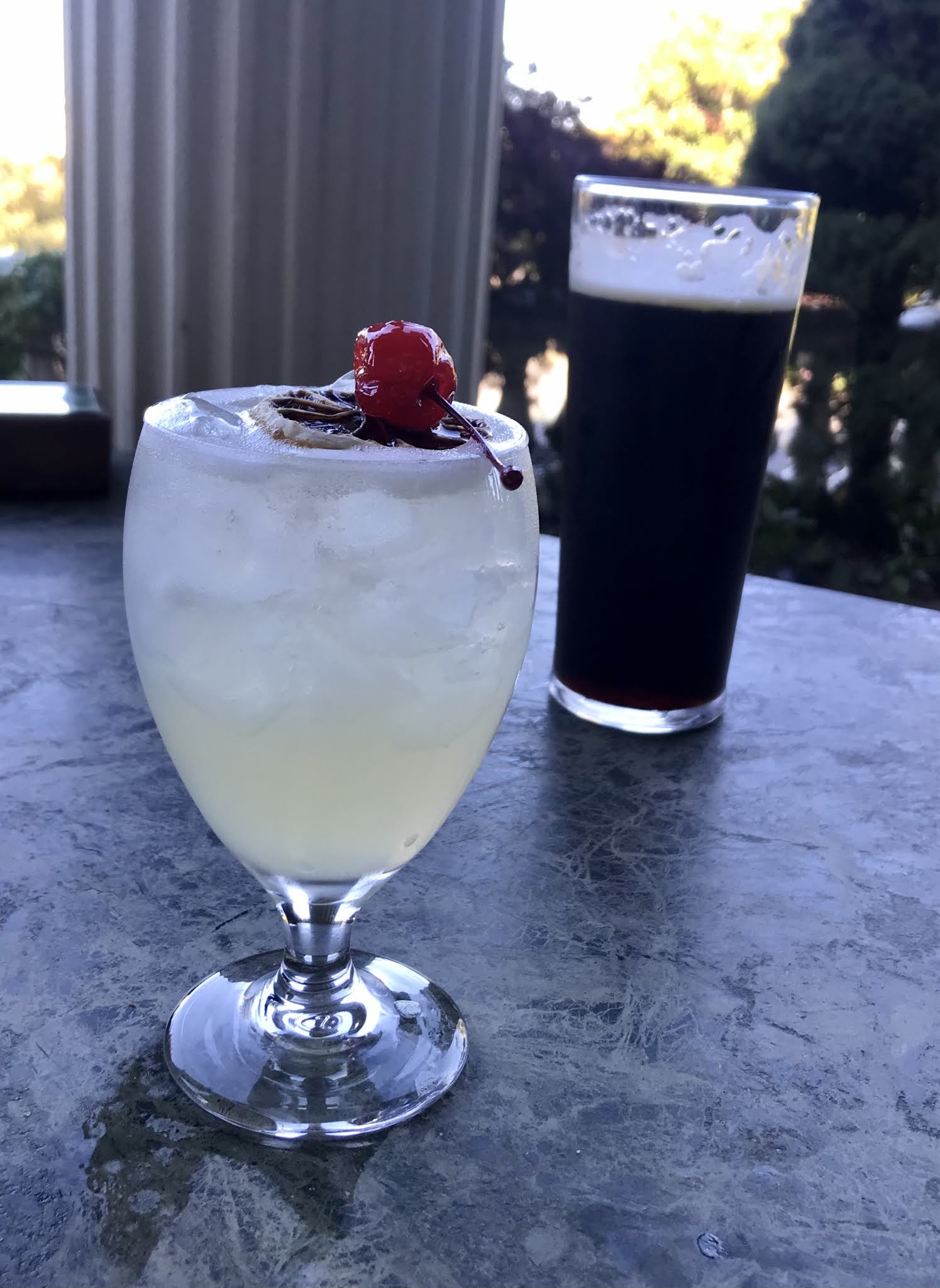
This time we sat out on the verandah and enjoyed a cocktail in the late afternoon sun. I had a St Germain (elderflower liqueur; gin; prosecco over crushed ice served with a slice of bitter lemon and a maraschino cherry). It was very tasty and refreshing after a long day of walking.


4. For dinner one evening we walked to Arjuna, an Indian restaurant on the outskirts of Katoomba. It doesn't look too salubrious from the exterior - although the adjacent water tower is painted with a rather attractive shark motif. 


It was Easter weekend and very busy; diners were booked into two sittings to keep the chef from getting two overwhelmed. We attended the earlier sitting, which means we caught the most amazing sunset views from the verandah. 


We weren't aware that the venue wasn't licensed so we hadn't brought a drink with us, although we spotted almost very other group arriving clutching bottles of wine - that's a top tip to remember for next time. The food was fabulous, though so I didn't feel as though we were lacking in anything. I had a Chicken Xacuti (Goan style chicken cooked with roasted coconut), which was melt in the mouth chunks of chicken in a rich and creamy sauce, while Him Outdoors went for Balti Gosht, which was served in one of those Balti buckets of spicy tomato and onion sauce. It was delicious, and we needed the walk of several kilometres back to our lodgings to work off some of the calories!


5. We were struggling to get a booking for dinner, because we had not been organised and had left everything too late, but we managed to book in to Avalon for Sunday lunch, and what a wonderful spot that was. The blurb on the website reads, 'set in the dress circle od the historic Savoy picture theatre, Avalon Restaurant and cocktail Bar at Katoomba combines playful art-deco charm with hearty food, friendly service and specular Blue Mountains views'. All of this is true.

The entrance leads us through the foyer of the 1930s cinema, past the ticket booth and up the stairs. It's all leadlight glass, geometric influences, upside down lampshades, kooky prints and vibrant colours. We began with cocktails, as it seemed wrong not to - he had a rhubarb and ginger martini and I had an 'Avalon', which was similar to the drink I had the other night featuring gin, elderflower liqueur, limoncello, Aperol, cranberry, peach bitters and mint. These were fabulous and a great start to the meal. 


For starters I had paprika prawns and tumeric scallops, served on pineapple and peach salsa, with caviar dip. The shellfish were melting with fishy goodness, and the salsa was popping with colour and flavour. I also inveigled a bite of the starter that Him Outdoors chose which was as delicious as it looked. He had grilled figs stuffed with blue cheese topped with a walnut and parmesan crust and wrapped in crispy prosciutto. This was rich and fruity with a bite from the blue cheese and savoury hints from the prosciutto - it was a perfect blend of texture as well. 


The quality of the starters set us up with high expectations for our mains, which were expertly met. Him Outdoors had the seared duck breast with carrot and ginger puree and orange liqueur reduction, served with rosemary potatoes and seasonal vegetables. I think he chose it partly because he loves duck - it's his go-to dish at a restaurant - but mainly because the description didn't mention 'jus' (a word he just despises for some reason; "why can't they just call it gravy?").  The waitress told him that it would be served pink and was he okay with this? He was, but I also like the way they explain this, not as an option, but as a directive - you don't have to have it if you don't like it!


It's Easter Sunday so I couldn't go past the lamb, and I do feel as though I have may have slightly won in the plate envy stakes. I had slow-roasted lamb wrapped in bacon, garlic, thyme, with a red wine and lime glaze, served with creamy mash and seasonal vegetables. The lamb was so tender and juicy; it practically fell apart and the comfort of the fat in the meat was well-matched with the crispness of the mangetout peas and the zing of the glaze. 


We accompanied the meal with a bottle of Robert Stein Shiraz Viognier (from Mudgee), which we lingered over at the end of the meal, unable to fit in any dessert. I was trying to think of an elegant word to tell the waitress I had had sufficient to eat, she supplied 'stonkered', which made me laugh as it is indeed a great word, but not particularly sophisticated. She also told us that the restaurant has been going for thirty years, and that last night (Easter Saturday) was their busiest night ever - people are obviously desperate to go on holiday and, as they can't currently go overseas, they are flocking to their own back yard. 

I also note that their menu says, 'along with our daily specials of new dishes to try, our main menu is well established, and so loved by our guests that we've hardly changed it in thirty years... we wouldn't dare!' It's good to know it should still be there serving fine fayre when we return.